
المجلة: Discover Sustainability، المجلد: 6، العدد: 1
DOI: https://doi.org/10.1007/s43621-025-00809-6
تاريخ النشر: 2025-01-13
DOI: https://doi.org/10.1007/s43621-025-00809-6
تاريخ النشر: 2025-01-13
1 المقدمة
1.1 الخلفية والدوافع
تتجه التطورات التكنولوجية والاستدامة بشكل متزايد نحو تشكيل مستقبل التعليم العالي. توفر الذكاء الاصطناعي (AI) أدوات لتعزيز التعليم، وتبسيط العمليات المؤسسية، والمساهمة في أهداف الاستدامة من خلال تحسين استخدام الطاقة وإدارة الموارد [1]. تسعى الجامعات في جميع أنحاء العالم إلى مواءمة عملياتها مع الأهداف العالمية للاستدامة بينما تتبنى الابتكارات التي تحسن النتائج التعليمية والعمليات الإدارية [2].
تشمل إمكانيات الذكاء الاصطناعي في ثورة التعليم تطبيقات مثل التعلم التكيفي، والمناهج الدراسية المخصصة، والتحليلات التنبؤية لنجاح الطلاب [3،4]. ومع ذلك، فإن هذه التقدمات تقدم تحديات، بما في ذلك مخاطر خصوصية البيانات، وعدم المساواة الرقمية، والتحيز الخوارزمي [5،6]. يجب على المؤسسات التأكد من أن دمج الذكاء الاصطناعي يوازن بين التقدم التكنولوجي والمبادئ الأخلاقية، مع حماية خصوصية الطلاب وتعزيز الوصول العادل [7، 8].
تغيرت التطبيقات الحديثة مثل التعليم المدعوم بالذكاء الاصطناعي، والتعلم المخصص، وأتمتة التقييم التعليم. تتيح هذه الأدوات للمعلمين تخصيص الدعم، وإشراك الطلاب، وأتمتة تصحيح الدرجات المكررة لتوفير الوقت. جميع هذه التقدمات تطرح عقبات كبيرة [9]. يمكن أن يمكّن الذكاء الاصطناعي الغش عن غير قصد، مما يتطلب طرق مراقبة صارمة لحماية النزاهة الأكاديمية. ستتعامل أنظمة الذكاء الاصطناعي مع بيانات الطلاب الحساسة، لذا هناك حاجة إلى تدابير صارمة لحماية البيانات [10]. أخيرًا، قد يؤدي عدم تدريب نماذج الذكاء الاصطناعي على مجموعات بيانات متنوعة إلى التحيز والتمييز. ومع ذلك، فإن نفس القضايا تمكّن الذكاء الاصطناعي في التعليم، حيث تكون المكافآت كبيرة. تحسن نماذج الذكاء الاصطناعي التكيفية نتائج التعلم، والكفاءة، والتكلفة من خلال توفير الوقت والمال [11]. كما يوسع الذكاء الاصطناعي الوصول إلى التعليم الجيد في جميع أنحاء العالم، بما في ذلك في الأماكن الفقيرة. من خلال معالجة هذه القضايا، يمكن للذكاء الاصطناعي أن يوازن بشكل أفضل قوته في التعليم [12].
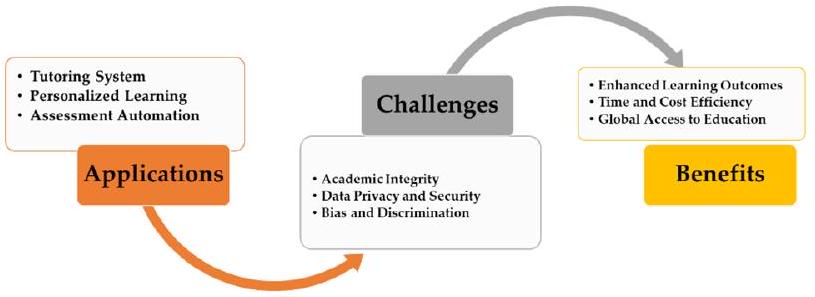
تظهر الشكل 1 نموذجًا مفاهيميًا للذكاء الاصطناعي في التعليم، بما في ذلك تطبيقاته، وعقباته، وفوائده. يقدم قسم التطبيقات التعليم المدعوم بالذكاء الاصطناعي، والتعلم المخصص، وأتمتة التقييم لتحسين التعليم. كما يعترف النموذج بالتحديات التي تواجه هذه التطبيقات، مثل النزاهة الأكاديمية، وخصوصية وأمان البيانات، والتحيز والتمييز في الذكاء الاصطناعي. على الرغم من هذه العقبات، يبرز النموذج فوائد الذكاء الاصطناعي للتعليم، بما في ذلك تحسين نتائج التعلم، وكفاءة الوقت والتكلفة، والوصول العالمي. تحسن تطبيقات الذكاء الاصطناعي التعليم ولكن تواجه عقبات كبيرة، كما يتضح من الأسهم التي تربط هذه المكونات.
تستخدم الخريطة تدرجًا لونيًا من الأصفر الفاتح إلى الأحمر الداكن لتمثيل مدى دمج الذكاء الاصطناعي في المؤسسات التعليمية. الاتجاهات العالمية في استخدام الذكاء الاصطناعي في التعليم العالي، بما في ذلك مستويات التنفيذ الخاصة بكل دولة. تظهر دول مثل الصين وكندا واليابان، المظللة بالأحمر الداكن، أعلى مستويات اعتماد الذكاء الاصطناعي، مما يشير إلى دمج كبير واستخدام لتقنيات الذكاء الاصطناعي في أنظمة التعليم العالي لديها. بالمقابل، تظهر الهند والبرازيل، المظللتان بدرجات البرتقالي، مستويات معتدلة من اعتماد الذكاء الاصطناعي. تعكس أستراليا، الممثلة بالأصفر الفاتح، مستويات أقل من دمج الذكاء الاصطناعي في قطاع التعليم العالي لديها. تسلط الخريطة الضوء على المناطق الرئيسية حيث يتم اعتماد الذكاء الاصطناعي بشكل متزايد في التعليم، مما يوفر منظورًا عالميًا حول كيفية احتضان الدول المختلفة للذكاء الاصطناعي لتعزيز النتائج التعليمية. تأخرت إفريقيا والعديد من الدول الآسيوية في نشر الذكاء الاصطناعي بسبب الموارد المحدودة والبنية التحتية التكنولوجية. ومع ذلك، تكشف هذه الفجوات عن انقسام رقمي بين الدول التي تسرع في اعتماد الذكاء الاصطناعي والتعليم وتلك التي تتخلف. لضمان رؤية فوائد الذكاء الاصطناعي التعليمية في جميع أنحاء العالم، هناك حاجة إلى التعاون الدولي لتبادل المعلومات والموارد [13]. تظهر الشكل 2 الاتجاهات العالمية في اعتماد الذكاء الاصطناعي في التعليم العالي.
الشكل 1 تأثير الذكاء الاصطناعي في التعليم
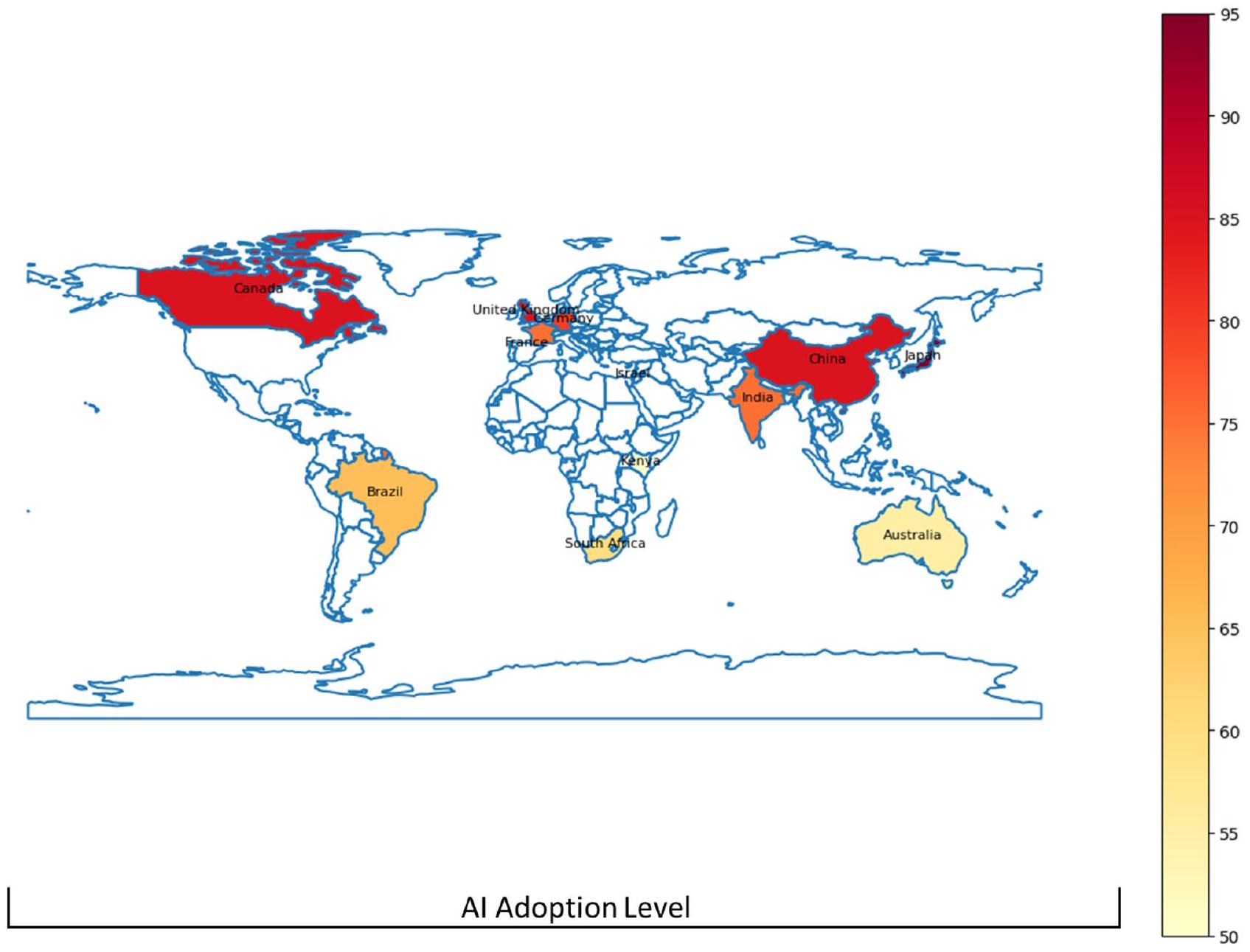
الشكل 2 الاتجاهات العالمية في اعتماد الذكاء الاصطناعي في التعليم العالي
1.2 بيان المشكلة
على الرغم من أنه تم دراسة الكثير حول دور الذكاء الاصطناعي في التعليم والاستدامة بشكل مستقل، إلا أن تقاطعها في التعليم العالي لا يزال غير مستكشف بشكل كافٍ [14، 15]. تتناول هذه الدراسة الفجوة من خلال تحليل كيفية تحسين الذكاء الاصطناعي للكفاءة التشغيلية وتحقيق أهداف الاستدامة في الوقت نفسه. يكمن التحدي الرئيسي في تطوير أطر أخلاقية لاستخدام الذكاء الاصطناعي تحمي الخصوصية وتخفف من التحيزات [16، 17]. علاوة على ذلك، تتطلب قضايا مثل الفجوة الرقمية ومقاومة المؤسسات لاعتماد التكنولوجيا اعتبارات دقيقة [18، 19].
تُكلف مؤسسات التعليم العالي أيضًا بإعداد الطلاب لمواجهة التحديات البيئية المستقبلية، مما يجعل التعليم في مجال الاستدامة أمرًا حيويًا [20،21]. تهدف هذه الدراسة إلى استكشاف كيفية تمكين بيئات التعلم المخصصة المدعومة بالذكاء الاصطناعي للطلاب من اكتساب المهارات للمشاركة في الممارسات المستدامة وتطوير حلول للمشكلات البيئية الملحة [22].
1.3 أسئلة البحث والأهداف
تستند هذه الدراسة إلى الأسئلة البحثية التالية:
- RQ1: كيف يمكن دمج الذكاء الاصطناعي بشكل فعال في مؤسسات التعليم العالي لتحسين إدارة الموارد ودعم الاستدامة؟
- RQ2: ما هي الاعتبارات الأخلاقية الرئيسية والتحديات المرتبطة باستخدام الذكاء الاصطناعي في التعليم العالي، خاصة فيما يتعلق بخصوصية البيانات، والتحيز الخوارزمي، والفجوة الرقمية؟
- RQ3: كيف يمكن أن تُعد تجارب التعلم المخصصة وتطوير المناهج المدعومة بالذكاء الاصطناعي الطلاب لمواجهة تحديات الاستدامة المستقبلية؟
- RQ4: كيف يمكن للمؤسسات تحقيق التوازن بين فوائد تقنيات الذكاء الاصطناعي والحاجة إلى الحفاظ على المعايير الأخلاقية وحماية خصوصية الطلاب؟
- RQ5: ما هي الاستراتيجيات المستقبلية التي يمكن أن توجه الدمج المستدام للذكاء الاصطناعي في التعليم العالي لتعزيز النتائج التعليمية؟
1.4 هيكل المقال
يتم هيكلة بقية هذا المقال على النحو التالي: القسم 2 يقدم مراجعة شاملة للأدبيات حول تطبيقات الذكاء الاصطناعي في التعليم والاستدامة. يوضح القسم 3 منهجية البحث المستخدمة لمعالجة الأسئلة البحثية. يقدم القسم 4 النتائج الرئيسية، تليه مناقشة لتداعياتها في القسم 5. أخيرًا، يقدم القسم 6 خاتمة، تلخص النتائج وتقدم توصيات للبحث المستقبلي.
1.5 الجوانب الرئيسية والعناصر الجديدة
يوجد الكثير من الأبحاث حول تأثير الذكاء الاصطناعي في التعليم والاستدامة، وقليل من الأبحاث حول تقاطع هذين المجالين على وجه الخصوص في مستوى التعليم العالي. ومع ذلك، لم تتناول الأدبيات الحالية حول كيفية تحسين الذكاء الاصطناعي للتعلم المخصص والكفاءة التشغيلية كيف يمكن أن يساعد الذكاء الاصطناعي في دفع الاستدامة في الوقت نفسه: تحسين استخدام الموارد، وتقليل الأثر البيئي، وغيرها من الجهود المماثلة. كما هو الحال مع الذكاء الاصطناعي، تم مناقشة التحديات الأخلاقية، بما في ذلك خصوصية البيانات والتحيز الخوارزمي، ومع ذلك، لم يتم استكشاف تداعيات تلك التحديات ضمن الذكاء الاصطناعي لدفع مبادرات الاستدامة في التعليم العالي إلى الحد الذي ينطبق عليه. تتناول هذه الدراسة الفجوات بين نتائج التعليم وجهود الاستدامة، وتحقق في كيفية مساعدة الذكاء الاصطناعي وكيف تلعب الاعتبارات الأخلاقية في دمج الذكاء الاصطناعي في هذه المجالات.
2 مراجعة الأدبيات
2.1 الذكاء الاصطناعي في التعليم العالي
تقوم تقنيات الذكاء الاصطناعي بتحويل التعليم العالي من خلال تقديم أدوات تخصيص التعلم، وتحسين العمليات، وتعزيز نتائج الطلاب. تعد منصات التعلم التكيفية محتوى التوصيل وفقًا لاحتياجات الطلاب الفردية، مما يزيد من المشاركة والاحتفاظ [9]. توفر أنظمة التعليم الذكية (ITS) تغذية راجعة في الوقت الفعلي، مما يعزز تجارب التعلم الفعالة والمخصصة [23]. تلعب التحليلات التنبؤية أيضًا دورًا حاسمًا من خلال تحديد الطلاب المعرضين للخطر وتقديم تدخلات في الوقت المناسب لتحسين معدلات الاحتفاظ [24، 25].
تتناول هذه المقالة القضايا الأخلاقية للذكاء الاصطناعي التوليدي في التعليم العالي، بما في ذلك المساءلة، والإشراف البشري، والشفافية، والشمولية. تدرس 30 من أفضل الكليات في العالم وتؤكد على ضرورة أن تعكس مهام الطلاب المعرفة الفردية والمسؤولية الأخلاقية والقانونية عن الأفعال الخاطئة المتعلقة بالذكاء الاصطناعي. يتضمن الإشراف البشري تدابير وقائية وعقوبات قائمة على الحوار، بينما تتعلق الشفافية بالكشف عن مناهج الدورة الدراسية لاستخدام الذكاء الاصطناعي. تعمل جنوب أفريقيا على تحسين التعليم العالي من خلال الذكاء الاصطناعي لتعزيز التعلم الشخصي والشامل للمساعدة في تحقيق أهداف التنمية المستدامة. يتطلب التنظيم الفعال من الحكومة وضع إرشادات سياسة التعليم الوطنية للذكاء الاصطناعي، كما يقول البحث.
تستفيد العمليات الإدارية من الذكاء الاصطناعي من خلال الأتمتة، مما يقلل من أعباء العمل ويزيد من الكفاءة التشغيلية. تقوم المؤسسات بتنفيذ أنظمة مدفوعة بالذكاء الاصطناعي للقبول، والتقييم، والصيانة التنبؤية. تدرس هذه الدراسة كيف يؤثر التعلم القائم على النشاط وChatGPT على الأداء الأكاديمي. تقارن التعلم القائم على النشاط بالأساليب التقليدية وتناقش مزايا وعيوب ChatGPT. يحسن التعلم القائم على النشاط من تفاعل الطلاب، وتحفيزهم، والتفكير النقدي، بينما يوفر ChatGPT التعلم التفاعلي والدعم الفردي. التعلم القائم على النشاط يركز على الطالب ويزيد من التعلم، على الرغم من المخاوف الأخلاقية. هذه الابتكارات تبسط العمليات، مما يمكّن الجامعات من التركيز على جودة التعليم.
2.2 الاستدامة في التعليم العالي
تتحول الاستدامة إلى هدف مركزي للمؤسسات التعليمية العليا، مدفوعة بالدفع العالمي لمعالجة التحديات البيئية والاجتماعية. تتبنى المؤسسات ممارسات مستدامة، مثل البنية التحتية الموفرة للطاقة، وبرامج تقليل النفايات، وأنظمة النقل المستدام، لتقليل بصمتها البيئية. يعزز الذكاء الاصطناعي هذه الجهود من خلال تمكين اتخاذ القرارات المستندة إلى البيانات في إدارة الطاقة وتحسين النفايات.
يمكن أن يحول الذكاء الاصطناعي في التعليم العالي التدريس، والتعلم، والإدارة، والبحث. توفر الحلول المدعومة بالذكاء الاصطناعي تجربة تعلم شخصية، وتقدم تعليقات فورية، وتشارك الطلاب. ومع ذلك، يجب فحص القضايا الأخلاقية، والتحيزات، وواجبات هيئة التدريس، والآثار التعليمية. تشير الأبحاث إلى أن تطبيق تكنولوجيا الذكاء الاصطناعي الأخلاقية والمسؤولة في التعليم العالي يتطلب تحليلًا دقيقًا لجوانبها المتعددة، مع تحقيق التوازن بين التعليم المدفوع بالبشر والتعليم المدفوع بالذكاء الاصطناعي.
يعد دمج المناهج أيضًا جانبًا مهمًا من الاستدامة في التعليم. تعزز البرامج التي تتضمن مفاهيم الاستدامة التفكير النقدي ورعاية البيئة بين الطلاب. ومع ذلك، تظل القيود المالية، والمقاومة للتغيير، وتعقيد دمج الاستدامة عبر التخصصات حواجز كبيرة. تؤكد نتائج هذه الدراسة على الحاجة إلى تضمين تعليم الاستدامة في دورات تكنولوجيا المعلومات والاتصالات الجامعية. تم عكس دعم الطلاب للاستدامة في استطلاع بجامعة يونانية، ولكن هناك حاجة لمزيد من مشاركة الجامعة في مواجهة الأثر البيئي لتكنولوجيا المعلومات والاتصالات.
تسلط الجدول 1 الضوء على الممارسات الرئيسية للاستدامة في مؤسسات التعليم العالي، بما في ذلك كفاءة الطاقة، وإدارة النفايات، والنقل المستدام، ودمج المناهج، واستراتيجيات الحفاظ على المياه. تقلل هذه الممارسات من بصمات الكربون، وتخفض التكاليف، وتعزز الحفاظ على الموارد. تشمل كفاءة الطاقة مصادر الطاقة المتجددة وأنظمة الإدارة المتقدمة، بينما تركز إدارة النفايات على إعادة التدوير وتقليل المواد غير القابلة لإعادة التدوير. يشجع النقل المستدام على وسائل النقل العامة، وركوب الدراجات، ومشاركة السيارات، ومحطات شحن السيارات الكهربائية. يعزز دمج المناهج ثقافة الاستدامة بين الطلاب ويقلل التكاليف.
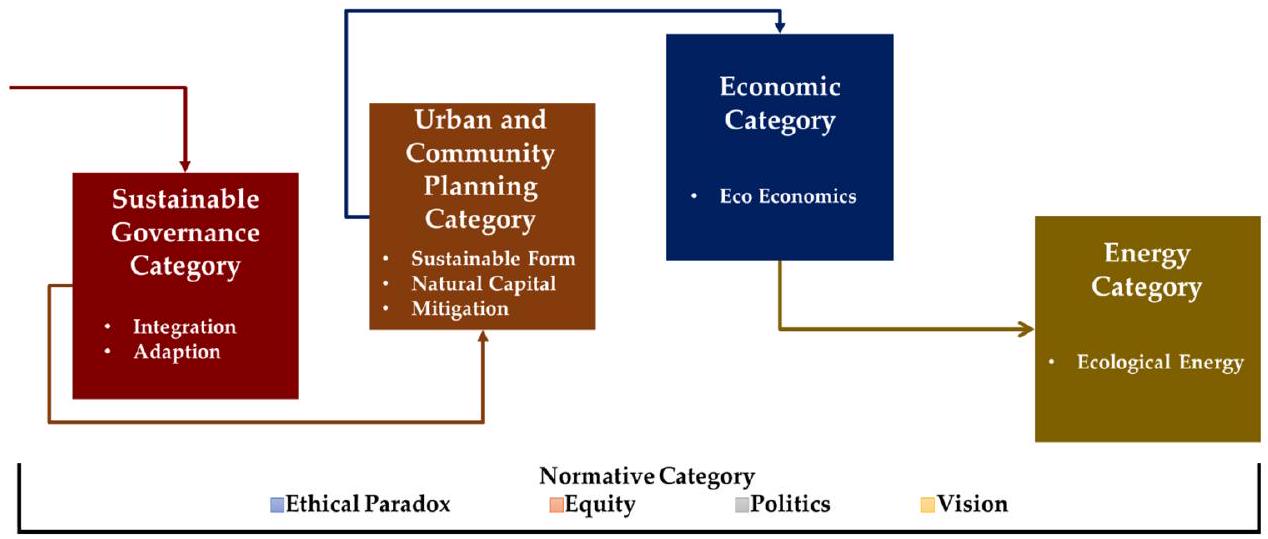
يسمح التقارب بين الذكاء الاصطناعي والاستدامة لمؤسسات التعليم العالي بنموذج رعاية البيئة. قد يحسن الذكاء الاصطناعي ممارسات الاستدامة لهذه المؤسسات، ويقلل من تأثيرها البيئي، ويجهز الجيل القادم من القادة للتعامل مع القضايا العالمية المتعلقة بالاستدامة. يربط الشكل 3 بين الذكاء الاصطناعي، والاستدامة، والتعليم العالي عبر أربع فئات: المرونة في الحوكمة المستدامة، والتخطيط الحضري والمجتمعي، والاقتصاد، والطاقة. لتعزيز اتخاذ القرارات المستدامة والمرونة التكنولوجية، تدمج فئة الحوكمة المستدامة الذكاء الاصطناعي في عمليات حوكمة المؤسسات التعليمية. يفحص الذكاء الاصطناعي في التخطيط الحضري والمجتمعي كيف يشكل الذكاء الاصطناعي تصاميم الحرم الجامعي المستدامة، ويحافظ على رأس المال الطبيعي، ويخفف من تغير المناخ. في “الاقتصاد البيئي”، يساعد الذكاء الاصطناعي في إدارة الموارد، وتقليل النفايات، والعمليات المالية المستدامة. أخيرًا، تفحص فئة الطاقة الطاقة البيئية وكيف يمكن أن يحسن الذكاء الاصطناعي من استهلاك الطاقة لتقليل بصمة الكربون للمؤسسات التعليمية.
ومع ذلك، يجب موازنة الفوائد المحتملة للذكاء الاصطناعي لاستدامة التعليم العالي مع عيوبه. قد يؤدي إدمان الذكاء الاصطناعي إلى زيادة استهلاك الطاقة والحوسبة، مما يهدد أهدافنا في الاستدامة إذا لم نتبنى تقنيات خضراء. تؤثر الخصوصية، والتحيز، والأخلاقيات على ثقة نظام الذكاء الاصطناعي والقبول الاجتماعي بما يتجاوز السطح. نحتاج إلى مبادئ أخلاقية صارمة للذكاء الاصطناعي، وتقنيات ذكاء اصطناعي موفرة للطاقة، وقواعد تضمن دعم الذكاء الاصطناعي للنمو المستدام في التعليم العالي لمعالجة الذكاء الاصطناعي والاستدامة بشكل حقيقي.
2.3 التحديات والاعتبارات الأخلاقية
يؤدي دمج الذكاء الاصطناعي في التعليم إلى إثارة مخاوف أخلاقية حاسمة تتطلب أطر حوكمة شاملة. تشمل التحديات الرئيسية خصوصية البيانات، والتحيز الخوارزمي، والفجوة الرقمية. تعتمد أنظمة الذكاء الاصطناعي على بيانات واسعة، مما يجعل المؤسسات عرضة للاختراقات وسوء استخدام المعلومات الشخصية. يجب على المؤسسات اعتماد تدابير حوكمة لحماية خصوصية الطلاب وتحقيق التوازن بين الابتكار التكنولوجي والمعايير الأخلاقية. تدرس هذه الدراسة كيف يؤثر التعلم القائم على النشاط وChatGPT على إنجاز الطلاب الأكاديمي. تقارن ChatGPT بالأساليب التقليدية وتقيّم مزاياها وعيوبها كأداة تعليمية. يحسن التعلم القائم على النشاط من تفاعل الطلاب، وتحفيزهم، والتفكير النقدي، بينما يوفر ChatGPT التعلم التفاعلي والدعم الفردي لمساعدتهم على فهم واستكشاف المفاهيم المعقدة.
الجدول 1 ملخص للممارسات الرئيسية للاستدامة في التعليم العالي
| الاستشهاد | الممارسة | الوصف | الأثر على الاستدامة |
| [39] | مبادرات كفاءة الطاقة | تقليل استهلاك الطاقة باستخدام الطاقة المتجددة وإدارة الطاقة الفعالة | يقلل بشكل كبير من تأثير الطاقة والكربون للمؤسسة |
| [40] | برامج إدارة النفايات | برامج إعادة تدوير شاملة واستراتيجيات لتقليل النفايات غير القابلة لإعادة التدوير ونفايات المدافن | تقليل النفايات والحفاظ على الموارد يقلل من التأثير البيئي |
| [41] | النقل المستدام | تشجيع وسائل النقل العامة، وركوب الدراجات، ومشاركة السيارات، ومحطات شحن السيارات الكهربائية | يقلل من انبعاثات الكربون أثناء التنقل ويعزز التنقل المستدام |
| [42] | دمج المناهج | لتعليم وتمكين الطلاب، دمج موضوعات الاستدامة في المناهج الأكاديمية عبر التخصصات | بناء ثقافة طلابية مستدامة يعد القادة المستقبليين لحل القضايا البيئية |
| [43] | استراتيجيات الحفاظ على المياه | تنفيذ أجهزة وتقنيات توفير المياه في الحرم الجامعي للحفاظ على المياه | يحافظ على المياه، ويقلل النفقات، ويزيد الوعي بنقص المياه |
الشكل 3 النموذج المفاهيمي للذكاء الاصطناعي والاستدامة في التعليم العالي
بالإضافة إلى ذلك، يمكن أن تنشر خوارزميات الذكاء الاصطناعي التحيزات إذا لم يتم تصميمها بعناية، مما قد يؤدي إلى نتائج غير عادلة وتمييز. كما أن الفجوة الرقمية تعمق الفوارق الاجتماعية، مما يحد من الوصول إلى أدوات الذكاء الاصطناعي للطلاب المحرومين. يتم تقديم مناقشة أكثر تفصيلًا حول هذه القضايا الأخلاقية والاستراتيجيات المحتملة للتخفيف في القسم 5.2.
2.4 فجوات البحث والفرص
لقد تم إجراء الكثير من الأبحاث بالفعل حول آثار الذكاء الاصطناعي في التعليم والاستدامة، ولكن القليل منها تناول تداخل الاثنين على مستوى التعليم العالي. ومع ذلك، فإن الأدبيات الموجودة حول الطرق التي يمكن أن يساهم بها الذكاء الاصطناعي في تعزيز ميزات التعلم الشخصي والكفاءة التشغيلية قد قالت بشكل مفاجئ القليل عن كيفية مساعدة الذكاء الاصطناعي في تعزيز الاستدامة من خلال تقليل استخدام الموارد، وتقليل النفقات البيئية، وأكثر من ذلك. بينما يتم عادةً مناقشة التحديات الأخلاقية، بما في ذلك خصوصية البيانات والتحيز الخوارزمي، فيما يتعلق بالذكاء الاصطناعي، لم يتم مناقشة القليل حول كيفية تطبيق تلك التحديات الأخلاقية أيضًا على مبادرات الاستدامة المدفوعة بالذكاء الاصطناعي في التعليم العالي. ومع ذلك، لا تزال هناك العديد من الحدود غير المستكشفة بين الذكاء الاصطناعي والتعليم العالي والاستدامة [51]. بينما كانت الأبحاث الحالية تركز بشكل أساسي على الفوائد المستقلة للذكاء الاصطناعي للتعليم والاستدامة، كانت الأبحاث تفتقر إلى حد ما إلى الدراسات التي تحقق في كيفية تطبيق هذه التقنيات لتحقيق الأهداف التعليمية والبيئية. علاوة على ذلك، هناك حاجة أيضًا إلى أبحاث تجريبية حول التأثير طويل الأمد للابتكار المدفوع بالذكاء الاصطناعي، خاصة من حيث الممارسات الأخلاقية والشاملة [52]. تملأ هذه الدراسة هذه الفجوات من خلال استخدام الذكاء الاصطناعي لتحسين النتائج التعليمية وزيادة الاستدامة مع اقتراح طرق للاستفادة من الذكاء الاصطناعي لتحقيق أهداف الاستدامة، وتعزيز الحوكمة الأخلاقية، وتعزيز العدالة بين الطلاب في مجال التعليم العالي.
3 المنهجية
3.1 تصميم البحث
تتبنى هذه الدراسة نهج مراجعة الأدبيات المنهجية (SLR) لفحص كيفية مساهمة التقنيات المدفوعة بالذكاء الاصطناعي في الاستدامة في التعليم العالي. يسمح أسلوب SLR بتوليف شامل وقابل للتكرار للأدبيات الحالية، مع التركيز على موضوعات الكفاءة التشغيلية، ودمج المناهج الدراسية، والاعتبارات الأخلاقية ضمن نشر الذكاء الاصطناعي في السياقات التعليمية. بالإضافة إلى ذلك، يتناول هذا النهج الحواجز والتحديات التي تواجهها المؤسسات عند تنفيذ الذكاء الاصطناعي للممارسات المستدامة. يوضح الشكل 4 مخطط PRISM لعملية المراجعة المنهجية.
في عملية المراجعة لدينا، حددنا في البداية 320 سجلًا من عمليات البحث في قواعد البيانات. بعد إزالة 280 سجلًا مكررًا وغير ذي صلة من خلال فحص العناوين والملخصات، تم الاحتفاظ بـ 130 مقالة لتقييم إضافي. أدى مراجعة النص الكامل لهذه المقالات الـ 130 إلى استبعاد 23 دراسة لم تستوفِ معايير الأهلية. تشمل التحليل النهائي 107 مراجع، والتي تشكل أساس دراستنا.
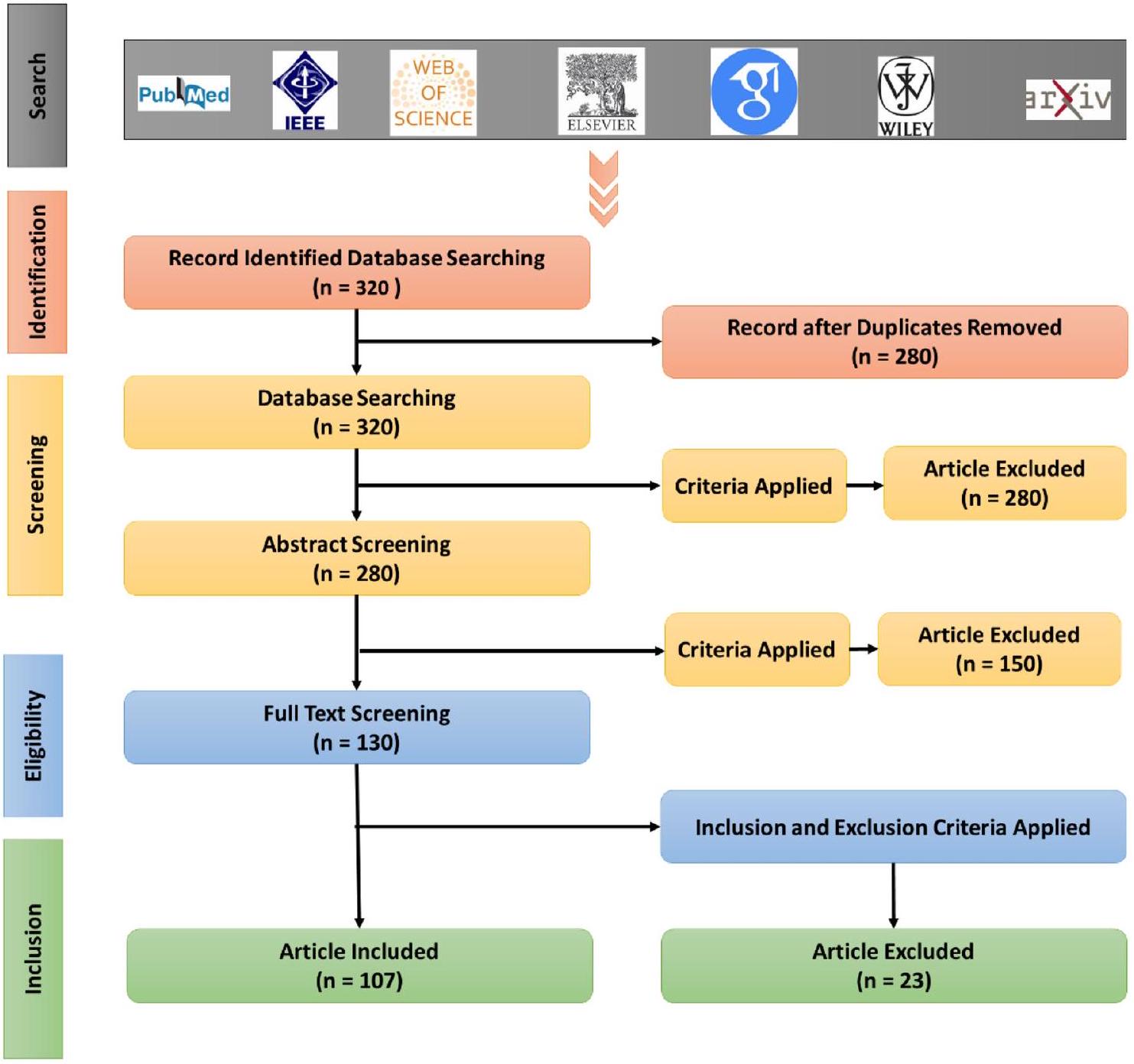
الشكل 4 مخطط PRISM للدراسة المقترحة
3.2 استراتيجية البحث في الأدبيات
تم إجراء مراجعة SLR باستخدام قواعد بيانات أكاديمية معروفة مثل Scopus وWeb of Science وGoogle Scholar. تضمنت مصطلحات البحث لدينا “الذكاء الاصطناعي في التعليم العالي”، “التعليم المستدام”، “الذكاء الاصطناعي الأخلاقي”، و”الذكاء الاصطناعي في إدارة العمليات” لضمان جمع شامل للدراسات ذات الصلة بأسئلة بحثنا. لتقليل البحث والحفاظ على الدقة، تم استخدام عوامل التشغيل البوليانية (AND، OR، NOT) مع سلاسل البحث الدقيقة، مثل: (الذكاء الاصطناعي AND التعليم العالي) OR (الاستدامة OR تحسين الموارد). تم تصميم هذا النهج التفصيلي للبحث لتعظيم التغطية وقابلية التكرار للمراجعة.
3.3 معايير الإدراج والاستبعاد
قمنا بتحديد معايير الإدراج والاستبعاد التالية لضمان مراجعة قوية للأدبيات:
3.3.1 معايير الإدراج
- دراسات تجريبية تظهر تأثير الذكاء الاصطناعي على التعليم العالي و/أو الاستدامة، مع التركيز بشكل خاص على التطبيقات العملية.
- مقالات تمت مراجعتها من قبل الأقران نشرت في السنوات العشر الماضية، تقدم رؤى معاصرة.
- مقالات نص كامل نشرت باللغة الإنجليزية للحفاظ على الوصول والاتساق.
3.3.2 معايير الاستبعاد
- دراسات نظرية بدون دليل تجريبي أو تطبيق عملي.
- دراسات تتناول الذكاء الاصطناعي أو الاستدامة بشكل مستقل دون ربط الاثنين.
- مقالات تفتقر إلى مناقشة حول الاعتبارات الأخلاقية المتعلقة بالذكاء الاصطناعي في التعليم العالي.
يضمن هذا النهج إدراج دراسات ذات صلة وعالية الجودة، مما يقلل من تحيز الاختيار ويحافظ على صرامة المراجعة.
3.4 جمع البيانات واستخراجها
تم جمع البيانات بشكل منهجي من خلال تحليل الدراسات التي تسلط الضوء على تأثير الذكاء الاصطناعي على الاستدامة، والكفاءة التشغيلية، والتعلم الشخصي ضمن البيئات التعليمية. شملت البيانات المستخرجة:
- نوع الدراسة: تصنيف الدراسات كدراسات تجريبية، تجريبية، أو نظرية.
- خصائص العينة: بما في ذلك تفاصيل مثل حجم العينة، والسياق المؤسسي، وخصائص المشاركين.
- تطبيقات الذكاء الاصطناعي: أدوات أو طرق مدفوعة بالذكاء الاصطناعي محددة تم تنفيذها (مثل منصات التعلم التكيفية، وأنظمة إدارة الطاقة).
- أثر الاستدامة: النتائج المتعلقة بكفاءة الطاقة، وإدارة النفايات، والحفاظ على البيئة.
- الاعتبارات الأخلاقية: توثيق المخاوف المتعلقة بخصوصية البيانات، والتحيز الخوارزمي، والفجوة الرقمية.
مكنت هذه الاستخراج المنهجي للبيانات من توفير أساس متسق لمقارنة الدراسات وتوليف النتائج عبر مصادر متنوعة.
3.5 عملية الترميز والإطار التحليلي
استخدمنا عملية ترميز منظمة لتسهيل التحليل الموضوعي، مما يسمح بتحديد الموضوعات المتكررة عبر الدراسات:
- الترميز المفتوح: قراءات أولية للدراسات المختارة حددت فئات واسعة تتعلق بتأثير الذكاء الاصطناعي على الكفاءة التشغيلية، والاستدامة، والاعتبارات الأخلاقية.
- الترميز المحوري: قمنا بتنقيح هذه الرموز الأولية لالتقاط العلاقات والموضوعات الفرعية الناشئة، مثل إدارة الطاقة، وخصوصية البيانات، ومشاركة الطلاب.
- الترميز الانتقائي: تم دمج هذه الموضوعات الفرعية بعد ذلك في موضوعات شاملة، تشكل أساس نتائجنا.
تم اعتماد إطار تحليلي لتنظيم الموضوعات ضمن السياق الأوسع لدور الذكاء الاصطناعي في تعزيز الاستدامة والمعايير الأخلاقية في التعليم العالي. وجه هذا الإطار توليف النتائج عبر الدراسات ويقدم في القسم التالي.
3.6 الاعتبارات الأخلاقية
مع الاعتراف بحساسية البيانات التعليمية، أولينا الأولوية للدراسات التي تتناول الخصوصية، والتحيز الخوارزمي، والفجوة الرقمية [53]. يتماشى هذا التحليل مع المبادئ الأخلاقية من الأبحاث السابقة، مما يبرز الشفافية، والمساءلة، والشمولية في اعتماد الذكاء الاصطناعي [54]. لضمان العدالة بشكل أكبر، أخذنا في الاعتبار approaches لتقليل التفاوتات والتحيزات المحتملة التي perpetuated by AI systems، supporting a responsible integration of AI within educational institutions [55].
4 النتائج
4.1 الابتكارات المدفوعة بالذكاء الاصطناعي في التعليم العالي
تسلط النتائج الضوء على كيفية تحسين الحلول المدفوعة بالذكاء الاصطناعي بشكل كبير النتائج التعليمية والكفاءة التشغيلية. لقد أظهرت منصات التعلم الشخصية وأنظمة التدريس الذكية (ITS) تحسينًا في مشاركة الطلاب والأداء الأكاديمي من خلال تكييف المحتوى مع الاحتياجات الفردية [56]. وقد مكنت التحليلات التنبؤية من الكشف المبكر عن الطلاب المعرضين للخطر، مما يسهل التدخلات في الوقت المناسب لتعزيز معدلات الاحتفاظ [57]. علاوة على ذلك، تقلل الأدوات الإدارية المدعومة بالذكاء الاصطناعي، مثل أنظمة التصحيح الآلي ونظم القبول، من الأعباء اليدوية، مما يزيد من الكفاءة التشغيلية [58]. في هذا الفصل، أستكشف تأثير ChatGPT على التعليم العالي، وخاصة في التدريس، والتعلم، والقيادة. يسلط هذا الضوء على الاتجاهات الحالية، والتحديات، والفرص، لتقديم أدلة حول كيفية المضي قدمًا مع الذكاء الاصطناعي في قيادة التعليم عبر الحدود [59].
4.2 أثر الاستدامة للذكاء الاصطناعي في عمليات الحرم الجامعي
تساهم الذكاء الاصطناعي في استدامة الحرم الجامعي من خلال تحسين إدارة الموارد، لا سيما في استهلاك الطاقة وإدارة النفايات. أنظمة إدارة الطاقة المدعومة بالذكاء الاصطناعي قد خفضت من استخدام الكهرباء من خلال المراقبة في الوقت الحقيقي والتحكم التكيفي لأنظمة التدفئة والتهوية وتكييف الهواء (HVAC) [60]. وقد حسنت حلول إدارة النفايات الذكية باستخدام جمع البيانات المعتمد على المستشعرات من كفاءة إعادة التدوير وقللت من توليد النفايات [61]. هذه الابتكارات لا تقلل فقط من البصمة البيئية ولكنها تقدم أيضًا وفورات مالية، مما يساهم في أهداف الاستدامة للمؤسسة. ولكن بينما يمتلك الذكاء الاصطناعي القدرة على تحويل كيفية تعاملنا مع القضايا البيئية ودمج الاستدامة، لا أحد لديه الإجابات حول كيفية جعله استهلاك الطاقة وبصمات الكربون تتقلص. في هذا الفصل، أقدم الأطروحة بأن تطوير الذكاء الاصطناعي المسؤول ضروري للحفاظ على التوازن بين فرص الذكاء الاصطناعي وآثاره البيئية [62].
4.3 التحديات الأخلاقية المحددة
تسلط النتائج الضوء على التحديات الأخلاقية المتأصلة في تنفيذ الذكاء الاصطناعي ضمن السياقات التعليمية. تظل المخاوف المتعلقة بخصوصية البيانات [63]، والتحيز الخوارزمي [64]، والوصول العادل ذات أهمية كبيرة. يتطلب ضمان العدالة والشفافية والشمولية في نشر الذكاء الاصطناعي أطرًا أخلاقية قوية. لمزيد من التحليل الموسع لهذه التحديات والحلول المحتملة، يرجى الرجوع إلى القسم 5.2.
4.4 الحواجز أمام اعتماد الذكاء الاصطناعي
تم تحديد المقاومة المؤسسية، والقيود المالية، والقيود التكنولوجية كحواجز رئيسية أمام الاعتماد الناجح للذكاء الاصطناعي من أجل الاستدامة. تكافح العديد من الجامعات لدمج الذكاء الاصطناعي مع الأنظمة القديمة، مما يحد من قدرتها على الاستفادة من التقنيات المتقدمة. بالإضافة إلى ذلك، فإن تكاليف التنفيذ العالية، بما في ذلك البرمجيات والأجهزة وتدريب الموظفين، تعيق اعتماد الذكاء الاصطناعي على نطاق واسع [65]. غالبًا ما يقاوم أعضاء هيئة التدريس والموظفون تقنيات الذكاء الاصطناعي بسبب المخاوف بشأن أمان الوظائف وعدم اليقين بشأن تأثير الذكاء الاصطناعي على الأدوار التقليدية [66].
4.5 كفاءة الطاقة وإدارة النفايات
في هذا العمل، نقدم رؤى حول كيفية استخدام الأنظمة المدفوعة بالذكاء الاصطناعي مثل منصات إدارة الطاقة الذكية في الجامعات لمراقبة وتحسين استهلاك الطاقة في الوقت الحقيقي. ومع ذلك، نشير أيضًا إلى العقبات التي تواجهها المؤسسات في اعتماد هذه التقنيات – مثل تكاليف الاستثمار الأولية الطويلة، والحاجة إلى موظفين متخصصين لتشغيل هذه الأنظمة بفعالية. يعتمد إزالة الكربون من المباني بشكل كبير على الذكاء الاصطناعي من خلال التحليلات التنبؤية، والأنظمة الذكية، والترابط بين مصادر الطاقة المتجددة. تُظهر هذه الدراسة كيف يمكن للذكاء الاصطناعي أن يقلل بشكل كبير من الكربون، مع معالجة التحديات مثل التكلفة، والخصوصية، والعقبات التنظيمية [67].
يتم أيضًا تطبيق الذكاء الاصطناعي في مجال إدارة النفايات، مع أمثلة مثل أنظمة فرز النفايات المعتمدة على الذكاء الاصطناعي التي زادت من كفاءة إعادة التدوير بحوالي
– سواء كانت هيكلية أو تقنية – لا تزال تمثل تحديات. تظل مقاومة الموظفين والطلاب للتغيير، فضلاً عن البنية التحتية التكنولوجية المطلوبة لدمج هذه الأنظمة، اعتبارات رئيسية للتنفيذ الناجح.
– سواء كانت هيكلية أو تقنية – لا تزال تمثل تحديات. تظل مقاومة الموظفين والطلاب للتغيير، فضلاً عن البنية التحتية التكنولوجية المطلوبة لدمج هذه الأنظمة، اعتبارات رئيسية للتنفيذ الناجح.
5 المناقشة والتوصيات
5.1 تفسير النتائج
لتتوافق مع نهج المراجعة المنهجية، قمنا بتنقيح المناقشة لدمج الرؤى من الدراسات الـ 107 المختارة. تشمل الموضوعات الأساسية تأثير الذكاء الاصطناعي على أداء المتعلمين، والإنتاجية، والاستدامة في التعليم العالي. يسلط هذا القسم الضوء على كيفية معالجة النتائج للفجوات في الأدبيات الحالية، لا سيما فيما يتعلق بدور الذكاء الاصطناعي في تعزيز النتائج التعليمية وكفاءة البيئة.
تؤكد النتائج أن تقنيات الذكاء الاصطناعي يمكن أن تعزز كل من النتائج التعليمية والكفاءة التشغيلية. لقد حسنت منصات التعلم الشخصية وأنظمة التدريس الذكية من تفاعل الطلاب من خلال التكيف مع احتياجات التعلم الفردية [69]. تمكّن التحليلات التنبؤية المدعومة بالذكاء الاصطناعي من التعرف المبكر على الطلاب الذين يواجهون صعوبات، مما يعزز التدخلات في الوقت المناسب ويساهم في الاحتفاظ بالطلاب [70]. تؤكد هذه النتائج على الإمكانات التحويلية للذكاء الاصطناعي في التعليم، شريطة أن يتم تنفيذه بما يتماشى مع أهداف المؤسسة [71].
على الجانب التشغيلي، أظهرت حلول الذكاء الاصطناعي فعاليتها في تحسين إدارة الطاقة وتقليل النفايات، بما يتماشى مع الأهداف الاستدامة وتقليل التكاليف [72]. على سبيل المثال، تُظهر أنظمة إدارة الطاقة التكيفية إمكانات الذكاء الاصطناعي في مواءمة الأهداف المالية والبيئية من خلال خفض استهلاك الكهرباء والنفقات التشغيلية [73]. ومع ذلك، يتطلب تعظيم تأثير الذكاء الاصطناعي من أجل الاستدامة أطر حوكمة قوية لمعالجة الحواجز الأخلاقية والتشغيلية والمالية [74].
5.2 التحديات الأخلاقية والتشغيلية
استجابةً للحاجة إلى مناقشة متماسكة وعميقة للاعتبارات الأخلاقية، يجمع هذا القسم بين التحديات الأخلاقية الرئيسية المرتبطة بنشر الذكاء الاصطناعي في التعليم العالي. تشمل هذه التحديات، التي تتضمن خصوصية البيانات، والتحيز الخوارزمي، والفجوة الرقمية، أهمية كبيرة ويجب معالجتها من خلال استراتيجيات حوكمة وتشغيل قوية لضمان اعتماد الذكاء الاصطناعي بشكل مسؤول.
- خصوصية البيانات: غالبًا ما تعتمد أنظمة الذكاء الاصطناعي على مجموعات بيانات كبيرة تحتوي على معلومات شخصية حساسة، مما يشكل مخاطر على الخصوصية. تحتاج المؤسسات إلى تنفيذ سياسات حوكمة بيانات قوية للتخفيف من هذه المخاطر، بما في ذلك التشفير المتقدم، وبروتوكولات التخزين الآمن، والامتثال للوائح الخصوصية [75].
- التحيز الخوارزمي: يمكن أن تستمر خوارزميات الذكاء الاصطناعي في perpetuating التحيزات إذا لم يتم مراقبتها وتحديثها بعناية. قد تؤدي التحيزات داخل مجموعات البيانات إلى معاملة غير عادلة للطلاب، مما قد يؤدي إلى تفاقم عدم المساواة التعليمية. يعد المراقبة المستمرة، ومجموعات البيانات المتنوعة، وشفافية الخوارزميات ضرورية لتقليل هذا الخطر [76].
- الفجوة الرقمية وعدم المساواة في الوصول: يمكن أن يؤدي الوصول غير المتكافئ إلى تقنيات الذكاء الاصطناعي إلى تعميق الفجوات الاجتماعية، لا سيما بالنسبة للطلاب من خلفيات محرومة. يجب على المؤسسات اعتماد استراتيجيات لسد هذه الفجوة، مثل توفير أجهزة مدعومة، والاستثمار في بيئات التعلم المدفوعة بالذكاء الاصطناعي، ودعم الوصول العادل لجميع الطلاب، بما في ذلك ذوي الإعاقة [77]. توضح الجدول 2 التحديات الأخلاقية والحلول المحتملة في تنفيذ الذكاء الاصطناعي.
يوفر هذا التحليل الشامل أساسًا للمؤسسات لمعالجة هذه التحديات الأخلاقية بفعالية، وتعزيز نشر الذكاء الاصطناعي المسؤول في التعليم العالي.
5.3 العواقب غير المقصودة والذكاء الاصطناعي المتمركز حول الإنسان
على الرغم من فوائد الذكاء الاصطناعي، فإن العواقب غير المقصودة – مثل ضعف العلاقات بين المعلم والطالب – تشكل مخاطر على التجربة التعليمية. مع تولي الذكاء الاصطناعي مسؤولية تقديم المحتوى، والتقييم، والتغذية الراجعة، قد يتضاءل العنصر البشري في التعليم [81]. يجب على المؤسسات تحقيق توازن دقيق بين استخدام التكنولوجيا والحاجة إلى الحفاظ على التفاعلات الشخصية التي تعزز التنمية الاجتماعية والعاطفية [82].
الجدول 2 التحديات الأخلاقية والحلول المحتملة في تنفيذ الذكاء الاصطناعي
| الاقتباس | التحدي | الوصف | الحل المحتمل |
| [78] | مخاوف الخصوصية | تصل أنظمة الذكاء الاصطناعي إلى بيانات شخصية حساسة، مما يعرض مشاكل الموافقة والاستخدام | حوكمة بيانات قوية وشفافية البيانات |
| [79] | مخاطر أمان البيانات | يمكن أن تتعرض قواعد بيانات الذكاء الاصطناعي الكبيرة للاختراق، مما يعرض البيانات الشخصية | استخدام التشفير الحديث، وتدقيق الأمان، وتخزين البيانات اللامركزي |
| [80] | الفجوة الرقمية | يمكن أن يؤدي الوصول غير العادل إلى تقنيات الذكاء الاصطناعي إلى تفاقم عدم المساواة بين الطلاب | دعم مالي للطلاب المحرومين والاستثمار في التكنولوجيا المتساوية |
لضمان دمج الذكاء الاصطناعي المستدام، يجب على الجامعات تبني نهج متمركز حول الإنسان، باستخدام أدوات الذكاء الاصطناعي لتكملة المعلمين بدلاً من استبدالهم. يمكن أن يعزز هذا النهج التعاون، حيث يتولى الذكاء الاصطناعي المهام الإدارية بينما يركز المعلمون على تفاعل الطلاب والإرشاد [83]. ستكون برامج التطوير المهني التي تعد أعضاء هيئة التدريس للعمل بفعالية مع أدوات الذكاء الاصطناعي ضرورية أيضًا [84].
5.4 الآثار السياسية والتوصيات
تشير النتائج إلى أن المؤسسات التعليمية يجب أن تطور استراتيجيات شاملة للتكامل الأخلاقي والمستدام للذكاء الاصطناعي. تشمل التوصيات الرئيسية ما يلي:
- تنفيذ أطر الحوكمة: وضع سياسات شفافة تحكم خصوصية البيانات، والتحيز الخوارزمي، والوصول العادل إلى أدوات الذكاء الاصطناعي [85].
- سد الفجوة الرقمية: توفير الوصول إلى الأجهزة وأدوات الذكاء الاصطناعي للطلاب من المجتمعات المهمشة لضمان الشمولية [86].
- الاستثمار في البنية التحتية: تخصيص الموارد لترقية الأنظمة القديمة وتدريب الموظفين على استخدام أدوات الذكاء الاصطناعي بفعالية [87].
- اعتماد الذكاء الاصطناعي المتمركز حول الإنسان: التركيز على استخدام الذكاء الاصطناعي لتكملة أدوار التدريس، مع ضمان بقاء التفاعل البشري محور تجربة التعلم [88].
من خلال تنفيذ هذه الاستراتيجيات، يمكن للمؤسسات استغلال الإمكانات الكاملة للذكاء الاصطناعي لتحسين النتائج التعليمية والاستدامة.
على الجانب التشغيلي، يقدم الذكاء الاصطناعي إمكانات تحويلية في الاستدامة داخل التعليم العالي، مما يمكّن الحرم الجامعي من العمل بكفاءة أكبر مع استخدام الموارد بشكل مسؤول. على سبيل المثال، يمكن الآن تقديم أنشطة التعليم والتعلم التي تتطلب تقليديًا مواد مادية رقميًا من خلال منصات التعلم الشخصية، مما يقلل من الفاقد. بالإضافة إلى ذلك، يمكن أن تقلل التحليلات التنبؤية المدفوعة بالذكاء الاصطناعي من استهلاك الموارد من خلال مساعدة المؤسسات في تخطيط تقديم الدورات وتجنب التكرارات التي تستهلك موارد غير ضرورية [89].
علاوة على ذلك، تمتد مساهمات الذكاء الاصطناعي في استدامة الحرم الجامعي إلى إدارة الطاقة والنفايات. على سبيل المثال، تعمل أنظمة إدارة الطاقة التكيفية على تحسين التدفئة والتبريد، بينما تزيد أنظمة إدارة النفايات المدفوعة بالذكاء الاصطناعي من كفاءة إعادة التدوير. لا تقلل هذه التطورات من الأثر البيئي فحسب، بل تقدم أيضًا فوائد مالية، مما يعزز الدور المزدوج للذكاء الاصطناعي في تحسين النتائج التشغيلية والاستدامة في التعليم العالي [90].
5.5 الذكاء الاصطناعي في التعليم
يعتبر الذكاء الاصطناعي عاملاً رئيسيًا في تنظيم الممارسة التعليمية التي تشمل عوامل مثل التعلم التكيفي، وزيادة الإنتاجية، والتحليل التنبؤي لأداء الطلاب. يجعل تطبيق الذكاء الاصطناعي في التعليم أجهزة التعلم حساسة لاحتياجات الطلاب الفردية، مما يحسن الأداء وفي نفس الوقت يعزز التفاعل [91]. علاوة على ذلك، يرتبط أنظمة التعلم التكيفية، يتم تقديم المحتوى ليتناسب مع تقدم التعلم للمشاركين المعينين؛ وبالتالي، يدرس الناس وفقًا لسرعتهم. أي أنه على المستوى التشغيلي، يساعد الذكاء الاصطناعي مؤسسات التعليم العالي من خلال أداء مهام متنوعة مثل التصحيح، والقبول، وجدولة الدورات. تقلل هذه الأنظمة الذكية من التدخل البشري إلى مستوى كبير لتمكين الهيئة التدريسية من التركيز على الوظائف التعليمية الرئيسية والفعالية العامة للمؤسسة الأكاديمية [92]. من خلال الذكاء الاصطناعي، في قطاع التعليم، لدينا خدمة تعلم شخصية أفضل، وإدارة المؤسسات بما في ذلك جوانب أخرى. كما أنه يخلق بعض قضايا التكامل في استخدام الذكاء الاصطناعي في التعليم. في هذه الدراسة، يتم مراجعة أدوات الذكاء الاصطناعي من حيث فعاليتها والأثر الذي تتركه على الطلاب والمعلمين والمؤسسات التعليمية في تحسين النتائج التعليمية [93].
5.6 الذكاء الاصطناعي في الاستدامة
تستخدم تقنيات الذكاء الاصطناعي أيضًا في تعزيز الاستدامة في مؤسسات التعليم العالي. تم تصميم أنظمة إدارة الطاقة المدفوعة بالذكاء الاصطناعي لتتبع والتحكم في استخدام الطاقة، وتحقيق تقليل في استهلاك الكهرباء من خلال التحكم الديناميكي. بنفس الطريقة، تعزز التقنيات المتقدمة طرق إعادة التدوير وتقلل من إنتاج النفايات كجزء من أهداف الاستدامة [94]. بالإضافة إلى ذلك، يمكن أن يؤثر الذكاء الاصطناعي على قرارات تخصيص الموارد المختلفة بحيث تستخدم المؤسسات الموارد المتاحة بفعالية. سيمكن استخدام الذكاء الاصطناعي ضمن مشاريع الاستدامة مؤسسات التعليم العالي من تقليل تأثيرها السلبي على البيئة وفي نفس الوقت، زيادة استدامتها التشغيلية على المدى الطويل [95].
6 القيود
بعض القيود التي نعتبرها في المراجعة الحالية قد تكون قد أضعفت شمولية بعض النتائج كما هو موضح أدناه. أولاً، تم فحص المقالات المحددة في قواعد بيانات سكوبس، وويب أوف ساينس، وجوجل سكولار، على الرغم من أنه قد تكون هناك مقالات أخرى حول الموضوع المعني في قواعد بيانات أخرى. ثالثًا، تم اعتبار المصادر المنشورة باللغة الإنجليزية فقط، مما يعني أن المصادر باللغة الأخرى قد تكون قد فاتت. هناك عدد من الأوراق التي كان يمكن تحديدها، على الرغم من أن البحث الحالي استخدم مجموعة واسعة من مصطلحات البحث. علاوة على ذلك، كانت الأوراق التي تمت مراجعتها في الغالب من المجلات المحكّمة، وتم إعطاء اعتراف أقل للدراسات غير المنشورة أو تلك التي تقع تحت الأدبيات الرمادية. أخيرًا، استبعد تحليلنا النتائج والتحقيقات المنشورة قبل العقد الماضي، بينما، بينما سمح هذا النهج بالتفاعل مع التقدمات الأساسية في هذا المجال، قد يكون قد ترك بعض الأبحاث القديمة المفيدة. من خلال القيام بذلك، يمكن للقارئ أن يحصل على فهم لنطاق دراسة المشكلة المعطاة والعقبات المحتملة لعملية المراجعة.
7 الخاتمة والأعمال المستقبلية
7.1 النتائج الرئيسية
تظهر هذه الدراسة أن دمج الذكاء الاصطناعي في التعليم العالي يوفر فرصًا كبيرة لتعزيز النتائج التعليمية، والكفاءة التشغيلية، والاستدامة. تعمل منصات التعلم الشخصية المدفوعة بالذكاء الاصطناعي على تحسين تفاعل الطلاب والاحتفاظ بهم من خلال تجارب تعليمية مخصصة، بينما توفر التحليلات التنبؤية تدخلات في الوقت المناسب للطلاب المعرضين للخطر [96]. من الناحية التشغيلية، تتماشى الأنظمة المدفوعة بالذكاء الاصطناعي لإدارة الطاقة والنفايات مع التوفير المالي مع أهداف الاستدامة، مما يقلل من الأثر البيئي [97].
ومع ذلك، فإن تنفيذ الذكاء الاصطناعي في التعليم العالي ليس بدون تحديات. تشمل القضايا الأخلاقية الرئيسية مخاطر خصوصية البيانات، والتحيز الخوارزمي، والفجوة الرقمية، والتي يجب معالجتها من خلال أطر حوكمة قوية [98]. بالإضافة إلى ذلك، يبرز خطر تقويض الذكاء الاصطناعي للعلاقات التقليدية بين المعلم والطالب أهمية اعتماد نهج متمركز حول الإنسان، حيث تكمل أدوات الذكاء الاصطناعي المعلمين بدلاً من استبدالهم [99].
7.2 الآثار السياسية
لضمان أن يؤدي اعتماد الذكاء الاصطناعي إلى تعزيز الاستدامة وجودة التعليم، يجب على المؤسسات إعطاء الأولوية لـ:
الشفافية والمساءلة: تطوير أطر حوكمة تعالج خصوصية البيانات وتخفف من التحيزات الخوارزمية [100].
الشفافية والمساءلة: تطوير أطر حوكمة تعالج خصوصية البيانات وتخفف من التحيزات الخوارزمية [100].
الوصول العادل: سد الفجوة الرقمية من خلال توفير أدوات وموارد الذكاء الاصطناعي للمجتمعات المحرومة [101].
الاستثمار في البنية التحتية: تحديث الأنظمة القديمة وتدريب الموظفين على استخدام أدوات الذكاء الاصطناعي بفعالية [102].
تكامل متوازن للذكاء الاصطناعي: تعزيز نهج متمركز حول الإنسان يحافظ على العلاقات بين المعلم والطالب ويثري تجربة التعليم [103].
الاستثمار في البنية التحتية: تحديث الأنظمة القديمة وتدريب الموظفين على استخدام أدوات الذكاء الاصطناعي بفعالية [102].
تكامل متوازن للذكاء الاصطناعي: تعزيز نهج متمركز حول الإنسان يحافظ على العلاقات بين المعلم والطالب ويثري تجربة التعليم [103].
7.3 الاتجاهات المستقبلية
يجب أن تستكشف الأبحاث المستقبلية الآثار طويلة المدى للذكاء الاصطناعي في التعليم العالي، مع التركيز على تطوير أطر توازن بين الابتكار والحوكمة الأخلاقية. يجب على المؤسسات التحقيق بشكل أكبر في استراتيجيات دمج الذكاء الاصطناعي في جهود الاستدامة، بما في ذلك توسيع دور الذكاء الاصطناعي في تطوير المناهج لإعداد الطلاب للتحديات البيئية المستقبلية [104]. سيكون التعاون مع صانعي السياسات وأصحاب المصلحة في الصناعة أمرًا أساسيًا لضمان توافق أدوات الذكاء الاصطناعي مع القيم المجتمعية وأهداف الاستدامة [105].
بالإضافة إلى ذلك، هناك حاجة إلى دراسات تجريبية حول فعالية الذكاء الاصطناعي في بيئات تعليمية متنوعة لتحديد أفضل الممارسات وتحسين أنظمة الذكاء الاصطناعي لتلبية الأهداف التعليمية والبيئية [106]. يمكن أن تساعد الأبحاث متعددة التخصصات المستمرة في مواءمة نشر الذكاء الاصطناعي مع الاستدامة، مما يضمن أن تعود التقدمات التكنولوجية بالنفع على المجتمع والبيئة.
7.4 ملاحظات نهائية
في الختام، تمتلك الذكاء الاصطناعي القدرة على تحويل التعليم العالي من خلال تحسين جودة التعليم، وكفاءة العمليات، والاستدامة. ومع ذلك، فإن تحقيق هذه الفوائد بنجاح يعتمد على اعتماد أطر أخلاقية، ومعالجة الفجوات، والحفاظ على العناصر البشرية في التعليم. من خلال دمج الذكاء الاصطناعي بشكل استراتيجي مع أهداف الاستدامة، يمكن لمؤسسات التعليم العالي خلق مستقبل حيث تتداخل الابتكارات التكنولوجية مع رعاية البيئة بشكل وثيق.
مساهمات المؤلفين يساهم جميع المؤلفين بالتساوي. سونوار خان وتحصين مزهر يقومان بأداء جزء الكتابة الأصلية، البرمجيات، والمنهجية؛ طارق شهزاد وتحصين مزهر يقومان بإعادة الكتابة، والتحقيق، وتصميم المنهجية، والتصور؛ حبيب حمام، محمد أمير خان وتحصين مزهر يقومون بأداء جزء العمل المتعلق وإدارة النتائج والمناقشات؛ حبيب حمام، عتيق الرحمن وتحصين مزهر يقومون بأداء جزء العمل المتعلق وإدارة النتائج والمناقشات؛ عتيق الرحمن، تحصين مزهر ومامون م. سعيد يقومون بإعادة الكتابة، وتصميم المنهجية، والتصور؛ تحصين مزهر، سونوار خان، طارق شهزاد ومحمد أمير خان يقومون بإعادة الكتابة، وتصميم المنهجية، والتصور.
تمويل لا.
توفر البيانات لم يتم إنشاء أو تحليل أي مجموعات بيانات خلال الدراسة الحالية.
توفر البيانات لم يتم إنشاء أو تحليل أي مجموعات بيانات خلال الدراسة الحالية.
الإعلانات
المصالح المتنافسة يعلن المؤلفون عدم وجود مصالح متنافسة.
الوصول المفتوح هذه المقالة مرخصة بموجب رخصة المشاع الإبداعي للاستخدام غير التجاري، والتي تسمح بأي استخدام غير تجاري، ومشاركة، وتوزيع، وإعادة إنتاج في أي وسيلة أو صيغة، طالما أنك تعطي الائتمان المناسب للمؤلفين الأصليين والمصدر، وتوفر رابطًا لرخصة المشاع الإبداعي، وتوضح إذا قمت بتعديل المادة المرخصة. ليس لديك إذن بموجب هذه الرخصة لمشاركة المواد المعدلة المشتقة من هذه المقالة أو أجزاء منها. الصور أو المواد الأخرى من طرف ثالث في هذه المقالة مشمولة في رخصة المشاع الإبداعي للمقالة، ما لم يُشار إلى خلاف ذلك في سطر الائتمان للمادة. إذا لم تكن المادة مشمولة في رخصة المشاع الإبداعي للمقالة واستخدامك المقصود غير مسموح به بموجب اللوائح القانونية أو يتجاوز الاستخدام المسموح به، ستحتاج إلى الحصول على إذن مباشرة من صاحب حقوق الطبع والنشر. لعرض نسخة من هذه الرخصة، قم بزيارة http://creativeco mmons.org/licenses/by-nc-nd/4.0/.
References
- Akinwalere SN, Ivanov V. Artificial intelligence in higher education: challenges and opportunities. Border Crossing. 2022;12(1):1-15.
- Pedro F, et al. Artificial intelligence in education: challenges and opportunities for sustainable development. 2019.
- Lin C-C, Huang AY, Lu OH. Artificial intelligence in intelligent tutoring systems toward sustainable education: a systematic review. Smart Learn Environ. 2023;10(1):41.
- Rahiman HU, Kodikal R. Revolutionizing education: artificial intelligence empowered learning in higher education. Cogent Educ. 2024;11(1):2293431.
- Adams C, et al. Ethical principles for artificial intelligence in K-12 education. Comput Educ Artif Intell. 2023;4: 100131.
- Dhirani LL, et al. Ethical dilemmas and privacy issues in emerging technologies: a review. Sensors. 2023;23(3):1151.
- Liu C-C, et al. An analysis of children’ interaction with an AI chatbot and its impact on their interest in reading. Comput Educ. 2022;189: 104576.
- Seo K, et al. The impact of artificial intelligence on learner-instructor interaction in online learning. Int J Educ Technol High Educ. 2021;18:1-23.
- Iqbal M. Al in education: personalized learning and adaptive assessment. Cosmic Bull Bus Manag. 2023;2(1):280-97.
- Rane N, Paramesha M, Desai P. Artificial intelligence, ChatGPT, and the new cheating dilemma: strategies for academic integrity. Artif Intell Ind Soc. 2024;5:2-2.
- González-Sendino R, Serrano E, Bajo J. Mitigating bias in artificial intelligence: fair data generation via causal models for transparent and explainable decision-making. Futur Gener Comput Syst. 2024;155:384-401.
- Ocaña-Fernández Y, Valenzuela-Fernández LA, Garro-Aburto LL. Artificial Intelligence and Its Implications in Higher Education. J Educ Psychol-Propositos y Representaciones. 2019;7(2):553-68.
- Kamalov F, Santandreu Calonge D, Gurrib I. New era of artificial intelligence in education: towards a sustainable multifaceted revolution. Sustainability. 2023;15(16):12451.
- Abo-Khalil AG. Integrating sustainability into higher education challenges and opportunities for universities worldwide. Heliyon. 2024;10:e29946.
- Dawodu A, et al. Campus sustainability research: indicators and dimensions to consider for the design and assessment of a sustainable campus. Heliyon. 2022;8(12):e11864.
- Nguyen A, et al. Ethical principles for artificial intelligence in education. Educ Inf Technol. 2023;28(4):4221-41.
- Dakakni D, Safa N. Artificial intelligence in the L2 classroom: implications and challenges on ethics and equity in higher education: a 21st century Pandora’s box. Comput Educ Artif Intell. 2023;5: 100179.
- Dieterle E, Dede C, Walker M. The cyclical ethical effects of using artificial intelligence in education. Al Soc. 2024;39(2):633-43.
- Tsou C. Implementing Artificial Intelligence (AI) in higher education: a narrative literature review. 2023.
- Kioupi V, Voulvoulis N. Education for sustainable development: a systemic framework for connecting the SDGs to educational outcomes. Sustainability. 2019;11(21):6104.
- Ovais D. Students’ sustainability consciousness with the three dimensions of sustainability: does the locus of control play a role? Regional Sustain. 2023;4(1):13-27.
- Akyuz Y. Effects of intelligent tutoring systems (ITS) on personalized learning (PL). Creat Educ. 2020;11(06):953.
- Kaledio P, Robert A, Frank L. The impact of artificial intelligence on students’ learning experience. Available at SSRN 4716747, 2024.
- Machii J, Murumba J, Micheni E. Predictive analytics and artificial intelligence in blended learning: a new dawn for institutions of higher learning. in 2021 IST-Africa Conference (IST-Africa). 2021. IEEE.
- Contrino MF, et al. Using an adaptive learning tool to improve student performance and satisfaction in online and face-to-face education for a more personalized approach. Smart Learn Environ. 2024;11(1):6.
- Dabis A, Csáki C. AI and ethics: investigating the first policy responses of higher education institutions to the challenge of generative Al. Hum Soc Sci Commun. 2024;11(1):1-13.
- Opesemowo OAG, Adekomaya V. Harnessing artificial intelligence for advancing sustainable development goals in South Africa’s higher education system: a qualitative study. Int J Learn Teach Educ Res. 2024;23(3):67-86.
- Bojic I, et al. Empowering health care education through learning analytics: in-depth scoping review. J Med Internet Res. 2023;25: e41671.
- Al Shloul T, et al. Role of activity-based learning and ChatGPT on students’ performance in education. Comput Educ Artif Intell. 2024;6:100219.
- Wollny S, et al. Are we there yet?-a systematic literature review on chatbots in education. Front Artif Intell. 2021;4: 654924.
- Žalėnienė I, Pereira P. Higher education for sustainability: a global perspective. Geogr Sustain. 2021;2(2):99-106.
- Dehghanmongabadi A, Hoşkara Ş. Challenges of promoting sustainable mobility on university campuses: the case of Eastern Mediterranean University. Sustainability. 2018;10(12):4842.
- Cardona MA, Rodríguez RJ, Ishmael K. Artificial intelligence and the future of teaching and learning: Insights and recommendations. 2023.
- Saaida MB. AI-Driven transformations in higher education: opportunities and challenges. Int J Educ Res Stud. 2023;5(1):29-36.
- Gamage KA, Ekanayake SY, Dehideniya SC. Embedding sustainability in learning and teaching: lessons learned and moving forwardapproaches in STEM higher education programmes. Educ Sci. 2022;12(3):225.
- Altassan A. Sustainable integration of solar energy, behavior change, and recycling practices in educational institutions: a holistic framework for environmental conservation and quality education. Sustainability. 2023;15(20):15157.
- Amaral AR, et al. How organizational constraints undermine sustainability actions in a university’s campuses: a case study. J Clean Prod. 2023;411: 137270.
- Angelaki ME, et al. Towards more sustainable higher education institutions: implementing the sustainable development goals and embedding sustainability into the information and computer technology curricula. Educ Inf Technol. 2024;29(4):5079-113.
- Chen W, et al. The need for energy efficiency and economic prosperity in a sustainable environment. Gondwana Res. 2024;127:22-35.
- Abubakar IR, et al. Environmental sustainability impacts of solid waste management practices in the global South. Int J Environ Res Public Health. 2022;19(19):12717.
- Jelti F, Allouhi A, Tabet Aoul KA. Transition paths towards a sustainable transportation system: a literature review. Sustainability. 2023;15(21):15457.
- Martínez-Borreguero G, et al. Integrating energy and sustainability into the educational curriculum: a pathway to achieving SDGs. Sustainability. 2024;16(10):4100.
- El-Nwsany RI, Maarouf I, Abdel-Aal W. Water management as a vital factor for a sustainable school. Alexandria Eng J. 2019;58(1):303-13.
- Rosak-Szyrocka J, et al. The role of sustainability and artificial intelligence in education improvement. 2023: CRC Press.
- Mazhar T, et al. Analysis of cybersecurity issues and solutions in education. In: Cybersecurity management in education technologies. CRC Press; 2023. p. 64-85.
- Timan T, Mann Z. Data protection in the era of artificial intelligence: trends, existing solutions and recommendations for privacypreserving technologies, in The elements of big data value: Foundations of the research and innovation ecosystem. 2021, Springer International Publishing Cham. p. 153-175.
- Lim T, Gottipati S, Cheong ML. Ethical Considerations for artificial intelligence in educational assessments, in creative AI tools and ethical implications in teaching and learning. 2023, IGI Global. p. 32-79.
- Nazer LH, et al. Bias in artificial intelligence algorithms and recommendations for mitigation. PLOS Digital Health. 2023;2(6): e0000278.
- Marcinkowski F, et al. Implications of AI (un-) fairness in higher education admissions: the effects of perceived AI (un-) fairness on exit, voice and organizational reputation. in Proceedings of the 2020 conference on fairness, accountability, and transparency. 2020.
- Božić V. Al as the reason and the solution of digital divide.
- Zouhaier S. The impact of Artificial intelligence on higher education: an empirical study. Eur J Educ Sci. 2023;10(1):17-33.
- Yu JH, et al. Mapping academic perspectives on AI in education: trends, challenges, and sentiments in educational research (2018-2024). Educational technology research development, 2024: p. 1-29.
- Kordzadeh N, Ghasemaghaei M. Algorithmic bias: review, synthesis, and future research directions. Eur J Inf Syst. 2022;31(3):388-409.
- Cumming D, et al. Towards AI ethics-led sustainability frameworks and toolkits: review and research agenda. J Sustain Finance Account. 2024;1: 100003.
- Eden CA, Chisom ON, Adeniyi IS. Integrating AI in education: opportunities, challenges, and ethical considerations. Magna Scientia Adv Res Rev. 2024;10(2):006-13.
- Ayeni OO, et al. Al in education: a review of personalized learning and educational technology. GSC Adv Res Rev. 2024;18(2):261-71.
- Al-Shabandar R, et al. Detecting at-risk students with early interventions using machine learning techniques. IEEE Access. 2019;7:149464-78.
- Gnanaprakasam J, Lourdusamy R. The Role of AI in Automating Grading: Enhancing Feedback and Efficiency, in Artificial Intelligence and Education-Shaping the Future of Learning. 2024, IntechOpen.
- Abulaiti M. Higher Education in the Era of AI, in Developments and Future Trends in Transnational Higher Education Leadership. 2024, IGI Global. p. 244-265.
- Le TT, et al. Harnessing artificial intelligence for data-driven energy predictive analytics: a systematic survey towards enhancing sustainability. Int J Renewable Energy Dev. 2024;13(2):270-93.
- Fang B, et al. Artificial intelligence for waste management in smart cities: a review. Environ Chem Lett. 2023;21(4):1959-89.
- Gundeti R, Vuppala K, Kasireddy V. The Future of AI and Environmental Sustainability: Challenges and Opportunities. Exploring Ethical Dimensions of Environmental Sustainability Use of AI, 2024: p. 346-371.
- Ahuja V. Equity and access in digital education: bridging the divide, in Contemporary challenges in education: digitalization, methodology, and management. 2023, IGI Global. p. 45-59.
- An Q, et al. Decoding AI ethics from Users’ lens in education: a systematic review. Heliyon. 2024;10(20):e39357.
- Grünbichler R. Implementation Barriers of Artificial Intelligence in Companies. in Proceedings of FEB Zagreb International Odyssey Conference on Economics and Business. 2023. University of Zagreb, Faculty of Economics and Business.
- Ozgul P, et al. High-skilled human workers in non-routine jobs are susceptible to Al automation but wage benefits differ between occupations. arXiv preprint arXiv:.06472, 2024.
- Ajayi F, et al. Al-driven decarbonization of buildings: Leveraging predictive analytics and automation for sustainable energy management. 2024.
- Olawade DB, et al. Smart waste management: a paradigm shift enabled by artificial intelligence. Waste Manag Bull. 2024;2:244.
- Kabudi T, Pappas I, Olsen DH. AI-enabled adaptive learning systems: a systematic mapping of the literature. Comput Educ Artif Intell. 2021;2: 100017.
- Ali A. Enhancing Student Engagement Through AI-driven Analytics in Higher Education Institutions. 2024, EasyChair.
- Gupta CP. Transformative potential of Artificial Intelligence in Education. in 2024 15th International Conference on Computing Communication and Networking Technologies (ICCCNT). 2024. IEEE.
- Ding C, et al. Potential of artificial intelligence in reducing energy and carbon emissions of commercial buildings at scale. Nat Commun. 2024;15(1):5916.
- Dong J, et al. Leveraging Al algorithms for energy efficiency: a smart energy system perspective. In: Advances in artificial intelligence, big data and algorithms. IOS Press; 2023. p. 57-64.
- Vinuesa R, et al. The role of artificial intelligence in achieving the Sustainable Development Goals. Nat Commun. 2020;11(1):1-10.
- Devineni SK. AI in data privacy and security. Int J Artif Intell Mach Learn. 2024;3(1):35-49.
- Dwivedi D. Algorithmic bias: a challenge for ethical artificial intelligence (AI). In: Immersive technology and experiences: implications for business and society. Springer; 2023. p. 67-84.
- AI-Zahrani AM. Unveiling the shadows: beyond the hype of AI in education. Heliyon. 2024;10(9):e30696.
- Brightwood S, Jame H. Data privacy, security, and ethical considerations in Al-powered finance. Article, Research Gate, 2024.
- Ali G, et al. A survey on artificial intelligence in cybersecurity for smart agriculture: state-of-the-art, cyber threats, artificial intelligence applications, and ethical concerns. Mesopotamian J Comput Sci. 2024;2024:71-121.
- Miah M. Digital inequality: the digital divide and educational outcomes. ACET J Comput Educ. 2023; 17(1).
- Ahmad SF, et al. Impact of artificial intelligence on human loss in decision making, laziness and safety in education. Hum Soc Sci Commun. 2023;10(1):1-14.
- Wang C, et al. Education reform and change driven by digital technology: a bibliometric study from a global perspective. Hum Soc Sci Commun. 2024;11(1):1-17.
- Al-Zahrani AM, Alasmari TM. Exploring the impact of artificial intelligence on higher education: the dynamics of ethical, social, and educational implications. Hum Soc Sci Commun. 2024;11(1):1-12.
- Mah D-K, Groß N. Artificial intelligence in higher education: exploring faculty use, self-efficacy, distinct profiles, and professional development needs. Int J Educ Technol High Educ. 2024;21(1):58.
- de Almeida PGR, dos Santos CD, Farias JS. Artificial intelligence regulation: a framework for governance. Ethics Inf Technol. 2021;23(3):505-25.
- Mpu Y. Bridging the Knowledge Gap on Special Needs Learner Support: The Use of Artificial Intelligence (AI) to Combat Digital Divide Post-COVID-19 Pandemic and beyond-A Comprehensive Literature Review. 2023.
- Bughin J, et al. Artificial intelligence the next digital frontier. 2017.
- Alfredo R, et al. Human-centred learning analytics and AI in education: a systematic literature review. Comput Educ Artif Intell. 2024: 100215.
- Strielkowski W, et al. Al-driven adaptive learning for sustainable educational transformation. Sustain Dev. 2024.
- Tariq R, et al. Complex artificial intelligence models for energy sustainability in educational buildings. Sci Rep. 2024;14(1):15020.
- Wang S, et al. Artificial intelligence in education: a systematic literature review. Expert Syst Appl. 2024;252: 124167.
- Er-Rafyg A, Zankadi H, Idrissi A. AI in Adaptive Learning: Challenges and Opportunities. Modern Artificial Intelligence Data Science: Tools, Techniques Systems, 2024: p. 329-342.
- Degni F. Al in Education: The Impact of Artificial Intelligence on Education. 2024.
- Van Wynsberghe A. Sustainable AI: AI for sustainability and the sustainability of AI. AI Ethics. 2021;1(3):213-8.
- Huang L, Peissl W. Artificial Intelligence-A New Knowledge and Decision-Making Paradigm?, in Technology Assessment in a Globalized World: Facing the Challenges of Transnational Technology Governance. 2023, Springer International Publishing Cham. p. 175-201.
- Shoaib M, et al. Al student success predictor: enhancing personalized learning in campus management systems. Comput Hum Behav. 2024;158: 108301.
- Huang J, Koroteev DD. Artificial intelligence for planning of energy and waste management. Sustain Energy Technol Assess. 2021;47: 101426.
- Jiang Z, Zhou J. Ethical Considerations and Challenges of AI in Higher Education: Analysis from the Perspective of International Organizations. Encyclopedia of Educational Innovation. Springer, Singapore, 2024.
- Ayala-Pazmiño M. Artificial intelligence in education: exploring the potential benefits and risks. Dig Publ CEIT. 2023;8(3):892-9.
- Cheong BC. Transparency and accountability in AI systems: safeguarding wellbeing in the age of algorithmic decision-making. Front Hum Dyn. 2024;6:1421273.
- Vassilakopoulou P, Hustad E. Bridging digital divides: a literature review and research agenda for information systems research. Inf Syst Front. 2023;25(3):955-69.
- Cao R, lansiti M. Digital transformation, data architecture, and legacy systems. J Dig Econ. 2022;1(1):1-19.
- Rane N, Choudhary S, Rane J. Education 4.0 and 5.0: integrating artificial intelligence (AI) for personalized and adaptive learning. Available at SSRN 4638365, 2023.
- Butson R, Spronken-Smith R. Al and its implications for research in higher education: a critical dialogue. Higher Educ Res Dev. 2024;43(3):563-77.
- Mariani L, et al. Achieving sustainable development goals through collaborative innovation: evidence from four European initiatives. J Bus Ethics. 2022;180(4):1075-95.
- Lin MP-C, et al. An exploratory study on the efficacy and inclusivity of AI technologies in diverse learning environments. Sustainability. 2024;16(20):8992.
Publisher’s Note Springer Nature remains neutral with regard to jurisdictional claims in published maps and institutional affiliations.
Journal: Discover Sustainability, Volume: 6, Issue: 1
DOI: https://doi.org/10.1007/s43621-025-00809-6
Publication Date: 2025-01-13
DOI: https://doi.org/10.1007/s43621-025-00809-6
Publication Date: 2025-01-13
1 Introduction
1.1 Background and motivation
Technological advancement and sustainability are increasingly shaping higher education’s future. Artificial intelligence (AI) offers tools to enhance teaching, streamline institutional operations, and contribute to sustainability goals by optimizing energy usage and resource management [1]. Universities worldwide are striving to align their operations with global sustainability targets while embracing innovations that improve educational outcomes and administrative processes [2].
Al’s potential to revolutionize education includes applications such as adaptive learning, personalized curricula, and predictive analytics for student success [3,4]. However, these advancements present challenges, including data privacy risks, digital inequality, and algorithmic bias [5,6]. Institutions must ensure that AI integration balances technological advancement with ethical principles, protecting student privacy and promoting equitable access [7, 8].
Modern applications like AI-powered tutoring, personalized learning, and assessment automation are changing education. These toolkits let educators personalize support, engage students, and automate duplicate grading to save time. All of these advances pose substantial hurdles [9]. Al can accidentally enable cheating, requiring tight proctoring and monitoring methods to protect academic integrity. Al systems will handle sensitive student data, so stringent data protection measures are needed [10]. Finally, not training AI models on varied datasets may lead to bias and discrimination. However, the same issues are enabling AI in education, where the rewards are significant. AI adaptive models improve learning results, efficiency, and cost by saving time and money [11]. AI also expands access to quality education worldwide, including in impoverished places. By addressing these issues, AI can better balance its power in education [12].
Figure 1 shows a conceptual paradigm of AI in education, including its applications, obstacles, and benefits. The Applications section introduces AI-driven tutoring, tailored learning, and assessment automation to improve education. The model also recognizes the challenges of these AI applications, such as academic integrity, data privacy and security, and AI prejudice and discrimination. Despite these obstacles, the model highlights Al’s benefits to education, including improved learning outcomes, time and cost efficiency, and worldwide access. Al applications improve education but face considerable hurdles, as shown by the arrows linking these components.
The map employs a color gradient from light yellow to deep red to represent the extent of AI integration in educational institutions. Global trends in higher education AI use, including country-specific implementation levels. Countries such as China, Canada, and Japan, shaded in deep red, demonstrate the highest levels of AI adoption, indicating significant integration and utilization of AI technologies in their higher education systems. In contrast, shown in shades of orange, India and Brazil exhibit moderate levels of AI adoption. Australia, depicted in light yellow, reflects lower levels of AI integration in its higher education sector. The map highlights key regions where AI is being increasingly adopted in education, offering a global perspective on how different countries are embracing AI to enhance educational outcomes. Africa and several Asian countries have delayed AI deployment due to limited resources and technological infrastructure. However, these inequalities reveal a digital divide between countries that accelerate AI adoption and education and those that lag behind. To ensure Al’s educational benefits are seen worldwide, international cooperation is needed to exchange information and resources [13]. Figure 2 shows the global trends in AI adoption in higher education.
Fig. 1 Impact of AI in education
Fig. 2 Global Trends in AI adoption in higher education
1.2 Problem statement
Although much has been studied regarding the role of AI in education and sustainability independently, their intersection in higher education remains underexplored [14, 15]. This research addresses the gap by analyzing how AI can simultaneously enhance operational efficiency and meet sustainability goals. A key challenge lies in developing ethical frameworks for AI use that protect privacy and mitigate biases [16, 17]. Moreover, issues such as the digital divide and institutional resistance to technological adoption require careful consideration [18, 19].
Higher education institutions are also tasked with preparing students to address future environmental challenges, making sustainability education crucial [20,21]. This research aims to explore how AI-driven personalized learning environments can equip students with skills to engage in sustainable practices and develop solutions for pressing environmental concerns [22].
1.3 Research questions and objectives
This study is guided by the following research questions:
- RQ1: How can artificial intelligence be effectively integrated into higher education institutions to optimize resource management and support sustainability?
- RQ2: What are the key ethical considerations and challenges associated with AI use in higher education, especially concerning data privacy, algorithmic bias, and the digital divide?
- RQ3: In what ways can AI-driven curriculum development and personalized learning experiences prepare students for future sustainability challenges?
- RQ4: How can institutions balance the benefits of AI-driven technologies with the need to maintain ethical standards and protect student privacy?
- RQ5: What future strategies can guide the sustainable integration of AI in higher education to enhance educational outcomes?
1.4 Structure of the article
The remainder of this article is structured as follows: Sect. 2 provides a comprehensive literature review of AI applications in education and sustainability. Section 3 details the research methodology employed to address the research questions. Section 4 presents the key findings, followed by a discussion of their implications in Sect. 5. Finally, Sect. 6 offers a conclusion, summarizing the results and providing recommendations for future research.
1.5 Key aspects and novel elements
There exists a great deal of research on the impact of AI in education and sustainability, and relatively little research on the intersection of these two areas at the higher education level in particular. The existing literature on how AI can improve personalized learning and operational efficiency, however, has had little to say about how AI can help simultaneously drive sustainability: optimizing resource use, minimizing environmental impact, and other similar efforts. As with AI, ethical challenges have been discussed, including data privacy and algorithmic bias, however, the implications of those challenges within AI for driving sustainability initiatives in higher education have not been explored to the extent that they apply. This study addresses the gaps between the educational outcomes and sustainability efforts bridge, and with that, investigates how AI can help and how the ethical considerations of incorporating AI into these areas come into play.
2 Literature review
2.1 Al in higher education
Al technologies have been transforming higher education by offering tools that personalize learning, optimize operations, and enhance student outcomes. Adaptive learning platforms adjust content delivery to individual students’ needs, increasing engagement and retention [9]. Intelligent tutoring systems (ITS) provide real-time feedback, promoting effective and personalized learning experiences [23]. Predictive analytics also play a crucial role by identifying at-risk students and offering timely interventions to improve retention rates [24, 25].
This essay examines the ethical issues of generative AI in higher education, including accountability, human oversight, transparency, and inclusivity. It studies 30 top colleges worldwide and emphasizes the necessity of student assignments reflecting individual knowledge and moral and legal accountability for AI-related wrongdoings. Human oversight entails preventive measures and dialogue-based sanctions, while transparency involves course syllabi disclosure of Al use [26]. South Africa is upgrading higher education through AI to reinforce personalized and inclusive learning to assist with SDG achievement. Effective regulation requires the government to set national AI education policy guidelines, says the study [27].
Administrative processes benefit from AI through automation, reducing workloads and increasing operational efficiency. Institutions are implementing AI-driven systems for admissions, grading, and predictive maintenance [28]. This study examines how activity-based learning and ChatGPT affect academic performance. It compares activity-based learning to traditional approaches and discusses ChatGPT’s pros and cons. Activity-based learning improves students’ engagement, motivation, and critical thinking, while ChatGPT provides interactive learning and individualized support. Activity-based learning is student-centered and increases learning, despite ethical concerns [29]. These innovations streamline operations, enabling universities to focus on educational quality [30].
2.2 Sustainability in higher education
Sustainability is becoming a central objective for higher education institutions, driven by the global push to address environmental and social challenges [31]. Institutions are adopting sustainable practices, such as energy-efficient infrastructure, waste reduction programs, and sustainable transportation systems, to minimize their environmental footprint [32]. Al further enhances these efforts by enabling data-driven decision-making in energy management and waste optimization [33].
AI in higher education could transform teaching, learning, administration, and research. AI-powered solutions personalize learning, provide real-time feedback, and engage students. However, ethical issues, prejudices, faculty duties, and instructional ramifications must be examined. The research suggests that ethical and responsible AI technology application in higher education demands rigorous analysis of its multifaceted aspects, balancing humandriven and AI-driven instruction [34].
Curriculum integration is also a significant aspect of sustainability in education. Programs incorporating sustainability concepts foster critical thinking and environmental stewardship among students [35, 36]. However, financial constraints, resistance to change, and the complexity of integrating sustainability across disciplines remain significant barriers [37]. The findings of this study place emphasis on the need to include sustainability education in undergraduate ICT courses. Student support to sustainability was reflected in a Greek university survey, but a greater university involvement in facing the environmental impact of ICT [38].
Table 1 highlights key sustainability practices in higher education institutions, including energy efficiency, waste management, sustainable transportation, curriculum integration, and water conservation strategies. These practices reduce carbon footprints, reduce costs, and promote resource conservation. Energy efficiency involves renewable energy sources and advanced management systems, while waste management focuses on recycling and minimizing non-recyclable materials. Sustainable transportation encourages public transportation, cycling, carpooling, and electric vehicle charging stations. Curriculum integration fosters a sustainability culture among students and reduces costs.
The convergence between AI and sustainability allows higher education institutions to model environmental stewardship. Al may improve these institutions’ sustainability practices, minimize their environmental effect, and equip the next generation of leaders to handle global sustainability issues [44]. Figure 3 connects AI, sustainability, and higher education across four categories: Resilience in Sustainable Governance, Urban and Community Planning, Economics, and Energy. To promote sustainable decision-making and technological flexibility, the Sustainable Governance Category embeds AI in educational institution governance processes. AI in Urban and Community Planning examines how AI shapes sustainable campus designs, conserves natural capital, and mitigates climate change. In “eco economics,” AI helps with resource management, waste reduction, and financially sustainable operations. Finally, the Energy Category examines ecological energy and how AI may optimize energy consumption to reduce educational institutions’ carbon footprint.
However, Al’s potential benefits to higher education sustainability must be balanced with its drawbacks. Al addiction could increase energy consumption and computation, threatening our sustainability goals if we don’t adopt green technologies. Privacy, bias, and ethics affect AI system trust and social acceptance beyond the surface. We need strict ethical principles for AI, energy-efficient AI techniques, and rules that ensure AI supports sustainable growth in higher education to truly address AI and sustainability.
2.3 Challenges and ethical considerations
The integration of AI in education raises critical ethical concerns that require comprehensive governance frameworks. Major challenges include data privacy, algorithmic bias, and the digital divide. Al systems rely on extensive data, making institutions vulnerable to breaches and misuse of personal information [45,46]. Institutions must adopt governance measures to protect student privacy and balance technological innovation with ethical standards [47]. This study examines how activity-based learning and ChatGPT affect students’ academic achievement. It compares ChatGPT to traditional approaches and assesses its pros and cons as a teaching tool. Activity-based learning improves students’ engagement, motivation, and critical thinking, while ChatGPT provides interactive learning and individualized support to help them comprehend and explore complicated concepts [29].
Table 1 Summary of key sustainability practices in higher education
| Citation | Practice | Description | Impact on sustainability |
| [39] | Energy Efficiency Initiatives | Reduce energy usage with renewable energy and efficient energy management | Lowers the institution’s energy and carbon impact significantly |
| [40] | Waste Management Programs | Comprehensive recycling programs and strategies to reduce nonrecyclable waste and landfill waste | Waste reduction and resource conservation reduce environmental effect |
| [41] | Sustainable Transportation | Encourage public transit, cycling, carpooling, and electric vehicle charging stations | Reduces commute carbon emissions and promotes sustainable mobility |
| [42] | Curriculum Integration | To educate and empower students, incorporate sustainability themes into academic curricula across disciplines | Building a sustainable student culture prepares future leaders to solve environmental issues |
| [43] | Water Conservation Strategies | Implementing water-saving devices and techniques on campus to conserve water | Conserves water, cuts expenses, and raises awareness of water scarcity |
Fig. 3 Conceptual Model of AI and Sustainability in Higher Education
Additionally, Al algorithms can propagate biases if not carefully designed, which can lead to unfair outcomes and discrimination [48, 49]. The digital divide also exacerbates social inequalities, limiting access to AI tools for underprivileged students [50]. A more detailed discussion of these ethical issues and potential strategies for mitigation is provided in Sect. 5.2.
2.4 Research gaps and opportunities
Much research has already taken place on the implications of AI in education and sustainability, but little on the overlap of the two at the higher education level. However, existing literature on the ways in which AI can contribute to enhancing features of personalized learning and operational efficiency have said surprisingly little about how AI can aid in fostering sustainability by reducing resource use, decreasing environmental expense, and even more. While typically, the ethical challenges, including data privacy and algorithmic bias, are discussed in regard to AI, little has been discussed regarding how those ethical challenges also apply to AI driven sustainability initiatives in higher education. However, there are still many unexplored borders among AI, higher education, and sustainability [51]. While current research has chiefly been concerned with independent benefits of AI for education and sustainability, research has been somewhat lacking in studies which investigate how these technologies can be applied to meet both educational and environmental goals. Furthermore, empirical research on the long-term impact of AI driven innovation, especially in terms of ethical and inclusive practice, is also needed [52]. This study fills these gaps by utilizing AI to improve educational outcomes and sustainability gains while suggesting ways to leverage AI to achieve sustainability targets, enforce ethical governance, and promote student equity in the realm of higher education.
3 Methodology
3.1 Research design
This study adopts a systematic literature review (SLR) approach to examine how AI-driven technologies contribute to sustainability in higher education. The SLR method allows for a comprehensive and replicable synthesis of current literature, focusing on themes of operational efficiency, curriculum integration, and ethical considerations within AI deployment in educational contexts. Additionally, this approach addresses barriers and challenges institutions face when implementing AI for sustainable practices. Figure 4 shows the PRISM diagram for the systematic review process.
In our review process, we initially identified 320 records from database searches. After removing 280 duplicate and irrelevant records through title and abstract screening, 130 articles were retained for further assessment. A fulltext review of these 130 articles led to the exclusion of 23 studies that did not meet the eligibility criteria. The final analysis includes 107 references, which form the foundation of our study.
Fig. 4 PRISM diagram for Proposed Study
3.2 Literature search strategy
The SLR was conducted using established academic databases such as Scopus, Web of Science, and Google Scholar. Our search terms included “AI in higher education,””sustainable education,””ethical AI,” and “AI in operations management” to ensure a comprehensive collection of studies relevant to our research questions. To refine the search and maintain precision, Boolean operators (AND, OR, NOT) were utilized with exact search strings, such as: (Artificial Intelligence AND Higher Education) OR (Sustainability OR Resource Optimization). This detailed search approach was designed to maximize coverage and replicability of the review.
3.3 Inclusion and exclusion criteria
We established the following inclusion and exclusion criteria to ensure a robust review of the literature:
3.3.1 Inclusion criteria
- Empirical studies that demonstrate Al’s impact on higher education and/or sustainability, with a particular focus on practical applications.
- Peer-reviewed articles published in the last ten years, providing contemporary insights.
- Full-text articles published in English to maintain accessibility and consistency.
3.3.2 Exclusion criteria
- Theoretical studies without empirical evidence or practical application.
- Studies that address AI or sustainability independently without linking the two.
- Articles lacking discussion on ethical considerations related to AI in higher education.
This approach ensures the inclusion of relevant, high-quality studies, mitigating selection bias and maintaining the rigor of the review.
3.4 Data collection and extraction
Data were collected systematically by analyzing studies that highlight Al’s impact on sustainability, operational efficiency, and personalized learning within educational environments. The extracted data included:
- Study Type: Classification of studies as empirical, experimental, or theoretical.
- Sample Characteristics: Including details such as sample size, institutional context, and participant demographics.
- AI Applications: Specific AI-driven tools or methods implemented (e.g., adaptive learning platforms, energy management systems).
- Sustainability Impact: Outcomes related to energy efficiency, waste management, and environmental conservation.
- Ethical Considerations: Documentation of concerns regarding data privacy, algorithmic bias, and the digital divide.
This systematic data extraction enabled a consistent basis for comparing studies and synthesizing findings across diverse sources.
3.5 Coding process and analytical framework
We employed a structured coding process to facilitate the thematic analysis, allowing for the identification of recurring themes across studies:
- Open Coding: Initial readings of the selected studies identified broad categories related to Al’s impact on operational efficiency, sustainability, and ethical considerations.
- Axial Coding: We refined these initial codes to capture relationships and emerging sub-themes, such as energy management, data privacy, and student engagement.
- Selective Coding: These sub-themes were then integrated into overarching themes, forming the basis of our findings.
An analytical framework was adopted to organize themes within the broader context of Al’s role in promoting sustainability and ethical standards in higher education. This framework guided the synthesis of findings across studies and is presented in the following section.
3.6 Ethical considerations
Recognizing the sensitivity of educational data, we prioritized studies addressing privacy, algorithmic bias, and the digital divide [53]. This analysis aligns with ethical principles from prior research, emphasizing transparency, accountability, and inclusivity in AI adoption [54]. To further ensure fairness, we considered approaches to reduce potential inequities and biases perpetuated by AI systems, supporting a responsible integration of AI within educational institutions [55].
4 Results
4.1 AI-driven innovations in higher education
The findings highlight how AI-driven solutions significantly improve educational outcomes and operational efficiency. Personalized learning platforms and intelligent tutoring systems (ITS) have demonstrated improved student engagement and academic performance by adapting content to individual needs [56]. Predictive analytics has enabled early detection of at-risk students, facilitating timely interventions to enhance retention rates [57]. Furthermore, AI-supported administrative tools, such as automated grading and admissions systems, reduce manual workloads, increasing operational efficiency [58]. In this chapter, I explore the impact of ChatGPT on higher education, specifically for teaching, learning and leadership. This sheds light on current trends, challenges and opportunities, to provide clues about how to move forward with AI in transnational education leadership [59].
4.2 Sustainability impact of AI in campus operations
AI contributes to campus sustainability by optimizing resource management, particularly in energy consumption and waste management. Al-powered energy management systems have decreased electricity use through realtime monitoring and adaptive control of heating, ventilation, and air conditioning (HVAC) systems [60]. Smart waste management solutions using sensor-based data collection have improved recycling efficiency and minimized waste generation [61]. These innovations not only reduce the environmental footprint but also offer financial savings, contributing to the institution’s sustainability goals. But while AI has the potential to transform how we tackle environmental issues and embed sustainability, no one has the answers on how it will make energy consumption and carbon footprints tumble. In this chapter, I put forward the thesis that responsible AI development is necessary to uphold the balance between AI opportunities and environmental impacts [62].
4.3 Ethical challenges identified
The results highlight ethical challenges inherent in AI implementation within educational contexts. Concerns surrounding data privacy [63], algorithmic bias [64], and equitable access remain significant. Ensuring fairness, transparency, and inclusivity in AI deployment requires strong ethical frameworks. For an expanded analysis of these challenges and potential solutions, refer to Sect. 5.2.
4.4 Barriers to Al adoption
Institutional resistance, financial constraints, and technological limitations were identified as key barriers to the successful adoption of AI for sustainability. Many universities struggle to integrate AI with legacy systems, limiting their ability to benefit from advanced technologies. Additionally, high implementation costs, including software, hardware, and staff training, hinder widespread AI adoption [65]. Faculty and staff often resist AI technologies due to concerns about job security and uncertainties regarding Al’s impact on traditional roles [66].
4.5 Energy efficiency and waste management
In this work, we offer insight into how AI-driven systems like smart energy management platforms have been used in universities to monitor and optimize energy consumption in real-time. Yet, we also point out the hurdles that institutions confront in adopting these technologies-long initial investment costs, for example, and the need for specialized personnel to operate these systems effectively. Decarbonizing buildings relies heavily on AI through predictive analytics, smart systems, and the interconnection of renewables. This study shows how AI can dramatically reduce carbon, while addressing challenges such as cost, privacy, and regulatory hurdles [67].
Al is also applied in the area of waste management, with examples such as Al -based waste sorting systems that have increased recycling efficiency by approximately
limitations—both structural and technical—continue to present challenges. Staff and student resistance to change, as well as the technological infrastructure required to integrate these systems, remain key considerations for successful implementation.
limitations—both structural and technical—continue to present challenges. Staff and student resistance to change, as well as the technological infrastructure required to integrate these systems, remain key considerations for successful implementation.
5 Discussion and recommendation
5.1 Interpretation of findings
To align with the systematic review approach, we have refined the discussion to integrate insights from the 107 selected studies. Core topics include the impact of AI on learner performance, productivity, and sustainability in higher education. This section highlights how the findings address gaps in the current literature, particularly regarding Al’s role in promoting educational outcomes and environmental efficiency.
The results confirm that AI technologies can enhance both educational outcomes and operational efficiency. Personalized learning platforms and intelligent tutoring systems have improved student engagement by adapting to individual learning needs [69]. Al-powered predictive analytics enables early identification of struggling students, promoting timely interventions and contributing to student retention [70]. These findings emphasize the transformative potential of AI in education, provided it is implemented in alignment with institutional goals [71].
On the operational side, AI solutions have demonstrated effectiveness in optimizing energy management and waste reduction, aligning with sustainability objectives and reducing costs [72]. For instance, adaptive energy management systems showcase Al’s potential to align financial and environmental goals by lowering electricity consumption and operational expenses [73]. However, maximizing Al’s impact for sustainability requires robust governance frameworks to address ethical, operational, and financial barriers [74].
5.2 Ethical and operational challenges
In response to the need for a cohesive and in-depth discussion of ethical considerations, this section consolidates the primary ethical challenges associated with AI deployment in higher education. These challenges, which encompass data privacy, algorithmic bias, and the digital divide, are significant and must be addressed through robust governance and operational strategies to ensure Al’s responsible adoption.
- Data Privacy: Al systems often rely on large datasets containing sensitive personal information, which poses privacy risks. Institutions need to implement strong data governance policies to mitigate these risks, including advanced encryption, secure storage protocols, and adherence to privacy regulations [75].
- Algorithmic Bias: Al algorithms can perpetuate biases if not carefully monitored and updated. Biases within datasets may lead to unfair treatment of students, potentially exacerbating educational inequalities. Continuous monitoring, diverse datasets, and algorithmic transparency are essential to minimize this risk [76].
- Digital Divide and Access Inequality: Unequal access to AI technology can deepen social inequalities, particularly for students from disadvantaged backgrounds. Institutions should adopt strategies to bridge this divide, such as providing subsidized devices, investing in accessible AI-driven learning environments, and supporting equitable access for all students, including those with disabilities [77]. Table 2 illustrates the ethical challenges and potential solutions in AI Implementation
This comprehensive analysis provides a foundation for institutions to address these ethical challenges effectively, promoting responsible AI deployment in higher education.
5.3 Unintended consequences and human-centered AI
Despite the benefits of AI, unintended consequences-such as the weakening of teacher-student relationships-pose risks to the educational experience. As AI takes over content delivery, assessment, and feedback, the human element of education may be diminished [81]. Institutions must carefully balance the use of technology with the need to preserve interpersonal interactions that foster social and emotional development [82].
Table 2 Ethical Challenges and Potential Solutions in AI Implementation
| Citation | Challenge | Description | Potential solution |
| [78] | Privacy Concerns | Al systems access sensitive personal data, presenting consent and usage problems | Strong data governance and data openness |
| [79] | Data Security Risks | Large AI databases can be breached, exposing personal data | Using modern encryption, security audits, and decentralized data storage |
| [80] | Digital Divide | Unfair access to AI technologies can worsen student inequality | Financially supporting disadvantaged students and investing in egalitarian technology |
To ensure sustainable AI integration, universities should embrace a human-centered approach, using AI tools to complement rather than replace educators. This approach can foster collaboration, with AI handling administrative tasks while educators focus on student engagement and mentorship [83]. Professional development programs that prepare faculty to work effectively with AI tools will also be essential [84].
5.4 Policy implications and recommendations
The findings suggest that educational institutions must develop comprehensive strategies for the ethical and sustainable integration of AI. Key recommendations include:
- Implementing Governance Frameworks: Establish transparent policies governing data privacy, algorithmic bias, and equitable access to AI tools [85].
- Bridging the Digital Divide: Provide access to devices and AI tools for students from marginalized communities to ensure inclusivity [86].
- Investing in Infrastructure: Allocate resources to upgrade legacy systems and train staff to use AI tools effectively [87].
- Human-Centered AI Adoption: Focus on using AI to complement teaching roles, ensuring that human interaction remains central to the learning experience [88].
By implementing these strategies, institutions can harness Al’s full potential to improve both educational and sustainability outcomes.
On the operational side, Al offers transformative potential in sustainability within higher education, enabling campuses to operate more efficiently while using resources responsibly. For example, teaching and learning activities traditionally requiring physical materials can now be delivered digitally through personalized learning platforms, minimizing waste. Additionally, AI-driven predictive analytics can reduce resource consumption by helping institutions plan course delivery and avoid duplications that consume unnecessary resources [89].
Furthermore, Al’s contributions to campus sustainability extend to energy and waste management. For instance, adaptive energy management systems optimize heating and cooling, while AI-powered waste management systems increase recycling efficiency. These advancements not only reduce environmental impact but also offer financial benefits, reinforcing Al’s dual role in enhancing operational and sustainability outcomes in higher education [90].
5.5 Al in education
Al is as a key factor in the organization of educational practice that involves agents such as adaptive learning, productivity enhancement, and predictive analysis of students’ performance. Application of Artificial Intelligence in education makes learning devices sensitive to individual students needs therefore improving the performance while at the same time improving engagement [91]. Moreover, associated with adaptive learning systems, content is delivered to fit the learning progress of particular participants; therefore, people study at their pace. That is, in the operational level, AI helps the higher education institutions by performing various tasks like grading, admissions and course scheduling. These intelligent systems cut down the human intervention to a considerable level to enable the faculty to concentrate on the main teaching jobs and overall effectiveness of an academic institution [92]. Through AI, in the education sector, we have a better personalized learning service, management of institutions including other aspects. Also, it creates some integration issues in the usage of AI in education. In this study, AI driven tools are being reviewed for their effectiveness and the effect they have on students, educators and educational institutions in improving educational outcomes [93].
5.6 AI in sustainability
AI technologies also used in promoting sustainability in the higher education institutions. Energy management such as Al-powered systems are designed to track and control energy usage, achieve a reduction of electricity usage through dynamic control. In the same way, advanced technologies enhance recycle methods and reduce waste productions as part of sustainability objectives [94]. In addition, AI can influence decisions of allocations of different resources such that institutions utilize the available resources effectively. The utilization of AI within sustainability projects will enable Institutions of higher learning to reduce their negative impact on the environment and at the same time, increase their operational sustainability in the long run [95].
6 Limitations
Some of the limitations which we consider in the current review may have compromised the thoroughness of some findings as presented below. First, only the articles identified in Scopus, Web of Science, and Google Scholar databases were examined, although there may be more articles on the topic of interest in other databases. Third, only the sources published in English were considered, which means the sources in other languages might be missed. There are a number of papers that could have been identified, although the present research used quite a wide range of search terms. Moreover, the papers reviewed were mainly those from peer journals, and less acknowledgement was given to unpublished studies or those which fall under grey literature. Lastly, our analysis excluded findings and investigations published prior to the last decade, while, while this approach allowed for interaction with essential advancements in the field, it may have left out useful older research. By doing so, the reader can get an understanding of the range of the study of the given problem and potential obstacles of the review process.
7 Conclusion and future work
7.1 Key findings
This study demonstrates that the integration of AI in higher education offers significant opportunities for enhancing educational outcomes, operational efficiency, and sustainability. Al-powered personalized learning platforms improve student engagement and retention through tailored educational experiences, while predictive analytics provides timely interventions for at-risk students [96]. Operationally, AI-driven systems for energy and waste management align financial savings with sustainability goals, reducing environmental impact [97].
However, Al implementation in higher education is not without challenges. Key ethical concerns include data privacy risks, algorithmic bias, and the digital divide, all of which must be addressed through robust governance frameworks [98]. Additionally, the risk of AI undermining traditional teacher-student relationships highlights the importance of adopting a human-centered approach, where AI tools complement rather than replace educators [99].
7.2 Policy implications
To ensure that AI adoption promotes sustainability and educational quality, institutions must prioritize:
Transparency and Accountability: Develop governance frameworks that address data privacy and mitigate algorithmic biases [100].
Transparency and Accountability: Develop governance frameworks that address data privacy and mitigate algorithmic biases [100].
Equitable Access: Bridge the digital divide by providing AI tools and resources to underserved communities [101].
Infrastructure Investment: Modernize legacy systems and train staff to leverage AI tools effectively [102].
Balanced AI Integration: Foster a human-centered approach that preserves teacher-student relationships and enriches the educational experience [103].
Infrastructure Investment: Modernize legacy systems and train staff to leverage AI tools effectively [102].
Balanced AI Integration: Foster a human-centered approach that preserves teacher-student relationships and enriches the educational experience [103].
7.3 Future directions
Future research should explore the long-term impacts of AI in higher education, focusing on developing frameworks that balance innovation with ethical governance. Institutions must further investigate strategies for integrating AI into sustainability efforts, including expanding the role of AI in curriculum development to prepare students for future environmental challenges [104]. Collaboration with policymakers and industry stakeholders will be essential to ensure that AI tools are aligned with societal values and sustainability goals [105].
Additionally, empirical studies on Al’s effectiveness in diverse educational settings are needed to identify best practices and refine AI systems to meet both educational and environmental objectives [106]. Ongoing interdisciplinary research can help align AI deployment with sustainability, ensuring that technological advances benefit society and the environment.
7.4 Final remarks
In conclusion, AI has the potential to transform higher education by improving educational quality, operational efficiency, and sustainability. However, the successful realization of these benefits depends on adopting ethical frameworks, addressing inequalities, and preserving the human elements of education. By strategically integrating AI with sustainability goals, higher education institutions can create a future where technological innovation and environmental stewardship are closely intertwined.
Author contributions All the author contributes equally. Sunawar khan and Tehseen Mazhar perform the Original Writing Part, Software, and Methodology; Tariq Shahzad and Tehseen Mazhar perform Rewriting, investigation, design Methodology, and Conceptualization; Habib Hamam, Muhammad Amir Khan and Tehseen Mazhar perform related work part and manage results and discussions; Habib Hamam, Ateeq Ur Rehman and Tehseen Mazhar perform related work part and manage results and discussion; Ateeq Ur Rehman, Tehseen Mazhar and Mamoon M. Saeed perform Rewriting, design Methodology, and Visualization; Tehseen Mazhar, Sunawar khan, Tariq Shahzad and Muhammad Amir Khan performs Rewriting, design Methodology, and Visualization.
Funding No.
Data availability No datasets were generated or analysed during the current study.
Data availability No datasets were generated or analysed during the current study.
Declarations
Competing interests The authors declare no competing interests.
Open Access This article is licensed under a Creative Commons Attribution-NonCommercial-NoDerivatives 4.0 International License, which permits any non-commercial use, sharing, distribution and reproduction in any medium or format, as long as you give appropriate credit to the original author(s) and the source, provide a link to the Creative Commons licence, and indicate if you modified the licensed material. You do not have permission under this licence to share adapted material derived from this article or parts of it. The images or other third party material in this article are included in the article’s Creative Commons licence, unless indicated otherwise in a credit line to the material. If material is not included in the article’s Creative Commons licence and your intended use is not permitted by statutory regulation or exceeds the permitted use, you will need to obtain permission directly from the copyright holder. To view a copy of this licence, visit http://creativeco mmons.org/licenses/by-nc-nd/4.0/.
References
- Akinwalere SN, Ivanov V. Artificial intelligence in higher education: challenges and opportunities. Border Crossing. 2022;12(1):1-15.
- Pedro F, et al. Artificial intelligence in education: challenges and opportunities for sustainable development. 2019.
- Lin C-C, Huang AY, Lu OH. Artificial intelligence in intelligent tutoring systems toward sustainable education: a systematic review. Smart Learn Environ. 2023;10(1):41.
- Rahiman HU, Kodikal R. Revolutionizing education: artificial intelligence empowered learning in higher education. Cogent Educ. 2024;11(1):2293431.
- Adams C, et al. Ethical principles for artificial intelligence in K-12 education. Comput Educ Artif Intell. 2023;4: 100131.
- Dhirani LL, et al. Ethical dilemmas and privacy issues in emerging technologies: a review. Sensors. 2023;23(3):1151.
- Liu C-C, et al. An analysis of children’ interaction with an AI chatbot and its impact on their interest in reading. Comput Educ. 2022;189: 104576.
- Seo K, et al. The impact of artificial intelligence on learner-instructor interaction in online learning. Int J Educ Technol High Educ. 2021;18:1-23.
- Iqbal M. Al in education: personalized learning and adaptive assessment. Cosmic Bull Bus Manag. 2023;2(1):280-97.
- Rane N, Paramesha M, Desai P. Artificial intelligence, ChatGPT, and the new cheating dilemma: strategies for academic integrity. Artif Intell Ind Soc. 2024;5:2-2.
- González-Sendino R, Serrano E, Bajo J. Mitigating bias in artificial intelligence: fair data generation via causal models for transparent and explainable decision-making. Futur Gener Comput Syst. 2024;155:384-401.
- Ocaña-Fernández Y, Valenzuela-Fernández LA, Garro-Aburto LL. Artificial Intelligence and Its Implications in Higher Education. J Educ Psychol-Propositos y Representaciones. 2019;7(2):553-68.
- Kamalov F, Santandreu Calonge D, Gurrib I. New era of artificial intelligence in education: towards a sustainable multifaceted revolution. Sustainability. 2023;15(16):12451.
- Abo-Khalil AG. Integrating sustainability into higher education challenges and opportunities for universities worldwide. Heliyon. 2024;10:e29946.
- Dawodu A, et al. Campus sustainability research: indicators and dimensions to consider for the design and assessment of a sustainable campus. Heliyon. 2022;8(12):e11864.
- Nguyen A, et al. Ethical principles for artificial intelligence in education. Educ Inf Technol. 2023;28(4):4221-41.
- Dakakni D, Safa N. Artificial intelligence in the L2 classroom: implications and challenges on ethics and equity in higher education: a 21st century Pandora’s box. Comput Educ Artif Intell. 2023;5: 100179.
- Dieterle E, Dede C, Walker M. The cyclical ethical effects of using artificial intelligence in education. Al Soc. 2024;39(2):633-43.
- Tsou C. Implementing Artificial Intelligence (AI) in higher education: a narrative literature review. 2023.
- Kioupi V, Voulvoulis N. Education for sustainable development: a systemic framework for connecting the SDGs to educational outcomes. Sustainability. 2019;11(21):6104.
- Ovais D. Students’ sustainability consciousness with the three dimensions of sustainability: does the locus of control play a role? Regional Sustain. 2023;4(1):13-27.
- Akyuz Y. Effects of intelligent tutoring systems (ITS) on personalized learning (PL). Creat Educ. 2020;11(06):953.
- Kaledio P, Robert A, Frank L. The impact of artificial intelligence on students’ learning experience. Available at SSRN 4716747, 2024.
- Machii J, Murumba J, Micheni E. Predictive analytics and artificial intelligence in blended learning: a new dawn for institutions of higher learning. in 2021 IST-Africa Conference (IST-Africa). 2021. IEEE.
- Contrino MF, et al. Using an adaptive learning tool to improve student performance and satisfaction in online and face-to-face education for a more personalized approach. Smart Learn Environ. 2024;11(1):6.
- Dabis A, Csáki C. AI and ethics: investigating the first policy responses of higher education institutions to the challenge of generative Al. Hum Soc Sci Commun. 2024;11(1):1-13.
- Opesemowo OAG, Adekomaya V. Harnessing artificial intelligence for advancing sustainable development goals in South Africa’s higher education system: a qualitative study. Int J Learn Teach Educ Res. 2024;23(3):67-86.
- Bojic I, et al. Empowering health care education through learning analytics: in-depth scoping review. J Med Internet Res. 2023;25: e41671.
- Al Shloul T, et al. Role of activity-based learning and ChatGPT on students’ performance in education. Comput Educ Artif Intell. 2024;6:100219.
- Wollny S, et al. Are we there yet?-a systematic literature review on chatbots in education. Front Artif Intell. 2021;4: 654924.
- Žalėnienė I, Pereira P. Higher education for sustainability: a global perspective. Geogr Sustain. 2021;2(2):99-106.
- Dehghanmongabadi A, Hoşkara Ş. Challenges of promoting sustainable mobility on university campuses: the case of Eastern Mediterranean University. Sustainability. 2018;10(12):4842.
- Cardona MA, Rodríguez RJ, Ishmael K. Artificial intelligence and the future of teaching and learning: Insights and recommendations. 2023.
- Saaida MB. AI-Driven transformations in higher education: opportunities and challenges. Int J Educ Res Stud. 2023;5(1):29-36.
- Gamage KA, Ekanayake SY, Dehideniya SC. Embedding sustainability in learning and teaching: lessons learned and moving forwardapproaches in STEM higher education programmes. Educ Sci. 2022;12(3):225.
- Altassan A. Sustainable integration of solar energy, behavior change, and recycling practices in educational institutions: a holistic framework for environmental conservation and quality education. Sustainability. 2023;15(20):15157.
- Amaral AR, et al. How organizational constraints undermine sustainability actions in a university’s campuses: a case study. J Clean Prod. 2023;411: 137270.
- Angelaki ME, et al. Towards more sustainable higher education institutions: implementing the sustainable development goals and embedding sustainability into the information and computer technology curricula. Educ Inf Technol. 2024;29(4):5079-113.
- Chen W, et al. The need for energy efficiency and economic prosperity in a sustainable environment. Gondwana Res. 2024;127:22-35.
- Abubakar IR, et al. Environmental sustainability impacts of solid waste management practices in the global South. Int J Environ Res Public Health. 2022;19(19):12717.
- Jelti F, Allouhi A, Tabet Aoul KA. Transition paths towards a sustainable transportation system: a literature review. Sustainability. 2023;15(21):15457.
- Martínez-Borreguero G, et al. Integrating energy and sustainability into the educational curriculum: a pathway to achieving SDGs. Sustainability. 2024;16(10):4100.
- El-Nwsany RI, Maarouf I, Abdel-Aal W. Water management as a vital factor for a sustainable school. Alexandria Eng J. 2019;58(1):303-13.
- Rosak-Szyrocka J, et al. The role of sustainability and artificial intelligence in education improvement. 2023: CRC Press.
- Mazhar T, et al. Analysis of cybersecurity issues and solutions in education. In: Cybersecurity management in education technologies. CRC Press; 2023. p. 64-85.
- Timan T, Mann Z. Data protection in the era of artificial intelligence: trends, existing solutions and recommendations for privacypreserving technologies, in The elements of big data value: Foundations of the research and innovation ecosystem. 2021, Springer International Publishing Cham. p. 153-175.
- Lim T, Gottipati S, Cheong ML. Ethical Considerations for artificial intelligence in educational assessments, in creative AI tools and ethical implications in teaching and learning. 2023, IGI Global. p. 32-79.
- Nazer LH, et al. Bias in artificial intelligence algorithms and recommendations for mitigation. PLOS Digital Health. 2023;2(6): e0000278.
- Marcinkowski F, et al. Implications of AI (un-) fairness in higher education admissions: the effects of perceived AI (un-) fairness on exit, voice and organizational reputation. in Proceedings of the 2020 conference on fairness, accountability, and transparency. 2020.
- Božić V. Al as the reason and the solution of digital divide.
- Zouhaier S. The impact of Artificial intelligence on higher education: an empirical study. Eur J Educ Sci. 2023;10(1):17-33.
- Yu JH, et al. Mapping academic perspectives on AI in education: trends, challenges, and sentiments in educational research (2018-2024). Educational technology research development, 2024: p. 1-29.
- Kordzadeh N, Ghasemaghaei M. Algorithmic bias: review, synthesis, and future research directions. Eur J Inf Syst. 2022;31(3):388-409.
- Cumming D, et al. Towards AI ethics-led sustainability frameworks and toolkits: review and research agenda. J Sustain Finance Account. 2024;1: 100003.
- Eden CA, Chisom ON, Adeniyi IS. Integrating AI in education: opportunities, challenges, and ethical considerations. Magna Scientia Adv Res Rev. 2024;10(2):006-13.
- Ayeni OO, et al. Al in education: a review of personalized learning and educational technology. GSC Adv Res Rev. 2024;18(2):261-71.
- Al-Shabandar R, et al. Detecting at-risk students with early interventions using machine learning techniques. IEEE Access. 2019;7:149464-78.
- Gnanaprakasam J, Lourdusamy R. The Role of AI in Automating Grading: Enhancing Feedback and Efficiency, in Artificial Intelligence and Education-Shaping the Future of Learning. 2024, IntechOpen.
- Abulaiti M. Higher Education in the Era of AI, in Developments and Future Trends in Transnational Higher Education Leadership. 2024, IGI Global. p. 244-265.
- Le TT, et al. Harnessing artificial intelligence for data-driven energy predictive analytics: a systematic survey towards enhancing sustainability. Int J Renewable Energy Dev. 2024;13(2):270-93.
- Fang B, et al. Artificial intelligence for waste management in smart cities: a review. Environ Chem Lett. 2023;21(4):1959-89.
- Gundeti R, Vuppala K, Kasireddy V. The Future of AI and Environmental Sustainability: Challenges and Opportunities. Exploring Ethical Dimensions of Environmental Sustainability Use of AI, 2024: p. 346-371.
- Ahuja V. Equity and access in digital education: bridging the divide, in Contemporary challenges in education: digitalization, methodology, and management. 2023, IGI Global. p. 45-59.
- An Q, et al. Decoding AI ethics from Users’ lens in education: a systematic review. Heliyon. 2024;10(20):e39357.
- Grünbichler R. Implementation Barriers of Artificial Intelligence in Companies. in Proceedings of FEB Zagreb International Odyssey Conference on Economics and Business. 2023. University of Zagreb, Faculty of Economics and Business.
- Ozgul P, et al. High-skilled human workers in non-routine jobs are susceptible to Al automation but wage benefits differ between occupations. arXiv preprint arXiv:.06472, 2024.
- Ajayi F, et al. Al-driven decarbonization of buildings: Leveraging predictive analytics and automation for sustainable energy management. 2024.
- Olawade DB, et al. Smart waste management: a paradigm shift enabled by artificial intelligence. Waste Manag Bull. 2024;2:244.
- Kabudi T, Pappas I, Olsen DH. AI-enabled adaptive learning systems: a systematic mapping of the literature. Comput Educ Artif Intell. 2021;2: 100017.
- Ali A. Enhancing Student Engagement Through AI-driven Analytics in Higher Education Institutions. 2024, EasyChair.
- Gupta CP. Transformative potential of Artificial Intelligence in Education. in 2024 15th International Conference on Computing Communication and Networking Technologies (ICCCNT). 2024. IEEE.
- Ding C, et al. Potential of artificial intelligence in reducing energy and carbon emissions of commercial buildings at scale. Nat Commun. 2024;15(1):5916.
- Dong J, et al. Leveraging Al algorithms for energy efficiency: a smart energy system perspective. In: Advances in artificial intelligence, big data and algorithms. IOS Press; 2023. p. 57-64.
- Vinuesa R, et al. The role of artificial intelligence in achieving the Sustainable Development Goals. Nat Commun. 2020;11(1):1-10.
- Devineni SK. AI in data privacy and security. Int J Artif Intell Mach Learn. 2024;3(1):35-49.
- Dwivedi D. Algorithmic bias: a challenge for ethical artificial intelligence (AI). In: Immersive technology and experiences: implications for business and society. Springer; 2023. p. 67-84.
- AI-Zahrani AM. Unveiling the shadows: beyond the hype of AI in education. Heliyon. 2024;10(9):e30696.
- Brightwood S, Jame H. Data privacy, security, and ethical considerations in Al-powered finance. Article, Research Gate, 2024.
- Ali G, et al. A survey on artificial intelligence in cybersecurity for smart agriculture: state-of-the-art, cyber threats, artificial intelligence applications, and ethical concerns. Mesopotamian J Comput Sci. 2024;2024:71-121.
- Miah M. Digital inequality: the digital divide and educational outcomes. ACET J Comput Educ. 2023; 17(1).
- Ahmad SF, et al. Impact of artificial intelligence on human loss in decision making, laziness and safety in education. Hum Soc Sci Commun. 2023;10(1):1-14.
- Wang C, et al. Education reform and change driven by digital technology: a bibliometric study from a global perspective. Hum Soc Sci Commun. 2024;11(1):1-17.
- Al-Zahrani AM, Alasmari TM. Exploring the impact of artificial intelligence on higher education: the dynamics of ethical, social, and educational implications. Hum Soc Sci Commun. 2024;11(1):1-12.
- Mah D-K, Groß N. Artificial intelligence in higher education: exploring faculty use, self-efficacy, distinct profiles, and professional development needs. Int J Educ Technol High Educ. 2024;21(1):58.
- de Almeida PGR, dos Santos CD, Farias JS. Artificial intelligence regulation: a framework for governance. Ethics Inf Technol. 2021;23(3):505-25.
- Mpu Y. Bridging the Knowledge Gap on Special Needs Learner Support: The Use of Artificial Intelligence (AI) to Combat Digital Divide Post-COVID-19 Pandemic and beyond-A Comprehensive Literature Review. 2023.
- Bughin J, et al. Artificial intelligence the next digital frontier. 2017.
- Alfredo R, et al. Human-centred learning analytics and AI in education: a systematic literature review. Comput Educ Artif Intell. 2024: 100215.
- Strielkowski W, et al. Al-driven adaptive learning for sustainable educational transformation. Sustain Dev. 2024.
- Tariq R, et al. Complex artificial intelligence models for energy sustainability in educational buildings. Sci Rep. 2024;14(1):15020.
- Wang S, et al. Artificial intelligence in education: a systematic literature review. Expert Syst Appl. 2024;252: 124167.
- Er-Rafyg A, Zankadi H, Idrissi A. AI in Adaptive Learning: Challenges and Opportunities. Modern Artificial Intelligence Data Science: Tools, Techniques Systems, 2024: p. 329-342.
- Degni F. Al in Education: The Impact of Artificial Intelligence on Education. 2024.
- Van Wynsberghe A. Sustainable AI: AI for sustainability and the sustainability of AI. AI Ethics. 2021;1(3):213-8.
- Huang L, Peissl W. Artificial Intelligence-A New Knowledge and Decision-Making Paradigm?, in Technology Assessment in a Globalized World: Facing the Challenges of Transnational Technology Governance. 2023, Springer International Publishing Cham. p. 175-201.
- Shoaib M, et al. Al student success predictor: enhancing personalized learning in campus management systems. Comput Hum Behav. 2024;158: 108301.
- Huang J, Koroteev DD. Artificial intelligence for planning of energy and waste management. Sustain Energy Technol Assess. 2021;47: 101426.
- Jiang Z, Zhou J. Ethical Considerations and Challenges of AI in Higher Education: Analysis from the Perspective of International Organizations. Encyclopedia of Educational Innovation. Springer, Singapore, 2024.
- Ayala-Pazmiño M. Artificial intelligence in education: exploring the potential benefits and risks. Dig Publ CEIT. 2023;8(3):892-9.
- Cheong BC. Transparency and accountability in AI systems: safeguarding wellbeing in the age of algorithmic decision-making. Front Hum Dyn. 2024;6:1421273.
- Vassilakopoulou P, Hustad E. Bridging digital divides: a literature review and research agenda for information systems research. Inf Syst Front. 2023;25(3):955-69.
- Cao R, lansiti M. Digital transformation, data architecture, and legacy systems. J Dig Econ. 2022;1(1):1-19.
- Rane N, Choudhary S, Rane J. Education 4.0 and 5.0: integrating artificial intelligence (AI) for personalized and adaptive learning. Available at SSRN 4638365, 2023.
- Butson R, Spronken-Smith R. Al and its implications for research in higher education: a critical dialogue. Higher Educ Res Dev. 2024;43(3):563-77.
- Mariani L, et al. Achieving sustainable development goals through collaborative innovation: evidence from four European initiatives. J Bus Ethics. 2022;180(4):1075-95.
- Lin MP-C, et al. An exploratory study on the efficacy and inclusivity of AI technologies in diverse learning environments. Sustainability. 2024;16(20):8992.
Publisher’s Note Springer Nature remains neutral with regard to jurisdictional claims in published maps and institutional affiliations.