توقع تغييرات استخدام الأراضي وتغطية الأرض من أجل إدارة الأراضي المستدامة باستخدام نمذجة CA-Markov وتقنيات نظم المعلومات الجغرافية Predicting land use and land cover changes for sustainable land management using CA-Markov modelling and GIS techniques

المجلة: Scientific Reports، المجلد: 15، العدد: 1
DOI: https://doi.org/10.1038/s41598-025-87796-w
PMID: https://pubmed.ncbi.nlm.nih.gov/39863826
تاريخ النشر: 2025-01-25

تقارير علمية

مفتوح

توقع تغييرات استخدام الأراضي وتغطية الأرض من أجل إدارة الأراضي المستدامة باستخدام نمذجة CA-Markov وتقنيات نظم المعلومات الجغرافية

زينب طاهر , محمد حسيب , سيد عامر محمود , سائر باتول , م. عبد الله العوض , ساجد الله & عقيل طارق

الملخص

تتناول هذه الدراسة القضية المهمة لتغيرات استخدام الأراضي والغطاء الأرضي السريعة في منطقة لاهور، والتي تعتبر حاسمة لدعم الإدارة البيئية والتخطيط المستدام لاستخدام الأراضي. فهم هذه التغيرات أمر بالغ الأهمية للتخفيف من الآثار البيئية السلبية وتعزيز التنمية المستدامة. الهدف الرئيسي هو تقييم التغيرات التاريخية في استخدام الأراضي والغطاء الأرضي من 1994 إلى 2024 وتوقع الاتجاهات المستقبلية لعامي 2034 و2044 باستخدام نموذج CA-Markov الهجين مع منهجيات نظم المعلومات الجغرافية. تم استخدام صور لاندسات من مستشعرات مختلفة (TM، OLI) للتصنيف الخاضع للإشراف، مما حقق دقة عالية (>90%). تم تحليل التغيرات التاريخية في استخدام الأراضي والغطاء الأرضي من 1994 إلى 2024، مما كشف عن تحولات كبيرة في لاهور. توسعت المنطقة المبنية بنسبة , مما يشير إلى التحضر السريع، بينما انخفضت تغطية النباتات بنسبة والأراضي القاحلة بنسبة . ظلت المسطحات المائية مستقرة نسبيًا خلال هذه الفترة. تم توقع الاتجاهات المستقبلية لاستخدام الأراضي والغطاء الأرضي لعامي 2034 و2044 باستخدام نموذج CA-Markov الهجين (CA-MHM)، الذي حقق دقة توقع عالية مع معامل كابا قدره 0.92. أشارت الأبحاث إلى نمو حضري كبير على حساب الغطاء النباتي والأراضي القاحلة. تشير التوقعات المستقبلية إلى استمرار التحضر، مما يبرز ضرورة تقنيات إدارة الأراضي المستدامة. تعتبر هذه الأبحاث إطارًا مهمًا للمخططين الحضريين، حيث تقدم رؤى تجمع بين التنمية والحفاظ البيئي. تسلط النتائج الضوء على ضرورة دمج النماذج التنبؤية في السياسات الحضرية لتعزيز التنمية المستدامة والحفاظ على البيئة في المناطق التي تتغير بسرعة مثل لاهور.

الكلمات الرئيسية: LULC، نموذج CA-Markov، الاستشعار عن بعد، نظم المعلومات الجغرافية، إدارة الأراضي المستدامة، لاهور، باكستان
يشير تغيير الأراضي إلى التعديلات في الخصائص الطبيعية أو البشرية للأرض مع مرور الوقت. يمكن أن تشمل هذه التغيرات تعديلات في استخدام الأراضي والغطاء الأرضي (LULC) . تعتبر التغيرات مؤشرات حاسمة للأنشطة الأنثروبولوجية والعمليات الطبيعية التي تغير سطح الأرض . تشمل هذه التغيرات تعديلات في الخصائص الفيزيائية والبيولوجية للأرض، بما في ذلك التغيرات في تغطية النباتات، والتوسع الحضري، وزيادة الزراعة . لهذه التغيرات عواقب كبيرة على النظم البيئية، والتنوع البيولوجي، ورفاهية الإنسان. على سبيل المثال، يمكن أن تؤدي إزالة الغابات إلى فقدان المواطن وفقدان الأراضي الزراعية، مما يؤدي إلى تحديات في الأمن الغذائي . استنادًا إلى بيانات من الأمم المتحدة (UN)، في عام 2020، عاش أكثر من من السكان عالميًا في المناطق الحضرية، ومن المتوقع أن يرتفع هذا العدد إلى بحلول عام 2030، مما يضع مزيدًا من الضغط على الموارد الحضرية . إن معدل هذا الارتفاع أكبر في الدول النامية، حيث تتوسع السكان وتغير البيئة الحضرية بسرعة . النمو السريع دون تخطيط مناسب وبنية تحتية يعجل بتغيرات LULC، والتي ترتبط بتدهور الخدمات البيئية و
رفاهية الناس . في الدول النامية، تُعرف المدن عادةً بتخطيط بنية تحتية غير كاف، ومعدلات كبيرة من المواطنة، وعدد متزايد من المجتمعات العشوائية . تشمل هذه المتطلبات معالجة تحديات وفرص محددة للتكيف والتخفيف من البيئات الحضرية ودمجها في استراتيجيات النمو الحضري.
باكستان دولة ذات مناظر طبيعية متنوعة، تتراوح من الجبال إلى السهول. شهدت باكستان تحولات كبيرة في استخدام الأراضي والغطاء الأرضي في العقود الأخيرة، خاصة في المناطق الحضرية مثل لاهور، كراتشي، إسلام آباد، إلخ، ويرجع ذلك أساسًا إلى التحضر السريع، ونمو السكان، وتناقص التوسع الزراعي . أدت هذه التغيرات إلى تحولات في النظم البيئية الطبيعية وأثرت بشكل عميق على البيئة والمجتمع. في باكستان، يعتبر تدهور الأراضي قضية كبيرة، ناتجة عن ممارسات استخدام الأراضي غير المستدامة مثل الرعي الجائر وإزالة الغابات التي تؤدي إلى تآكل التربة. هذه الآثار شديدة بشكل خاص في المناطق التي تعتبر الزراعة المصدر الرئيسي للعيش. عواقب تدهور الأراضي بعيدة المدى . لديها القدرة على التسبب في فقدان التنوع البيولوجي، وانخفاض الإنتاج الزراعي، وزيادة القابلية للكوارث الطبيعية مثل الجفاف والفيضانات. يمكن أن يكون لهذه الآثار تداعيات عميقة على سبل عيش الناس الذين يعتمدون على الأرض من أجل غذائهم ودخلهم . يهتم الباحثون في جميع أنحاء العالم بدراسة أنماط وتغيرات LULC بسبب التأثير الكبير لموارد الأراضي على الاستدامة البيئية . تعتبر تحولات LULC تحديًا خاصًا في المناطق غير المخططة والتي تتغير بسرعة مثل المستوطنات الحضرية في الدول النامية. فهم أنماط تغير LULC الماضية على مدى العقود القليلة الماضية وتوقع التغيرات المستقبلية أمر بالغ الأهمية لفهم آثار تغيير LULC على سطح الأرض .
غالبًا ما تُستخدم المعلومات المستشعرة عن بُعد لفحص الاتجاهات والتغيرات في LULC على نطاق واسع . لقد درست العديد من الدراسات تغيرات LULC في مناطق مختلفة من باكستان. استخدم الباحثون بيانات لاندسات وطبقوا الطريقة الأكثر احتمالًا لتحديد زيادة في المناطق السكنية وانخفاض في تغطية النباتات في أوكارا من 2000 إلى . كشفت دراسة مختلفة أجريت في خيبر بختونخوا (KPK) عن انخفاض بنسبة في تغطية النباتات، مصحوبة بتوسع الأراضي القاحلة والنمو الحضري من 1990 إلى . بالإضافة إلى ذلك، كشفت دراسة في إسلام آباد، باكستان، أن مساحة كبيرة من الغطاء النباتي الطبيعي والأراضي الزراعية قد تم تحويلها إلى أراضٍ قاحلة بين عامي 1993 و2018 استنادًا إلى صور لاندسات .
تُستخدم تقنيات الاستشعار عن بُعد (RS) ونظم المعلومات الجغرافية (GIS) على نطاق واسع في توقعات الطقس، وتغير المناخ، والبحوث البيئية . توفر RS بيانات جغرافية مكانية مفصلة، بينما توفر GIS أدوات لإدارة بيانات البيئة والنظم البيئية بشكل أكثر فعالية . تم استخدام طرق مثل التقييم المتقاطع، وتباين الصور، ومقارنة ما بعد التصنيف (PCC)، وتصنيف بناءً على كائنات البكسل، ودمج الصور لدراسة تغيرات LULC باستخدام بيانات RS . يعتمد تقييم تغيرات LULC، وهي تقنية مستخدمة بشكل شائع لقياس التغيرات في LULC، بشكل أساسي على استخدام بيانات الاستشعار عن بُعد متعددة الطيف. لقد قدم استخدام البيانات وصور الأقمار الصناعية متعددة الأوقات العديد من الفرص الأكاديمية، خاصة في دراسة اتجاهات LULC . لعبت صور الأقمار الصناعية، بما في ذلك تلك التي تم الحصول عليها من مستشعرات لاندسات، دورًا حاسمًا في تحليل التغيرات في LULC . تقدم هذه الصور أيضًا بيانات حيوية حول المحاصيل، وإنتاج الغذاء، ومؤشرات بيئية، مما يسهل تتبع التحولات البيئية على مر الزمن .
يعتبر Google Earth Engine (GEE) مثالًا بارزًا على منصة قائمة على السحابة لتخزين ومعالجة مجموعات البيانات المكانية الكبيرة. يسمح للباحثين بالوصول إلى موارد حسابية عالية الأداء ومشاركة الخوارزميات بسهولة مع الآخرين. يسهل GEE دراسات LULC من خلال التعامل بكفاءة مع مجموعات البيانات المكانية الكبيرة. مع الوصول إلى صور الأقمار الصناعية وبيانات الجغرافيا المكانية الواسعة، يمكن للباحثين تحليل تغيرات LULC على مر الزمن . علاوة على ذلك، يدعم GEE تقنيات التعلم الآلي الحديثة، مما يحسن دقة تصنيف LULC واكتشاف التغيرات، وبالتالي يساهم بشكل كبير في تقدم الأبحاث في هذا المجال . يتم تعديل GEE بانتظام لاستيعاب التقنيات الحديثة وتقنيات التعلم الآلي (ML)، حيث أن ML أمر حاسم في تحليل البيانات المكانية، خاصة في تحديد العلاقات المعقدة والاعتماديات . هذه القدرة مفيدة بشكل خاص لفهم الظواهر المكانية التي تظهر سلوكيات معقدة.
نموذج CA-Markov الهجين (CA-MHM)، الذي يجمع بين CA وسلسلة ماركوف، يُستخدم بشكل متكرر لتقييم تغيرات LULC بدقة . هذا النموذج قوي بشكل خاص، مما يجعله مناسبًا لنمذجة تغييرات استخدام الأراضي واستخدام الغابات في بيئة معقدة . العديد من الباحثين قد استخدموا بنجاح نموذج CA-MHM لتوقع استخدام الأراضي واستخدام الغابات. في هذا البحث، نستخدم CA-MHM لأنه خيار قوي وشائع بين الباحثين للكشف عن التغيرات المكانية والزمانية في استخدام الأراضي واستخدام الغابات وتوقعها ومراقبتها ومحاكاتها . العنصر الحاسم في CA-MHM هو قواعد الانتقال، التي تحدد بناءً على بيانات التدريب. بالإضافة إلى ذلك، تتأثر الأداء بعوامل مثل فئة الأحياء وحجم الخلايا، والتي تعتبر أساسية لتحقيق نتائج محاكاة أو توقع مثالية . يجمع CA-MHM بكفاءة بين بيانات الاستشعار عن بعد ونظم المعلومات الجغرافية، مما يمكّن من تحويل النتائج إلى مخرجات جغرافية دقيقة تعتبر ضرورية لدراسات استخدام الأراضي واستخدام الغابات . التخصيص والاستخدام الدقيق للموارد لتحقيق التوازن بين المتطلبات البيئية والاجتماعية والاقتصادية هو شرط مسبق لإدارة الأراضي المستدامة . أظهرت الأبحاث أن النماذج التنبؤية، بما في ذلك نماذج سلسلة ماركوف والأنظمة الخلوية، هي أدوات لا غنى عنها لفهم وتخفيف عواقب تكثيف الزراعة وإزالة الغابات والتوسع الحضري على النظم البيئية . تمكّن هذه النماذج المخططين وصانعي السياسات من تنفيذ تدابير استباقية تتماشى مع أهداف الاستدامة، بما في ذلك الحفاظ على التنوع البيولوجي، والحفاظ على جودة المياه، وتقليل انبعاثات غازات الدفيئة من خلال توقع تغييرات استخدام الأراضي واستخدام الغابات . تقدم نماذج توقع استخدام الأراضي واستخدام الغابات رؤى قيمة للحفاظ على الموارد الطبيعية ومرونة المناظر الطبيعية في ظل الظروف البيئية والاجتماعية والاقتصادية المتغيرة.
تتناول هذه الدراسة فجوة في أبحاث استخدام الأراضي واستخدام الغابات في باكستان، حيث استخدمت دراسات قليلة نموذج CA-Markov الهجين مع أدوات نظم المعلومات الجغرافية للتنبؤ على المدى الطويل. من خلال تقديم توقعات لعامي 2034 و2044، تمكّن من تقييم استراتيجيات الإدارة الحضرية المستدامة. تركز الدراسة على لاهور، واحدة من أسرع المدن نموًا في باكستان، وتدرس 50 عامًا من تغييرات استخدام الأراضي واستخدام الغابات (1994-2044)، مقدمة رؤى حول النمو الحضري وتدهور البيئة مع تقديم توصيات قابلة للتنفيذ للتخطيط الحضري المستدام.
تشمل الأسئلة البحثية الرئيسية تحديد الأنماط التاريخية والاتجاهات لتغييرات استخدام الأراضي واستخدام الغابات، وتقييم تأثير التحضر على البيئة والمشهد الاجتماعي والاقتصادي، وتقييم دقة
توقعات CA-MHM. تفترض الدراسة أن المناطق الحضرية في لاهور قد زادت بشكل كبير، مما أدى إلى تقليل الغطاء النباتي والأراضي القاحلة. علاوة على ذلك، تفترض أن CA-MHM يمكن أن يتنبأ بدقة بالسيناريوهات المستقبلية لاستخدام الأراضي واستخدام الغابات. تملأ هذه الدراسة فجوة كبيرة من خلال تقديم تحليل شامل وطويل الأمد لتغييرات استخدام الأراضي واستخدام الغابات والتحقق من القدرات التنبؤية لـ CA-MHM في هذا السياق.
أهداف هذه الدراسة هي: (i) تقييم شامل ودقيق للاتجاهات الديناميكية لتغييرات استخدام الأراضي واستخدام الغابات في لاهور من 1994 إلى 2024. (ii) توقع وتنبؤ الاتجاهات المستقبلية لاستخدام الأراضي واستخدام الغابات لعامي 2034 و2044 باستخدام CA-MHM، مما يوفر رؤى حول السيناريوهات المحتملة للتوسع الحضري وتراجع الغطاء النباتي. (iii) تمكين تنفيذ ممارسات إدارة الأراضي البيئية من خلال تحديد المحركات الرئيسية ومسارات تغييرات استخدام الأراضي واستخدام الغابات، مما يدعم اتخاذ قرارات مستنيرة وصياغة السياسات.

المواد والأساليب منطقة الدراسة

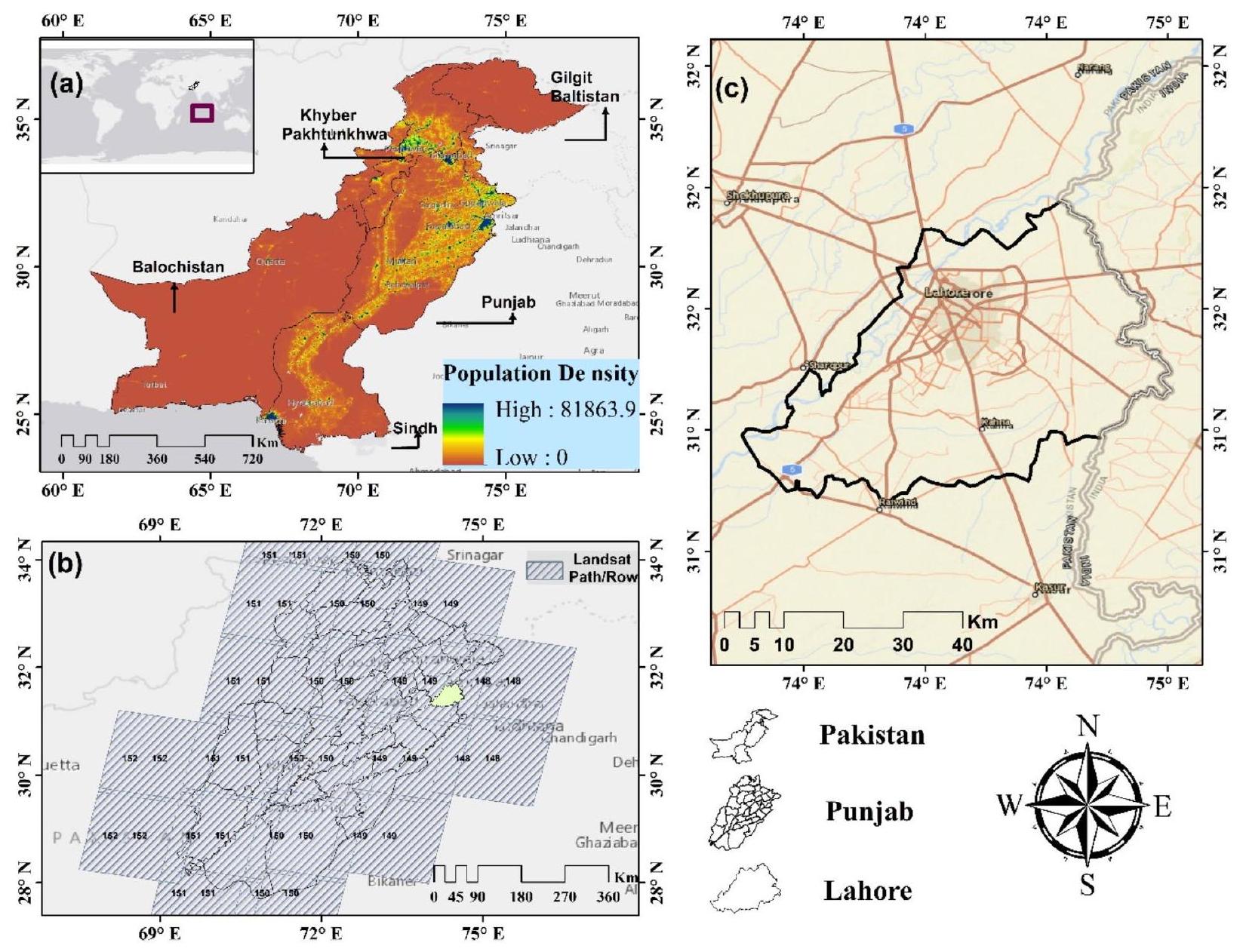
تركز الدراسة على لاهور، مدينة حضرية في محافظة البنجاب في باكستان. البنجاب هي ثاني أكبر محافظة في باكستان من حيث المساحة ( ) والسكان . يؤثر تغيير إنتاج المحاصيل بشكل كبير على المحافظة بسبب تغير المناخ، حيث يعتمد العديد من السكان الريفيين على الزراعة لكسب عيشهم . تقع لاهور بين خطوط العرض وخطوط الطول في شرق باكستان المركزي، وتجاور ولايات البنجاب وهيماتشال براديش الهندية . تغطي المنطقة إجمالي مساحة وتحدها من الجنوب منطقة كاسور ومن الشمال والغرب منطقة شيخوپورہ. مع عدد سكان يقارب 14 مليون، تعتبر لاهور ثاني أكثر المناطق كثافة سكانية في باكستان . بسبب بيئتها شبه الجافة، تشهد المنطقة شتاءً دافئًا وجافًا وصيفًا حارًا ورطبًا، يتراوح عادةً بين 36 و . تم اختيار مدينة لاهور كمنطقة للدراسة بسبب تحضرها السريع، وتوسع عدد سكانها الكبير، ودورها كمركز صناعي وثقافي رئيسي في باكستان. بسبب هذه المتغيرات، تعتبر لاهور موقعًا مهمًا لدراسة ديناميات استخدام الأراضي واستخدام الغابات. بالإضافة إلى ذلك، تبرز هشاشة البيئة في لاهور، التي تتميز بتقليل الغطاء النباتي وزيادة الأراضي القاحلة، ضرورة التخطيط الحضري المستدام لتقليل الآثار السلبية على العالم الطبيعي. تقدم الشكل 1 نظرة عامة بصرية على منطقة دراستنا وتغطية البيانات، (أ) تصور باكستان في السياق العالمي، مع التركيز على توزيع كثافة السكان، (ب) تكبير منطقة البنجاب، مع تسليط الضوء على منطقة دراستنا المحددة مع مسارات وأعمدة صور الأقمار الصناعية Landsat، (ج) يقدم صورة مقربة مفصلة للاهور، مع التركيز على رسم الخرائط على مستوى الشارع ضمن حدود دراستنا. معًا، توضح هذه الصور السياق الجغرافي، وتغطية بيانات الأقمار الصناعية، والنطاق المكاني لبحثنا حول تغييرات استخدام الأراضي واستخدام الغابات في لاهور.

الحصول على البيانات

تضمنت هذه الدراسة سلسلة من الخطوات لتحليل تغييرات استخدام الأراضي واستخدام الغابات بدقة. قمنا بالحصول على ومعالجة الصور من بيانات Landsat-5 وLandsat-8 وLandsat-9 باستخدام كتالوجات بيانات GEE. تم تقسيم التحليل إلى أربع فترات متميزة: 1994 و2004 و2014 و2024، للنظر في العملية المستمرة لتغيير استخدام الأراضي واستخدام الغابات. بعد ذلك، حصلنا على صور من Landsat-5 للسنوات 1994 و2004 ومن Landsat-8 و9 للسنوات 2014 و2024. استخدم تحليل استخدام الأراضي واستخدام الغابات في هذه الدراسة بيانات Landsat 5 و8 و9، جميعها بدقة مكانية تبلغ 30 مترًا لعكس الأطياف. على الرغم من جمعها من بعثات أقمار صناعية مختلفة، إلا أن هذه البيانات تحافظ على دقة مكانية متطابقة، مما يوفر اتساقًا في تصنيف استخدام الأراضي واستخدام الغابات عبر سنوات متعددة. تم تقديم المواصفات التفصيلية لهذه البيانات في الجدول 1.

المعالجة المسبقة لبيانات الاستشعار عن بعد

قمنا بمعالجة صور Landsat من 1994 إلى 2024 مباشرة ضمن منصة GEE لضمان جودة عالية للبيانات لتحليلنا. باستخدام مجموعات Landsat المعالجة مسبقًا من GEE، والتي تشمل تصحيحات هندسية موحدة، قمنا بالوصول إلى وتنظيم الأطياف لكل صورة في مجموعات بيانات متعددة زمنية مناسبة للتحليل. قدمت هذه العملية محاذاة متسقة للصور عبر الزمن، حيث تحافظ تصحيحات GEE المدمجة على الدقة المكانية. بالإضافة إلى ذلك، قمنا بإسقاط مجموعة البيانات إلى نظام الإحداثيات العالمي UTM لضمان اتساق التمثيل المكاني عبر منطقة الدراسة، مما يسهل تحليلًا متعدد الزمن بدقة أكبر. ضمنت هذه الخطوة أن جميع الصور كانت متوافقة بدقة وممثلة في نظام إحداثيات جغرافي قياسي. قمنا بتصفية الصور التي تحتوي على أقل من تغطية سحابية لجميع الأربعة الموزاييك لتقليل تداخل السحب. أخيرًا، قمنا بحساب القيم المتوسطة لكل موزاييك لدمج الصور، باستخدام تقنية متوسط البكسل. قدمت هذه المنهجية تمثيلًا أكثر وضوحًا للخصائص السنوية في جميع المناطق، مما يقلل من تأثير تداخل السحب والبيانات غير الكافية على تقييم التغييرات.

مؤشرات الاستشعار عن بعد (RSIs)

تجمع RSIs بين أطياف مختلفة من بيانات الاستشعار عن بعد في صورة واحدة، مما يعزز ميزات معينة من الاهتمام. معروفة بقدرتها على تحسين رؤية الميزات وتقليل الضوضاء ، اختارت هذه الدراسة أربعة مؤشرات RSIs راسخة من الأدبيات الحالية واستخدمت عدة مؤشرات مفصلة في الجدول 2. تم اختيار هذه المؤشرات بناءً على أنماط استخدام الأراضي المتنوعة في منطقة البحث لتحسين دقة طريقة التصنيف.

تصنيف الصور وتقييم الدقة

ركزت منطقة الدراسة على فئات استخدام الأراضي الرئيسية: المسطحات المائية، المناطق المبنية، الغطاء النباتي (بما في ذلك الأراضي الزراعية القديمة والجديدة المستعادة)، والأراضي القاحلة، كما هو موضح في الجدول 3. تم استخدام طريقة تصنيف تحت إشراف باستخدام غابة عشوائية ومصنف شجرة القرار (DTC)، مع دمج مؤشرات متنوعة لتحسين الدقة. يعد DTC نموذجًا هرميًا، يقوم بتقسيم المتغيرات المستقلة بشكل متكرر إلى مناطق متجانسة من خلال قواعد القرار، مصنفًا كل بكسل من خلال قرارات ثنائية. تُستخدم هذه الطريقة بشكل شائع في الأقمار الصناعية.
الشكل 1. تمثيل بصري لمنطقة الدراسة. (أ) خريطة العالم توضح باكستان مع توزيع كثافة السكان. (ب) نظرة عامة على محافظة البنجاب مع تسليط الضوء على منطقة الدراسة ومسار وأقراص ساتل لاندسات. (ج) عرض مقرب لمنطقة الدراسة في لاهور مع تفاصيل خريطة الشوارع.
قمر صناعي نوع المستشعر عدد الفرق الدقة المكانية الدقة الإشعاعية تاريخ الاستحواذ مصدر
لاندسات 5 علامة تجارية مسجلة ٧ 30 م 8 بت 1994 و 2004
لاندسات 8 أولي/تيرس 11 30 م 12 بت 2014 https://landsat.gsfc.nasa.gov/
لاندسات 9 أولي-2/تيرس-2 11 30 م 14 بت ٢٠٢٤
الجدول 1. تفاصيل عملية جمع البيانات. تضمنت المراحل اللاحقة من الدراسة نمذجة التعلم الآلي، والمعالجة اللاحقة، وإنشاء خرائط استخدام الأراضي وتغطية الأرض عالية الجودة، مما أدى في النهاية إلى تحديد ومراقبة التغيرات في استخدام الأراضي وتغطية الأرض على مدى الفترة المحددة. تم اختيار فترة زمنية مدتها 30 عامًا (1994-2024) نظرًا لتوفر بيانات لاندسات المستمرة وموثوقيتها في أبحاث استخدام الأراضي وتغطية الأرض على المدى الطويل. سيوفر التوسع خارج هذه الفترة مشكلات بسبب حدود المستشعرات وتناقضات البيانات. تلتقط الفترة الزمنية المختارة اتجاهات كبيرة في استخدام الأراضي وتغطية الأرض وتضمن دقة نموذجنا مع الحفاظ على نزاهة التنبؤات. جميع الخرائط (الأشكال 1، 6، 10، 11، 12 و 13) التي أنشأها المؤلف باستخدام ArcGIS الإصدار 10.8 (Esri Inc.، ريدلاندز، كاليفورنيا، الولايات المتحدة الأمريكية؛ https://www.esri.com/en-us/arcgis/about-arcgis/overview).
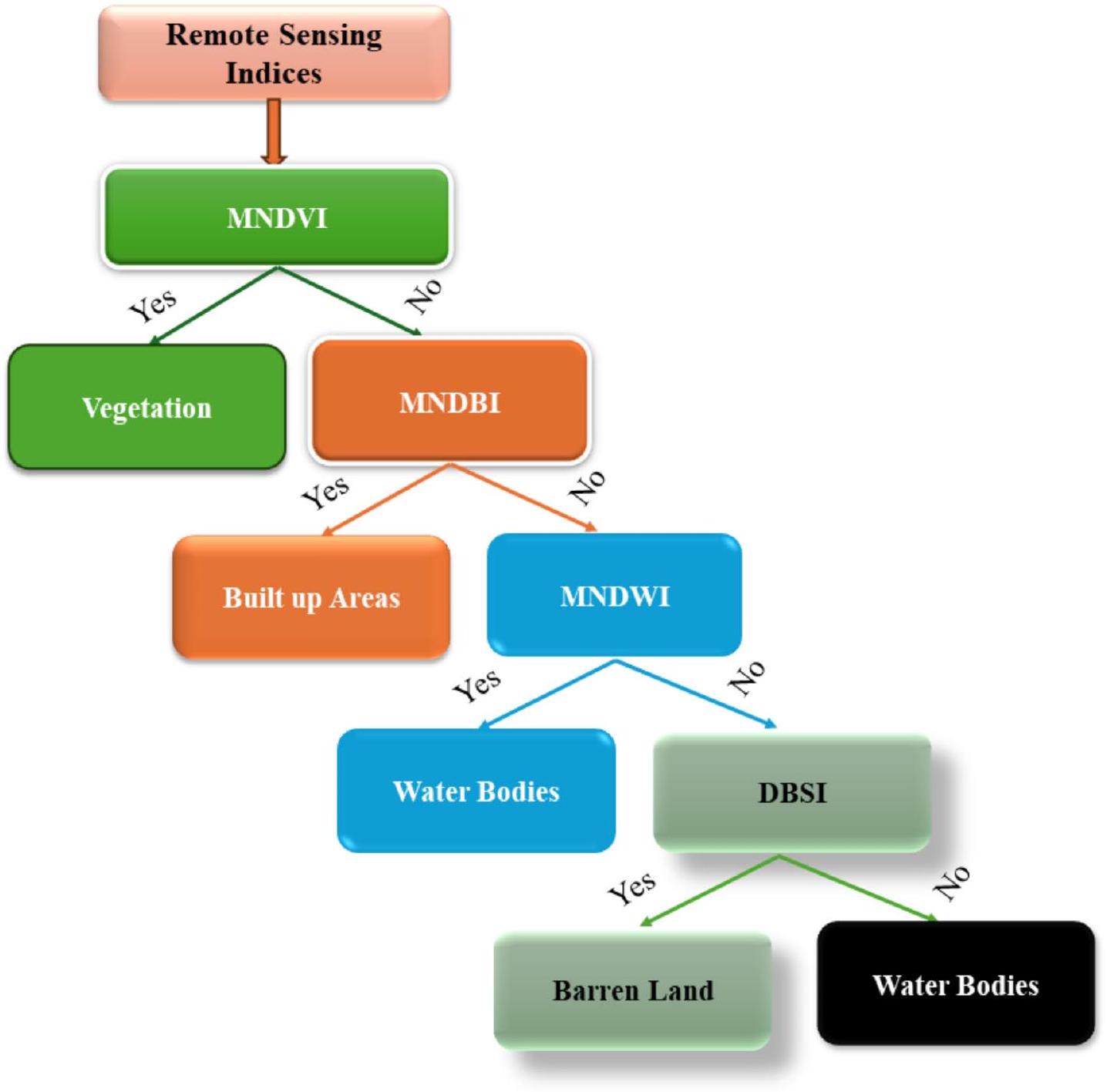
تستخدم الصور، قواعد التصنيف في ثلاث مراحل: جمع المعلومات، تحديد العوامل باستخدام الأساليب المعرفية، وتوليد المعايير من البيانات الملاحظة (الشكل 2).
تقييم دقة البيانات المكانية المستمدة من صور الاستشعار عن بُعد أمر ضروري لضمان دقة الصور المصنفة. في هذه الدراسة، تم تقييم دقة الصور من عام 1994 و2004 و2014 و2024 من خلال مصفوفة الخطأ. تم استخدام تقييم الدقة لتصنيف استخدام الأراضي والغطاء الأرضي لعام 1994 و2004 و2014 من خلال مزيج
مؤشرات صيغة مصدر
مؤشر الفرق النباتي المعدل (MNDVI) ٤٦
مؤشر البناء التفاضلي المعدل (MNDBI) ٤٧
مؤشر الفرق المائي المعدل (MNDWI) ٤٨
مؤشر التربة الجافة العارية (DBSI) ٤٩
الجدول 2. مؤشرات الاستشعار عن بعد المستخدمة في تصنيف استخدامات الأراضي وتغطية الأرض باستخدام منصة GEE.
فئات استخدام الأراضي وصف
تراكم سكني، تجاري وخدمات، صناعي، نقل، طرق، حضري مختلط، وأخرى حضرية
أرض قاحلة المساحات المفتوحة، الأراضي العارية والتربة، الرمال، الكثبان، ومواقع الحفر
نباتات الغابات المتساقطة الأوراق، الأراضي الحرجية المختلطة، النخيل، الصنوبريات، الشجيرات، حقول المحاصيل، الأراضي الزراعية، الغابات، الأشجار، وغيرها
المسطحات المائية تشمل أيضًا شبكات الأنهار، والقنوات، والميزات الهيدرولوجية النشطة، والمجاري، والأنهار، والمناطق المغمورة بالمياه.
الجدول 3. وصف فئات استخدام الأراضي وتغطية الأرض .
من بيانات الحقيقة الأرضية المستمدة من الخرائط التاريخية، وصور الأقمار الصناعية عالية الدقة، وسجلات من المسوحات الميدانية. نظرًا لندرة البيانات الميدانية المباشرة من عام 1994، استخدمنا نقاط مرجعية تم الحصول عليها من الصور عالية الدقة وحققناها مع البيانات السابقة. بالإضافة إلى ذلك، قدمت مسح شبه مفصل تم إجراؤه في عام 2024 معلومات دقيقة حول اتجاهات التربة، والتضاريس، والميزات البيئية. تم استخدام هذه البيانات كمرجع موثوق للمنطقة البحثية بأكملها. استخدمنا نسبة 70:30 لنقاط التدريب والتحقق. تم جمع ما مجموعه 500 نقطة تحكم أرضية خلال مسح شبه مفصل تم إجراؤه في عام 2024، والذي غطى فئات أراضٍ متنوعة (المناطق المبنية، والنباتات، والأراضي القاحلة، والمسطحات المائية) لتعزيز دقة تصنيف استخدام الأراضي. وبالتالي، تم تقييم دقة كل صورة موسومة من خلال حساب قيم معاملات المنتج، والمستخدم، والإجمالي، ومعامل كابا، وتوضح المعادلات 1-4 العملية لحسابها. علاوة على ذلك، تم الاستفادة من دمج نظم المعلومات الجغرافية مع بيانات الاستشعار عن بعد ونموذج ماركوف، مما يبرز الفوائد التآزرية لدمج هذه التقنيات. يتم قسمة العدد الإجمالي للبكسلات المحددة بشكل صحيح على عدد بكسلات المرجع للحصول على الدقة العامة.
يمثل دقة المنتج, يمثل ” k دقة المستخدم، و Ao تشير إلى الدقة العامة. يتم تمثيل معامل كابا بالرمز k.

ما بعد المعالجة

تشمل هذه المرحلة أنشطة أساسية مثل اكتشاف التغير، وتقييم الدقة، وتصفية الأغلبية لاستخدامات الأراضي واستخدامات الغابات. لتعزيز دقة التصنيف، يتم استخدام فلتر الأغلبية لإزالة البكسلات المعزولة، كما هو موضح بواسطة . يستخدم هذا الفلتر جيرة بكسل صغير لتحديد القيمة التي تحدث بشكل متكرر. يساعد تنفيذ هذا الفلتر قبل إجراء تقييمات الدقة في إزالة الضوضاء وتحسين الدقة.
تم تقييم الصور المصنفة النهائية باستخدام مقاييس مثل الدقة، والاسترجاع، والدقة، ودرجة F1 (F1s)، كما هو موضح بواسطة تستند هذه المقاييس إلى معدلات الإيجابيات الحقيقية (TP) والإيجابيات السلبية (TN) والإيجابيات الكاذبة (FP) والسلبيات الكاذبة (FN)، مما يوفر تقييمًا شاملاً لدقة المصنف. الدقة، التي تُعرف بأنها (المعادلة 5) النسبة المئوية للأمثلة المحددة بشكل صحيح (TP) إلى جميع الحالات التي حددها الخوارزم، هي مقياس مهم لوصف قياس الدقة النهائي.
الاسترجاع هو نسبة الحالات الإيجابية المعترف بها بدقة إلى العدد الإجمالي للحالات الإيجابية الفعلية (TP + FN)، كما هو موضح في المعادلة (6). تبرز هذه المقياس فعالية النموذج في الكشف عن الحالات الإيجابية بدقة.
الشكل 2. شجرة القرار لفئات استخدام الأراضي.
مقياس F1 (F1s)، الذي يجمع بين الدقة والاسترجاع، يقيس الأداء العام للنموذج، كما هو موضح في المعادلة (7).
بالإضافة إلى تقنيات تقييم الدقة هذه، يتم تطوير مصفوفة الارتباك لمقارنة تسميات الفئات الفعلية مع المتوقعة. في هذه المصفوفة، يتم تصنيف البكسلات في الصفوف والأعمدة الصحيحة بشكل غير صحيح، بينما يتم تصنيف البكسلات على طول القطر بشكل صحيح.
الخطوة النهائية في تحليل استخدامات الأراضي وتغطية الأرض هي كشف التغيرات. تتضمن هذه العملية مقارنة الصور من فترات زمنية مختلفة، عادةً من خلال طرح الصور، لتسليط الضوء على الفروقات بين الصور الأصلية والصور الناتجة. في هذه الدراسة، تم إجراء تحليل التغيرات لمراقبة التغيرات العامة في الأراضي، مع التركيز الأساسي على تقييم تأثير استخدامات الأراضي وتغطية الأرض.

تنبؤ بتغير استخدام الأراضي باستخدام نموذج CA-Markov الهجين (CA-MHM)

في هذه الدراسة، تم استخدام نموذج CA-MHM للتنبؤ باتجاهات استخدام الأراضي المستقبلية. من خلال الاستفادة من احتمالات الانتقال، يتنبأ هذا النموذج بالسيناريوهات المستقبلية لاستخدام الأراضي بناءً على الظروف الحالية. تعتبر طريقة CA-MHM أسلوبًا إحصائيًا بسيطًا يستخدم مصفوفة احتمالات الانتقال، مع دمج التأثيرات المجاورة من خلال خوارزمية واعية مكانيًا. . ومع ذلك، بينما تكون مصفوفة احتمالية الانتقال لكل فئة دقيقة، فإن التشتت المكاني لهذه الحوادث لا يزال غير مؤكد. تنشأ هذه القيود من عدم القدرة على توقع التوزيع المكاني لفئات استخدام الأراضي وتغطية الأرض بدقة. لمعالجة هذه المشكلة، يتضمن CA-MHM فلتر CA، مما يعزز دقة النموذج في اكتشاف التغيرات عبر فئات استخدام الأراضي المختلفة من خلال إضافة بُعد مكاني. قمنا بإجراء نمذجة CA-Markov-Chaining في بيئة IDRISI Selva، التي كانت بمثابة البيئة الرئيسية لتنفيذ هذه الطرق على بيانات الشبكة. سهلت IDRISI Selva المعالجة الفعالة للبيانات المكانية وسمحت لنا بتطبيق قواعد الانتقال CA لمحاكاة تغيرات استخدام الأراضي. لم تتضمن هذه الدراسة أساليب اتخاذ القرار متعددة المعايير، مثل AHP، لأنها كانت تركز بشكل أساسي على التغيرات الزمنية المكانية في استخدام الأراضي، والتي يعالجها النموذج بنجاح. يمكن أن تدمج الدراسات المستقبلية تقنيات اتخاذ القرار متعددة المعايير لتعزيز تخطيط استخدام الأراضي وعمليات اتخاذ القرار.
نموذج CA يفترض أن حالة خلية الشبكة تتأثر بكل من دينامياتها وديناميات الخلايا المجاورة لها. يقدم هذا النموذج تقييمًا تكيفيًا من خلال إنشاء مجموعة بيانات لاستخدامات الأراضي في وقت محدد، ومن ثم التنبؤ بفرص هذه التعديلات لفترة زمنية مستقبلية. . في المقابل، يتضمن اكتشاف التغير في استخدام الأراضي والتغطية الأرضية التنبؤ بتحول بكسلات الصورة من فئة استخدام الأراضي واحدة في وقت أولي (t1) إلى أخرى لاحقًا (t2). يتم التعبير عن النماذج المطبقة في المعادلة. .
Pij يمثل مصفوفة احتمالات الانتقال، التي تعكس احتمال الانتقال من نوع استخدام الأراضي المحدد (n) إلى آخر، مع قيم تتراوح من 0 إلى 1. St يدل على حالة استخدام الأراضي الحالية في الوقت t، بينما St +1 يمثل حالة استخدام الأراضي التالية في الوقت. .

تنبؤ استخدام الأراضي وتغطية الأرض لعامي 2034 و2044

عند دمجه مع CA، يتنبأ نموذج ماركوف بدقة بالتغيرات في استخدام الأراضي وتغطية الأرض (LULC) على مر الزمن والمكان. تتفوق هذه المنهجية الشاملة في تمثيل وتوقع أنواع LULC المعقدة بدقة. النموذج المعتمد على الخلايا ماركوف (CA-MHM) المستخدم في هذه الدراسة يستفيد من متغيرين: المتغير المنفصل في الزمن والمكان والمتغير المحلي، الذي يُخصص عادةً للتفاعلات. تشمل المكونات الأساسية لنموذج CA-Markov أحجام الشبكات، وجوار الخلايا، ومساحات الخلايا، ومراحل الزمن، وقواعد الانتقال. يمكن أن تكون الخلايا، المتجاورة أو القريبة في أي فضاء أبعاد، في حالة واحدة فقط في وقت واحد، مما يحدد خصائص النظام. تحدد قواعد الانتقال أن حالة الخلية تتغير بناءً على حالات جيرانها. يخصص النموذج عوامل وزن لتحديد الجيران، حيث تكون الخلايا الأقرب لها عامل وزن أعلى، مما يساعد في التنبؤ بحالات الخلايا المجاورة. تم حساب تغييرات استخدام الأراضي واستخدام الغطاء الأرضي باستخدام معادلة مناسبة. .
يمثل تغيير استخدام الأراضي. يشير إلى تغيير استخدام الأراضي خلال فترة سابقة، بينما تشير إلى تغيير استخدام الأراضي خلال فترة لاحقة. هي المنطقة التي لم يحدث فيها أي تغيير.
تم التنبؤ بأنماط استخدام الأراضي المستقبلية للتواريخ المستقبلية المدروسة ستعتمد على الأنماط التاريخية. استخدمت هذه الدراسة صور استخدام الأراضي من فترتين زمنيتين: استخدام الأراضي الأولي، t 1 ، واستخدام الأراضي اللاحق، t 2 ، وفقًا للمنهجية الموضحة من قبل هيندي ومارتز. . كل صورة تمر بعملية نموذجية فلتر قرب البكسل لتحديد الخلايا القريبة لكل فئة من فئات استخدام الأراضي. لتحقيق تأثير كبير، تم إحاطة كل خلية فردية بمصفوفة تتكون من ترتيب الخلايا استخدمت هذه الدراسة بكسلات مجاورة لإنتاج أوزان جغرافية مجاورة لتوقع فئات استخدام الأراضي وتغطية الأرض للسنوات 2034 و2044. توضح المعادلة 10 تطبيق فلتر القرب في تقييم تغيير استخدام الأراضي وتغطية الأرض.
تتضمن المنهجية لفحص ونمذجة وتوقع تغييرات استخدام الأراضي وتغطية الأرض (LULC) باستخدام CA-MHM أربع خطوات رئيسية:
  • تم استخدام CA-MHM لحساب مصفوفات احتمالات الانتقال للسنوات 1994 و2004 و2014 و2024.
  • تم استخدام هذه المصفوفات الانتقالية لاحقًا لإنتاج سلسلة من مجموعات البيانات الاحتمالية الشرطية لمختلف أنواع الأراضي التي تمتد من 1994 إلى 2024.
  • تم دمج مصفوفات الاحتمالات الانتقالية للفترات 1994-2004 و2004-2014 و2014-2024، جنبًا إلى جنب مع بيانات الاحتمالات الشرطية وخرائط تصنيف استخدام الأراضي والغطاء الأرضي لعامي 2014 و2024، باستخدام مشغلات CA-Markov الجغرافية.
  • تم استخدام هذا التكامل لمحاكاة خرائط استخدام الأراضي وتغطية الأرض لعامي 2034 و2044.

تحقق من نموذج ماركوف

وفقًا لإيستمان تعتمد دقة أي خوارزمية لتغيير التنبؤ بشكل كبير على إجراء التحقق. قبل توقع أنماط استخدام الأراضي واستخدام الغطاء الأرضي المستقبلية للسنوات 2034 و2044، كان من الضروري التحقق من مخرجات النموذج. حقق وحدة التحقق ذلك من خلال مقارنة الخرائط المتوقعة مع الخرائط المصنفة وتقييم درجة الاتفاق بينها. شمل إجراء التحقق مقارنة نتائج استخدام الأراضي واستخدام الغطاء الأرضي المتوقعة لعام 2024 مع مجموعة البيانات الملاحظة المقابلة لها. ثم تم حساب معاملات كابا لتقييم دقة النموذج. معامل كابا (المعادلة 11) هو مقياس إحصائي يميز بين الأخطاء في الكمية والأخطاء في الموقع في خريطتين نوعيتين، مما يوفر تقييمًا شاملاً لأداء النموذج. .
كاررا
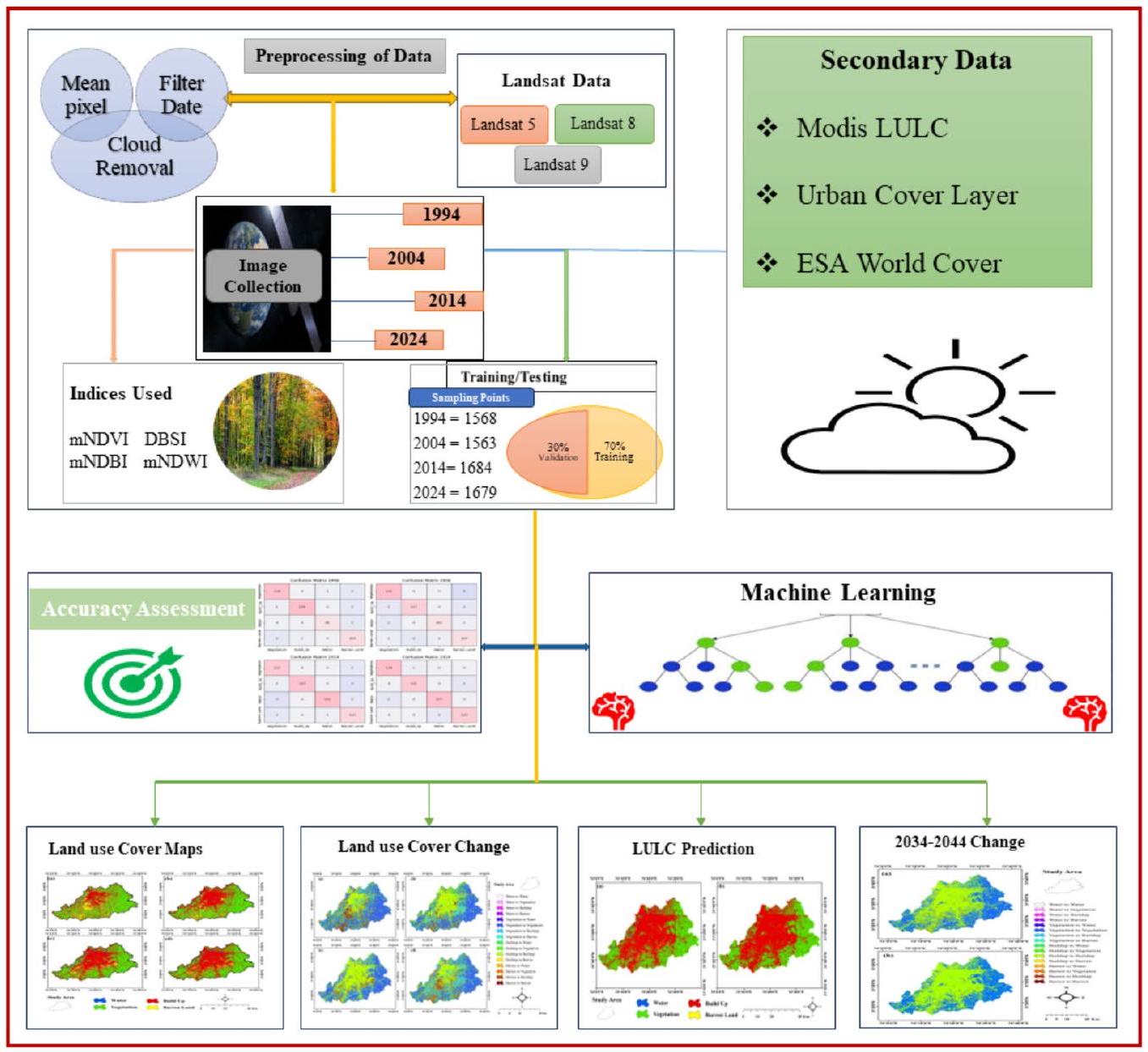
يمثل النسبة المئوية للخلايا التي تم تصنيفها بشكل صحيح. تشير إلى الاحتمالية الافتراضية للتوافق العشوائي بين خريطة استخدام الأراضي الفعلية لعام 2024 والخرائط المتوقعة لاستخدام الأراضي لنفس العام. تم تقسيم قيم كابا وفقًا لـ كما هو موضح في الجدول 4. بالإضافة إلى ذلك، توضح الشكل 3 المنهجية المستخدمة لتقييم وتوقع استخدام الأراضي واستخدام الغطاء الأرضي باستخدام نموذج CA-Markov الهجين.

النتائج

تقييم دقة فئات استخدام الأراضي

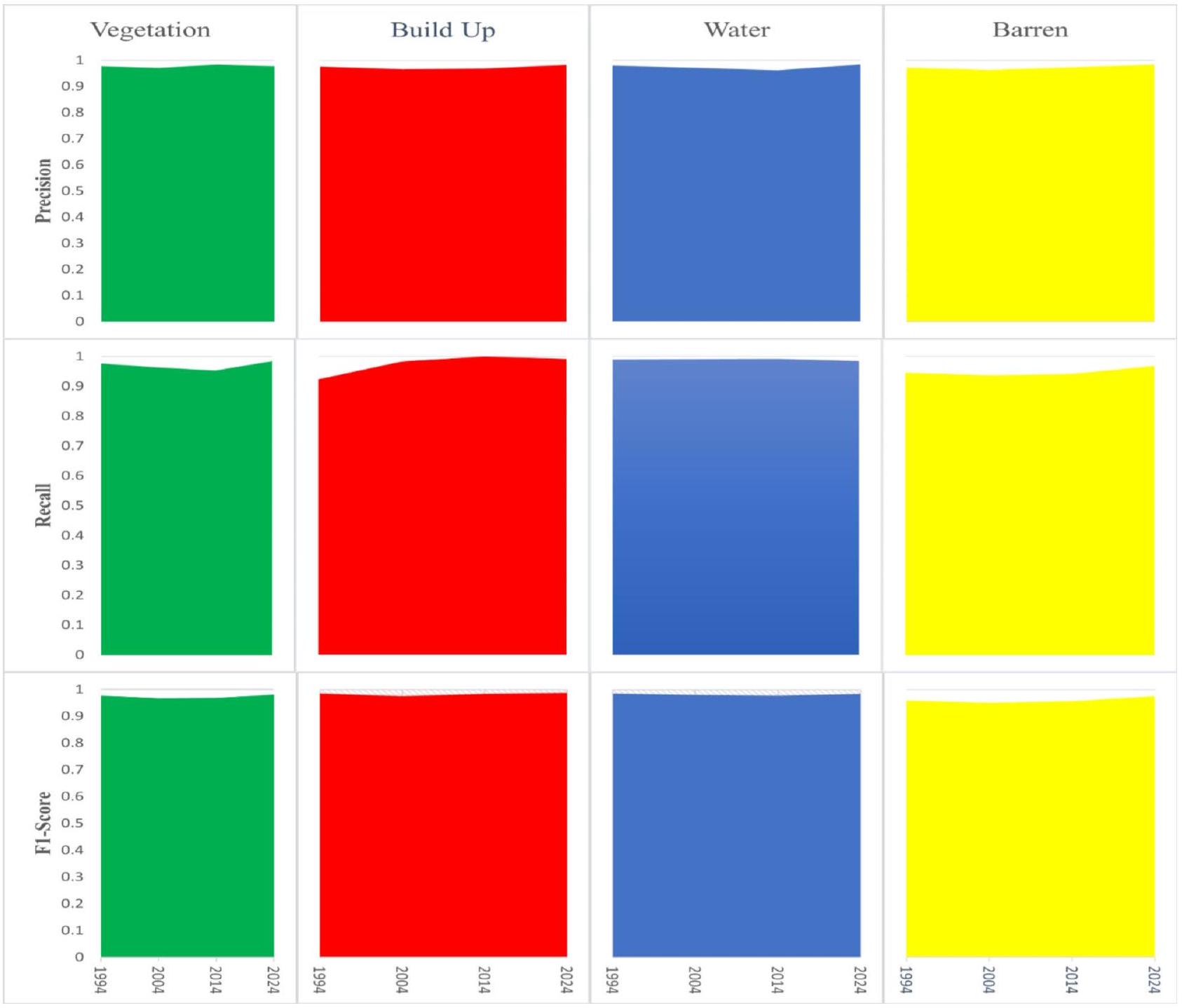
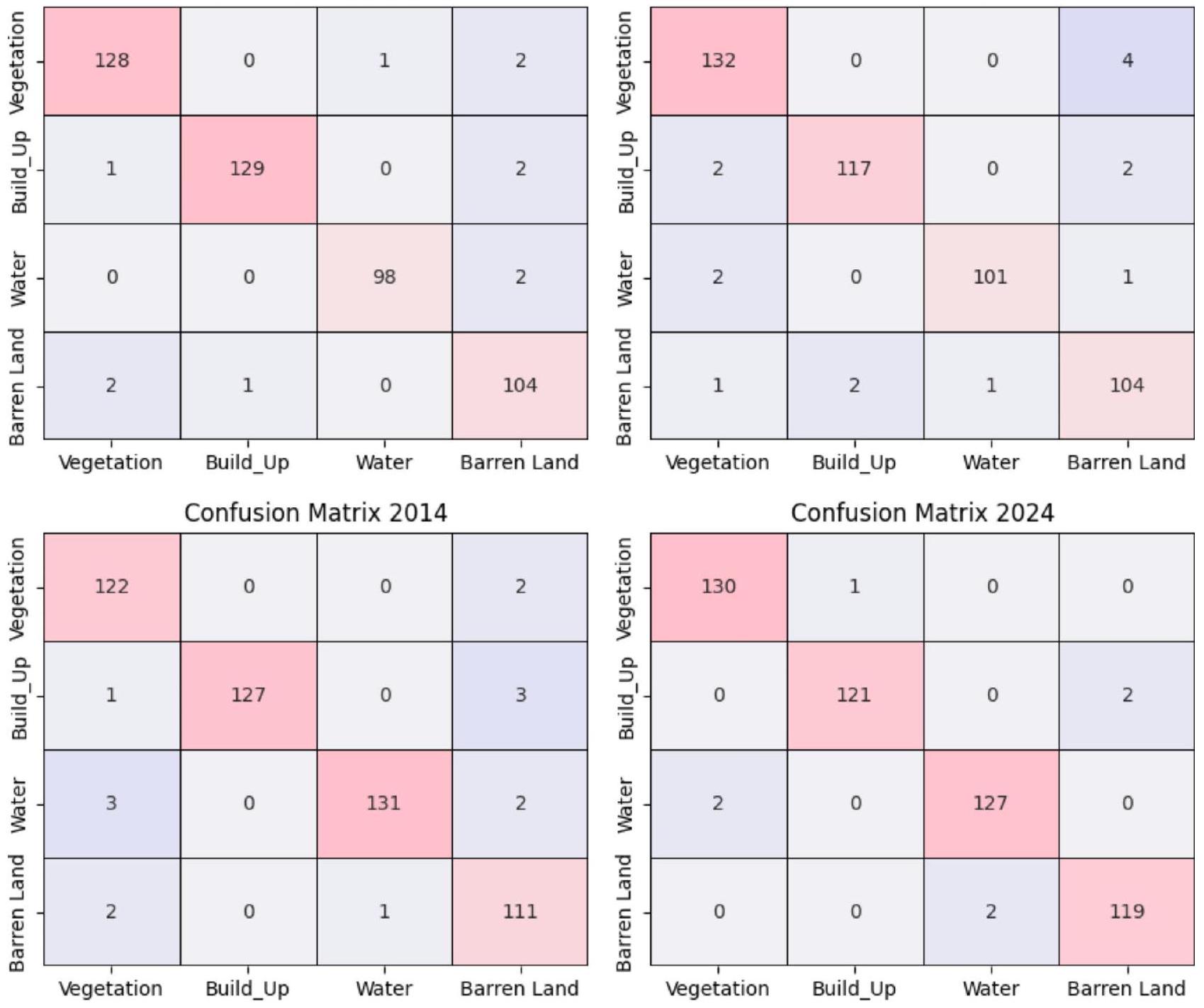
تظهر النتائج أن تقييم الدقة وقيم كابا لفئات استخدام الأراضي المختلفة في منطقة لاهور كانت مقبولة للسنوات 1994 و2004 و2014 و2024 (الأشكال 4 و5). حققت هذه الدراسة دقة تصنيف تلبي المعيار المطلوب وهو على الأقل دقة بيانات المستشعر. توضح الأشكال 4 و 5 نتائج تقييم دقتنا. تشير درجات F-1 العالية، التي تتجاوز 0.90 لمعظم الفئات، إلى قوة تصنيفنا، مع استثناء طفيف للأراضي القاحلة، التي حصلت على درجة 0.88. يتم ملاحظة الاتساق في الأداء عبر الفئات المختلفة، حيث تظهر المناطق المبنية، والمسطحات المائية، والنباتات أعلى دقة. على العكس، أظهرت الأراضي القاحلة دقة أقل، مع متوسط درجة استرجاع قدرها 0.89. من المهم أن جميع فئات استخدام الأراضي تجاوزت عتبة 0.90 في الدقة، مما يثبت قوة نتائجنا. توضح مصفوفات الالتباس الاتفاق العالي بين البيانات الفعلية والفئات المتوقعة، مع درجات دقة إجمالية من ، و لـ ، و 2024 ، على التوالي. لقد تأثرت دقة البيانات العالية بشكل كبير بجودة بيانات لاندسات الأفضل الصور. التقييم الشامل للدقة لا يبرز فقط قوة وموثوقية تصنيف استخدامات الأراضي والغطاء الأرضي لدينا، بل يسهل أيضًا اتخاذ قرارات مستنيرة ودراسات موثوقة باستخدام معلومات الخرائط.

تصنيف استخدامات الأراضي ونوع الغطاء الأرضي

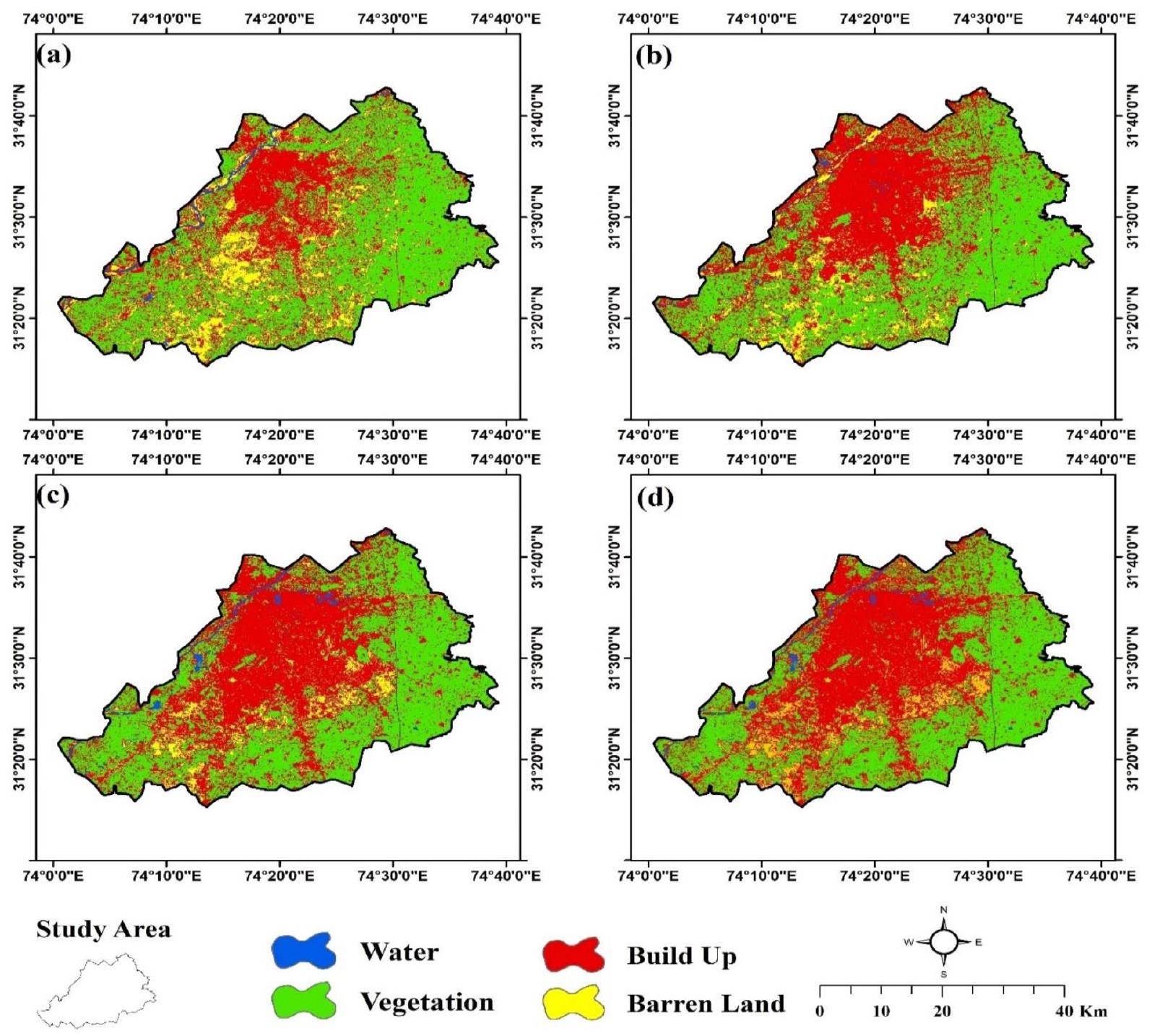
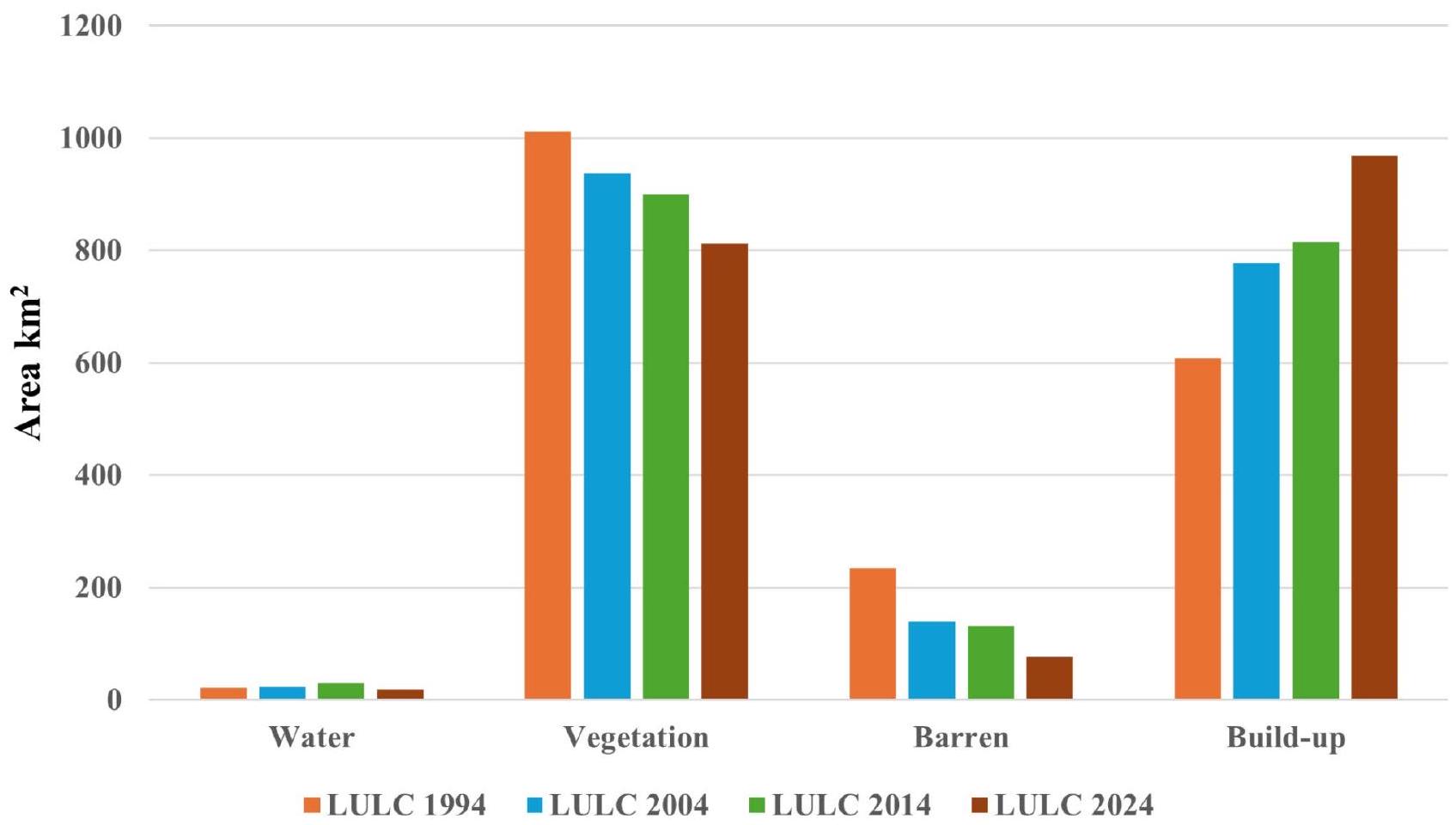
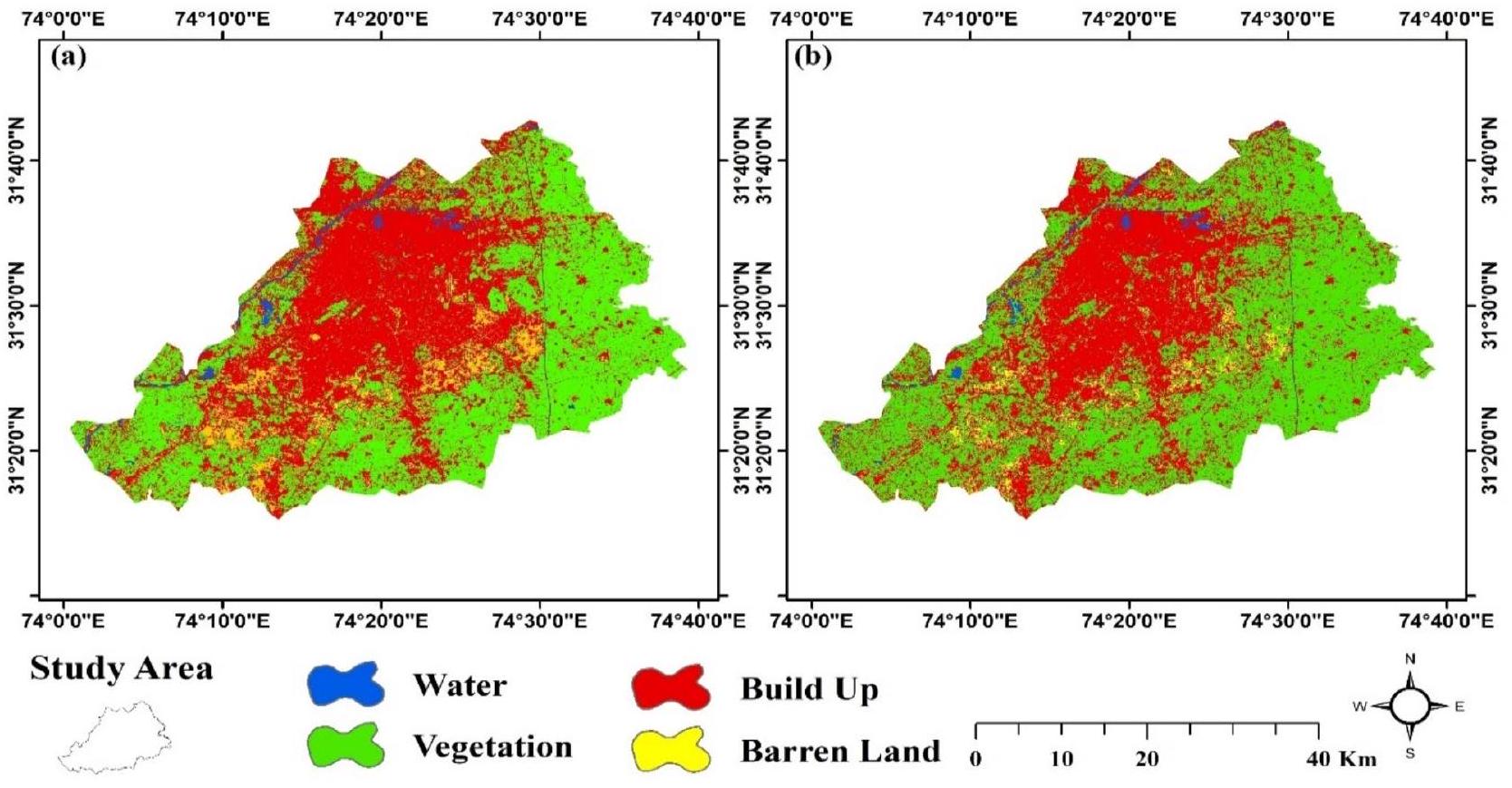
أظهرت نتائج طريقة الاحتمال الأقصى المطبقة على صور الأقمار الصناعية من خلال التصنيف المراقب تحديد أربع فئات لاستخدام الأراضي وتغطية الأرض في منطقة الدراسة: المناطق المبنية، والنباتات، والأراضي القاحلة، والمسطحات المائية. تقدم الشكل 7 البيانات الكمية للفئات الأربع لاستخدام الأراضي وتغطية الأرض عبر فترات زمنية مختلفة. بالإضافة إلى ذلك، يعرض الشكل 6 ترتيب فئات استخدام الأراضي وتغطية الأرض باستخدام الخرائط المصنفة التي تم إنشاؤها من صور الأقمار الصناعية لمنطقة لاهور للسنوات 1994 و2004 و2014 و2024. تظهر الفئات المختلفة لاستخدام الأراضي وتغطية الأرض في هذه الخرائط بألوان يسهل التعرف عليها.
تحليل تغييرات استخدام الأراضي وتغطية الأرض (LULC) خلال الفترة من 1994 إلى 2024 في منطقة لاهور يكشف عن تحولات كبيرة في فئات مختلفة، كما هو موضح في الجدول 5. أظهرت مساحة المسطحات المائية تقلبات، بدءًا من ( ) في عام 1994، زادت قليلاً إلى في عام 2004، وصل إلى ذروته في عام 2014، قبل أن ينخفض إلى في عام 2024. كان هناك تراجع مستمر في تغطية النباتات من في عام 1994 والوصول إلى في عام 2024. كما انخفضت الأراضي القاحلة خلال فترة الدراسة، بدءًا من في عام 1994 و进一步 إلى في عام 2024. بالمقابل، شهدت المناطق المبنية زيادة كبيرة من في عام 1994 إلى في عام 2004، ارتفع إلى في عام 2014، والوصول إلى في عام 2024. تسلط هذه الاتجاهات الضوء على التحضر المستمر وتقليص كل من الغطاء النباتي والأراضي القاحلة في منطقة لاهور على مدى السنوات الثلاث الماضية.
قيمة معامل كابا مستوى الاتفاق
اتفاق ضعيف
اتفاق عادل
اتفاق معتدل
اتفاق كبير
مثالي
الجدول 4. قيم معامل كابا ومستويات الاتفاق .
الشكل 3. الإطار المنهجي.
عقود. تشير التحولات في فئات استخدام الأراضي إلى تغييرات بيئية وتنموية كبيرة، مع كون التوسع الحضري هو الأكثر وضوحًا.

تغيرات استخدام الأراضي

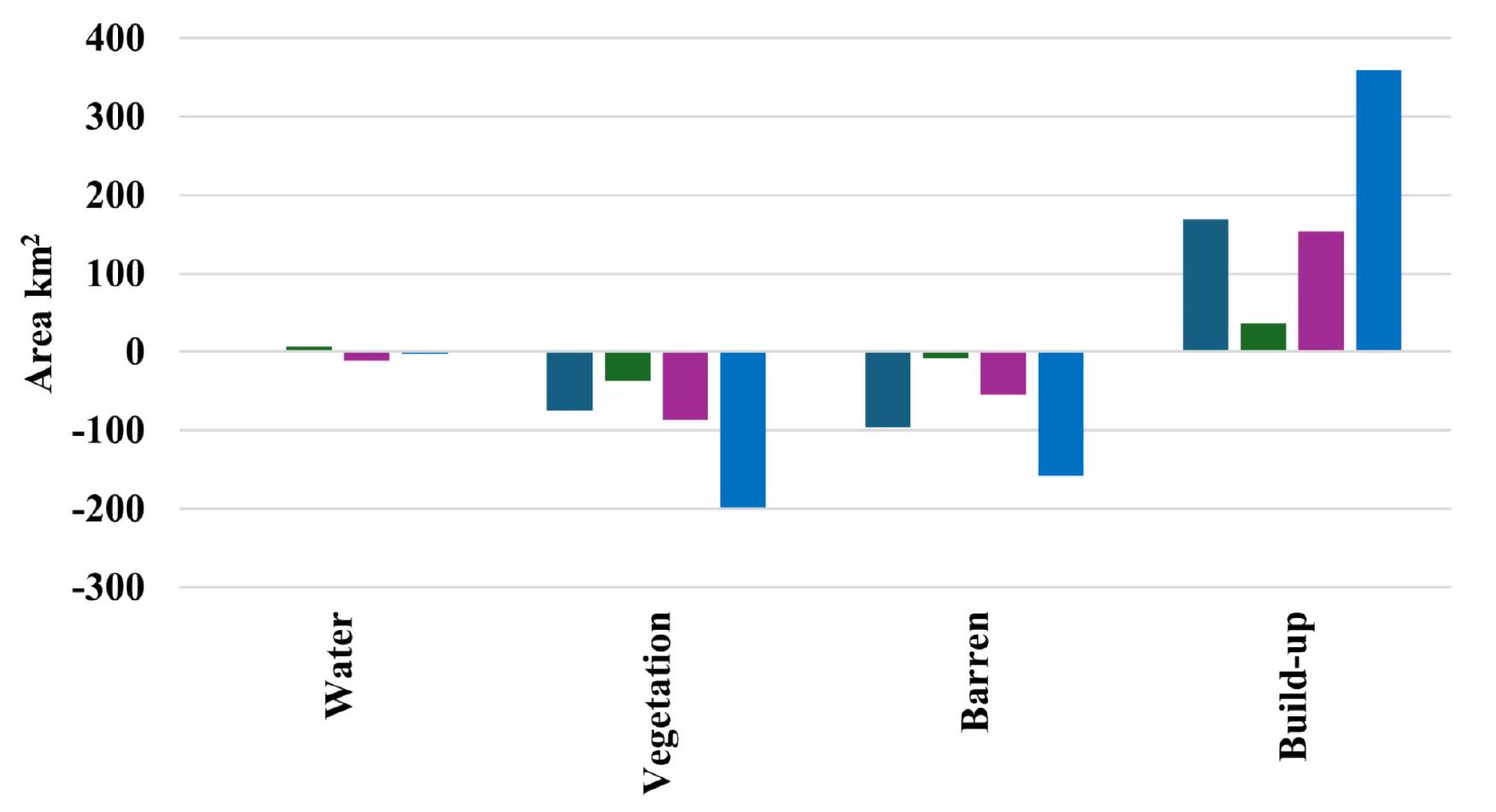
للحصول على فهم للتغيرات المتقلبة في أنواع استخدام الأراضي في منطقة لاهور، تم حساب التغيرات السنوية في هذه الأنواع لثلاث سنوات مختلفة تحت البحث (1994-2004، 2004-2014، و2014-2024)، وتغير إجمالي من 1994 إلى 2024، كما هو موضح في الشكل 8. وفقًا للبيانات في الجدول 6، بين 1994 و2004، زادت مساحة المسطحات المائية بمقدار ، تليها زيادة أكبر بمقدار من 2004 إلى 2014. ومع ذلك، كان هناك انخفاض كبير بمقدار في الفترة من 2014 إلى 2024، مما أدى إلى انخفاض إجمالي قدره على مدار الثلاثين عامًا. انخفضت تغطية النباتات سنويًا بمقدار ، و للفترات الثلاث، على التوالي، مع حدوث أكبر انخفاض بين 2014 و2024. بشكل عام، كان هناك فقدان كبير قدره من تغطية النباتات من 1994 إلى 2024. كما شهدت فئة الأراضي القاحلة انخفاضًا ملحوظًا على مر السنين. كان هناك انخفاض كبير قدره بين 1994 و2004، تلاه انخفاض أصغر قدره من 2004 إلى 2014. شهدت الفترة من 2014 إلى 2024 مزيدًا من الانخفاض قدره . في المجموع، انخفضت الأراضي القاحلة بمقدار على مدار العقود الثلاثة. توسعت المناطق المبنية بشكل كبير، مع زيادات سنوية قدرها من 1994 إلى 2004، و من 2004 إلى 2014، و من 2014 إلى 2024. على مدار فترة الدراسة بأكملها، توسعت المنطقة المبنية بمقدار ملحوظ قدره .
علاوة على ذلك، يظهر الشكل 8 التغير الزمني في تغيرات فئات استخدام الأراضي في منطقة لاهور في طوال فترة الدراسة. تظهر النتائج أن المنطقة المبنية زادت مع مرور الوقت ولكنها أظهرت أيضًا انخفاضًا ملحوظًا في الأراضي القاحلة. كما أن الزيادة في البناء تشير إلى زيادة النمو السكاني في لاهور وزيادة المباني والتنمية والأشياء المنزلية المتزايدة، وكلها من المحركات الرئيسية لتغيرات استخدام الأراضي. تسلط هذه الاتجاهات الضوء على التحضر السريع في المنطقة والتغيرات البيئية الكبيرة على مدى العقود الثلاثة الماضية.
الشكل 4. يتم استخدام مقاييس التقييم مثل درجة F1، والدقة، والاسترجاع لقياس صحة كل فئة من فئات استخدام الأراضي للأعوام المقابلة.

ديناميات استخدام الأراضي

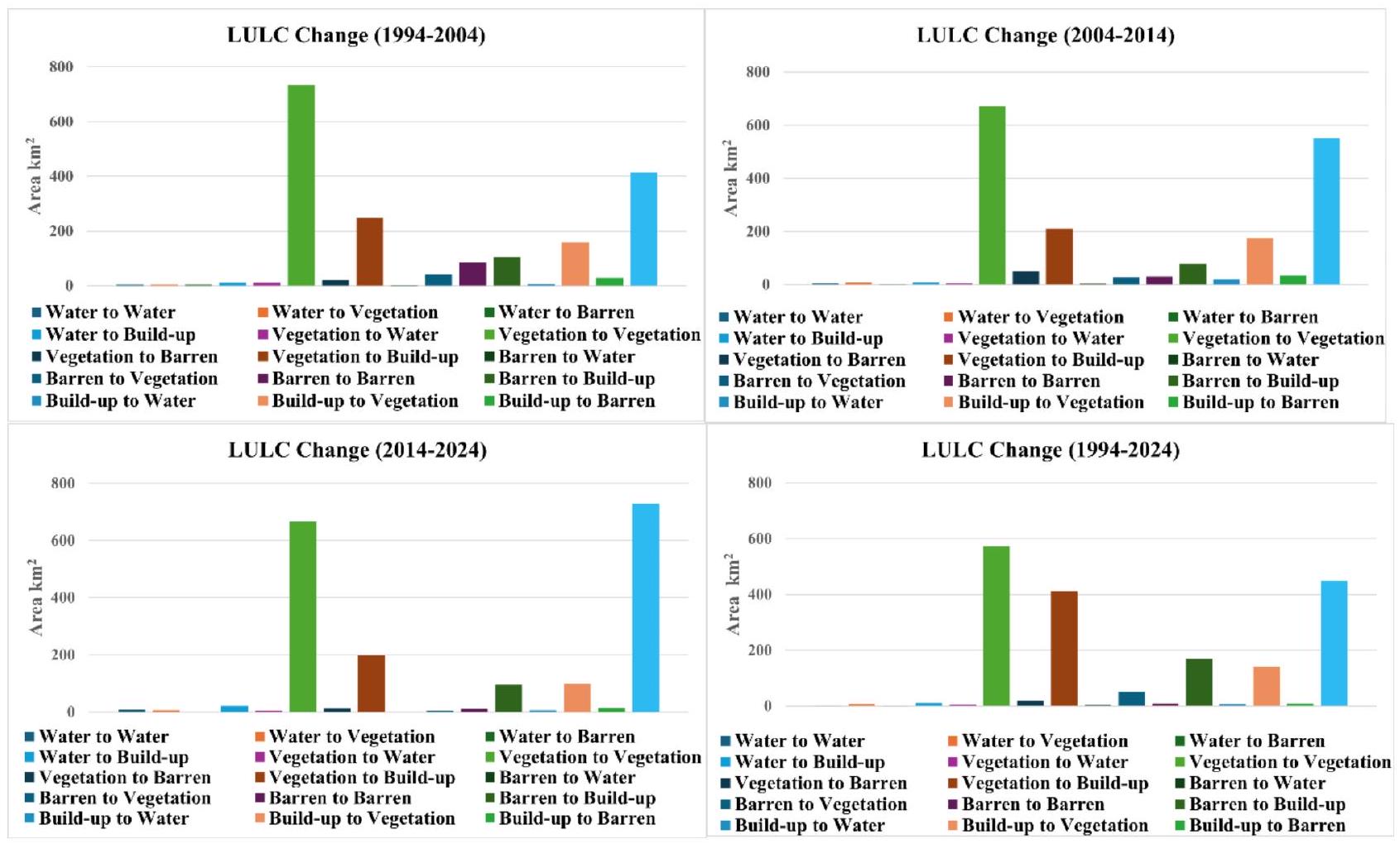
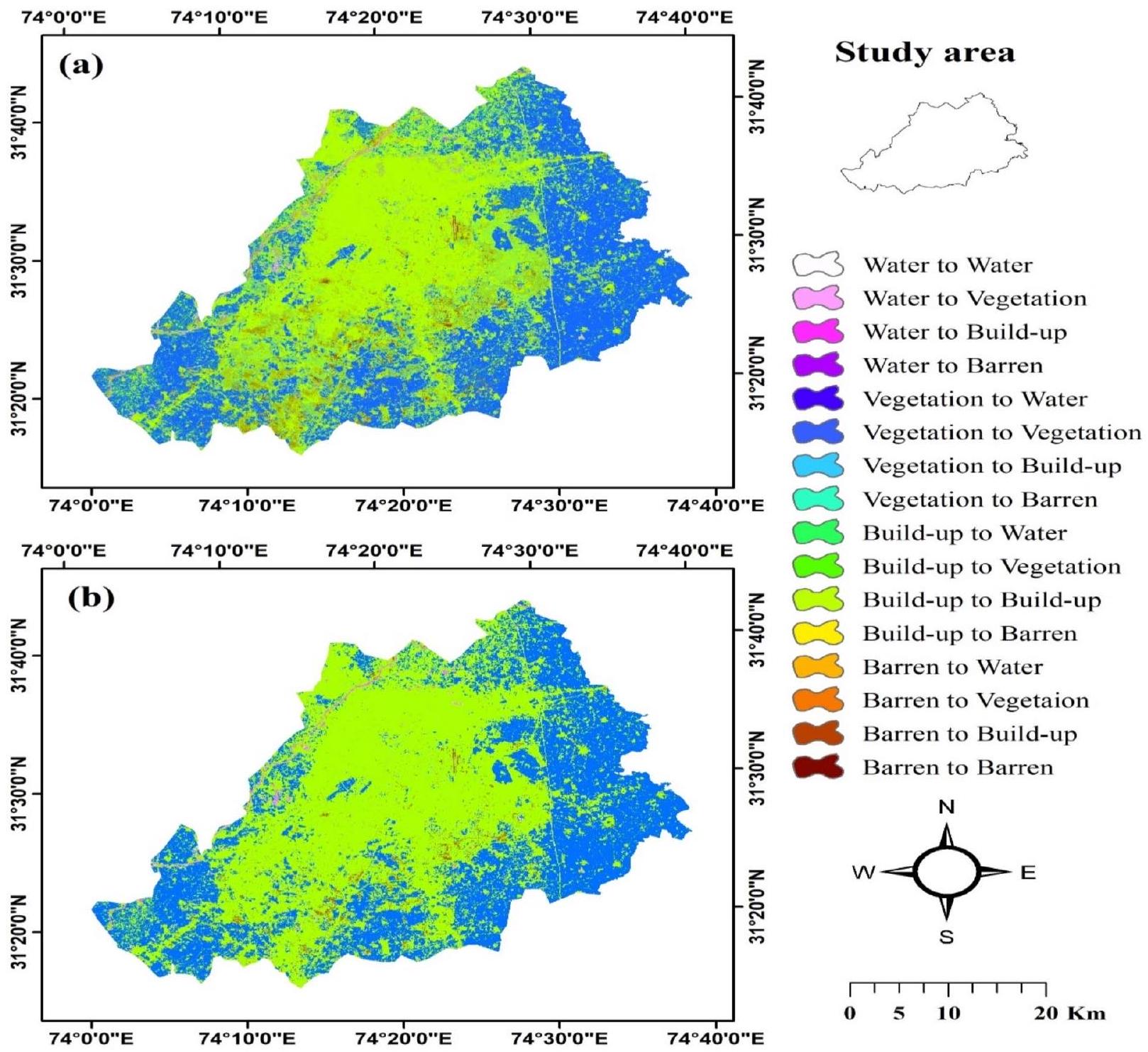
يقدم الشكل 9 التغيرات في فئات استخدام الأراضي في منطقة لاهور عبر ثلاث فترات زمنية: 1994-2004، 2004-2014، و2014-2024. تسلط البيانات الضوء على اتجاهات كبيرة في انتقال أنواع استخدام الأراضي خلال هذه الفترات. علاوة على ذلك، يوضح الشكل 10 التغيرات المكانية لفئات استخدام الأراضي عبر منطقة الدراسة. تظهر تحليل تغيرات استخدام الأراضي من 1994 إلى 2004 أن أكبر تغيير حدث في فئة النباتات إلى النباتات، حيث تغطي حوالي . تلا ذلك انتقال من المباني إلى المباني بمقدار ، مما يشير إلى استقرار حضري كبير. كما أن التوسع الحضري واضح، مع يتغير من النباتات إلى المباني. شملت التغيرات الملحوظة الأخرى من الأراضي القاحلة إلى المباني و من المباني إلى النباتات. من 2004 إلى 2014، ظلت التغيرات من النباتات إلى النباتات هي الأكبر، بمساحة قدرها . زادت المباني إلى المباني إلى ، مما يظهر التنمية الحضرية المستدامة. شهدت الانتقالات من النباتات إلى المباني ومن المباني إلى النباتات أيضًا مناطق كبيرة من التغيير، و ، على التوالي. لوحظت تغييرات أصغر في فئات مثل الأراضي القاحلة إلى المباني، تغطي ، والمباني إلى المياه، مع .
بين 2014 و2024، ظلت فئة النباتات إلى النباتات أكبر تغيير، تغطي . أظهرت فئة المباني إلى المباني زيادة كبيرة إلى . بلغت التغيرات من النباتات إلى المباني ، بينما سجلت المباني إلى النباتات . شملت التغيرات الملحوظة الأخرى من الأراضي القاحلة إلى المباني و من المياه إلى المباني. بشكل عام، من 1994 إلى 2024، حدث أكبر تغيير في استخدام الأراضي في فئة النباتات إلى النباتات، حيث تراكمت . تلتها فئة المباني إلى المباني بمقدار ، مما يظهر التنمية الحضرية المستمرة. غطت الانتقال من النباتات إلى المباني ، مما يشير إلى تحويل كبير للمناطق النباتية إلى مناطق حضرية. شملت التغيرات المهمة الأخرى من الأراضي القاحلة إلى النباتات و من المباني إلى النباتات.
مصفوفة الالتباس 1994
الشكل 5. تصف مصفوفات الالتباس للسنوات 1994، 2004، 2014، و2024 التقييم التفصيلي لدقة التصنيف لكل فئة من فئات استخدام الأراضي.
تشير البيانات إلى نمط ثابت من التوسع الحضري في لاهور، بشكل أساسي على حساب النباتات والأراضي القاحلة. ظلت التغيرات من النباتات إلى النباتات هي الأعلى في جميع الفترات، مما يعكس المناطق التي يتم فيها الحفاظ على تغطية نباتية. تسلط هذه الانتقالات الضوء على الطبيعة الديناميكية لتغيرات استخدام الأراضي مع مرور الوقت، مع نمو حضري ملحوظ وتحويل المناظر الطبيعية الأصلية إلى مدن حضرية.

تحليل نموذج سلسلة ماركوف

توضح الجداول 6 و7 و8 مصفوفات احتمالات الانتقال المستمدة من فئات استخدام الأراضي في منطقة لاهور للفترات 1994-2004، 2004-2014، و2014-2024، على التوالي. تظهر الجداول احتمال تغيير كل فئة من فئات استخدام الأراضي إلى أخرى خلال الفترات المحددة.
من 1994 إلى 2004 (الجدول 7)، كانت للمسطحات المائية فرصة قدرها للبقاء مياه، مع أعلى احتمال للتحول إلى مناطق مبنية. كانت للنباتات معدل استمرارية مرتفع قدره ، بينما كانت للأراضي القاحلة فرصة قدرها للبقاء كما هي و فرصة للتحول إلى مناطق مبنية. كانت للمناطق المبنية فرصة قدرها للبقاء دون تغيير.
من 2004 إلى 2014 (الجدول 8)، أظهرت المسطحات المائية استمرارية أعلى قدرها ، مع احتمال للتحول إلى مناطق مبنية. كانت للنباتات استمرارية قدرها ، وكانت للأراضي القاحلة استمرارية منخفضة قدرها ، مع احتمال أعلى ( ) للتحول إلى مناطق مبنية. ظلت المناطق المبنية مستقرة نسبيًا مع فرصة قدرها للاستمرارية.
في الفترة من 2014 إلى 2024 (الجدول 9)، كانت للمسطحات المائية معدل استمرارية مرتفع قليلاً قدره وفرصة قدرها للتحول إلى مناطق مبنية. حافظت النباتات على معدل استمرارية مرتفع قدره ، بينما كانت للأراضي القاحلة استمرارية منخفضة قدرها ، مع احتمال كبير ( ) للتحول إلى مناطق مبنية. كانت للمناطق المبنية أعلى معدل استمرارية قدره 86.01%.
الشكل 6. خرائط تصنيف استخدام الأراضي (أ) 1994 (ب) 2004 (ج) 2014 و(د) 2024.
تظهر البيانات في هذه الجداول التحولات في استخدام الأراضي مع مرور الوقت، مما يبرز زيادة التحضر والتغيرات في استخدام الأراضي في منطقة لاهور. على سبيل المثال، كانت احتمالية بقاء المناطق المبنية كمناطق مبنية من 1994 إلى 2004، وكانت الأراضي المزروعة لديها احتمال قدره للتحول إلى مناطق حضرية. كانت للأراضي القاحلة والمسطحات المائية احتمالات استمرارية أكبر قدرها و ، على التوالي، في عام 2004.

تحقق من نموذج ماركوف

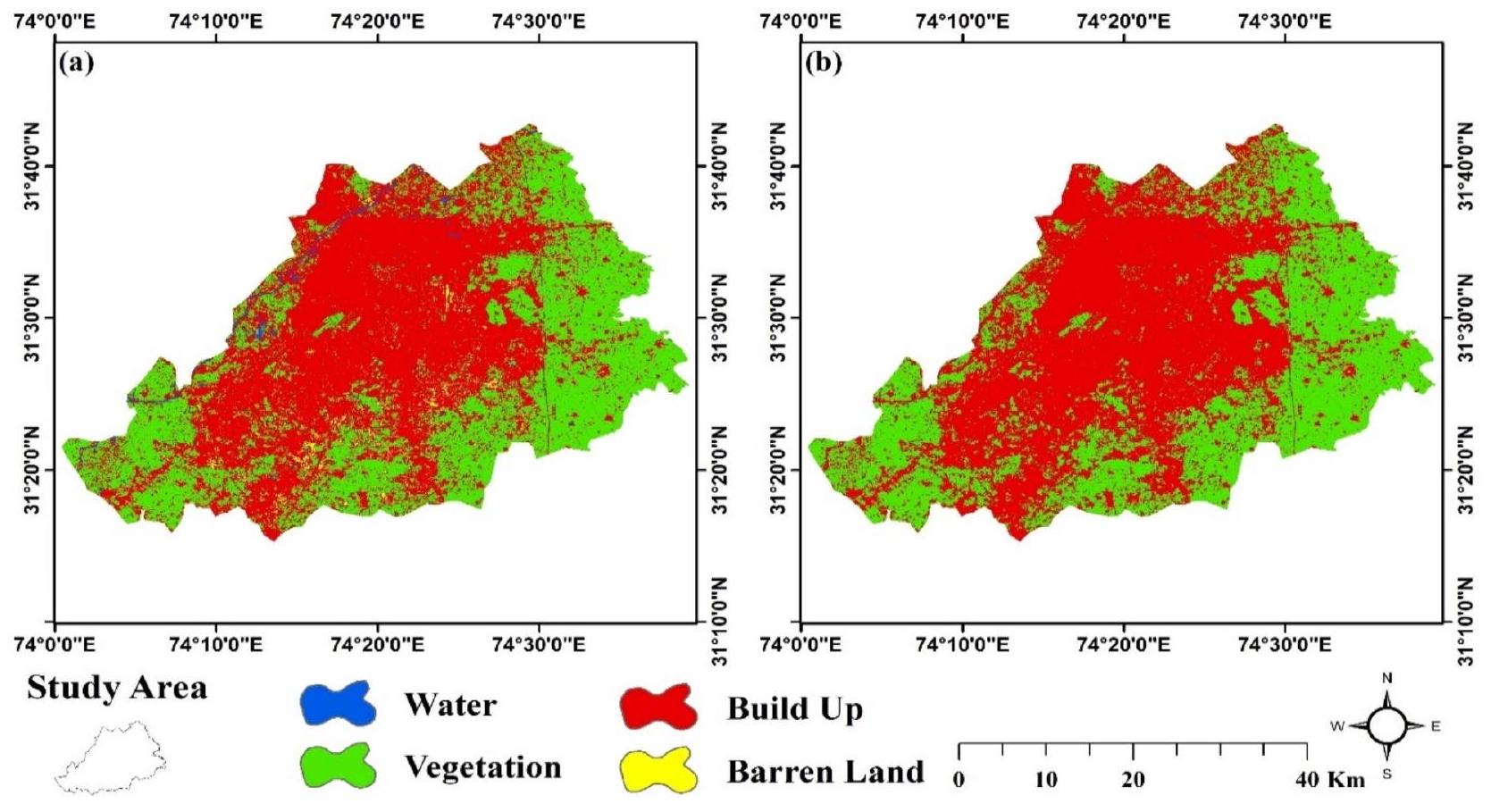
تكشف خرائط التوزيع المكاني لاستخدام الأراضي في 2024، سواء الفعلية أو المتوقعة، عن عدة رؤى رئيسية (الشكل 11). تشير الخريطة الفعلية لعام 2024 إلى أن المناطق المبنية تهيمن، حيث تمثل أكبر نسبة من تغطية الأراضي، تليها النباتات عن كثب. تشكل المسطحات المائية والأراضي القاحلة جزءًا أصغر من المساحة الإجمالية. تتماشى الخريطة المتوقعة لعام 2024، التي تم إنشاؤها باستخدام CA-MHM، بشكل وثيق مع التوزيع الفعلي، على الرغم من ملاحظة بعض التباينات. يتوقع النموذج نسبة أعلى قليلاً من النباتات، ونسبة أقل قليلاً من المناطق المبنية مقارنة بالبيانات الفعلية. من المتوقع أن تغطي الأراضي القاحلة مساحة أقل مما تم ملاحظته، بينما تظل مساحة المسطحات المائية متسقة بين الخرائط الفعلية والمتوقعة. تؤكد هذه النتائج على كفاءة CA-MHM في التقاط الاتجاهات العامة لاستخدام الأراضي، على الرغم من أن التباينات الطفيفة تسلط الضوء على مجالات لمزيد من التحسين في النمذجة التنبؤية.
تم التحقق من CA-MHM في هذا البحث من خلال مقارنة خريطة استخدام الأراضي الفعلية لعام 2024 مع خريطة استخدام الأراضي المتوقعة لذلك العام. تم تقييم الدقة العامة للنموذج باستخدام مقاييس أساسية مختلفة. حقق نموذج ماركوف CA تصنيفًا عامًا بدقة قدرها ، مما يدل على قدرته على التنبؤ بدقة بتوزيع الأنواع المختلفة من تغطية الأرض في لاهور حتى عام 2024. هذه النسبة المرتفعة تؤكد أن النموذج يعكس بدقة التغيرات الحقيقية في استخدام الأراضي، مما يشير إلى موثوقيته في التنبؤ بالمستقبل.
الشكل 7. مساحة فئات استخدام الأراضي من 1994-2024.
فئات استخدام الأراضي 1994 2004 2014 2024
منطقة % منطقة % منطقة % منطقة %
المسطحات المائية 21.76 1.16 ٢٣.١٨ 1.23 30.24 1.61 19.19 1.02
نباتات ١٠١١.٠٦ 53.9 936.37 ٤٩.٩ 899.73 ٤٧.٩ ٨١٢.٢٩ ٤٣.٣
أرض قاحلة 235.07 12.5 ١٣٨.٨٩ 7.4 ١٣١.٤٥ ٧.٠٠ ٧٦.٥٨ ٤.٠٨
تراكم 608.65 ٣٢.٤٣ 778.11 ٤١.٤ 815.12 ٤٣.٤ 968.49 ٥١.٦
إجمالي ١٨٧٦.٥٦ 100 ١٨٧٦.٥٦ 100 ١٨٧٦.٥٦ 100 ١٨٧٦.٥٦ 100
الجدول 5. مساحة فئات استخدامات الأراضي المختلفة ) للفترة التاريخية 1994-2024 والنسبة في المساحة بين السنوات المختلفة.
تم حساب معامل كابا لتقييم التوافق بين خرائط استخدام الأراضي المتوقعة والفعلية، مما يعزز من صحة النموذج. كان معامل كابا 0.92، مما يدل على توافق شبه كامل بين مجموعتي البيانات. وفقًا لمعايير كابا، تشير النتيجة التي تتجاوز 0.81 إلى اتفاق شبه مثالي، مما يدعم قوة التنبؤ للنموذج. تؤكد نتائج التحقق فعالية نموذج CA-MHM في التنبؤ بدقة بتغيرات استخدام الأراضي على مر الزمن. إن دمج نسبة دقة عامة عالية ومعامل كابا قوي يشير إلى أن النموذج أداة موثوقة لنمذجة انتقالات تغطية الأراضي المستقبلية، مما يعزز الثقة في توقعاته لعامي 2034 و2044.
الجدول 10 يقارن التغيرات الفعلية والمتوقعة في استخدام الأراضي واستخدام الغطاء الأرضي لعام 2024. تشير البيانات الفعلية إلى أن المياه تغطي من المنطقة، التي من المتوقع أن تنخفض إلى حد ما النباتات، حاليا عند من المتوقع أن يرتفع إلى أرض قاحلة، التي تغطي من المتوقع أن تنخفض إلى تُشكل المناطق المبنية الأرض ولكن من المتوقع أن تنخفض إلى تشير هذه التوقعات إلى زيادة في الغطاء النباتي على حساب المناطق القاحلة والمبنية.

تنبؤ المستقبل لفئات استخدام الأراضي

تم استخدام نموذج CA-MHM للتنبؤ باتجاهات استخدام الأراضي وتغطيتها في المستقبل للسنوات 2034 و2044. كما هو موضح في الخرائط الموضوعية في الشكل 12، من المتوقع حدوث تغييرات كبيرة في استخدام الأراضي وتغطيتها في لاهور. تشير التوقعات إلى زيادة كبيرة في المناطق الحضرية، التي ستستمر في التوسع على حساب الأراضي المزروعة والغير مزروعة. بحلول عام 2034، من المتوقع أن تصبح المناطق الحضرية أكثر هيمنة، ومن المتوقع أن يستمر هذا الاتجاه حتى عام 2044. من المتوقع أن تنخفض الغطاء النباتي بشكل مستمر على مدار الفترتين، مما يعكس عملية التحضر المستمرة. من المتوقع أن تشهد المسطحات المائية زيادة طفيفة، بينما من المتوقع أن تتقلص الأراضي القاحلة بشكل كبير. تسلط هذه السيناريوهات المستقبلية الضوء على الاتجاه المستمر للامتداد الحضري وتقليص المناظر الطبيعية الطبيعية، مما يبرز أهمية التخطيط الحضري الفعال وإدارة الأراضي المستدامة للتعامل مع هذه التغييرات. يوضح الشكل 13 خرائط التغيير من 2024 إلى 2034 ومن 2034 إلى 2044.
الشكل 8. تغييرات استخدام الأراضي واستخدام الغطاء الأرضي على مدار السنوات السنوية في لاهور.
تغيير في المساحة
فئات استخدام الأراضي
المسطحات المائية 1.42 7.05 -11.05 -2.57
نباتات -74.7 -٣٦.٦ -87.4 -198.7
أرض قاحلة -96.2 -7.43 -54.88 -158.5
تراكم ١٦٩.٤ 37 153.3 ٣٥٩.٨
الجدول 6. التغيرات السنوية في فئات استخدام الأراضي والغطاء الأرضي لمدينة لاهور.
تظهر التوقعات المستقبلية لتغيرات استخدام الأراضي في لاهور تحولات كبيرة بين عامي 2024 و2034 و2044 (الجدول 11). من المتوقع أن تنخفض المساحة التي تغطيها المسطحات المائية بشكل طفيف بـ من 2024 إلى 2034، وتقليلها أكثر بـ بحلول عام 2044. من المتوقع أن تنخفض الغطاء النباتي بشكل كبير، حيث ستنخفض بنسبة بين عامي 2024 و2034، وواحد آخر بحلول عام 2044. من المتوقع أن تتقلص الأراضي القاحلة بشكل كبير، مع انخفاض قدره في العقد الأول وانخفاض إضافي من في العقد التالي. وعلى العكس، من المتوقع أن تتوسع مناطق البناء بشكل كبير، بزيادة قدرها من 2024 إلى 2034، و بواسطة من 2034 إلى 2044. تسلط هذه الاتجاهات الضوء على نمط مستمر من التحضر على حساب الأراضي الطبيعية وغير المطورة.

نقاش

تقوم هذه الدراسة بتحليل شامل لتغيرات استخدام الأراضي في لاهور من 1994 إلى 2024 وتقدم توقعات لعامي 2034 و2044 باستخدام نموذج CA-MHM. العوامل الاجتماعية والاقتصادية الأكثر أهمية التي تسهم في تغيرات استخدام الأراضي في لاهور هي التحضر، وزيادة السكان، وزيادة تكثيف الزراعة. نتيجة مباشرة لتوسع المناطق المبنية هي انخفاض كمية الغطاء النباتي والأراضي التي تفتقر إلى الغطاء النباتي. من الضروري أن يكون هناك فهم قوي لهذه العوامل من أجل إنشاء تدابير محددة تعزز إدارة الأراضي المستدامة وتلغي الآثار البيئية الضارة للتوسع الحضري. تعترف هذه الدراسة بأهمية التحولات الريفية والتغيرات الزراعية، على الرغم من أن التنمية الحضرية هي النمط الأكثر بروزًا الذي تم ملاحظته في تغييرات استخدام الأراضي في لاهور. لا يؤدي تحويل الأراضي الزراعية إلى مناطق مبنية إلى تقليل إمكانية إنتاج الغذاء فحسب، بل يغير أيضًا النظم البيئية في المنطقة المحيطة، مما يؤثر على مستويات التنوع البيولوجي والموارد الطبيعية. نتيجةً لذلك، فإن المناطق الريفية توفر خدمات حيوية مثل إنتاج الغذاء والكربون.
الشكل 9. التغيرات في فئات استخدام الأراضي بين 1994-2024.
الشكل 10. تغييرات استخدام الأراضي (أ) 1994-2004 (ب) 2004-2014 (ج) 2014-2024 و (د) 1994-2024.
احتمالية التغيير من 1994 إلى 2004
فئات استخدام الأراضي ماء نباتات عقيم تراكم
ماء 0.163148 0.136472 0.186141 0.514239
نباتات 0.010597 0.725359 0.019662 0.244382
عقيم 0.010592 0.177038 0.362716 0.449654
تراكم 0.010568 0.260249 0.048792 0.680391
الجدول 7. مصفوفة الاحتمالات الانتقالية المستمدة من فئات استخدام الأراضي في منطقة لاهور من 1994 إلى 2004.
احتمالية التغيير من 2004 إلى 2014
فئات استخدام الأراضي ماء نباتات عقيم تراكم
ماء 0.230096 0.367778 0.029309 0.372817
نباتات 0.005596 0.716502 0.05242 0.225482
عقيم 0.02845 0.1943 0.214223 0.563027
تراكم 0.025022 0.224315 0.043137 0.707527
الجدول 8. مصفوفة الاحتمالات الانتقالية المستمدة من فئات استخدام الأراضي في منطقة لاهور من 2004 إلى 2014.
احتمالية التغيير من 2014 إلى 2024
فئات استخدام الأراضي ماء نباتات عقيم تراكم
ماء 0.240017 0.147763 0.014021 0.598199
نباتات 0.005096 0.756188 0.013978 0.224738
عقيم 0.006281 0.043427 0.106769 0.843523
تراكم 0.00688 0.116256 0.016716 0.860148
الجدول 9. مصفوفة الاحتمالات الانتقالية المستمدة من فئات استخدام الأراضي في منطقة لاهور من 2014 إلى 2024.
الشكل 11. تغيير استخدام الأراضي (أ) الفعلي 2024 (ب) المتوقع 2024.
فئات استخدام الأراضي 2024 الفعلي توقعات 2024
منطقة نسبة مئوية منطقة نسبة مئوية
ماء 19.19746 1.0230 18.8675 1.0054
نباتات 812.2915 ٤٣.٢٨٦ 872.071 ٤٦.٤٧١
أرض قاحلة 76.57944 ٤.٠٨٠٨ 60.0219 3.1985
تراكم 968.4986 51.610 925.606 ٤٩.٣٢٤
الجدول 10. تغييرات استخدام الأراضي الفعلية مقابل المتوقعة 2024.
الشكل 12. خرائط التوزيع المكاني لتوقعات استخدام الأراضي (أ) 2034 (ب) 2044.
الاحتجاز، هذه التغييرات ضرورية للحفاظ على إدارة الأراضي المستدامة. لضمان الاستدامة البيئية للمنطقة وأمن الغذاء على المدى الطويل، من الضروري اتخاذ نهج متوازن لتنظيم كل من نمو المناطق الحضرية وتحولات المناطق الريفية.
تحديث خرائط استخدام الأراضي بدقة وبانتظام مهم لحساب العوامل المناخية بدقة. تم إجراء دراسة لفحص كيف تغيرت أنماط هطول الأمطار في المدن الكبيرة مثل شنغهاي على مر الزمن استنادًا إلى بيانات استخدام الأراضي. قامت الدراسة بتحليل بيانات استخدام الأراضي من عام 1979، 1990، 2000، و2010، بالإضافة إلى اتجاهات هطول الأمطار اليومية من 1979 إلى 2010. أشارت النتائج إلى أن اتجاهات الأمطار تختلف في مناطق مختلفة من شنغهاي، بما في ذلك الأطراف، والضواحي، والنواة الحضرية. على وجه الخصوص، شهدت المناطق الضاحية زيادة ملحوظة في هطول الأمطار، بينما أظهرت المناطق السكنية اتجاهًا متناقصًا في هطول الأمطار. أظهرت دراسة أخرى أجريت على دلتا نهر اليانغتسي في الصين أن المحطات في المناطق الحضرية العالية من 1990 إلى 2015 أظهرت أكثر الاتجاهات السنوية السلبية وضوحًا في سرعة الرياح، مما يبرز التأثير الكبير للتحضر في تقليل سرعة الرياح. دراسة تفحص تأثير تغييرات استخدام الأراضي على درجة حرارة السطح في حوض سان لويس بوتوسي، المكسيك، من 2007 إلى 2020، وجدت زيادة سنوية في في LST. أظهرت النتائج أن المناطق المصنفة كغطاء نباتي نادر أو أراضٍ صحراوية كانت لديها درجات حرارة أعلى، في حين أن المناطق ذات الكثافة النباتية العالية والمسطحات المائية أظهرت درجات حرارة أقل. . الدراسة التي أجريت بواسطة درست العلاقة بين التلوث وتغيرات استخدام الأراضي، مع التركيز على دكا، إندونيسيا، المعروفة بتلوث الجسيمات العالية. استخدموا صور الأقمار الصناعية من Rapid Eye Landsat لتصنيف استخدام الأراضي في 2012 و2018. أظهرت النتائج انخفاضًا في المسطحات المائية وتغطية النباتات بنسبة و على التوالي، بينما زادت الأراضي القاحلة بنسبة و على التوالي. وجدت الدراسة علاقة إيجابية بين انخفاض الأراضي المزروعة والمسطحات المائية وارتفاع مستويات مما يبرز أهمية تعديلات استخدام الأراضي في تحسين جودة الهواء. استخدم الباحثون طرق تصنيف مختلفة تحت إشراف، مثل الغابة العشوائية وخوارزميات التعلم الآلي، لتحليل صور Landsat التي تمتد من 2017 إلى 2020. كانت دراستهم، التي أجريت في منطقة تانغايل في بنغلاديش، تهدف إلى التحقيق في التغيرات في استخدام الأراضي، وخاصة التوسع السريع للمناطق الحضرية.
الشكل 13. توقعات مستقبلية لتغيرات استخدام الأراضي (أ) 2024-2034 (ب) 2034-2044.
فئات استخدام الأراضي المتوقع 2034 التغير 2024-2034 المتوقع 2044 التغير 2034-2044
% %
المسطحات المائية 19.10 1.01 -0.45 17.23 0.91 -1.87
النباتات 751.47 40.04 -23.28 695.18 37.04 -56.29
البناء 15.34 0.81 -23.69 7.84 0.41 -7.50
الأراضي القاحلة 1090.62 58.11 47.06 1156.30 61.61 65.67
الجدول 11. توقعات مستقبلية لتغيرات مساحة فئات استخدام الأراضي في .
تستكشف دراسة أجريت في العراق ديناميات استخدام الأراضي تحت سيناريوهين من الأعمال كالمعتاد، أحدهما يفترض استمرار الاتجاهات السابقة تحت عقوبات الأمم المتحدة حتى 2023، والآخر يفترض الاتجاهات بعد العقوبات حتى 2023. تم استخدام نموذج الخلايا الآلية-سلسلة ماركوف للمحاكاة، مع تصنيف فئات استخدام الأراضي باستخدام الغابات العشوائية. تشير النتائج إلى اتجاه نحو مناطق مستقرة ومتجانسة بحلول 2023، خاصة في السيناريو بعد انتهاء عقوبات الأمم المتحدة، وهو ما يفيد الحديقة . في دراسة تركز على شمال الصين، تم استخدام نموذج WRF لتحليل التغيرات المناخية المتأثرة بالظروف البيئية والاجتماعية والاقتصادية. اعتبرت المحاكاة لعامي 2001 و2010 التفاعلات الديناميكية بين استخدام الأراضي والمناخ. حسبت الدراسة أربعة معلمات بيولوجية فيزيائية بناءً على تغيرات استخدام الأراضي: الانعكاسية، نسبة النباتات، مؤشر مساحة الأوراق
(LAI)، والانبعاثية. أظهرت النتائج أن تغيرات استخدام الأراضي أدت إلى انخفاض كبير في درجات حرارة الصيف وزيادة في درجات حرارة الشتاء. لوحظ تحسين أداء نموذج WRF مع استخدام بيانات استخدام الأراضي المحدثة . البحث الذي أجراه يركز على منطقة جيانغلي في الصين، وتحديداً منطقة جبلية. يستخدم نموذج CA-Markov للتنبؤ بأنماط استخدام الأراضي في 2025 و2036. يجمع نموذج CA-Markov بين الخلايا الآلية وتحليل سلسلة ماركوف للتنبؤ باستخدام الأراضي المستقبلية بناءً على البيانات التاريخية. أسفرت التحقق من التوقعات باستخدام بيانات استخدام الأراضي الفعلية من 2014 عن مؤشر كابا قدره 0.8128، مما يدل على توافق جيد. استخدم الباحث CA-Markov لدراسة تغيرات استخدام الأراضي في صحاري تشولستان وثال، البنجاب، باكستان، لعام 1990 و2006 و2022. صنفت الغابة العشوائية صور Landsat بدقة تزيد عن . أظهر التنبؤ باستخدام CA-Markov تغيرات استخدام الأراضي في 2022، وتمتد إلى 2038. أشار تحليل التمدد الحضري باستخدام الغابة العشوائية إلى نمو في المناطق السكنية ذات الكثافة العالية والمنخفضة بنسبة . استخدمت دراسة تقنيات التحليل المكاني لفحص تغيرات استخدام الأراضي في رافنسار من 1992 إلى 2015. ثم تم استخدام نموذج CA-Markov لتوقع التغيرات في النمط المكاني لاستخدام الأراضي حتى 2030. كشفت النتائج عن زيادة كبيرة في الأراضي المبنية والأراضي الزراعية (سواء المائية وغير المائية) من 1992 إلى 2015، مما أدى إلى انخفاض في الحدائق والمراعي والأراضي القاحلة في المنطقة .
تتعلق نتائج هذا البحث بشكل خاص بلهاهور، وهي مدينة حضرية سريعة التحضر تتميز بخصائص اجتماعية واقتصادية وبيئية مميزة. يمثل النموذج بدقة تغيرات استخدام الأراضي في لاهور؛ ومع ذلك، قد تختلف أنماط النمو الحضري، والضغوط البيئية، وعوامل استخدام الأراضي في مناطق أخرى من البنجاب أو باكستان. وبالتالي، يجب فهم النتائج في سياق الديناميات الحضرية المميزة لمدينة لاهور. هناك حاجة إلى مزيد من البحث لمعرفة ما إذا كانت الاتجاهات المحددة في لاهور يمكن تعميمها على أماكن أخرى، خاصة المناطق الريفية أو المدن ذات الأطر التنموية المتنوعة. ومع ذلك، نظرًا لأن دراستنا كانت مقيدة بنقص المحركات الشاملة لتغيرات استخدام الأراضي، يجب تفسير هذه التوقعات بحذر. يجب أن تركز الأبحاث المستقبلية على تحديد المتغيرات التي تحرك تغيرات استخدام الأراضي لتحسين دقة هذه التوقعات. تؤكد نتائجنا على ضرورة أن تتعامل حكومة لاهور مع تطوير المناطق الحضرية إلى أراضٍ زراعية منتجة لتعزيز التنمية المستدامة. يجب أن تهدف الممارسات الزراعية إلى الحفاظ على الإنتاجية مع تقليل الأذى للأنظمة البيئية، بما يتماشى مع تحذير منظمة الأغذية والزراعة بشأن زيادة تدهور الأراضي بسبب النمو السكاني السريع.

تحديد عدم اليقين

أجرت هذه الدراسة قياسًا شاملاً لعدم اليقين المرتبط بنموذج CA-MHM لتحسين الموثوقية العلمية لتحليلات التنبؤ لدينا. قمنا بتقييم المصادر الرئيسية لعدم اليقين، بما في ذلك جودة ودقة بيانات الإدخال، التي تتكون من صور Landsat. من خلال اختيار صور عالية الجودة فقط مع تغطية سحابية أقل من ، وتطبيق تعديلات هندسية، حققنا اتساقًا عبر مجموعات بيانات زمنية مختلفة. علاوة على ذلك، تم فحص احتمالات الانتقال المستمدة من التغيرات التاريخية في استخدام الأراضي بحثًا عن أي تناقضات محتملة ناتجة عن تأثيرات اجتماعية واقتصادية أو بيئية غير متوقعة. تم استخدام طرق التحقق المتبادل وفترات المعايرة المتنوعة لتخفيف تأثير هذه الشواذ. تم التحقق من قوة النموذج أيضًا من خلال تحليل الحساسية، الذي يشير إلى تقلبات ضئيلة في النتائج مع تغييرات في معلمات الإدخال. تظهر نتائجنا توافقًا قويًا بين التغطية المتوقعة والحقيقية، كما يتضح من معامل كابا قدره 0.92 ودقة إجمالية قدرها . على الرغم من أن النموذج يظهر فعالية، يمكن أن تقلل المزيد من الدراسات من عدم اليقين من خلال دمج عوامل اجتماعية واقتصادية وبيئية إضافية.

ممارسات إدارة الأراضي البيئية

توفر نتائج هذا التحليل رؤى حاسمة حول المحركات الرئيسية لتغيرات استخدام الأراضي في لاهور، وخاصة التحضر السريع وانخفاض الغطاء النباتي. تؤكد هذه العوامل على ضرورة وجود حلول نشطة لإدارة الأراضي البيئية التي تجمع بين التنمية الحضرية والحفاظ على البيئة. مع توسع المناطق الحضرية، من الضروري اعتماد استراتيجيات إدارة الأراضي التي تقلل من العواقب البيئية لهذه التطورات، مثل تدمير المواطن، وإزالة الغابات، وزيادة الضغط على موارد المياه. يمكن أن تساعد نتائج هذه الدراسة صانعي السياسات في صياغة استراتيجيات قائمة على الأدلة تعزز إدارة الأراضي المستدامة. يمكن إنشاء حدود للنمو الحضري للحد من التمدد والحفاظ على الأراضي الزراعية. يمكن أن تساعد توقعات استخدام الأراضي لهذه الدراسة لعامي 2034 و2044 مخططي المدن في توقع اتجاهات التنمية المستقبلية ووضع استراتيجيات للحفاظ على المساحات الخضراء والأنظمة البيئية. إن دمج البنية التحتية الخضراء في التخطيط الحضري هو توصية رئيسية من هذه الدراسة. تساهم البنية التحتية الخضراء، بما في ذلك الحدائق، والأحزمة الخضراء، والغابات الحضرية، في التوازن البيئي، وتخفف من جزر الحرارة، وتعزز التنوع البيولوجي. علاوة على ذلك، فإن إعطاء الأولوية لاستراتيجيات إدارة المياه أمر ضروري لتقليل الانخفاض الملحوظ في المسطحات المائية من خلال دمج حصاد مياه الأمطار واستعادة الأراضي الرطبة في المبادرات الحضرية.
من المعروف أن نماذج توقع استخدام الأراضي هي أدوات حاسمة لتعزيز إدارة الأراضي المستدامة. يمكن لصانعي السياسات ومخططي المدن اتخاذ قرارات مستنيرة تؤثر على التوازن بين التوسع الحضري والحفاظ على البيئة بفضل هذه النماذج، التي تقدر الأنماط المستقبلية في استخدام الأراضي. تسلط دراسة الضوء على استخدام النماذج الجغرافية المكانية في إدارة التعديات على الأراضي في المناطق الحساسة . تبرز دراسة أخرى كيف يمكن أن تساعد النماذج التنبؤية في تقييم التأثير الذي يحدثه تحويل الأراضي على جودة الموائل . من خلال التنبؤ بالتغيرات في مناطق التجميع، يوضح الباحث كيف يمكن أن تسهم نماذج التنبؤ باستخدام الأراضي واستخدام الغابات (LULC) في تطوير إدارة مستدامة للأراضي والمياه . لتقديم رؤى أساسية لتطوير خطط للتوسع الحضري المستدام، تبني هذه الدراسة على هذه الأفكار من خلال استخدام نموذج CA-Markov للتنبؤ بالتغيرات في LULC في لاهور. من الممكن ضمان أن مبادئ الاستدامة تقود التنمية الحضرية من خلال دمج النماذج التنبؤية في خطط استخدام الأراضي. سيسمح ذلك بالحفاظ على الموارد الطبيعية مع استيعاب نمو المدينة.
تؤكد هذه الدراسة على أهمية استخدام نماذج LULC التنبؤية، مثل نموذج CA-Markov، كأداة لإدارة الأراضي المستدامة. من خلال تحديد العوامل الرئيسية التي تؤثر على تغييرات LULC
ومن خلال دمج هذه الرؤى في تطوير السياسات، يمكن لصانعي القرار ضمان أن التوسع الحضري في لاهور يتم بطريقة مستدامة بيئيًا.

القيود والاتجاهات المستقبلية

رغم أن نموذج CA-Markov مفيد في التنبؤ بتغيرات LULC بناءً على الاتجاهات التاريخية، إلا أن له قيودًا ملحوظة. يفترض أن الانتقالات الأرضية تحدث بشكل خطي وقابل للتنبؤ، وهو ما غالبًا ما يفشل في التقاط تعقيدات التغيرات في العالم الحقيقي. يمكن أن تؤدي تأثيرات مثل التحضر السريع، والتقلبات الاقتصادية، والتحولات في الممارسات الزراعية، وتغير المناخ إلى أنماط LULC غير منتظمة لا يمثلها هذا النموذج بشكل فعال. لمعالجة هذه القيود، يجب على الدراسات المستقبلية استكشاف أساليب أكثر تعقيدًا تشمل الأبعاد الاجتماعية والاقتصادية والبيئية. على سبيل المثال، نماذج قائمة على الوكلاء (ABMs) تحاكي سلوكيات وتفاعلات الوكلاء الفرديين (الأسر، الأعمال، أو الهيئات الحكومية) مع بيئاتهم، مما يمكّن من نمذجة أكثر شمولية وديناميكية. بالإضافة إلى ذلك، يمكن أن تساعد تقنيات التعلم الآلي مثل الغابات العشوائية والشبكات العصبية في نمذجة العلاقات المعقدة وغير الخطية وكشف الأنماط الخفية، مع دمج متغيرات مثل نمو السكان، والتنمية الاقتصادية، وتأثيرات المناخ، وتنظيمات استخدام الأراضي. يمكن أن تؤدي هذه النماذج المتقدمة إلى توقعات LULC أكثر دقة ومتعددة الأبعاد، تدعم التخطيط الحضري المستدام وصنع السياسات.

الخاتمة والتوصيات

قيمت هذه الدراسة فعالية CA-MHM في التنبؤ بنماذج LULC المستقبلية. من خلال تحليل تغييرات LULC من 1994 إلى 2024 وتوقع الاتجاهات لعامي 2034 و2044، وُجد أن نموذج ماركوف، المدمج مع بيانات الاستشعار عن بعد، يتنبأ بدقة باتجاهات LULC المستقبلية بمعدلات دقة عالية من سلطت الدراسة الضوء على التوسع الحضري الواسع على مدى العقود الثلاثة الماضية، مع زيادة المناطق المبنية بشكل كبير حوالي على حساب الغطاء النباتي ( ) والأراضي القاحلة . أظهرت المسطحات المائية تقلبات طفيفة لكنها ظلت مستقرة نسبيًا. أكدت مصفوفات احتمالات الانتقال على الاحتمالية العالية لتحول الأراضي المزروعة والقاحلة إلى مناطق حضرية، مما يعكس ضغط التحضر المستمر. تشير التوقعات المستقبلية إلى أن هذه الاتجاهات ستستمر، مما يبرز الحاجة إلى تخطيط حضري فعال واستراتيجيات تنمية مستدامة في لاهور. حددت الدراسة زيادة ملحوظة في الزحف الحضري بسبب نمو السكان والأنشطة الصناعية، بينما تظل الأراضي الزراعية المستصلحة حديثًا غير كافية لضمان الأمن الغذائي المستدام. تؤكد هذه النتائج على الحاجة الملحة لاستراتيجيات شاملة لإدارة الأراضي. من خلال دمج الاستشعار عن بعد، ونظم المعلومات الجغرافية، ونمذجة ماركوف، توضح هذه الدراسة نهجًا فعالًا لرسم خرائط ومراقبة تغييرات LULC، على الرغم من أن الأبحاث المستقبلية يجب أن تصقل النموذج من خلال دمج متغيرات إضافية. بشكل عام، توفر هذه الدراسة رؤى قيمة حول التغيرات الديناميكية في LULC في لاهور، مما يبرز التوسع الحضري الكبير وتأثيراته على المناظر الطبيعية الطبيعية، مما يبرز ضرورة اعتماد ممارسات التنمية المستدامة.
يجب على صانعي السياسات إعطاء الأولوية لدمج المساحات الخضراء في خطط التنمية للسيطرة على النمو السريع للاهور مع توفير بيئة مستدامة. يتضمن ذلك الحفاظ على الحدائق، والغابات الحضرية، والمناطق الخضراء، التي تعتبر حيوية للحفاظ على التوازن البيئي وتقليل ظاهرة جزر الحرارة الحضرية. علاوة على ذلك، فإن حماية الأراضي الزراعية من التوسع الحضري غير المنضبط أمر ضروري. سيساعد سن لوائح تقسيم المناطق وتحديد حدود النمو الحضري في الحفاظ على الأراضي القابلة للزراعة، مما يعزز الأمن الغذائي ويخفف من تدهور الأراضي. علاوة على ذلك، من الضروري تنفيذ تدابير الحفاظ على المياه. يتطلب الانخفاض المبلغ عنه في المسطحات المائية دمج تدابير مثل جمع مياه الأمطار، واستعادة الأراضي الرطبة، وأنظمة الصرف المستدامة في استراتيجيات التنمية الحضرية لحماية الموارد المائية. يجب تعزيز تطبيق تقنيات نظم المعلومات الجغرافية والاستشعار عن بعد لمراقبة مستمرة لتغييرات استخدام الأراضي. توفر هذه الأدوات معلومات دقيقة وفي الوقت الحقيقي، مما يسمح لصانعي السياسات باتخاذ قرارات مستنيرة والاستجابة بسرعة لتدهور الأراضي أو التغيرات غير القانونية في استخدام الأراضي. من خلال تنفيذ هذه الإرشادات، يمكن لمخططي المدن تعزيز النمو العادل مع الحفاظ على البيئات الطبيعية والزراعية في لاهور.

توفر البيانات

ستكون البيانات متاحة عند الطلب المعقول من المؤلف الأول.
تاريخ الاستلام: 3 يوليو 2024؛ تاريخ القبول: 22 يناير 2025
تاريخ النشر على الإنترنت: 25 يناير 2025

References

  1. Hu, Y. et al. Land Use / Land Cover Change Detection and NDVI Estimation in Pakistan ‘s Land Use / Land Cover Change Detection and NDVI Estimation in Pakistan’s Southern Punjab Province. (2023). https://doi.org/10.3390/su15043572
  2. Haseeb, M., Tahir, Z., Mahmood, S. A., Batool, S. & Farooq, M. U. Spatial soil loss prediction impacted by long-term land use/land cover change: a case study of Swat District. Environ. Monit. Assess. 196, (2024).
  3. Abdul Athick, A. S. M. & Shankar, K. Data on land use and land cover changes in Adama Wereda, Ethiopia, on ETM+, TM and OLI- TIRS landsat sensor using PCC and CDM techniques. Data Br. 24, 103880 (2019).
  4. Zhu, L., Song, R., Sun, S., Li, Y. & Hu, K. Land use/land cover change and its impact on ecosystem carbon storage in coastal areas of China from 1980 to 2050. Ecol. Indic. 142, 109178 (2022).
  5. Wang, S. W., Munkhnasan, L. & Lee, W. K. Land use and land cover change detection and prediction in Bhutan’s high altitude city of Thimphu, using cellular automata and Markov chain. Environ. Challenges. 2, 100017 (2021).
  6. Kedia, S., Bhakare, S. P., Dwivedi, A. K., Islam, S. & Kaginalkar, A. Estimates of change in surface meteorology and urban heat island over northwest India: impact of urbanization. Urban Clim. 36, 100782 (2021).
  7. Khanal, N., Uddin, K. & Matin, M. A. Automatic detection of Spatiotemporal Urban expansion patterns by fusing OSM and Landsat Data in Kathmandu. (2019). https://doi.org/10.3390/rs11192296
  8. Mallupattu, P. K. & Sreenivasula Reddy, J. R. Analysis of land use/land cover changes using remote sensing data and GIS at an urban area, Tirupati, India. Sci. World J. 2013, 1-7 (2013).
  9. Hussain, S., Mubeen, M. & Karuppannan, S. Land use and land cover (LULC) change analysis using TM, ETM + and OLI Landsat images in district of Okara, Punjab, Pakistan. Phys. Chem. Earth Parts A/B/C. 126, 103117 (2022).
  10. Sahana, M., Ahmed, R. & Sajjad, H. Analyzing land surface temperature distribution in response to land use/land cover change using split window algorithm and spectral radiance model in Sundarban Biosphere Reserve, India. Model. Earth Syst. Environ. 2, 81 (2016).
  11. Yazdanpanah, M. et al. The impact of Livelihood assets on the Food Security of Farmers in Southern Iran during the COVID-19 pandemic. Int. J. Environ. Res. Public. Health 18, (2021).
  12. Ojima, D. S., Galvin, K. A. & Turner, B. L. The global impact of land-use change: to understand global change, natural scientists must consider the social context influencing human impact on environment. Bioscience 44, 300-304 (1994).
  13. Rane, N., Achari, A., Choudhary, S. & Giduturi, M. Effectiveness and Capability of Remote Sensing (RS) and Geographic Information Systems (GIS): A Powerful Tool for Land use and Land Cover (LULC) Change and Accuracy Assessment. 8, 286-295 (2023).
  14. Waleed, M. & Sajjad, M. Leveraging cloud-based computing and spatial modeling approaches for land surface temperature disparities in response to land cover change: evidence from Pakistan. Remote Sens. Appl. Soc. Environ. 25, 100665 (2022).
  15. Asif, M. et al. Modelling of land use and land cover changes and prediction using CA-Markov and Random Forest. Geocarto Int. 38, (2023).
  16. Zhao, Q. et al. Evaluation of Land Use Land Cover changes in response to Land Surface temperature with Satellite indices and Remote Sensing Data. Rangel. Ecol. Manag. 96, 183-196 (2024).
  17. Khan, R. et al. Monitoring land use land cover changes and its impacts on land surface temperature over Mardan and Charsadda Districts, Khyber Pakhtunkhwa (KP), Pakistan. Environ. Monit. Assess. 194, 409 (2022).
  18. Sadiq Khan, M., Ullah, S., Sun, T., Rehman, A. U. R. & Chen, L. Land-Use/Land-Cover Changes and Its Contribution to Urban Heat Island: A Case Study of Islamabad, Pakistan. Sustainability 12, (2020).
  19. Sarfo, A. K. & Karuppannan, S. Application of Geospatial Technologies in the COVID-19 fight of Ghana. Trans. Indian Natl. Acad. Eng. 5, 193-204 (2020).
  20. Mukherjee, S. et al. Aquatic eco-systems under influence of Climate Change and anthropogenic activities: potential threats and its mitigation strategies. in 307-331 (2022). https://doi.org/10.1002/9781119870562.ch14
  21. Kharazmi, R. et al. Monitoring and assessment of seasonal land cover changes using remote sensing: a 30-year (1987-2016) case study of Hamoun Wetland, Iran. Environ. Monit. Assess. 190, 356 (2018).
  22. Birhanu, A., Masih, I., van der Zaag, P., Nyssen, J. & Cai, X. Impacts of land use and land cover changes on hydrology of the Gumara catchment, Ethiopia. Phys. Chem. Earth Parts A/B/C. 112, 165-174 (2019).
  23. Choate, M., Rengarajan, R., Storey, J. & Lubke, M. Geometric calibration updates to Landsat 7 ETM + instrument for Landsat Collection 2 products. Remote Sens. 13, (2021).
  24. Zoungrana, B. J. B., Conrad, C., Thiel, M., Amekudzi, L. K. & Da, E. D. MODIS NDVI trends and fractional land cover change for improved assessments of vegetation degradation in Burkina Faso, West Africa. J. Arid Environ. 153, 66-75 (2018).
  25. Mozumder, C. & Tripathi, N. Geospatial scenario based modelling of urban and agricultural intrusions in Ramsar Wetland Deepor Beel in Northeast India using a multi-layer perceptron neural network. Int. J. Appl. Earth Obs Geoinf. 32, 92-104 (2014).
  26. Upadhaya, S. & Dwivedi, P. Conversion of forestlands to blueberries: assessing implications for habitat quality in Alabaha river watershed in Southeastern Georgia, United States. Land. use Policy. 89, 104229 (2019).
  27. Ouma, Y. O. et al. Land-Use Change Prediction in Dam Catchment Using Logistic Regression-CA, ANN-CA and Random Forest Regression and Implications for Sustainable Land-Water Nexus. Sustainability 16, (2024).
  28. Kumar, L. & Mutanga, O. Google Earth Engine applications since inception: usage, trends, and potential. Remote Sens. 10, 1-15 (2018).
  29. Avci, C., Budak, M., Yagmur, N. & Balcik, F. B. Comparison between random forest and support vector machine algorithms for LULC classification. Int. J. Eng. Geosci. 8, 1-10 (2023).
  30. Naghdyzadegan Jahromi, M. et al. Developing machine learning models for wheat yield prediction using ground-based data, satellite-based actual evapotranspiration and vegetation indices. Eur. J. Agron. 146, 126820 (2023).
  31. Sibanda, S. & Ahmed, F. Modelling historic and future land use/land cover changes and their impact on wetland area in Shashe sub-catchment, Zimbabwe. Model. Earth Syst. Environ. 7, 57-70 (2021).
  32. Hyandye, C. & Martz, L. W. A Markovian and cellular automata land-use change predictive model of the Usangu Catchment. Int. J. Remote Sens. 38, 64-81 (2017).
  33. Ganjirad, M. & Bagheri, H. Ecological Informatics Google Earth Engine-based mapping of land use and land cover for weather forecast models using landsat 8 imagery. Ecol. Inf. 80, 102498 (2024).
  34. Liping, C., Yujun, S. & Saeed, S. Monitoring and predicting land use and land cover changes using remote sensing and GIS techniques-A case study of a hilly area, Jiangle, China. PLoS One. 13, 1-23 (2018).
  35. Dey, N. N., Rakib, A., Kafy, A., Raikwar, V. & A.- Al & Geospatial modelling of changes in land use/land cover dynamics using multi-layer Perceptron Markov chain model in Rajshahi City, Bangladesh. Environ. Challenges. 4, 100148 (2021).
  36. Majumder, M. Introduction to Model Development for Prediction, Simulation and Optimization. (2023).
  37. Li, Y. et al. Dynamics of Land Use/Land Cover Considering Ecosystem Services for a dense-Population Watershed based on a hybrid dual-subject Agent and Cellular Automaton modeling Approach. Engineering https://doi.org/10.1016/j.eng.2023.10.015 (2024).
  38. Bashir, O. et al. Simulating Spatiotemporal Changes in Land Use and Land Cover of the North-Western Himalayan Region Using Markov Chain Analysis. Land 11, (2022).
  39. Belay, T. & Mengistu, D. A. Impacts of land use/land cover and climate changes on soil erosion in Muga watershed, Upper Blue Nile basin (Abay), Ethiopia. Ecol. Process. 10, 68 (2021).
  40. Amin, M. et al. Monitoring agricultural drought using geospatial techniques: a case study of thal region of Punjab, Pakistan. . Water Clim. Chang. 11, 203-216 (2020).
  41. Abbas, F. Analysis of a historical (1981-2010) temperature record of the Punjab Province of Pakistan. Earth Interact. 17, 1-23 (2013).
  42. Minallah, M. Retrieval of Land Surface temperature of Lahore through Landsat-8 TIRS Data. Int. J. Econ. Environ. Geol. 10, 70-77 (2019).
  43. Khokhar, M. F., Mehdi, H., Abbas, Z. & Javed, Z. Temporal assessment of NO2 pollution levels in urban centers of Pakistan by employing ground-based and satellite observations. Aerosol Air Qual. Res. 16, 1854-1867 (2016).
  44. Basheer, M. A. & Waseem, M. A. Spatiotemporal Analysis of Urban Growth and Land Surface temperature: a case study of Lahore, Pakistan. Int. Arch. Photogramm Remote Sens. Spat. Inf. Sci. – ISPRS Arch. 48, 25-29 (2022).
  45. Xue, J. & Su, B. Significant remote sensing vegetation indices: A review of developments and applications. J. Sensors (2017). (2017).
  46. Kumari, M. & Sarma, K. Changing trends of land surface temperature in relation to land use/cover around thermal power plant in Singrauli district, Madhya Pradesh, India. Spat. Inf. Res. 25, 769-777 (2017).
  47. Jaswal, S. & Thakur, P. Correlation between LST, NDVI and NDBI with reference to Urban Sprawling – A Case Study of Shimla city. Int. J. Multidiscip Res. 5, 1-14(2023).
  48. Haseeb, M. et al. Enhancing Carbon Sequestration through Afforestation: evaluating the impact of Land Use and Cover changes on Carbon Storage dynamics. Earth Syst. Environ. https://doi.org/10.1007/s41748-024-00414-z (2024).
  49. Zhao, H. & Chen, X. Use of normalized difference bareness index in quickly mapping bare areas from TM/ETM+. in Proceedings. 2005 IEEE International Geoscience and Remote Sensing Symposium, 2005. IGARSS ’05. vol. 3 1666-1668 (2005).
  50. Al-aarajy, K. H. A., Zaeen, A. A. & Abood, K. I. Supervised Classification Accuracy Assessment Using Remote Sensing and Geographic Information System. 13, 396-403 (2024).
  51. Selmy, S. A. H. et al. Detecting, Analyzing, and Predicting Land Use / Land Cover (LULC) Changes in Arid Regions Using Landsat Images, CA-Markov Hybrid Model, and GIS Techniques. (2023).
  52. Salvi, M., Acharya, U. R., Molinari, F. & Meiburger, K. M. The impact of pre- and post-image processing techniques on deep learning frameworks: a comprehensive review for digital pathology image analysis. Comput. Biol. Med. 128, 104129 (2021).
  53. Abdul Rahaman, S., Aruchamy, S., Balasubramani, K. & Jegankumar, R. Land use/land cover changes in semi-arid mountain landscape in Southern India: a geoinformatics based Markov chain approach. Int. Arch. Photogramm Remote Sens. Spat. Inf. Sci. ISPRS Arch. 42, 231-237 (2017).
  54. Firozjaei, M. K., Sedighi, A., Argany, M., Jelokhani-Niaraki, M. & Arsanjani, J. J. A geographical direction-based approach for capturing the local variation of urban expansion in the application of CA-Markov model. Cities 93, 120-135 (2019).
  55. Nouri, J., Gharagozlou, A., Arjmandi, R., Faryadi, S. & Adl, M. Predicting Urban Land Use Changes using a CA-Markov Model. Arab. J. Sci. Eng. 39, 5565-5573 (2014).
  56. Aliani, H., Malmir, M., Sourodi, M. & Kafaky, S. B. Change detection and prediction of urban land use changes by CA-Markov model (case study: Talesh County). Environ. Earth Sci. 78, 546 (2019).
  57. Ma, C., Zhang, G. Y., Zhang, X. C., Zhao, Y. J. & Li, H. Y. Application of Markov model in wetland change dynamics in Tianjin Coastal Area, China. Procedia Environ. Sci. 13, 252-262 (2012).
  58. Keshtkar, H. & Voigt, W. A spatiotemporal analysis of landscape change using an integrated Markov chain and cellular automata models. Model. Earth Syst. Environ. 2, 10 (2015).
  59. Mannan, A. et al. Application of land-use/land cover changes in monitoring and projecting forest biomass carbon loss in Pakistan. Glob Ecol. Conserv. 17, e00535 (2019).
  60. Laari, S. K. S. P. B., Szabó, S. & S. M. P. K. S. & Modelling of land use land cover change using earth observation data-sets of Tons River Basin, Madhya Pradesh, India. Geocarto Int. 33, 1202-1222 (2018).
  61. Eastman, J. R. Guide to GIS and Image Processing. (2009).
  62. Pan, S. et al. Runoff Responses to Climate and Land Use/Cover Changes under Future Scenarios. Water vol. 9 at (2017). https://do i.org/10.3390/w9070475
  63. McHugh, M. L. Interrater reliability: the kappa statistic. Biochem. Med. 22, 276-282 (2012).
  64. Jiang, Q. et al. Spatiotemporal analysis of land use and land cover (lulc) changes and precipitation trends in Shanghai. Appl. Sci. 10, 1-21 (2020).
  65. Zhang, G. et al. Rapid urbanization induced daily maximum wind speed decline in metropolitan areas: a case study in the Yangtze River Delta (China). Urban Clim. 43, 101147 (2022).
  66. Ovalle, A. G. C., Tristán, A. C., Amador-Nieto, J. A., Putri, R. F. & Zahra, R. A. Analysing the land use/land cover influence on land surface temperature in San Luis Potosí Basin, México using remote sensing techniques. IOP Conf. Ser. Earth Environ. Sci. 686, 12029 (2021).
  67. Zarin, T. & Esraz-Ul-Zannat, M. Assessing the potential impacts of LULC change on urban air quality in Dhaka city. Ecol. Indic. 154, 110746 (2023).
  68. Talukder, A., Mim, S. M., Ahmed, S., Syed, M. & Rahman, R. M. Machine learning and remote sensing technique for urbanization change detection in Tangail District. in Intelligent Sustainable Systems (eds Nagar, A. K., Jat, D. S. & Marín-Raventós, G.) (2022). & Mishra, D. K.) 241-249 (Springer Nature Singapore, Singapore.
  69. Hamad, R., Balzter, H. & Kolo, K. Predicting Land Use/Land Cover Changes Using a CA-Markov Model under Two Different Scenarios. Sustainability 10, (2018).
  70. Karimi, H., Jafarnezhad, J., Khaledi, J. & Ahmadi, P. Monitoring and prediction of land use/land cover changes using CA-Markov model: a case study of Ravansar County in Iran. Arab. J. Geosci. 11, 592 (2018).

الشكر والتقدير

يقدم المؤلفون تقديرهم لمشروع دعم الباحثين رقم (RSPD2025R951)، جامعة الملك سعود، الرياض، المملكة العربية السعودية.

مساهمات المؤلفين

ساهمت زينب طاهر ومحمد حسيب بشكل كبير في هذا البحث، حيث قادا عملية التصور، والمنهجية، وتنفيذ البرمجيات، والتحقق، والتحليل الرسمي، والتحقيق. كانا مسؤولين عن المسودة الأولية للمخطوطة والمراجعات اللاحقة، حيث قدما رؤى حاسمة طوال عملية التحرير. ساهم عقيل طارق في تحسين المخطوطة من خلال المراجعة والتدقيق التفصيلي. قدم محمد عبد الله العوض وساجد الله دعمًا ماليًا أساسيًا، مما مكن من إجراء البحث بالموارد اللازمة. أشرفت سaira باتول وسيد عامر محمود على المشروع، مقدمان التوجيه للمؤلفين وضمان أن البحث يفي بمعايير أكاديمية عالية. راجع جميع المؤلفين ووافقوا على المخطوطة النهائية، مما ساهم في إكمالها والتحقق منها.

التمويل

يقر المؤلفون بمشروع دعم الباحثين رقم (RSPD2025R951)، جامعة الملك سعود، الرياض، المملكة العربية السعودية.

الإعلانات

المصالح المتنافسة

يعلن المؤلفون عدم وجود مصالح متنافسة.

معلومات إضافية

يجب توجيه المراسلات والطلبات للحصول على المواد إلى م.ح. أو س.ع.
معلومات إعادة الطبع والتصاريح متاحة علىwww.nature.com/reprints.
ملاحظة الناشر تظل Springer Nature محايدة فيما يتعلق بالمطالبات القضائية في الخرائط المنشورة والانتماءات المؤسسية.
الوصول المفتوح. هذه المقالة مرخصة بموجب رخصة المشاع الإبداعي النسب-غير التجاري-عدم الاشتقاق 4.0 الدولية، التي تسمح بأي استخدام غير تجاري، ومشاركة، وتوزيع، وإعادة إنتاج في أي وسيلة أو صيغة، طالما أنك تعطي الائتمان المناسب للمؤلفين الأصليين والمصدر، وتوفر رابطًا لرخصة المشاع الإبداعي، وتوضح إذا قمت بتعديل المادة المرخصة. ليس لديك إذن بموجب هذه الرخصة لمشاركة المواد المعدلة المشتقة من هذه المقالة أو أجزاء منها. الصور أو المواد الأخرى من طرف ثالث في هذه المقالة مشمولة في رخصة المشاع الإبداعي الخاصة بالمقالة، ما لم يُشار إلى خلاف ذلك في سطر الائتمان للمادة. إذا لم تكن المادة مشمولة في رخصة المشاع الإبداعي الخاصة بالمقالة وكان استخدامك المقصود غير مسموح به بموجب اللوائح القانونية أو يتجاوز الاستخدام المسموح به، ستحتاج إلى الحصول على إذن مباشرة من صاحب حقوق الطبع والنشر. لعرض نسخة من هذه الرخصة، قم بزيارة http://creativecommo ns.org/licenses/by-nc-nd/4.0/.
© المؤلفون 2025

  1. معهد علوم الفضاء، جامعة البنجاب، لاهور 54780، البنجاب، باكستان. مركز أبحاث الجبال المتكاملة، جامعة البنجاب، لاهور 54780، البنجاب، باكستان. قسم هندسة البرمجيات، كلية علوم الحاسوب والمعلومات، جامعة الملك سعود، الرياض 11543، المملكة العربية السعودية. قسم موارد المياه والهندسة البيئية، جامعة ننگرهار، جلال آباد، ننگرهار 2600، أفغانستان. مدرسة موارد الهندسة البيئية، جامعة شرق الصين للعلوم والتكنولوجيا، شنغهاي 200237، جمهورية الصين الشعبية. قسم مصايد الأسماك والحياة البرية وتربية الأحياء المائية، كلية موارد الغابات، جامعة ولاية ميسيسيبي، ولاية ميسيسيبي، MS 39762-9690، الولايات المتحدة الأمريكية. البريد الإلكتروني: mrhaseeb223@gmail.com; sajidjalwan@gmail.com

Journal: Scientific Reports, Volume: 15, Issue: 1
DOI: https://doi.org/10.1038/s41598-025-87796-w
PMID: https://pubmed.ncbi.nlm.nih.gov/39863826
Publication Date: 2025-01-25

scientific reports

OPEN

Predicting land use and land cover changes for sustainable land management using CA-Markov modelling and GIS techniques

Zainab Tahir , Muhammad Haseeb , Syed Amer Mahmood , Saira Batool , M. Abdullah-Al-Wadud , Sajid Ullah & Aqil Tariq

Abstract

This study addresses the significant issue of rapid land use and land cover (LULC) changes in Lahore District, which is critical for supporting ecological management and sustainable land-use planning. Understanding these changes is crucial for mitigating adverse environmental impacts and promoting sustainable development. The main goal is to evaluate historical LULC changes from 1994 to 2024 and forecast future trends for 2034 and 2044 utilizing the CA-Markov hybrid model combined with GIS methodologies. Landsat images from various sensors (TM, OLI) were employed for supervised classification, attaining high accuracy (>90%). Historical LULC changes from 1994 to 2024 were analyzed, revealing significant transformations in Lahore. The build-up area expanded by , indicating rapid urbanization, while vegetation cover decreased by and barren lands by . Water bodies remained relatively stable during this period. Future LULC trends were projected for 2034 and 2044 using the CA-Markov hybrid model (CA-MHM), which achieved a high prediction accuracy with a kappa coefficient of 0.92 . The research indicated significant urban growth at the expense of vegetation and barren land. Future forecasts suggest ongoing urbanization, underscoring the necessity for sustainable land management techniques. This research is a significant framework for urban planners, providing insights that combine development with ecological conservation. The results highlight the necessity of incorporating predictive models into urban policy to promote sustainable development and environmental preservation in quickly changing areas such as Lahore.

Keywords LULC, CA-Markov Model, Remote sensing, GIS, Sustainable Land Management, Lahore, Pakistan
Land change refers to alterations in land’s natural or human-induced characteristics over time. These changes can include modifications in land use and land cover (LULC) . Variations are critical indicators of anthropological activities and natural processes altering the Earth’s surface . These changes encompass modifications in the physical and biological characteristics of the land, including changes in vegetation cover, urban expansion, and agricultural intensification . These variations have significant consequences for ecosystems, biodiversity, and human well-being. For example, deforestation can lead to habitat loss and loss of agricultural land, leading to food security challenges . Based on data from the United Nations (UN), in 2020, more than of the population globally resided in urban areas, which is expected to rise to by 2030 , placing more pressure on urbanized resources . The rate of this rise is more significant in developing nations, where populations are expanding and altering the urban environment rapidly . The rapid growth without proper planning and infrastructure accelerates LULC changes, which are linked to the deterioration of ecological services and the
welfare of people . In developing countries, cities are usually defined by inadequate infrastructure planning, significant rates of citizenship, and a growing number of squatter communities . These requirements include addressing distinct challenges and possibilities for adapting and mitigating urban environments and integrating them into urban growth strategies.
Pakistan is a country with diverse landscapes, ranging from mountains to plains. Pakistan has witnessed significant LULC transformations in recent decades, especially in metropolitan areas such as Lahore, Karachi, Islamabad, etc., primarily due to rapid urbanization, population growth, and decreasing agricultural expansions . These changes have led to the transformations of natural ecosystems and profoundly impacted the environment and society. In Pakistan, land degradation is a significant concern, caused by unsustainable land use practices such as overgrazing and deforestation which lead to soil erosion. These impacts are particularly severe in areas where agriculture is the primary source of livelihood. The consequences of land degradation are far-reaching . It has the potential to cause biodiversity loss, decreased agricultural output, and heightened susceptibility to natural disasters like droughts and floods. These impacts can have profound implications for the livelihoods of people dependent on the land for their food and income . Researchers worldwide are interested in studying LULC patterns and changes due to the significant impact of land resources on environmental sustainability . The transformation of LULC is particularly challenging in unplanned, rapidly changing areas such as urban settlements in developing countries. Understanding past LULC change patterns over the last few decades and predicting future changes is crucial for comprehending the effects of LULC alteration on the Earth’s surface .
Remotely sensed information is often used to examine trends and alterations in LULC on a significant scale . Several studies have investigated LULC changes in various regions of Pakistan. Researchers used Landsat data and applied the most likely method to identify a rise in residential areas and a decline in vegetation coverage in Okara from 2000 to . A different study conducted in Khyber Pakhtunkhwa (KPK) revealed a reduction of in vegetation cover, accompanied by an expansion of bare terrain and urban growth from 1990 to . Additionally, a study in Islamabad, Pakistan, revealed a significant area of Natural vegetation and agricultural land had been converted to barren land between 1993 and 2018 based on Landsat images .
Remote sensing (RS) and Geographical Information System (GIS) techniques are extensively used in weather prediction, climate change, and ecological research . RS provides detailed Geo-spatial data, while GIS provides tools for managing environmental and ecosystem data more effectively . Methods such as cross-correlated evaluation, imagery variance, post-classification comparison (PCC), Object pixel-based classification, and combining images have been employed to study LULC changes using RS data . LULC change evaluation, a commonly used technique to measure changes in LULC, mainly depends on the use of multi-spectral remote sensing data. The use of data and multi-temporal remote sensing satellite images has presented multiple academic possibilities, especially in the study of LULC trends . Satellite images, including those acquired from Landsat sensors, have played a crucial role in the analysis of changes to LULC . These images also offer vital data on crops, food production, and environmental indicators, facilitating the tracking of ecological shifts over a time .
Google Earth Engine (GEE) is a prominent example of a cloud-based platform for storing and processing large spatial datasets. It allows researchers to access high-performance computational resources and easily share algorithms with others. GEE facilitates LULC studies by efficiently handling large-scale spatial datasets. With access to extensive satellite imagery and geospatial data, researchers can analyze LULC changes over time . Moreover, GEE supports modern Machine Learning techniques, improving the accuracy of LULC classification and change detection, thus significantly contributing to advancing research in this field . GEE is regularly modified to accommodate recent techniques and Machine Learning (ML) techniques, as ML is crucial in spatial data analysis, especially in identifying intricate relationships and dependencies . This capability is particularly beneficial for understanding spatial phenomena that exhibit complex behaviours.
The CA-Markov hybrid Model (CA-MHM), which combines CA with the Markov Chain, is frequently used for accurately evaluating LULC variations . This model is particularly robust, making it suitable for modelling LULC changes in a complicated environment . Many researchers have successfully utilized the CA-MHM for LULC prediction. In this research, we employ the CA-MHM as it is a powerful and popular choice among researchers for detecting, predicting, monitoring, and simulating spatiotemporal changes in LULC . The critical element of the CA-MHM is the transition rules, which are determined based on training data. Additionally, the performance is influenced by factors such as neighbourhoods class and cell size, which are essential for achieving optimal simulation or prediction results . The CA-MHM efficiently combines remote sensing data with GIS, enabling the conversion of findings into geographically precise outputs that are essential for LULC studies . The careful allocation and utilization of resources to balance ecological, social, and economic requirements is a prerequisite for sustainable land management . Research has shown that predictive models, including Markov chain models and cellular automata, are indispensable instruments for comprehending and mitigating the consequences of agricultural intensification, deforestation, and urban expansion on ecosystems . These models enable planners and policymakers to implement proactive measures that are consistent with sustainability objectives, including the preservation of biodiversity, the preservation of water quality, and the reduction of greenhouse gas emissions by forecasting LULC changes . Valuable insights for the conservation of natural resources and the resilience of landscapes under changing environmental and socio-economic conditions are provided by the integration of LULC prediction models into land management strategies.
This study addresses a gap in LULC research in Pakistan, where few studies have used the hybrid CA-Markov model with GIS tools for long-term forecasting. By providing predictions for 2034 and 2044, it enables an evaluation of sustainable urban management strategies. Focused on Lahore, one of Pakistan’s fastest-growing cities, the study examines 50 years of LULC changes (1994-2044), offering insights into urban growth and environmental degradation while providing actionable recommendations for sustainable urban planning.
Key research questions include identifying the historical patterns and trends of LULC changes, assessing the impact of urbanization on the environmental and socio-economic landscape, and evaluating the accuracy of the
CA-MHM projections. The study hypothesizes that urban areas in Lahore have significantly increased, resulting in the reduction of vegetation and barren land. Furthermore, it posits that the CA-MHM can accurately predict future LULC scenarios. This research fills a significant gap by providing a comprehensive, long-term analysis of LULC changes and validating the predictive capabilities of the CA-MHM in this context.
The objectives of this study are: (i) To comprehensively assess and evaluate the dynamic trends of LULC variations in Lahore from 1994 to 2024. (ii) Predict and project future LULC trends for 2034 and 2044 using the CA-MHM, providing insights into potential urban expansion scenarios and vegetation decline. (iii) Enable the implementation of ecological land management practices by identifying key drivers and trajectories of LULC changes, thereby supporting informed decision-making and policy formulation.

Materials and methods Study area

The study focuses on Lahore, a metropolitan city in Punjab province in Pakistan. Punjab is Pakistan’s secondlargest province in terms of area ( ) and population . Change in crop production heavily impact the province due to climate change, as many rural residents depend on agriculture for their livelihoods . Lahore is located between latitudes and longitudes in Pakistan’s central east, bordering the Indian states of Punjab and Himachal Pradesh . The district covers a total area of and is bordered to the south by the Kasur district and to the north and west by the Sheikhupura district. With a population of approximately 14 million, Lahore is Pakistan’s second most populous district . Due to its semiarid environment, the district experiences warm, dry winters and hot, muggy summers, typically ranging from 36 to . For this research, the city of Lahore has been chosen as the region of study because of its rapid urbanization, large population expansion, and its role as a key industrial and cultural center in Pakistan. Because of these variables, Lahore is an important location for the study of the dynamics of LULC. In addition, the environmental vulnerability of Lahore, which is characterized by a decrease in vegetation and an increase in barren land, highlights the necessity of sustainable urban planning to reduce the negative effects on the natural world. Figure 1 provides a visual overview of our study area and data coverage, (a) depicts Pakistan within the global context, emphasizing population density distribution, (b) zooms into Punjab province, highlighting our specific study area with overlaid Landsat satellite path and row tiles, (c) offers a detailed close-up of Lahore, focusing on street-level mapping within our study boundaries. Together, these visuals illustrate the geographical context, satellite data coverage, and spatial scale of our research on LULC changes in Lahore.

Data acquisition

This study involved a series of steps to analyse changes in LULC thoroughly. We acquired and processed images from Landsat-5, Landsat-8, and Landsat-9 data using the GEE data catalogues. The analysis was segmented into four distinct periods: 1994, 2004, 2014, and 2024, to consider the steady process of LULC change. Subsequently, we obtained images from Landsat-5 for the years 1994 and 2004 and from Landsat-8 and 9 for the years 2014 and 2024. The LULC analysis in this study utilized Landsat 5, 8, and 9, all with a spatial resolution of 30 m for reflecting bands. Although collected from various satellite missions, these datasets maintain identical spatial resolution, hence providing uniformity in LULC classification across multiple years. Detailed specifications of these datasets are provided in Table 1.

Preprocessing of remote sensing data

We processed Landsat images from 1994 to 2024 directly within the GEE platform to ensure high-quality data for our analysis. Using GEE’s pre-processed Landsat collections, which include standardized geometric corrections, we accessed and organized the spectral bands of each image into multi-temporal datasets suitable for analysis. This workflow provided consistent alignment of images across time, as GEE’s built-in corrections maintain spatial accuracy. Additionally, we projected the dataset to the Universal Transverse Mercator (UTM) coordinate system for uniformity in spatial representation across the study area, facilitating more precise multitemporal analysis. This step ensured that all images were accurately aligned and represented in a standard geographic coordinate system. We filtered out images with less than cloud coverage for all four mosaics to minimize cloud interference. Finally, we calculated the average values of every mosaic to combine the pictures, applying the average pixel technique. This methodology offered a more distinct representation of the annual characteristics in all regions, minimizing the influence of cloud influence and insufficient data on the evaluation of changes.

Remote sensing indices (RSIs)

RSIs combine various spectral ands from remote sensing data into a single image, enhancing specific features of interest. Recognized for their ability to improve feature visibility and reduce noise , this research selected four well-established RSIs from existing literature and utilized several indices detailed in Table 2. The selection of these indices was based on the diverse land use patterns in the research area to improve the accuracy of the classification method.

Image classification and accuracy assessment

The study area focused on key LULC classes: water bodies, build-up areas, vegetation (including old and newly restored agricultural land), and barren land, as detailed in Table 3. A supervised classification method using a Random Forest and a Decision Tree Classifier (DTC) was employed, integrating various indices for enhanced accuracy. The DTC, a hierarchical model, recursively divides independent variables into homogeneous regions through decision rules, categorizing each pixel by binary decisions. This method, commonly used in satellite
Fig. 1. Visual representation of study area Map (a) World map depicting Pakistan with population density distribution. (b) Overview of Punjab province with highlighted study area and Landsat satellite path and row tiles. (c) Close-up view of Lahore study area with street map detail.
Satellite Sensor type No of bands Spatial resolution Radiometric resolution Acquisition date Source
Landsat 5 TM 7 30 m 8 bits 1994 and 2004
Landsat 8 OLI/TIRS 11 30 m 12 bits 2014 https://landsat.gsfc.nasa.gov/
Landsat 9 OLI-2/TIRS-2 11 30 m 14 bits 2024
Table 1. Details of the data collection process. The subsequent stages of the study involved machine learning modelling, post-processing, and the creation of high-quality LULC maps, ultimately leading to identifying and monitoring LULC variations over the specified period. A 30-year timeframe (1994-2024) was selected due to the availability of persistent Landsat data and its dependability for long-term land use and land cover research. Expanding beyond this period would provide issues due to sensor limits and data discrepancies. The chosen timeframe adequately captures substantial LULC trends and guarantees the precision of our model while maintaining the integrity of the predictions. All Maps (Figs. 1, 6, 10, 11 and 12, and 13) generated by the author using ArcGIS version 10.8 (Esri Inc., Redlands, CA, USA; https://www.esri.com/en-us/arcgis/about-arc gis/overview)”.
imagery, applies classification rules in three stages: gathering information, identifying factors using cognitive approaches, and generating criteria from observed data (Fig. 2).
Assessing the precision of spatial data obtained from remote sensing images is essential to ensure accurate classified images . In this study, the accuracy of images from 1994, 2004, 2014, and 2024 was evaluated through the error matrix. The accuracy assessment for the 1994, 2004, and 2014 LULC classification utilized a combination
Indices Formula Source
Modified Normalized differential vegetation index (MNDVI) 46
Modified Normalized differential Buildup index (MNDBI) 47
Modified Normalized Difference Water Index (MNDWI) 48
Dry Bare soil Index (DBSI) 49
Table 2. Remote sensing indices used for LULC classification using the GEE platform.
LULC Classes Description
Build-up Residential, commercial and services, industrial, transportation, roads, mixed urban, and other urban
Barren land Open spaces, bare land and soils, sands, dunes, and excavation sites
Vegetation Deciduous forests, mixed forest lands, palms, conifer, scrub, Crop fields, agricultural lands, forests, trees, and others
Water Bodies River networks, canals, active hydrological features, channels, rivers, and waterlogged areas are also included
Table 3. Description of LULC classes .
of ground truth data derived from historical maps, high-resolution satellite imagery, and records from field surveys. Due to the scarcity of direct field data from 1994, we employed reference points obtained from highresolution images and corroborated them with previous data. Additionally, a semi-detailed survey conducted in 2024 provided precise information about soil trends, terrain, and environmental features. This data was used as a reliable reference for the entire research region. We employed a 70:30 ratio for training and validation points. A total of 500 ground control points were collected during a semi-detailed survey conducted in 2024, which covered various land classes (build-up areas, vegetation, barren land, and water bodies) to enhance the accuracy of the LULC classification. Consequently, the accuracy of each labeled image was assessed by calculating the values of the producer’s, user’s, overall, and Kappa coefficients, and Eqs. 1-4 outline the process for calculating them. Furthermore, the integration of GIS with remote sensing data and the Markov model was leveraged, highlighting the synergistic benefits of combining these technologies . The total number of correctly identified pixels is divided by the number of reference pixels to obtain overall accuracy.
represents the producer’s accuracy, stands for the user’s accuracy, and Ao denotes the overall accuracy. The kappa coefficient is symbolized by k.

Post processing

This phase encompasses essential activities such as change detection, accuracy evaluation, and LULC majority filtering. To enhance classification accuracy, a majority filter is employed to remove isolated pixels, as detailed by . This filter uses a tiny pixel’s neighborhood to identify the value that occurs most frequently. Implementing this filter before conducting accuracy assessments helps to remove noise and improve accuracy.
The final classified images were evaluated using metrics such as accuracy, recall, precision, and F1-Score (F1s), as described by . These metrics are derived from True Positive (TP), True Negative (TN), False Positive (FP), and False Negative (FN) rates, offering a comprehensive assessment of the classifier’s accuracy. Precision, defined as (Eq. 5) the percentage of correctly identified examples (TP) to all instances identified by the algorithm, is an important metric for characterizing the final accuracy measurement.
Recall is the ratio of accurately recognized positive cases to the overall count of actual positive cases (TP +FN ), as illustrated in Eq. (6). This metric emphasizes the model’s effectiveness in detecting positive cases accurately.
Fig. 2. Decision tree for LULC classes.
The F1-Score (F1s), which combines both precision and recall, quantifies the model’s overall performance, as illustrated in Eq. (7).
In addition to these accuracy assessment techniques, a confusion matrix is developed to compare actual class labels with projected ones. In this matrix, pixels in the proper rows and columns are incorrectly classified, whereas pixels along the diagonal are correctly classified.
The final step in LULC analysis is change detection. This process involves the comparison of images from different periods, usually through image subtraction, to highlight differences between the original and resulting images. In this study, change analysis was conducted to observe overall land changes, with a primary focus on assessing the impact of LULC.

LULC change prediction using the CA-Markov Hybrid Model (CA-MHM)

In this study, the CA-MHM was utilized to predict future LULC trends. By leveraging transition probabilities, this model forecasts upcoming LULC scenarios based on current conditions. The CA-MHM approach is a straightforward statistical method that uses a transition probability matrix, integrating neighbourhood influences through a spatially aware algorith . However, while the transition probability matrix for each class is precise, the spatial dispersal of these occurrences remains uncertain. This limitation arises from the inability to project the spatial allocation of LULC categories accurately . To address this issue, the CA-MHM incorporates a CA filter, enhancing the model’s precision in detecting changes across various land-use classes by adding a spatial dimension . We conducted the CA-Markov-Chaining modelling in the IDRISI Selva environment, which served as the primary IDE for implementing these methods on raster data. IDRISI Selva facilitated the efficient processing of spatial data and allowed us to apply CA transitional rules for land cover change simulation. This study did not include multi-criteria decision-making approaches, such as AHP, because it primarily concentrated on spatial-temporal LULC changes, which the model successfully addresses. Future studies could integrate multi-criteria decision-making technologies to enhance land use planning and decisionmaking processes.
The CA model posits that the state of a grid cell is influenced by both its dynamics and those of its neighbouring cells . This model offers an adaptive assessment by establishing a dataset of land uses at a specific time and subsequently predicting the chances of these modifications for a future timeframe . In contrast, change detection in LULC involves predicting the transformation of image pixels from one land-use category at an initial time (t1) to another later (t2). The applied models are expressed in Eq. .
Pij represents the transitional probability matrix, reflecting the probability of a transition from one specific land use type ( n ) to another, with values ranging from 0 to 1 . St denotes the current land-use status at time t , while St +1 represents the subsequent land-use state at time .

LULC prediction for 2034 and 2044

When combined with CA, The Markov model accurately forecasts and predicts variations in LULC over time and space. This comprehensive methodology excels in accurately representing and forecasting intricate LULC types . The CA-MHM employed in this study utilizes two variables: the discrete variable in time and space and the local variable, typically assigned to interactions. Core components of the CA-Markov model include grid sizes, cell neighbourhoods, cell spaces, time phases, and transition rules . Cells, adjacent or close in any dimensional space, can only be in one state at a time, defining the system’s attributes. Transition rules dictate that a cell’s state changes based on its neighbours’ states. The model assigns weight factors to determine neighbours, with closer cells having a higher weight factor, thus aiding in predicting the states of neighbouring cells. The LULC changes were calculated using an appropriate Eq. .
represents land-use change. refers to land-use change during an earlier period, while indicates land-use change during a later period. is the area where no change has occurred.
Future LULC patterns for the studied future dates were predicted to depend on historical patterns. This study used LULC images from two time periods: initial land use, t 1 , and later land use, t 2 , following the methodology illustrated by Hyandye and Martz . Each image undergoes a typical pixel proximity filter to determine the nearby cells for every land-use category. To exert a substantial impact, every individual cell was encircled by a matrix consisting of a arrangement of cells . This study utilized adjacent pixels to produce geographically adjacent weights for projecting LULC categories for the years 2034 and 2044. Equation 10 demonstrates the application of the proximity filter in evaluating LULC change.
The methodology for examining, modeling, and forecasting LULC changes using the CA-MHM involves four main steps:
  • The CA-MHM was used to calculate transition probability matrices for the years 1994, 2004, 2014, and 2024.
  • These transitional matrixes were subsequently utilized to produce a series of conditional probabilistic datasets for various land types spanning from 1994 to 2024.
  • The transitional probability matrixes for the periods 1994-2004, 2004-2014, and 2014-2024, in conjunction with the conditional probabilistic data and LULC classification maps for 2014 and 2024, were combined using the CA-Markov geospatial operators.
  • This integration was used to simulate LULC maps for 2034 and 2044.

Validation of the Markov model

According to Eastman , the accuracy of any predicted change algorithm is highly based on the validation procedure. Before projecting future LULC patterns for the years 2034 and 2044, it was necessary to validate the outputs of the model. A validation module achieved this by comparing the predicted maps with the classified maps and assessing the degree of agreement between them. The validation process involved comparing the predicted LULC results for 2024 with their corresponding observed dataset. Kappa coefficients were then computed to assess the accuracy of the model. The Kappa coefficient (Eq. 11) is a statistical metric that differentiates between errors in quantity and errors in location in two qualitative maps, providing a comprehensive evaluation of the model’s performance .
Карра
represents the proportion of cells that are correctly classified. denotes the hypothetical probability of chance agreement between the actual LULC map for 2024 and the projected LULC maps for the same year. The Kappa values were divided according to as shown in Table 4. Additionally, Fig. 3 illustrates the methodology used for LULC evaluation and prediction using the CA-Markov hybrid model.

Results

Accuracy assessment of LULC classes

The findings show that the accuracy assessment and kappa values for various land-use classes in the Lahore area were acceptable for the years 1994, 2004, 2014, and 2024 (Figs. 4 and 5). This study achieved classification accuracy that met the required criterion of at least accuracy for the sensor data. Figures 4 and 5 demonstrate the results of our accuracy assessment. The high F-1 scores, which exceed 0.90 for most categories, indicate the robustness of our classification, with a slight exception for barren land, which scored 0.88 . The consistency in performance is observed across various classes, with Build-up areas, water bodies, and vegetation showing the highest accuracy. Conversely, barren land exhibited lower accuracy, with an average recall score of 0.89 . Importantly, all land use classes surpassed the 0.90 threshold in precision, further validating the robustness of our results. The confusion matrices illustrate the high agreement among actual data and predicted classes, with overall accuracy scores of , and for , and 2024 , respectively. The higher accuracy of the data has been greatly influenced by the better quality of the Landsat images. The comprehensive evaluation of correctness not only highlights the strength and reliability of our LULC categorization but also facilitates informed decision-making and dependable studies using map information.

LULC classification

The findings of the maximum likelihood method applied to satellite images via supervised classification identified four LULC classes in the study area: Build-up, Vegetation, Barren, and water bodies. Figure 7 presents the quantitative data for the four LULC categories across different periods. Additionally, Fig. 6 displays the arrangement of LULC classes using classified maps created from satellite imagery of the Lahore region for the years 1994, 2004, 2014, and 2024. The various LULC classes on these maps are shown in easily identifiable colours.
The analysis of LULC variations over the period from 1994 to 2024 in the Lahore area reveals significant shifts in various categories, as shown in Table 5. The area of water bodies showed fluctuations, starting at ( ) in 1994, slightly increasing to in 2004, reaching a peak of in 2014, before decreasing to in 2024. There was a consistent decline in vegetation cover from in 1994 and reaching in 2024. Barren land also decreased over the study period, starting at in 1994 and further to in 2024. In contrast, Build-up areas saw a substantial increase from in 1994 to in 2004, rising to in 2014, and reaching in 2024. These trends highlight the ongoing urbanization and reduction in both vegetation and barren land in the Lahore area over the past three
Kappa Coefficient Value Level of Agreement
Poor Agreement
Fair Agreement
Moderate Agreement
Substantial Agreement
Perfect
Table 4. Kappa coefficient values and levels of agreement .
Fig. 3. Methodological framework.
decades. The shifts in LULC categories indicate significant environmental and developmental changes, with urban expansion being the most pronounced.

LULC changes

To acquire an understanding of the fluctuating alterations to LULC types in the Lahore area, the yearly variations in such types were calculated for the three different years under research (1994-2004, 2004-2014, and 20142024), and an overall change from 1994 to 2024, as shown in Fig. 8. According to the data in Table 6, Between 1994 and 2004, the area of water bodies increased by , followed by a more substantial rise of from 2004 to 2014. However, there was a significant decline of in the period from 2014 to 2024, resulting in an overall decrease of over the entire 30-year period. Vegetation cover decreased annually by , and for the three periods, respectively, with the greatest reduction occurring between 2014 and 2024. Overall, there was a significant loss of of vegetation cover from 1994 to 2024. The barren land category also saw a notable reduction over the years. There was a substantial decrease of between 1994 and 2004, followed by a smaller decline of from 2004 to 2014. The period from 2014 to 2024 saw a further reduction of . In total, barren land decreased by over the three decades. Build-up areas expanded significantly, with annual increases of from 1994 to 2004, from 2004 to 2014, and from 2014 to 2024. Over the entire study period, the Build-up area expanded by a remarkable .
Furthermore, Fig. 8shows the temporal variation of LULC Classes change in the Lahore region in throughout the study period. The results show that the build-up area increased over time but also showed a noticeable decrease in barren land. The rise in build-up also shows rising population growth in Lahore and an increase in buildings, development, and growing domestic things, all of which are the main drivers of LULC changes. These trends highlight the region’s rapid urbanization and significant environmental changes over the past three decades.
Fig. 4. Evaluation measures such as F1-score, precision, and Recall are used to measure the correctness of each LULC category for the corresponding years.

LULC dynamics

Figure 9 presents the changes in LULC classes in the Lahore region across three time periods: 1994-2004, 20042014, and 2014-2024. The data highlight significant trends in the transition of LULC types over these periods. Furthermore, Fig. 10illustrates the spatial variations of LULC classes over the study region. The analysis of LULC changes from 1994 to 2004 shows that the most significant change occurred in the vegetation-to-vegetation category, covering approximately . This was followed by a build-up to build-up with , indicating considerable urban stability. Urban expansion is also evident, with changing from vegetation to build-up. Other notable changes included from barren to build-up and from build-up to vegetation. From 2004 to 2014, vegetation-to-vegetation changes remained the largest, with an area of . Build-up to build-up increased to , showing sustained urban development. The transitions from vegetation to build-up and build-up to vegetation also saw significant areas of change, and , respectively. Smaller changes were observed in categories like barren to build-up, covering , and build-up to water, with .
Between 2014 and 2024, the vegetation-to-vegetation category remained the largest change, covering . The buildup-to-buildup category showed a significant increase to . Changes from vegetation to build-up amounted to , while build-up to vegetation recorded . Other notable changes included from barren to build-up and from Water to Buildup. Overall, from 1994 to 2024, the largest LULC change occurred in the vegetation-to-vegetation category, accumulating . The build-up to build-up followed by , showing consistent urban development. The transition from Vegetation to Buildup covered , indicating a significant conversion of vegetative areas to urban areas. Other important changes included from barren to vegetation and from build-up to vegetation.
Confusion Matrix 1994
Fig. 5. Confusion matrices for the years 1994, 2004, 2014, and 2024 described the detailed assessment of classification accuracy for each land use land cover class.
The data indicate a consistent pattern of urban expansion in Lahore, primarily at the expense of vegetation and barren land. The vegetation-to-vegetation changes remained the highest in all periods, reflecting areas where vegetative cover is maintained. These transitions highlight the dynamic nature of land use changes over time, with notable urban growth and the conversion of native landscapes into metropolitan cities.

Markov chain model analysis

Tables 6, 7 and 8 illustrate the transition probability matrices derived from LULC categories in the Lahore region for 1994-2004, 2004-2014, and 2014-2024, respectively. The tables show the likelihood of each LULC category changing into another over the specified periods.
From 1994 to 2004 (Table 7), water bodies had a chance of remaining water, with the highest probability of converting to build-up areas. Vegetation had a high persistence rate of , while barren land had a probability of remaining the same and a chance of becoming build-up areas. Build-up areas had a probability of remaining unchanged.
From 2004 to 2014 (Table 8), water bodies showed a higher persistence of , with a likelihood of transitioning to build-up areas. Vegetation had a persistence of , and barren land had a decreased persistence of , with a higher probability ( ) of becoming build-up areas. Build-up areas remained relatively stable with a chance of persistence.
In the period from 2014 to 2024 (Table 9), water bodies had a slightly increased persistence rate of and a probability of converting to Build-up areas. Vegetation maintained a high persistence rate of , while barren land had a low persistence of , with a significant likelihood ( ) of transitioning to build-up areas. Build-up areas had the highest persistence rate of 86.01%.
Fig. 6. LULC classification maps (a) 1994 (b) 2004 (c) 2014 and (d) 2024.
The data in these tables demonstrate the shifts in LULC over time, highlighting the increasing urbanization and changes in land use in the Lahore region. For example, the probability of build-up areas remaining as Buildup areas were from 1994 to 2004, and cultivated lands had a probability of changing to urban areas. Barren land and water bodies had greater persistent probabilities of and , respectively, in 2004.

Validation of the Markov model

The spatial distribution maps for LULC in 2024, both actual and predicted, reveal several key insights (Fig. 11). The actual map for 2024 indicates that Build-up areas dominate, accounting for the largest percentage of land cover, followed closely by vegetation. Water bodies and barren land constitute a smaller portion of the total area. The predicted map for 2024, generated using the CA-MHM, closely aligns with the actual distribution, though some discrepancies are noted. The model predicts a slightly higher percentage of vegetation, and a marginally lower percentage of Build-up areas compared to the actual data. Barren land is predicted to cover less area than observed, while the extent of water bodies remains consistent between the actual and predicted maps. These results underscore the efficiency of CA-MHM in capturing the overall LULC trends, though minor variations highlight areas for further refinement in predictive modelling.
The CA-MHM was validated in this research by comparing the actual LULC map for 2024 with the projected LULC map for that year. The model’s overall accuracy was evaluated using various essential metrics. The CAMarkov model attained an overall classification accuracy of , signifying its capability to accurately forecast the geographical distribution of different land cover types in Lahore until 2024. This elevated percentage verifies that the model accurately reflects real LULC changes, indicating its dependability for predicting future
Fig. 7. LULC classes area from 1994-2024.
LULC Classes 1994 2004 2014 2024
Area % Area % Area % Area %
Water bodies 21.76 1.16 23.18 1.23 30.24 1.61 19.19 1.02
Vegetation 1011.06 53.9 936.37 49.9 899.73 47.9 812.29 43.3
Barren land 235.07 12.5 138.89 7.4 131.45 7.00 76.58 4.08
Build-up 608.65 32.43 778.11 41.4 815.12 43.4 968.49 51.6
Total 1876.56 100 1876.56 100 1876.56 100 1876.56 100
Table 5. Area of different LULC classes ( ) for the historic period 1994-2024 and percentage in the area between different years.
developments. The Kappa coefficient was calculated to assess the concordance between the predicted and actual LULC maps, so further validating the model. The Kappa coefficient was 0.92 , signifying nearly complete concordance between the two datasets. Per Kappa criteria, a result exceeding 0.81 indicates almost perfect agreement, hence substantiating the model’s predictive robustness. The validation results underscore the efficacy of the CA-MHM in precisely forecasting LULC changes over time. The amalgamation of a high overall accuracy percentage and a robust Kappa coefficient indicates that the model is a dependable instrument for modeling future land cover transitions, instilling confidence in its forecasts for 2034 and 2044.
Table 10 compares the actual and predicted LULC changes for 2024. The actual data indicates that water covers of the area, which is predicted to decrease to slightly . Vegetation, currently at , is expected to rise to . Barren land, which covers , is predicted to decrease to . Build-up areas make up of the land but are expected to reduce to . These predictions suggest an increase in vegetative cover at the expense of barren and build-up areas.

Future prediction of LULC classes

The CA-MHM was utilized to forecast the future LULC trends for the years 2034 and 2044. As shown in the thematic maps in Fig. 12, significant changes are expected in the land use and cover of Lahore. The projections indicate a substantial increase in urban areas, which will continue to expand at the expense of vegetated and barren lands. By 2034, urban areas are anticipated to become more dominant, and this trend is expected to continue into 2044. Vegetation is predicted to decrease steadily over both periods, reflecting the ongoing urbanization. Water bodies are forecasted to see a slight increase, while barren lands are expected to shrink considerably. These future scenarios underscore the ongoing trend of urban sprawl and the reduction of natural landscapes, highlighting the importance of effective urban planning and sustainable land management to address these changes. Figure 13 shows the change maps from 2024 to 2034 and 2034-2044.
Fig. 8. LULC changes for annual years in lahore.
Change in area
LULC Classes
Water bodies 1.42 7.05 -11.05 -2.57
Vegetation -74.7 -36.6 -87.4 -198.7
Barren land -96.2 -7.43 -54.88 -158.5
Build-up 169.4 37 153.3 359.8
Table 6. Annual changes in LULC classes for the Lahore.
The future predictions for LULC changes in Lahore show significant shifts between 2024, 2034, and 2044 (Table 11). The area covered by water bodies is expected to decline slightly by from 2024 to 2034, and further reduce by by 2044. Vegetation is projected to decline substantially, decreasing by between 2024 and 2034, and another by 2044. Barren land is anticipated to shrink dramatically, with a reduction of in the first decade and an additional decrease of in the subsequent decade. Conversely, Build-up areas are predicted to expand significantly, increasing by from 2024 to 2034, and by from 2034 to 2044 . These trends highlight a continuing pattern of urbanization at the expense of natural and undeveloped land.

Discussion

This study comprehensively analyzes LULC changes in Lahore from 1994 to 2024 and provides projections for 2034 and 2044 using the CA-MHM. The most important socioeconomic factors that are contributing to changes in LULC in Lahore are urbanization, population increase, and greater agricultural intensification. A direct result of the expansion of built-up areas is the decline in the amount of vegetation and land that is the absence of vegetation. To create specific measures that promote sustainable land management and eliminate the detrimental environmental impacts of urban expansion, it is essential to have a solid understanding of these factors. This study acknowledges the significance of rural transformations and agricultural shifts, even though urban development is the most prominent pattern that has been noticed in Lahore’s LULC alterations. Not only does the transformation of agricultural land into build-up areas diminish the possibility of food production, but it also changes the ecosystems of the surrounding area, which influences the levels of biodiversity and natural resources. As a result of the fact that rural regions supply crucial services such as food production and carbon
Fig. 9. Changes in LULC classes between 1994-2024.
Fig. 10. LULC changes (a) 1994-2004 (b) 2004-2014 (c) 2014-2024 and (d) 1994-2024.
Probability of Changing from 1994 to 2004
LULC Classes Water Vegetation Barren Build-up
Water 0.163148 0.136472 0.186141 0.514239
Vegetation 0.010597 0.725359 0.019662 0.244382
Barren 0.010592 0.177038 0.362716 0.449654
Build-up 0.010568 0.260249 0.048792 0.680391
Table 7. Transitional probability matrix obtained from LULC classes in the Lahore region from 1994 to 2004.
Probability of Changing from 2004-2014
LULC Classes Water Vegetation Barren Build-up
Water 0.230096 0.367778 0.029309 0.372817
Vegetation 0.005596 0.716502 0.05242 0.225482
Barren 0.02845 0.1943 0.214223 0.563027
Build-up 0.025022 0.224315 0.043137 0.707527
Table 8. Transitional probability matrix obtained from LULC classes in the Lahore region from 2004 to 2014.
Probability of Changing from 2014-2024
LULC Classes Water Vegetation Barren Build-up
Water 0.240017 0.147763 0.014021 0.598199
Vegetation 0.005096 0.756188 0.013978 0.224738
Barren 0.006281 0.043427 0.106769 0.843523
Build-up 0.00688 0.116256 0.016716 0.860148
Table 9. Transitional probability matrix obtained from LULC classes in the Lahore region from 2014 to 2024.
Fig. 11. LULC change (a) Actual 2024 (b) Predicted 2024.
LULC Classes Actual 2024 Predicted 2024
Area %age Area %age
Water 19.19746 1.0230 18.8675 1.0054
Vegetation 812.2915 43.286 872.071 46.471
Barren land 76.57944 4.0808 60.0219 3.1985
Build-up 968.4986 51.610 925.606 49.324
Table 10. LULC changes actual vs. predicted 2024.
Fig. 12. Spatial Distribution Maps of LULC prediction (a) 2034 (b) 2044.
sequestration, these changes are essential for the preservation of sustainable land management. To ensure the region’s ecological sustainability and food security over the long term, it is vital to take a balanced approach to regulating both the growth of urban areas and the transformations of rural areas.
Accurately and regularly updating LULC maps is significant for accurately calculating climatological factors. A study was conducted to examine how rainfall patterns in the large towns of Shanghai have changed over time based on LULC data. The study analyzed LULC data from 1979, 1990, 2000, and 2010, as well as daily rainfall trends from 1979 to 2010. The findings indicated that rain trends vary in different areas of Shanghai, including the fringes, suburbs, and the urban core. Specifically, the suburban areas experienced a notable increase in precipitation, while residential areas showed a decreasing trend in rainfall . Another research conducted on the Yangtze River Delta in China observed that stations in highly urbanized areas from 1990 to 2015 showed the most pronounced negative annual trend in wind speed, highlighting the significant impact of urbanization in reducing wind speed . A study examining the effect of LULC alternations on LST in the San Luis Potosí Basin, Mexico, from 2007 to 2020, found an annual rise of in LST. The results indicated that areas classified as scarce vegetation or desert land had higher temperatures, whereas regions with dense foliage and water bodies showed lower temperatures . The study conducted by examined the correlation between pollution and LULC alternations, focusing on Dhaka, Indonesia, which is known for high particulate matter pollution. They used Rapid Eye Landsat imagery to classify LULC in 2012 and 2018. Results showed a decrease in water bodies and vegetation cover by and , respectively, while barren lands increased by and , respectively. The study found a positive correlation between the decline in cultivated land and water bodies and the rise in levels, highlighting the importance of LULC modifications in improving air quality. Researchers utilized various supervised classification methods, such as random forest and machine learning algorithms, to analyze Landsat imagery spanning from 2017 to 2020. Their study, conducted in the Tangail district of Bangladesh, aimed to investigate changes in LULC, particularly the rapid expansion of urban areas.
Fig. 13. Future prediction LULC changes (a) 2024-2034 (b) 2034-2044.
LULC Classes Predicted 2034 Change 2024-2034 Predicted 2044 Change 2034-2044
% %
Water bodies 19.10 1.01 -0.45 17.23 0.91 -1.87
Vegetation 751.47 40.04 -23.28 695.18 37.04 -56.29
Build-up 15.34 0.81 -23.69 7.84 0.41 -7.50
Barren land 1090.62 58.11 47.06 1156.30 61.61 65.67
Table 11. Future prediction variations of LULC classes area in .
A study conducted in Iraq explores LULC dynamics under two business-as-usual scenarios, one assuming the continuation of past trends under UN sanctions until 2023, and the other assuming post-sanctions trends until 2023. The Cellular Automata-Markov chain model is used for simulation, with land use classes classified using Random Forests. The results indicate a trend towards stable and homogeneous areas by 2023, particularly in the scenario after the end of UN sanctions, which is beneficial for the park . In a study focusing on northern China, the WRF model was employed to analyze climate variations influenced by environmental and socio-economic conditions. Simulations for 2001 and 2010 considered the dynamic interactions between LULC and climate. The study computed four biophysical parameters based on LULC changes: albedo, vegetation fraction, leaf area index
(LAI), and emissivity. Results showed that LULC changes led to a significant reduction in summer temperatures and an increase in winter temperatures. Improved performance of the WRF model was noted with the use of updated LULC data . Research conducted by focuses on the Jiangle region in China, specifically a hilly area. It employs the CA-Markov model to predict land use patterns in 2025 and 2036. The CA-Markov model combines cellular automata and Markov chain analysis to forecast future land use based on historical data. Validation of the predictions using actual land use data from 2014 yielded a Kappa index of 0.8128 , indicating a good fit. The researcher used CA-Markov to study LULC changes in Cholistan and Thal deserts, Punjab, Pakistan, for 1990, 2006, and 2022. Random Forest classified Landsat imagery with over accuracy. Forecasting with CA-Markov showed LULC changes in 2022, extended to 2038. Urban sprawl analysis using Random Forest indicated growth in high and low-density residential areas by . A study utilized spatial analysis techniques to examine LULC changes in Ravansar from 1992 to 2015. The CA-Markov model was then used to project the spatial pattern changes of LULC up to 2030. The findings revealed a significant increase in build-up and agricultural land (both aquatic and non-aquatic) from 1992 to 2015, leading to a decrease in gardens, range, and bare lands in the region .
The results of this research concern specifically Lahore, a swiftly urbanizing metropolis with distinct socioeconomic and environmental attributes. The model accurately represents the LULC variations in Lahore; however, the urban growth patterns, environmental pressures, and land use determinants may vary in other areas of Punjab or Pakistan. Consequently, the findings must be understood about the distinct urban dynamics of Lahore. Additional research is necessary to see if the trends identified in Lahore may be extrapolated to other places, especially rural areas or cities with varying developmental frameworks. However, because our study was constrained by the lack of comprehensive LULC change drivers, these projections should be interpreted with caution. Future research should focus on identifying the variables that drive LULC changes to improve the accuracy of these predictions. Our findings emphasize the need for the Lahore government to address developing urban areas into productive farmland to promote sustainable development. Agricultural practices should aim to maintain productivity while minimizing harm to ecosystems, aligning with FAO’s warning about increased land degradation due to rapid population growth.

Quantification of uncertainty

This study conducted a thorough measurement of the uncertainty related to the CA-MHM model to improve the scientific reliability of our forecasting analyses. We assessed principal sources of uncertainty, including the quality and resolution of input data, which comprised Landsat imagery. By choosing exclusively high-quality images with under cloud cover and applying geometric modifications, we achieved consistency across various time datasets. Furthermore, the transition probabilities obtained from historical land use alterations were examined for possible discrepancies induced by unforeseen socio-economic or environmental influences. Cross-validation methods and diverse calibration intervals were utilized to alleviate the impact of these anomalies. The model’s robustness was additionally validated by sensitivity analysis, which indicates negligible fluctuations in outcomes with alterations to input parameters. Our findings demonstrate a robust concordance between predicted and real land cover, evidenced by a Kappa coefficient of 0.92 and an overall accuracy of . Although the model exhibits effectiveness, more studies could diminish uncertainty by incorporating supplementary socio-economic and environmental factors.

Ecological land management practices

The results from this analysis provide crucial insights into the primary drivers of LULC changes in Lahore, particularly the fast urbanization and reduction in vegetation. These factors underscore the necessity for proactive ecological land management solutions that combine urban development with environmental preservation. With the expansion of metropolitan areas, it is imperative to adopt land management strategies that reduce the environmental consequences of these developments, such as habitat destruction, deforestation, and heightened strain on water supplies. This study’s findings can assist policymakers in formulating evidence-based strategies that enhance sustainable land management. Urban growth boundaries can be instituted to curtail sprawl and save agricultural land. The study’s LULC projections for 2034 and 2044 can assist urban planners in forecasting future development trends and strategizing to preserve green spaces and ecosystems. The incorporation of green infrastructure into urban planning is a principal recommendation from this study. Green infrastructure, including parks, green belts, and urban forests, contributes to ecological equilibrium, mitigates heat islands, and promotes biodiversity. Furthermore, prioritization of water management strategies is essential to minimize the observed decline in water bodies through the incorporation of rainwater harvesting and wetland restoration in urban initiatives.
It is recognized that LULC prediction models are crucial tools to promote sustainable land management. Policymakers and urban planners can make informed decisions that impact a balance between urban expansion and environmental conservation due to these models, which estimate future patterns in land use. A study highlights the use of geospatial models in the management of land incursions in sensitive areas . Another study further highlights how predictive models can assist in evaluating the influence that land conversion has on the quality of habitat . By predicting changes in catchment areas, the researcher demonstrates how LULC prediction models can contribute to the development of sustainable land-water management . To provide insights that are essential for the development of plans for sustainable urban expansion, this study builds on these ideas by employing the CA-Markov model to anticipate changes in the LULC in Lahore. It is possible to ensure that principles of sustainability drive urban development by incorporating predictive models into land use plans. This will allow for the preservation of natural resources while also accommodating the growth of the city.
This study underscores the importance of using predictive LULC models, such as the CA-Markov model, as a tool for sustainable land management. By identifying the principal factors influencing LULC changes
and incorporating these insights into policy development, decision-makers can guarantee that Lahore’s urban expansion is conducted in an environmentally sustainable manner.

Limitations and future directions

The CA-Markov model, though useful for predicting LULC changes based on historical trends, has notable limitations. It assumes that land transitions occur linearly and predictably, which often fails to capture the complexities of real-world changes. Influences such as rapid urbanization, economic fluctuations, shifts in agricultural practices, and climate change can lead to irregular LULC patterns that this model does not effectively represent. To address these limitations, future studies should explore more sophisticated approaches that incorporate social, economic, and environmental dimensions. Agent-Based Models (ABMs), for example, simulate the behaviours and interactions of individual agents (households, businesses, or governmental bodies) with their environments, enabling more comprehensive, dynamic modelling. Additionally, machine learning techniques like random forests and neural networks can model complex, non-linear relationships and uncover hidden patterns, integrating variables like population growth, economic development, climate impacts, and land use regulations. These advanced models could lead to more accurate, multidimensional LULC forecasts, supporting sustainable urban planning and policymaking.

Conclusion and recommendations

This study evaluated the effectiveness of the CA-MHM in predicting and modelling future LULC trends. By analyzing LULC changes from 1994 to 2024 and projecting trends for 2034 and 2044, it was found that the Markov model, integrated with remote sensing data, accurately predicts future LULC trends with high accuracy rates of The study highlighted extensive urban expansion over the past three decades, with buildup areas increasing significantly about at the expense of vegetation ( ) and barren lands . Water bodies exhibited minor fluctuations but remained relatively stable. Transition probability matrices underscored the high likelihood of vegetated and barren lands transitioning into urban areas, reflecting continuous urbanization pressure. Future projections indicate these trends will persist, emphasizing the need for effective urban planning and sustainable development strategies in Lahore. The study identified a notable increase in urban sprawl due to population growth and industrial activities, while newly reclaimed agricultural lands remain insufficient to ensure sustainable food security. These findings underscore the urgent need for comprehensive land management strategies. By integrating RS, GIS, and Markov modelling, this study demonstrates an effective approach for mapping and monitoring LULC changes, though future research should refine the model by incorporating additional variables. Overall, this study provides valuable insights into the dynamic LULC changes in Lahore, highlighting significant urban expansion and its implications for natural landscapes, underscoring the urgency of adopting sustainable development practices.
Policymakers should prioritize the incorporation of greenery into development plans to control Lahore’s rapid growth while providing a sustainable environment. This involves the conservation of gardens, city forests, and green areas, which are vital for sustaining ecological equilibrium and reducing the urban heat island phenomenon. Furthermore, safeguarding agricultural land from uncontrolled urban expansion is essential. Enacting zoning regulations and instituting urban growth limits will aid in the preservation of arable land, hence enhancing food security and mitigating land degradation. Moreover, it is essential to execute water conservation measures. The reported reduction in water bodies necessitates the incorporation of measures like rainwater collecting, wetland restoration, and sustainable drainage systems into urban development strategies to safeguard water resources. The application of GIS and remote sensing techniques must be enhanced for the ongoing monitoring of land use changes. These instruments deliver precise, real-time information, allowing policymakers to make informed judgments and react promptly to land degradation or unlawful land use alterations. By implementing these guidelines, urban planners may foster equitable growth while preserving Lahore’s natural and agricultural environments.

Data availability

Data will be available on the reasonable request from the 1st author.
Received: 3 July 2024; Accepted: 22 January 2025
Published online: 25 January 2025

References

  1. Hu, Y. et al. Land Use / Land Cover Change Detection and NDVI Estimation in Pakistan ‘s Land Use / Land Cover Change Detection and NDVI Estimation in Pakistan’s Southern Punjab Province. (2023). https://doi.org/10.3390/su15043572
  2. Haseeb, M., Tahir, Z., Mahmood, S. A., Batool, S. & Farooq, M. U. Spatial soil loss prediction impacted by long-term land use/land cover change: a case study of Swat District. Environ. Monit. Assess. 196, (2024).
  3. Abdul Athick, A. S. M. & Shankar, K. Data on land use and land cover changes in Adama Wereda, Ethiopia, on ETM+, TM and OLI- TIRS landsat sensor using PCC and CDM techniques. Data Br. 24, 103880 (2019).
  4. Zhu, L., Song, R., Sun, S., Li, Y. & Hu, K. Land use/land cover change and its impact on ecosystem carbon storage in coastal areas of China from 1980 to 2050. Ecol. Indic. 142, 109178 (2022).
  5. Wang, S. W., Munkhnasan, L. & Lee, W. K. Land use and land cover change detection and prediction in Bhutan’s high altitude city of Thimphu, using cellular automata and Markov chain. Environ. Challenges. 2, 100017 (2021).
  6. Kedia, S., Bhakare, S. P., Dwivedi, A. K., Islam, S. & Kaginalkar, A. Estimates of change in surface meteorology and urban heat island over northwest India: impact of urbanization. Urban Clim. 36, 100782 (2021).
  7. Khanal, N., Uddin, K. & Matin, M. A. Automatic detection of Spatiotemporal Urban expansion patterns by fusing OSM and Landsat Data in Kathmandu. (2019). https://doi.org/10.3390/rs11192296
  8. Mallupattu, P. K. & Sreenivasula Reddy, J. R. Analysis of land use/land cover changes using remote sensing data and GIS at an urban area, Tirupati, India. Sci. World J. 2013, 1-7 (2013).
  9. Hussain, S., Mubeen, M. & Karuppannan, S. Land use and land cover (LULC) change analysis using TM, ETM + and OLI Landsat images in district of Okara, Punjab, Pakistan. Phys. Chem. Earth Parts A/B/C. 126, 103117 (2022).
  10. Sahana, M., Ahmed, R. & Sajjad, H. Analyzing land surface temperature distribution in response to land use/land cover change using split window algorithm and spectral radiance model in Sundarban Biosphere Reserve, India. Model. Earth Syst. Environ. 2, 81 (2016).
  11. Yazdanpanah, M. et al. The impact of Livelihood assets on the Food Security of Farmers in Southern Iran during the COVID-19 pandemic. Int. J. Environ. Res. Public. Health 18, (2021).
  12. Ojima, D. S., Galvin, K. A. & Turner, B. L. The global impact of land-use change: to understand global change, natural scientists must consider the social context influencing human impact on environment. Bioscience 44, 300-304 (1994).
  13. Rane, N., Achari, A., Choudhary, S. & Giduturi, M. Effectiveness and Capability of Remote Sensing (RS) and Geographic Information Systems (GIS): A Powerful Tool for Land use and Land Cover (LULC) Change and Accuracy Assessment. 8, 286-295 (2023).
  14. Waleed, M. & Sajjad, M. Leveraging cloud-based computing and spatial modeling approaches for land surface temperature disparities in response to land cover change: evidence from Pakistan. Remote Sens. Appl. Soc. Environ. 25, 100665 (2022).
  15. Asif, M. et al. Modelling of land use and land cover changes and prediction using CA-Markov and Random Forest. Geocarto Int. 38, (2023).
  16. Zhao, Q. et al. Evaluation of Land Use Land Cover changes in response to Land Surface temperature with Satellite indices and Remote Sensing Data. Rangel. Ecol. Manag. 96, 183-196 (2024).
  17. Khan, R. et al. Monitoring land use land cover changes and its impacts on land surface temperature over Mardan and Charsadda Districts, Khyber Pakhtunkhwa (KP), Pakistan. Environ. Monit. Assess. 194, 409 (2022).
  18. Sadiq Khan, M., Ullah, S., Sun, T., Rehman, A. U. R. & Chen, L. Land-Use/Land-Cover Changes and Its Contribution to Urban Heat Island: A Case Study of Islamabad, Pakistan. Sustainability 12, (2020).
  19. Sarfo, A. K. & Karuppannan, S. Application of Geospatial Technologies in the COVID-19 fight of Ghana. Trans. Indian Natl. Acad. Eng. 5, 193-204 (2020).
  20. Mukherjee, S. et al. Aquatic eco-systems under influence of Climate Change and anthropogenic activities: potential threats and its mitigation strategies. in 307-331 (2022). https://doi.org/10.1002/9781119870562.ch14
  21. Kharazmi, R. et al. Monitoring and assessment of seasonal land cover changes using remote sensing: a 30-year (1987-2016) case study of Hamoun Wetland, Iran. Environ. Monit. Assess. 190, 356 (2018).
  22. Birhanu, A., Masih, I., van der Zaag, P., Nyssen, J. & Cai, X. Impacts of land use and land cover changes on hydrology of the Gumara catchment, Ethiopia. Phys. Chem. Earth Parts A/B/C. 112, 165-174 (2019).
  23. Choate, M., Rengarajan, R., Storey, J. & Lubke, M. Geometric calibration updates to Landsat 7 ETM + instrument for Landsat Collection 2 products. Remote Sens. 13, (2021).
  24. Zoungrana, B. J. B., Conrad, C., Thiel, M., Amekudzi, L. K. & Da, E. D. MODIS NDVI trends and fractional land cover change for improved assessments of vegetation degradation in Burkina Faso, West Africa. J. Arid Environ. 153, 66-75 (2018).
  25. Mozumder, C. & Tripathi, N. Geospatial scenario based modelling of urban and agricultural intrusions in Ramsar Wetland Deepor Beel in Northeast India using a multi-layer perceptron neural network. Int. J. Appl. Earth Obs Geoinf. 32, 92-104 (2014).
  26. Upadhaya, S. & Dwivedi, P. Conversion of forestlands to blueberries: assessing implications for habitat quality in Alabaha river watershed in Southeastern Georgia, United States. Land. use Policy. 89, 104229 (2019).
  27. Ouma, Y. O. et al. Land-Use Change Prediction in Dam Catchment Using Logistic Regression-CA, ANN-CA and Random Forest Regression and Implications for Sustainable Land-Water Nexus. Sustainability 16, (2024).
  28. Kumar, L. & Mutanga, O. Google Earth Engine applications since inception: usage, trends, and potential. Remote Sens. 10, 1-15 (2018).
  29. Avci, C., Budak, M., Yagmur, N. & Balcik, F. B. Comparison between random forest and support vector machine algorithms for LULC classification. Int. J. Eng. Geosci. 8, 1-10 (2023).
  30. Naghdyzadegan Jahromi, M. et al. Developing machine learning models for wheat yield prediction using ground-based data, satellite-based actual evapotranspiration and vegetation indices. Eur. J. Agron. 146, 126820 (2023).
  31. Sibanda, S. & Ahmed, F. Modelling historic and future land use/land cover changes and their impact on wetland area in Shashe sub-catchment, Zimbabwe. Model. Earth Syst. Environ. 7, 57-70 (2021).
  32. Hyandye, C. & Martz, L. W. A Markovian and cellular automata land-use change predictive model of the Usangu Catchment. Int. J. Remote Sens. 38, 64-81 (2017).
  33. Ganjirad, M. & Bagheri, H. Ecological Informatics Google Earth Engine-based mapping of land use and land cover for weather forecast models using landsat 8 imagery. Ecol. Inf. 80, 102498 (2024).
  34. Liping, C., Yujun, S. & Saeed, S. Monitoring and predicting land use and land cover changes using remote sensing and GIS techniques-A case study of a hilly area, Jiangle, China. PLoS One. 13, 1-23 (2018).
  35. Dey, N. N., Rakib, A., Kafy, A., Raikwar, V. & A.- Al & Geospatial modelling of changes in land use/land cover dynamics using multi-layer Perceptron Markov chain model in Rajshahi City, Bangladesh. Environ. Challenges. 4, 100148 (2021).
  36. Majumder, M. Introduction to Model Development for Prediction, Simulation and Optimization. (2023).
  37. Li, Y. et al. Dynamics of Land Use/Land Cover Considering Ecosystem Services for a dense-Population Watershed based on a hybrid dual-subject Agent and Cellular Automaton modeling Approach. Engineering https://doi.org/10.1016/j.eng.2023.10.015 (2024).
  38. Bashir, O. et al. Simulating Spatiotemporal Changes in Land Use and Land Cover of the North-Western Himalayan Region Using Markov Chain Analysis. Land 11, (2022).
  39. Belay, T. & Mengistu, D. A. Impacts of land use/land cover and climate changes on soil erosion in Muga watershed, Upper Blue Nile basin (Abay), Ethiopia. Ecol. Process. 10, 68 (2021).
  40. Amin, M. et al. Monitoring agricultural drought using geospatial techniques: a case study of thal region of Punjab, Pakistan. . Water Clim. Chang. 11, 203-216 (2020).
  41. Abbas, F. Analysis of a historical (1981-2010) temperature record of the Punjab Province of Pakistan. Earth Interact. 17, 1-23 (2013).
  42. Minallah, M. Retrieval of Land Surface temperature of Lahore through Landsat-8 TIRS Data. Int. J. Econ. Environ. Geol. 10, 70-77 (2019).
  43. Khokhar, M. F., Mehdi, H., Abbas, Z. & Javed, Z. Temporal assessment of NO2 pollution levels in urban centers of Pakistan by employing ground-based and satellite observations. Aerosol Air Qual. Res. 16, 1854-1867 (2016).
  44. Basheer, M. A. & Waseem, M. A. Spatiotemporal Analysis of Urban Growth and Land Surface temperature: a case study of Lahore, Pakistan. Int. Arch. Photogramm Remote Sens. Spat. Inf. Sci. – ISPRS Arch. 48, 25-29 (2022).
  45. Xue, J. & Su, B. Significant remote sensing vegetation indices: A review of developments and applications. J. Sensors (2017). (2017).
  46. Kumari, M. & Sarma, K. Changing trends of land surface temperature in relation to land use/cover around thermal power plant in Singrauli district, Madhya Pradesh, India. Spat. Inf. Res. 25, 769-777 (2017).
  47. Jaswal, S. & Thakur, P. Correlation between LST, NDVI and NDBI with reference to Urban Sprawling – A Case Study of Shimla city. Int. J. Multidiscip Res. 5, 1-14(2023).
  48. Haseeb, M. et al. Enhancing Carbon Sequestration through Afforestation: evaluating the impact of Land Use and Cover changes on Carbon Storage dynamics. Earth Syst. Environ. https://doi.org/10.1007/s41748-024-00414-z (2024).
  49. Zhao, H. & Chen, X. Use of normalized difference bareness index in quickly mapping bare areas from TM/ETM+. in Proceedings. 2005 IEEE International Geoscience and Remote Sensing Symposium, 2005. IGARSS ’05. vol. 3 1666-1668 (2005).
  50. Al-aarajy, K. H. A., Zaeen, A. A. & Abood, K. I. Supervised Classification Accuracy Assessment Using Remote Sensing and Geographic Information System. 13, 396-403 (2024).
  51. Selmy, S. A. H. et al. Detecting, Analyzing, and Predicting Land Use / Land Cover (LULC) Changes in Arid Regions Using Landsat Images, CA-Markov Hybrid Model, and GIS Techniques. (2023).
  52. Salvi, M., Acharya, U. R., Molinari, F. & Meiburger, K. M. The impact of pre- and post-image processing techniques on deep learning frameworks: a comprehensive review for digital pathology image analysis. Comput. Biol. Med. 128, 104129 (2021).
  53. Abdul Rahaman, S., Aruchamy, S., Balasubramani, K. & Jegankumar, R. Land use/land cover changes in semi-arid mountain landscape in Southern India: a geoinformatics based Markov chain approach. Int. Arch. Photogramm Remote Sens. Spat. Inf. Sci. ISPRS Arch. 42, 231-237 (2017).
  54. Firozjaei, M. K., Sedighi, A., Argany, M., Jelokhani-Niaraki, M. & Arsanjani, J. J. A geographical direction-based approach for capturing the local variation of urban expansion in the application of CA-Markov model. Cities 93, 120-135 (2019).
  55. Nouri, J., Gharagozlou, A., Arjmandi, R., Faryadi, S. & Adl, M. Predicting Urban Land Use Changes using a CA-Markov Model. Arab. J. Sci. Eng. 39, 5565-5573 (2014).
  56. Aliani, H., Malmir, M., Sourodi, M. & Kafaky, S. B. Change detection and prediction of urban land use changes by CA-Markov model (case study: Talesh County). Environ. Earth Sci. 78, 546 (2019).
  57. Ma, C., Zhang, G. Y., Zhang, X. C., Zhao, Y. J. & Li, H. Y. Application of Markov model in wetland change dynamics in Tianjin Coastal Area, China. Procedia Environ. Sci. 13, 252-262 (2012).
  58. Keshtkar, H. & Voigt, W. A spatiotemporal analysis of landscape change using an integrated Markov chain and cellular automata models. Model. Earth Syst. Environ. 2, 10 (2015).
  59. Mannan, A. et al. Application of land-use/land cover changes in monitoring and projecting forest biomass carbon loss in Pakistan. Glob Ecol. Conserv. 17, e00535 (2019).
  60. Laari, S. K. S. P. B., Szabó, S. & S. M. P. K. S. & Modelling of land use land cover change using earth observation data-sets of Tons River Basin, Madhya Pradesh, India. Geocarto Int. 33, 1202-1222 (2018).
  61. Eastman, J. R. Guide to GIS and Image Processing. (2009).
  62. Pan, S. et al. Runoff Responses to Climate and Land Use/Cover Changes under Future Scenarios. Water vol. 9 at (2017). https://do i.org/10.3390/w9070475
  63. McHugh, M. L. Interrater reliability: the kappa statistic. Biochem. Med. 22, 276-282 (2012).
  64. Jiang, Q. et al. Spatiotemporal analysis of land use and land cover (lulc) changes and precipitation trends in Shanghai. Appl. Sci. 10, 1-21 (2020).
  65. Zhang, G. et al. Rapid urbanization induced daily maximum wind speed decline in metropolitan areas: a case study in the Yangtze River Delta (China). Urban Clim. 43, 101147 (2022).
  66. Ovalle, A. G. C., Tristán, A. C., Amador-Nieto, J. A., Putri, R. F. & Zahra, R. A. Analysing the land use/land cover influence on land surface temperature in San Luis Potosí Basin, México using remote sensing techniques. IOP Conf. Ser. Earth Environ. Sci. 686, 12029 (2021).
  67. Zarin, T. & Esraz-Ul-Zannat, M. Assessing the potential impacts of LULC change on urban air quality in Dhaka city. Ecol. Indic. 154, 110746 (2023).
  68. Talukder, A., Mim, S. M., Ahmed, S., Syed, M. & Rahman, R. M. Machine learning and remote sensing technique for urbanization change detection in Tangail District. in Intelligent Sustainable Systems (eds Nagar, A. K., Jat, D. S. & Marín-Raventós, G.) (2022). & Mishra, D. K.) 241-249 (Springer Nature Singapore, Singapore.
  69. Hamad, R., Balzter, H. & Kolo, K. Predicting Land Use/Land Cover Changes Using a CA-Markov Model under Two Different Scenarios. Sustainability 10, (2018).
  70. Karimi, H., Jafarnezhad, J., Khaledi, J. & Ahmadi, P. Monitoring and prediction of land use/land cover changes using CA-Markov model: a case study of Ravansar County in Iran. Arab. J. Geosci. 11, 592 (2018).

Acknowledgements

The authors extended their appreciation to the Researchers Supporting Project number (RSPD2025R951), King Saud University, Riyadh, Saudi Arabia.

Author contributions

Zainab Tahir and Muhammad Haseeb contributed significantly to this research, leading the conceptualization, methodology, software implementation, validation, formal analysis, and investigation. They were responsible for the initial drafting of the manuscript and subsequent revisions, providing critical insight throughout the editing process. Aqil Tariq contributed to the manuscript’s refinement through detailed review and editing. M. Abdullah-Al-Wadud and Sajid Ullah provided essential funding support, enabling the research to be conducted with the necessary resources. Saira Batool and Syed Amer Mahmood supervised the project, offering guidance to authors and ensuring the research met high academic standards. All authors have reviewed and approved the final manuscript, contributing to its completion and validation.

Funding

The authors acknowledge the Researchers Supporting Project number (RSPD2025R951), King Saud University, Riyadh, Saudi Arabia.

Declarations

Competing interests

The authors declare no competing interests.

Additional information

Correspondence and requests for materials should be addressed to M.H. or S.U.
Reprints and permissions information is available at www.nature.com/reprints.
Publisher’s note Springer Nature remains neutral with regard to jurisdictional claims in published maps and institutional affiliations.
Open Access This article is licensed under a Creative Commons Attribution-NonCommercial-NoDerivatives 4.0 International License, which permits any non-commercial use, sharing, distribution and reproduction in any medium or format, as long as you give appropriate credit to the original author(s) and the source, provide a link to the Creative Commons licence, and indicate if you modified the licensed material. You do not have permission under this licence to share adapted material derived from this article or parts of it. The images or other third party material in this article are included in the article’s Creative Commons licence, unless indicated otherwise in a credit line to the material. If material is not included in the article’s Creative Commons licence and your intended use is not permitted by statutory regulation or exceeds the permitted use, you will need to obtain permission directly from the copyright holder. To view a copy of this licence, visit http://creativecommo ns.org/licenses/by-nc-nd/4.0/.
© The Author(s) 2025

  1. Institute of Space Science, University of Punjab, Lahore 54780, Punjab, Pakistan. Centre For Integrated Mountain Research, University of the Punjab, Lahore 54780, Punjab, Pakistan. Department of Software Engineering, College of Computer and Information Sciences, King Saud University, Riyadh 11543, Saudi Arabia. Department of Water Resources and Environmental Engineering, Nangarhar University, Jalalabad, Nangarhar 2600, Afghanistan. School of Resources and Environmental Engineering, East China University of Science and Technology, Shanghai 200237, People’s Republic of China. Department of Wildlife Fisheries and Aquaculture, College of Forest Resources, Mississippi State University, Mississippi State, MS 39762-9690, USA. email: mrhaseeb223@gmail.com; sajidjalwan@gmail.com