
المجلة: Humanities and Social Sciences Communications، المجلد: 12، العدد: 1
DOI: https://doi.org/10.1057/s41599-024-04319-0
تاريخ النشر: 2025-01-03
DOI: https://doi.org/10.1057/s41599-024-04319-0
تاريخ النشر: 2025-01-03
هل تعزز الذكاء الاصطناعي كفاءة الاقتصاد الأخضر؟ دور التمويل الأخضر، والانفتاح التجاري، واستثمار البحث والتطوير
تشكل مصايد الأسماك البحرية مكونًا حيويًا في التنمية الخضراء العالمية، حيث تلعب الذكاء الاصطناعي (AI) دورًا أساسيًا في تعزيز كفاءة الاقتصاد الأخضر المرتبطة بمصايد الأسماك البحرية. تستخدم هذه الدراسة بيانات بانل من 11 محافظة وبلدية ساحلية في الصين من 2009 إلى 2020، معتمدة على طريقة الإنتروبيا ونموذج كفاءة EBM الفائق لحساب مؤشر الذكاء الاصطناعي وكفاءة الاقتصاد الأخضر لمصايد الأسماك البحرية. استنادًا إلى هذه الحسابات، نستخدم نماذج التأثيرات الثابتة، ونماذج تأثير التعديل، ونماذج العتبة البانل لفحص تأثير الذكاء الاصطناعي على كفاءة الاقتصاد الأخضر لمصايد الأسماك البحرية. تكشف الدراسة أن: (i) من 2009 إلى 2020، تحسن الذكاء الاصطناعي بشكل ملحوظ، بينما أظهرت كفاءة الاقتصاد الأخضر لمصايد الأسماك البحرية اتجاهًا متقلبًا، مع تفاوتات إقليمية كبيرة. (ii) يعزز الذكاء الاصطناعي بشكل كبير كفاءة الاقتصاد الأخضر لمصايد الأسماك البحرية. (iii) تعمل التمويل الأخضر، والانفتاح التجاري، واستثمار البحث والتطوير كمتغيرات تعديل حاسمة، مما يسرع من تطوير الذكاء الاصطناعي ويعزز كفاءة الاقتصاد الأخضر لمصايد الأسماك البحرية. (iv) يختلف تأثير الذكاء الاصطناعي على كفاءة الاقتصاد الأخضر عبر فترات مختلفة من التمويل الأخضر، والانفتاح التجاري، واستثمار البحث والتطوير. هذه النتائج حاسمة لفهم وتعزيز استراتيجية المعلوماتية لمصايد الأسماك البحرية وتحمل دلالات كبيرة للتنمية المستدامة لمصايد الأسماك البحرية العالمية.
مقدمة
منذ أوائل القرن الحادي والعشرين، أصبحت الاقتصاد البحري قوة محورية في دفع التنمية المستدامة العالمية (وينثر وآخرون 2020). المحيطات، التي تمتص
تماشيًا مع نظرية النمو الذاتي، يتم الاعتراف بشكل متزايد بالذكاء الاصطناعي (AI) كعامل إنتاج جديد كونه محركًا أساسيًا للتنمية المستدامة (أغيون وآخرون، 1998؛ نكوفونغ وآسونغو، 2022). إن اعتماد خوارزميات التعلم الآلي، وأجهزة الاستشعار الذكية، وتقنيات التعلم العميق يعزز بشكل كبير من كفاءة الإنتاج، مما يسهل إدارة الموارد بشكل أكثر عقلانية والحفاظ على البيئة (السليح ويانغ، 2023؛ بهاتاشاريا وداش، 2021؛ نثاني وآخرون، 2020). كما يلعب الذكاء الاصطناعي دورًا حاسمًا في تحسين نشر المعلومات المتعلقة بالصيد، وتقليل عدم التوازن في السوق، وبالتالي رفع كفاءة المعاملات (أورا وآخرون، 2019). وقد أكدت وزارة الزراعة الصينية على أهمية الذكاء الاصطناعي في الانتقال من طرق الصيد التقليدية إلى ممارسات أكثر استدامة وإعلامًا وذكاءً. ومع ذلك، قد يؤدي تطوير ونشر تقنيات الذكاء الاصطناعي إلى استهلاك كبير للطاقة الأحفورية، مما قد يؤثر سلبًا على الكفاءة الاقتصادية الخضراء لمصائد الأسماك البحرية. لذلك، فإن الفحص المتعمق لتطبيق الذكاء الاصطناعي في مصائد الأسماك البحرية في الصين وتأثيره المحتمل على الكفاءة الاقتصادية الخضراء أمر بالغ الأهمية لتحقيق التوازن بين التنمية التكنولوجية وحماية البيئة وتعزيز التنمية المستدامة في مصائد الأسماك.
يواجه نشر الذكاء الاصطناعي في مصايد الأسماك البحرية تحديات متعددة، بما في ذلك الصعوبات التقنية، ومتطلبات الاستثمار الكبيرة، والسيناريوهات عالية المخاطر التي قد تؤدي إلى عوائد كبيرة. تسلط هذه القضايا الضوء على الأدوار الحيوية لاستثمار البحث والتطوير (R&D)، والتمويل الأخضر، والانفتاح التجاري في تعزيز الابتكار التكنولوجي وضمان تكامله الناجح داخل قطاع مصايد الأسماك (مشطق وبرونو، 2019). أولاً، يعمل استثمار البحث والتطوير كعامل محفز أساسي لتقدم الذكاء الاصطناعي، داعماً الأنشطة من الاستكشاف الأولي إلى مراحل التطوير (بوينغ وآخرون، 2022). وهذا لا يتضمن فقط التمويل ولكن أيضاً تنمية المواهب والقدرات التكنولوجية. ثانياً، يوفر التمويل الأخضر مساراً لحل تحديات التمويل للذكاء الاصطناعي.
تطبيقات الذكاء الاصطناعي في مصايد الأسماك البحرية من خلال دعم التقنيات منخفضة الكربون والمشاريع المستدامة، مما يقلل من المخاطر المرتبطة بالاستثمارات الأولية في الذكاء الاصطناعي (تشو وآخرون، 2022). أخيرًا، يعزز الانفتاح التجاري إمكانية الوصول إلى الأسواق وينوع مصادر التمويل لتقنيات الذكاء الاصطناعي، مما يمكّن من تبادل التكنولوجيا الدولية والتعاون الذي يسرع من اعتماد الحلول البيئية المدفوعة بالذكاء الاصطناعي (وانغ وآخرون، 2024). هذا يعزز كفاءة مصايد الأسماك البحرية من الناحيتين البيئية والاقتصادية، مما يمكّن من التكيف السريع مع التغيرات في الأسواق العالمية والتحديات البيئية. إن استكشاف هذه العوامل بعمق أمر حاسم لدفع تطبيقات الذكاء الاصطناعي في مصايد الأسماك البحرية وتعظيم مساهمتها في كفاءة الاقتصاد الأخضر. لا تقدم هذه الدراسة إرشادات استراتيجية للتحول الرقمي والذكي في قطاع مصايد الأسماك في المناطق الساحلية في الصين فحسب، بل تعتبر أيضًا رؤية حيوية للجهود العالمية نحو التنمية المستدامة في مصايد الأسماك البحرية.
تطبيقات الذكاء الاصطناعي في مصايد الأسماك البحرية من خلال دعم التقنيات منخفضة الكربون والمشاريع المستدامة، مما يقلل من المخاطر المرتبطة بالاستثمارات الأولية في الذكاء الاصطناعي (تشو وآخرون، 2022). أخيرًا، يعزز الانفتاح التجاري إمكانية الوصول إلى الأسواق وينوع مصادر التمويل لتقنيات الذكاء الاصطناعي، مما يمكّن من تبادل التكنولوجيا الدولية والتعاون الذي يسرع من اعتماد الحلول البيئية المدفوعة بالذكاء الاصطناعي (وانغ وآخرون، 2024). هذا يعزز كفاءة مصايد الأسماك البحرية من الناحيتين البيئية والاقتصادية، مما يمكّن من التكيف السريع مع التغيرات في الأسواق العالمية والتحديات البيئية. إن استكشاف هذه العوامل بعمق أمر حاسم لدفع تطبيقات الذكاء الاصطناعي في مصايد الأسماك البحرية وتعظيم مساهمتها في كفاءة الاقتصاد الأخضر. لا تقدم هذه الدراسة إرشادات استراتيجية للتحول الرقمي والذكي في قطاع مصايد الأسماك في المناطق الساحلية في الصين فحسب، بل تعتبر أيضًا رؤية حيوية للجهود العالمية نحو التنمية المستدامة في مصايد الأسماك البحرية.
تهدف هذه الدراسة إلى التحقيق في العلاقة بين الذكاء الاصطناعي والكفاءة الاقتصادية الخضراء لمصائد الأسماك البحرية في المناطق الساحلية في الصين. تتناول عدة أسئلة محورية للمرة الأولى: هل يمكن أن يعزز الذكاء الاصطناعي الكفاءة الاقتصادية الخضراء لمصائد الأسماك البحرية؟ ما هو دور التمويل الأخضر والانفتاح التجاري واستثمار البحث والتطوير في هذه العملية؟ وكيف تؤثر هذه العوامل الثلاثة بشكل مميز على النتيجة؟ للإجابة على هذه الأسئلة، تستخدم الدراسة بيانات بانل من 11 محافظة ومدينة ساحلية في الصين تغطي الفترة من 2009 إلى 2020. يتم استخدام طريقة الانتروبيا ونموذج Super-EBM لحساب مؤشر الذكاء الاصطناعي والكفاءة الاقتصادية الخضراء لمصائد الأسماك البحرية، على التوالي. ثم يتم بناء نموذج تأثيرات ثابتة ثنائي الاتجاه لتقييم التأثير المباشر للذكاء الاصطناعي على الكفاءة الاقتصادية الخضراء لمصائد الأسماك البحرية بشكل تجريبي. علاوة على ذلك، من خلال نموذج تأثير التعديل، يتم استكشاف دور التمويل الأخضر والانفتاح التجاري واستثمار البحث والتطوير كعوامل تعديل في هذه العلاقة. أخيرًا، من خلال تنفيذ نموذج عتبة بانل، تحقق الدراسة في كيفية تأثير الذكاء الاصطناعي على الكفاءة الاقتصادية الخضراء عبر نطاقات عتبة مختلفة من التمويل الأخضر والانفتاح التجاري واستثمار البحث والتطوير، مما يوفر رؤى دقيقة حول الآليات المعنية.
تتكون مساهمات هذه الدراسة من ثلاثة جوانب. أولاً، تدمج الذكاء الاصطناعي والكفاءة الاقتصادية الخضراء لمصائد الأسماك البحرية في إطار تحليلي متماسك، مما يوفر منظورًا جديدًا حول علاقتهم المتبادلة. لا يثري هذا النهج فقط مجال الذكاء الاصطناعي والتنمية المستدامة في مصائد الأسماك البحرية، بل يؤسس أيضًا نظريًا الآلية التي يؤثر من خلالها الذكاء الاصطناعي على الكفاءة الاقتصادية الخضراء. ثانيًا، من حيث بناء المؤشرات، يتم استخدام نموذج Super-EBM لتقييم الكفاءة الاقتصادية الخضراء لمصائد الأسماك البحرية. يتضمن هذا النموذج بشكل صارم كل من المتغيرات المرنة وغير المرنة، مما يعزز دقة تقييمات الكفاءة. علاوة على ذلك، تبدأ الدراسة من أربعة أبعاد – ممارسات وتكنولوجيا الذكاء الاصطناعي والبحث، خدمات معلومات الصيد، تدريب وتطوير المواهب، وموارد تكنولوجيا المعلومات الأساسية – وتستخدم طريقة الانتروبيا لتقييم شامل للذكاء الاصطناعي. تعالج هذه الطريقة قيود الأبحاث السابقة التي اعتمدت على تحليلات ذات متغير واحد. أخيرًا، في التحليل التجريبي، تستخدم الدراسة نموذج تأثيرات ثابتة للتحقيق في التأثير الخطي للذكاء الاصطناعي على الكفاءة الاقتصادية الخضراء لمصائد الأسماك البحرية. من خلال نموذج تأثير التعديل، تسلط هذه الدراسة الضوء على تأثير التمويل الأخضر والانفتاح التجاري واستثمار البحث والتطوير في تعزيز دور الذكاء الاصطناعي في تعزيز الكفاءة الاقتصادية الخضراء في مصائد الأسماك البحرية. بالإضافة إلى ذلك، يتم تطبيق نموذج عتبة بانل لكشف التأثيرات غير الخطية للذكاء الاصطناعي عبر مستويات مختلفة من التمويل الأخضر والانفتاح التجاري واستثمار البحث والتطوير، مما يعمق الفهم لكيفية تعزيز الذكاء الاصطناعي للكفاءة الاقتصادية الخضراء في مصائد الأسماك البحرية.
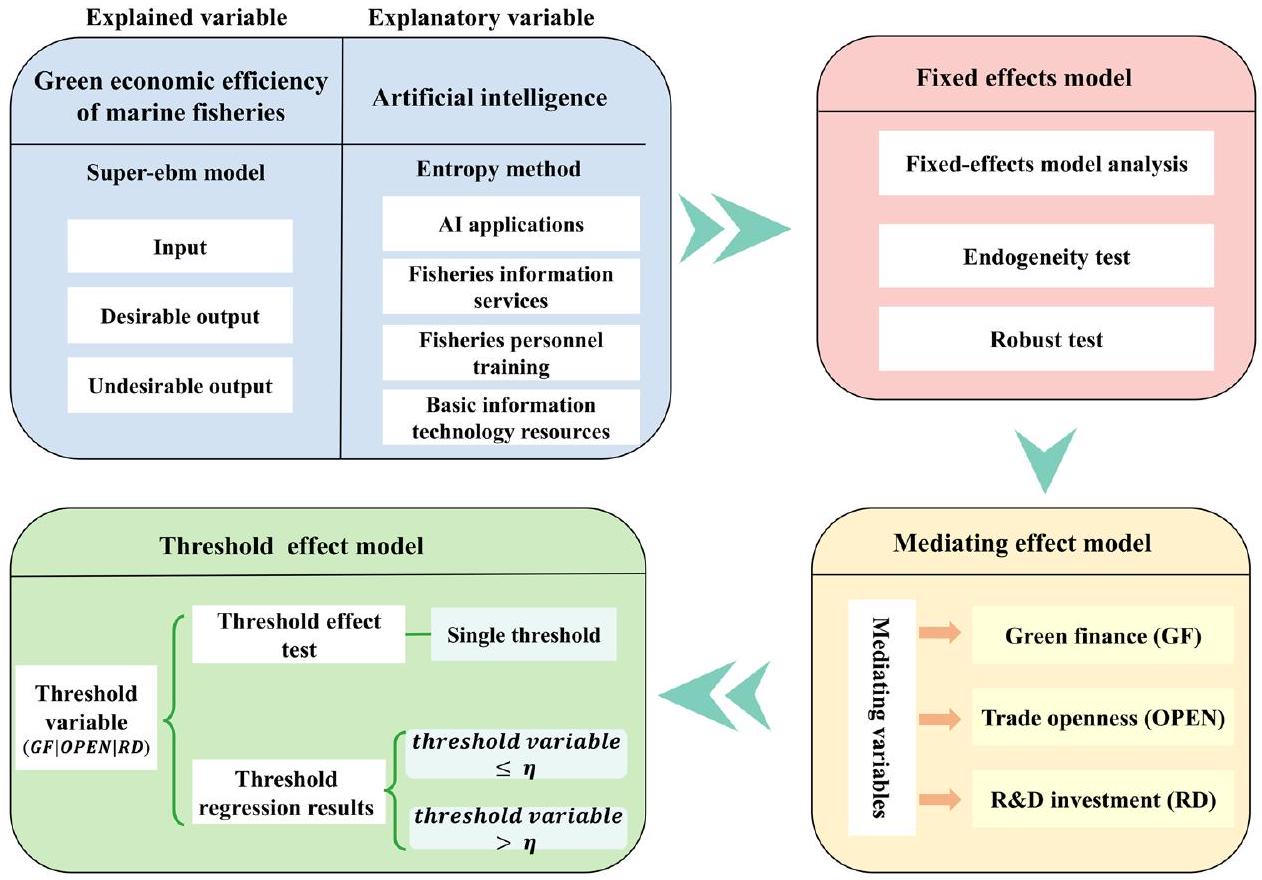
الشكل 1 إطار البحث. يوضح هذا الشكل الإطار المفاهيمي والمنهجي للدراسة.
تستكشف هذه المقالة العلاقة بين الذكاء الاصطناعي والتنمية الخضراء لمصائد الأسماك البحرية، مقدمة أدلة تجريبية هامة للاقتصادات الناشئة لتحسين إدارة الموارد البحرية وحماية البيئة. كما تقدم وجهات نظر سياسية جديدة لتعزيز التنمية المستدامة في مصائد الأسماك للدول الساحلية في جميع أنحاء العالم. لذلك، يُحث صانعو السياسات على الاعتراف بالدور المحوري لتكنولوجيا الذكاء الاصطناعي في التقدم المستدام لمصائد الأسماك البحرية وتطوير سياسات تشجع على الابتكار التكنولوجي وتطبيقه. علاوة على ذلك، يجب تشجيع تطوير التمويل الأخضر لتوفير الدعم المالي للبحث وتطبيق الذكاء الاصطناعي في مصائد الأسماك البحرية. بالإضافة إلى ذلك، من خلال تحسين السياسات التجارية، يجب تعزيز التبادل الدولي والتعاون في التكنولوجيا والمعرفة للتقدم المشترك في التنمية الخضراء لمصائد الأسماك البحرية العالمية.
هيكل هذه الورقة منظم على النحو التالي: يقدم القسم “مراجعة الأدبيات” مراجعة شاملة للأدبيات. في قسم “التحليل النظري”، نقوم بإجراء تحليل نظري. يطور قسم “الطريقة والبيانات” النماذج ويقدم وصفًا تفصيليًا لمصادر البيانات المستخدمة في دراستنا. يقدم قسم “النتائج والتحليل” نتائج الانحدار الاقتصادي. يناقش قسم “المناقشة” النتائج. أخيرًا، يلخص قسم “الاستنتاجات والتوصيات” النتائج الرئيسية وتوصيات السياسة. يتم توضيح إطار البحث في الشكل 1.
مراجعة الأدبيات
الكفاءة الاقتصادية الخضراء لمصائد الأسماك البحرية. الكفاءة الاقتصادية الخضراء لمصائد الأسماك البحرية هي مقياس حيوي لتقييم التفاعل بين الأنشطة الاقتصادية، واستخدام الموارد، وتأثير البيئة ضمن مصائد الأسماك البحرية، مما يعمل كدافع للتنمية المستدامة في الاقتصاد البحري (Cochrane, 2021). تركز الأبحاث المعاصرة بشكل أساسي على حسابها المنهجي والعوامل المؤثرة. يتم تصنيف منهجيات الحساب السائدة إلى نوعين: تحليل الحدود العشوائية (SFA) (Li et al., 2021a; Xu et al., 2023b) وتحليل الانحدار البياني (DEA) (Li et al., 2022; Zou et al., 2023). SFA، المناسب لنماذج الإنتاج ذات المخرج الواحد و
يتطلب وظيفة إنتاج محددة مسبقًا، يواجه تحديات تتعلق بالذاتية، مما قد يؤدي إلى نتائج غير متسقة (Lovell, 1996). بالمقابل، يوفر DEA مرونة أكبر حيث لا يعتمد على أي شكل وظيفي محدد ويمكنه التعامل مع مدخلات ومخرجات متعددة، مما يجعله مثاليًا لتقييم كفاءة وحدات اتخاذ القرار المختلفة (Sarkar et al., 2024). ومن ثم، تستخدم هذه الورقة طريقة DEA لحساب الكفاءة الاقتصادية الخضراء لمصائد الأسماك البحرية.
يتطلب وظيفة إنتاج محددة مسبقًا، يواجه تحديات تتعلق بالذاتية، مما قد يؤدي إلى نتائج غير متسقة (Lovell, 1996). بالمقابل، يوفر DEA مرونة أكبر حيث لا يعتمد على أي شكل وظيفي محدد ويمكنه التعامل مع مدخلات ومخرجات متعددة، مما يجعله مثاليًا لتقييم كفاءة وحدات اتخاذ القرار المختلفة (Sarkar et al., 2024). ومن ثم، تستخدم هذه الورقة طريقة DEA لحساب الكفاءة الاقتصادية الخضراء لمصائد الأسماك البحرية.
في إطار DEA، تظهر النماذج التقليدية مثل CCR وBCC وSBM بعض القيود. تتطلب النماذج الشعاعية مثل CCR وBCC تغييرات نسبية في المدخلات والمخرجات، مما قد يقيد قابليتها العملية (Charnes et al., 1978; Lee, 2022). بينما تعالج نموذج SBM المتغيرات المرنة غير الشعاعية، قد تشوه النسبة الفعلية للمدخلات إلى المخرجات، مما يؤثر على دقة التقييمات (Tone, 2001; Zheng et al., 2024). للتغلب على هذه التحديات، قدم Tone وTsutsui (2010) نموذج EBM، الذي يتضمن المتغيرات المرنة غير الشعاعية مع الحفاظ على نسبة المدخلات إلى المخرجات، مما يعزز دقة التقييم. ومع ذلك، غالبًا ما يؤدي نموذج EBM إلى عدد كبير من وحدات اتخاذ القرار الفعالة (DMUs) التي تسجل 1، مما يجعل من الصعب التمييز بين الوحدات الفعالة. لمعالجة ذلك، تستخدم دراستنا نموذج Super-EBM لقياس الكفاءة الاقتصادية الخضراء لمصائد الأسماك البحرية. بينما يتم استخدام هذا النموذج في قطاعات مختلفة (Ding and Liu, 2024; Wang et al., 2023d; Wu et al., 2019)، فإن تطبيقه في فحص الكفاءة الاقتصادية الخضراء لمصائد الأسماك البحرية نادر نسبيًا (Zhou et al., 2023). وقد أسفرت الدراسات الحالية التي تطبق هذه النماذج على الاقتصاد البحري في الصين عن استنتاجات غير متسقة (Guo et al., 2022; Zheng et al., 2022). على سبيل المثال، حدد Ren et al. (2018) اتجاهًا متقلبًا في كفاءة الاقتصاد البحري في الصين. استخدم Zou et al. (2023) نموذج DEA الشبكي ذو المرحلتين واكتشفوا أن الكفاءة الاقتصادية الخضراء للاقتصاد البحري في الصين تظهر اتجاهًا متقلبًا متناقصًا، بينما لاحظ Xu et al. (2023b) اتجاهًا عامًا صاعدًا. نظرًا للدور الحاسم لمصائد الأسماك البحرية في الاقتصاد البحري، فإن الفحص المتعمق للكفاءة الاقتصادية الخضراء لمصائد الأسماك البحرية في الصين، بما في ذلك تطورها الزماني والمكاني، يعد أمرًا مهمًا بشكل خاص.
فيما يتعلق بالعوامل المؤثرة على كفاءة الاقتصاد الأخضر في مصايد الأسماك البحرية، تركز الأبحاث بشكل أساسي على التقدم التكنولوجي، والتنظيم البيئي، والعوامل الاقتصادية. أولاً، يُعترف بالتقدم التكنولوجي بشكل عالمي كعامل محوري في الكفاءة (غاو وآخرون، 2024؛ وانغ وآخرون، 2024د). وقد أوضح شيو وآخرون (2023ب) تأثيراته الإيجابية على كفاءة الاقتصاد البحري، لا سيما من وجهات نظر العلوم البحرية وبنية الصناعة. بالإضافة إلى ذلك، أكد تشانغ وآخرون (2021ب) على الدور الحاسم للاستثمارات في رأس المال والتكنولوجيا. ثانياً، جذبت تعقيدات التنظيم البيئي اهتماماً كبيراً. وجد تشين وآخرون (2023ب) أن التنظيم البيئي والتنمية الاقتصادية لهما تأثير إيجابي على الرفاهية البيئية البحرية، بينما أبرز تشنغ وآخرون (2022) تأثيره المعتدل المفيد على العلاقة بين الاستثمار الأجنبي المباشر (FDI) وكفاءة الاقتصاد الأخضر البحري. وقد لاحظ صن وآخرون (2023) أن أنواعاً مختلفة من التنظيمات البيئية لها تأثيرات غير خطية على الاقتصاد الأخضر البحري. أخيراً، تعتبر العوامل الاقتصادية حاسمة في التأثير على كفاءة الاقتصاد البحري. طبق قوه وآخرون (2022) نموذج EBM ونموذج دوربين المكاني لتحليل العلاقة الإيجابية بين مستوى التنمية الاقتصادية، وتوقعات النمو، والانفتاح مع كفاءة الاقتصاد البحري، مما يبرز تأثير البيئة الاقتصادية. حدد زو وآخرون (2023) تأثيراً إيجابياً لانفتاح التجارة على كفاءة الاقتصاد الأخضر البحري، على الرغم من أنهم لاحظوا تأثيرات سلبية من تطوير الاقتصاد البحري وبنية الصناعة. استقصى غاو وآخرون (2022) تداعيات هياكل الصناعة والتوظيف، ومستوى الاقتصاد، وقدرة امتصاص الكربون، ورأس المال البشري في مصايد الأسماك من منظور كلي. تكشف نتائجهم عن تأثيرات إيجابية على الكفاءة، باستثناء هياكل الصناعة والتوظيف، مما يوفر رؤية شاملة للعوامل المؤثرة على كفاءة انبعاث الكربون في مصايد الأسماك البحرية.
الذكاء الاصطناعي وكفاءة الاقتصاد الأخضر في مصايد الأسماك البحرية. يُعترف بشكل متزايد بالذكاء الاصطناعي كعامل رئيسي في كفاءة الاقتصاد الأخضر (حسين وآخرون، 2023)، بشكل أساسي من خلال تحسين تخصيص الموارد وتعزيز كفاءة تدفق المعلومات. على وجه التحديد، يمكن أن يقلل تطبيق الذكاء الاصطناعي من الفاقد ويعزز الاستخدام الأمثل للموارد من خلال التعلم العميق والتحليل الخوارزمي المتقدم (تشو وآخرون، 2023). علاوة على ذلك، يقلل الذكاء الاصطناعي من تكاليف الإنتاج والمعاملات من خلال المنصات الرقمية، مما يعزز كفاءة الإنتاج العامة (لاده وآخرون، 2022). كما يلعب دوراً حاسماً في تعزيز كفاءة الطاقة (تشاو وآخرون، 2022ب)، من خلال أنظمة الإدارة الذكية (وانغ وآخرون، 2023ب). علاوة على ذلك، يدعم الذكاء الاصطناعي مراقبة البيئة ومنع التلوث، مما يقلل بشكل فعال من استهلاك الطاقة والانبعاثات، وبالتالي يخفف من الآثار البيئية (ساقب وآخرون، 2024؛ تشونغ وآخرون، 2022). ومع ذلك، فإن وجهات النظر الأكاديمية حول العلاقة بين الذكاء الاصطناعي وكفاءة الاقتصاد الأخضر متنوعة. وقد أبرزت عدة دراسات (باكر وريتش، 2018) الدور الحاسم للذكاء الاصطناعي في تحسين البيئة، وتعزيز كفاءة الطاقة، وتعزيز استخدام التكنولوجيا النظيفة. على العكس، وجدت دراسات أخرى (وانغ وآخرون، 2022أ) أن تجمع الذكاء الاصطناعي قد زاد من انبعاثات الكربون، حيث تتطلب أنظمة الذكاء الاصطناعي بشكل عام موارد حاسوبية وطاقة كبيرة. علاوة على ذلك، يظهر التفاعل بين الذكاء الاصطناعي وجود تأثير غير خطي تحت تأثير عوامل مختلفة. على سبيل المثال، لاحظ نكوفونغ وآسونغو (2022) أن العولمة وبيئة السياسة تعتدل تأثير الذكاء الاصطناعي على التنمية المستدامة. وبالمثل، اكتشف لي ووانغ (2022) أن العلاقة بين الاقتصاد الرقمي وانبعاثات الكربون تتأثر بموارد المدينة، وحجم المدينة، وقدرة الابتكار، مما يظهر تأثيرات عتبة معقدة.
لذلك، لم يتم التوصل بعد إلى اتفاق بالإجماع حول تأثير الذكاء الاصطناعي على كفاءة الاقتصاد الأخضر.
في قطاع مصايد الأسماك البحرية، لا تزال الأبحاث حول الذكاء الاصطناعي في مراحلها الأولى. استكشف عدد قليل من العلماء الدور المحتمل للذكاء الاصطناعي في إدارة مصايد الأسماك، ومشاركة البيانات، وتعزيز استدامة المصايد. تشير الدراسات إلى أن الذكاء الاصطناعي لا يحسن فقط كفاءة العمليات في المصايد، بل يعزز أيضاً التنمية المستدامة لمصايد الأسماك البحرية من خلال تحليل البيانات بدقة وفعالية (داش وآخرون 2023). علاوة على ذلك، من خلال معالجة مجموعات بيانات واسعة حول السوق والظروف البيئية، تلعب أدوات الذكاء الاصطناعي دوراً مهماً في التغلب على حواجز السوق وتقليل عدم التماثل في المعلومات. تظهر هذه الأدوات وعداً كبيراً في تقديم رؤى حول تربية الأحياء المائية والسوق للصيادين، لا سيما من خلال نشر المعلومات الحيوية بشكل فعال (نتيري وآخرون 2022). على الصعيد العالمي، بدأت بعض الدول المتقدمة بالفعل في الاستفادة من تكنولوجيا الذكاء الاصطناعي لتعزيز استدامة المصايد (السليح ويانغ، 2023). على سبيل المثال، تتيح قدرات الذكاء الاصطناعي في تحليل وتوقع موارد المصايد تخطيطاً أكثر عقلانية للأنشطة الصيد، مما يقلل من مخاطر الصيد الجائر ويحمي النظم البيئية البحرية. في الصين، أشارت الدراسات (جي ولي، 2021) إلى أن إدخال تقنيات الذكاء الاصطناعي، مثل أنظمة المراقبة والتحليل الذكية، يمكن أن يعزز بشكل كبير كفاءة الاقتصاد واستدامة البيئة في المصايد. من الناحية العملية، أظهر الذكاء الاصطناعي إمكانات هائلة في جوانب مختلفة من مصايد الأسماك البحرية. من خلال دعم اتخاذ القرار الذكي والمعالجة الآلية لمعلومات وبيانات المصايد، تساعد تقنيات الذكاء الاصطناعي الممارسين في إدارة الموارد بشكل أكثر فعالية، وزيادة كفاءة الإنتاج، وتقليل الآثار البيئية، مما يعزز بشكل كبير التنمية المستدامة لمصايد الأسماك البحرية (هوه، 2017؛ سافيل وآخرون 2015؛ تيني ووت وآخرون 2022). بينما تحلل الأبحاث الحالية الذكاء الاصطناعي في المصايد من منظور مؤشر واحد (السليح ويانغ، 2023)، فإن فهمًا أكثر شمولية يتطلب تحليلًا متعدد الأبعاد. تقيم هذه الدراسة جوانب مختلفة من مؤشر تطوير الذكاء الاصطناعي، مما يوفر رؤية أكثر تفصيلاً لتأثيراته المتنوعة.
الذكاء الاصطناعي، والتمويل الأخضر، وكفاءة الاقتصاد الأخضر في مصايد الأسماك البحرية. يشير التمويل الأخضر إلى الأنشطة التمويلية التي تدعم تحسين البيئة، وتخفيف تغير المناخ، وتعزيز الاستخدام الفعال والدائري للموارد. من خلال تمويل المشاريع وتقديم الحوافز، يشجع التمويل الأخضر الشركات على اعتماد طرق وتقنيات إنتاج صديقة للبيئة. لا يوسع هذا النهج فقط نطاق الاستثمار والتمويل (تشينغ وآخرون 2023أ) ويحسن كفاءة الطاقة (لي وآخرون 2023) ولكنه يقلل أيضًا بشكل فعال من انبعاثات الكربون (ليو وآخرون 2023). وبالتالي، يؤثر التمويل الأخضر بشكل إيجابي على التنمية المستدامة للشركات ويساهم بشكل كبير في حماية البيئة العالمية وتخفيف تغير المناخ.
تشير الأبحاث إلى أنه منذ تنفيذ سياسة التمويل الأخضر التجريبية في عام 2017، حققت الشركات تقدمًا كبيرًا في الابتكار الأخضر (جيا وآخرون 2023)، مما يوفر دعمًا قويًا للتحول الأخضر للاقتصاد الحقيقي (هوا وآخرون 2024). قدم التمويل الأخضر، من خلال مجموعة متنوعة من الأدوات المالية، تمويلاً أساسيًا لتطبيق تكنولوجيا الذكاء الاصطناعي في مصايد الأسماك البحرية (تشينغ وآخرون 2024). بالإضافة إلى ذلك، يستخدم التمويل الأخضر سلسلة من آليات التخفيف من المخاطر والحوافز لتقليل المخاطر الاستثمارية المرتبطة بتكنولوجيا الذكاء الاصطناعي في مصايد الأسماك البحرية، مما يعزز ثقة المستثمرين. وقد أبرزت عدة دراسات أن تكنولوجيا الذكاء الاصطناعي، من خلال تحسين تخصيص الموارد (يو وآخرون 2020)، ومعالجة عدم التماثل في المعلومات (موغاني وآخرون 2021)، وتقليل تكاليف الإنتاج والمعاملات، قد عززت فعالية
التمويل الأخضر. تعزز هذه الشراكة بين التمويل الأخضر والذكاء الاصطناعي النمو الاقتصادي المستدام، مما يشير إلى تكاملها كعامل رئيسي للتنمية المستدامة.
التمويل الأخضر. تعزز هذه الشراكة بين التمويل الأخضر والذكاء الاصطناعي النمو الاقتصادي المستدام، مما يشير إلى تكاملها كعامل رئيسي للتنمية المستدامة.
على الرغم من أن الأدبيات التي تستكشف التفاعل بين التمويل الأخضر والذكاء الاصطناعي في قطاع مصايد الأسماك البحرية محدودة نسبيًا، إلا أن الدراسات الحالية بدأت تكشف عن إمكانيات التمويل الأخضر في تعزيز تطبيق تكنولوجيا الذكاء الاصطناعي (ليو وآخرون 2021ب). يوسع شيو وليو (2023) هذا النقاش ليشمل القطاع البحري الأوسع، مشيرين إلى أن التمويل الأخضر لا يدعم فقط تنفيذ التكنولوجيا، بل يسهل أيضًا التحول الأخضر للصناعة بأكملها. يقدم تومسون (2022) توسيعًا مثيرًا لهذا الموضوع من خلال استكشاف دور السندات الزرقاء في تمويل المشاريع البحرية التي تولد فوائد بيئية ومناخية، مما يوفر منظورًا جديدًا للتنمية المستدامة للاقتصاد البحري. ومع ذلك، فإن الوضع ليس متفائلًا تمامًا. يثير فانديركليفت وآخرون (2019) مخاوف بشأن القيود العملية للسندات الزرقاء، وخاصة الشروط الصارمة التي قد تعيق التنمية المستدامة. وبالتالي، فإن فعالية التمويل الأخضر في تسريع مساهمة الذكاء الاصطناعي في كفاءة الاقتصاد الأخضر لمصايد الأسماك البحرية لا تزال غير واضحة.
الذكاء الاصطناعي، والانفتاح التجاري، وكفاءة الاقتصاد الأخضر في مصايد الأسماك البحرية. تشير الأبحاث عمومًا إلى أن الانفتاح التجاري يسهل نقل التكنولوجيا، وتوسيع الأسواق، وتحسين الموارد، مما يدفع النمو الاقتصادي (Chen et al. 2022b; Hdom و Fuinhas، 2020). ومع ذلك، فإن تأثيره على كفاءة الاقتصاد الأخضر لا يزال موضع جدل. من ناحية، يقدم الانفتاح التجاري تقنيات بيئية متقدمة وممارسات إدارية، مما يحسن الهياكل الصناعية (Dou et al. 2021)، وينقل الموارد من القطاعات ذات الكفاءة المنخفضة والقيمة المضافة المنخفضة إلى القطاعات ذات الكفاءة العالية والقيمة المضافة العالية، مما يعزز كفاءة الاقتصاد الأخضر (Mealy و Teytelboym، 2022). على سبيل المثال، قام قمرى وآخرون (2022) بتحليل بيانات من 21 دولة آسيوية بين عامي 1980 و2018، ووجدوا أن الانفتاح التجاري حسّن بشكل كبير من جودة البيئة وعزز النمو الاقتصادي. من ناحية أخرى، قد يؤدي الانفتاح التجاري إلى تأثير “ملاذ التلوث”، حيث تنتقل الصناعات كثيفة التلوث إلى الدول النامية ذات المعايير البيئية الأقل، مما يزيد من التلوث في هذه الدول (Liu et al. 2022). وجد ليو ودونغ (2021)، باستخدام نموذج اقتصادي مكاني، أن تحرير التجارة أثر سلبًا على كفاءة الاقتصاد الأخضر في الصين. بالإضافة إلى ذلك، ركز كان وآخرون (2021) على تجارة السلع الصديقة للبيئة، واكتشفوا اتجاهًا من الانخفاض الأولي تلاه زيادة في الاستدامة البيئية، مما يدعم فرضية منحنى كوزنتس البيئي.
في عصر الاقتصاد الرقمي، أدى التطور المستمر لتقنيات تكنولوجيا المعلومات والاتصالات من الجيل الجديد، مثل الذكاء الاصطناعي والإنترنت، إلى جعل التجارة الرقمية شكلًا رئيسيًا من أشكال التجارة (Cao et al. 2021; Danish et al. 2023). وأكد إيفانز وميساجان (2022) أن تجارة تكنولوجيا المعلومات والاتصالات، جنبًا إلى جنب مع الحوكمة الحكومية الفعالة، يمكن أن تقلل من التلوث البيئي. علاوة على ذلك، يؤثر الذكاء الاصطناعي بشكل كبير على انبعاثات الكربون وانتقالات الطاقة في ظل انفتاح التجارة من خلال تعزيز كفاءة الصناعة، ودفع التحول الاقتصادي الهيكلي، وتعزيز التعاون العالمي (Wang et al. 2024c). في الوقت نفسه، أشارت عدد من الدراسات إلى أن تكنولوجيا الذكاء الاصطناعي تساعد أيضًا الشركات في تحديد وإدارة مخاطر التجارة، مما يزيد من سلامة التجارة واستقرارها، ويقدم دعمًا حاسمًا للتنمية المستدامة (Feijóo et al. 2020; Horowitz et al. 2022).
ومع ذلك، في قطاع مصايد الأسماك البحرية، لا يزال تأثير انفتاح التجارة على تسريع كفاءة الاقتصاد الأخضر المدفوع بالذكاء الاصطناعي غير واضح. تهدف هذه الدراسة إلى استكشاف كيفية دمج انفتاح التجارة وتكنولوجيا الذكاء الاصطناعي لتسريع الاقتصاد الأخضر.
الكفاءة الاقتصادية في قطاع مصايد الأسماك البحرية، باستخدام حالات من المناطق الساحلية في الصين.
الكفاءة الاقتصادية في قطاع مصايد الأسماك البحرية، باستخدام حالات من المناطق الساحلية في الصين.
الذكاء الاصطناعي، واستثمار البحث والتطوير، وكفاءة الاقتصاد الأخضر في مصايد الأسماك البحرية. وفقًا لنظرية النمو الداخلي، يُعتبر استثمار البحث والتطوير متغيرًا داخليًا حاسمًا يدفع النمو الاقتصادي، بشكل أساسي من خلال التقدم التكنولوجي الذي يعزز الإنتاجية (رومر، 1990). وقد أكدت العديد من الدراسات أن استثمار البحث والتطوير له تأثير إيجابي كبير على كفاءة الاقتصاد الأخضر (ليو ودونغ، 2021؛ سونغ وآخرون، 2019). لا تعزز هذه الأنشطة البحثية فقط الابتكار وتطبيق التقنيات الخضراء، بل تقلل أيضًا بشكل فعال من استهلاك الموارد وانبعاثات التلوث، مما يحسن كفاءة استخدام الموارد (شاو وتشين، 2022). على وجه الخصوص، تُظهر أبحاث تشين ويانغ (2024) أن زيادة استثمار البحث والتطوير في قطاع الطاقة المتجددة في الصين قد عززت بشكل كبير كفاءة الاقتصاد الأخضر. علاوة على ذلك، يعزز استثمار البحث والتطوير آثار التسرب التكنولوجي، التي من خلال تبادل المعرفة ونقل التكنولوجيا، ترفع المستوى التكنولوجي العام للمجتمع (لي وآخرون، 2024؛ وانغ وآخرون، 2024أ). وهذا بدوره يسهل ترقية وتحسين الهياكل الصناعية، مما ينتقل بالصناعات التقليدية نحو اتجاهات صديقة للبيئة (ليو وآخرون، 2024).
تلعب تكنولوجيا الذكاء الاصطناعي دورًا حاسمًا في تعزيز عمليات البحث والتطوير، كما يتضح من دراسات متعددة. يوضح ليو وآخرون (2020) أن الذكاء الاصطناعي يسرع دورة البحث والتطوير ويزيد من معدل نجاح المشاريع البحثية. بناءً على ذلك، يظهر كولوري وآخرون (2022) أن قدرات الذكاء الاصطناعي في الأتمتة والتنبؤ تقصر بشكل كبير من دورة البحث والتطوير وتقلل التكاليف، لا سيما في تطوير مواد جديدة والأدوية. وبالمثل، يبرز جونسون وآخرون (2022) وفولر وآخرون (2022) مساهمات الذكاء الاصطناعي في تعزيز القدرات الاستكشافية لفرق البحث، وتسريع دورات التطوير، وتحسين دقة اتخاذ القرار. علاوة على ذلك، يوضح كيدينغ ومايسنر (2021) كيف يدعم الذكاء الاصطناعي إدارة الابتكار من خلال هيكلة وتبسيط عمليات اتخاذ القرار في استثمارات البحث والتطوير. إن التآزر بين استثمار البحث والتطوير والذكاء الاصطناعي لا يدفع فقط ابتكار التقنيات الخضراء، بل يؤثر أيضًا بشكل عميق على التنمية المستدامة (تشين وآخرون 2022أ). تعزز هذه الابتكارات التكنولوجية النمو الاقتصادي وتعزز الاستدامة البيئية من خلال تحسين تصميم المنتجات وعمليات الإنتاج (بابينا وآخرون 2024).
تركز الأبحاث الحالية بشكل أساسي على طرق القياس والعوامل المؤثرة في كفاءة الاقتصاد الأخضر في مصايد الأسماك البحرية، بالإضافة إلى تأثير الذكاء الاصطناعي على هذه الكفاءة. ومع ذلك، هناك نقص ملحوظ: أولاً، على الرغم من أن الأبحاث الحالية تتناول التأثير الشامل للذكاء الاصطناعي على كفاءة الاقتصاد الأخضر، فإن الدور المحدد للذكاء الاصطناعي في مجال مصايد الأسماك البحرية غالبًا ما يبقى غير مدروس بشكل كافٍ. ثانيًا، قد لا تعالج نماذج تحليل البيانات التقليدية، المستخدمة عادةً لتقييم الكفاءة، أهمية كل من المتغيرات المتبقية وغير المتبقية في المدخلات والمخرجات، مما قد يؤدي إلى تقييمات جزئية أو غير دقيقة. ثالثًا، نظرت الدراسات السابقة بشكل أساسي إلى الذكاء الاصطناعي من منظور الروبوتات الصناعية الفردية، مما يفتقر إلى فهم شامل لتأثير تقنيات الذكاء الاصطناعي المتقدمة على قطاع مصايد الأسماك البحرية ككل. أخيرًا، ركزت الأبحاث السابقة بشكل رئيسي على التأثيرات المباشرة للذكاء الاصطناعي على كفاءة الاقتصاد الأخضر، متجاهلة تأثيره الشامل في المجال البحري بالإضافة إلى إغفال الأدوار الحاسمة التي تلعبها المالية الخضراء، والانفتاح التجاري، واستثمار البحث والتطوير.
التحليل النظري
الأثر المباشر للذكاء الاصطناعي على الكفاءة الاقتصادية الخضراء لمصائد الأسماك البحرية. لقد أثر الذكاء الاصطناعي، كونه تكنولوجيا متقدمة للمعلومات والاتصالات، بشكل عميق على الاقتصاد
التنمية، إدارة الموارد، والأنشطة البيئية في قطاع مصايد الأسماك البحرية (Chen et al. 2023a). يتم تحقيق هذا التأثير بشكل أساسي من خلال تحسين تخصيص الموارد، تقليل تكاليف الإنتاج، تعزيز كفاءة تدفق المعلومات، تحسين استخدام الطاقة، وتعزيز حماية البيئة.
التنمية، إدارة الموارد، والأنشطة البيئية في قطاع مصايد الأسماك البحرية (Chen et al. 2023a). يتم تحقيق هذا التأثير بشكل أساسي من خلال تحسين تخصيص الموارد، تقليل تكاليف الإنتاج، تعزيز كفاءة تدفق المعلومات، تحسين استخدام الطاقة، وتعزيز حماية البيئة.
أولاً، يمكن للذكاء الاصطناعي، بفضل قدراته القوية في معالجة البيانات والتعرف على الأنماط، تحليل كميات هائلة من بيانات مراقبة المحيط في الوقت الحقيقي (سونفالد وآخرون 2021). من خلال التعلم العميق والخوارزميات المعقدة، يتنبأ الذكاء الاصطناعي بدقة بالمناطق الغنية بالموارد البيولوجية البحرية واتجاهاتها المتغيرة (لو وآخرون 2023). وهذا يمكّن الذكاء الاصطناعي من تقديم توصيات في الوقت الحقيقي حول متى وأين يجب الصيد، ويوجه كيفية تعديل موقع وحجم مناطق الاستزراع المائي لتحقيق تخطيط فعال لإنتاج الأسماك، مما يقلل من الاستغلال المفرط وهدر الموارد البحرية.
ثانياً، يلعب الذكاء الاصطناعي دوراً أساسياً في تداول معلومات الصيد (بروبتس، 2019). من خلال جمع البيانات وتحليلها بشكل آلي وذكي، يحسن الذكاء الاصطناعي بشكل كبير دقة توقعات الطلب في السوق. وهذا يعزز أيضاً إدارة سلسلة التوريد، بما في ذلك تعديل طرق النقل واختيار أفضل الشركاء اللوجستيين (غوفن وشيمشير، 2020). تتيح هذه العمليات لشركات الصيد الاستجابة بمرونة وكفاءة لتغيرات السوق، مع تقليل النقل غير الضروري، وتعزيز كفاءة اللوجستيات، وتقليل انبعاثات الكربون من أنشطة الصيد، مما يساهم في حماية البيئة.
أخيراً، يلعب الذكاء الاصطناعي دوراً مهماً في تعزيز كفاءة الطاقة ومراقبة البيئة من خلال تقليل استهلاك الطاقة عبر أنظمة الإدارة الذكية والصيانة التنبؤية (ساقب وآخرون 2024)، ومن خلال استخدام تكنولوجيا المراقبة المتقدمة لمراقبة البيئة البحرية في الوقت الحقيقي، مما يمنع ويقلل من انبعاثات التلوث، وبالتالي حماية البيئة الإيكولوجية البحرية (تشونغ وآخرون 2022).
الفرضية 1: يمكن للذكاء الاصطناعي تحسين كفاءة الاقتصاد الأخضر في مصايد الأسماك البحرية.
التأثير المحتمل للتمويل الأخضر على العلاقة بين الذكاء الاصطناعي وكفاءة الاقتصاد الأخضر في مصايد الأسماك البحرية. يعزز التمويل الأخضر من توفر وكفاءة التمويل (أحمد وآخرون 2024)، مما يعزز التأثير الإيجابي للذكاء الاصطناعي على كفاءة الاقتصاد الأخضر في مصايد الأسماك البحرية. على وجه التحديد، مع التطور المستمر للتمويل الأخضر، زادت الاستثمارات في مصايد الأسماك المستدامة وأنشطة الابتكار في المناطق الساحلية بشكل متناسب. يدعم هذا الدعم المالي الابتكار التكنولوجي وقدرات التحول للذكاء الاصطناعي داخل قطاع الصيد (تشين وآخرون 2024). بتوجيه وتحفيز من التمويل الأخضر، تستطيع شركات الصيد الاستثمار بشكل أكثر فعالية في تقنيات الذكاء الاصطناعي، مما يحقق تقدماً كبيراً في تحسين كفاءة الإنتاج وتقليل الأضرار على أنظمة الصيد، مما يعزز في النهاية التحسين العام لكفاءة الاقتصاد الأخضر في مصايد الأسماك البحرية.
تشير الأبحاث إلى أن تأثير التمويل الأخضر قد يظهر خصائص محددة حسب المرحلة (سونغ وآخرون 2024). لا شك أن التمويل الأخضر يمكن أن يظهر تحفظاً وانتقائية في استراتيجيات تخصيص الموارد خلال مراحله الأولية. عادةً ما يعطي الأولوية لدعم المشاريع الصناعية التي لها فوائد بيئية مباشرة واضحة. وغالباً ما يؤدي هذا التركيز إلى إهمال الاستثمارات في القطاعات التقليدية مثل مصايد الأسماك البحرية، خاصة فيما يتعلق بإدخال تقنيات الذكاء الاصطناعي (كانتروفيتش وآخرون 2024). لذلك، في بيئة تمويل أخضر منخفضة المستوى، قد تواجه تطوير تكنولوجيا الذكاء الاصطناعي في المناطق الساحلية صعوبات في الحصول على التمويل وحواجز تحول التكنولوجيا، وهي عوامل تحد من إمكانيات الذكاء الاصطناعي في تعزيز كفاءة الاقتصاد الأخضر في مصايد الأسماك البحرية.
تحت دفع مستويات عالية من التمويل الأخضر، يوفر الدعم المالي تمويلاً وفيراً للابتكار وتطبيق تكنولوجيا الذكاء الاصطناعي (شو وآخرون 2023أ). يسهل ذلك تقدم مصايد الأسماك البحرية نحو التنمية المستدامة (أبانغان وآخرون 2023).
تحت دفع مستويات عالية من التمويل الأخضر، يوفر الدعم المالي تمويلاً وفيراً للابتكار وتطبيق تكنولوجيا الذكاء الاصطناعي (شو وآخرون 2023أ). يسهل ذلك تقدم مصايد الأسماك البحرية نحو التنمية المستدامة (أبانغان وآخرون 2023).
الفرضية 2أ: يعزز التمويل الأخضر من تأثير الذكاء الاصطناعي على كفاءة الاقتصاد الأخضر في مصايد الأسماك البحرية.
الفرضية 2ب: يظهر تأثير التمويل الأخضر على تعزيز كفاءة الاقتصاد الأخضر في مصايد الأسماك البحرية بواسطة الذكاء الاصطناعي خصائص محددة حسب المرحلة.
التأثير المحتمل لانفتاح التجارة على العلاقة بين الذكاء الاصطناعي وكفاءة الاقتصاد الأخضر في مصايد الأسماك البحرية. يعزز انفتاح التجارة من الوصول إلى السوق والفرص للتعاون الدولي، مما يعزز التأثير الإيجابي للذكاء الاصطناعي على كفاءة الاقتصاد الأخضر في مصايد الأسماك البحرية. مع التقدم المستمر في انفتاح التجارة، تم تعزيز أنشطة الاستثمار والابتكار في قطاع الصيد في المناطق الساحلية، مما خلق ظروفاً مواتية لتطوير وتطبيق تكنولوجيا الذكاء الاصطناعي في مصايد الأسماك. يسمح انفتاح التجارة لشركات الصيد بالوصول إلى تقنيات متقدمة وسوق دولي واسع، مما يحفز الاستثمارات في تكنولوجيا الذكاء الاصطناعي (تشين وآخرون 2022ب). لقد أظهرت هذه التقنيات تأثيرات كبيرة في تحسين عمليات الإنتاج، وزيادة كفاءة استخدام الموارد، وتقليل التأثيرات على النظم البيئية، مما يدفع في النهاية مصايد الأسماك البحرية نحو اتجاه أكثر استدامة وكفاءة.
تشير الأبحاث إلى أن تأثير انفتاح التجارة قد يظهر خصائص محددة حسب المرحلة (مرشد، 2020). يؤدي انخفاض مستوى انفتاح التجارة إلى إغلاق نسبي في السوق وحدود الحجم، مما يؤدي إلى تلبية منتجات مصايد الأسماك بشكل أساسي لطلبات السوق المحلية، والتي تكون محدودة نسبياً (دو وآخرون 2021). مثل هذا البيئة السوقية المحدودة تقيد الفوائد الاقتصادية المحتملة للاستثمارات التكنولوجية، مما يجعل شركات الصيد تفتقر إلى الدافع الكافي للاستثمار في تكنولوجيا الذكاء الاصطناعي. في الوقت نفسه، لا يضعف الإغلاق النسبي للتجارة فقط تداول وتوفر الأموال، مما يقلل من اهتمام المستثمرين الخارجيين في السوق، بل يقيد أيضاً إدخال التقنيات المتقدمة والمعرفة الخارجية (كوان، 2020)، مما يبطئ تحسين مستويات تكنولوجيا مصايد الأسماك المحلية ويقيد الفضاء للابتكار وتطبيق تكنولوجيا الذكاء الاصطناعي. من الجدير بالذكر أنه في المراحل المبكرة من انفتاح التجارة، قد تقوم دول أخرى بنقل الشركات الملوثة إلى الدولة المضيفة، مما قد يؤدي إلى تفاقم مشاكل التلوث البيئي في الدولة المضيفة، ويؤثر أيضاً على إمكانيات تكنولوجيا الذكاء الاصطناعي في تحسين كفاءة الاقتصاد الأخضر (نجاتي وتاليغاني، 2022). لقد خلق تقدم انفتاح التجارة، وتوسع حجم السوق، وإدخال التقنيات المتقدمة ورأس المال ظروفاً مواتية لتسريع ابتكار الذكاء الاصطناعي. وقد أدى ذلك إلى تحسين عمليات الإنتاج وزيادة كفاءة استخدام الموارد، مما يدفع قطاع الصيد نحو تنمية أكثر استدامة وصديقة للبيئة.
الفرضية 3أ: يعزز انفتاح التجارة من تأثير الذكاء الاصطناعي على كفاءة الاقتصاد الأخضر في مصايد الأسماك البحرية.
الفرضية 3ب: يظهر تأثير انفتاح التجارة على تعزيز كفاءة الاقتصاد الأخضر في مصايد الأسماك البحرية بواسطة الذكاء الاصطناعي خصائص محددة حسب المرحلة.
التأثير المحتمل لاستثمار البحث والتطوير على العلاقة بين الذكاء الاصطناعي وكفاءة الاقتصاد الأخضر في مصايد الأسماك البحرية. يمتلك استثمار البحث والتطوير القدرة على إشعال الابتكار والتحسينات التكنولوجية، ويلعب دوراً مهماً في
دفع التقدم العلمي والتكنولوجي (بوينغ وآخرون 2022). لقد سهل هذا الاستثمار التكامل العميق والتطبيق الواسع للذكاء الاصطناعي في قطاع مصايد الأسماك البحرية (وانغ وآخرون 2021). علاوة على ذلك، فإن آثار الحجم التي أثارها قد عززت كفاءة البحث والتطوير ومعدل تحويل النتائج (ألديري وآخرون 2022). هذا لا يجذب فقط أفضل المواهب للمشاركة في البحث والتطوير للذكاء الاصطناعي، بل يقلل أيضًا من تكلفة تنفيذ التكنولوجيا لكل وحدة من خلال آثار الحجم. في النهاية، تساهم هذه العوامل بشكل أساسي في التنمية الاقتصادية الخضراء لمصايد الأسماك البحرية. وبالتالي، فإن هذا يسرع من وتيرة الابتكار التكنولوجي، مما يعزز بشكل كبير الكفاءة الاقتصادية الخضراء العامة لمصايد الأسماك البحرية ويمهد الطريق للتنمية المستدامة.
دفع التقدم العلمي والتكنولوجي (بوينغ وآخرون 2022). لقد سهل هذا الاستثمار التكامل العميق والتطبيق الواسع للذكاء الاصطناعي في قطاع مصايد الأسماك البحرية (وانغ وآخرون 2021). علاوة على ذلك، فإن آثار الحجم التي أثارها قد عززت كفاءة البحث والتطوير ومعدل تحويل النتائج (ألديري وآخرون 2022). هذا لا يجذب فقط أفضل المواهب للمشاركة في البحث والتطوير للذكاء الاصطناعي، بل يقلل أيضًا من تكلفة تنفيذ التكنولوجيا لكل وحدة من خلال آثار الحجم. في النهاية، تساهم هذه العوامل بشكل أساسي في التنمية الاقتصادية الخضراء لمصايد الأسماك البحرية. وبالتالي، فإن هذا يسرع من وتيرة الابتكار التكنولوجي، مما يعزز بشكل كبير الكفاءة الاقتصادية الخضراء العامة لمصايد الأسماك البحرية ويمهد الطريق للتنمية المستدامة.
تشير الأبحاث إلى أن تأثير استثمار البحث والتطوير قد يظهر خصائص محددة حسب المرحلة (عارف خان وآخرون 2020). في سياق التمويل المحدود للبحث والتطوير، قد لا يتم تحقيق الآثار الإيجابية المحتملة لتكنولوجيا الذكاء الاصطناعي بشكل كامل. غالبًا ما يتم تخصيص هذه الموارد النادرة للمجالات التي يُنظر إليها على أنها ذات إمكانات ابتكارية أكبر أو احتياجات أكثر إلحاحًا. يمكن أن تضع هذه الأولوية الصناعات التقليدية، مثل مصايد الأسماك البحرية، في وضع غير مواتٍ من حيث تخصيص الموارد (لي وآخرون 2021ج). علاوة على ذلك، يميل قطاع مصايد الأسماك البحرية إلى امتصاص والتكيف مع التقنيات الناشئة ببطء نسبي، مما يجعل من الصعب تنفيذ الذكاء الاصطناعي بشكل فعال (غاو وآخرون 2022). هذا لا يعيق فقط تطبيق وتعزيز التكنولوجيا، بل قد يؤدي أيضًا إلى انخفاض في الكفاءة الاقتصادية الخضراء في المراحل الأولية. ومع ذلك، مع زيادة استثمار البحث والتطوير، يمكن لمؤسسات الصيد أن تستثمر بشكل أكثر فعالية في الذكاء الاصطناعي المتقدم، مما يعزز ليس فقط تحسين وإدارة فعالة لعملية إنتاج مصايد الأسماك، ولكن أيضًا يساعد في تقليل الأثر السلبي لأنشطة الصيد على النظام البيئي البحري، مما يدفع في النهاية النمو العام في الكفاءة الاقتصادية الخضراء لمصايد الأسماك البحرية.
الفرضية 4أ: يعزز استثمار البحث والتطوير التأثير الترويجي للذكاء الاصطناعي على الكفاءة الاقتصادية الخضراء لمصايد الأسماك البحرية.
الفرضية 4ب: يظهر تأثير استثمار البحث والتطوير على تعزيز الكفاءة الاقتصادية الخضراء لمصايد الأسماك البحرية من خلال الذكاء الاصطناعي خصائص محددة حسب المرحلة.
الطريقة والبيانات
تستخدم هذه الدراسة بيانات بانل من 11 محافظة ومدينة ساحلية في الصين، تمتد من 2009 إلى 2020 (انظر الشكل 2). في البداية، تقوم الدراسة بإنشاء نموذج مرجعي، يتم بناءً عليه نموذج تأثير معتدل ونموذج عتبة بانل. تُستخدم هذه النماذج لفحص تأثير الذكاء الاصطناعي، والتمويل الأخضر، والانفتاح التجاري، واستثمار البحث والتطوير على الكفاءة الاقتصادية الخضراء لمصايد الأسماك البحرية. بالإضافة إلى ذلك، توضح الدراسة بدقة مؤشرات التركيب وطرق القياس لكل متغير. أخيرًا، توفر هذه القسم مصدر البيانات والتحليل الوصفي.
إعداد النموذج
نموذج مرجعي. لقياس تأثير الذكاء الاصطناعي على الكفاءة الاقتصادية الخضراء لمصايد الأسماك البحرية بشكل أكثر شمولاً، قمنا بإنشاء نموذج تأثير ثابت مع أبعاد زمنية وفردية، كما هو موضح في المعادلة (1):
في هذا النموذج،
نموذج تأثير معتدل. في هذه الدراسة، نقوم بإنشاء نموذج تأثير معتدل للتحقيق في تأثير ثلاثة متغيرات معتدلة – التمويل الأخضر، والانفتاح التجاري، واستثمار البحث والتطوير – على العلاقة بين الذكاء الاصطناعي والكفاءة الاقتصادية الخضراء لمصايد الأسماك البحرية. نقدم مصطلح تفاعل بين الذكاء الاصطناعي والمتغيرات المعتدلة في المعادلة (2):
في المعادلات (2)-(4)،
نموذج عتبة بانل. لتقييم تأثيرات العتبة، نستخدم نموذج عتبة بانل، حيث يتم تعيين التمويل الأخضر، والانفتاح التجاري، واستثمار البحث والتطوير كمتغير عتبة. يتم صياغة النموذج كما يلي:
تمثل المعادلة (5) نموذج عتبة واحدة تصف تأثير الذكاء الاصطناعي على الكفاءة الاقتصادية الخضراء لمصايد الأسماك البحرية. في هذا النموذج،
تفسير المتغيرات
المتغير المفسر. تعتبر الكفاءة الاقتصادية الخضراء لمصايد الأسماك البحرية (MFGEE) مقياسًا تكامليًا لتقييم التنمية الاقتصادية الخضراء لمصايد الأسماك البحرية، مع أساس في استهلاك الموارد واعتبارات التلوث البيئي. تعكس خصائص 11 محافظة ومدينة ساحلية في الصين وتوافر البيانات، قامت هذه الدراسة، بناءً على الأبحاث الحالية (دينغ وآخرون 2020؛ لي وآخرون 2021أ؛ وانغ وآخرون 2020)، بدمج العوامل التي تؤثر على هذه الكفاءة، بما في ذلك العمل، ورأس المال، ومدخلات الموارد، والملوثات، والمخرجات الاقتصادية. في الجدول 1، يتم تصنيف مؤشرات تقييم MFGEE إلى ثلاث فئات: المدخلات، والمخرجات المرغوبة، والمخرجات غير المرغوبة، وبالتالي تشكيل نظام مؤشرات. لحساب MFGEE، نستخدم نموذج Super-EBM، والصيغة الخاصة به موضحة في الملحق A.
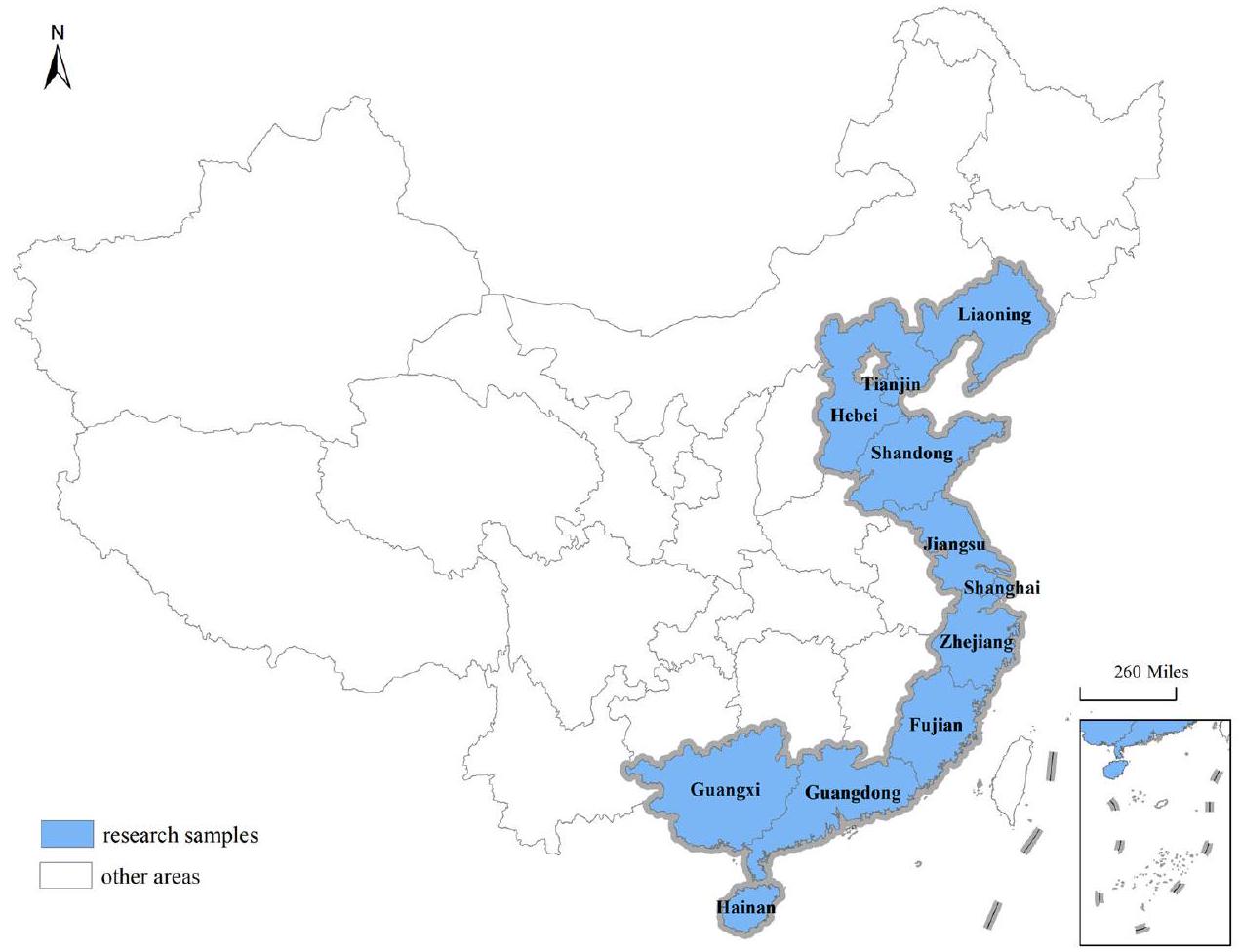
الشكل 2 عينة البحث لهذه المقالة. يوفر هذا الشكل نظرة عامة على عينة البحث، مع التركيز على البيانات المختارة من 11 محافظة ساحلية في الصين.
الجدول 1 مؤشرات اختيار الكفاءة الاقتصادية الخضراء لمصايد الأسماك البحرية.
| الهدف | الفئة | المكون المحدد | المؤشر | الخاصية |
| الكفاءة الاقتصادية الخضراء لمصايد الأسماك البحرية | المدخلات | مدخلات العمل | عمال مصايد الأسماك البحرية | + |
| مدخلات رأس المال | رصيد رأس المال البحري | + | ||
| مدخلات الموارد (طريقة الإنتروبيا) | أرصفة الإنتاج في الموانئ | + | ||
| إجمالي عدد وكالات السفر | + | |||
| مساحة الثقافة البحرية | + | |||
| المخرجات المرغوبة | الفوائد الاقتصادية | القيمة الفعلية لمخرجات مصايد الأسماك البحرية (استنادًا إلى 2009) | + | |
| المخرجات غير المرغوبة | الأثر البيئي السلبي (طريقة الإنتروبيا) | انبعاثات الكربون من مصايد الأسماك البحرية | – | |
| التصريف المباشر لمصدر التلوث إلى البحر – النيتروجين الأموني | – | |||
| التصريف المباشر لمصدر التلوث إلى البحر – الطلب الكيميائي على الأكسجين | – |
نقوم بتصنيف MFGEE إلى خمس فئات: منخفضة
تطوير بسبب ضعفه البيئي الفريد والضغوط البيئية الكبيرة كجزيرة، مما أدى إلى تراجع كفاءة مصايد الأسماك مقارنة بأعلى المستويات. على الرغم من تحقيق مقاطعتين هيبي وقوانغشي بعض التقدم في تطوير مصايد الأسماك، إلا أنهما لا تزالان تواجهان مشكلات مثل نقص أمثلة الشركات الرائدة، والاكتفاء الذاتي في سلالات الأسماك عالية الجودة، وضعف قدرات ضمان السلامة. هذه المشكلات تحد من تقدمهما في الابتكار التكنولوجي في مصايد الأسماك وتعزيز تقنيات تربية الأحياء المائية الصديقة للبيئة. بينما تعتبر مقاطعتي قوانغدونغ وجيانغسو، كمناطق أكثر تطورًا اقتصاديًا، على الرغم من مواردهما الوفيرة، تعاني من قصور في تنفيذ سياسات إدارة مصايد الأسماك وتدابير حماية البيئة. بالإضافة إلى ذلك، قد تؤدي الضغوط الناتجة عن التلوث الصناعي وتطوير المناطق البحرية إلى تدهور البيئة البحرية، مما يؤثر بشكل أكبر على جودة وكمية موارد مصايد الأسماك. تساهم هذه العوامل مجتمعة في تراجع كفاءة مصايد الأسماك.
تطوير بسبب ضعفه البيئي الفريد والضغوط البيئية الكبيرة كجزيرة، مما أدى إلى تراجع كفاءة مصايد الأسماك مقارنة بأعلى المستويات. على الرغم من تحقيق مقاطعتين هيبي وقوانغشي بعض التقدم في تطوير مصايد الأسماك، إلا أنهما لا تزالان تواجهان مشكلات مثل نقص أمثلة الشركات الرائدة، والاكتفاء الذاتي في سلالات الأسماك عالية الجودة، وضعف قدرات ضمان السلامة. هذه المشكلات تحد من تقدمهما في الابتكار التكنولوجي في مصايد الأسماك وتعزيز تقنيات تربية الأحياء المائية الصديقة للبيئة. بينما تعتبر مقاطعتي قوانغدونغ وجيانغسو، كمناطق أكثر تطورًا اقتصاديًا، على الرغم من مواردهما الوفيرة، تعاني من قصور في تنفيذ سياسات إدارة مصايد الأسماك وتدابير حماية البيئة. بالإضافة إلى ذلك، قد تؤدي الضغوط الناتجة عن التلوث الصناعي وتطوير المناطق البحرية إلى تدهور البيئة البحرية، مما يؤثر بشكل أكبر على جودة وكمية موارد مصايد الأسماك. تساهم هذه العوامل مجتمعة في تراجع كفاءة مصايد الأسماك.
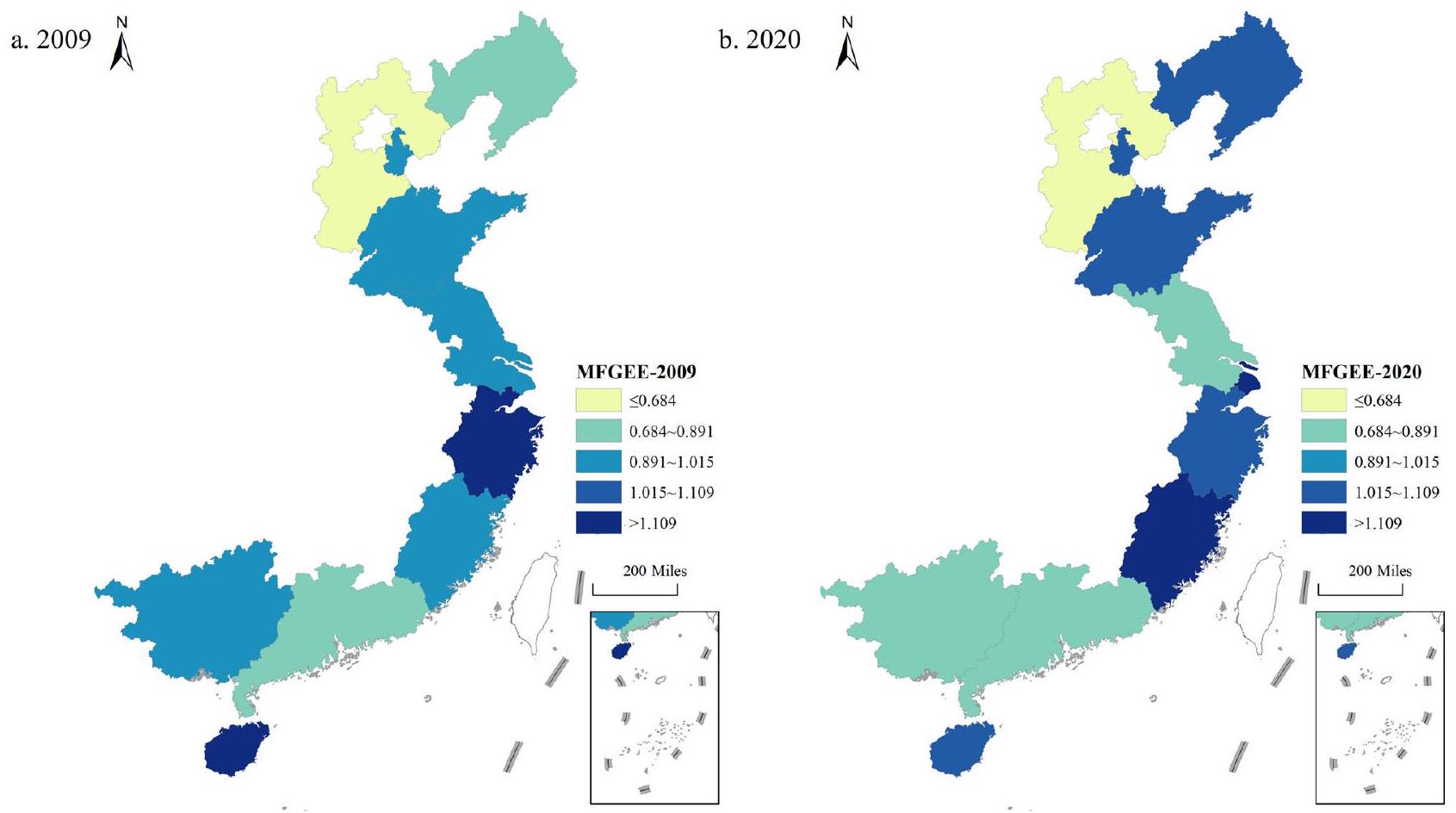
الشكل 3 توزيع كفاءة الاقتصاد الأخضر في مصايد الأسماك البحرية (MFGEE) في 11 محافظة ساحلية في الصين في عامي 2009 و2020. يوضح هذا الشكل التوزيع المكاني لكفاءة الاقتصاد الأخضر في مصايد الأسماك البحرية عبر 11 محافظة ساحلية في الصين في عامي 2009 و2020. من بينها، (أ) يمثل الوضع في عام 2009، بينما (ب) يمثل الوضع في عام 2020.
المتغير التفسيري. تشمل الذكاء الاصطناعي (AI) تطبيق الخوارزميات المتقدمة والنماذج الحاسوبية لمحاكاة وتعزيز وتوسيع قدرات اتخاذ القرار البشري، خاصة في معالجة القضايا المعقدة لإدارة وتشغيل مصايد الأسماك. لتحليل الاتجاهات التطويرية للذكاء الاصطناعي وآثاره بشكل موضوعي، فإن القياس ضروري. استنادًا إلى جي ولي (2021) وألسالح ويانغ (2023)، ومع الأخذ في الاعتبار الظروف الفعلية لمصايد الأسماك في الصين، يبدأ هذا البحث من أربعة أبعاد: تطبيق الذكاء الاصطناعي، خدمات المعلومات في مصايد الأسماك، تدريب المواهب في مصايد الأسماك، وموارد تكنولوجيا المعلومات الأساسية. يتم اختيار 12 مؤشرًا لقياس مستوى تطبيق الذكاء الاصطناعي في مصايد الأسماك، كما هو موضح في الجدول 2. بشكل محدد، يغطي تطبيق الذكاء الاصطناعي التطبيقات المباشرة لتكنولوجيا الذكاء الاصطناعي في قطاع مصايد الأسماك والتقدم البحثي ذي الصلة؛ تقيم خدمات المعلومات في مصايد الأسماك القدرة على تقديم خدمات المعلومات المتعلقة بمصايد الأسماك، مما يوفر الدعم البياني الضروري لتطبيق تكنولوجيا الذكاء الاصطناعي وإدارة مصايد الأسماك؛ يركز تدريب المواهب في مصايد الأسماك على قبول تكنولوجيا الذكاء الاصطناعي في مجال مصايد الأسماك وتدريب المواهب، والذي يشكل الأساس للتطبيق الواسع لتكنولوجيا الذكاء الاصطناعي؛ تعكس موارد تكنولوجيا المعلومات الأساسية الظروف التحتية التي تعتمد عليها معلومات مصايد الأسماك وتطبيقات الذكاء الاصطناعي. نستخدم طريقة الانتروبيا لدمج هذه المؤشرات لحساب تكنولوجيا الذكاء الاصطناعي في مصايد الأسماك في الصين من 2009 إلى 2020.
نحن نصنف الذكاء الاصطناعي إلى خمس فئات: منخفضة
الاستثمار في الذكاء الاصطناعي في مجال مصايد الأسماك، وتيرة التحديثات التكنولوجية، وتطوير المواهب، أو دعم السياسات. يعكس هذا التطور غير المتوازن الفروق في الاستثمار في الذكاء الاصطناعي وتطبيقه عبر المناطق، بينما يبرز أيضًا الفرص والتحديات المحتملة في تعزيز تطبيق الذكاء الاصطناعي في مصايد الأسماك في المناطق ذات المستوى الأدنى.
الاستثمار في الذكاء الاصطناعي في مجال مصايد الأسماك، وتيرة التحديثات التكنولوجية، وتطوير المواهب، أو دعم السياسات. يعكس هذا التطور غير المتوازن الفروق في الاستثمار في الذكاء الاصطناعي وتطبيقه عبر المناطق، بينما يبرز أيضًا الفرص والتحديات المحتملة في تعزيز تطبيق الذكاء الاصطناعي في مصايد الأسماك في المناطق ذات المستوى الأدنى.
متغير معتدل
التمويل الأخضر (GF): يُعترف به بشكل متزايد كأداة فعالة لتعزيز التشغيل الصحي للاقتصادات والتنمية المستدامة (سعيد ميو وكريم، 2022). وقد درست العديد من الدراسات التمويل الأخضر من زوايا مختلفة (ديبراه وآخرون 2022؛ هافنر وآخرون 2020). لضمان جدوى وقابلية تشغيل المؤشرات، تهدف هذه الدراسة إلى بناء مؤشر شامل لتطوير التمويل الأخضر، يشمل أربعة أبعاد: الائتمان الأخضر، الاستثمار الأخضر، التأمين الأخضر، والدعم الحكومي، كما هو موضح في الجدول 3. على وجه التحديد، كعنصر أساسي في نظام التمويل الأخضر، يؤثر الائتمان الأخضر بشكل مباشر على إمدادات التمويل للمشاريع المستدامة؛ الاستثمار الأخضر لا يعكس فقط دعم السوق المالية للصناعات الخضراء ولكنه أيضًا مؤشر مهم على عمق السوق واتساعه؛ يهدف التأمين الأخضر إلى تقليل المخاطر البيئية من خلال منتجات وخدمات التأمين، مما يشجع ويدعم أنشطة حماية البيئة؛ تلعب السياسات الحكومية والدعم المالي دورًا حاسمًا في تعزيز تطوير التمويل الأخضر. نستخدم طريقة قيمة الانتروبيا لحساب GF في المقاطعات والمدن الساحلية في الصين من 2009 إلى 2020.
تماشيًا مع نهج التصنيف السابق، قمنا أيضًا بتقسيم التمويل الأخضر إلى خمس فترات. كما هو موضح في الشكل 5، من 2009 إلى 2020، كانت الاتجاه العام للتمويل الأخضر في المناطق الساحلية في الصين تصاعديًا، مما يدل على النمو والتطور المستمر في هذا القطاع. بحلول عام 2020، كانت الغالبية العظمى من المقاطعات قد دخلت الفئة العالية من التمويل الأخضر. وهذا يدل على تقدم كبير في التمويل الأخضر عبر هذه المناطق الساحلية.
الجدول 2 مؤشرات اختيار الذكاء الاصطناعي في مصايد الأسماك.
| هدف | قاعدة | معايير | مؤشر | صفة | ||
| الذكاء الاصطناعي في مصايد الأسماك |
|
ممارسة تكنولوجيا الذكاء الاصطناعي | كثافة تركيب الروبوتات الصناعية في الصناعة الأولى | + | ||
| البحث في الأوراق المتعلقة بالذكاء الاصطناعي | تم العثور على أوراق بحثية متعلقة بالذكاء الاصطناعي مستخدمة في المجال البحري من WOS | + | ||||
| عدد المواقع الإلكترونية | المواقع الإلكترونية (العدد) | + | ||||
| عدد مستخدمي منصات الهواتف المحمولة | منصة موبايل (منزلية) | + | ||||
| عدد خدمات الخط الساخن | خط هاتف ساخن (الرقم) | + | ||||
| نسبة أموال تعزيز التكنولوجيا المائية | صندوق تشغيل ترويج التكنولوجيا المائية / إجمالي نفقات ترويج التكنولوجيا المائية | + | ||||
| نسبة الصيادين المدربين | عدد الصيادين المدربين/عدد الصيادين | + | ||||
| مواهب معلومات الصيد | تكرار التدريب للعاملين في الإرشاد | عدد تدريبات الأعمال للعاملين في التمديد/عدد الأشخاص الذين يروجون لتقنية تربية الأحياء المائية | + | |||
| معلومات الصيد | معدل انتشار الإنترنت | عدد مستخدمي الوصول إلى الإنترنت عالي السرعة / عدد السكان المقيمين في نهاية العام | + | |||
| الموارد | معدل انتشار الخطوط الأرضية | عدد مستخدمي الهواتف الثابتة / عدد السكان المقيمين في نهاية العام | + | |||
| معدل انتشار الهواتف المحمولة | عدد مستخدمي الهواتف المحمولة / عدد السكان المقيمين في نهاية العام | + | ||||
| إجمالي خدمات البريد والاتصالات لكل فرد | إجمالي خدمات البريد والاتصالات لكل فرد | + |
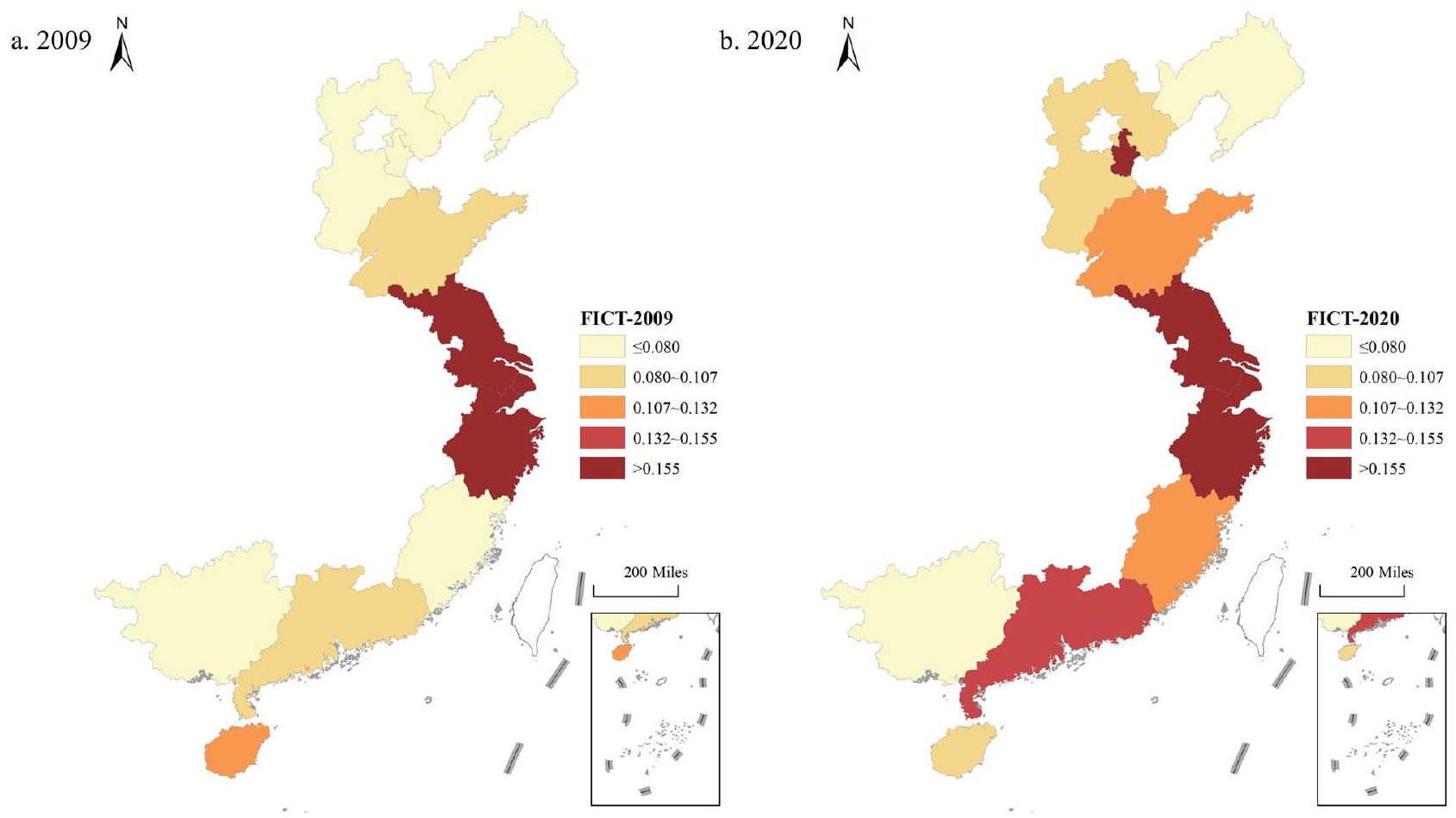
الشكل 4 توزيع الذكاء الاصطناعي في 11 محافظة ساحلية في الصين في عامي 2009 و2020. يوضح هذا الشكل توزيع الذكاء الاصطناعي (مستويات تطوير الذكاء الاصطناعي) في 11 محافظة ساحلية في الصين للسنوات 2009 و2020، مما يشير إلى التغيرات الزمنية والإقليمية. من بينها، (أ) يمثل الوضع في عام 2009، بينما (ب) يمثل الوضع في عام 2020.
المحافظات على مدى العقد الماضي. يمكن أن يُعزى الانتقال الواسع إلى الفترات العالية إلى السياسات المالية الخضراء الداعمة والتركيز المتزايد على الاستدامة البيئية.
انفتاح التجارة (OPEN): يستخدم هذا المقال نسبة إجمالي الواردات والصادرات إلى الناتج المحلي الإجمالي كمتغير بديل لتعريف انفتاح التجارة. يُعتبر انفتاح التجارة على نطاق واسع عاملاً رئيسياً في دفع النمو الاقتصادي والاندماج العالمي (وو، 2022). يجلب انفتاح التجارة المعرفة المتقدمة والتكنولوجيا إلى
تسريع تخصيص الموارد بكفاءة، وتعزيز القدرة التنافسية الصناعية. ومع ذلك، فإن تطوير التجارة يقدم أيضًا تحديات معينة، خاصة في الدول المضيفة التي تتمتع بتنظيمات بيئية أكثر تساهلاً، مما قد يؤدي إلى إدخال منتجات ذات جودة منخفضة، وزيادة استهلاك الموارد والتلوث البيئي، وبالتالي، تقييد التنمية المستدامة للاقتصاد الصيني (Li et al. 2021b).
تسريع تخصيص الموارد بكفاءة، وتعزيز القدرة التنافسية الصناعية. ومع ذلك، فإن تطوير التجارة يقدم أيضًا تحديات معينة، خاصة في الدول المضيفة التي تتمتع بتنظيمات بيئية أكثر تساهلاً، مما قد يؤدي إلى إدخال منتجات ذات جودة منخفضة، وزيادة استهلاك الموارد والتلوث البيئي، وبالتالي، تقييد التنمية المستدامة للاقتصاد الصيني (Li et al. 2021b).
كما هو موضح في الشكل 6، من 2009 إلى 2020، لم يظهر انفتاح التجارة في المناطق الساحلية في الصين اتجاهًا تصاعديًا مستمرًا.
| الجدول 3 مؤشرات اختيار التمويل الأخضر. | |||
| هدف | قاعدة | معايير | مؤشر |
| تطوير التمويل الأخضر | الائتمان الأخضر | نسبة مصاريف الفوائد للصناعات ذات الاستهلاك العالي للطاقة | نفقات الفائدة لستة صناعات رئيسية تستهلك الطاقة / إجمالي نفقات الفائدة الصناعية |
| الاستثمار الأخضر | استثمار التحكم في تلوث البيئة كنسبة من الناتج المحلي الإجمالي | استثمار التحكم في تلوث البيئة/الناتج المحلي الإجمالي + | |
| التأمين الأخضر | عمق التأمين الزراعي | دخل التأمين الزراعي/قيمة الناتج الزراعي الإجمالي | |
| الدعم الحكومي | نسبة الإنفاق المالي على حماية البيئة | نفقات حماية البيئة المالية / نفقات الميزانية العامة المالية | |
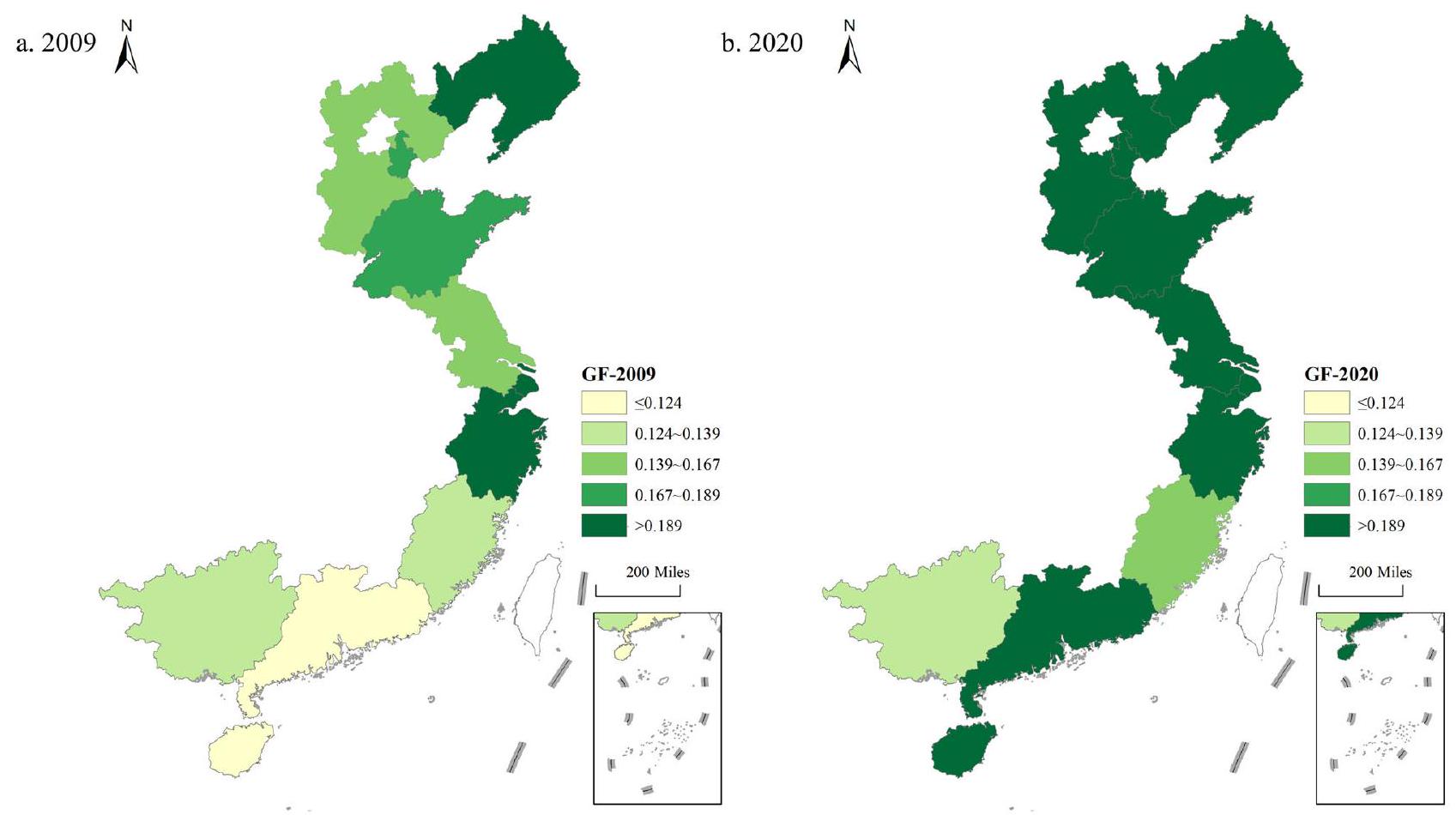
الشكل 5 توزيع التمويل الأخضر في 11 محافظة ساحلية في الصين في عامي 2009 و2020. يقدم هذا الشكل التوزيع المكاني للتمويل الأخضر في 11 محافظة ساحلية في الصين لعامي 2009 و2020. من بينها، (أ) يمثل الوضع في عام 2009، بينما (ب) يمثل الوضع في عام 2020.
وشهدت بعض المقاطعات حتى تراجعًا. هذه التقلبات مرتبطة مباشرة بتشديد سياسة التجارة وإجراءات الإغلاق التجاري التي فرضتها الولايات المتحدة، والتي أثرت بشكل كبير على أنشطة التجارة الخارجية في المناطق الساحلية الصينية. علاوة على ذلك، تسبب تفشي جائحة كوفيد-19 في بداية عام 2020 في صدمات غير مسبوقة للأنشطة الاقتصادية العالمية والتجارة الدولية. باعتبارها جبهة الانفتاح على العالم الخارجي، تأثرت درجة انفتاح التجارة في المناطق الساحلية الصينية بشكل كبير. كما أن الاضطرابات في سلاسل الإمداد الناتجة عن الجائحة، وتقليل تدفقات التجارة، وتقلص الطلب في الأسواق الدولية زادت من تفاقم التراجع في مستوى انفتاح التجارة.
استثمار البحث والتطوير (RD): لضمان جدوى ومشغلية المؤشر، تستخدم هذه الورقة “اللوغاريتم الطبيعي للنفقات الداخلية على البحث والتطوير” كمتغير بديل لقياس استثمار البحث والتطوير. وقد حددت الأبحاث الحالية استثمار البحث والتطوير كعامل رئيسي في تحسين كفاءة الاقتصاد الأخضر. وفقًا لزاينغ وآخرين (2021a)، فإن ارتفاع نسبة استثمار البحث والتطوير لا يعزز فقط تطوير تقنيات ومنتجات جديدة، بل يساعد أيضًا في تحسين كفاءة الإنتاج وتقليل الأثر البيئي.
التلوث، وتعزيز تطوير اقتصاد أخضر. ومع ذلك، من الجدير بالذكر أن الاستثمارات الحالية في البحث والتطوير غالبًا ما تتركز في الصناعات عالية التقنية، مما قد يتسبب في إهمال الدعم للبحث والتطوير في الصناعات التقليدية والتقنيات البيئية، وبالتالي قد يحد من الكفاءة الاقتصادية الخضراء لصيد الأسماك البحرية (Chen et al. 2022b).
التلوث، وتعزيز تطوير اقتصاد أخضر. ومع ذلك، من الجدير بالذكر أن الاستثمارات الحالية في البحث والتطوير غالبًا ما تتركز في الصناعات عالية التقنية، مما قد يتسبب في إهمال الدعم للبحث والتطوير في الصناعات التقليدية والتقنيات البيئية، وبالتالي قد يحد من الكفاءة الاقتصادية الخضراء لصيد الأسماك البحرية (Chen et al. 2022b).
كما هو موضح في الشكل 7، من 2009 إلى 2020، يظهر الاستثمار في البحث والتطوير في المناطق الساحلية في الصين اتجاهًا تصاعديًا بشكل عام، مما يشير إلى أن الاستثمار والجهود في أنشطة البحث والتطوير في المناطق الساحلية قد تم تعزيزها باستمرار. بحلول عام 2020، شهدت معظم المقاطعات زيادة كبيرة في استثمار البحث والتطوير، مما يعكس التقدم المهم الذي حققته المقاطعات الساحلية على مدار العقد الماضي في تعزيز الابتكار العلمي. قد تستفيد هذه الزيادة المستمرة في استثمار البحث والتطوير من دعم السياسات، وتحسين بيئة الابتكار، وتعزيز حماية الملكية الفكرية.
متغيرات التحكم
ابتكار التكنولوجيا البحرية (MTI): يُعتبر ابتكار التكنولوجيا البحرية عاملاً رئيسياً في تعزيز الكفاءة الاقتصادية الخضراء لمصائد الأسماك البحرية. يمثل هذا البحث ذلك كنسبة من الإضافة
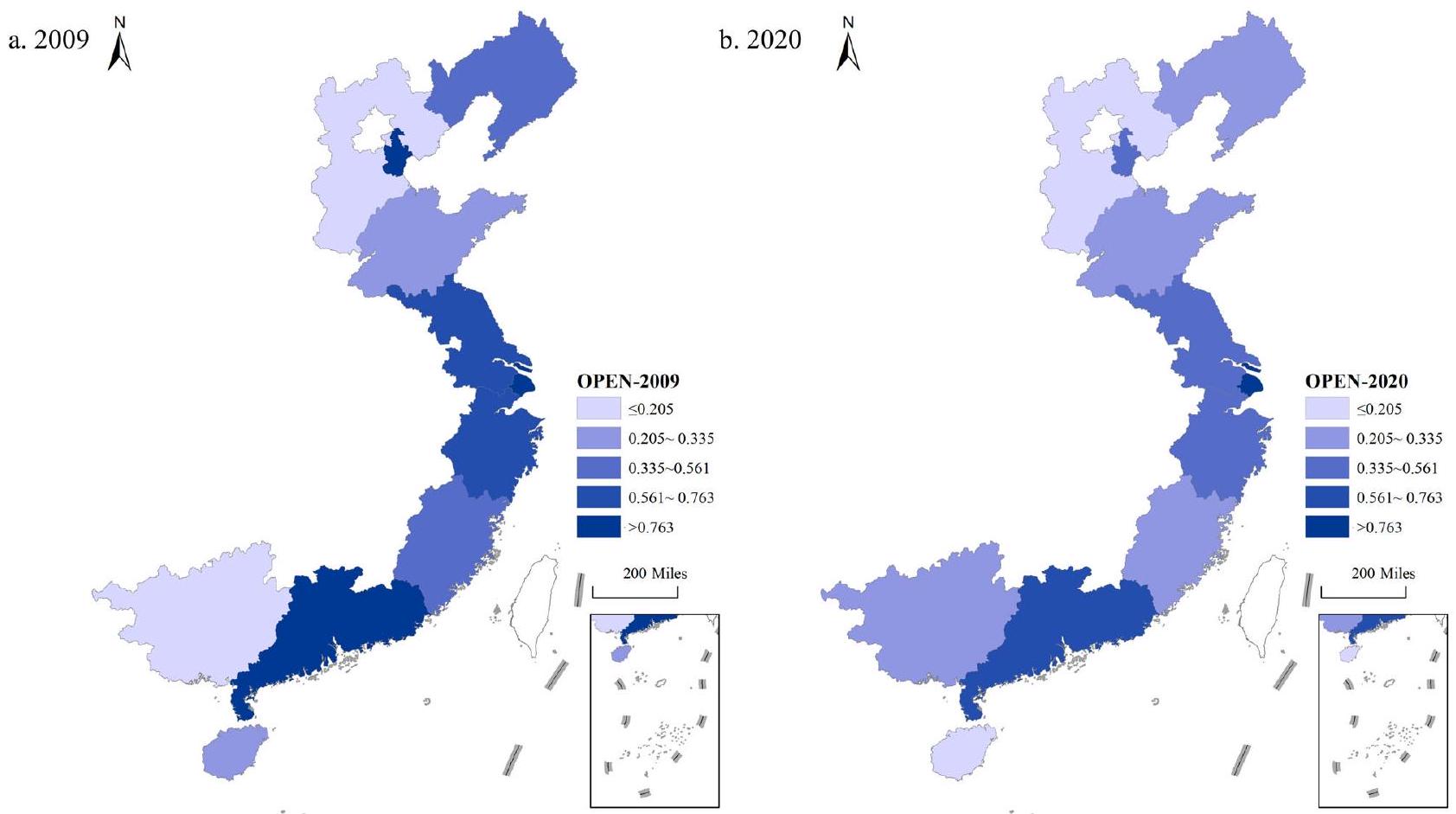
الشكل 6 توزيع انفتاح التجارة في 11 محافظة ساحلية في الصين في عامي 2009 و2020. يعرض هذا الشكل توزيع انفتاح التجارة في 11 محافظة ساحلية في الصين خلال عامي 2009 و2020. من بينها، (أ) يمثل الوضع في عام 2009، بينما (ب) يمثل الوضع في عام 2020.
الشكل 7 توزيع استثمارات البحث والتطوير في 11 محافظة ساحلية في الصين في عامي 2009 و2020. يوضح هذا الشكل توزيع استثمارات البحث والتطوير عبر 11 محافظة ساحلية في الصين في عامي 2009 و2020، مع التركيز على الفجوات الإقليمية والاتجاهات الزمنية. من بينها، (أ) يمثل الوضع في عام 2009، بينما (ب) يمثل الوضع في عام 2020.
قيمة خدمات البحث العلمي البحري للحكومة. يشير النسبة الأعلى إلى أن المنطقة لديها استثمار وإنجازات كبيرة في ابتكار التكنولوجيا البحرية، مما يؤثر بشكل إيجابي على تعزيز الكفاءة الاقتصادية الخضراء لصيد الأسماك البحرية (Liu et al. 2021a).
كثافة الطاقة (ET): كأحد المؤشرات المهمة لقياس كفاءة الطاقة في الأنشطة الاقتصادية وتأثيراتها البيئية، لا يمكن تجاهل دور كثافة الطاقة في اقتصاد مصايد الأسماك (Bastardie et al. 2022). تعني كثافة الطاقة المنخفضة أن الطاقة تُستخدم بشكل أكثر كفاءة في الإنتاج
الإنتاج الاقتصادي المعادل، مما يؤدي إلى تأثير بيئي أقل، وهو ما يسهم في تحقيق التنمية الخضراء والمستدامة في اقتصاديات الصيد (Li et al. 2024). تستخدم هذه الورقة استهلاك الطاقة لكل وحدة من الناتج المحلي الإجمالي كمتغير بديل لشدة الطاقة.
الإنتاج الاقتصادي المعادل، مما يؤدي إلى تأثير بيئي أقل، وهو ما يسهم في تحقيق التنمية الخضراء والمستدامة في اقتصاديات الصيد (Li et al. 2024). تستخدم هذه الورقة استهلاك الطاقة لكل وحدة من الناتج المحلي الإجمالي كمتغير بديل لشدة الطاقة.
التسويق (MAR): يرتبط مباشرة بكفاءة تخصيص الموارد وحرية الأنشطة الاقتصادية (Zhang et al. 2023b). تمتلك المناطق التي تتمتع بمؤشرات تسويق أعلى بيئات سوقية أكثر حرية وانفتاحًا، مما يسهم في تعزيز التنمية الاقتصادية الصحية ويمكن أن يعزز بشكل فعال كفاءة الاقتصاد الأخضر (Zeng et al. 2021). تقيس هذه الورقة درجة التسويق باستخدام مؤشر التسويق.
تجمع صناعة البحار (MIA): تشير قيمة إنتروبيا الموقع الأعلى إلى درجة عالية من تجمع صناعة البحار في المنطقة، مما يوحي بأن المنطقة تتمتع بمزايا نسبية ومستوى عالٍ من التخصص في تطوير صناعة البحار، مما قد يكون له تأثير إيجابي على تعزيز التنمية الاقتصادية الخضراء. استنادًا إلى الأبحاث الحالية، يقيس هذا البحث تجمع صناعة البحار باستخدام إنتروبيا الموقع. الصيغة هي كما يلي:
الجدول 4 الإحصائيات الوصفية للمتغيرات.
| متغير | ملاحظات | معنى | الانحراف المعياري | من | ماكس |
| MFGEE | 132 | -0.060 | 0.217 | -0.766 | 0.165 |
| الذكاء الاصطناعي | 132 | -2.284 | 0.610 | -3.653 | -0.907 |
| صديقة | 132 | -1.563 | 0.392 | -2.203 | -0.256 |
| RD | 132 | 15.261 | 1.374 | 10.965 | 17.365 |
| مفتوح | 132 | -0.915 | 0.660 | -2.217 | 0.345 |
| MTI | 132 | 0.177 | 0.085 | 0.044 | 0.457 |
| إي تي | 132 | 0.677 | 0.304 | 0.285 | 1.661 |
| مار | 132 | ٢.١٩٥ | 0.184 | 1.714 | ٢.٤٧٩ |
| ميا | 132 | 1.148 | 0.378 | 0.679 | 2.065 |
في المعادلة،
مصدر البيانات. تشمل مصادر البيانات الكتاب الإحصائي السنوي للصين، الكتاب الإحصائي السنوي لقطاع الصيد في الصين، الكتاب الإحصائي السنوي البحري للصين، النشرات البيئية البحرية، تقرير مؤشر السوق الوطني الإقليمي، الكتاب الإحصائي السنوي للطاقة في الصين، الكتب الإحصائية السنوية الإقليمية، والمكتب الوطني للإحصاء في الصين. تم تحويل بعض المتغيرات لوغاريتمياً للتحليل. يوفر الجدول 4 الإحصائيات الوصفية لهذه المتغيرات. يوضح الشكل 8 معاملات الارتباط. يمكن ملاحظة أنه، باستثناء معامل الارتباط الملحوظ بين السوق والاستثمار في البحث والتطوير، فإن بقية معاملات الارتباط أقل من 0.8، مما يشير إلى عدم وجود تعدد خطي بين المتغيرات.
تحدد هذه الورقة عام 2009 كسنة أساسية، بناءً على الاعتبارات التالية: أولاً، كان عام 2009 نقطة تحول عالمية عندما زاد الاهتمام بالاقتصاد الأخضر والتنمية المستدامة بشكل كبير، خاصة مع انعقاد مؤتمر الأمم المتحدة لتغير المناخ في كوبنهاغن وتركيز الصين على التنمية عالية الجودة. إن اختيار هذه السنة كنقطة انطلاق يسهل تتبع وتحليل التطورات والتحسينات اللاحقة في كفاءة الاقتصاد الأخضر لصيد الأسماك البحرية. ثانياً، منذ هذا العام، بدأت تطبيقات تكنولوجيا الذكاء الاصطناعي في صيد الأسماك البحرية في الزيادة، مما يجعل عام 2009 سنة أساسية مناسبة للدراسة لتقييم تأثير تكنولوجيا الذكاء الاصطناعي في هذا المجال. علاوة على ذلك، منذ عام 2009، كانت البيانات ذات الصلة حول صيد الأسماك البحرية والاقتصاد الأخضر كاملة ومتسقة، مما يوفر دعماً موثوقاً للبيانات لهذه البحث.
النتائج والتحليل
نتائج الانحدار المرجعي
اختبار المتغيرات. قبل الشروع في تحليل الانحدار، قمنا أولاً باستخدام اختبارات الجذر الأحادي للتحقق من استقرارية المتغيرات المختارة. كما هو موضح في الجدول 5، تشير نتائج اختبار الجذر الأحادي للمتغيرات الأصلية إلى أن بعض المتغيرات مستقرة؛ بعد
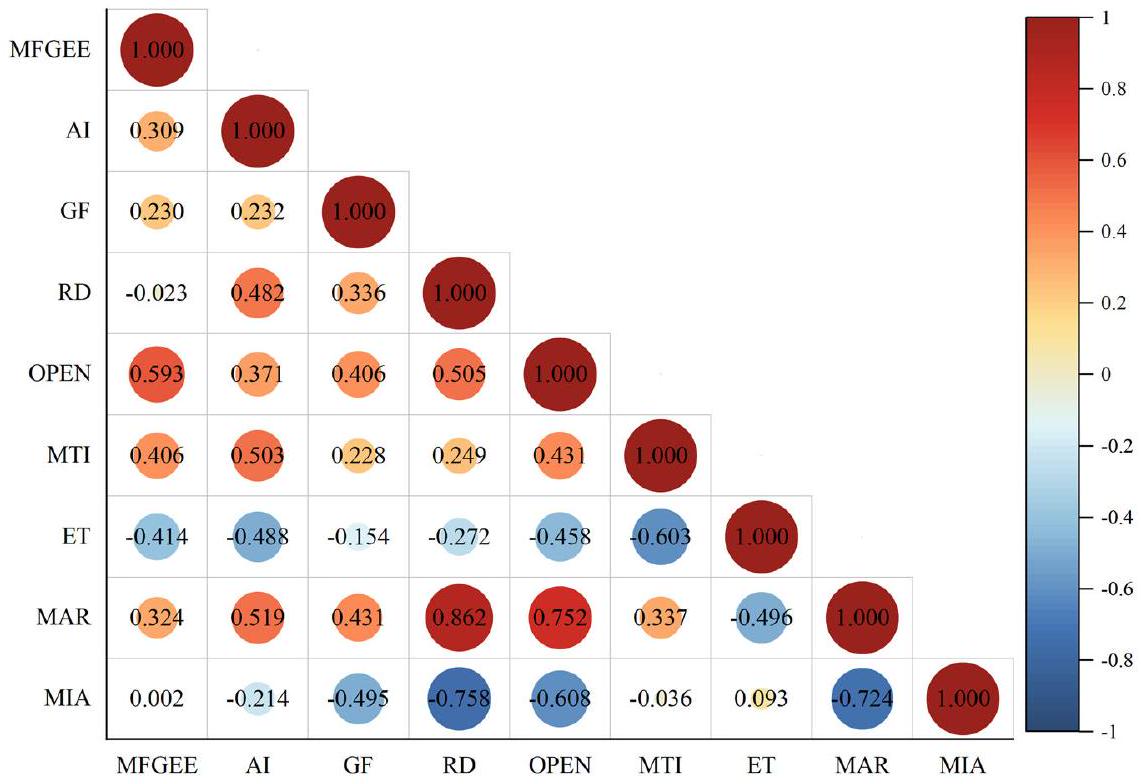
الشكل 8 مخطط معامل الارتباط بين المتغيرات. يوضح هذا الشكل معاملات الارتباط بين المتغيرات الرئيسية المستخدمة في الدراسة.
| الجدول 7 نتائج الانحدار الأساسية. | |||||
| المتغيرات | (1) | (2) | (3) | (4) | (5) |
| الذكاء الاصطناعي | 0.026* (1.915) | 0.026* (1.861) | 0.034** (2.262) | 0.038** (2.572) | 0.033** (2.341) |
| MTI | -0.020 (-0.049) | -0.179 (-0.416) | -0.239 (-0.607) | -0.202 (-0.529) | |
| إي تي | 0.261 (1.567) | 0.263 (1.563) | 0.242 (1.471) | ||
| مار | -0.418** (-2.586) | -0.397** (-2.442) | |||
| ميا | -0.146 (-1.208) | ||||
| ثابت | 0.000 (0.006) | 0.004 (0.046) | -0.128 (-1.114) | 0.808** (2.074) | 0.929** (2.025) |
| سنة FE | نعم | نعم | نعم | نعم | نعم |
| المقاطعة FE | نعم | نعم | نعم | نعم | نعم |
| ن | 132 | 132 | 132 | 132 | 132 |
|
|
0.914 | 0.914 | 0.917 | 0.924 | 0.926 |
| أخطاء معيارية قوية بين الأقواس؛ ** و * تشير إلى الدلالة عند
|
|||||
| جدول 8 اختبار التداخل. | ||
| المتغيرات | 2SLS-المرحلة (1) Al | 2SLS-المرحلة (2) MFGEE |
| الرابع | 0.012*** (5.953) | |
| الذكاء الاصطناعي | 0.077*** (2.659) | |
| MTI | 2.176 (1.571) | -0.547 (-1.492) |
| إي تي | −1.975 * (−1.663) | 0.216 (1.498) |
| مار | -0.050 (-0.069) | -0.463*** (-3.001) |
| ميا | -0.094 (-0.230) | -0.116 (-0.957) |
| سنة FE | نعم | نعم |
| المقاطعة FE | نعم | نعم |
|
|
121 | 121 |
|
|
0.749 | 0.156 |
| كليبرغن-باب آر كيه إل إم | 23.692 (0.000) | |
| كليبرغن-باب آر ك والد
|
٣٥.٤٤٣(١٦.٣٨) | |
| أخطاء معيارية قوية بين الأقواس؛ *** و * تشير إلى الدلالة عند
|
||
الناجمة عن بدء نظام معلومات التمويل الأخضر واندلاع الجائحة. تظهر النتائج، المعروضة في العمود (2) من الجدول 9، أن الذكاء الاصطناعي لا يزال إيجابيًا بشكل كبير، مما يؤكد مرة أخرى قوة النتائج تجاه التغيرات في فترة العينة.
تأخير المتغير المفسر: لاختبار القوة بشكل أكبر، يقوم البحث بتأخير المتغير التابع بفترة واحدة ثم يعيد تشغيل الانحدار. وفقًا للنتائج في العمود (3) من الجدول 9، يستمر معامل الذكاء الاصطناعي في إظهار تأثير متسق من حيث الاتجاه مع النتائج السابقة. بشكل عام، تؤكد هذه الاختبارات مجتمعة على قوة نتائج الانحدار في هذه الدراسة.
نتائج تأثير التعديل. للتحقق من الفرضية 2a، قمنا بإنشاء نموذج تأثير تعديل (المعادلة (2)) حيث تعمل المالية الخضراء كمتغير معدل. تظهر نتائج الانحدار، كما هو موضح في العمود (1) من الجدول 10، معاملًا إيجابيًا كبيرًا لحدوث التفاعل.
| جدول 9 نتائج اختبار المتانة لعملية الانحدار. | |||
| المتغيرات | MFGEE (1) | MFGEE (2) | أنا. إم إف جي إي (3) |
| الذكاء الاصطناعي | 0.150*** (4.935) | 0.034** (2.370) | 0.047*** (3.047) |
| MTI | -0.087 (-0.134) | -0.078 (-0.184) | -0.117 (-0.341) |
| إي تي | -0.158 (-0.712) | 0.260 (1.650) | 0.164 (0.867) |
| مار | -0.723** (-2.071) | -0.379** (-2.044) | -0.457*** (-2.827) |
| ميا | 0.311 (1.595) | -0.115 (-0.910) | 0.020 (0.181) |
| ثابت | 1.278 (1.505) | 0.818 (1.593) | 0.947** (2.296) |
| سنة FE | نعم | نعم | نعم |
| محافظة FE | نعم | نعم | نعم |
|
|
132 | 121 | 121 |
|
|
0.895 | 0.936 | 0.940 |
| أخطاء معيارية قوية بين القوسين؛ *** و ** تشير إلى الدلالة عند
|
|||
إن التمويل الأخضر يعزز دور الذكاء الاصطناعي في تحسين الكفاءة الاقتصادية الخضراء لمصائد الأسماك البحرية. على وجه التحديد، بعد تطبيق المعادلة (2)، فإن الأثر الهامشي للذكاء الاصطناعي هو 0.095، بينما في العمود (5) من الجدول 7، بدون المتغير المعتدل، فإن الأثر الهامشي للذكاء الاصطناعي هو 0.033. لذلك، فإن الأثر الهامشي المعتدل للتمويل الأخضر على الأثر الأساسي هو 0.062، وهذا الأثر المعتدل ذو دلالة إحصائية، مما يدعم الفرضية 2a.
للتحقق من الفرضية 3a، قمنا ببناء نموذج تأثير التعديل (المعادلة (3))، مع تضمين انفتاح التجارة كمتغير معدل. تكشف نتائج الانحدار، كما هو موضح في العمود (2) من الجدول 10، عن معامل إيجابي كبير لمصطلح التفاعل AI×OPEN. تشير هذه النتيجة إلى أن انفتاح التجارة يعزز فعالية الذكاء الاصطناعي في تعزيز الكفاءة الاقتصادية الخضراء لقطاع مصايد الأسماك البحرية. على وجه التحديد، عند تطبيق المعادلة (3)، وُجد أن التأثير الهامشي للذكاء الاصطناعي هو 0.088، مقارنة بتأثير هامشي قدره 0.033 للذكاء الاصطناعي دون تضمين المتغير المعدل، كما هو ملاحظ في العمود (5) من الجدول 7. وبالتالي، فإن التأثير الهامشي المعدل لانفتاح التجارة على التأثير الأساسي هو 0.055، وهذا التأثير المعدل ذو دلالة إحصائية، مما يدعم الفرضية 3a.
لتأكيد الفرضية 4a، قمنا بصياغة نموذج تأثير التعديل (المعادلة (4))، حيث تعتبر استثمارات البحث والتطوير المتغير المعدل. تظهر نتائج الانحدار، الموضحة في العمود (3) من الجدول 10، معاملًا إيجابيًا كبيرًا لحدوث التفاعل.
علاوة على ذلك، بالنظر إلى إطلاق نظام إدارة معلومات التمويل الأخضر في عام 2019، قد تظهر قضايا محتملة تتعلق بالذكاء الاصطناعي. تم اختبار هذا النظام في البداية في مدينة هوتشو، مقاطعة تشجيانغ، ثم تم توسيعه لاحقًا إلى مدن أخرى في تشجيانغ في عام 2020. قد يمنح هذا الاختبار الإقليمي والتنفيذ البيانات من مقاطعة تشجيانغ درجة من الخصوصية في البحث. لذلك، لتجنب التحيزات المحتملة في البيانات، اعتمدنا نهج استبعاد جميع العينات من مقاطعة تشجيانغ، كما هو موضح في العمود (4) من الجدول 10. من خلال هذا الفحص للموثوقية، نتأكد من أن استنتاجات بحثنا تظل مستقرة، مما يؤكد مرة أخرى على قوة وموثوقية نتائج دراستنا.
نتائج تأثير العتبة. وفقًا للفرضيات 2ب، 3ب، و4ب، التغيرات في التمويل الأخضر، والانفتاح التجاري، والبحث والتطوير
| الجدول 10 نتائج الانحدار لنموذج تأثير التعديل. | ||||||||
| المتغيرات | (1) | (2) | (3) | (4) | ||||
|
|
|
|
||||||
| أل×أوبن | 0.065*** (3.191) | |||||||
| ال×RD | 0.035** (2.211) | |||||||
| الذكاء الاصطناعي | 0.095*** (2.807) | 0.088*** (4.652) | 0.014 (0.994) | 0.101*** (2.698) | ||||
| صديقة | 0.066 (0.961) | 0.078 (1.008) | ||||||
| مفتوح | 0.153** (2.227) | |||||||
| RD | -0.193*** (-3.189) | |||||||
| MTI | -0.275 (-0.690) | -0.317 (-0.879) | -0.445 (-1.324) | -0.323 (-0.753) | ||||
| إي تي | 0.212 (1.298) | 0.204 (1.169) | 0.359** (2.421) | 0.186 (1.047) | ||||
| مار | -0.399** (-2.493) | -0.361** (-2.251) | -0.353** (-2.558) | -0.411** (-2.510) | ||||
| ميا | -0.163 (-1.390) | -0.162 (-1.479) | -0.281*** (-3.038) | -0.174 (-1.447) | ||||
| ثابت | 1.075** (2.306) | 1.034** (2.320) | 3.841*** (4.457) | 1.135** (2.240) | ||||
| سنة FE | نعم | نعم | نعم | نعم | ||||
| محافظة FE | نعم | نعم | نعم | نعم | ||||
|
|
132 | 132 | 132 | ١٢٠ | ||||
|
|
0.927 | 0.933 | 0.940 | 0.924 | ||||
| أخطاء معيارية قوية بين القوسين؛
|
||||||||
قد يؤثر الاستثمار على تأثير الذكاء الاصطناعي على الكفاءة الاقتصادية الخضراء لمصائد الأسماك البحرية. استجابةً لهذه الإمكانية، نستخدم نموذج العتبة اللوحي لتحليل الاتجاهات في فعالية الذكاء الاصطناعي عبر فترات عتبة مختلفة من التمويل الأخضر، والانفتاح التجاري، واستثمار البحث والتطوير.
اختبار تأثير العتبة. في تحليلنا، استخدمنا طريقة البوتستراب، حيث قمنا بتكرار العينة 300 مرة لتحديد عدد القيم المحددة للعتبات. كما هو موضح في الجدول 11، ووفقًا للإرشادات التي قدمها هانسن (1999)، حددنا أن التمويل الأخضر، والانفتاح التجاري، واستثمار البحث والتطوير كل منها يظهر خاصية عتبة واحدة ذات دلالة إحصائية. قيم العتبات الخاصة بهم هي
بعد ذلك، استخدمنا اختبار نسبة الاحتمالات (LR) للتحقق من دقة نموذج العتبة الواحدة. كما هو موضح في الشكل 9، هناك تطابق مستمر بين القيم المقدرة للعتبة والبيانات الفعلية. علاوة على ذلك، فإن إحصائية LR أقل بكثير من القيمة الحرجة 7.35 (المشار إليها بالخط المنقط). تؤكد هذه النتائج مجتمعة أن العتبة المقدرة دقيقة وفعالة. باختصار، قمنا ببناء نماذج انحدار ذات عتبة واحدة مع كفاءة الاقتصاد الأخضر لقطاع مصايد الأسماك البحرية كمتغير تابع، والذكاء الاصطناعي كمتغير تفسيري، والتمويل الأخضر، والانفتاح التجاري، واستثمار البحث والتطوير كمتغيرات عتبة.
نتائج الانحدار الحدّي. بعد التحقق من وجود حدّ واحد، يتم استخدام المعادلة (5) لفحص التأثير المتغير للذكاء الاصطناعي على الكفاءة الاقتصادية الخضراء لصيد الأسماك البحرية تحت ظروف مختلفة من التمويل الأخضر، والانفتاح التجاري، واستثمار البحث والتطوير. يتم تقديم النتائج في الجدول 12.
في العمود (1)، استخدمنا التمويل الأخضر كمتغير عتبة لدراسة العلاقة غير الخطية بين الذكاء الاصطناعي وكفاءة الاقتصاد الأخضر في قطاع مصايد الأسماك البحرية. تظهر نتائجنا أنه عندما يكون التمويل الأخضر ضمن نطاق منخفض (
في العمود (2)، تم التحقيق في العلاقة غير الخطية بين الذكاء الاصطناعي وكفاءة الاقتصاد الأخضر في قطاع مصايد الأسماك البحرية مع اعتبار انفتاح التجارة كمتغير عتبة. على وجه التحديد، عندما يكون انفتاح التجارة ضمن نطاق منخفض (OPEN
| الجدول 11 اختبار العتبة. | ||||||||
| متغيرات العتبة | اختبار تأثير العتبة | قيمة العتبة | فترة الثقة | إحصاء F |
|
10٪ | 5% | 1% |
| صديقة | عتبة واحدة | -1.9505 | [-2.0115، -1.9257] | ١٤.٢٣ | 0.070 | 13.049 | 15.298 | 18.684 |
| مفتوح | عتبة واحدة | -1.0935 | [-1.1150، -1.0923] | 18.98 | 0.040 | 14.935 | 17.883 | ٢٢٫٢٩٤ |
| RD | عتبة واحدة | 13.3514 | [١٣.٠٦٤٨, ١٣.٦٠٥٠] | ٣٨.٥٦ | 0.003 | 19.130 | ٢٣.١٥٢ | ٢٩.٤٥٣ |
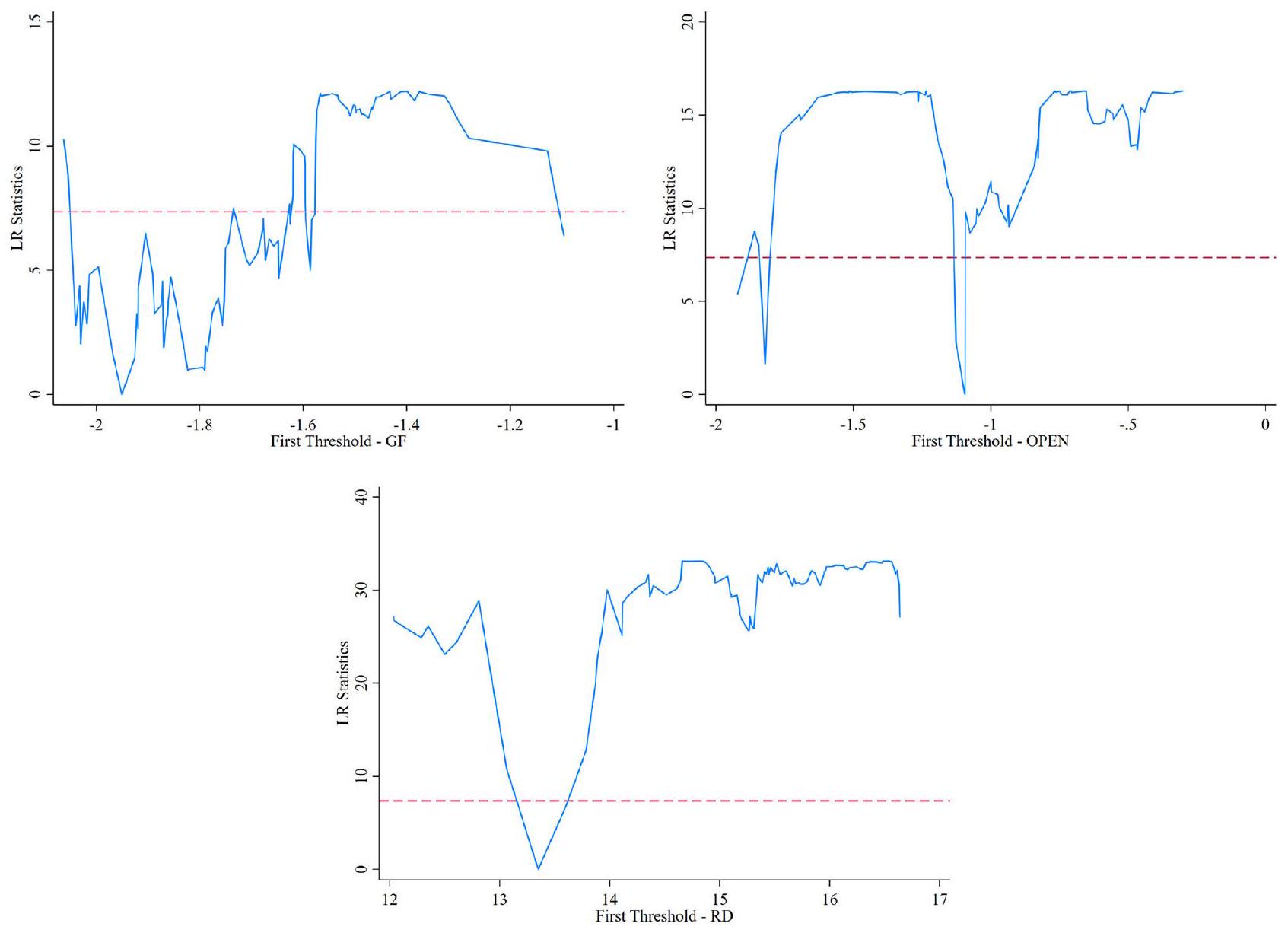
الشكل 9 اختبار LR. يوضح هذا الشكل مخطط LR المستخدم لاختبار قيمة العتبة، مع تسليط الضوء على النقاط الحرجة حيث تتغير قيم العتبة.
في العمود (3)، تم استكشاف العلاقة غير الخطية بين الذكاء الاصطناعي وكفاءة الاقتصاد الأخضر في قطاع مصايد الأسماك البحرية باستخدام استثمار البحث والتطوير كمتغير عتبة. عندما يكون استثمار البحث والتطوير في نطاق منخفض (
نقاش
مناقشة نموذج التأثيرات الثابتة. كان هدفنا البحثي الأولي هو دراسة تأثير الذكاء الاصطناعي على الكفاءة الاقتصادية الخضراء لقطاع مصايد الأسماك البحرية. بناءً على الأبحاث السابقة التي أجراها زهاو وآخرون (2022أ)، والتي أبرزت التأثير الإيجابي للذكاء الاصطناعي على النمو الاقتصادي الأخضر في الصين، يركز هذه الدراسة بشكل خاص على مصايد الأسماك البحرية في المناطق الساحلية للصين. لقد لوحظ أن التطبيق الواسع للذكاء الاصطناعي في قطاع المصايد قد دفع المصايد التقليدية نحو التحولات الذكية والآلية، مما أضفى حيوية جديدة على تعزيز الكفاءة الاقتصادية الخضراء في المناطق الساحلية. تشير الأدبيات الحالية إلى أن رقمنة المصايد يمكن أن تسهل الابتكار التكنولوجي وتحسن تخصيص موارد المصايد، مما يعزز الفوائد الاقتصادية لـ
تعتبر مصايد الأسماك (جي ولي، 2021) ضرورية بشكل خاص للتنمية المستدامة لمصايد الأسماك (السليح ويانغ، 2023). كأحد الأشكال الأكثر تقدمًا لتكنولوجيا المعلومات والاتصالات، تعزز الذكاء الاصطناعي بشكل جوهري الاستخدام الفعال لموارد مصايد الأسماك وحماية البيئة (وانغ وآخرون، 2023ج) من خلال التحسين الذكي لتقنيات وعمليات الإنتاج. من خلال الاستفادة من التعلم الآلي وتحليل البيانات الضخمة، يمكن للصيادين التنبؤ بدقة بديناميات تجمعات الأسماك، وتحسين استراتيجيات الصيد، وزيادة كفاءة استخدام الموارد (شريشا وآخرون، 2023). علاوة على ذلك، يساعد تطبيق الذكاء الاصطناعي في مراقبة وإدارة موارد مصايد الأسماك على منع الصيد الجائر وتقليل الأضرار التي تلحق بالنظام البيئي لمصايد الأسماك، مما يعزز الكفاءة الاقتصادية الخضراء لمصايد الأسماك البحرية.
تعتبر مصايد الأسماك (جي ولي، 2021) ضرورية بشكل خاص للتنمية المستدامة لمصايد الأسماك (السليح ويانغ، 2023). كأحد الأشكال الأكثر تقدمًا لتكنولوجيا المعلومات والاتصالات، تعزز الذكاء الاصطناعي بشكل جوهري الاستخدام الفعال لموارد مصايد الأسماك وحماية البيئة (وانغ وآخرون، 2023ج) من خلال التحسين الذكي لتقنيات وعمليات الإنتاج. من خلال الاستفادة من التعلم الآلي وتحليل البيانات الضخمة، يمكن للصيادين التنبؤ بدقة بديناميات تجمعات الأسماك، وتحسين استراتيجيات الصيد، وزيادة كفاءة استخدام الموارد (شريشا وآخرون، 2023). علاوة على ذلك، يساعد تطبيق الذكاء الاصطناعي في مراقبة وإدارة موارد مصايد الأسماك على منع الصيد الجائر وتقليل الأضرار التي تلحق بالنظام البيئي لمصايد الأسماك، مما يعزز الكفاءة الاقتصادية الخضراء لمصايد الأسماك البحرية.
مناقشة نموذج تأثير التعديل. تكشف نتائج الانحدار لنموذج تأثير التعديل عن اكتشاف محوري: إن دمج الذكاء الاصطناعي مع التمويل الأخضر، والانفتاح التجاري، واستثمار البحث والتطوير يعزز بشكل كبير الكفاءة الاقتصادية الخضراء لقطاع مصايد الأسماك البحرية.
(1) تتناغم هذه النتيجة مع أبحاث جوديل وآخرين (2021)، التي أكدت على دور الذكاء الاصطناعي في تعزيز كفاءة المعاملات والقرارات المالية. علاوة على ذلك، مع زيادة التمويل الرقمي، تم التأكيد على أن تحويل المنتجات والخدمات المالية من خلال الوسائل التكنولوجية له تأثير إيجابي على النمو الاقتصادي الأخضر في الصين (رازق ويانغ، 2023). تعتبر التكنولوجيا المالية، كابتكار مالي مدفوع بالتكنولوجيا، عند دمجها مع التمويل الأخضر، لا تقلل فقط من التلوث البيئي ولكن تعزز أيضًا من كفاءة الاقتصاد الأخضر (موغاني وآخرون، 2021؛
(1) تتناغم هذه النتيجة مع أبحاث جوديل وآخرين (2021)، التي أكدت على دور الذكاء الاصطناعي في تعزيز كفاءة المعاملات والقرارات المالية. علاوة على ذلك، مع زيادة التمويل الرقمي، تم التأكيد على أن تحويل المنتجات والخدمات المالية من خلال الوسائل التكنولوجية له تأثير إيجابي على النمو الاقتصادي الأخضر في الصين (رازق ويانغ، 2023). تعتبر التكنولوجيا المالية، كابتكار مالي مدفوع بالتكنولوجيا، عند دمجها مع التمويل الأخضر، لا تقلل فقط من التلوث البيئي ولكن تعزز أيضًا من كفاءة الاقتصاد الأخضر (موغاني وآخرون، 2021؛
| جدول 12 نتائج انحدار نموذج العتبة. | |||
| متغير | (1) | (2) | (3) |
|
|
|
|
|
|
|
0.008 | 0.012 | -0.040*** |
| (0.457) | (0.585) | (-3.206) | |
|
|
0.037** | 0.055*** | 0.045** |
| (2.231) | (3.236) | (3.090) | |
| MTI | -0.238 | -0.258 | -0.450 |
| (-0.402) | (-0.478) | (-0.845) | |
| إي تي | 0.259 | 0.358** | 0.265 |
| (1.491) | (2.804) | (1.179) | |
| مار | -0.374 | -0.380* | -0.437* |
| (-1.669) | (-2.204) | (-2.202) | |
| ميا | -0.211 | -0.111 | -0.245 |
| (-1.498) | (-0.902) | (-1.671) | |
| ثابت | 0.849 | 0.698 | 1.063* |
| (1.391) | (1.445) | (1.896) | |
| سنة FE | نعم | نعم | نعم |
| محافظة FE | نعم | نعم | نعم |
|
|
132 | 132 | 132 |
|
|
0.353 | 0.375 | 0.452 |
| أخطاء معيارية قوية بين القوسين؛
|
|||
تشير Zhou وآخرون (2022). على عكس هذه الدراسات، يركز بحثنا، بدءًا من الوسائل التكنولوجية الناشئة للذكاء الاصطناعي، على تفاعله مع التمويل الأخضر وتأثيره على الكفاءة الاقتصادية الخضراء لقطاع مصايد الأسماك البحرية، وبالتالي يملأ فجوة في الأدبيات الموجودة.
(2) تتماشى أبحاثنا حول انفتاح التجارة مع الدراسات السابقة (وانغ وآخرون 2024ب)، حيث أن الذكاء الاصطناعي، من خلال تعزيز انفتاح التجارة، يقلل من انبعاثات الكربون ويعزز التحول في الطاقة. لقد سهلت عولمة التجارة تدفق التقنيات المتقدمة (بما في ذلك التقنيات الخضراء والذكاء الاصطناعي) (أحمد ولي، 2021). علاوة على ذلك، يساهم انفتاح التجارة في تحسين البيئة من خلال تعزيز مهارات الإدارة والابتكار التكنولوجي (كان وآخرون 2021؛ وانغ وآخرون 2023أ). ومع ذلك، استخدمت هذه الدراسة مؤشر تطوير متكامل للذكاء الاصطناعي، والذي لم يتم استخدامه في الأبحاث السابقة.
(3) يتماشى مع أبحاث بابينا وآخرين (2024)، حيث تعزز الذكاء الاصطناعي النمو الاقتصادي من خلال الابتكار في المنتجات، وهي عملية لا يمكن فصلها عن الدور الحاسم لاستثمار البحث والتطوير. وهذا يعزز بشكل أكبر أهمية استثمار البحث والتطوير في دفع تقدم التقنيات الصديقة للبيئة وتعزيز قدرات حماية البيئة.
(2) تتماشى أبحاثنا حول انفتاح التجارة مع الدراسات السابقة (وانغ وآخرون 2024ب)، حيث أن الذكاء الاصطناعي، من خلال تعزيز انفتاح التجارة، يقلل من انبعاثات الكربون ويعزز التحول في الطاقة. لقد سهلت عولمة التجارة تدفق التقنيات المتقدمة (بما في ذلك التقنيات الخضراء والذكاء الاصطناعي) (أحمد ولي، 2021). علاوة على ذلك، يساهم انفتاح التجارة في تحسين البيئة من خلال تعزيز مهارات الإدارة والابتكار التكنولوجي (كان وآخرون 2021؛ وانغ وآخرون 2023أ). ومع ذلك، استخدمت هذه الدراسة مؤشر تطوير متكامل للذكاء الاصطناعي، والذي لم يتم استخدامه في الأبحاث السابقة.
(3) يتماشى مع أبحاث بابينا وآخرين (2024)، حيث تعزز الذكاء الاصطناعي النمو الاقتصادي من خلال الابتكار في المنتجات، وهي عملية لا يمكن فصلها عن الدور الحاسم لاستثمار البحث والتطوير. وهذا يعزز بشكل أكبر أهمية استثمار البحث والتطوير في دفع تقدم التقنيات الصديقة للبيئة وتعزيز قدرات حماية البيئة.
مناقشة نموذج العتبة اللوحي. تؤكد نتائج الانحدار لنموذج العتبة اللوحي أن تأثير الذكاء الاصطناعي على الكفاءة الاقتصادية الخضراء لقطاع مصايد الأسماك البحرية غير خطي عندما تكون التمويل الأخضر، والانفتاح التجاري، واستثمار البحث والتطوير بمثابة متغيرات عتبة.
على وجه التحديد، عندما يكون التمويل الأخضر دون عتبة معينة، فإن تأثير الذكاء الاصطناعي على الكفاءة الاقتصادية الخضراء لقطاع مصايد الأسماك البحرية ليس له دلالة. على العكس، عندما يتجاوز التمويل الأخضر هذه العتبة، يصبح تأثير الذكاء الاصطناعي على الكفاءة الاقتصادية الخضراء ذا دلالة إيجابية. تشير الأبحاث الحالية إلى أنه عندما لا يكون تطوير التمويل الأخضر ناضجًا بما فيه الكفاية، فقد يعيق التأثيرات الإيجابية للذكاء الاصطناعي (جي وآخرون 2022). يشير نقص دعم التمويل الأخضر إلى عدم وجود تمويل كافٍ لأبحاث وتطوير تقنيات الذكاء الاصطناعي (موغاني وآخرون 2021)، خاصة للمشاريع التي يمكن أن تعزز مباشرة الاستدامة البيئية لمصايد الأسماك البحرية. علاوة على ذلك، قد يؤدي نظام التمويل الأخضر غير الناضج أيضًا إلى نقص في أدوات تقييم وإدارة المخاطر اللازمة (وو،
2023)، مما يؤثر على ثقة المستثمرين والمؤسسات المالية في دعم تطبيق الذكاء الاصطناعي في مصايد الأسماك البحرية.
2023)، مما يؤثر على ثقة المستثمرين والمؤسسات المالية في دعم تطبيق الذكاء الاصطناعي في مصايد الأسماك البحرية.
عندما يكون الانفتاح التجاري دون قيمة عتبة، فإن تأثير الذكاء الاصطناعي على الكفاءة الاقتصادية الخضراء لقطاع مصايد الأسماك البحرية ليس له دلالة. على النقيض من ذلك، بمجرد أن يتجاوز الانفتاح التجاري هذه العتبة، يعزز الذكاء الاصطناعي بشكل كبير الكفاءة الاقتصادية الخضراء. تشير الأبحاث إلى أنه بسبب السياسات التجارية التقييدية، فضلاً عن نقص الفرص لتبادل التكنولوجيا عبر الحدود، قد تواجه الدول ذات التجارة المغلقة نسبيًا تحديات كبيرة في استغلال إمكانيات الذكاء الاصطناعي (وانغ وآخرون 2022c). بالإضافة إلى ذلك، فإن الطبيعة المغلقة للتجارة تؤدي إلى عدم وجود فرص لمؤسسات مصايد الأسماك في هذه الدول للمشاركة في الأسواق الدولية، مما يقلل من حافزها للحصول على ميزة تنافسية من خلال الابتكار التكنولوجي (هولسمان وآخرون 2008؛ روزنتال وغريب، 2020).
عندما يكون استثمار البحث والتطوير دون قيمة عتبة، يظهر الذكاء الاصطناعي تأثيرًا سلبيًا على الكفاءة الاقتصادية الخضراء لقطاع مصايد الأسماك البحرية. ومع ذلك، بمجرد أن يتجاوز استثمار البحث والتطوير هذه العتبة، يظهر الذكاء الاصطناعي تأثيرًا إيجابيًا على الكفاءة الاقتصادية الخضراء. نجد أن التأثير الإيجابي للذكاء الاصطناعي على الكفاءة الاقتصادية الخضراء لمصايد الأسماك البحرية يتأثر بشكل كبير باستثمار البحث والتطوير، مما يظهر خصائص مميزة على شكل مراحل. تتناقض هذه الملاحظة مع نتائج ليو وآخرين (2020)، الذين بحثوا في تطبيقات الذكاء الاصطناعي في قطاع التصنيع ولاحظوا أن تأثير الذكاء الاصطناعي على الابتكار التكنولوجي كان أكثر وضوحًا في القطاعات الصناعية ذات التقنية المنخفضة. على عكس نطاق بحثهم، تركز هذه الدراسة على قطاع مصايد الأسماك البحرية التقليدي والموارد الكثيفة، مما يكشف عن أهمية موارد البحث والتطوير وتأثير خصائص الصناعة على معدل نجاح تطبيقات الذكاء الاصطناعي.
الاستنتاجات والتوصيات
الخاتمة. بعد اختبارات وتحليلات شاملة، تؤكد هذه الدراسة بشكل قوي الدور الحاسم للذكاء الاصطناعي في تعزيز الكفاءة الاقتصادية الخضراء لمصايد الأسماك البحرية في المناطق الساحلية. التحول الذي يحفزه الذكاء الاصطناعي، من الممارسات التقليدية إلى الأساليب الموجهة رقميًا، يضخ دفعة جديدة نحو استدامة مصايد الأسماك الساحلية.
تتوافق نتائجنا مع الدراسات السابقة، حيث توضح التأثير الإيجابي للذكاء الاصطناعي على الكفاءة الاقتصادية لمصايد الأسماك من خلال تحسين تخصيص الموارد وتسهيل التقدم التكنولوجي. يتغلغل تأثير الذكاء الاصطناعي في عملية إنتاج الأسماك بأكملها، مما يعزز كفاءة استخدام الموارد، ويمنع الصيد الجائر، ويقلل من الأضرار البيئية. بالإضافة إلى ذلك، في المعالجة والتوزيع، يقوم الذكاء الاصطناعي بتحسين سلاسل الإمداد، ويقلل من استهلاك الطاقة، ويقلل من الفاقد، مما يعزز جودة المنتج والتنافسية في السوق بينما يعزز الكفاءة الاقتصادية الخضراء.
في معالجة المخاوف المحتملة بشأن الاندماج، تؤكد نهجنا في استخدام المتغيرات الآلية التأثير الإيجابي الكبير للذكاء الاصطناعي على الكفاءة الاقتصادية الخضراء. تعزز اختبارات القوة وتعديلات النموذج هذه العلاقة، مما يضمن موثوقية وثبات نتائجنا.
علاوة على ذلك، يظهر التأثير التآزري بين الذكاء الاصطناعي والتمويل الأخضر، والانفتاح التجاري، واستثمار البحث والتطوير كعامل محفز كبير لاستدامة مصايد الأسماك. يسهل هذا الدعم التعاوني استثمارًا أكثر فعالية في تقنيات الذكاء الاصطناعي المتطورة، مما يعزز كفاءة الإنتاج ويخفف من الآثار السلبية على مصايد الأسماك. نتيجة لذلك، يعزز تحسين شامل للموارد المالية والتكنولوجية الكفاءة الاقتصادية الخضراء لمصايد الأسماك البحرية.
تؤكد المناقشة حول تأثيرات العتبة الدور المحوري للتمويل الأخضر، والانفتاح التجاري، واستثمار البحث والتطوير في تحديد تأثير الذكاء الاصطناعي على الكفاءة الاقتصادية الخضراء. تحت مستويات أقل من التمويل الأخضر، والانفتاح التجاري، واستثمار البحث والتطوير، بسبب القيود المالية والتكنولوجية، يبقى تأثير الذكاء الاصطناعي على الكفاءة الاقتصادية الخضراء محدودًا.
ومع ذلك، مع تحسن التمويل الأخضر، والانفتاح التجاري، واستثمار البحث والتطوير، يصبح دور الذكاء الاصطناعي أكثر أهمية، مما يؤدي إلى تطبيقات أوسع وأكثر تقدمًا، وبالتالي دفع التنمية المستدامة في قطاع مصايد الأسماك.
الآثار السياسية. بناءً على استنتاجات البحث أعلاه؛ لتعزيز الكفاءة الاقتصادية الخضراء لقطاع مصايد الأسماك البحرية في المناطق الساحلية في الصين وتعزيز التنمية عالية الجودة في هذه المناطق، نقترح التوصيات التالية:
(1) نظرًا للدور الكبير للذكاء الاصطناعي في تعزيز الكفاءة الاقتصادية الخضراء لمصايد الأسماك البحرية، يجب على صانعي السياسات في الصين وغيرها من الاقتصادات الناشئة إنشاء صناديق خاصة لدعم المشاريع ذات الصلة، مثل أنظمة المراقبة الذكية وتقنيات الصيد الدقيقة. يجب على الحكومة تشجيع الاستثمار الخاص والشركات من خلال صناديق مطابقة، وقروض بفوائد منخفضة، أو ضمانات مخاطر. بالإضافة إلى ذلك، يجب سن قوانين صارمة لحماية الملكية الفكرية، مع زيادة العقوبات على الانتهاكات وآلية استجابة سريعة للتعامل مع نزاعات الملكية الفكرية.
(2) من أجل دمج الذكاء الاصطناعي بشكل فعال في مصايد الأسماك وتعزيز المبادرات الخضراء، يجب على صانعي السياسات تحسين الإطار التنظيمي المالي لمعالجة المتطلبات الفريدة لتقنيات الذكاء الاصطناعي في هذا القطاع. يتضمن ذلك تعديل اللوائح الحالية لتشمل أحكامًا تتعلق بتطبيقات الذكاء الاصطناعي، بالإضافة إلى صياغة سياسات مالية مخصصة تقدم إرشادات واضحة وحوافز للاستثمارات في مشاريع الصيد الخضراء. بالإضافة إلى ذلك، فإن التعاون مع وكالات التقييم المتخصصة أمر ضروري لتطوير بروتوكولات تقييم المخاطر المصممة خصيصًا وإدخال أنظمة تصنيف ائتماني مصممة خصيصًا لمشاريع الصيد المدفوعة بالذكاء الاصطناعي.
(3) نظرًا لأن الانفتاح التجاري يعزز بشكل كبير دور الذكاء الاصطناعي في تحسين الكفاءة الاقتصادية الخضراء لمصايد الأسماك البحرية، يجب على صانعي السياسات التفاوض بنشاط مع المنظمات التجارية متعددة الأطراف لتأمين شروط مواتية في مفاوضات تجارة منتجات مصايد الأسماك، مثل تخفيض الرسوم الجمركية وتبسيط إجراءات الاستيراد والتصدير. علاوة على ذلك، يجب عليهم إنشاء اتفاقيات تعاون ثنائية أو متعددة الأطراف في مجال مصايد الأسماك مع الشركاء التجاريين الرئيسيين، بما في ذلك التعاون التكنولوجي وتبادل الموارد. سيسهل إنشاء مركز دولي لتبادل تقنيات الذكاء الاصطناعي تنظيم ندوات دولية منتظمة ومعارض تكنولوجية.
(4) لتعزيز الأثر الإيجابي للذكاء الاصطناعي، يجب على صانعي السياسات زيادة الدعم المالي والحوافز لأبحاث وتطوير تكنولوجيا الذكاء الاصطناعي. بالإضافة إلى ذلك، فإن إنشاء مراكز بحثية مشتركة ومختبرات تضم الجامعات والمؤسسات البحثية والشركات سيساهم في تعزيز الابتكار التكنولوجي وتجاريته. يجب أن يكون تطوير المواهب أيضًا أولوية، مع برامج مثل المنح الدراسية وصناديق البحث المخصصة المصممة لجذب أفضل المواهب المحلية والدولية إلى أبحاث وتطوير تكنولوجيا الذكاء الاصطناعي في مصايد الأسماك البحرية.
(1) نظرًا للدور الكبير للذكاء الاصطناعي في تعزيز الكفاءة الاقتصادية الخضراء لمصايد الأسماك البحرية، يجب على صانعي السياسات في الصين وغيرها من الاقتصادات الناشئة إنشاء صناديق خاصة لدعم المشاريع ذات الصلة، مثل أنظمة المراقبة الذكية وتقنيات الصيد الدقيقة. يجب على الحكومة تشجيع الاستثمار الخاص والشركات من خلال صناديق مطابقة، وقروض بفوائد منخفضة، أو ضمانات مخاطر. بالإضافة إلى ذلك، يجب سن قوانين صارمة لحماية الملكية الفكرية، مع زيادة العقوبات على الانتهاكات وآلية استجابة سريعة للتعامل مع نزاعات الملكية الفكرية.
(2) من أجل دمج الذكاء الاصطناعي بشكل فعال في مصايد الأسماك وتعزيز المبادرات الخضراء، يجب على صانعي السياسات تحسين الإطار التنظيمي المالي لمعالجة المتطلبات الفريدة لتقنيات الذكاء الاصطناعي في هذا القطاع. يتضمن ذلك تعديل اللوائح الحالية لتشمل أحكامًا تتعلق بتطبيقات الذكاء الاصطناعي، بالإضافة إلى صياغة سياسات مالية مخصصة تقدم إرشادات واضحة وحوافز للاستثمارات في مشاريع الصيد الخضراء. بالإضافة إلى ذلك، فإن التعاون مع وكالات التقييم المتخصصة أمر ضروري لتطوير بروتوكولات تقييم المخاطر المصممة خصيصًا وإدخال أنظمة تصنيف ائتماني مصممة خصيصًا لمشاريع الصيد المدفوعة بالذكاء الاصطناعي.
(3) نظرًا لأن الانفتاح التجاري يعزز بشكل كبير دور الذكاء الاصطناعي في تحسين الكفاءة الاقتصادية الخضراء لمصايد الأسماك البحرية، يجب على صانعي السياسات التفاوض بنشاط مع المنظمات التجارية متعددة الأطراف لتأمين شروط مواتية في مفاوضات تجارة منتجات مصايد الأسماك، مثل تخفيض الرسوم الجمركية وتبسيط إجراءات الاستيراد والتصدير. علاوة على ذلك، يجب عليهم إنشاء اتفاقيات تعاون ثنائية أو متعددة الأطراف في مجال مصايد الأسماك مع الشركاء التجاريين الرئيسيين، بما في ذلك التعاون التكنولوجي وتبادل الموارد. سيسهل إنشاء مركز دولي لتبادل تقنيات الذكاء الاصطناعي تنظيم ندوات دولية منتظمة ومعارض تكنولوجية.
(4) لتعزيز الأثر الإيجابي للذكاء الاصطناعي، يجب على صانعي السياسات زيادة الدعم المالي والحوافز لأبحاث وتطوير تكنولوجيا الذكاء الاصطناعي. بالإضافة إلى ذلك، فإن إنشاء مراكز بحثية مشتركة ومختبرات تضم الجامعات والمؤسسات البحثية والشركات سيساهم في تعزيز الابتكار التكنولوجي وتجاريته. يجب أن يكون تطوير المواهب أيضًا أولوية، مع برامج مثل المنح الدراسية وصناديق البحث المخصصة المصممة لجذب أفضل المواهب المحلية والدولية إلى أبحاث وتطوير تكنولوجيا الذكاء الاصطناعي في مصايد الأسماك البحرية.
تكشف هذه الدراسة عن التفاعل المعقد بين الذكاء الاصطناعي، والتمويل الأخضر، والانفتاح التجاري، واستثمار البحث والتطوير، واستدامة مصايد الأسماك البحرية. في مواجهة التحديات البيئية المتغيرة، فإن اعتماد الذكاء الاصطناعي المتقدم وت complementing ذلك بتمويل أخضر سليم واستثمارات في البحث والتطوير وبيئة مفتوحة ليبرالية، هو طريق واعد لتوجيه مصايد الأسماك الساحلية نحو الاستدامة، مما يضمن الحفاظ على الموارد والكفاءة الاقتصادية.
توفر البيانات
يجب أن تكون مجموعات البيانات المتاحة للجمهور من خلالhttps://doi.org/10.7910/DVN/TLNTIC
تاريخ الاستلام: 4 يناير 2024؛ تاريخ القبول: 19 ديسمبر 2024؛
نُشر على الإنترنت: 03 يناير 2025
نُشر على الإنترنت: 03 يناير 2025
الملحق أ. مقياس سوبر إبسيلون (EBM) لـ MFGEE
اعتبر سيناريو مع
في النموذج،
References
Abangan AS, Kopp D, Faillettaz R (2023) Artificial intelligence for fish behavior recognition may unlock fishing gear selectivity. Front Mar Sci 10. https://doi. org/10.3389/fmars.2023.1010761
Aghion P, Howitt P, Brant-Collett M et al. (1998) Endogenous growth theory. MIT Press, Cambridge, MA
Ahmed D, Hua HX, Bhutta US (2024) Innovation through Green Finance: a thematic review. Curr Opin Environ Sustain 66:101402. https://doi.org/10. 1016/j.cosust.2023.101402
Ahmed Z, Le HP (2021) Linking Information Communication Technology, trade globalization index, and
Aldieri L, Makkonen T, Vinci CP (2022) Do research and development and environmental knowledge spillovers facilitate meeting sustainable development goals for resource efficiency? Resour Policy 76:102603. https://doi.org/ 10.1016/j.resourpol.2022.102603
Aghion P, Howitt P, Brant-Collett M et al. (1998) Endogenous growth theory. MIT Press, Cambridge, MA
Ahmed D, Hua HX, Bhutta US (2024) Innovation through Green Finance: a thematic review. Curr Opin Environ Sustain 66:101402. https://doi.org/10. 1016/j.cosust.2023.101402
Ahmed Z, Le HP (2021) Linking Information Communication Technology, trade globalization index, and
Aldieri L, Makkonen T, Vinci CP (2022) Do research and development and environmental knowledge spillovers facilitate meeting sustainable development goals for resource efficiency? Resour Policy 76:102603. https://doi.org/ 10.1016/j.resourpol.2022.102603
Alsaleh M, Yang Z (2023) The evolution of information and communications technology in the fishery industry: the pathway for marine sustainability. Mar Pollut Bull 193:115231. https://doi.org/10.1016/j.marpolbul.2023.115231
Arif Khan M, Qin X, Jebran K et al. (2020) Uncertainty and R&D investment: does product market competition matter? Res Int Bus Financ 52:101167. https:// doi.org/10.1016/j.ribaf.2019.101167
Aura CM, Nyamweya CS, Njiru JM et al. (2019) Using fish landing sites and markets information towards quantification of the blue economy to enhance fisheries management. Fish Manag Ecol 26(2):141-152. https://doi.org/10.1111/fme. 12334
Babina T, Fedyk A, He A et al. (2024) Artificial intelligence, firm growth, and product innovation. J Financ Econ 151:103745. https://doi.org/10.1016/j. jfineco.2023.103745
Arif Khan M, Qin X, Jebran K et al. (2020) Uncertainty and R&D investment: does product market competition matter? Res Int Bus Financ 52:101167. https:// doi.org/10.1016/j.ribaf.2019.101167
Aura CM, Nyamweya CS, Njiru JM et al. (2019) Using fish landing sites and markets information towards quantification of the blue economy to enhance fisheries management. Fish Manag Ecol 26(2):141-152. https://doi.org/10.1111/fme. 12334
Babina T, Fedyk A, He A et al. (2024) Artificial intelligence, firm growth, and product innovation. J Financ Econ 151:103745. https://doi.org/10.1016/j. jfineco.2023.103745
Bakker K, Ritts M (2018) Smart Earth: a meta-review and implications for environmental governance. Global Environ Chang 52:201-211. https://doi.org/10. 1016/j.gloenvcha.2018.07.011
Bastardie F, Hornborg S, Ziegler F et al. (2022) Reducing the fuel use intensity of fisheries: through efficient fishing techniques and recovered fish stocks. Front Mar Sci 9. https://doi.org/10.3389/fmars.2022.817335
Bhattacharya P, Dash AK (2021) Determinants of blue economy in Asia-Pacific island countries: a study of tourism and fisheries sectors. Ocean Coast Manage 211:105774. https://doi.org/10.1016/j.ocecoaman.2021.105774
Boeing P, Eberle J, Howell A (2022) The impact of China’s R&D subsidies on R&D investment, technological upgrading and economic growth. Technol Forecast Soc 174:121212. https://doi.org/10.1016/j.techfore.2021.121212
Can M, Ahmed Z, Mercan M et al. (2021) The role of trading environment-friendly goods in environmental sustainability: does green openness matter for OECD countries? J Environ Manage 295:113038. https://doi.org/10.1016/j.jenvman. 2021.113038
Bastardie F, Hornborg S, Ziegler F et al. (2022) Reducing the fuel use intensity of fisheries: through efficient fishing techniques and recovered fish stocks. Front Mar Sci 9. https://doi.org/10.3389/fmars.2022.817335
Bhattacharya P, Dash AK (2021) Determinants of blue economy in Asia-Pacific island countries: a study of tourism and fisheries sectors. Ocean Coast Manage 211:105774. https://doi.org/10.1016/j.ocecoaman.2021.105774
Boeing P, Eberle J, Howell A (2022) The impact of China’s R&D subsidies on R&D investment, technological upgrading and economic growth. Technol Forecast Soc 174:121212. https://doi.org/10.1016/j.techfore.2021.121212
Can M, Ahmed Z, Mercan M et al. (2021) The role of trading environment-friendly goods in environmental sustainability: does green openness matter for OECD countries? J Environ Manage 295:113038. https://doi.org/10.1016/j.jenvman. 2021.113038
Cao S, Nie L, Sun H et al. (2021) Digital finance, green technological innovation and energy-environmental performance: evidence from China’s regional economies. J Clean Prod 327:129458. https://doi.org/10.1016/j.jclepro.2021.129458
Charnes A, Cooper WW, Rhodes E (1978) Measuring the efficiency of decision making units. Eur J Oper Res 2(6):429-444. https://doi.org/10.1016/0377-2217(78)90138-8
Chen C, Frey CB, Presidente G (2022a) Automation or globalization? The impacts of robots and Chinese imports on jobs in the United Kingdom. J Econ Behav Organ 204:528-542. https://doi.org/10.1016/j.jebo.2022.10.027
Chen G, Huang B, Yang J et al. (2023a) Deep blue artificial intelligence for knowledge discovery of the intermediate ocean. Front Mar Sci 9. https://doi. org/10.3389/fmars.2022.1034188
Chen S, Yang Q (2024) Renewable energy technology innovation and urban green economy efficiency. J Environ Manag 353:120130. https://doi.org/10.1016/j. jenvman.2024.120130
Chen S, Zhang H, Wang S (2022b) Trade openness, economic growth, and energy intensity in China. Technol Forecast Soc 179:121608. https://doi.org/10.1016/ j.techfore.2022.121608
Charnes A, Cooper WW, Rhodes E (1978) Measuring the efficiency of decision making units. Eur J Oper Res 2(6):429-444. https://doi.org/10.1016/0377-2217(78)90138-8
Chen C, Frey CB, Presidente G (2022a) Automation or globalization? The impacts of robots and Chinese imports on jobs in the United Kingdom. J Econ Behav Organ 204:528-542. https://doi.org/10.1016/j.jebo.2022.10.027
Chen G, Huang B, Yang J et al. (2023a) Deep blue artificial intelligence for knowledge discovery of the intermediate ocean. Front Mar Sci 9. https://doi. org/10.3389/fmars.2022.1034188
Chen S, Yang Q (2024) Renewable energy technology innovation and urban green economy efficiency. J Environ Manag 353:120130. https://doi.org/10.1016/j. jenvman.2024.120130
Chen S, Zhang H, Wang S (2022b) Trade openness, economic growth, and energy intensity in China. Technol Forecast Soc 179:121608. https://doi.org/10.1016/ j.techfore.2022.121608
Chen X, Yu Z, Di Q et al. (2023b) Assessing the marine ecological welfare performance of coastal regions in China and analysing its determining factors. Ecol Indic 147:109942. https://doi.org/10.1016/j.ecolind.2023.109942
Cochrane KL (2021) Reconciling sustainability, economic efficiency and equity in marine fisheries: has there been progress in the last 20 years? Fish Fish 22(2):298-323. https://doi.org/10.1111/faf. 12521
Danish, Khan S, Haneklaus N (2023) Sustainable economic development across globe: the dynamics between technology, digital trade and economic performance. Technol Soc 72:102207. https://doi.org/10.1016/j.techsoc.2023.102207
Dash MK, Singh C, Panda G et al. (2023) ICT for sustainability and socioeconomic development in fishery: a bibliometric analysis and future research agenda. Environ Dev Sustain 25(3):2201-2233. https://doi.org/10.1007/ s10668-022-02131-x
Debrah C, Chan APC, Darko A (2022) Green finance gap in green buildings: a scoping review and future research needs. Build Environ 207:108443. https:// doi.org/10.1016/j.buildenv.2021.108443
Ding H, Liu C (2024) Carbon emission efficiency of China’s logistics industry: measurement, evolution mechanism, and promotion countermeasures. Energy Econ 129:107221. https://doi.org/10.1016/j.eneco.2023.107221
Ding L, Yang Y, Wang L et al. (2020) Cross efficiency assessment of China’s marine economy under environmental governance. Ocean Coast Manag 193:105245. https://doi.org/10.1016/j.ocecoaman.2020.105245
Dou Y, Zhao J, Malik MN et al. (2021) Assessing the impact of trade openness on
Evans O, Mesagan EP (2022) ICT-trade and pollution in Africa: do governance and regulation matter? J Policy Model 44(3):511-531. https://doi.org/10.1016/j. jpolmod.2022.06.003
Feijóo C, Kwon Y, Bauer JM et al. (2020) Harnessing artificial intelligence (AI) to increase wellbeing for all: the case for a new technology diplomacy. Telecommun Policy 44(6):101988. https://doi.org/10.1016/j.telpol.2020.101988
Füller J, Hutter K, Wahl J et al. (2022) How AI revolutionizes innovation man-agement-perceptions and implementation preferences of AI-based innovators. Technol Forecast Soc 178:121598. https://doi.org/10.1016/j.techfore. 2022.121598
Cochrane KL (2021) Reconciling sustainability, economic efficiency and equity in marine fisheries: has there been progress in the last 20 years? Fish Fish 22(2):298-323. https://doi.org/10.1111/faf. 12521
Danish, Khan S, Haneklaus N (2023) Sustainable economic development across globe: the dynamics between technology, digital trade and economic performance. Technol Soc 72:102207. https://doi.org/10.1016/j.techsoc.2023.102207
Dash MK, Singh C, Panda G et al. (2023) ICT for sustainability and socioeconomic development in fishery: a bibliometric analysis and future research agenda. Environ Dev Sustain 25(3):2201-2233. https://doi.org/10.1007/ s10668-022-02131-x
Debrah C, Chan APC, Darko A (2022) Green finance gap in green buildings: a scoping review and future research needs. Build Environ 207:108443. https:// doi.org/10.1016/j.buildenv.2021.108443
Ding H, Liu C (2024) Carbon emission efficiency of China’s logistics industry: measurement, evolution mechanism, and promotion countermeasures. Energy Econ 129:107221. https://doi.org/10.1016/j.eneco.2023.107221
Ding L, Yang Y, Wang L et al. (2020) Cross efficiency assessment of China’s marine economy under environmental governance. Ocean Coast Manag 193:105245. https://doi.org/10.1016/j.ocecoaman.2020.105245
Dou Y, Zhao J, Malik MN et al. (2021) Assessing the impact of trade openness on
Evans O, Mesagan EP (2022) ICT-trade and pollution in Africa: do governance and regulation matter? J Policy Model 44(3):511-531. https://doi.org/10.1016/j. jpolmod.2022.06.003
Feijóo C, Kwon Y, Bauer JM et al. (2020) Harnessing artificial intelligence (AI) to increase wellbeing for all: the case for a new technology diplomacy. Telecommun Policy 44(6):101988. https://doi.org/10.1016/j.telpol.2020.101988
Füller J, Hutter K, Wahl J et al. (2022) How AI revolutionizes innovation man-agement-perceptions and implementation preferences of AI-based innovators. Technol Forecast Soc 178:121598. https://doi.org/10.1016/j.techfore. 2022.121598
Gao Y, Fu Z, Yang J et al. (2022) Spatial-temporal differentiation and influencing factors of marine fishery carbon emission efficiency in China. Environ Dev Sustain. https://doi.org/10.1007/s10668-022-02716-6
Gao Z, Zhao Y, Li L et al. (2024) Economic effects of sustainable energy technology progress under carbon reduction targets: an analysis based on a dynamic multi-regional CGE model. Appl Energy 363:123071. https://doi.org/10.1016/ j.apenergy.2024.123071
Gao Z, Zhao Y, Li L et al. (2024) Economic effects of sustainable energy technology progress under carbon reduction targets: an analysis based on a dynamic multi-regional CGE model. Appl Energy 363:123071. https://doi.org/10.1016/ j.apenergy.2024.123071
Ge L, Zhao H, Yang J et al. (2022) Green finance, technological progress, and ecological performance-evidence from 30 Provinces in China. Environ Sci Pollut Res 29(44):66295-66314. https://doi.org/10.1007/s11356-022-20501-w
Goodell JW, Kumar S, Lim WM et al. (2021) Artificial intelligence and machine learning in finance: identifying foundations, themes, and research clusters from bibliometric analysis. J Behav Exp Financ 32:100577. https://doi.org/10. 1016/j.jbef.2021.100577
Guo J, Yuan X, Song W (2022) Driving forces on the development of China’s marine economy: efficiency and spatial perspective. Ocean Coast Manag 224:106192. https://doi.org/10.1016/j.ocecoaman.2022.106192
Güven İ, Şimşir F (2020) Demand forecasting with color parameter in retail apparel industry using artificial neural networks (ANN) and support vector machines (SVM) methods. Comput Ind Eng 147:106678. https://doi.org/10.1016/j.cie. 2020.106678
Guo J, Yuan X, Song W (2022) Driving forces on the development of China’s marine economy: efficiency and spatial perspective. Ocean Coast Manag 224:106192. https://doi.org/10.1016/j.ocecoaman.2022.106192
Güven İ, Şimşir F (2020) Demand forecasting with color parameter in retail apparel industry using artificial neural networks (ANN) and support vector machines (SVM) methods. Comput Ind Eng 147:106678. https://doi.org/10.1016/j.cie. 2020.106678
Hafner S, Jones A, Anger-Kraavi A et al. (2020) Closing the green finance gap-a systems perspective. Environ Innov Soc Transit 34:26-60. https://doi.org/10. 1016/j.eist.2019.11.007
Hansen MT (1999) The search-transfer problem: the role of weak ties in sharing knowledge across organization subunits. Admin Sci Q 44(1):82-111. https:// doi.org/10.2307/2667032
Hdom HAD, Fuinhas JA (2020) Energy production and trade openness: assessing economic growth,
Horowitz MC, Allen GC, Saravalle E et al. (2022) Artificial intelligence and international security. Center for a New American Security
Hua M, Li Z, Zhang Y et al. (2024) Does green finance promote green transformation of the real economy? Res Int Bus Financ 67:102090. https://doi.org/ 10.1016/j.ribaf.2023.102090
Hansen MT (1999) The search-transfer problem: the role of weak ties in sharing knowledge across organization subunits. Admin Sci Q 44(1):82-111. https:// doi.org/10.2307/2667032
Hdom HAD, Fuinhas JA (2020) Energy production and trade openness: assessing economic growth,
Horowitz MC, Allen GC, Saravalle E et al. (2022) Artificial intelligence and international security. Center for a New American Security
Hua M, Li Z, Zhang Y et al. (2024) Does green finance promote green transformation of the real economy? Res Int Bus Financ 67:102090. https://doi.org/ 10.1016/j.ribaf.2023.102090
Huh J-H (2017) PLC-based design of monitoring system for ICT-integrated vertical fish farm. Hum-Centric Comput Inf Sci 7(1):20. https://doi.org/10.1186/ s13673-017-0101-x
Hülsmann M, Grapp J, Li Y (2008) Strategic adaptivity in global supply chainscompetitive advantage by autonomous cooperation. Int J Prod Econ 114(1):14-26. https://doi.org/10.1016/j.ijpe.2007.09.009
Hussain S, Gul R, Ullah S (2023) Role of financial inclusion and ICT for sustainable economic development in developing countries. Technol Forecast Soc 194:122725. https://doi.org/10.1016/j.techfore.2023.122725
Ji J, Li Y (2021) The development of China’s fishery informatization and its impact on fishery economic efficiency. Mar Policy 133:104711. https://doi.org/10. 1016/j.marpol.2021.104711
Jia J, He X, Zhu T et al. (2023) Does green finance reform promote corporate green innovation? Evidence from China. Pac-Basin Finance J 82:102165. https://doi. org/10.1016/j.pacfin.2023.102165
Johnson PC, Laurell C, Ots M et al. (2022) Digital innovation and the effects of artificial intelligence on firms’ research and development-automation or augmentation, exploration or exploitation? Technol Forecast Soc 179:121636. https://doi.org/10.1016/j.techfore.2022.121636
Kantorowicz J, Collewet M, DiGiuseppe M et al. (2024) How to finance green investments? The role of public debt. Energy Policy 184:113899. https://doi. org/10.1016/j.enpol.2023.113899
Keding C, Meissner P (2021) Managerial overreliance on AI-augmented decisionmaking processes: how the use of AI-based advisory systems shapes choice behavior in R&D investment decisions. Technol Forecast Soc 171:120970. https://doi.org/10.1016/j.techfore.2021.120970
Kolluri S, Lin J, Liu R et al. (2022) Machine learning and artificial intelligence in pharmaceutical research and development: a review. AAPS J 24(1):19. https:// doi.org/10.1208/s12248-021-00644-3
Kwan CH (2020) The China-US Trade War: deep-rooted causes, shifting focus and uncertain prospects. Asian Econ Policy R 15(1):55-72. https://doi.org/10. 1111/aepr. 12284
Laddha Y, Tiwari A, Kasperowicz R et al. (2022) Impact of Information Communication Technology on labor productivity: a panel and cross-sectional analysis. Technol Soc 68:101878. https://doi.org/10.1016/j.techsoc.2022.101878
Lee C-C, Wang C-s, He Z et al. (2023) How does green finance affect energy efficiency? The role of green technology innovation and energy structure. Renew Energ 219:119417. https://doi.org/10.1016/j.renene.2023.119417
Lee H-S (2022) Integrating SBM model and Super-SBM model: a one-model approach. Omega 113:102693. https://doi.org/10.1016/j.omega.2022.102693
Lei X, Chen X, Zhang B (2024) Unleashing the spillover potential: exploring the role of technology-seeking investment in driving green innovation of host countries. Technol Forecast Soc 200:123200. https://doi.org/10.1016/j. techfore.2023.123200
Li G, Zhou Y, Liu F et al. (2021a) Regional difference and convergence analysis of marine science and technology innovation efficiency in China. Ocean Coast Manage 205:105581. https://doi.org/10.1016/j.ocecoaman.2021.105581
Li M, Ahmad M, Fareed Z et al. (2021b) Role of trade openness, export diversification, and renewable electricity output in realizing carbon neutrality dream of China. J Environ Manage 297:113419. https://doi.org/10.1016/j.jenvman. 2021.113419
Hülsmann M, Grapp J, Li Y (2008) Strategic adaptivity in global supply chainscompetitive advantage by autonomous cooperation. Int J Prod Econ 114(1):14-26. https://doi.org/10.1016/j.ijpe.2007.09.009
Hussain S, Gul R, Ullah S (2023) Role of financial inclusion and ICT for sustainable economic development in developing countries. Technol Forecast Soc 194:122725. https://doi.org/10.1016/j.techfore.2023.122725
Ji J, Li Y (2021) The development of China’s fishery informatization and its impact on fishery economic efficiency. Mar Policy 133:104711. https://doi.org/10. 1016/j.marpol.2021.104711
Jia J, He X, Zhu T et al. (2023) Does green finance reform promote corporate green innovation? Evidence from China. Pac-Basin Finance J 82:102165. https://doi. org/10.1016/j.pacfin.2023.102165
Johnson PC, Laurell C, Ots M et al. (2022) Digital innovation and the effects of artificial intelligence on firms’ research and development-automation or augmentation, exploration or exploitation? Technol Forecast Soc 179:121636. https://doi.org/10.1016/j.techfore.2022.121636
Kantorowicz J, Collewet M, DiGiuseppe M et al. (2024) How to finance green investments? The role of public debt. Energy Policy 184:113899. https://doi. org/10.1016/j.enpol.2023.113899
Keding C, Meissner P (2021) Managerial overreliance on AI-augmented decisionmaking processes: how the use of AI-based advisory systems shapes choice behavior in R&D investment decisions. Technol Forecast Soc 171:120970. https://doi.org/10.1016/j.techfore.2021.120970
Kolluri S, Lin J, Liu R et al. (2022) Machine learning and artificial intelligence in pharmaceutical research and development: a review. AAPS J 24(1):19. https:// doi.org/10.1208/s12248-021-00644-3
Kwan CH (2020) The China-US Trade War: deep-rooted causes, shifting focus and uncertain prospects. Asian Econ Policy R 15(1):55-72. https://doi.org/10. 1111/aepr. 12284
Laddha Y, Tiwari A, Kasperowicz R et al. (2022) Impact of Information Communication Technology on labor productivity: a panel and cross-sectional analysis. Technol Soc 68:101878. https://doi.org/10.1016/j.techsoc.2022.101878
Lee C-C, Wang C-s, He Z et al. (2023) How does green finance affect energy efficiency? The role of green technology innovation and energy structure. Renew Energ 219:119417. https://doi.org/10.1016/j.renene.2023.119417
Lee H-S (2022) Integrating SBM model and Super-SBM model: a one-model approach. Omega 113:102693. https://doi.org/10.1016/j.omega.2022.102693
Lei X, Chen X, Zhang B (2024) Unleashing the spillover potential: exploring the role of technology-seeking investment in driving green innovation of host countries. Technol Forecast Soc 200:123200. https://doi.org/10.1016/j. techfore.2023.123200
Li G, Zhou Y, Liu F et al. (2021a) Regional difference and convergence analysis of marine science and technology innovation efficiency in China. Ocean Coast Manage 205:105581. https://doi.org/10.1016/j.ocecoaman.2021.105581
Li M, Ahmad M, Fareed Z et al. (2021b) Role of trade openness, export diversification, and renewable electricity output in realizing carbon neutrality dream of China. J Environ Manage 297:113419. https://doi.org/10.1016/j.jenvman. 2021.113419
Li R, Li L, Wang Q (2022) The impact of energy efficiency on carbon emissions: evidence from the transportation sector in Chinese 30 provinces. Sustain Cities Soc 82:103880. https://doi.org/10.1016/j.scs.2022.103880
Li R, Wang Q, Guo J (2024) Revisiting the Environmental Kuznets Curve (EKC) hypothesis of carbon emissions: exploring the impact of geopolitical risks, natural resource rents, corrupt governance, and energy intensity. J Environ Manage 351:119663. https://doi.org/10.1016/j.jenvman.2023.119663
Li R, Wang Q, Liu Y et al. (2021c) Per-capita carbon emissions in 147 countries: the effect of economic, energy, social, and trade structural changes. Sustain Prod Consum 27:1149-1164. https://doi.org/10.1016/j.spc.2021.02.031
Li Z, Wang J (2022) The dynamic impact of digital economy on carbon emission reduction: evidence city-level empirical data in China. J Clean Prod 351:131570. https://doi.org/10.1016/j.jclepro.2022.131570
Liu J, Chang H, Forrest JY-L et al. (2020) Influence of artificial intelligence on technological innovation: evidence from the panel data of China’s manufacturing sectors. Technol Forecast Soc 158:120142. https://doi.org/10.1016/j. techfore.2020.120142
Liu P, Zhu B, Yang M (2021a) Has marine technology innovation promoted the high-quality development of the marine economy?-Evidence from coastal regions in China. Ocean Coast Manag 209:105695. https://doi.org/10.1016/j. ocecoaman.2021.105695
Liu Y, Dong F (2021) How technological innovation impacts urban green economy efficiency in emerging economies: a case study of 278 Chinese cities. Resour Conserv Recycl 169:105534. https://doi.org/10.1016/j.resconrec.2021.105534
Liu Y, Sadiq F, Ali W et al. (2022) Does tourism development, energy consumption, trade openness and economic growth matters for ecological footprint: testing the environmental Kuznets Curve and pollution haven hypothesis for Pakistan. Energy 245:123208. https://doi.org/10.1016/j.energy. 2022.123208
Li R, Wang Q, Liu Y et al. (2021c) Per-capita carbon emissions in 147 countries: the effect of economic, energy, social, and trade structural changes. Sustain Prod Consum 27:1149-1164. https://doi.org/10.1016/j.spc.2021.02.031
Li Z, Wang J (2022) The dynamic impact of digital economy on carbon emission reduction: evidence city-level empirical data in China. J Clean Prod 351:131570. https://doi.org/10.1016/j.jclepro.2022.131570
Liu J, Chang H, Forrest JY-L et al. (2020) Influence of artificial intelligence on technological innovation: evidence from the panel data of China’s manufacturing sectors. Technol Forecast Soc 158:120142. https://doi.org/10.1016/j. techfore.2020.120142
Liu P, Zhu B, Yang M (2021a) Has marine technology innovation promoted the high-quality development of the marine economy?-Evidence from coastal regions in China. Ocean Coast Manag 209:105695. https://doi.org/10.1016/j. ocecoaman.2021.105695
Liu Y, Dong F (2021) How technological innovation impacts urban green economy efficiency in emerging economies: a case study of 278 Chinese cities. Resour Conserv Recycl 169:105534. https://doi.org/10.1016/j.resconrec.2021.105534
Liu Y, Sadiq F, Ali W et al. (2022) Does tourism development, energy consumption, trade openness and economic growth matters for ecological footprint: testing the environmental Kuznets Curve and pollution haven hypothesis for Pakistan. Energy 245:123208. https://doi.org/10.1016/j.energy. 2022.123208
Liu Y, Zhao C, Dong K et al. (2023) How does green finance achieve urban carbon unlocking? Evidence from China. Urban Clim 52:101742. https://doi.org/10. 1016/j.uclim.2023.101742
Liu Z, Chen S, Tang T et al. (2024) How public education investment and advanced human capital structure affect regional innovation: a spatial econometric analysis from the perspective of innovation value chain. Socio-Econ Plan Sci 91:101800. https://doi.org/10.1016/j.seps.2023.101800
Liu Z, Song J, Wu H et al. (2021b) Impact of financial technology on regional green finance. Comput Syst Sci Eng 39(3)
Lou R, Lv Z, Dang S et al. (2023) Application of machine learning in ocean data. Multimed Syst 29(3):1815-1824. https://doi.org/10.1007/s00530-020-00733-x
Lovell CK (1996) Applying efficiency measurement techniques to the measurement of productivity change. J Prod Anal 7(2):329-340. https://doi.org/10.1007/ BF00157047
Mealy P, Teytelboym A (2022) Economic complexity and the green economy. Res Policy 51(8):103948. https://doi.org/10.1016/j.respol.2020.103948
Muganyi T, Yan L, Sun H-P (2021) Green finance, fintech and environmental protection: evidence from China. Environ Sci Ecotechnol 7:100107. https:// doi.org/10.1016/j.ese.2021.100107
Murshed M (2020) An empirical analysis of the non-linear impacts of ICT-trade openness on renewable energy transition, energy efficiency, clean cooking fuel access and environmental sustainability in South Asia. Environ Sci Pollut Res 27(29):36254-36281. https://doi.org/10.1007/s11356-020-09497-3
Mushtaq R, Bruneau C (2019) Microfinance, financial inclusion and ICT: implications for poverty and inequality. Technol Soc 59:101154. https://doi.org/10. 1016/j.techsoc.2019.101154
Nchofoung TN, Asongu SA (2022) ICT for sustainable development: global comparative evidence of globalisation thresholds. Telecommun Policy 46(5):102296. https://doi.org/10.1016/j.telpol.2021.102296
Nejati M, Taleghani F (2022) Pollution halo or pollution haven? A CGE appraisal for Iran. J Clean Prod 344:131092. https://doi.org/10.1016/j.jclepro.2022.131092
Nthane TT, Saunders F, Gallardo Fernández GL et al. (2020) Toward sustainability of South African small-scale fisheries leveraging ICT transformation pathways. Sustainability 12(2):743
Ntiri P, Ragasa C, Anang SA et al. (2022) Does ICT-based aquaculture extension contribute to greater adoption of good management practices and improved incomes? Evidence from Ghana. Aquaculture 557:738350. https://doi.org/10. 1016/j.aquaculture.2022.738350
Nunn N, Qian N (2014) US food aid and civil conflict. Am Econ Rev 104(6):1630-1666. https://doi.org/10.1257/aer.104.6.1630
Probst WN (2019) How emerging data technologies can increase trust and transparency in fisheries. ICES J Mar Sci 77(4):1286-1294. https://doi.org/10. 1093/icesjms/fsz036
Puszkarski J, Śniadach O (2022) Instruments to implement sustainable aquaculture in the European Union. Mar Policy 144:105215. https://doi.org/10.1016/j. marpol.2022.105215
Qamri GM, Sheng B, Adeel-Farooq RM et al. (2022) The criticality of FDI in environmental degradation through financial development and economic growth: implications for promoting the green sector. Resour Policy 78:102765. https://doi.org/10.1016/j.resourpol.2022.102765
Qin L, Aziz G, Hussan MW et al. (2024) Empirical evidence of fintech and green environment: using the green finance as a mediating variable. Int Rev Econ Financ 89:33-49. https://doi.org/10.1016/j.iref.2023.07.056
Liu Z, Chen S, Tang T et al. (2024) How public education investment and advanced human capital structure affect regional innovation: a spatial econometric analysis from the perspective of innovation value chain. Socio-Econ Plan Sci 91:101800. https://doi.org/10.1016/j.seps.2023.101800
Liu Z, Song J, Wu H et al. (2021b) Impact of financial technology on regional green finance. Comput Syst Sci Eng 39(3)
Lou R, Lv Z, Dang S et al. (2023) Application of machine learning in ocean data. Multimed Syst 29(3):1815-1824. https://doi.org/10.1007/s00530-020-00733-x
Lovell CK (1996) Applying efficiency measurement techniques to the measurement of productivity change. J Prod Anal 7(2):329-340. https://doi.org/10.1007/ BF00157047
Mealy P, Teytelboym A (2022) Economic complexity and the green economy. Res Policy 51(8):103948. https://doi.org/10.1016/j.respol.2020.103948
Muganyi T, Yan L, Sun H-P (2021) Green finance, fintech and environmental protection: evidence from China. Environ Sci Ecotechnol 7:100107. https:// doi.org/10.1016/j.ese.2021.100107
Murshed M (2020) An empirical analysis of the non-linear impacts of ICT-trade openness on renewable energy transition, energy efficiency, clean cooking fuel access and environmental sustainability in South Asia. Environ Sci Pollut Res 27(29):36254-36281. https://doi.org/10.1007/s11356-020-09497-3
Mushtaq R, Bruneau C (2019) Microfinance, financial inclusion and ICT: implications for poverty and inequality. Technol Soc 59:101154. https://doi.org/10. 1016/j.techsoc.2019.101154
Nchofoung TN, Asongu SA (2022) ICT for sustainable development: global comparative evidence of globalisation thresholds. Telecommun Policy 46(5):102296. https://doi.org/10.1016/j.telpol.2021.102296
Nejati M, Taleghani F (2022) Pollution halo or pollution haven? A CGE appraisal for Iran. J Clean Prod 344:131092. https://doi.org/10.1016/j.jclepro.2022.131092
Nthane TT, Saunders F, Gallardo Fernández GL et al. (2020) Toward sustainability of South African small-scale fisheries leveraging ICT transformation pathways. Sustainability 12(2):743
Ntiri P, Ragasa C, Anang SA et al. (2022) Does ICT-based aquaculture extension contribute to greater adoption of good management practices and improved incomes? Evidence from Ghana. Aquaculture 557:738350. https://doi.org/10. 1016/j.aquaculture.2022.738350
Nunn N, Qian N (2014) US food aid and civil conflict. Am Econ Rev 104(6):1630-1666. https://doi.org/10.1257/aer.104.6.1630
Probst WN (2019) How emerging data technologies can increase trust and transparency in fisheries. ICES J Mar Sci 77(4):1286-1294. https://doi.org/10. 1093/icesjms/fsz036
Puszkarski J, Śniadach O (2022) Instruments to implement sustainable aquaculture in the European Union. Mar Policy 144:105215. https://doi.org/10.1016/j. marpol.2022.105215
Qamri GM, Sheng B, Adeel-Farooq RM et al. (2022) The criticality of FDI in environmental degradation through financial development and economic growth: implications for promoting the green sector. Resour Policy 78:102765. https://doi.org/10.1016/j.resourpol.2022.102765
Qin L, Aziz G, Hussan MW et al. (2024) Empirical evidence of fintech and green environment: using the green finance as a mediating variable. Int Rev Econ Financ 89:33-49. https://doi.org/10.1016/j.iref.2023.07.056
Razzaq A, Yang X (2023) Digital finance and green growth in China: appraising inclusive digital finance using web crawler technology and big data. Technol Forecast Soc 188:122262. https://doi.org/10.1016/j.techfore.2022.122262
Ren W, Ji J, Chen L et al. (2018) Evaluation of China’s marine economic efficiency under environmental constraints-an empirical analysis of China’s eleven coastal regions. J Clean Prod 184:806-814. https://doi.org/10.1016/j.jclepro.2018.02.300
Romer PM (1990) Endogenous technological change. J Polit Econ 98(5, Part 2):S71-S102
Ren W, Ji J, Chen L et al. (2018) Evaluation of China’s marine economic efficiency under environmental constraints-an empirical analysis of China’s eleven coastal regions. J Clean Prod 184:806-814. https://doi.org/10.1016/j.jclepro.2018.02.300
Romer PM (1990) Endogenous technological change. J Polit Econ 98(5, Part 2):S71-S102
Rosenthal SS, Strange WC (2020) How close is close? The spatial reach of agglomeration economies. J Econ Perspect 34(3):27-49. https://doi.org/10. 1257/jep.34.3.27
Saeed Meo M, Karim MZA (2022) The role of green finance in reducing CO2 emissions: an empirical analysis. Borsa Istanb Rev 22(1):169-178. https://doi. org/10.1016/j.bir.2021.03.002
Saqib N, Abbas S, Ozturk I et al. (2024) Leveraging environmental ICT for carbon neutrality: Analyzing the impact of financial development, renewable energy and human capital in top polluting economies. Gondwana Res 126:305-320. https://doi.org/10.1016/j.gr.2023.09.014
Sarkar S, Paramanik AR, Mahanty B (2024) A Z-number slacks-based measure DEA model-based framework for sustainable supplier selection with imprecise information. J Clean Prod 436:140563. https://doi.org/10.1016/j.jclepro. 2024.140563
Saeed Meo M, Karim MZA (2022) The role of green finance in reducing CO2 emissions: an empirical analysis. Borsa Istanb Rev 22(1):169-178. https://doi. org/10.1016/j.bir.2021.03.002
Saqib N, Abbas S, Ozturk I et al. (2024) Leveraging environmental ICT for carbon neutrality: Analyzing the impact of financial development, renewable energy and human capital in top polluting economies. Gondwana Res 126:305-320. https://doi.org/10.1016/j.gr.2023.09.014
Sarkar S, Paramanik AR, Mahanty B (2024) A Z-number slacks-based measure DEA model-based framework for sustainable supplier selection with imprecise information. J Clean Prod 436:140563. https://doi.org/10.1016/j.jclepro. 2024.140563
Saville R, Hatanaka K, Sano M et al. (2015) Application of information and communication technology and data sharing management scheme for the coastal fishery using real-time fishery information. Ocean Coast Manag 106:77-86. https://doi.org/10.1016/j.ocecoaman.2015.01.019
Shao Y, Chen Z (2022) Can government subsidies promote the green technology innovation transformation? Evidence from Chinese listed companies. Econ Anal Policy 74:716-727. https://doi.org/10.1016/j.eap.2022.03.020
Shreesha S, Pai MMM, Pai RM et al. (2023) Pattern detection and prediction using deep learning for intelligent decision support to identify fish behaviour in aquaculture. Ecol Inform 78:102287. https://doi.org/10.1016/j.ecoinf.2023.102287
Song X, Zhou Y, Jia W (2019) How do economic openness and R&D investment affect green economic growth?-Evidence from China. Resour Conserv Recycl 146:405-415. https://doi.org/10.1016/j.resconrec.2019.03.050
Song Y, Gong Y, Song Y (2024) The impact of digital financial development on the green economy: an analysis based on a volatility perspective. J Clean Prod 434:140051. https://doi.org/10.1016/j.jclepro.2023.140051
Sonnewald M, Lguensat R, Jones DC et al. (2021) Bridging observations, theory and numerical simulation of the ocean using machine learning. Environ Res Lett 16(7):073008. https://doi.org/10.1088/1748-9326/ac0eb0
Sun J, Zhai N, Miao J et al. (2023) How do heterogeneous environmental regulations affect the sustainable development of marine green economy? Empirical evidence from China’s coastal areas. Ocean Coast Manag 232:106448. https://doi.org/10.1016/j.ocecoaman.2022.106448
Suresh A (2023) Contextualising credit transactions in artisanal marine fishing: insights from Kerala, India. Rev Fish Biol Fisher 33(3):699-715. https://doi. org/10.1007/s11160-023-09782-7
Teniwut WA, Hasyim CL, Pentury F (2022) Towards smart government for sustainable fisheries and marine development: an intelligent web-based support system approach in small islands. Mar Policy 143:105158. https://doi.org/10. 1016/j.marpol.2022.105158
Terhaar J, Goris N, Müller JD et al. (2024) Assessment of global ocean biogeochemistry models for ocean carbon sink estimates in RECCAP2 and recommendations for future studies. J Adv Model Earth Syst 16(3). https:// doi.org/10.1029/2023MS003840
Thompson BS (2022) Blue bonds for marine conservation and a sustainable ocean economy: status, trends, and insights from green bonds. Mar Policy 144:105219. https://doi.org/10.1016/j.marpol.2022.105219
Tone K (2001) A slacks-based measure of efficiency in data envelopment analysis. Eur J Oper Res 130(3):498-509. https://doi.org/10.1016/S0377-2217(99)00407-5
Tone K, Tsutsui M (2010) An epsilon-based measure of efficiency in DEA-a third pole of technical efficiency. Eur J Oper Res 207(3):1554-1563. https://doi.org/ 10.1016/j.ejor.2010.07.014
Shao Y, Chen Z (2022) Can government subsidies promote the green technology innovation transformation? Evidence from Chinese listed companies. Econ Anal Policy 74:716-727. https://doi.org/10.1016/j.eap.2022.03.020
Shreesha S, Pai MMM, Pai RM et al. (2023) Pattern detection and prediction using deep learning for intelligent decision support to identify fish behaviour in aquaculture. Ecol Inform 78:102287. https://doi.org/10.1016/j.ecoinf.2023.102287
Song X, Zhou Y, Jia W (2019) How do economic openness and R&D investment affect green economic growth?-Evidence from China. Resour Conserv Recycl 146:405-415. https://doi.org/10.1016/j.resconrec.2019.03.050
Song Y, Gong Y, Song Y (2024) The impact of digital financial development on the green economy: an analysis based on a volatility perspective. J Clean Prod 434:140051. https://doi.org/10.1016/j.jclepro.2023.140051
Sonnewald M, Lguensat R, Jones DC et al. (2021) Bridging observations, theory and numerical simulation of the ocean using machine learning. Environ Res Lett 16(7):073008. https://doi.org/10.1088/1748-9326/ac0eb0
Sun J, Zhai N, Miao J et al. (2023) How do heterogeneous environmental regulations affect the sustainable development of marine green economy? Empirical evidence from China’s coastal areas. Ocean Coast Manag 232:106448. https://doi.org/10.1016/j.ocecoaman.2022.106448
Suresh A (2023) Contextualising credit transactions in artisanal marine fishing: insights from Kerala, India. Rev Fish Biol Fisher 33(3):699-715. https://doi. org/10.1007/s11160-023-09782-7
Teniwut WA, Hasyim CL, Pentury F (2022) Towards smart government for sustainable fisheries and marine development: an intelligent web-based support system approach in small islands. Mar Policy 143:105158. https://doi.org/10. 1016/j.marpol.2022.105158
Terhaar J, Goris N, Müller JD et al. (2024) Assessment of global ocean biogeochemistry models for ocean carbon sink estimates in RECCAP2 and recommendations for future studies. J Adv Model Earth Syst 16(3). https:// doi.org/10.1029/2023MS003840
Thompson BS (2022) Blue bonds for marine conservation and a sustainable ocean economy: status, trends, and insights from green bonds. Mar Policy 144:105219. https://doi.org/10.1016/j.marpol.2022.105219
Tone K (2001) A slacks-based measure of efficiency in data envelopment analysis. Eur J Oper Res 130(3):498-509. https://doi.org/10.1016/S0377-2217(99)00407-5
Tone K, Tsutsui M (2010) An epsilon-based measure of efficiency in DEA-a third pole of technical efficiency. Eur J Oper Res 207(3):1554-1563. https://doi.org/ 10.1016/j.ejor.2010.07.014
Vanderklift MA, Marcos-Martinez R, Butler JRA et al. (2019) Constraints and opportunities for market-based finance for the restoration and protection of blue carbon ecosystems. Mar Policy 107:103429. https://doi.org/10.1016/j. marpol.2019.02.001
Wang C, Li Z, Wang T et al. (2021) Intelligent fish farm-the future of aquaculture. Aquacult Int 29(6):2681-2711. https://doi.org/10.1007/s10499-021-00773-8
Wang J, Dong X, Dong K (2022a) How does ICT agglomeration affect carbon emissions? The case of Yangtze River Delta urban agglomeration in China. Energy Econ 111:106107. https://doi.org/10.1016/j.eneco.2022.106107
Wang J, Yang J, Yang L (2023a) Do natural resources play a role in economic development? Role of institutional quality, trade openness, and FDI. Resour Policy 81:103294. https://doi.org/10.1016/j.resourpol.2023.103294
Wang K-L, Sun T-T, Xu R-Y et al. (2022b) How does internet development promote urban green innovation efficiency? Evidence from China. Technol Forecast Soc 184:122017. https://doi.org/10.1016/j.techfore.2022.122017
Wang C, Li Z, Wang T et al. (2021) Intelligent fish farm-the future of aquaculture. Aquacult Int 29(6):2681-2711. https://doi.org/10.1007/s10499-021-00773-8
Wang J, Dong X, Dong K (2022a) How does ICT agglomeration affect carbon emissions? The case of Yangtze River Delta urban agglomeration in China. Energy Econ 111:106107. https://doi.org/10.1016/j.eneco.2022.106107
Wang J, Yang J, Yang L (2023a) Do natural resources play a role in economic development? Role of institutional quality, trade openness, and FDI. Resour Policy 81:103294. https://doi.org/10.1016/j.resourpol.2023.103294
Wang K-L, Sun T-T, Xu R-Y et al. (2022b) How does internet development promote urban green innovation efficiency? Evidence from China. Technol Forecast Soc 184:122017. https://doi.org/10.1016/j.techfore.2022.122017
Wang L, Zhou Z, Yang Y et al. (2020) Green efficiency evaluation and improvement of Chinese ports: a cross-efficiency model. Transp Res Part D 88:102590. https://doi.org/10.1016/j.trd.2020.102590
Wang M, Zhu C, Wang X et al. (2023b) Effect of information and communication technology and electricity consumption on green total factor productivity. Appl Energy 347:121366. https://doi.org/10.1016/j.apenergy.2023.121366
Wang Q, Li Y, Li R (2024a) Ecological footprints, carbon emissions, and energy transitions: the impact of artificial intelligence (AI). Hum Soc Sci Commun 11(1). https://doi.org/10.1057/s41599-024-03520-5
Wang Q, Sun T, Li R (2023c) Does artificial intelligence promote green innovation? An assessment based on direct, indirect, spillover, and heterogeneity effects. Energy Environ-Uk. https://doi.org/10.1177/0958305X231220520
Wang Q, Zhang F, Li R (2024b) Artificial intelligence and sustainable development during urbanization: perspectives on AI R&D innovation, AI infrastructure, and AI market advantage. Sustain Dev. https://doi.org/10.1002/sd. 3150
Wang Q, Zhang F, Li R et al. (2024c) Does artificial intelligence promote energy transition and curb carbon emissions? The role of trade openness. J Clean Prod 447:141298. https://doi.org/10.1016/j.jclepro.2024.141298
Wang W, Rehman MA, Fahad S (2022c) The dynamic influence of renewable energy, trade openness, and industrialization on the sustainable environment in G-7 economies. Renew Energy 198:484-491. https://doi.org/10.1016/j. renene.2022.08.067
Wang X, Lu Y, Chen C et al. (2024d) Total-factor energy efficiency of ten major global energy-consuming countries. J Environ Sci-China 137:41-52. https:// doi.org/10.1016/j.jes.2023.02.031
Wang X, Zhang T, Luo S et al. (2023d) Pathways to improve energy efficiency under carbon emission constraints in iron and steel industry: using EBM, NCA and QCA approaches. J Environ Manage 348:119206. https://doi.org/ 10.1016/j.jenvman.2023.119206
Wang M, Zhu C, Wang X et al. (2023b) Effect of information and communication technology and electricity consumption on green total factor productivity. Appl Energy 347:121366. https://doi.org/10.1016/j.apenergy.2023.121366
Wang Q, Li Y, Li R (2024a) Ecological footprints, carbon emissions, and energy transitions: the impact of artificial intelligence (AI). Hum Soc Sci Commun 11(1). https://doi.org/10.1057/s41599-024-03520-5
Wang Q, Sun T, Li R (2023c) Does artificial intelligence promote green innovation? An assessment based on direct, indirect, spillover, and heterogeneity effects. Energy Environ-Uk. https://doi.org/10.1177/0958305X231220520
Wang Q, Zhang F, Li R (2024b) Artificial intelligence and sustainable development during urbanization: perspectives on AI R&D innovation, AI infrastructure, and AI market advantage. Sustain Dev. https://doi.org/10.1002/sd. 3150
Wang Q, Zhang F, Li R et al. (2024c) Does artificial intelligence promote energy transition and curb carbon emissions? The role of trade openness. J Clean Prod 447:141298. https://doi.org/10.1016/j.jclepro.2024.141298
Wang W, Rehman MA, Fahad S (2022c) The dynamic influence of renewable energy, trade openness, and industrialization on the sustainable environment in G-7 economies. Renew Energy 198:484-491. https://doi.org/10.1016/j. renene.2022.08.067
Wang X, Lu Y, Chen C et al. (2024d) Total-factor energy efficiency of ten major global energy-consuming countries. J Environ Sci-China 137:41-52. https:// doi.org/10.1016/j.jes.2023.02.031
Wang X, Zhang T, Luo S et al. (2023d) Pathways to improve energy efficiency under carbon emission constraints in iron and steel industry: using EBM, NCA and QCA approaches. J Environ Manage 348:119206. https://doi.org/ 10.1016/j.jenvman.2023.119206
Willis KA, Serra-Gonçalves C, Richardson K et al. (2022) Cleaner seas: reducing marine pollution. Rev Fish Biol Fisher 32(1):145-160. https://doi.org/10. 1007/s11160-021-09674-8
Winther J-G, Dai M, Rist T et al. (2020) Integrated ocean management for a sustainable ocean economy. Nat Ecol Evol 4(11):1451-1458. https://doi.org/ 10.1038/s41559-020-1259-6
Winther J-G, Dai M, Rist T et al. (2020) Integrated ocean management for a sustainable ocean economy. Nat Ecol Evol 4(11):1451-1458. https://doi.org/ 10.1038/s41559-020-1259-6
WMA (2022) State of the global climate 2021. Retrieved from https://policycommons. net/artifacts/2434625/1290_statement_2021_en/3456217/. Accessed 2 Apr 2024
Wu H (2022) Trade openness, green finance and natural resources: a literature review. Resour Policy 78:102801. https://doi.org/10.1016/j.resourpol.2022.102801
Wu H (2023) Evaluating the role of renewable energy investment resources and green finance on the economic performance: evidence from OECD economies. Resour Policy 80:103149. https://doi.org/10.1016/j.resourpol.2022.103149
Wu P, Wang Y, Chiu Y-h et al. (2019) Production efficiency and geographical location of Chinese coal enterprises-undesirable EBM DEA. Resour Policy 64:101527. https://doi.org/10.1016/j.resourpol.2019.101527
Xu J, Chen F, Zhang W et al. (2023a) Analysis of the carbon emission reduction effect of Fintech and the transmission channel of green finance. Financ Res Lett 56:104127. https://doi.org/10.1016/j.frl.2023.104127
Xu S, Liu Y (2023) Research on the impact of carbon finance on the green transformation of China’s marine industry. J Clean Prod 418:138143. https:// doi.org/10.1016/j.jclepro.2023.138143
Xu T, Dong J, Qiao D (2023b) China’s marine economic efficiency: a meta-analysis. Ocean Coast Manag 239:106633. https://doi.org/10.1016/j.ocecoaman.2023.106633
Yu L, Zhao D, Xue Z et al. (2020) Research on the use of digital finance and the adoption of green control techniques by family farms in China. Technol Soc 62:101323. https://doi.org/10.1016/j.techsoc.2020.101323
Zeng W, Li L, Huang Y (2021) Industrial collaborative agglomeration, marketization, and green innovation: evidence from China’s provincial panel data. J Clean Prod 279:123598. https://doi.org/10.1016/j.jclepro.2020.123598
Zhang D, Mohsin M, Rasheed AK et al. (2021a) Public spending and green economic growth in BRI region: mediating role of green finance. Energy Policy 153:112256. https://doi.org/10.1016/j.enpol.2021.112256
Zhang G, Guo B, Lin J (2023a) The impact of green finance on enterprise investment and financing. Financ Res Lett 58:104578. https://doi.org/10.1016/ j.frl.2023.104578
Wu H (2022) Trade openness, green finance and natural resources: a literature review. Resour Policy 78:102801. https://doi.org/10.1016/j.resourpol.2022.102801
Wu H (2023) Evaluating the role of renewable energy investment resources and green finance on the economic performance: evidence from OECD economies. Resour Policy 80:103149. https://doi.org/10.1016/j.resourpol.2022.103149
Wu P, Wang Y, Chiu Y-h et al. (2019) Production efficiency and geographical location of Chinese coal enterprises-undesirable EBM DEA. Resour Policy 64:101527. https://doi.org/10.1016/j.resourpol.2019.101527
Xu J, Chen F, Zhang W et al. (2023a) Analysis of the carbon emission reduction effect of Fintech and the transmission channel of green finance. Financ Res Lett 56:104127. https://doi.org/10.1016/j.frl.2023.104127
Xu S, Liu Y (2023) Research on the impact of carbon finance on the green transformation of China’s marine industry. J Clean Prod 418:138143. https:// doi.org/10.1016/j.jclepro.2023.138143
Xu T, Dong J, Qiao D (2023b) China’s marine economic efficiency: a meta-analysis. Ocean Coast Manag 239:106633. https://doi.org/10.1016/j.ocecoaman.2023.106633
Yu L, Zhao D, Xue Z et al. (2020) Research on the use of digital finance and the adoption of green control techniques by family farms in China. Technol Soc 62:101323. https://doi.org/10.1016/j.techsoc.2020.101323
Zeng W, Li L, Huang Y (2021) Industrial collaborative agglomeration, marketization, and green innovation: evidence from China’s provincial panel data. J Clean Prod 279:123598. https://doi.org/10.1016/j.jclepro.2020.123598
Zhang D, Mohsin M, Rasheed AK et al. (2021a) Public spending and green economic growth in BRI region: mediating role of green finance. Energy Policy 153:112256. https://doi.org/10.1016/j.enpol.2021.112256
Zhang G, Guo B, Lin J (2023a) The impact of green finance on enterprise investment and financing. Financ Res Lett 58:104578. https://doi.org/10.1016/ j.frl.2023.104578
Zhang J, Chen X, Zhao X (2023b) A perspective of government investment and enterprise innovation: marketization of business environment. J Bus Res 164:113925. https://doi.org/10.1016/j.jbusres.2023.113925
Zhang X, Sun D, Zhang X et al. (2021b) Regional ecological efficiency and future sustainable development of marine ranch in China: an empirical research using DEA and system dynamics. Aquaculture 534:736339. https://doi.org/ 10.1016/j.aquaculture.2021.736339
Zhang X, Sun D, Zhang X et al. (2021b) Regional ecological efficiency and future sustainable development of marine ranch in China: an empirical research using DEA and system dynamics. Aquaculture 534:736339. https://doi.org/ 10.1016/j.aquaculture.2021.736339
Zhao P, Gao Y, Sun X (2022a) How does artificial intelligence affect green economic growth?-Evidence from China. Sci Total Environ 834:155306. https:// doi.org/10.1016/j.scitotenv.2022.155306
Zhao S, Hafeez M, Faisal CMN (2022b) Does ICT diffusion lead to energy efficiency and environmental sustainability in emerging Asian economies? Environ Sci Pollut Res 29(8):12198-12207. https://doi.org/10.1007/s11356-021-16560-0
Zhao S, Hafeez M, Faisal CMN (2022b) Does ICT diffusion lead to energy efficiency and environmental sustainability in emerging Asian economies? Environ Sci Pollut Res 29(8):12198-12207. https://doi.org/10.1007/s11356-021-16560-0
Zheng H, Wu Y, He H et al. (2024) Urbanization and urban energy eco-efficiency: a meta-frontier super EBM analysis based on 271 cities of China. Sustain Cities Soc 101:105089. https://doi.org/10.1016/j.scs.2023.105089
Zheng H, Zhang L, Zhao X (2022) How does environmental regulation moderate the relationship between foreign direct investment and marine green economy efficiency: an empirical evidence from China’s coastal areas. Ocean Coast Manag 219:106077. https://doi.org/10.1016/j.ocecoaman.2022.106077
Zhong M-R, Cao M-Y, Zou H (2022) The carbon reduction effect of ICT: a perspective of factor substitution. Technol Forecast Soc 181:121754. https:// doi.org/10.1016/j.techfore.2022.121754
Zhou G, Zhu J, Luo S (2022) The impact of fintech innovation on green growth in China: mediating effect of green finance. Ecol Econ 193:107308. https://doi. org/10.1016/j.ecolecon.2021.107308
Zhou Y, Li G, Zhou S et al. (2023) Spatio-temporal differences and convergence analysis of green development efficiency of marine economy in China. Ocean Coast Manag 238:106560. https://doi.org/10.1016/j.ocecoaman.2023.106560
Zhu M, Huang H, Ma W (2023) Transformation of natural resource use: moving towards sustainability through ICT-based improvements in green total factor energy efficiency. Resour Policy 80:103228. https://doi.org/10.1016/j. resourpol.2022.103228
Zou W, Yang Y, Yang M et al. (2023) Analyzing efficiency measurement and influencing factors of China’s marine green economy: based on a two-stage network DEA model. Front Mar Sci 10. https://doi.org/10.3389/fmars.2023. 1020373
Zheng H, Zhang L, Zhao X (2022) How does environmental regulation moderate the relationship between foreign direct investment and marine green economy efficiency: an empirical evidence from China’s coastal areas. Ocean Coast Manag 219:106077. https://doi.org/10.1016/j.ocecoaman.2022.106077
Zhong M-R, Cao M-Y, Zou H (2022) The carbon reduction effect of ICT: a perspective of factor substitution. Technol Forecast Soc 181:121754. https:// doi.org/10.1016/j.techfore.2022.121754
Zhou G, Zhu J, Luo S (2022) The impact of fintech innovation on green growth in China: mediating effect of green finance. Ecol Econ 193:107308. https://doi. org/10.1016/j.ecolecon.2021.107308
Zhou Y, Li G, Zhou S et al. (2023) Spatio-temporal differences and convergence analysis of green development efficiency of marine economy in China. Ocean Coast Manag 238:106560. https://doi.org/10.1016/j.ocecoaman.2023.106560
Zhu M, Huang H, Ma W (2023) Transformation of natural resource use: moving towards sustainability through ICT-based improvements in green total factor energy efficiency. Resour Policy 80:103228. https://doi.org/10.1016/j. resourpol.2022.103228
Zou W, Yang Y, Yang M et al. (2023) Analyzing efficiency measurement and influencing factors of China’s marine green economy: based on a two-stage network DEA model. Front Mar Sci 10. https://doi.org/10.3389/fmars.2023. 1020373
شكر وتقدير
يدعم هذا العمل مشروع “فريق ابتكار الشباب” التابع لمؤسسات التعليم العالي تحت إدارة وزارة التعليم في مقاطعة شاندونغ (رقم 2023RW015) ومؤسسة العلوم الطبيعية الوطنية في الصين (رقم 71874203).
مساهمات المؤلفين
QW: التصور، المنهجية، البرمجيات، تنظيم البيانات، إعداد المسودة الأصلية، الإشراف، المراجعة والتحرير. TS: المنهجية، البرمجيات، تنظيم البيانات، التحقيق، إعداد المسودة الأصلية، المراجعة والتحرير. RL: التصور، المنهجية، تنظيم البيانات، التحقيق، إعداد المسودة الأصلية، المراجعة.
المصالح المتنافسة
يعلن المؤلفون عدم وجود مصالح متنافسة.
بيان أخلاقي
لا يحتوي هذا المقال على أي دراسات مع مشاركين بشريين أجراها أي من المؤلفين.
الموافقة المستنيرة
لا يحتوي هذا المقال على أي دراسات مع مشاركين بشريين أجراها أي من المؤلفين.
معلومات إضافية
يجب توجيه المراسلات والطلبات للحصول على المواد إلى تشيانغ وانغ أو رونغ رونغ لي.
معلومات إعادة الطباعة والإذن متاحة علىhttp://www.nature.com/reprints
ملاحظة الناشر: تظل شركة سبرينجر ناتشر محايدة فيما يتعلق بالمطالبات القضائية في الخرائط المنشورة والانتماءات المؤسسية.
ملاحظة الناشر: تظل شركة سبرينجر ناتشر محايدة فيما يتعلق بالمطالبات القضائية في الخرائط المنشورة والانتماءات المؤسسية.
الوصول المفتوح هذه المقالة مرخصة بموجب رخصة المشاع الإبداعي النسب 4.0 الدولية، التي تسمح بالاستخدام والمشاركة والتكيف والتوزيع وإعادة الإنتاج بأي وسيلة أو صيغة، طالما أنك تعطي الائتمان المناسب للمؤلفين الأصليين والمصدر، وتوفر رابطًا لرخصة المشاع الإبداعي، وتوضح إذا ما تم إجراء تغييرات. الصور أو المواد الأخرى من طرف ثالث في هذه المقالة مشمولة في رخصة المشاع الإبداعي الخاصة بالمقالة، ما لم يُشار إلى خلاف ذلك في سطر الائتمان للمواد. إذا لم تكن المادة مشمولة في رخصة المشاع الإبداعي الخاصة بالمقالة وكان استخدامك المقصود غير مسموح به بموجب اللوائح القانونية أو يتجاوز الاستخدام المسموح به، فسيتعين عليك الحصول على إذن مباشرة من صاحب حقوق الطبع والنشر. لعرض نسخة من هذه الرخصة، قم بزيارةhttp://creativecommons.org/رخصة/بواسطة/4.0/.
© المؤلف(ون) 2025
© المؤلف(ون) 2025
كلية الاقتصاد والإدارة، جامعة البترول الصينية (شرق الصين)، 266580 كينغداو، جمهورية الصين الشعبية.
البريد الإلكتروني:وانغ تشيانغ 7@upc.edu.cn; lirr@upc.edu.cn
Journal: Humanities and Social Sciences Communications, Volume: 12, Issue: 1
DOI: https://doi.org/10.1057/s41599-024-04319-0
Publication Date: 2025-01-03
DOI: https://doi.org/10.1057/s41599-024-04319-0
Publication Date: 2025-01-03
Does Artificial Intelligence (AI) enhance green economy efficiency? The role of green finance, trade openness, and R&D investment
Marine fisheries constitute a crucial component of global green development, where artificial intelligence (AI) plays an essential role in enhancing green economic efficiency associated with marine fisheries. This study utilizes panel data from 11 coastal provinces and municipalities in China from 2009 to 2020, employing the entropy method and the super-efficiency EBM model to calculate the AI index and the green economic efficiency of marine fisheries. Based on these calculations, we utilize fixed effects models, moderation effect models, and panel threshold models to examine the impact of AI on the green economic efficiency of marine fisheries. The study reveals that: (i) From 2009 to 2020, AI has significantly improved overall, while the green economic efficiency of marine fisheries has shown a fluctuating trend, with substantial regional disparities. (ii) AI significantly enhances the green economic efficiency of marine fisheries. (iii) Green finance, trade openness, and R&D investment act as crucial moderating variables, accelerating AI development and further improving the green economic efficiency of marine fisheries. (iv) The impact of Al on green economic efficiency varies across different intervals of green finance, trade openness, and R&D investment. These findings are crucial for understanding and advancing the informatization strategy of marine fisheries and hold significant implications for the sustainable development of global marine fisheries.
Introduction
Since the early 21st century, the marine economy has become a pivotal force in driving global sustainable development (Winther et al. 2020). The oceans, absorbing
Consistent with endogenous growth theory, artificial intelligence (AI), as a novel production factor, is increasingly acknowledged as an essential driver of sustainable development (Aghion et al., 1998; Nchofoung and Asongu, 2022). The adoption of machine learning algorithms, intelligent sensors, and deep learning technologies significantly enhances production efficiency, facilitating more rational resource management and environmental conservation (Alsaleh and Yang, 2023; Bhattacharya and Dash, 2021; Nthane et al., 2020). AI also assumes a critical role in improving the dissemination of fishery-related information, diminishing market asymmetries, and thus elevating transaction efficiency (Aura et al., 2019). The Chinese Ministry of Agriculture has emphasized the importance of AI in transitioning from conventional fishing methods to more sustainable, informative, and intelligent practices. Nevertheless, the development and deployment of AI technologies may lead to considerable fossil energy consumption, which could adversely affect the green economic efficiency of marine fisheries. Therefore, an in-depth examination of the application of AI in China’s marine fisheries and its potential impact on green economic efficiency is crucial for balancing technological development with environmental protection and promoting sustainable development in fisheries.
The deployment of AI in marine fisheries faces multiple challenges, including technical difficulties, substantial investment requirements, and high-risk scenarios with the potential for significant returns. These issues highlight the critical roles of research and development (R&D) investment, green finance, and trade openness in fostering technological innovation and ensuring its successful integration within the fisheries sector (Mushtaq and Bruneau, 2019). Firstly, R&D investment acts as a fundamental catalyst for AI advancements, supporting activities from initial exploration through to development phases (Boeing et al. 2022). This involves not just funding but also the cultivation of talent and technological capabilities. Secondly, green finance offers a pathway to resolving funding challenges for AI
applications in marine fisheries by supporting low-carbon technologies and sustainable projects, thereby reducing the risks associated with initial investments in AI (Zhou et al., 2022). Lastly, trade openness enhances market accessibility and diversifies funding sources for AI technologies, enabling international technological exchanges and collaborations that accelerate the adoption of AI-driven environmental solutions (Wang et al., 2024c). This enhances both the environmental and economic efficiencies of marine fisheries, enabling quicker adaptation to global market changes and environmental challenges. An indepth exploration of these factors is crucial for propelling AI applications in marine fisheries and maximizing their contribution to green economic efficiency. This research not only offers strategic guidance for the informatization and intelligent transformation in the fisheries sector of China’s coastal regions but also serves as a vital insight for the global efforts towards sustainable development in marine fisheries.
applications in marine fisheries by supporting low-carbon technologies and sustainable projects, thereby reducing the risks associated with initial investments in AI (Zhou et al., 2022). Lastly, trade openness enhances market accessibility and diversifies funding sources for AI technologies, enabling international technological exchanges and collaborations that accelerate the adoption of AI-driven environmental solutions (Wang et al., 2024c). This enhances both the environmental and economic efficiencies of marine fisheries, enabling quicker adaptation to global market changes and environmental challenges. An indepth exploration of these factors is crucial for propelling AI applications in marine fisheries and maximizing their contribution to green economic efficiency. This research not only offers strategic guidance for the informatization and intelligent transformation in the fisheries sector of China’s coastal regions but also serves as a vital insight for the global efforts towards sustainable development in marine fisheries.
This study aims to investigate the relationship between AI and the green economic efficiency of marine fisheries in China’s coastal regions. It addresses several pivotal questions for the first time: Can AI boost the green economic efficiency of marine fisheries? What role do green finance trade openness, and R&D investment play in this process? And how do these three moderating factors distinctly influence the outcome? To address these questions, the study utilizes panel data from 11 coastal provinces and cities in China covering the period from 2009 to 2020. The entropy method and the Super-EBM model are employed to calculate the AI index and green economic efficiency of marine fisheries, respectively. A two-way fixed effects model is then constructed to empirically assess the direct impact of AI on the green economic efficiency of marine fisheries. Furthermore, through a moderation effect model, the role of green finance, trade openness, and R&D investment as moderators in this relationship is explored. Finally, by implementing a panel threshold model, the study investigates how AI influences green economic efficiency across different threshold ranges of green finance, trade openness, and R&D investment, providing nuanced insights into the mechanisms at play.
The contributions of this study are threefold. Firstly, it integrates AI and the green economic efficiency of marine fisheries into a cohesive analytical framework, providing a novel perspective on their interrelationship. This approach not only enriches the field of AI and sustainable development in marine fisheries but also theoretically establishes the mechanism through which AI impacts green economic efficiency. Secondly, in terms of indicator construction, the Super-EBM model is employed to assess the green economic efficiency of marine fisheries. This model rigorously incorporates both slack and non-slack variables, enhancing the accuracy of efficiency evaluations. Furthermore, the study, starting from four dimensions-AI technology practices and research, fishery information services, talent training and development, and foundational information technology resources-employs the entropy method for a comprehensive evaluation of AI. This method addresses the limitations of previous research that relied on single-variable analyses. Finally, in the empirical analysis, the study employs a fixed effects model to investigate the linear impact of AI on the green economic efficiency of marine fisheries. Through the moderating effect model, this study highlights the influence of green finance, trade openness, and R&D investment in amplifying AI’s role in fostering green economic efficiency in marine fisheries. Additionally, a panel threshold model is applied to reveal the nonlinear effects of AI across varying levels of green finance, trade openness, and R&D investment, deepening the understanding of how AI can foster green economic efficiency in marine fisheries.
Fig. 1 The research framework. This figure outlines the conceptual and methodological framework of the study.
This article investigates the relationship between AI and the green development of marine fisheries, providing significant empirical evidence for emerging economies to improve marine resource management and environmental protection. It also offers new policy perspectives for promoting sustainable development in fisheries for coastal countries worldwide. Therefore, policymakers are urged to recognize the pivotal role of AI technology in the sustainable progression of marine fisheries and to develop policies that encourage technological innovation and its application. Moreover, the development of green finance should be encouraged to provide financial support for research and application of AI in marine fisheries. Additionally, through the optimization of trade policies, international exchange and cooperation in technology and knowledge should be promoted to jointly advance the green development of global marine fisheries.
The structure of this paper is organized as follows: section “Literature review” presents a comprehensive literature review. In the section “Theoretical analysis”, we conduct a theoretical analysis. Section “Method and data” develops the models and provides a detailed description of the data sources utilized in our study. Section “Results and analysis” presents the econometric regression results. Section “Discussion” discusses the results. Finally, the section “Conclusions and recommendations” summarizes the key findings and policy recommendations. The research framework is illustrated in Fig. 1.
Literature review
Marine fisheries green economic efficiency. Marine fisheries green economic efficiency is a vital metric for evaluating the interplay between economic activities, resource utilization, and environmental impact within marine fisheries, serving as an impetus for sustainable development in the marine economy (Cochrane, 2021). Contemporary research primarily concentrates on its methodological calculation and influencing factors. Predominant calculation methodologies are categorized into two types: stochastic frontier analysis (SFA) (Li et al., 2021a; Xu et al., 2023b) and data envelopment analysis (DEA) (Li et al., 2022; Zou et al., 2023). SFA, suitable for single-output models and
necessitating a predefined production function, encounters challenges related to subjectivity, which may lead to inconsistent outcomes (Lovell, 1996). In contrast, DEA offers greater flexibility as it does not depend on any specific functional form and can handle multiple inputs and outputs, making it ideal for assessing the efficiency of various decision-making units (Sarkar et al., 2024). Hence, this paper employs the DEA method to calculate the green economic efficiency of marine fisheries.
necessitating a predefined production function, encounters challenges related to subjectivity, which may lead to inconsistent outcomes (Lovell, 1996). In contrast, DEA offers greater flexibility as it does not depend on any specific functional form and can handle multiple inputs and outputs, making it ideal for assessing the efficiency of various decision-making units (Sarkar et al., 2024). Hence, this paper employs the DEA method to calculate the green economic efficiency of marine fisheries.
In the DEA framework, traditional models like CCR, BCC, and SBM exhibit certain limitations. Radial models such as CCR and BCC necessitate proportional changes in inputs and outputs, which may restrict their practical applicability (Charnes et al., 1978; Lee, 2022). The SBM model, while addressing non-radial slack variables, may distort the actual proportion of inputs to outputs, thus impacting the accuracy of assessments (Tone, 2001; Zheng et al., 2024). To overcome these challenges, Tone and Tsutsui (2010) introduced the EBM model, which incorporates non-radial slack variables while maintaining the input-output proportion, thereby enhancing assessment precision. However, the EBM model frequently results in a large number of efficient decision-making units (DMUs) scoring 1, making it difficult to differentiate among efficient units. To address this, our study employs the Super-EBM model to measure the green economic efficiency of marine fisheries. While this model is utilized in various sectors (Ding and Liu, 2024; Wang et al., 2023d; Wu et al., 2019), its application in examining the green economic efficiency of marine fisheries is relatively rare (Zhou et al., 2023). Existing studies applying these models to China’s marine economy have yielded inconsistent conclusions (Guo et al., 2022; Zheng et al., 2022). For instance, Ren et al., (2018) identified a fluctuating trend in China’s marine economic efficiency. Zou et al., (2023) employed a two-stage network DEA model and discovered that the green economic efficiency of China’s marine economy exhibits a fluctuating declining trend, whereas Xu et al., (2023b) observed an overall upward trend. Given the critical role of marine fisheries in the marine economy, an in-depth examination of the green economic efficiency of China’s marine fisheries, including its spatial-temporal development, is particularly important.
Regarding the factors influencing green economic efficiency in marine fisheries, research primarily focuses on technological advancements, environmental regulation, and economic factors. Firstly, technological progress is universally acknowledged as a pivotal driver of efficiency (Gao et al., 2024; Wang et al., 2024d). Xu et al., (2023b) detailed its positive effects on marine economic efficiency, particularly from the vantage points of marine science and industry structure. Additionally, Zhang et al., (2021b) emphasized the critical role of capital and technological investments. Secondly, the complexity of environmental regulation has attracted significant attention. Chen et al., (2023b) found that environmental regulation and economic development have a positive impact on marine ecological welfare, while Zheng et al., (2022) highlighted its beneficial moderating influence on the nexus between foreign direct investment (FDI) and marine green economic efficiency. Sun et al., (2023) discerned that different types of environmental regulations have nonlinear impacts on the marine green economy. Lastly, economic factors are crucial in affecting marine economic efficiency. Guo et al., (2022) applied the EBM model and a spatial Durbin model to analyze the positive correlation between economic development level, growth expectations, and openness with marine economic efficiency, accentuating the economic environment’s influence. Zou et al., (2023) identified a positive effect of trade openness on ocean green economy efficiency, although they noted negative influences from the development of the ocean economy and industrial structure. Gao et al., (2022) investigated the implications of industry and employment structures, economic level, carbon sink capacity, and fisheries human capital from a macro perspective. Their findings reveal positive effects on efficiency, except for industry and employment structures, providing a comprehensive view of the determinants affecting carbon emission efficiency in marine fisheries.
AI and marine fisheries green economic efficiency. AI is increasingly recognized as a key driver of green economic efficiency (Hussain et al., 2023), primarily through optimizing resource allocation and enhancing information flow efficiency. Specifically, the application of AI can reduce waste and promote optimal resource utilization through deep learning and sophisticated algorithmic analysis (Zhu et al., 2023). Moreover, AI reduces production and transaction costs through digital platforms, thereby boosting overall production efficiency (Laddha et al., 2022). It also plays a crucial role in enhancing energy efficiency (Zhao et al., 2022b), through intelligent management systems (Wang et al., 2023b). Furthermore, AI supports environmental monitoring and pollution prevention, effectively reducing energy consumption and emissions, and thus mitigating environmental impacts (Saqib et al., 2024; Zhong et al., 2022). However, academic perspectives on the relationship between AI and green economic efficiency are diverse. Several studies (Bakker and Ritts, 2018) have highlighted AI’s critical role in environmental improvement, enhancing energy efficiency, and fostering clean technology use. Conversely, others (Wang et al., 2022a) found that AI agglomeration has increased carbon emissions, as AI systems generally require substantial computational resources and energy. Furthermore, the interaction between AI and environmental quality demonstrates a nonlinear effect under the influence of various factors. For instance, Nchofoung and Asongu (2022) observed that globalization and the policy environment moderate the impact of AI on sustainable development. Similarly, Li and Wang (2022) discovered that the relationship between the digital economy and carbon emissions is influenced by resource endowment, city size, and innovation capacity, exhibiting complex threshold effects.
Therefore, a unanimous agreement on AI’s impact on green economic efficiency is yet to be established.
In the marine fishery sector, research on AI is currently in its nascent stages. A handful of scholars have explored the potential role of AI in fishery management, data sharing, and enhancing the sustainability of fisheries. Studies indicate that AI not only improves the operational efficiency of fisheries but also promotes the sustainable development of marine fisheries with accurate, precise data analysis and forecasting (Dash et al. 2023). Moreover, by processing extensive datasets on market and environmental conditions, AI tools play a significant role in overcoming market barriers and reducing information asymmetry. They exhibit considerable promise in providing aquaculture and market insights to fishermen, particularly by disseminating vital information effectively (Ntiri et al. 2022). Globally, some developed countries have already begun leveraging AI technology to promote the sustainability of fisheries (Alsaleh and Yang, 2023). For instance, AI’s capabilities in analyzing and predicting fishery resources allow for more rational planning of fishing activities, thereby reducing overfishing risks and protecting marine ecosystems. In China, studies have indicated (Ji and Li, 2021) that the introduction of AI technologies, such as intelligent monitoring and analysis systems, can significantly enhance the economic efficiency and environmental sustainability of fisheries. In practical terms, AI has shown tremendous potential in various aspects of marine fisheries. With intelligent decision support and automated processing of fishery information and data, AI technologies assist practitioners in more effective resource management, augment production efficiency, and reduce environmental impacts, greatly promoting the sustainable development of marine fisheries (Huh, 2017; Saville et al. 2015; Teniwut et al. 2022). While existing research primarily analyzes AI in fisheries from a single-indicator perspective (Alsaleh and Yang, 2023), a more comprehensive understanding necessitates a multidimensional analysis. This study assesses different aspects of the AI development index, providing a more detailed view of its diverse impacts.
AI, green finance, and marine fisheries green economic efficiency. Green finance refers to financing activities that support environmental improvement, mitigate climate change, and promote the efficient and circular use of resources. By funding projects and offering incentives, green finance encourages companies to adopt environmentally friendly production methods and technologies. This approach not only expands the scale of investment and financing (Zhang et al. 2023a) and improves energy efficiency (Lee et al. 2023) but also effectively reduces carbon emissions (Liu et al. 2023). Consequently, green finance positively impacts corporate sustainable development and significantly contributes to global environmental protection and climate change mitigation.
Research indicates that since the implementation of the green finance pilot policy in 2017, companies have made significant progress in green innovation (Jia et al. 2023), providing robust support for the green transformation of the real economy (Hua et al. 2024). Green finance, through various financial instruments, has provided essential funding for the application of AI technology in marine fisheries (Qin et al. 2024). Additionally, green finance employs a series of risk mitigation and incentive mechanisms to reduce investment risks associated with AI technology in marine fisheries, thereby boosting investor confidence. Several studies have highlighted that AI technology, by optimizing resource allocation (Yu et al. 2020), addressing information asymmetry (Muganyi et al. 2021), and lowering production and transaction costs, has enhanced the effectiveness
of green finance. This synergy between green finance and AI promotes sustainable economic growth, suggesting their integration as a key driver for sustainable development.
of green finance. This synergy between green finance and AI promotes sustainable economic growth, suggesting their integration as a key driver for sustainable development.
Although the literature exploring the interaction between green finance and AI in the marine fisheries sector is relatively limited, existing studies have begun to reveal the potential of green finance in promoting the application of AI technology (Liu et al. 2021b). Xu and Liu (2023) extend this discussion to the broader marine sector, indicating that green finance not only supports technological implementation but also facilitates the green transformation of the entire industry. Thompson (2022) offers an intriguing extension of this topic by exploring the role of blue bonds in financing marine projects that generate environmental and climate benefits, thereby providing a new perspective on sustainable development for the marine economy. However, the situation is not entirely optimistic. Vanderklift et al. (2019) raise concerns about the practical limitations of blue bonds, particularly the stringent conditions that may hinder sustainable development. Consequently, the effectiveness of green finance in accelerating AI’s contribution to the green economic efficiency of marine fisheries remains unclear.
AI, trade openness, and marine fisheries green economic efficiency. Research generally suggests that trade openness facilitates technology transfer, market expansion, and resource optimization, thereby driving economic growth (Chen et al. 2022b; Hdom and Fuinhas, 2020). However, its impact on green economic efficiency remains contentious. On one hand, trade openness introduces advanced environmental technologies and management practices, optimizing industrial structures (Dou et al. 2021), and shifting resources from low-efficiency, low-value-added sectors to high-efficiency, high-value-added sectors, thereby enhancing green economic efficiency (Mealy and Teytelboym, 2022). For example, Qamri et al. (2022) analyzed data from 21 Asian countries between 1980 and 2018, finding that trade openness significantly improved environmental quality and promoted economic growth. Conversely, trade openness might lead to a “pollution haven” effect, where pollution-intensive industries relocate to developing countries with lower environmental standards, exacerbating pollution in these countries (Liu et al. 2022). Liu and Dong (2021), using a spatial econometric model, found that trade liberalization negatively impacted green economic efficiency in China. Additionally, Can et al. (2021) focused on the trade of environmentally friendly goods, discovering a trend of initial decline followed by an increase in environmental sustainability, supporting the environmental Kuznets curve hypothesis.
In the digital economy era, the continuous development of new-generation ICT technologies, such as AI and the Internet, has made digital trade a major form of trade (Cao et al. 2021; Danish et al. 2023). Evans and Mesagan (2022) emphasized that ICT trade, combined with effective government governance, can reduce environmental pollution. Moreover, AI significantly impacts carbon emissions and energy transitions under trade openness by enhancing industry efficiency, driving structural economic transformation, and promoting global cooperation (Wang et al. 2024c). Meanwhile, a number of studies have pointed out that AI technology also helps businesses identify and manage trade risks, increasing trade safety and stability, and providing crucial support for sustainable development (Feijóo et al. 2020; Horowitz et al. 2022).
However, in the marine fisheries sector, the effect of trade openness on accelerating AI-driven green economic efficiency remains unclear. This study aims to explore how the integration of trade openness and AI technology can accelerate green
economic efficiency in the marine fisheries sector, using cases from China’s coastal regions.
economic efficiency in the marine fisheries sector, using cases from China’s coastal regions.
AI, R&D investment, and marine fisheries green economic efficiency. According to endogenous growth theory, R&D investment is a crucial endogenous variable driving economic growth, primarily through technological advancement that enhances productivity (Romer, 1990). Numerous studies have confirmed that R&D investment significantly positively impacts green economic efficiency (Liu and Dong, 2021; Song et al. 2019). These R&D activities not only foster the innovation and application of green technologies but also effectively reduce resource consumption and pollution emissions, thereby improving resource utilization efficiency (Shao and Chen, 2022). Specifically, research by Chen and Yang (2024) demonstrates that increased R&D investment in the renewable energy sector in China has significantly enhanced green economic efficiency. Furthermore, R&D investment promotes technological spillover effects, which, through knowledge sharing and technology transfer, elevate the overall technological level of society (Lei et al. 2024; Wang et al. 2024a). This, in turn, facilitates the upgrading and optimization of industrial structures, transitioning traditional industries towards environmentally friendly directions (Liu et al. 2024).
AI technology plays a crucial role in enhancing R&D processes, as evidenced by multiple studies. Liu et al. (2020) demonstrate that AI accelerates the R&D cycle and increases the success rate of research projects. Building on this, Kolluri et al. (2022) show that AI’s capabilities in automation and prediction significantly shorten the R&D cycle and reduce costs, particularly in the development of new materials and pharmaceuticals. Similarly, Johnson et al. (2022) and Füller et al. (2022) highlight AI’s contributions to enhancing the exploratory capabilities of research teams, accelerating development cycles, and improving decision-making accuracy. Moreover, Keding and Meissner (2021) illustrate how AI supports innovation management by structuring and streamlining decision-making processes in R&D investments. The synergy between R&D investment and AI not only drives the innovation of green technologies but also profoundly impacts sustainable development (Chen et al. 2022a). These technological innovations foster economic growth and enhance environmental sustainability by optimizing product design and production processes (Babina et al. 2024).
The current research primarily focuses on the measurement methods and influencing factors of green economic efficiency in marine fisheries, as well as the influence of AI on this efficiency. However, there are notable deficiencies: Firstly, although current research delves into the comprehensive impact of AI on green economic efficiency, the specific role of AI within the realm of marine fisheries frequently remains underexamined. Secondly, traditional DEA models, commonly used for efficiency assessment, may not fully address the importance of both slack and non-slack variables in inputs and outputs, possibly resulting in partial or imprecise evaluations. Thirdly, previous studies have primarily viewed AI from the perspective of individual industrial robots, lacking a comprehensive understanding of the impact of advanced AI technologies on the marine fishery sector as a whole. Finally, prior research has focused mainly on the direct effects of AI on green economic efficiency, overlooking its holistic impact in the marine domain as well as neglecting the crucial roles played by green finance, trade openness, and R&D investment.
Theoretical analysis
The direct impact of AI on the green economic efficiency of marine fisheries. AI, as an advanced information and communication technology (ICT), has profoundly influenced economic
development, resource management, and environmental activities in the marine fisheries sector (Chen et al. 2023a). This impact is primarily achieved through optimizing resource allocation, reducing production costs, enhancing the efficiency of information flow, improving energy utilization, and promoting environmental protection.
development, resource management, and environmental activities in the marine fisheries sector (Chen et al. 2023a). This impact is primarily achieved through optimizing resource allocation, reducing production costs, enhancing the efficiency of information flow, improving energy utilization, and promoting environmental protection.
Firstly, AI, with its robust data processing capabilities and pattern recognition, can analyze vast amounts of real-time ocean observation data (Sonnewald et al. 2021). Through deep learning and complex algorithms, AI accurately predicts the rich areas of marine biological resources and their changing trends (Lou et al. 2023). This enables AI to provide real-time recommendations on when and where to fish and guides how to adjust the location and size of aquaculture areas to achieve an efficient layout of fishery production, reducing overexploitation and waste of marine resources.
Secondly, AI plays a core role in the circulation of fishery information (Probst, 2019). Through automated and intelligent data collection and analysis, AI significantly improves the accuracy of market demand forecasting. This further optimizes supply chain management, including adjusting transportation routes and selecting the best logistics partners (Güven and Şimşir, 2020). These operations allow fisheries businesses to flexibly and efficiently respond to market changes, while reducing unnecessary transportation, enhancing logistics efficiency, and lowering the carbon emissions of fishery activities, thereby contributing to environmental protection.
Finally, AI plays a significant role in enhancing energy efficiency and environmental monitoring by reducing energy consumption through intelligent management systems and predictive maintenance (Saqib et al. 2024), and by using advanced monitoring technology for real-time monitoring of the marine environment, effectively preventing and reducing pollution emissions, thus protecting the marine ecological environment (Zhong et al. 2022).
Hypothesis 1: AI can improve the green economic efficiency of marine fisheries.
The potential impact of green finance on the relationship between AI and green economic efficiency of marine fisheries. Green finance enhances the availability and efficiency of funding (Ahmed et al. 2024), which further amplifies the positive impact of AI on the green economic efficiency of marine fisheries. Specifically, with the continuous development of green finance, sustainable fishery investments, and innovation activities in coastal areas have correspondingly increased. This financial support bolsters the technological innovation and transformation capabilities of AI within the fisheries sector (Qin et al. 2024). Guided and incentivized by green finance, fisheries enterprises are able to invest more effectively in AI technologies, thereby making significant progress in improving production efficiency and reducing damage to fishery systems, ultimately promoting the overall improvement of green economic efficiency in marine fisheries.
Research indicates that the impact of green finance may exhibit phase-specific characteristics (Song et al. 2024). Undoubtedly, green finance can exhibit conservatism and selectivity in its resource allocation strategies during its initial stages. Typically, it prioritizes support for industrial projects with apparent direct environmental benefits. This focus often leads to the neglect of investments in traditional sectors such as marine fisheries, especially concerning the infusion of AI technologies (Kantorowicz et al. 2024). Therefore, in a low-level green finance environment, the development of AI technology in coastal areas may face difficulties in funding acquisition and barriers to
technology transformation, factors that collectively limit the potential of AI in enhancing green economic efficiency in marine fisheries. Under the drive for high levels of green finance, financial support provides ample funding for the innovation and application of AI technology (Xu et al. 2023a). This facilitates the progression of marine fisheries toward sustainable development (Abangan et al. 2023).
technology transformation, factors that collectively limit the potential of AI in enhancing green economic efficiency in marine fisheries. Under the drive for high levels of green finance, financial support provides ample funding for the innovation and application of AI technology (Xu et al. 2023a). This facilitates the progression of marine fisheries toward sustainable development (Abangan et al. 2023).
Hypothesis 2a: Green finance strengthens the promotional effect of AI on the green economic efficiency of marine fisheries.
Hypothesis 2b: The impact of green finance on the enhancement of green economic efficiency in marine fisheries by AI exhibits phase-specific characteristics.
The potential impact of trade openness on the relationship between AI and the green economic efficiency of marine fisheries. Trade openness enhances market access and opportunities for international cooperation, further strengthening the positive impact of AI on green economic efficiency in marine fisheries. With the continuous advancement of trade openness, investment and innovation activities in the fisheries sector of coastal regions have been bolstered, creating favorable conditions for the development and application of AI technology in fisheries. Trade openness allows fisheries enterprises to access advanced technologies and a broad international market, thereby motivating investments in AI technology (Chen et al. 2022b). These technologies have shown significant effects in optimizing production processes, improving resource utilization efficiency, and reducing impacts on ecosystems, ultimately driving marine fisheries toward a more sustainable and efficient direction.
Research indicates that the impact of trade openness may exhibit phase-specific characteristics (Murshed, 2020). A low level of trade openness leads to relative market closure and size limitations, resulting in marine fisheries products primarily satisfying local market demands, which are relatively limited (Dou et al. 2021). Such a limited market environment restricts the potential economic benefits of technological investments, causing fisheries enterprises to lack sufficient motivation to invest in AI technology. Meanwhile, the relative closure of trade not only weakens the circulation and availability of funds, reducing external investors’ interest in the market but also restricts the introduction of external advanced technologies and knowledge (Kwan, 2020), which slows the improvement of local fisheries technology levels and constrains the space for AI technology innovation and application. Notably, in the early stages of trade openness, other countries may relocate polluting enterprises to the host country, not only potentially exacerbating the host country’s environmental pollution issues but also affecting the potential of AI technology to improve green economic efficiency (Nejati and Taleghani, 2022). The advancement of trade openness, the expansion of market size, and the introduction of advanced technologies and capital have created favorable conditions for accelerating AI innovation. This has led to the optimization of production processes and improved resource utilization efficiency, further driving the fisheries sector towards more sustainable and environmentally friendly development.
Hypothesis 3a: Trade openness strengthens the promotional effect of AI on green economic efficiency in marine fisheries.
Hypothesis 3b: The impact of trade openness on the enhancement of green economic efficiency in marine fisheries by AI exhibits phase-specific characteristics.
The potential impact of R&D investment on the relationship between AI and the green economic efficiency of marine fisheries. R&D investment has the capacity to spark innovation and technological improvements, playing a significant role in
propelling scientific and technological advancement (Boeing et al. 2022). Such investment has facilitated the deep integration and widespread application of AI in the marine fisheries sector (Wang et al. 2021). Moreover, the scale effects triggered by it have further enhanced R&D efficiency and the rate of outcome transformation (Aldieri et al. 2022). This not only attracts top talents to engage in the R&D of AI but also reduces the cost per unit of technology implementation through scale effects. Ultimately, these factors fundamentally contribute to the green economic development of marine fisheries. Consequently, this accelerates the pace of technological innovation, significantly boosting the overall green economic efficiency of marine fisheries and paving the way for sustainable development.
propelling scientific and technological advancement (Boeing et al. 2022). Such investment has facilitated the deep integration and widespread application of AI in the marine fisheries sector (Wang et al. 2021). Moreover, the scale effects triggered by it have further enhanced R&D efficiency and the rate of outcome transformation (Aldieri et al. 2022). This not only attracts top talents to engage in the R&D of AI but also reduces the cost per unit of technology implementation through scale effects. Ultimately, these factors fundamentally contribute to the green economic development of marine fisheries. Consequently, this accelerates the pace of technological innovation, significantly boosting the overall green economic efficiency of marine fisheries and paving the way for sustainable development.
Research indicates that the impact of R&D investment may exhibit phase-specific characteristics (Arif Khan et al. 2020). In the context of limited R&D funding, the potential positive impacts of AI technology may not be fully realized. These scarce resources are often allocated to areas perceived as having more innovative potential or more urgent needs. This prioritization can place traditional industries, such as marine fisheries at a disadvantage in terms of resource allocation (Li et al. 2021c). Moreover, the marine fisheries sector tends to absorb and adapt to emerging technologies relatively slowly, making it difficult for AI to be effectively implemented (Gao et al. 2022). This not only hinders the application and promotion of the technology but may also lead to a decline in green economic efficiency in the initial stages. However, with increased R&D investment, fisheries enterprises can more effectively invest in advanced AI, not only enhancing the optimization and efficient management of the fisheries production process but also helping to reduce the adverse impact of fisheries activities on the marine ecosystem, ultimately driving overall growth in the green economic efficiency of marine fisheries.
Hypothesis 4a: R&D investment strengthens the promotional effect of AI on the green economic efficiency of marine fisheries.
Hypothesis 4b: The impact of R&D investment on enhancing the green economic efficiency of marine fisheries through AI exhibits phase-specific characteristics.
Method and data
This study utilizes panel data from 11 coastal provinces and cities in China, spanning from 2009 to 2020 (see Fig. 2). Initially, the study establishes a benchmark model, upon which a moderating effect model and a panel threshold model are constructed. These models are employed to examine the impact of AI, green finance, trade openness, and R&D investment on the green economic efficiency of marine fisheries. Additionally, the study meticulously outlines the composition indicators and measurement methodologies for each variable. Finally, this section provides the data source and descriptive analysis.
Model setting
Benchmark model. To more comprehensively measure the impact of AI on the green economic efficiency of marine fisheries, we have constructed a fixed-effects model with both temporal and individual dimensions, as illustrated in Eq. (1):
In this model,
Moderating effect model. In this study, we establish a moderating effect model to investigate the impact of three moderating vari-ables-green finance, trade openness, and R&D investment-on the relationship between AI and the green economic efficiency of marine fisheries. We introduce an interaction term between AI and moderating variables in Eq. (2):
In Eqs. (2)-(4),
Panel threshold model. To evaluate the threshold effects, we employ a panel threshold model, in which green finance, trade openness, and R&D investment are designated as the threshold variable. The model is formulated as follows:
Equation (5) represents a single-threshold model describing the impact of AI on the green economic efficiency of marine fisheries. In this model,
Variable explanation
Explained variable. The marine fisheries green economic efficiency (MFGEE) serves as an integrative metric for evaluating the green economic development of marine fisheries, with a foundation in resource consumption and environmental pollution considerations. Reflecting on the characteristics of China’s 11 coastal provinces and cities and the data availability, this study, building upon existing research (Ding et al. 2020; Li et al. 2021a; Wang et al. 2020), has integrated factors that affect this efficiency, including labor, capital, and resource inputs, pollutants, and economic outputs. In Table 1, the evaluation indicators of MFGEE are classified into three categories: inputs, desired outputs, and undesired outputs, thereby formulating an indicator system. To calculate the MFGEE, we employ the Super-EBM model, the formula for which is provided in Appendix A.
Fig. 2 Research sample of this article. This figure provides an overview of the research sample, focusing on the selected data from 11 coastal provinces of China.
Table 1 Selection indicators of green economic efficiency of marine fisheries.
| Target | Category | Specific component | Indicator | Attribute |
| Green economic efficiency of marine fisheries | Input | Labor input | Marine fishery workers | + |
| Capital input | ocean capital stock | + | ||
| Resource input (entropy method) | Port production berths | + | ||
| Total number of travel agencies | + | |||
| Marine culture area | + | |||
| Desirable Output | Economic benefits | Actual output value of marine fisheries (based on 2009) | + | |
| Undesirable output | Negative environmental impact (entropy method) | Marine fishery carbon emissions | – | |
| Direct discharge of pollution source into the sea-ammonia nitrogen | – | |||
| Direct discharge of pollution source into the sea-chemical oxygen demand | – |
We categorize MFGEE into five intervals: low
development due to its unique environmental vulnerability and significant environmental pressures as an island, leading to a decline in fisheries efficiency compared to the highest levels. Hebei and Guangxi, despite making certain progress in fisheries development, still face issues such as the lack of leading enterprise examples, self-sufficiency in high-quality aquatic breeds, and weak safety guarantee capabilities. These issues limit their progress in fisheries technological innovation and the promotion of environmentally friendly aquaculture technologies. Guangdong and Jiangsu, as economically more developed regions, despite their abundant resources, face shortcomings in implementing fisheries management policies and environmental protection measures. Additionally, pressures from industrial pollution and sea area development may lead to the deterioration of the marine ecological environment, further impacting the quality and quantity of fisheries resources. These factors collectively contribute to a decline in fisheries efficiency.
development due to its unique environmental vulnerability and significant environmental pressures as an island, leading to a decline in fisheries efficiency compared to the highest levels. Hebei and Guangxi, despite making certain progress in fisheries development, still face issues such as the lack of leading enterprise examples, self-sufficiency in high-quality aquatic breeds, and weak safety guarantee capabilities. These issues limit their progress in fisheries technological innovation and the promotion of environmentally friendly aquaculture technologies. Guangdong and Jiangsu, as economically more developed regions, despite their abundant resources, face shortcomings in implementing fisheries management policies and environmental protection measures. Additionally, pressures from industrial pollution and sea area development may lead to the deterioration of the marine ecological environment, further impacting the quality and quantity of fisheries resources. These factors collectively contribute to a decline in fisheries efficiency.
Fig. 3 Distribution of MFGEE in 11 coastal provinces of China in 2009 and 2020. This figure illustrates the spatial distribution of marine fisheries green economic efficiency (MFGEE) across China’s 11 coastal provinces in 2009 and 2020. Among them, (a) represents the situation in 2009, while (b) represents the situation in 2020.
Explanatory variable. Artificial intelligence (AI) encompasses the application of advanced algorithms and computational models to simulate, enhance, and expand human decision-making capabilities, especially in addressing complex fisheries management and operational issues. To objectively analyze the development trends of AI and its impacts, quantification is essential. Drawing on Ji and Li (2021) and Alsaleh and Yang (2023), and considering the actual conditions of fisheries in China, this paper starts from four dimensions: AI application, fisheries information services, fisheries talent training, and foundational information technology resources. It selects 12 indicators to measure the application level of AI in fisheries, as shown in Table 2. Specifically, AI application covers the direct applications of AI technology in the fisheries sector and related research progress; the fisheries informatization services evaluate the ability to provide fisheries-related information services, offering necessary data support for the application of AI technology and fisheries management; fisheries talent training focuses on the acceptance of AI technology in the fisheries field and talent training, which constitutes the foundation for the widespread application of AI technology; the foundational information technology resources reflects the infrastructural conditions relied upon by fisheries informatization and AI applications. We use the entropy method to combine these indicators to calculate the AI technology in China’s fisheries from 2009 to 2020.
We categorize AI into five intervals: low
investment in fisheries AI, the pace of technological updates, talent development, or policy support. This uneven development reflects the differences in AI investment and application across regions, while also highlighting the potential opportunities and challenges in enhancing AI application in fisheries in lower-level areas.
investment in fisheries AI, the pace of technological updates, talent development, or policy support. This uneven development reflects the differences in AI investment and application across regions, while also highlighting the potential opportunities and challenges in enhancing AI application in fisheries in lower-level areas.
Moderating variable
Green finance (GF): It is increasingly recognized as an effective tool for fostering the healthy operation of economies and sustainable development (Saeed Meo and Karim, 2022). Numerous studies have examined green finance from various perspectives (Debrah et al. 2022; Hafner et al. 2020). To ensure the feasibility and operability of the indicators, this study aims to construct a comprehensive index of green finance development, encompassing four dimensions: green credit, green investment, green insurance, and governmental support, as detailed in Table 3. Specifically, as a core component of the green finance system, green credit directly affects the funding supply for sustainable projects; green investment not only reflects the financial market’s support for green industries but is also an important indicator of the market’s depth and breadth; green insurance aims to reduce environmental risks through insurance products and services, encouraging and supporting environmental protection activities; government policies and fiscal support play a crucial role in promoting the development of green finance. We employ the entropy value method to calculate GF in China’s coastal provinces and cities from 2009 to 2020.
Consistent with the previous categorization approach, we have also divided green finance into five intervals. As shown in Fig. 5, from 2009 to 2020, the overall trend of green finance in China’s coastal regions has been upward, indicating continuous growth and development in this sector. By 2020, the majority of the provinces had entered the high interval of green finance. This signifies significant progress in green finance across these coastal
Table 2 Selection indicators of AI in fisheries.
| Target | Rule | Criteria | Indicator | Attribute | ||
| Artificial intelligence of fisheries |
|
AI technology practice | First industry industrial robot installation density | + | ||
| Research on AI-related papers | Found AI-related papers used in the marine field from WOS | + | ||||
| Number of websites | Websites (number) | + | ||||
| Number of mobile platform users | Mobile platform (household) | + | ||||
| Number of telephone hotline services | Telephone hotline (number) | + | ||||
| Proportion of aquatic technology promotion funds | Aquatic technology promotion operating funds/total aquatic technology promotion expenses | + | ||||
| Ratio of trained fishermen | Number of trained fishermen/number of fishermen | + | ||||
| Fishery information talents | Frequency of training for extension personnel | Number of business training for extension personnel/number of people promoting aquaculture technology | + | |||
| Fisheries Information | Internet penetration rate | Number of Internet broadband access users/end-of-year resident population | + | |||
| Resources | Landline penetration rate | Number of fixed-line telephone users/end-of-year resident population | + | |||
| Mobile phone penetration rate | Number of mobile phone users/end-of-year resident population | + | ||||
| Total postal and telecommunications services per capita | Total postal and telecommunications services per capita | + |
Fig. 4 Distribution of AI in 11 coastal provinces of China in 2009 and 2020. This figure shows the distribution of AI (Artificial Intelligence development levels) in 11 coastal provinces of China for the years 2009 and 2020, indicating temporal and regional variations. Among them, (a) represents the situation in 2009, while (b) represents the situation in 2020.
provinces over the past decade. The widespread transition into the high interval may be attributed to supportive green finance policies and a growing emphasis on environmental sustainability.
Trade openness (OPEN): This article uses the ratio of total imports and exports to GDP as a proxy variable to define trade openness. Trade openness is widely regarded as a key factor in driving economic growth and global integration ( Wu , 2022). Trade openness brings advanced knowledge and technology to the
host country, accelerates the efficient allocation of resources, and enhances industrial competitiveness. However, trade development also presents certain challenges, especially in host countries with more lenient environmental regulations, which may lead to the introduction of low-quality products, increase resource consumption and environmental pollution, and in turn, restrict the sustainable development of China’s economy (Li et al. 2021b).
host country, accelerates the efficient allocation of resources, and enhances industrial competitiveness. However, trade development also presents certain challenges, especially in host countries with more lenient environmental regulations, which may lead to the introduction of low-quality products, increase resource consumption and environmental pollution, and in turn, restrict the sustainable development of China’s economy (Li et al. 2021b).
As illustrated in Fig. 6, from 2009 to 2020, trade openness in China’s coastal regions did not show a continuous upward trend,
| Table 3 Selection indicators of green finance. | |||
| Target | Rule | Criteria | Indicator |
| Green finance development | Green credit | Proportion of interest expenses of high energy-consuming industries | Interest expenses of six major energy-consuming industrial industries/total industrial interest expenses |
| Green investment | Environmental pollution control investment as a share of GDP | Environmental pollution control investment/GDP + | |
| Green insurance | Agricultural insurance depth | Agricultural insurance income/gross agricultural output value | |
| Governmental support | Proportion of fiscal environmental protection expenditure | Fiscal environmental protection expenditure/ fiscal general budget expenditure | |
Fig. 5 Distribution of GF in China’s 11 coastal provinces in 2009 and 2020. This figure presents the spatial distribution of Green Finance (GF) in the 11 coastal provinces of China for 2009 and 2020. Among them, (a) represents the situation in 2009, while (b) represents the situation in 2020.
and some provinces even experienced a decline. This fluctuation is directly related to the trade policy tightening and trade lockdown measures implemented by the United States, which significantly affected the foreign trade activities of China’s coastal regions. Moreover, the outbreak of the COVID-19 pandemic at the beginning of 2020 caused unprecedented shocks to global economic activities and international trade. As the frontier of openness to the outside world, the trade openness of China’s coastal regions was significantly affected. The pandemic-induced supply chain disruptions, reduction in trade flows, and shrinkage of international market demand further exacerbated the decline in the level of trade openness.
R&D investment (RD): To ensure the practicality and operability of the indicator, this paper uses “the natural logarithm of internal expenditures on R&D” as the proxy variable to measure R&D investment. Existing research has identified R&D investment as a key factor in improving green economic efficiency. According to Zhang et al. (2021a), a higher ratio of R&D investment not only promotes the development of new technologies and products but also helps improve production efficiency, reduce environmental
pollution, and foster the development of a green economy. However, it is noteworthy that current R&D investments are often concentrated in high-end, high-tech industries, potentially neglecting support for R&D in traditional industries and environmental technologies, thus possibly limiting the green economic efficiency of marine fisheries (Chen et al. 2022b).
pollution, and foster the development of a green economy. However, it is noteworthy that current R&D investments are often concentrated in high-end, high-tech industries, potentially neglecting support for R&D in traditional industries and environmental technologies, thus possibly limiting the green economic efficiency of marine fisheries (Chen et al. 2022b).
As shown in Fig. 7, from 2009 to 2020, R&D investment in China’s coastal regions overall shows an upward trend, indicating that investment and efforts in R&D activities in coastal regions have been continuously strengthened. By 2020, most provinces saw a significant increase in R&D investment, reflecting the important progress made by coastal provinces over the past decade in intensifying scientific innovation. This continuous increase in R&D investment may benefit from policy support, the optimization of the innovation environment, and the strengthening of intellectual property protection.
Control variables
Marine technology innovation (MTI): Marine technology innovation is a key factor in driving the green economic efficiency of marine fisheries. This paper represents it as the ratio of the added
Fig. 6 Distribution of trade openness in China’s 11 coastal provinces in 2009 and 2020. This figure displays the distribution of trade openness in 11 coastal provinces of China during 2009 and 2020. Among them, (a) represents the situation in 2009, while (b) represents the situation in 2020.
Fig. 7 Distribution of R&D investment in China’s 11 coastal provinces in 2009 and 2020. This figure illustrates the distribution of Research and Development (R&D) investment across China’s 11 coastal provinces in 2009 and 2020, emphasizing regional disparities and temporal trends. Among them, (a) represents the situation in 2009, while (b) represents the situation in 2020.
value of marine scientific research services to GOP. A higher ratio implies that the region has significant investment and achievements in marine technology innovation, positively affecting the enhancement of the green economic efficiency of marine fisheries (Liu et al. 2021a).
Energy intensity (ET): As an important indicator for measuring the energy efficiency of economic activities and environmental impacts, the role of energy intensity in the fisheries economy cannot be ignored (Bastardie et al. 2022). Low energy intensity means that energy is used more efficiently in the production of
equivalent economic output, resulting in less environmental impact, which is conducive to achieving green and sustainable development in the fisheries economy (Li et al. 2024). This paper uses energy consumption per unit of GDP as the proxy variable for energy intensity.
equivalent economic output, resulting in less environmental impact, which is conducive to achieving green and sustainable development in the fisheries economy (Li et al. 2024). This paper uses energy consumption per unit of GDP as the proxy variable for energy intensity.
Marketization (MAR): It is directly related to the efficiency of resource allocation and the freedom of economic activities (Zhang et al. 2023b). Regions with higher marketization indices possess more free and open market environments, which are conducive to promoting healthy economic development and can effectively enhance green economic efficiency (Zeng et al. 2021). This paper measures the degree of marketization using the marketization index.
Marine industry agglomeration (MIA): A higher location entropy value indicates a high degree of marine industry agglomeration in the region, suggesting that the region has comparative advantages and a high level of specialization in marine industry development, which may have a positive impact on promoting green economic development. Drawing on existing research, this paper measures marine industry agglomeration using location entropy. The formula is as follows:
Table 4 Descriptive statistics of variables.
| Variable | Obs. | Mean | Std. dev. | Min | Max |
| MFGEE | 132 | -0.060 | 0.217 | -0.766 | 0.165 |
| AI | 132 | -2.284 | 0.610 | -3.653 | -0.907 |
| GF | 132 | -1.563 | 0.392 | -2.203 | -0.256 |
| RD | 132 | 15.261 | 1.374 | 10.965 | 17.365 |
| OPEN | 132 | -0.915 | 0.660 | -2.217 | 0.345 |
| MTI | 132 | 0.177 | 0.085 | 0.044 | 0.457 |
| ET | 132 | 0.677 | 0.304 | 0.285 | 1.661 |
| MAR | 132 | 2.195 | 0.184 | 1.714 | 2.479 |
| MIA | 132 | 1.148 | 0.378 | 0.679 | 2.065 |
In the formula,
Data source. The data sources include the China Statistical Yearbook, China Fisheries Statistical Yearbook, China Marine Statistical Yearbook, Marine Ecological Bulletins, National Provincial Marketization Index Report, China Energy Statistical Yearbook, provincial statistical yearbooks, and the National Bureau of Statistics of China. Certain variables were logarithmically transformed for analysis. Table 4 provides the descriptive statistics for these variables. Figure 8 shows the correlation coefficients. It can be observed that, apart from the correlation coefficient observed between marketization and R&D investment, the rest of the correlation coefficients are <0.8, indicating that there is no multicollinearity among the variables.
This paper sets 2009 as the base year, mainly based on the following considerations: First, 2009 was a global turning point when the attention to green economy and sustainable development significantly increased, especially with the convening of the Copenhagen United Nations Climate Change Conference and China’s emphasis on high-quality development. Selecting this year as the starting point facilitates tracking and analyzing the subsequent development and improvements in the green economic efficiency of marine fisheries. Secondly, since this year, the application of AI technology in marine fisheries began to increase, making 2009 a suitable base year for the study to assess the impact of AI technology in this field. Furthermore, since 2009, relevant data on marine fisheries and the green economy have been complete and coherent, providing reliable data support for this research.
Results and analysis
Benchmark regression results
Variable test. Before proceeding with regression analysis, we first employed unit root tests to verify the stationarity of the selected variables. As indicated in Table 5, the unit root test results for the original variables indicate that some variables are stationary; after
Fig. 8 Correlation coefficient diagram between variables. This figure shows the correlation coefficients among key variables used in the study.
| Table 7 Baseline regression results. | |||||
| Variables | (1) | (2) | (3) | (4) | (5) |
| AI | 0.026* (1.915) | 0.026* (1.861) | 0.034** (2.262) | 0.038** (2.572) | 0.033** (2.341) |
| MTI | -0.020 (-0.049) | -0.179 (-0.416) | -0.239 (-0.607) | -0.202 (-0.529) | |
| ET | 0.261 (1.567) | 0.263 (1.563) | 0.242 (1.471) | ||
| MAR | -0.418** (-2.586) | -0.397** (-2.442) | |||
| MIA | -0.146 (-1.208) | ||||
| Constant | 0.000 (0.006) | 0.004 (0.046) | -0.128 (-1.114) | 0.808** (2.074) | 0.929** (2.025) |
| Year FE | Yes | Yes | Yes | Yes | Yes |
| Province FE | Yes | Yes | Yes | Yes | Yes |
| N | 132 | 132 | 132 | 132 | 132 |
|
|
0.914 | 0.914 | 0.917 | 0.924 | 0.926 |
| Robust standard errors in brackets; ** and * indicate significance at
|
|||||
| Table 8 Endogeneity test. | ||
| Variables | 2SLS-stage (1) Al | 2SLS-stage (2) MFGEE |
| IV | 0.012*** (5.953) | |
| AI | 0.077*** (2.659) | |
| MTI | 2.176 (1.571) | -0.547 (-1.492) |
| ET | -1.975* (-1.663) | 0.216 (1.498) |
| MAR | -0.050 (-0.069) | -0.463*** (-3.001) |
| MIA | -0.094 (-0.230) | -0.116 (-0.957) |
| Year FE | Yes | Yes |
| Province FE | Yes | Yes |
|
|
121 | 121 |
|
|
0.749 | 0.156 |
| Kleibergen-Paap rk LM | 23.692 (0.000) | |
| Kleibergen-Paap rk Wald
|
35.443(16.38) | |
| Robust standard errors in brackets; *** and * indicate significance at
|
||
stemming from the initiation of the green finance information system and the outbreak of the pandemic. The results, displayed in column (2) of Table 9, demonstrate that AI remains significantly positive, further validating the robustness of the results to changes in the sample timeframe.
Lagging the explained variable: To further test robustness, the study lags the dependent variable by one period and then re-runs the regression. According to the results in column (3) of Table 9, the coefficient of AI continues to exhibit a directionally consistent impact with previous results. Overall, these tests collectively affirm the robustness of the regression results in this study.
Moderating effect results. To validate Hypothesis 2a, we established a moderation effect model (Eq. (2)) with green finance acting as the moderating variable. The regression outcomes, as displayed in column (1) of Table 10, demonstrate a significantly positive coefficient for the interaction term
| Table 9 Robustness test regression results. | |||
| Variables | MFGEE (1) | MFGEE (2) | I. MFGEE (3) |
| AI | 0.150*** (4.935) | 0.034** (2.370) | 0.047*** (3.047) |
| MTI | -0.087 (-0.134) | -0.078 (-0.184) | -0.117 (-0.341) |
| ET | -0.158 (-0.712) | 0.260 (1.650) | 0.164 (0.867) |
| MAR | -0.723** (-2.071) | -0.379** (-2.044) | -0.457*** (-2.827) |
| MIA | 0.311 (1.595) | -0.115 (-0.910) | 0.020 (0.181) |
| Constant | 1.278 (1.505) | 0.818 (1.593) | 0.947** (2.296) |
| Year FE | Yes | Yes | Yes |
| Province FE | Yes | Yes | Yes |
|
|
132 | 121 | 121 |
|
|
0.895 | 0.936 | 0.940 |
| Robust standard errors in brackets; *** and ** indicate significance at
|
|||
that green finance enhances the role of AI in improving the green economic efficiency of marine fisheries. Specifically, after applying Eq. (2), the marginal effect of AI is 0.095 , whereas in column (5) of Table 7, without the moderating variable, the marginal effect of AI is 0.033 . Therefore, the marginal moderating effect of green finance on the primary effect is 0.062 , and this moderating effect is significant, thereby substantiating Hypothesis 2a.
To validate Hypothesis 3a, we constructed a moderation effect model (Eq. (3)), incorporating trade openness as the moderating variable. The regression results, as presented in column (2) of Table 10, reveal a significantly positive coefficient for the interaction term AI×OPEN. This outcome suggests that trade openness enhances the efficacy of AI in boosting the green economic efficiency of the marine fishery sector. Specifically, upon applying Eq. (3), the marginal effect of AI is found to be 0.088, as opposed to a marginal effect of 0.033 for AI without the inclusion of the moderating variable, as observed in column (5) of Table 7. Thus, the marginal moderating effect of trade openness on the primary effect is 0.055 , and this moderating effect is statistically significant, thereby substantiating Hypothesis 3a.
To substantiate Hypothesis 4a, we formulated a moderation effect model (Eq. (4)), with R&D investment serving as the moderating variable. The regression findings, delineated in column (3) of Table 10, exhibit a significantly positive coefficient for the interaction term
Moreover, considering the launch of the green finance information management system in 2019, potential issues related to AI could emerge. Initially piloted in Huzhou City, Zhejiang Province, this system was subsequently expanded to other cities in Zhejiang in 2020. This regional pilot and implementation might endow the data from Zhejiang Province with a degree of specificity in the research. Therefore, to circumvent potential data biases, we adopted the approach of excluding all samples from Zhejiang Province, as illustrated in column (4) of Table 10. Through this robustness check, we ascertain that our research conclusions remain stable, further affirming the robustness and reliability of our study findings.
Threshold effect results. In accordance with Hypotheses 2b, 3b, and 4 b , Changes in green finance, trade openness, and R&D
| Table 10 Regression results of moderating effect model. | ||||||||
| Variables | (1) | (2) | (3) | (4) | ||||
|
|
|
|
||||||
| Al×OPEN | 0.065*** (3.191) | |||||||
| Al×RD | 0.035** (2.211) | |||||||
| AI | 0.095*** (2.807) | 0.088*** (4.652) | 0.014 (0.994) | 0.101*** (2.698) | ||||
| GF | 0.066 (0.961) | 0.078 (1.008) | ||||||
| OPEN | 0.153** (2.227) | |||||||
| RD | -0.193*** (-3.189) | |||||||
| MTI | -0.275 (-0.690) | -0.317 (-0.879) | -0.445 (-1.324) | -0.323 (-0.753) | ||||
| ET | 0.212 (1.298) | 0.204 (1.169) | 0.359** (2.421) | 0.186 (1.047) | ||||
| MAR | -0.399** (-2.493) | -0.361** (-2.251) | -0.353** (-2.558) | -0.411** (-2.510) | ||||
| MIA | -0.163 (-1.390) | -0.162 (-1.479) | -0.281*** (-3.038) | -0.174 (-1.447) | ||||
| Constant | 1.075** (2.306) | 1.034** (2.320) | 3.841*** (4.457) | 1.135** (2.240) | ||||
| Year FE | Yes | Yes | Yes | Yes | ||||
| Province FE | Yes | Yes | Yes | Yes | ||||
|
|
132 | 132 | 132 | 120 | ||||
|
|
0.927 | 0.933 | 0.940 | 0.924 | ||||
| Robust standard errors in brackets;
|
||||||||
investment may alter the impact of AI on the green economic efficiency of marine fisheries. In response to this possibility, we utilize a panel threshold model to analyze the trends in the efficacy of AI across different threshold intervals of green finance, trade openness, and R&D investment.
Threshold effect test. In our analysis, we employed the bootstrap method, replicating the sample 300 times to determine the number and their specific values of thresholds. As indicated in Table 11, following the guidelines by Hansen (1999), we determined that green finance, trade openness, and R&D investment each exhibit a significant single-threshold characteristic. Their respective threshold values are
Subsequently, we employed the likelihood ratio (LR) test to verify the accuracy of the single-threshold model. As illustrated in Fig. 9, there is a consistent match between the estimated threshold values and the actual data. Moreover, the LR statistic is notably less than the critical value of 7.35 (indicated by the dashed line). These results collectively affirm that the estimated threshold is accurate and effective. In summary, we constructed single-threshold regression models with the green economic efficiency of the marine fishery sector as the dependent variable, AI as the explanatory variable, and green finance, trade openness, and R&D investment as threshold variables.
Threshold regression results. Following the verification of a single threshold’s presence, Eq. (5) is utilized to examine the varying impact of AI on the green economic efficiency of marine fisheries under different green finance, trade openness, and R&D investment. The results are presented in Table 12.
In column (1), we used green finance as the threshold variable to examine the nonlinear relationship between AI and the green economic efficiency of the marine fishery sector. Our results show that when green finance is within a low range (
In column (2), with trade openness serving as the threshold variable, the nonlinear relationship between AI and the green economic efficiency of the marine fishery sector was investigated. Specifically, when trade openness is within a low range (OPEN
| Table 11 Threshold test. | ||||||||
| Threshold variables | Threshold effect test | Threshold value | Confidence interval | F-stat |
|
10% | 5% | 1% |
| GF | Single threshold | -1.9505 | [-2.0115, -1.9257] | 14.23 | 0.070 | 13.049 | 15.298 | 18.684 |
| OPEN | Single threshold | -1.0935 | [-1.1150, -1.0923] | 18.98 | 0.040 | 14.935 | 17.883 | 22.294 |
| RD | Single threshold | 13.3514 | [13.0648,13.6050] | 38.56 | 0.003 | 19.130 | 23.152 | 29.453 |
Fig. 9 LR test. This figure illustrates the LR diagram used to test the threshold value, highlighting the critical points where the threshold values change.
In column (3), using R&D investment as the threshold variable, the nonlinear relationship between AI and the green economic efficiency of the marine fishery sector was explored. When R&D investment is in a low range (
Discussion
Discussion of fixed effects model. Our initial research objective was to investigate the impact of AI on the green economic efficiency of the marine fishery sector. Building upon previous research by Zhao et al. (2022a), which highlighted AI’s positive influence on green economic growth within China, this study specifically narrows its focus to the marine fisheries of China’s coastal regions. It has been observed that the extensive application of AI in the fisheries sector has propelled traditional fisheries towards intelligent and automated transformations, injecting new vitality into enhancing green economic efficiency in coastal areas. Existing literature indicates that fisheries informatization can facilitate technological innovation and optimize the allocation of fishery resources, thereby enhancing the economic benefits of
fisheries (Ji and Li, 2021), which is particularly vital for the sustainable development of fisheries (Alsaleh and Yang, 2023). As a more advanced form of ICT, AI intrinsically promotes the efficient utilization of fishery resources and environmental protection (Wang et al. 2023c) through the intelligent optimization of production technologies and processes. Leveraging machine learning and big data analysis, fishermen can precisely predict fish population dynamics, optimize fishing strategies, and improve resource utilization efficiency (Shreesha et al. 2023). Furthermore, the application of AI in monitoring and managing fishery resources helps prevent overfishing and reduce damage to the fishery ecosystem, thereby enhancing the green economic efficiency of marine fisheries.
fisheries (Ji and Li, 2021), which is particularly vital for the sustainable development of fisheries (Alsaleh and Yang, 2023). As a more advanced form of ICT, AI intrinsically promotes the efficient utilization of fishery resources and environmental protection (Wang et al. 2023c) through the intelligent optimization of production technologies and processes. Leveraging machine learning and big data analysis, fishermen can precisely predict fish population dynamics, optimize fishing strategies, and improve resource utilization efficiency (Shreesha et al. 2023). Furthermore, the application of AI in monitoring and managing fishery resources helps prevent overfishing and reduce damage to the fishery ecosystem, thereby enhancing the green economic efficiency of marine fisheries.
Discussion of moderating effect model. The regression outcomes of the moderation effect model unveil a pivotal finding: the integration of AI with green finance, trade openness, and R&D investment significantly enhances the green economic efficiency of the marine fishery sector.
(1) This result resonates with the research of Goodell et al. (2021), which underscored the role of AI in enhancing the efficiency of financial transactions and decisions. Furthermore, with the increase in digital finance, the transformation of financial products and services through technological means has been confirmed to have a positive impact on China’s green economic growth (Razzaq and Yang, 2023). Fin-tech, as a technologydriven financial innovation, when integrated with green finance, not only reduces environmental pollution but also promotes the enhancement of green economic efficiency (Muganyi et al. 2021;
(1) This result resonates with the research of Goodell et al. (2021), which underscored the role of AI in enhancing the efficiency of financial transactions and decisions. Furthermore, with the increase in digital finance, the transformation of financial products and services through technological means has been confirmed to have a positive impact on China’s green economic growth (Razzaq and Yang, 2023). Fin-tech, as a technologydriven financial innovation, when integrated with green finance, not only reduces environmental pollution but also promotes the enhancement of green economic efficiency (Muganyi et al. 2021;
| Table 12 Threshold model regression results. | |||
| Variable | (1) | (2) | (3) |
|
|
|
|
|
|
|
0.008 | 0.012 | -0.040*** |
| (0.457) | (0.585) | (-3.206) | |
|
|
0.037** | 0.055*** | 0.045** |
| (2.231) | (3.236) | (3.090) | |
| MTI | -0.238 | -0.258 | -0.450 |
| (-0.402) | (-0.478) | (-0.845) | |
| ET | 0.259 | 0.358** | 0.265 |
| (1.491) | (2.804) | (1.179) | |
| MAR | -0.374 | -0.380* | -0.437* |
| (-1.669) | (-2.204) | (-2.202) | |
| MIA | -0.211 | -0.111 | -0.245 |
| (-1.498) | (-0.902) | (-1.671) | |
| Constant | 0.849 | 0.698 | 1.063* |
| (1.391) | (1.445) | (1.896) | |
| Year FE | Yes | Yes | Yes |
| Province FE | Yes | Yes | Yes |
|
|
132 | 132 | 132 |
|
|
0.353 | 0.375 | 0.452 |
| Robust standard errors in brackets;
|
|||
Zhou et al. 2022). Unlike these studies, our focus, starting from the emerging technological means of AI, explores its interaction with green finance and its impact on the green economic efficiency of the marine fishery sector, thus filling a gap in the existing literature.
(2) Our research on trade openness aligns with previous scholars (Wang et al. 2024b), where AI, by promoting trade openness, further reduces carbon emissions and fosters energy transformation. Trade globalization has facilitated the inflow of advanced technologies (including green technologies and AI) (Ahmed and Le, 2021). Moreover, trade openness contributes to environmental improvement through enhanced management skills and technological innovation (Can et al. 2021; Wang et al. 2023a). However, this study utilized an integrated development index of AI, which was not employed in previous research.
(3) Consistent with the research of Babina et al. (2024), AI fosters economic growth through product innovation, a process inseparable from the crucial role of R&D investment. This further substantiates the significance of R&D investment in driving the advancement of environmentally friendly technologies and enhancing environmental protection capabilities.
(2) Our research on trade openness aligns with previous scholars (Wang et al. 2024b), where AI, by promoting trade openness, further reduces carbon emissions and fosters energy transformation. Trade globalization has facilitated the inflow of advanced technologies (including green technologies and AI) (Ahmed and Le, 2021). Moreover, trade openness contributes to environmental improvement through enhanced management skills and technological innovation (Can et al. 2021; Wang et al. 2023a). However, this study utilized an integrated development index of AI, which was not employed in previous research.
(3) Consistent with the research of Babina et al. (2024), AI fosters economic growth through product innovation, a process inseparable from the crucial role of R&D investment. This further substantiates the significance of R&D investment in driving the advancement of environmentally friendly technologies and enhancing environmental protection capabilities.
Discussion of panel threshold model. The regression results of the panel threshold model confirm that the impact of AI on the green economic efficiency of the marine fishery sector is nonlinear when green finance, trade openness, and R&D investment serve as threshold variables.
Specifically, when green finance is below a certain threshold, the impact of AI on the green economic efficiency of the marine fishery sector is not significant. Conversely, when green finance exceeds this threshold, the impact of AI on green economic efficiency becomes positively significant. Existing research indicates that when the development of green finance is not sufficiently mature, it may hinder the positive effects of AI (Ge et al. 2022). Insufficient green finance support implies a lack of adequate funding for the research and development of AI technologies (Muganyi et al. 2021), especially for projects that could directly promote the environmental sustainability of marine fisheries. Moreover, an immature green finance system might also result in a lack of necessary risk assessment and management tools ( Wu ,
2023), thereby affecting the confidence of investors and financial institutions in supporting the application of AI in marine fisheries.
2023), thereby affecting the confidence of investors and financial institutions in supporting the application of AI in marine fisheries.
When trade openness is below a threshold value, the impact of AI on the green economic efficiency of the marine fishery sector is not significant. In contrast, once trade openness exceeds this threshold, AI significantly promotes green economic efficiency. Research indicates that due to restrictive trade policies, as well as the lack of opportunities for transnational technological exchanges, countries with relatively closed trade may face significant challenges in harnessing the potential of AI (Wang et al. 2022c). Additionally, the closed nature of trade results in fisheries enterprises in these countries lacking opportunities to participate in international markets, diminishing their incentive to gain a competitive advantage through technological innovation (Hülsmann et al. 2008; Rosenthal and Strange, 2020).
When R&D investment is below a threshold value, AI exhibits a negative impact on the green economic efficiency of the marine fishery sector. However, once R&D investment exceeds this threshold, AI demonstrates a positive impact on green economic efficiency. We find that the positive influence of AI on the green economic efficiency of marine fisheries is significantly influenced by R&D investment, exhibiting distinct stage-like characteristics. This observation contrasts with the findings of Liu et al. (2020), who investigated AI applications in the manufacturing sector and noted that AI’s influence on technological innovation was more pronounced in low-tech industrial sectors. Unlike their research scope, this study concentrates on the traditional and resource-intensive marine fishery sector, revealing the significance of R&D resources and the influence of industry characteristics on the success rate of AI applications.
Conclusions and recommendations
Conclusion. After thorough testing and analysis, this study robustly establishes the crucial role of AI in enhancing the green economic efficiency of marine fisheries in coastal regions. The transformation catalyzed by AI, from traditional practices to digitally oriented approaches, injects a fresh impetus towards the sustainability of coastal fisheries.
Our findings resonate with prior studies, illustrating AI’s positive influence on fisheries’ economic efficiency by optimizing resource allocation and facilitating technological advancements. AI’s impact permeates the entire fishery production process, enhancing resource utilization efficiency, preventing overfishing, and reducing ecological harm. Additionally, in processing and distribution, AI optimizes supply chains, decreases energy consumption, and minimizes waste, enhancing both product quality and market competitiveness while bolstering green economic efficiency.
Addressing potential endogeneity concerns, our instrumental variable approach reaffirms AI’s significant positive impact on green economic efficiency. Robustness tests and model adjustments further solidify this relationship, ensuring the reliability and consistency of our results.
Moreover, the synergistic effect between AI and green finance, trade openness, and R&D investment emerges is identified as a significant catalyst for fisheries sustainability. This collaborative support facilitates more effective investment in cutting-edge AI technologies, in turn boosting production efficiency and mitigating adverse impacts on fisheries. As a result, a comprehensive enhancement of financial and technological resources bolsters the green economic efficiency of marine fisheries.
The discussion on threshold effects underscores the pivotal role of green finance, trade openness, and R&D investment in determining the impact of AI on green economic efficiency. Under lower levels of green finance, trade openness, and R&D investment, due to financial and technological limitations, the influence of AI on green economic efficiency remains limited.
However, as green finance, trade openness, and R&D investment improve, the role of AI becomes increasingly significant, leading to broader and more advanced applications, thereby driving sustainable development in the fisheries sector.
Policy implications. Based on the above research conclusions; to enhance the green economic efficiency of the marine fishery sector in China’s coastal regions and promote high-quality development in these areas, we propose the following recommendations:
(1) Given AI’s significant role in enhancing the green economic efficiency of marine fisheries, policymakers in China and other emerging economies should establish special funds to support related projects, such as intelligent monitoring systems and precision fishing technologies. The government should encourage private and corporate investment through matching funds, lowinterest loans, or risk guarantees. Additionally, strict intellectual property laws should be enacted, with increased penalties for infringements and a rapid response mechanism for handling intellectual property disputes.
(2) To effectively integrate AI in fisheries and enhance green initiatives, policymakers should refine the financial regulatory framework to address the unique requirements of AI technologies in this sector. This involves amending existing regulations to include provisions specifically addressing AI applications, while also formulating dedicated financial policies that provide clear guidelines and incentives for investments in green fishing projects. Additionally, collaboration with specialized assessment agencies is essential to develop tailored risk assessment protocols and introduce credit rating systems specifically designed for AIdriven fishing projects.
(3) Given that trade openness significantly enhances AI’s role in improving the green economic efficiency of marine fisheries, policymakers should actively negotiate with multilateral trade organizations to secure favorable terms in fisheries product trade negotiations, such as tariff reductions and simplified importexport procedures. Furthermore, they should establish bilateral or multilateral fisheries cooperation agreements with major trade partners, including technological cooperation and resource sharing. Setting up an international AI technology exchange center would facilitate regular international seminars and technology exhibitions.
(4) To further strengthen AI’s positive impact, policymakers should increase fiscal support and incentives for AI technology R&D. Additionally, creating joint research centers and laboratories involving universities, research institutions, and enterprises will promote both technological innovation and its commercialization. Talent development should also be a priority, with programs like scholarships and dedicated research funds designed to attract top domestic and international talent to marine fisheries AI technology R&D.
(1) Given AI’s significant role in enhancing the green economic efficiency of marine fisheries, policymakers in China and other emerging economies should establish special funds to support related projects, such as intelligent monitoring systems and precision fishing technologies. The government should encourage private and corporate investment through matching funds, lowinterest loans, or risk guarantees. Additionally, strict intellectual property laws should be enacted, with increased penalties for infringements and a rapid response mechanism for handling intellectual property disputes.
(2) To effectively integrate AI in fisheries and enhance green initiatives, policymakers should refine the financial regulatory framework to address the unique requirements of AI technologies in this sector. This involves amending existing regulations to include provisions specifically addressing AI applications, while also formulating dedicated financial policies that provide clear guidelines and incentives for investments in green fishing projects. Additionally, collaboration with specialized assessment agencies is essential to develop tailored risk assessment protocols and introduce credit rating systems specifically designed for AIdriven fishing projects.
(3) Given that trade openness significantly enhances AI’s role in improving the green economic efficiency of marine fisheries, policymakers should actively negotiate with multilateral trade organizations to secure favorable terms in fisheries product trade negotiations, such as tariff reductions and simplified importexport procedures. Furthermore, they should establish bilateral or multilateral fisheries cooperation agreements with major trade partners, including technological cooperation and resource sharing. Setting up an international AI technology exchange center would facilitate regular international seminars and technology exhibitions.
(4) To further strengthen AI’s positive impact, policymakers should increase fiscal support and incentives for AI technology R&D. Additionally, creating joint research centers and laboratories involving universities, research institutions, and enterprises will promote both technological innovation and its commercialization. Talent development should also be a priority, with programs like scholarships and dedicated research funds designed to attract top domestic and international talent to marine fisheries AI technology R&D.
This study unveils the intricate interplay between AI, green finance, trade openness, R&D investment, and the sustainability of marine fisheries. In the face of changing environmental challenges, embracing advanced AI and complementing it with sound green finance and R&D investments and a liberal open environment, is a promising pathway to steer coastal fisheries towards sustainability, ensuring resource preservation and economic efficiency.
Data availability
The datasets publicly available should be through https://doi.org/ 10.7910/DVN/TLNTIC
Received: 4 January 2024; Accepted: 19 December 2024;
Published online: 03 January 2025
Published online: 03 January 2025
Appendix A. Super epsilon-based measure (EBM) of MFGEE
Consider a scenario with
In the model,
References
Abangan AS, Kopp D, Faillettaz R (2023) Artificial intelligence for fish behavior recognition may unlock fishing gear selectivity. Front Mar Sci 10. https://doi. org/10.3389/fmars.2023.1010761
Aghion P, Howitt P, Brant-Collett M et al. (1998) Endogenous growth theory. MIT Press, Cambridge, MA
Ahmed D, Hua HX, Bhutta US (2024) Innovation through Green Finance: a thematic review. Curr Opin Environ Sustain 66:101402. https://doi.org/10. 1016/j.cosust.2023.101402
Ahmed Z, Le HP (2021) Linking Information Communication Technology, trade globalization index, and
Aldieri L, Makkonen T, Vinci CP (2022) Do research and development and environmental knowledge spillovers facilitate meeting sustainable development goals for resource efficiency? Resour Policy 76:102603. https://doi.org/ 10.1016/j.resourpol.2022.102603
Aghion P, Howitt P, Brant-Collett M et al. (1998) Endogenous growth theory. MIT Press, Cambridge, MA
Ahmed D, Hua HX, Bhutta US (2024) Innovation through Green Finance: a thematic review. Curr Opin Environ Sustain 66:101402. https://doi.org/10. 1016/j.cosust.2023.101402
Ahmed Z, Le HP (2021) Linking Information Communication Technology, trade globalization index, and
Aldieri L, Makkonen T, Vinci CP (2022) Do research and development and environmental knowledge spillovers facilitate meeting sustainable development goals for resource efficiency? Resour Policy 76:102603. https://doi.org/ 10.1016/j.resourpol.2022.102603
Alsaleh M, Yang Z (2023) The evolution of information and communications technology in the fishery industry: the pathway for marine sustainability. Mar Pollut Bull 193:115231. https://doi.org/10.1016/j.marpolbul.2023.115231
Arif Khan M, Qin X, Jebran K et al. (2020) Uncertainty and R&D investment: does product market competition matter? Res Int Bus Financ 52:101167. https:// doi.org/10.1016/j.ribaf.2019.101167
Aura CM, Nyamweya CS, Njiru JM et al. (2019) Using fish landing sites and markets information towards quantification of the blue economy to enhance fisheries management. Fish Manag Ecol 26(2):141-152. https://doi.org/10.1111/fme. 12334
Babina T, Fedyk A, He A et al. (2024) Artificial intelligence, firm growth, and product innovation. J Financ Econ 151:103745. https://doi.org/10.1016/j. jfineco.2023.103745
Arif Khan M, Qin X, Jebran K et al. (2020) Uncertainty and R&D investment: does product market competition matter? Res Int Bus Financ 52:101167. https:// doi.org/10.1016/j.ribaf.2019.101167
Aura CM, Nyamweya CS, Njiru JM et al. (2019) Using fish landing sites and markets information towards quantification of the blue economy to enhance fisheries management. Fish Manag Ecol 26(2):141-152. https://doi.org/10.1111/fme. 12334
Babina T, Fedyk A, He A et al. (2024) Artificial intelligence, firm growth, and product innovation. J Financ Econ 151:103745. https://doi.org/10.1016/j. jfineco.2023.103745
Bakker K, Ritts M (2018) Smart Earth: a meta-review and implications for environmental governance. Global Environ Chang 52:201-211. https://doi.org/10. 1016/j.gloenvcha.2018.07.011
Bastardie F, Hornborg S, Ziegler F et al. (2022) Reducing the fuel use intensity of fisheries: through efficient fishing techniques and recovered fish stocks. Front Mar Sci 9. https://doi.org/10.3389/fmars.2022.817335
Bhattacharya P, Dash AK (2021) Determinants of blue economy in Asia-Pacific island countries: a study of tourism and fisheries sectors. Ocean Coast Manage 211:105774. https://doi.org/10.1016/j.ocecoaman.2021.105774
Boeing P, Eberle J, Howell A (2022) The impact of China’s R&D subsidies on R&D investment, technological upgrading and economic growth. Technol Forecast Soc 174:121212. https://doi.org/10.1016/j.techfore.2021.121212
Can M, Ahmed Z, Mercan M et al. (2021) The role of trading environment-friendly goods in environmental sustainability: does green openness matter for OECD countries? J Environ Manage 295:113038. https://doi.org/10.1016/j.jenvman. 2021.113038
Bastardie F, Hornborg S, Ziegler F et al. (2022) Reducing the fuel use intensity of fisheries: through efficient fishing techniques and recovered fish stocks. Front Mar Sci 9. https://doi.org/10.3389/fmars.2022.817335
Bhattacharya P, Dash AK (2021) Determinants of blue economy in Asia-Pacific island countries: a study of tourism and fisheries sectors. Ocean Coast Manage 211:105774. https://doi.org/10.1016/j.ocecoaman.2021.105774
Boeing P, Eberle J, Howell A (2022) The impact of China’s R&D subsidies on R&D investment, technological upgrading and economic growth. Technol Forecast Soc 174:121212. https://doi.org/10.1016/j.techfore.2021.121212
Can M, Ahmed Z, Mercan M et al. (2021) The role of trading environment-friendly goods in environmental sustainability: does green openness matter for OECD countries? J Environ Manage 295:113038. https://doi.org/10.1016/j.jenvman. 2021.113038
Cao S, Nie L, Sun H et al. (2021) Digital finance, green technological innovation and energy-environmental performance: evidence from China’s regional economies. J Clean Prod 327:129458. https://doi.org/10.1016/j.jclepro.2021.129458
Charnes A, Cooper WW, Rhodes E (1978) Measuring the efficiency of decision making units. Eur J Oper Res 2(6):429-444. https://doi.org/10.1016/0377-2217(78)90138-8
Chen C, Frey CB, Presidente G (2022a) Automation or globalization? The impacts of robots and Chinese imports on jobs in the United Kingdom. J Econ Behav Organ 204:528-542. https://doi.org/10.1016/j.jebo.2022.10.027
Chen G, Huang B, Yang J et al. (2023a) Deep blue artificial intelligence for knowledge discovery of the intermediate ocean. Front Mar Sci 9. https://doi. org/10.3389/fmars.2022.1034188
Chen S, Yang Q (2024) Renewable energy technology innovation and urban green economy efficiency. J Environ Manag 353:120130. https://doi.org/10.1016/j. jenvman.2024.120130
Chen S, Zhang H, Wang S (2022b) Trade openness, economic growth, and energy intensity in China. Technol Forecast Soc 179:121608. https://doi.org/10.1016/ j.techfore.2022.121608
Charnes A, Cooper WW, Rhodes E (1978) Measuring the efficiency of decision making units. Eur J Oper Res 2(6):429-444. https://doi.org/10.1016/0377-2217(78)90138-8
Chen C, Frey CB, Presidente G (2022a) Automation or globalization? The impacts of robots and Chinese imports on jobs in the United Kingdom. J Econ Behav Organ 204:528-542. https://doi.org/10.1016/j.jebo.2022.10.027
Chen G, Huang B, Yang J et al. (2023a) Deep blue artificial intelligence for knowledge discovery of the intermediate ocean. Front Mar Sci 9. https://doi. org/10.3389/fmars.2022.1034188
Chen S, Yang Q (2024) Renewable energy technology innovation and urban green economy efficiency. J Environ Manag 353:120130. https://doi.org/10.1016/j. jenvman.2024.120130
Chen S, Zhang H, Wang S (2022b) Trade openness, economic growth, and energy intensity in China. Technol Forecast Soc 179:121608. https://doi.org/10.1016/ j.techfore.2022.121608
Chen X, Yu Z, Di Q et al. (2023b) Assessing the marine ecological welfare performance of coastal regions in China and analysing its determining factors. Ecol Indic 147:109942. https://doi.org/10.1016/j.ecolind.2023.109942
Cochrane KL (2021) Reconciling sustainability, economic efficiency and equity in marine fisheries: has there been progress in the last 20 years? Fish Fish 22(2):298-323. https://doi.org/10.1111/faf. 12521
Danish, Khan S, Haneklaus N (2023) Sustainable economic development across globe: the dynamics between technology, digital trade and economic performance. Technol Soc 72:102207. https://doi.org/10.1016/j.techsoc.2023.102207
Dash MK, Singh C, Panda G et al. (2023) ICT for sustainability and socioeconomic development in fishery: a bibliometric analysis and future research agenda. Environ Dev Sustain 25(3):2201-2233. https://doi.org/10.1007/ s10668-022-02131-x
Debrah C, Chan APC, Darko A (2022) Green finance gap in green buildings: a scoping review and future research needs. Build Environ 207:108443. https:// doi.org/10.1016/j.buildenv.2021.108443
Ding H, Liu C (2024) Carbon emission efficiency of China’s logistics industry: measurement, evolution mechanism, and promotion countermeasures. Energy Econ 129:107221. https://doi.org/10.1016/j.eneco.2023.107221
Ding L, Yang Y, Wang L et al. (2020) Cross efficiency assessment of China’s marine economy under environmental governance. Ocean Coast Manag 193:105245. https://doi.org/10.1016/j.ocecoaman.2020.105245
Dou Y, Zhao J, Malik MN et al. (2021) Assessing the impact of trade openness on
Evans O, Mesagan EP (2022) ICT-trade and pollution in Africa: do governance and regulation matter? J Policy Model 44(3):511-531. https://doi.org/10.1016/j. jpolmod.2022.06.003
Feijóo C, Kwon Y, Bauer JM et al. (2020) Harnessing artificial intelligence (AI) to increase wellbeing for all: the case for a new technology diplomacy. Telecommun Policy 44(6):101988. https://doi.org/10.1016/j.telpol.2020.101988
Füller J, Hutter K, Wahl J et al. (2022) How AI revolutionizes innovation man-agement-perceptions and implementation preferences of AI-based innovators. Technol Forecast Soc 178:121598. https://doi.org/10.1016/j.techfore. 2022.121598
Cochrane KL (2021) Reconciling sustainability, economic efficiency and equity in marine fisheries: has there been progress in the last 20 years? Fish Fish 22(2):298-323. https://doi.org/10.1111/faf. 12521
Danish, Khan S, Haneklaus N (2023) Sustainable economic development across globe: the dynamics between technology, digital trade and economic performance. Technol Soc 72:102207. https://doi.org/10.1016/j.techsoc.2023.102207
Dash MK, Singh C, Panda G et al. (2023) ICT for sustainability and socioeconomic development in fishery: a bibliometric analysis and future research agenda. Environ Dev Sustain 25(3):2201-2233. https://doi.org/10.1007/ s10668-022-02131-x
Debrah C, Chan APC, Darko A (2022) Green finance gap in green buildings: a scoping review and future research needs. Build Environ 207:108443. https:// doi.org/10.1016/j.buildenv.2021.108443
Ding H, Liu C (2024) Carbon emission efficiency of China’s logistics industry: measurement, evolution mechanism, and promotion countermeasures. Energy Econ 129:107221. https://doi.org/10.1016/j.eneco.2023.107221
Ding L, Yang Y, Wang L et al. (2020) Cross efficiency assessment of China’s marine economy under environmental governance. Ocean Coast Manag 193:105245. https://doi.org/10.1016/j.ocecoaman.2020.105245
Dou Y, Zhao J, Malik MN et al. (2021) Assessing the impact of trade openness on
Evans O, Mesagan EP (2022) ICT-trade and pollution in Africa: do governance and regulation matter? J Policy Model 44(3):511-531. https://doi.org/10.1016/j. jpolmod.2022.06.003
Feijóo C, Kwon Y, Bauer JM et al. (2020) Harnessing artificial intelligence (AI) to increase wellbeing for all: the case for a new technology diplomacy. Telecommun Policy 44(6):101988. https://doi.org/10.1016/j.telpol.2020.101988
Füller J, Hutter K, Wahl J et al. (2022) How AI revolutionizes innovation man-agement-perceptions and implementation preferences of AI-based innovators. Technol Forecast Soc 178:121598. https://doi.org/10.1016/j.techfore. 2022.121598
Gao Y, Fu Z, Yang J et al. (2022) Spatial-temporal differentiation and influencing factors of marine fishery carbon emission efficiency in China. Environ Dev Sustain. https://doi.org/10.1007/s10668-022-02716-6
Gao Z, Zhao Y, Li L et al. (2024) Economic effects of sustainable energy technology progress under carbon reduction targets: an analysis based on a dynamic multi-regional CGE model. Appl Energy 363:123071. https://doi.org/10.1016/ j.apenergy.2024.123071
Gao Z, Zhao Y, Li L et al. (2024) Economic effects of sustainable energy technology progress under carbon reduction targets: an analysis based on a dynamic multi-regional CGE model. Appl Energy 363:123071. https://doi.org/10.1016/ j.apenergy.2024.123071
Ge L, Zhao H, Yang J et al. (2022) Green finance, technological progress, and ecological performance-evidence from 30 Provinces in China. Environ Sci Pollut Res 29(44):66295-66314. https://doi.org/10.1007/s11356-022-20501-w
Goodell JW, Kumar S, Lim WM et al. (2021) Artificial intelligence and machine learning in finance: identifying foundations, themes, and research clusters from bibliometric analysis. J Behav Exp Financ 32:100577. https://doi.org/10. 1016/j.jbef.2021.100577
Guo J, Yuan X, Song W (2022) Driving forces on the development of China’s marine economy: efficiency and spatial perspective. Ocean Coast Manag 224:106192. https://doi.org/10.1016/j.ocecoaman.2022.106192
Güven İ, Şimşir F (2020) Demand forecasting with color parameter in retail apparel industry using artificial neural networks (ANN) and support vector machines (SVM) methods. Comput Ind Eng 147:106678. https://doi.org/10.1016/j.cie. 2020.106678
Guo J, Yuan X, Song W (2022) Driving forces on the development of China’s marine economy: efficiency and spatial perspective. Ocean Coast Manag 224:106192. https://doi.org/10.1016/j.ocecoaman.2022.106192
Güven İ, Şimşir F (2020) Demand forecasting with color parameter in retail apparel industry using artificial neural networks (ANN) and support vector machines (SVM) methods. Comput Ind Eng 147:106678. https://doi.org/10.1016/j.cie. 2020.106678
Hafner S, Jones A, Anger-Kraavi A et al. (2020) Closing the green finance gap-a systems perspective. Environ Innov Soc Transit 34:26-60. https://doi.org/10. 1016/j.eist.2019.11.007
Hansen MT (1999) The search-transfer problem: the role of weak ties in sharing knowledge across organization subunits. Admin Sci Q 44(1):82-111. https:// doi.org/10.2307/2667032
Hdom HAD, Fuinhas JA (2020) Energy production and trade openness: assessing economic growth,
Horowitz MC, Allen GC, Saravalle E et al. (2022) Artificial intelligence and international security. Center for a New American Security
Hua M, Li Z, Zhang Y et al. (2024) Does green finance promote green transformation of the real economy? Res Int Bus Financ 67:102090. https://doi.org/ 10.1016/j.ribaf.2023.102090
Hansen MT (1999) The search-transfer problem: the role of weak ties in sharing knowledge across organization subunits. Admin Sci Q 44(1):82-111. https:// doi.org/10.2307/2667032
Hdom HAD, Fuinhas JA (2020) Energy production and trade openness: assessing economic growth,
Horowitz MC, Allen GC, Saravalle E et al. (2022) Artificial intelligence and international security. Center for a New American Security
Hua M, Li Z, Zhang Y et al. (2024) Does green finance promote green transformation of the real economy? Res Int Bus Financ 67:102090. https://doi.org/ 10.1016/j.ribaf.2023.102090
Huh J-H (2017) PLC-based design of monitoring system for ICT-integrated vertical fish farm. Hum-Centric Comput Inf Sci 7(1):20. https://doi.org/10.1186/ s13673-017-0101-x
Hülsmann M, Grapp J, Li Y (2008) Strategic adaptivity in global supply chainscompetitive advantage by autonomous cooperation. Int J Prod Econ 114(1):14-26. https://doi.org/10.1016/j.ijpe.2007.09.009
Hussain S, Gul R, Ullah S (2023) Role of financial inclusion and ICT for sustainable economic development in developing countries. Technol Forecast Soc 194:122725. https://doi.org/10.1016/j.techfore.2023.122725
Ji J, Li Y (2021) The development of China’s fishery informatization and its impact on fishery economic efficiency. Mar Policy 133:104711. https://doi.org/10. 1016/j.marpol.2021.104711
Jia J, He X, Zhu T et al. (2023) Does green finance reform promote corporate green innovation? Evidence from China. Pac-Basin Finance J 82:102165. https://doi. org/10.1016/j.pacfin.2023.102165
Johnson PC, Laurell C, Ots M et al. (2022) Digital innovation and the effects of artificial intelligence on firms’ research and development-automation or augmentation, exploration or exploitation? Technol Forecast Soc 179:121636. https://doi.org/10.1016/j.techfore.2022.121636
Kantorowicz J, Collewet M, DiGiuseppe M et al. (2024) How to finance green investments? The role of public debt. Energy Policy 184:113899. https://doi. org/10.1016/j.enpol.2023.113899
Keding C, Meissner P (2021) Managerial overreliance on AI-augmented decisionmaking processes: how the use of AI-based advisory systems shapes choice behavior in R&D investment decisions. Technol Forecast Soc 171:120970. https://doi.org/10.1016/j.techfore.2021.120970
Kolluri S, Lin J, Liu R et al. (2022) Machine learning and artificial intelligence in pharmaceutical research and development: a review. AAPS J 24(1):19. https:// doi.org/10.1208/s12248-021-00644-3
Kwan CH (2020) The China-US Trade War: deep-rooted causes, shifting focus and uncertain prospects. Asian Econ Policy R 15(1):55-72. https://doi.org/10. 1111/aepr. 12284
Laddha Y, Tiwari A, Kasperowicz R et al. (2022) Impact of Information Communication Technology on labor productivity: a panel and cross-sectional analysis. Technol Soc 68:101878. https://doi.org/10.1016/j.techsoc.2022.101878
Lee C-C, Wang C-s, He Z et al. (2023) How does green finance affect energy efficiency? The role of green technology innovation and energy structure. Renew Energ 219:119417. https://doi.org/10.1016/j.renene.2023.119417
Lee H-S (2022) Integrating SBM model and Super-SBM model: a one-model approach. Omega 113:102693. https://doi.org/10.1016/j.omega.2022.102693
Lei X, Chen X, Zhang B (2024) Unleashing the spillover potential: exploring the role of technology-seeking investment in driving green innovation of host countries. Technol Forecast Soc 200:123200. https://doi.org/10.1016/j. techfore.2023.123200
Li G, Zhou Y, Liu F et al. (2021a) Regional difference and convergence analysis of marine science and technology innovation efficiency in China. Ocean Coast Manage 205:105581. https://doi.org/10.1016/j.ocecoaman.2021.105581
Li M, Ahmad M, Fareed Z et al. (2021b) Role of trade openness, export diversification, and renewable electricity output in realizing carbon neutrality dream of China. J Environ Manage 297:113419. https://doi.org/10.1016/j.jenvman. 2021.113419
Hülsmann M, Grapp J, Li Y (2008) Strategic adaptivity in global supply chainscompetitive advantage by autonomous cooperation. Int J Prod Econ 114(1):14-26. https://doi.org/10.1016/j.ijpe.2007.09.009
Hussain S, Gul R, Ullah S (2023) Role of financial inclusion and ICT for sustainable economic development in developing countries. Technol Forecast Soc 194:122725. https://doi.org/10.1016/j.techfore.2023.122725
Ji J, Li Y (2021) The development of China’s fishery informatization and its impact on fishery economic efficiency. Mar Policy 133:104711. https://doi.org/10. 1016/j.marpol.2021.104711
Jia J, He X, Zhu T et al. (2023) Does green finance reform promote corporate green innovation? Evidence from China. Pac-Basin Finance J 82:102165. https://doi. org/10.1016/j.pacfin.2023.102165
Johnson PC, Laurell C, Ots M et al. (2022) Digital innovation and the effects of artificial intelligence on firms’ research and development-automation or augmentation, exploration or exploitation? Technol Forecast Soc 179:121636. https://doi.org/10.1016/j.techfore.2022.121636
Kantorowicz J, Collewet M, DiGiuseppe M et al. (2024) How to finance green investments? The role of public debt. Energy Policy 184:113899. https://doi. org/10.1016/j.enpol.2023.113899
Keding C, Meissner P (2021) Managerial overreliance on AI-augmented decisionmaking processes: how the use of AI-based advisory systems shapes choice behavior in R&D investment decisions. Technol Forecast Soc 171:120970. https://doi.org/10.1016/j.techfore.2021.120970
Kolluri S, Lin J, Liu R et al. (2022) Machine learning and artificial intelligence in pharmaceutical research and development: a review. AAPS J 24(1):19. https:// doi.org/10.1208/s12248-021-00644-3
Kwan CH (2020) The China-US Trade War: deep-rooted causes, shifting focus and uncertain prospects. Asian Econ Policy R 15(1):55-72. https://doi.org/10. 1111/aepr. 12284
Laddha Y, Tiwari A, Kasperowicz R et al. (2022) Impact of Information Communication Technology on labor productivity: a panel and cross-sectional analysis. Technol Soc 68:101878. https://doi.org/10.1016/j.techsoc.2022.101878
Lee C-C, Wang C-s, He Z et al. (2023) How does green finance affect energy efficiency? The role of green technology innovation and energy structure. Renew Energ 219:119417. https://doi.org/10.1016/j.renene.2023.119417
Lee H-S (2022) Integrating SBM model and Super-SBM model: a one-model approach. Omega 113:102693. https://doi.org/10.1016/j.omega.2022.102693
Lei X, Chen X, Zhang B (2024) Unleashing the spillover potential: exploring the role of technology-seeking investment in driving green innovation of host countries. Technol Forecast Soc 200:123200. https://doi.org/10.1016/j. techfore.2023.123200
Li G, Zhou Y, Liu F et al. (2021a) Regional difference and convergence analysis of marine science and technology innovation efficiency in China. Ocean Coast Manage 205:105581. https://doi.org/10.1016/j.ocecoaman.2021.105581
Li M, Ahmad M, Fareed Z et al. (2021b) Role of trade openness, export diversification, and renewable electricity output in realizing carbon neutrality dream of China. J Environ Manage 297:113419. https://doi.org/10.1016/j.jenvman. 2021.113419
Li R, Li L, Wang Q (2022) The impact of energy efficiency on carbon emissions: evidence from the transportation sector in Chinese 30 provinces. Sustain Cities Soc 82:103880. https://doi.org/10.1016/j.scs.2022.103880
Li R, Wang Q, Guo J (2024) Revisiting the Environmental Kuznets Curve (EKC) hypothesis of carbon emissions: exploring the impact of geopolitical risks, natural resource rents, corrupt governance, and energy intensity. J Environ Manage 351:119663. https://doi.org/10.1016/j.jenvman.2023.119663
Li R, Wang Q, Liu Y et al. (2021c) Per-capita carbon emissions in 147 countries: the effect of economic, energy, social, and trade structural changes. Sustain Prod Consum 27:1149-1164. https://doi.org/10.1016/j.spc.2021.02.031
Li Z, Wang J (2022) The dynamic impact of digital economy on carbon emission reduction: evidence city-level empirical data in China. J Clean Prod 351:131570. https://doi.org/10.1016/j.jclepro.2022.131570
Liu J, Chang H, Forrest JY-L et al. (2020) Influence of artificial intelligence on technological innovation: evidence from the panel data of China’s manufacturing sectors. Technol Forecast Soc 158:120142. https://doi.org/10.1016/j. techfore.2020.120142
Liu P, Zhu B, Yang M (2021a) Has marine technology innovation promoted the high-quality development of the marine economy?-Evidence from coastal regions in China. Ocean Coast Manag 209:105695. https://doi.org/10.1016/j. ocecoaman.2021.105695
Liu Y, Dong F (2021) How technological innovation impacts urban green economy efficiency in emerging economies: a case study of 278 Chinese cities. Resour Conserv Recycl 169:105534. https://doi.org/10.1016/j.resconrec.2021.105534
Liu Y, Sadiq F, Ali W et al. (2022) Does tourism development, energy consumption, trade openness and economic growth matters for ecological footprint: testing the environmental Kuznets Curve and pollution haven hypothesis for Pakistan. Energy 245:123208. https://doi.org/10.1016/j.energy. 2022.123208
Li R, Wang Q, Liu Y et al. (2021c) Per-capita carbon emissions in 147 countries: the effect of economic, energy, social, and trade structural changes. Sustain Prod Consum 27:1149-1164. https://doi.org/10.1016/j.spc.2021.02.031
Li Z, Wang J (2022) The dynamic impact of digital economy on carbon emission reduction: evidence city-level empirical data in China. J Clean Prod 351:131570. https://doi.org/10.1016/j.jclepro.2022.131570
Liu J, Chang H, Forrest JY-L et al. (2020) Influence of artificial intelligence on technological innovation: evidence from the panel data of China’s manufacturing sectors. Technol Forecast Soc 158:120142. https://doi.org/10.1016/j. techfore.2020.120142
Liu P, Zhu B, Yang M (2021a) Has marine technology innovation promoted the high-quality development of the marine economy?-Evidence from coastal regions in China. Ocean Coast Manag 209:105695. https://doi.org/10.1016/j. ocecoaman.2021.105695
Liu Y, Dong F (2021) How technological innovation impacts urban green economy efficiency in emerging economies: a case study of 278 Chinese cities. Resour Conserv Recycl 169:105534. https://doi.org/10.1016/j.resconrec.2021.105534
Liu Y, Sadiq F, Ali W et al. (2022) Does tourism development, energy consumption, trade openness and economic growth matters for ecological footprint: testing the environmental Kuznets Curve and pollution haven hypothesis for Pakistan. Energy 245:123208. https://doi.org/10.1016/j.energy. 2022.123208
Liu Y, Zhao C, Dong K et al. (2023) How does green finance achieve urban carbon unlocking? Evidence from China. Urban Clim 52:101742. https://doi.org/10. 1016/j.uclim.2023.101742
Liu Z, Chen S, Tang T et al. (2024) How public education investment and advanced human capital structure affect regional innovation: a spatial econometric analysis from the perspective of innovation value chain. Socio-Econ Plan Sci 91:101800. https://doi.org/10.1016/j.seps.2023.101800
Liu Z, Song J, Wu H et al. (2021b) Impact of financial technology on regional green finance. Comput Syst Sci Eng 39(3)
Lou R, Lv Z, Dang S et al. (2023) Application of machine learning in ocean data. Multimed Syst 29(3):1815-1824. https://doi.org/10.1007/s00530-020-00733-x
Lovell CK (1996) Applying efficiency measurement techniques to the measurement of productivity change. J Prod Anal 7(2):329-340. https://doi.org/10.1007/ BF00157047
Mealy P, Teytelboym A (2022) Economic complexity and the green economy. Res Policy 51(8):103948. https://doi.org/10.1016/j.respol.2020.103948
Muganyi T, Yan L, Sun H-P (2021) Green finance, fintech and environmental protection: evidence from China. Environ Sci Ecotechnol 7:100107. https:// doi.org/10.1016/j.ese.2021.100107
Murshed M (2020) An empirical analysis of the non-linear impacts of ICT-trade openness on renewable energy transition, energy efficiency, clean cooking fuel access and environmental sustainability in South Asia. Environ Sci Pollut Res 27(29):36254-36281. https://doi.org/10.1007/s11356-020-09497-3
Mushtaq R, Bruneau C (2019) Microfinance, financial inclusion and ICT: implications for poverty and inequality. Technol Soc 59:101154. https://doi.org/10. 1016/j.techsoc.2019.101154
Nchofoung TN, Asongu SA (2022) ICT for sustainable development: global comparative evidence of globalisation thresholds. Telecommun Policy 46(5):102296. https://doi.org/10.1016/j.telpol.2021.102296
Nejati M, Taleghani F (2022) Pollution halo or pollution haven? A CGE appraisal for Iran. J Clean Prod 344:131092. https://doi.org/10.1016/j.jclepro.2022.131092
Nthane TT, Saunders F, Gallardo Fernández GL et al. (2020) Toward sustainability of South African small-scale fisheries leveraging ICT transformation pathways. Sustainability 12(2):743
Ntiri P, Ragasa C, Anang SA et al. (2022) Does ICT-based aquaculture extension contribute to greater adoption of good management practices and improved incomes? Evidence from Ghana. Aquaculture 557:738350. https://doi.org/10. 1016/j.aquaculture.2022.738350
Nunn N, Qian N (2014) US food aid and civil conflict. Am Econ Rev 104(6):1630-1666. https://doi.org/10.1257/aer.104.6.1630
Probst WN (2019) How emerging data technologies can increase trust and transparency in fisheries. ICES J Mar Sci 77(4):1286-1294. https://doi.org/10. 1093/icesjms/fsz036
Puszkarski J, Śniadach O (2022) Instruments to implement sustainable aquaculture in the European Union. Mar Policy 144:105215. https://doi.org/10.1016/j. marpol.2022.105215
Qamri GM, Sheng B, Adeel-Farooq RM et al. (2022) The criticality of FDI in environmental degradation through financial development and economic growth: implications for promoting the green sector. Resour Policy 78:102765. https://doi.org/10.1016/j.resourpol.2022.102765
Qin L, Aziz G, Hussan MW et al. (2024) Empirical evidence of fintech and green environment: using the green finance as a mediating variable. Int Rev Econ Financ 89:33-49. https://doi.org/10.1016/j.iref.2023.07.056
Liu Z, Chen S, Tang T et al. (2024) How public education investment and advanced human capital structure affect regional innovation: a spatial econometric analysis from the perspective of innovation value chain. Socio-Econ Plan Sci 91:101800. https://doi.org/10.1016/j.seps.2023.101800
Liu Z, Song J, Wu H et al. (2021b) Impact of financial technology on regional green finance. Comput Syst Sci Eng 39(3)
Lou R, Lv Z, Dang S et al. (2023) Application of machine learning in ocean data. Multimed Syst 29(3):1815-1824. https://doi.org/10.1007/s00530-020-00733-x
Lovell CK (1996) Applying efficiency measurement techniques to the measurement of productivity change. J Prod Anal 7(2):329-340. https://doi.org/10.1007/ BF00157047
Mealy P, Teytelboym A (2022) Economic complexity and the green economy. Res Policy 51(8):103948. https://doi.org/10.1016/j.respol.2020.103948
Muganyi T, Yan L, Sun H-P (2021) Green finance, fintech and environmental protection: evidence from China. Environ Sci Ecotechnol 7:100107. https:// doi.org/10.1016/j.ese.2021.100107
Murshed M (2020) An empirical analysis of the non-linear impacts of ICT-trade openness on renewable energy transition, energy efficiency, clean cooking fuel access and environmental sustainability in South Asia. Environ Sci Pollut Res 27(29):36254-36281. https://doi.org/10.1007/s11356-020-09497-3
Mushtaq R, Bruneau C (2019) Microfinance, financial inclusion and ICT: implications for poverty and inequality. Technol Soc 59:101154. https://doi.org/10. 1016/j.techsoc.2019.101154
Nchofoung TN, Asongu SA (2022) ICT for sustainable development: global comparative evidence of globalisation thresholds. Telecommun Policy 46(5):102296. https://doi.org/10.1016/j.telpol.2021.102296
Nejati M, Taleghani F (2022) Pollution halo or pollution haven? A CGE appraisal for Iran. J Clean Prod 344:131092. https://doi.org/10.1016/j.jclepro.2022.131092
Nthane TT, Saunders F, Gallardo Fernández GL et al. (2020) Toward sustainability of South African small-scale fisheries leveraging ICT transformation pathways. Sustainability 12(2):743
Ntiri P, Ragasa C, Anang SA et al. (2022) Does ICT-based aquaculture extension contribute to greater adoption of good management practices and improved incomes? Evidence from Ghana. Aquaculture 557:738350. https://doi.org/10. 1016/j.aquaculture.2022.738350
Nunn N, Qian N (2014) US food aid and civil conflict. Am Econ Rev 104(6):1630-1666. https://doi.org/10.1257/aer.104.6.1630
Probst WN (2019) How emerging data technologies can increase trust and transparency in fisheries. ICES J Mar Sci 77(4):1286-1294. https://doi.org/10. 1093/icesjms/fsz036
Puszkarski J, Śniadach O (2022) Instruments to implement sustainable aquaculture in the European Union. Mar Policy 144:105215. https://doi.org/10.1016/j. marpol.2022.105215
Qamri GM, Sheng B, Adeel-Farooq RM et al. (2022) The criticality of FDI in environmental degradation through financial development and economic growth: implications for promoting the green sector. Resour Policy 78:102765. https://doi.org/10.1016/j.resourpol.2022.102765
Qin L, Aziz G, Hussan MW et al. (2024) Empirical evidence of fintech and green environment: using the green finance as a mediating variable. Int Rev Econ Financ 89:33-49. https://doi.org/10.1016/j.iref.2023.07.056
Razzaq A, Yang X (2023) Digital finance and green growth in China: appraising inclusive digital finance using web crawler technology and big data. Technol Forecast Soc 188:122262. https://doi.org/10.1016/j.techfore.2022.122262
Ren W, Ji J, Chen L et al. (2018) Evaluation of China’s marine economic efficiency under environmental constraints-an empirical analysis of China’s eleven coastal regions. J Clean Prod 184:806-814. https://doi.org/10.1016/j.jclepro.2018.02.300
Romer PM (1990) Endogenous technological change. J Polit Econ 98(5, Part 2):S71-S102
Ren W, Ji J, Chen L et al. (2018) Evaluation of China’s marine economic efficiency under environmental constraints-an empirical analysis of China’s eleven coastal regions. J Clean Prod 184:806-814. https://doi.org/10.1016/j.jclepro.2018.02.300
Romer PM (1990) Endogenous technological change. J Polit Econ 98(5, Part 2):S71-S102
Rosenthal SS, Strange WC (2020) How close is close? The spatial reach of agglomeration economies. J Econ Perspect 34(3):27-49. https://doi.org/10. 1257/jep.34.3.27
Saeed Meo M, Karim MZA (2022) The role of green finance in reducing CO2 emissions: an empirical analysis. Borsa Istanb Rev 22(1):169-178. https://doi. org/10.1016/j.bir.2021.03.002
Saqib N, Abbas S, Ozturk I et al. (2024) Leveraging environmental ICT for carbon neutrality: Analyzing the impact of financial development, renewable energy and human capital in top polluting economies. Gondwana Res 126:305-320. https://doi.org/10.1016/j.gr.2023.09.014
Sarkar S, Paramanik AR, Mahanty B (2024) A Z-number slacks-based measure DEA model-based framework for sustainable supplier selection with imprecise information. J Clean Prod 436:140563. https://doi.org/10.1016/j.jclepro. 2024.140563
Saeed Meo M, Karim MZA (2022) The role of green finance in reducing CO2 emissions: an empirical analysis. Borsa Istanb Rev 22(1):169-178. https://doi. org/10.1016/j.bir.2021.03.002
Saqib N, Abbas S, Ozturk I et al. (2024) Leveraging environmental ICT for carbon neutrality: Analyzing the impact of financial development, renewable energy and human capital in top polluting economies. Gondwana Res 126:305-320. https://doi.org/10.1016/j.gr.2023.09.014
Sarkar S, Paramanik AR, Mahanty B (2024) A Z-number slacks-based measure DEA model-based framework for sustainable supplier selection with imprecise information. J Clean Prod 436:140563. https://doi.org/10.1016/j.jclepro. 2024.140563
Saville R, Hatanaka K, Sano M et al. (2015) Application of information and communication technology and data sharing management scheme for the coastal fishery using real-time fishery information. Ocean Coast Manag 106:77-86. https://doi.org/10.1016/j.ocecoaman.2015.01.019
Shao Y, Chen Z (2022) Can government subsidies promote the green technology innovation transformation? Evidence from Chinese listed companies. Econ Anal Policy 74:716-727. https://doi.org/10.1016/j.eap.2022.03.020
Shreesha S, Pai MMM, Pai RM et al. (2023) Pattern detection and prediction using deep learning for intelligent decision support to identify fish behaviour in aquaculture. Ecol Inform 78:102287. https://doi.org/10.1016/j.ecoinf.2023.102287
Song X, Zhou Y, Jia W (2019) How do economic openness and R&D investment affect green economic growth?-Evidence from China. Resour Conserv Recycl 146:405-415. https://doi.org/10.1016/j.resconrec.2019.03.050
Song Y, Gong Y, Song Y (2024) The impact of digital financial development on the green economy: an analysis based on a volatility perspective. J Clean Prod 434:140051. https://doi.org/10.1016/j.jclepro.2023.140051
Sonnewald M, Lguensat R, Jones DC et al. (2021) Bridging observations, theory and numerical simulation of the ocean using machine learning. Environ Res Lett 16(7):073008. https://doi.org/10.1088/1748-9326/ac0eb0
Sun J, Zhai N, Miao J et al. (2023) How do heterogeneous environmental regulations affect the sustainable development of marine green economy? Empirical evidence from China’s coastal areas. Ocean Coast Manag 232:106448. https://doi.org/10.1016/j.ocecoaman.2022.106448
Suresh A (2023) Contextualising credit transactions in artisanal marine fishing: insights from Kerala, India. Rev Fish Biol Fisher 33(3):699-715. https://doi. org/10.1007/s11160-023-09782-7
Teniwut WA, Hasyim CL, Pentury F (2022) Towards smart government for sustainable fisheries and marine development: an intelligent web-based support system approach in small islands. Mar Policy 143:105158. https://doi.org/10. 1016/j.marpol.2022.105158
Terhaar J, Goris N, Müller JD et al. (2024) Assessment of global ocean biogeochemistry models for ocean carbon sink estimates in RECCAP2 and recommendations for future studies. J Adv Model Earth Syst 16(3). https:// doi.org/10.1029/2023MS003840
Thompson BS (2022) Blue bonds for marine conservation and a sustainable ocean economy: status, trends, and insights from green bonds. Mar Policy 144:105219. https://doi.org/10.1016/j.marpol.2022.105219
Tone K (2001) A slacks-based measure of efficiency in data envelopment analysis. Eur J Oper Res 130(3):498-509. https://doi.org/10.1016/S0377-2217(99)00407-5
Tone K, Tsutsui M (2010) An epsilon-based measure of efficiency in DEA-a third pole of technical efficiency. Eur J Oper Res 207(3):1554-1563. https://doi.org/ 10.1016/j.ejor.2010.07.014
Shao Y, Chen Z (2022) Can government subsidies promote the green technology innovation transformation? Evidence from Chinese listed companies. Econ Anal Policy 74:716-727. https://doi.org/10.1016/j.eap.2022.03.020
Shreesha S, Pai MMM, Pai RM et al. (2023) Pattern detection and prediction using deep learning for intelligent decision support to identify fish behaviour in aquaculture. Ecol Inform 78:102287. https://doi.org/10.1016/j.ecoinf.2023.102287
Song X, Zhou Y, Jia W (2019) How do economic openness and R&D investment affect green economic growth?-Evidence from China. Resour Conserv Recycl 146:405-415. https://doi.org/10.1016/j.resconrec.2019.03.050
Song Y, Gong Y, Song Y (2024) The impact of digital financial development on the green economy: an analysis based on a volatility perspective. J Clean Prod 434:140051. https://doi.org/10.1016/j.jclepro.2023.140051
Sonnewald M, Lguensat R, Jones DC et al. (2021) Bridging observations, theory and numerical simulation of the ocean using machine learning. Environ Res Lett 16(7):073008. https://doi.org/10.1088/1748-9326/ac0eb0
Sun J, Zhai N, Miao J et al. (2023) How do heterogeneous environmental regulations affect the sustainable development of marine green economy? Empirical evidence from China’s coastal areas. Ocean Coast Manag 232:106448. https://doi.org/10.1016/j.ocecoaman.2022.106448
Suresh A (2023) Contextualising credit transactions in artisanal marine fishing: insights from Kerala, India. Rev Fish Biol Fisher 33(3):699-715. https://doi. org/10.1007/s11160-023-09782-7
Teniwut WA, Hasyim CL, Pentury F (2022) Towards smart government for sustainable fisheries and marine development: an intelligent web-based support system approach in small islands. Mar Policy 143:105158. https://doi.org/10. 1016/j.marpol.2022.105158
Terhaar J, Goris N, Müller JD et al. (2024) Assessment of global ocean biogeochemistry models for ocean carbon sink estimates in RECCAP2 and recommendations for future studies. J Adv Model Earth Syst 16(3). https:// doi.org/10.1029/2023MS003840
Thompson BS (2022) Blue bonds for marine conservation and a sustainable ocean economy: status, trends, and insights from green bonds. Mar Policy 144:105219. https://doi.org/10.1016/j.marpol.2022.105219
Tone K (2001) A slacks-based measure of efficiency in data envelopment analysis. Eur J Oper Res 130(3):498-509. https://doi.org/10.1016/S0377-2217(99)00407-5
Tone K, Tsutsui M (2010) An epsilon-based measure of efficiency in DEA-a third pole of technical efficiency. Eur J Oper Res 207(3):1554-1563. https://doi.org/ 10.1016/j.ejor.2010.07.014
Vanderklift MA, Marcos-Martinez R, Butler JRA et al. (2019) Constraints and opportunities for market-based finance for the restoration and protection of blue carbon ecosystems. Mar Policy 107:103429. https://doi.org/10.1016/j. marpol.2019.02.001
Wang C, Li Z, Wang T et al. (2021) Intelligent fish farm-the future of aquaculture. Aquacult Int 29(6):2681-2711. https://doi.org/10.1007/s10499-021-00773-8
Wang J, Dong X, Dong K (2022a) How does ICT agglomeration affect carbon emissions? The case of Yangtze River Delta urban agglomeration in China. Energy Econ 111:106107. https://doi.org/10.1016/j.eneco.2022.106107
Wang J, Yang J, Yang L (2023a) Do natural resources play a role in economic development? Role of institutional quality, trade openness, and FDI. Resour Policy 81:103294. https://doi.org/10.1016/j.resourpol.2023.103294
Wang K-L, Sun T-T, Xu R-Y et al. (2022b) How does internet development promote urban green innovation efficiency? Evidence from China. Technol Forecast Soc 184:122017. https://doi.org/10.1016/j.techfore.2022.122017
Wang C, Li Z, Wang T et al. (2021) Intelligent fish farm-the future of aquaculture. Aquacult Int 29(6):2681-2711. https://doi.org/10.1007/s10499-021-00773-8
Wang J, Dong X, Dong K (2022a) How does ICT agglomeration affect carbon emissions? The case of Yangtze River Delta urban agglomeration in China. Energy Econ 111:106107. https://doi.org/10.1016/j.eneco.2022.106107
Wang J, Yang J, Yang L (2023a) Do natural resources play a role in economic development? Role of institutional quality, trade openness, and FDI. Resour Policy 81:103294. https://doi.org/10.1016/j.resourpol.2023.103294
Wang K-L, Sun T-T, Xu R-Y et al. (2022b) How does internet development promote urban green innovation efficiency? Evidence from China. Technol Forecast Soc 184:122017. https://doi.org/10.1016/j.techfore.2022.122017
Wang L, Zhou Z, Yang Y et al. (2020) Green efficiency evaluation and improvement of Chinese ports: a cross-efficiency model. Transp Res Part D 88:102590. https://doi.org/10.1016/j.trd.2020.102590
Wang M, Zhu C, Wang X et al. (2023b) Effect of information and communication technology and electricity consumption on green total factor productivity. Appl Energy 347:121366. https://doi.org/10.1016/j.apenergy.2023.121366
Wang Q, Li Y, Li R (2024a) Ecological footprints, carbon emissions, and energy transitions: the impact of artificial intelligence (AI). Hum Soc Sci Commun 11(1). https://doi.org/10.1057/s41599-024-03520-5
Wang Q, Sun T, Li R (2023c) Does artificial intelligence promote green innovation? An assessment based on direct, indirect, spillover, and heterogeneity effects. Energy Environ-Uk. https://doi.org/10.1177/0958305X231220520
Wang Q, Zhang F, Li R (2024b) Artificial intelligence and sustainable development during urbanization: perspectives on AI R&D innovation, AI infrastructure, and AI market advantage. Sustain Dev. https://doi.org/10.1002/sd. 3150
Wang Q, Zhang F, Li R et al. (2024c) Does artificial intelligence promote energy transition and curb carbon emissions? The role of trade openness. J Clean Prod 447:141298. https://doi.org/10.1016/j.jclepro.2024.141298
Wang W, Rehman MA, Fahad S (2022c) The dynamic influence of renewable energy, trade openness, and industrialization on the sustainable environment in G-7 economies. Renew Energy 198:484-491. https://doi.org/10.1016/j. renene.2022.08.067
Wang X, Lu Y, Chen C et al. (2024d) Total-factor energy efficiency of ten major global energy-consuming countries. J Environ Sci-China 137:41-52. https:// doi.org/10.1016/j.jes.2023.02.031
Wang X, Zhang T, Luo S et al. (2023d) Pathways to improve energy efficiency under carbon emission constraints in iron and steel industry: using EBM, NCA and QCA approaches. J Environ Manage 348:119206. https://doi.org/ 10.1016/j.jenvman.2023.119206
Wang M, Zhu C, Wang X et al. (2023b) Effect of information and communication technology and electricity consumption on green total factor productivity. Appl Energy 347:121366. https://doi.org/10.1016/j.apenergy.2023.121366
Wang Q, Li Y, Li R (2024a) Ecological footprints, carbon emissions, and energy transitions: the impact of artificial intelligence (AI). Hum Soc Sci Commun 11(1). https://doi.org/10.1057/s41599-024-03520-5
Wang Q, Sun T, Li R (2023c) Does artificial intelligence promote green innovation? An assessment based on direct, indirect, spillover, and heterogeneity effects. Energy Environ-Uk. https://doi.org/10.1177/0958305X231220520
Wang Q, Zhang F, Li R (2024b) Artificial intelligence and sustainable development during urbanization: perspectives on AI R&D innovation, AI infrastructure, and AI market advantage. Sustain Dev. https://doi.org/10.1002/sd. 3150
Wang Q, Zhang F, Li R et al. (2024c) Does artificial intelligence promote energy transition and curb carbon emissions? The role of trade openness. J Clean Prod 447:141298. https://doi.org/10.1016/j.jclepro.2024.141298
Wang W, Rehman MA, Fahad S (2022c) The dynamic influence of renewable energy, trade openness, and industrialization on the sustainable environment in G-7 economies. Renew Energy 198:484-491. https://doi.org/10.1016/j. renene.2022.08.067
Wang X, Lu Y, Chen C et al. (2024d) Total-factor energy efficiency of ten major global energy-consuming countries. J Environ Sci-China 137:41-52. https:// doi.org/10.1016/j.jes.2023.02.031
Wang X, Zhang T, Luo S et al. (2023d) Pathways to improve energy efficiency under carbon emission constraints in iron and steel industry: using EBM, NCA and QCA approaches. J Environ Manage 348:119206. https://doi.org/ 10.1016/j.jenvman.2023.119206
Willis KA, Serra-Gonçalves C, Richardson K et al. (2022) Cleaner seas: reducing marine pollution. Rev Fish Biol Fisher 32(1):145-160. https://doi.org/10. 1007/s11160-021-09674-8
Winther J-G, Dai M, Rist T et al. (2020) Integrated ocean management for a sustainable ocean economy. Nat Ecol Evol 4(11):1451-1458. https://doi.org/ 10.1038/s41559-020-1259-6
Winther J-G, Dai M, Rist T et al. (2020) Integrated ocean management for a sustainable ocean economy. Nat Ecol Evol 4(11):1451-1458. https://doi.org/ 10.1038/s41559-020-1259-6
WMA (2022) State of the global climate 2021. Retrieved from https://policycommons. net/artifacts/2434625/1290_statement_2021_en/3456217/. Accessed 2 Apr 2024
Wu H (2022) Trade openness, green finance and natural resources: a literature review. Resour Policy 78:102801. https://doi.org/10.1016/j.resourpol.2022.102801
Wu H (2023) Evaluating the role of renewable energy investment resources and green finance on the economic performance: evidence from OECD economies. Resour Policy 80:103149. https://doi.org/10.1016/j.resourpol.2022.103149
Wu P, Wang Y, Chiu Y-h et al. (2019) Production efficiency and geographical location of Chinese coal enterprises-undesirable EBM DEA. Resour Policy 64:101527. https://doi.org/10.1016/j.resourpol.2019.101527
Xu J, Chen F, Zhang W et al. (2023a) Analysis of the carbon emission reduction effect of Fintech and the transmission channel of green finance. Financ Res Lett 56:104127. https://doi.org/10.1016/j.frl.2023.104127
Xu S, Liu Y (2023) Research on the impact of carbon finance on the green transformation of China’s marine industry. J Clean Prod 418:138143. https:// doi.org/10.1016/j.jclepro.2023.138143
Xu T, Dong J, Qiao D (2023b) China’s marine economic efficiency: a meta-analysis. Ocean Coast Manag 239:106633. https://doi.org/10.1016/j.ocecoaman.2023.106633
Yu L, Zhao D, Xue Z et al. (2020) Research on the use of digital finance and the adoption of green control techniques by family farms in China. Technol Soc 62:101323. https://doi.org/10.1016/j.techsoc.2020.101323
Zeng W, Li L, Huang Y (2021) Industrial collaborative agglomeration, marketization, and green innovation: evidence from China’s provincial panel data. J Clean Prod 279:123598. https://doi.org/10.1016/j.jclepro.2020.123598
Zhang D, Mohsin M, Rasheed AK et al. (2021a) Public spending and green economic growth in BRI region: mediating role of green finance. Energy Policy 153:112256. https://doi.org/10.1016/j.enpol.2021.112256
Zhang G, Guo B, Lin J (2023a) The impact of green finance on enterprise investment and financing. Financ Res Lett 58:104578. https://doi.org/10.1016/ j.frl.2023.104578
Wu H (2022) Trade openness, green finance and natural resources: a literature review. Resour Policy 78:102801. https://doi.org/10.1016/j.resourpol.2022.102801
Wu H (2023) Evaluating the role of renewable energy investment resources and green finance on the economic performance: evidence from OECD economies. Resour Policy 80:103149. https://doi.org/10.1016/j.resourpol.2022.103149
Wu P, Wang Y, Chiu Y-h et al. (2019) Production efficiency and geographical location of Chinese coal enterprises-undesirable EBM DEA. Resour Policy 64:101527. https://doi.org/10.1016/j.resourpol.2019.101527
Xu J, Chen F, Zhang W et al. (2023a) Analysis of the carbon emission reduction effect of Fintech and the transmission channel of green finance. Financ Res Lett 56:104127. https://doi.org/10.1016/j.frl.2023.104127
Xu S, Liu Y (2023) Research on the impact of carbon finance on the green transformation of China’s marine industry. J Clean Prod 418:138143. https:// doi.org/10.1016/j.jclepro.2023.138143
Xu T, Dong J, Qiao D (2023b) China’s marine economic efficiency: a meta-analysis. Ocean Coast Manag 239:106633. https://doi.org/10.1016/j.ocecoaman.2023.106633
Yu L, Zhao D, Xue Z et al. (2020) Research on the use of digital finance and the adoption of green control techniques by family farms in China. Technol Soc 62:101323. https://doi.org/10.1016/j.techsoc.2020.101323
Zeng W, Li L, Huang Y (2021) Industrial collaborative agglomeration, marketization, and green innovation: evidence from China’s provincial panel data. J Clean Prod 279:123598. https://doi.org/10.1016/j.jclepro.2020.123598
Zhang D, Mohsin M, Rasheed AK et al. (2021a) Public spending and green economic growth in BRI region: mediating role of green finance. Energy Policy 153:112256. https://doi.org/10.1016/j.enpol.2021.112256
Zhang G, Guo B, Lin J (2023a) The impact of green finance on enterprise investment and financing. Financ Res Lett 58:104578. https://doi.org/10.1016/ j.frl.2023.104578
Zhang J, Chen X, Zhao X (2023b) A perspective of government investment and enterprise innovation: marketization of business environment. J Bus Res 164:113925. https://doi.org/10.1016/j.jbusres.2023.113925
Zhang X, Sun D, Zhang X et al. (2021b) Regional ecological efficiency and future sustainable development of marine ranch in China: an empirical research using DEA and system dynamics. Aquaculture 534:736339. https://doi.org/ 10.1016/j.aquaculture.2021.736339
Zhang X, Sun D, Zhang X et al. (2021b) Regional ecological efficiency and future sustainable development of marine ranch in China: an empirical research using DEA and system dynamics. Aquaculture 534:736339. https://doi.org/ 10.1016/j.aquaculture.2021.736339
Zhao P, Gao Y, Sun X (2022a) How does artificial intelligence affect green economic growth?-Evidence from China. Sci Total Environ 834:155306. https:// doi.org/10.1016/j.scitotenv.2022.155306
Zhao S, Hafeez M, Faisal CMN (2022b) Does ICT diffusion lead to energy efficiency and environmental sustainability in emerging Asian economies? Environ Sci Pollut Res 29(8):12198-12207. https://doi.org/10.1007/s11356-021-16560-0
Zhao S, Hafeez M, Faisal CMN (2022b) Does ICT diffusion lead to energy efficiency and environmental sustainability in emerging Asian economies? Environ Sci Pollut Res 29(8):12198-12207. https://doi.org/10.1007/s11356-021-16560-0
Zheng H, Wu Y, He H et al. (2024) Urbanization and urban energy eco-efficiency: a meta-frontier super EBM analysis based on 271 cities of China. Sustain Cities Soc 101:105089. https://doi.org/10.1016/j.scs.2023.105089
Zheng H, Zhang L, Zhao X (2022) How does environmental regulation moderate the relationship between foreign direct investment and marine green economy efficiency: an empirical evidence from China’s coastal areas. Ocean Coast Manag 219:106077. https://doi.org/10.1016/j.ocecoaman.2022.106077
Zhong M-R, Cao M-Y, Zou H (2022) The carbon reduction effect of ICT: a perspective of factor substitution. Technol Forecast Soc 181:121754. https:// doi.org/10.1016/j.techfore.2022.121754
Zhou G, Zhu J, Luo S (2022) The impact of fintech innovation on green growth in China: mediating effect of green finance. Ecol Econ 193:107308. https://doi. org/10.1016/j.ecolecon.2021.107308
Zhou Y, Li G, Zhou S et al. (2023) Spatio-temporal differences and convergence analysis of green development efficiency of marine economy in China. Ocean Coast Manag 238:106560. https://doi.org/10.1016/j.ocecoaman.2023.106560
Zhu M, Huang H, Ma W (2023) Transformation of natural resource use: moving towards sustainability through ICT-based improvements in green total factor energy efficiency. Resour Policy 80:103228. https://doi.org/10.1016/j. resourpol.2022.103228
Zou W, Yang Y, Yang M et al. (2023) Analyzing efficiency measurement and influencing factors of China’s marine green economy: based on a two-stage network DEA model. Front Mar Sci 10. https://doi.org/10.3389/fmars.2023. 1020373
Zheng H, Zhang L, Zhao X (2022) How does environmental regulation moderate the relationship between foreign direct investment and marine green economy efficiency: an empirical evidence from China’s coastal areas. Ocean Coast Manag 219:106077. https://doi.org/10.1016/j.ocecoaman.2022.106077
Zhong M-R, Cao M-Y, Zou H (2022) The carbon reduction effect of ICT: a perspective of factor substitution. Technol Forecast Soc 181:121754. https:// doi.org/10.1016/j.techfore.2022.121754
Zhou G, Zhu J, Luo S (2022) The impact of fintech innovation on green growth in China: mediating effect of green finance. Ecol Econ 193:107308. https://doi. org/10.1016/j.ecolecon.2021.107308
Zhou Y, Li G, Zhou S et al. (2023) Spatio-temporal differences and convergence analysis of green development efficiency of marine economy in China. Ocean Coast Manag 238:106560. https://doi.org/10.1016/j.ocecoaman.2023.106560
Zhu M, Huang H, Ma W (2023) Transformation of natural resource use: moving towards sustainability through ICT-based improvements in green total factor energy efficiency. Resour Policy 80:103228. https://doi.org/10.1016/j. resourpol.2022.103228
Zou W, Yang Y, Yang M et al. (2023) Analyzing efficiency measurement and influencing factors of China’s marine green economy: based on a two-stage network DEA model. Front Mar Sci 10. https://doi.org/10.3389/fmars.2023. 1020373
Acknowledgements
This work is supported by the “Youth Innovation Team Project” of the Higher Education Institutions under the Shandong Provincial Department of Education (No. 2023RW015) and the National Natural Science Foundation of China (No. 71874203).
Author contributions
QW: Conceptualization, methodology, software, data curation, writing-original draft preparation, supervision, writing-reviewing and editing. TS: Methodology, software, data curation, investigation writing-original draft, writing-reviewing and editing. RL: Conceptualization, methodology, data curation, investigation writing-original draft, writing-reviewing.
Competing interests
The authors declare no competing interests.
Ethical statement
This article does not contain any studies with human participants performed by any of the authors.
Informed consent
This article does not contain any studies with human participants performed by any of the authors.
Additional information
Correspondence and requests for materials should be addressed to Qiang Wang or Rongrong Li.
Reprints and permission information is available at http://www.nature.com/reprints
Publisher’s note Springer Nature remains neutral with regard to jurisdictional claims in published maps and institutional affiliations.
Publisher’s note Springer Nature remains neutral with regard to jurisdictional claims in published maps and institutional affiliations.
Open Access This article is licensed under a Creative Commons Attribution 4.0 International License, which permits use, sharing, adaptation, distribution and reproduction in any medium or format, as long as you give appropriate credit to the original author(s) and the source, provide a link to the Creative Commons licence, and indicate if changes were made. The images or other third party material in this article are included in the article’s Creative Commons licence, unless indicated otherwise in a credit line to the material. If material is not included in the article’s Creative Commons licence and your intended use is not permitted by statutory regulation or exceeds the permitted use, you will need to obtain permission directly from the copyright holder. To view a copy of this licence, visit http://creativecommons.org/ licenses/by/4.0/.
© The Author(s) 2025
© The Author(s) 2025
School of Economics and Management, China University of Petroleum (East China), 266580 Qingdao, People’s Republic of China.
email: wangqiang7@upc.edu.cn; lirr@upc.edu.cn