
DOI: https://doi.org/10.1007/s40820-023-01317-w
PMID: https://pubmed.ncbi.nlm.nih.gov/38214822
تاريخ النشر: 2024-01-12
نانوميكرو ليت. (2024) 16:85
تم القبول: 5 ديسمبر 2023 تم النشر على الإنترنت: 12 يناير 2024 © المؤلفون 2024
وحدة درع تداخل كهرومغناطيسي متوافقة قائمة على الكربون مطبوعة بتقنية الطباعة ثلاثية الأبعاد للإلكترونيات المتكاملة
النقاط البارزة
- تمت صياغة أحبار وظيفية قابلة للطباعة ثلاثية الأبعاد تحتوي على جرافين وجزيئات نانوية من أنابيب الكربون بشكل جيد من خلال التحكم في أدائها اللزج.
- الإطار ذو الهيكل الخفيف للغاية (
) وتم تجميع درع تداخل كهرومغناطيسي عالي الكفاءة ( 61.4 ديسيبل ) - تم دمج وحدة c-SE المطبوعة بتقنية الطباعة ثلاثية الأبعاد في الموقع على الإلكترونيات، مما يوفر وظائف متعددة تتعلق بالتوافق الكهرومغناطيسي وتبديد الحرارة.
الملخص
تعد وحدات درع التداخل الكهرومغناطيسي (EMI SE) المكون الأساسي للإلكترونيات الحديثة. ومع ذلك، فإن وحدات SE التقليدية المعتمدة على المعادن تأخذ دائمًا مساحة ثلاثية الأبعاد لا غنى عنها داخل الإلكترونيات، مما يشكل عقبة كبيرة أمام تكامل الإلكترونيات. إن ابتكار دمج وحدات درع متوافقة مطبوعة ثلاثية الأبعاد (c-SE) مع مواد التعبئة والتغليف على الإلكترونيات الأساسية يوفر إمكانيات لا حصر لها لتلبية وظيفة SE المثالية دون شغل مساحة إضافية. هنا، يتم استخدام أحبار قائمة على الكربون قابلة للطباعة ثلاثية الأبعاد مع مجموعة متنوعة من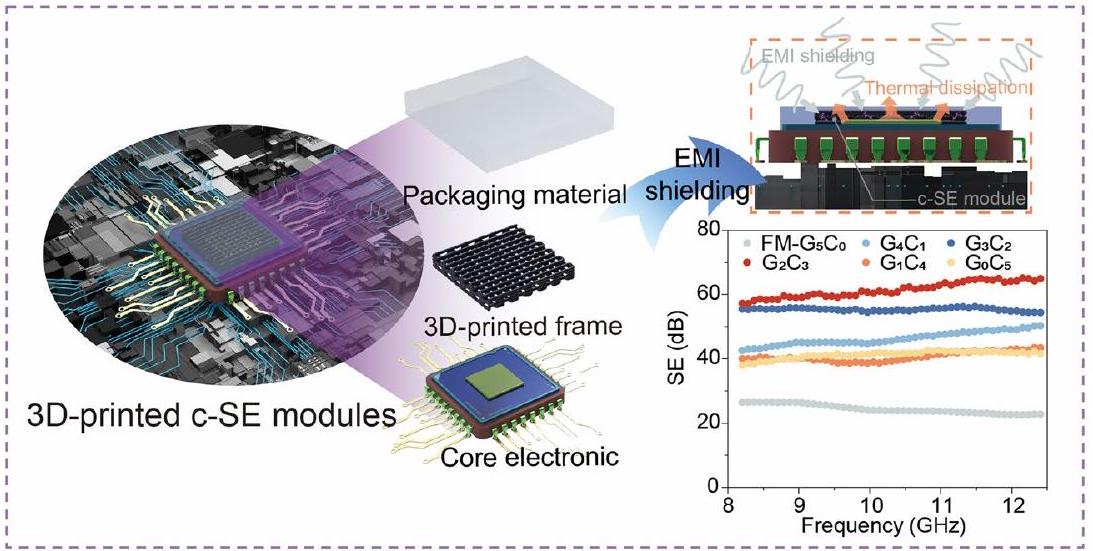 نسب جزيئات الجرافين وأنابيب الكربون النانوية تم صياغتها بشكل جيد من خلال التلاعب بخصائصها اللزجة. وبناءً على ذلك، تم إنشاء الهياكل المصممة بحرية ذات بنية مخصصة بشكل تعسفي ووظائف متعددة عبر الطباعة ثلاثية الأبعاد. بشكل خاص، فإن أداء SE للإطار المطبوعة ثلاثية الأبعاد يصل إلى 61.4 ديسيبل، مصحوبًا في الوقت نفسه بهيكل فائق الخفة من
1 المقدمة
تقدم إمكانيات واعدة في تعزيز التشتت المتجانس لجزيئات غرافين ونانوليفات الكربون في أنظمة المحاليل، حيث توجد مجموعات وظيفية وفيرة في السلاسل الجزيئية، مما يساهم بشكل إيجابي في التفاعل بين السليلوز وجزيئات الكربون النانوية، وبالتالي تحقيق ارتباط قوي على الواجهة في مركباتها. لذلك، تم استخدام السليلوز ومشتقاته كقوالب عضوية لتطوير بعض المواد الجديدة والمتعددة الاستخدامات لحماية EMI.
2 القسم التجريبي
2.1 المواد
2.2 إعداد أحبار Gr@ CNT القابلة للطباعة ثلاثية الأبعاد
جهاز تكسير الخلايا بالموجات فوق الصوتية (Ymnl-1800Y، نانجينغ YMNL للأدوات والمعدات، الصين). من الملحوظ أن التركيب التفصيلي للأحبار الوظيفية المعتمدة على الكربون موفر في الجدول S1. بعد التشتت المتجانس، تم تحريك المحلول ميكانيكياً وتركيزه في
2.3 الطباعة ثلاثية الأبعاد باستخدام تقنية الكتابة بالحبر المباشر (DIW) لإطارات Gr@CNT
2.4 توصيف
تم تقييم مسح التردد الزاوي الاهتزازي باستخدام جهاز الريومتر (AR2000ex، TA Instruments، الولايات المتحدة الأمريكية) في نطاق
3 النتائج والمناقشة
3.1 الأداء الريولوجي وقابلية الطباعة ثلاثية الأبعاد لأحبار Gr@CNT الوظيفية
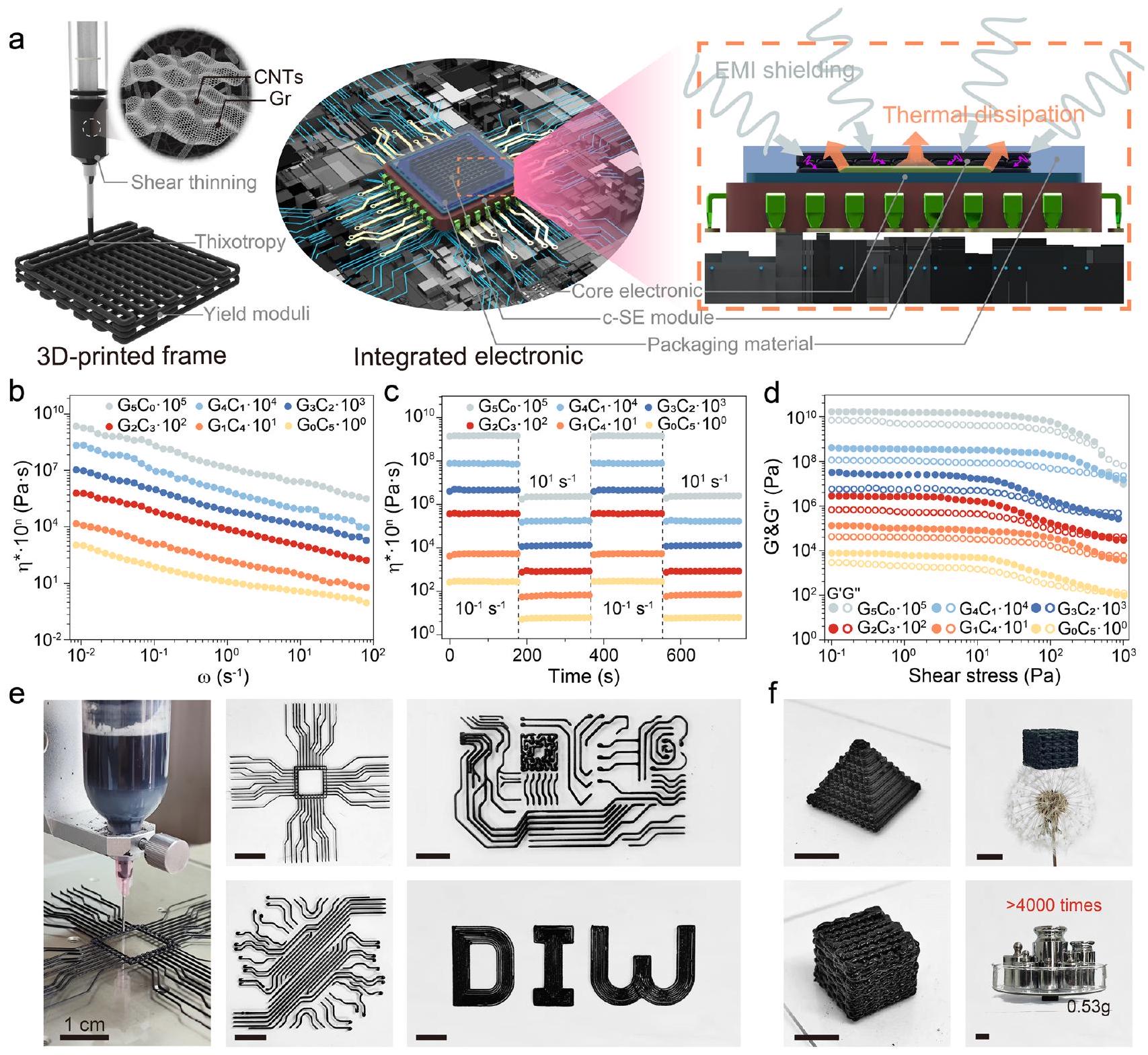
قص
، مما يشير إلى أن الشبكات المتشابكة من CNF و Gr@CNT قد دمرت جزئيًا لمقاومة معدل القص المطبق، وبالتالي
)، وفي الوقت نفسه، تحمل أكثر من 4000 مرة من وزنه دون أي تدمير أو انهيار. بالإضافة إلى ذلك، مع نفس التحميل، تم إثبات الاستقرار الجيد لشكل الهيكل ثلاثي الأبعاد تحت بيئة ذات درجة حرارة مرتفعة نسبيًا لمحاكاة تأثيرات التسخين الداخلي للإلكترونيات على الهيكل المصمم (الشكل S6). ومن ثم، توفر هذه الخصائص الفيزيائية ضمانات أساسية لتصنيع إطارات وظيفية عالية الأداء عبر تقنية الطباعة ثلاثية الأبعاد.
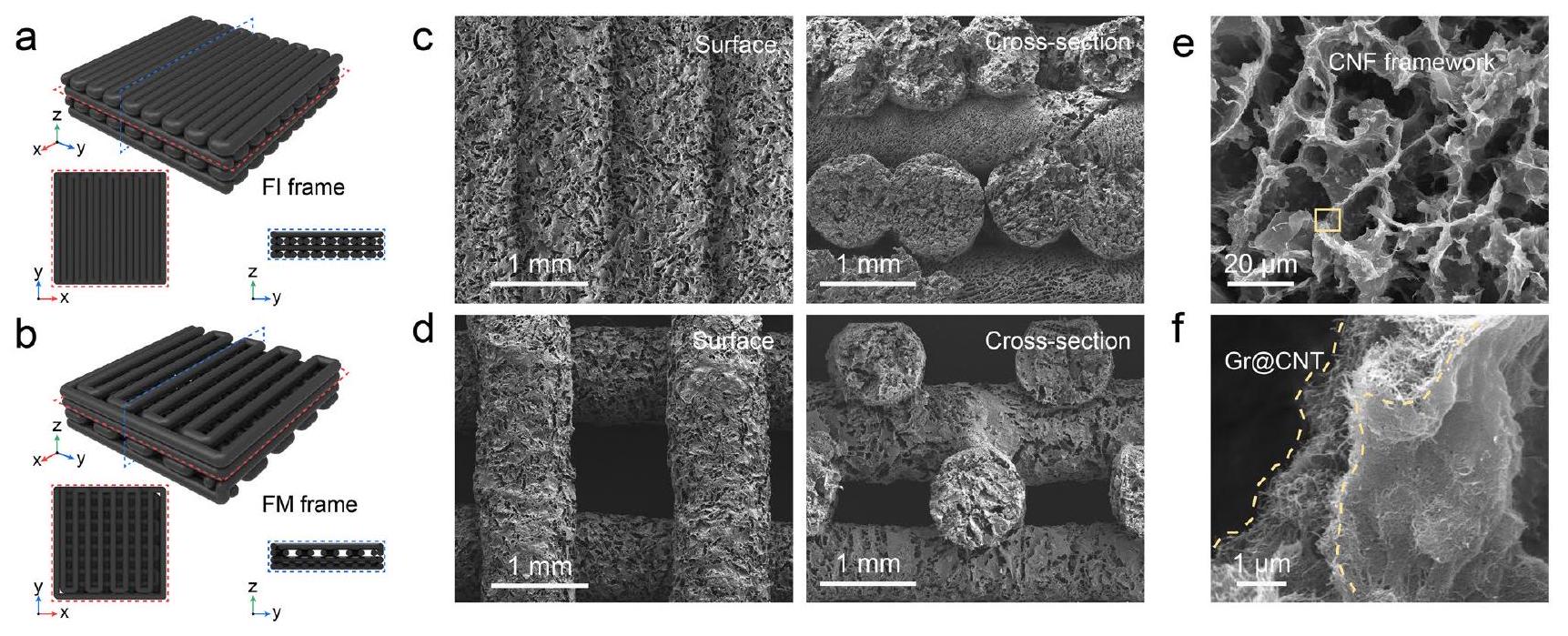
نظرًا للأداء الكهربائي الجوهري لجزيئات Gr و CNT، من المتوقع أن تستغل الهياكل المجمعه إمكانياتها في التوافق الكهرومغناطيسي للإلكترونيات المتكاملة. في هذا السياق، يتم تصوير الإطارات المطبوعة ثلاثية الأبعاد التمثيلية مع أوضاع تكديس مختلفة الموقع كإطارات ملء كامل (FI) وعدم تطابق كامل (FM) في الشكل 2أ، ب. وفقًا لذلك، يتم عرض أشكال السطح والمقطع العرضي للإطارات المصممة في الشكل 2ج، د، وأظهرت التكدسات المنتظمة من هياكل FI و FM قابلية التخصيص الجيدة للأشكال المبنية بحرية عبر الطباعة ثلاثية الأبعاد، سواء في أوضاع الملء الكامل أو عدم التطابق الكامل. علاوة على ذلك، تم توزيع الهياكل المسامية الاصطناعية بكثافة في داخل الإطارات، مما يظهر خاصية خفيفة الوزن للإطار. بالإضافة إلى ذلك، تم إجراء صور SEM عالية الدقة في المقطع العرضي لهياكل FM في الشكل 2هـ، و و. كما هو موضح في الشكل 2هـ، تم تشكيل الهياكل المسامية المجمعة بواسطة CNF وتوفير مواقع كافية لتحميل جزيئات CNT و Gr. تم تصور المزيد في الشكل 2و، حيث تم تشابك عدد كبير من جزيئات Gr@CNT بكثافة على هياكل CNF، وهو ما يُعزى بشكل رئيسي إلى التفاعل بين CNF وجزيئات Gr@ CNT [27، 49].
مقارنة مرئية، تم حساب القيم المتوسطة لـ EMI SE و SSE لجميع إطارات FI و FM في الشكل 3ب، ج. بشكل عام، كانت قيمة EMI SE لعينة FI أفضل قليلاً من تلك الخاصة بعينة FM بنفس نسبة Gr@CNT، وهو ما يُعزى بشكل أساسي إلى عدد أكبر من المسام، مما يمنح مسارات انتشار أطول لطاقة EMWs، وبالتالي يوفر
المواد التي تم الإبلاغ عنها سابقًا في الأدبيات (الشكل 3f) (المراجع التفصيلية داخل هذا الرسم موضحة في الجدول S3).
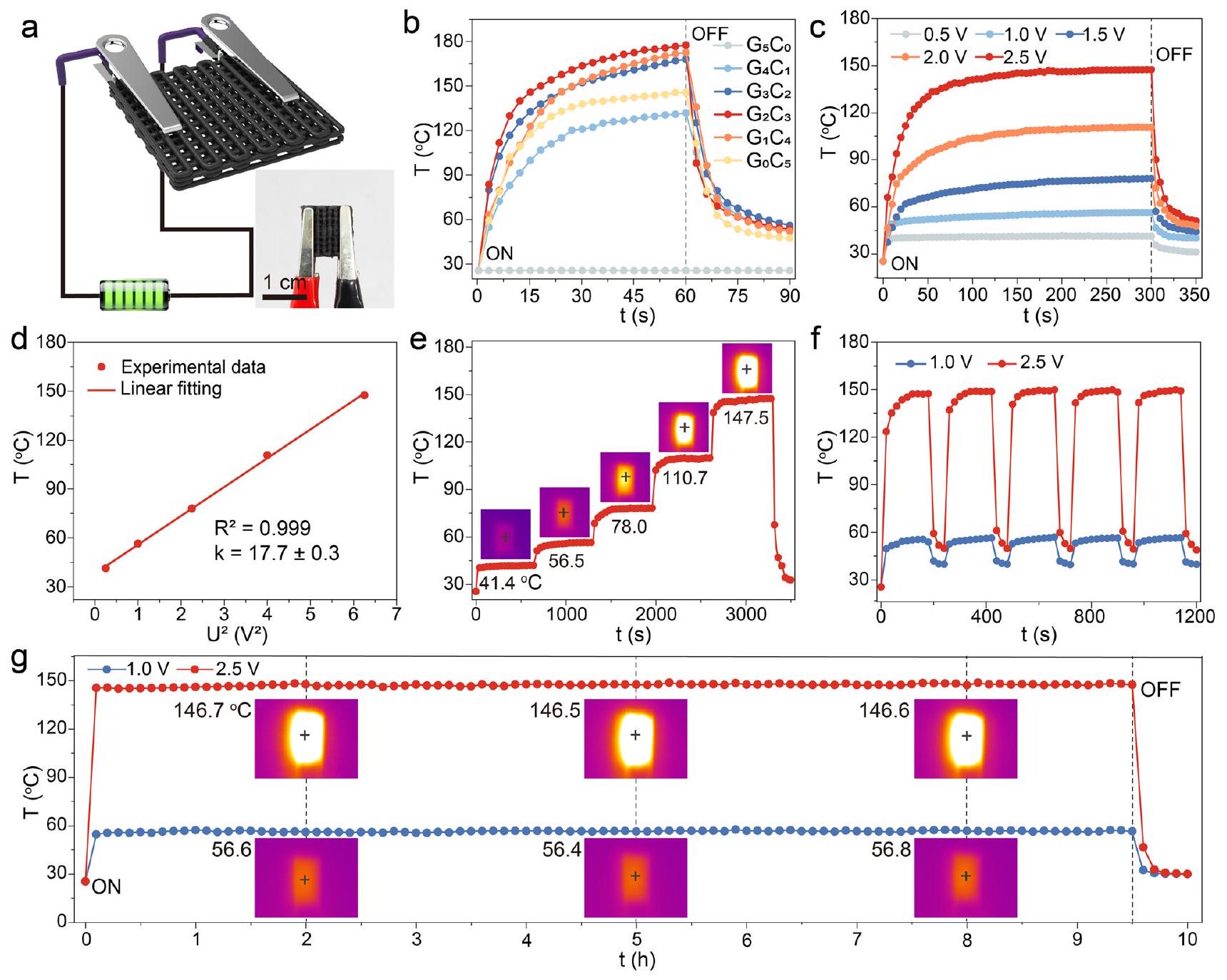
3.4 الأداء الكهروحراري للإطارات المطبوعة بتقنية الطباعة ثلاثية الأبعاد
3.5 وحدة درع متوافقة مطبوعة بتقنية الطباعة ثلاثية الأبعاد للإلكترونيات المتكاملة
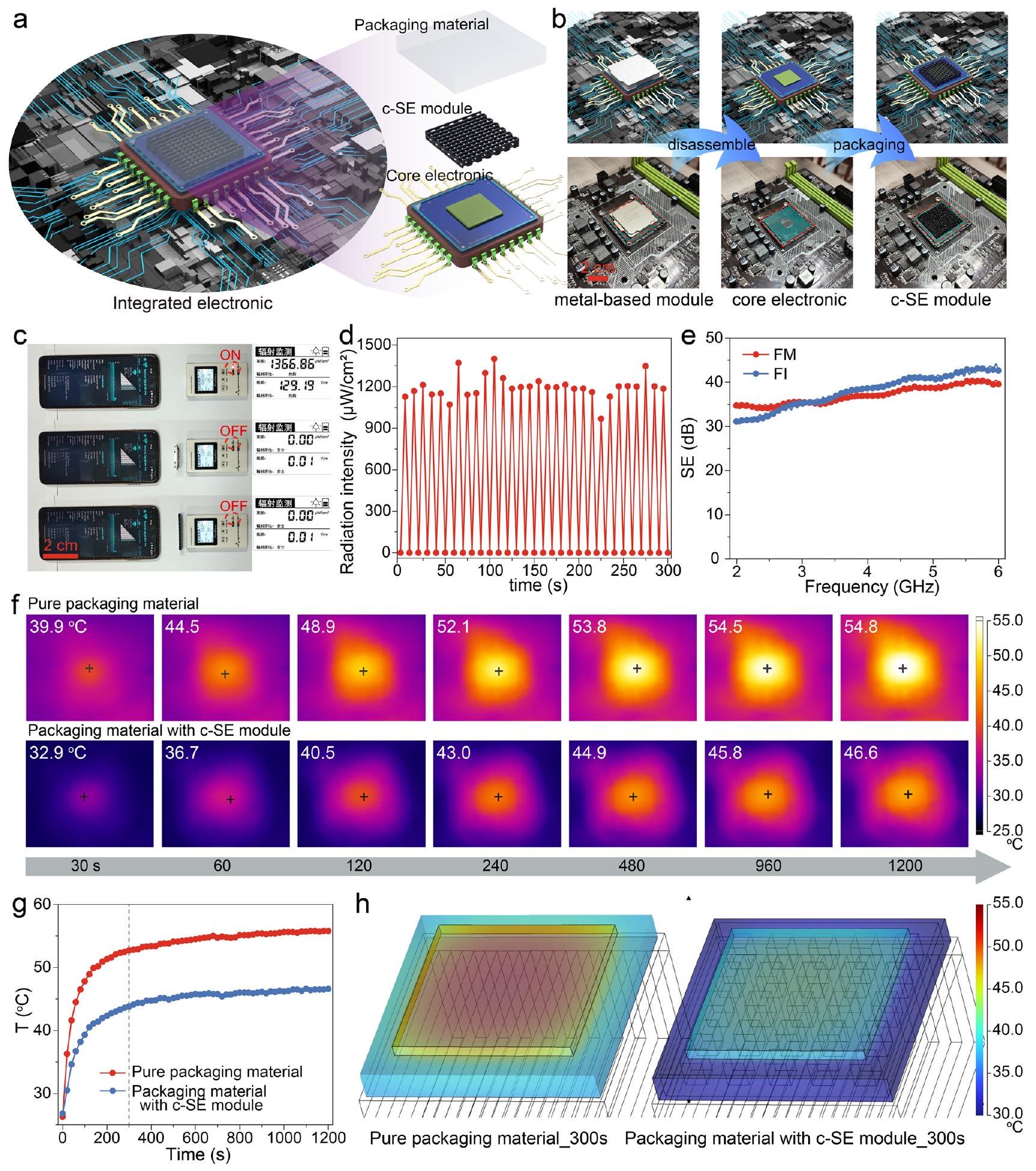
[44, 60]. بعد ذلك، تم تقييم مساهمة التشتت الحراري لوحدة c-SE المجمعة مع مادة التعبئة بشكل مكافئ على سخان LED، وتظهر الصور الحرارية التمثيلية في الشكل 5f (تظهر الصورة الرقمية المقاسة في الشكل S10). بالمقارنة مع مواد التعبئة النقية، المستخدمة عادة في الإلكترونيات لتسهيل التشتت الحراري، فإن مواد التعبئة المدمجة مع وحدة c-SE أظهرت كفاءة تشتت حراري أفضل من تلك النقية، ويمكن أن تصل أقصى فرق في درجة حرارة التشغيل إلى
4 الاستنتاجات
الإعلانات
المادة في هذه المقالة مشمولة في رخصة المشاع الإبداعي للمقالة، ما لم يُشار إلى خلاف ذلك في سطر الائتمان للمادة. إذا لم تكن المادة مشمولة في رخصة المشاع الإبداعي للمقالة وكان استخدامك المقصود غير مسموح به بموجب اللوائح القانونية أو يتجاوز الاستخدام المسموح به، فستحتاج إلى الحصول على إذن مباشرة من صاحب حقوق الطبع والنشر. لعرض نسخة من هذه الرخصة، قم بزيارة http://creativecommons.org/licenses/by/4.0/.
References
- Y. Xie, S. Liu, K. Huang, B. Chen, P. Shi et al., Ultra-broadband strong electromagnetic interference shielding with ferromagnetic graphene quartz fabric. Adv. Mater. 34, e2202982 (2022). https://doi.org/10.1002/adma. 202202982
- H. Lv, Y. Yao, S. Li, G. Wu, B. Zhao et al., Staggered circular nanoporous graphene converts electromagnetic waves into electricity. Nat. Commun. 14, 1982 (2023). https://doi.org/ 10.1038/s41467-023-37436-6
- D. Jiang, M. Lian, M. Xu, Q. Sun, B.B. Xu et al., Advances in triboelectric nanogenerator technology-applications in selfpowered sensors, Internet of Things, biomedicine, and blue energy. Adv. Compos. Hybrid Mater. 6, 57 (2023). https://doi. org/10.1007/s42114-023-00632-5
- S. Dang, O. Amin, B. Shihada, M.-S. Alouini, What should 6G be? Nat. Electron. 3, 20-29 (2020). https://doi.org/10.1038/ s41928-019-0355-6
- K. Zhang, L. Zheng, M.A. Aouraghe, F. Xu, Ultra-lightweight kevlar/polyimide 3D woven spacer multifunctional composites for high-gain microstrip antenna. Adv. Compos. Hybrid Mater. 5, 872-883 (2022). https://doi.org/10.1007/ s42114-021-00382-2
- J. Singh, Z. Din, Energy efficient data aggregation and densitybased spatial clustering of applications with noise for activity monitoring in wireless sensor networks. Eng. Sci. 19, 144-153 (2022). https://doi.org/10.30919/es8d694
- Z. Zeng, F. Jiang, Y. Yue, D. Han, L. Lin et al., Flexible and ultrathin waterproof cellular membranes based on high-conjunction metal-wrapped polymer nanofibers for electromagnetic interference shielding. Adv. Mater. 32, e1908496 (2020). https://doi.org/10.1002/adma. 201908496
- Y. Zhang, K. Ruan, K. Zhou, J. Gu, Controlled distributed Ti3 C2 tx hollow microspheres on thermally conductive polyimide composite films for excellent electromagnetic interference shielding. Adv. Mater. 35, e2211642 (2023). https://doi.org/10.1002/adma. 202211642
- D. Lan, Y. Wang, Y. Wang, X. Zhu, H. Li et al., Impact mechanisms of aggregation state regulation strategies on the
microwave absorption properties of flexible polyaniline. J. Colloid Interface Sci. 651, 494-503 (2023). https://doi.org/ 10.1016/j.jcis.2023.08.019 - Y. Hao, Z. Leng, C. Yu, P. Xie, S. Meng et al., Ultra-lightweight hollow bowl-like carbon as microwave absorber owning broad band and low filler loading. Carbon 212, 118156 (2023). https://doi.org/10.1016/j.carbon.2023.118156
- P. Xie, Y. Liu, M. Feng, M. Niu, C. Liu et al., Hierarchically porous
nanocomposites for ultralight highperformance microwave absorption. Adv. Compos. Hybrid Mater. 4, 173-185 (2021). https://doi.org/10.1007/ s42114-020-00202-z - F. Li, N. Wu, H. Kimura, Y. Wang, B.B. Xu et al., Initiating binary metal oxides microcubes electrsomagnetic wave absorber toward ultrabroad absorption bandwidth through interfacial and defects modulation. Nano-Micro Lett. 15, 220 (2023). https://doi.org/10.1007/s40820-023-01197-0
- Y. Cheng, X. Li, Y. Qin, Y. Fang, G. Liu et al., Hierarchically porous polyimide/Ti3C2Tx film with stable electromagnetic interference shielding after resisting harsh conditions. Sci. Adv. 7, eabj1663 (2021). https://doi.org/10.1126/sciadv.abj1663
- J. Ruan, Z. Chang, H. Rong, T.S. Alomar, D. Zhu et al., Highconductivity nickel shells encapsulated wood-derived porous carbon for improved electromagnetic interference shielding. Carbon 213, 118208 (2023). https://doi.org/10.1016/j.carbon. 2023.118208
- R. Zhu, Z. Li, G. Deng, Y. Yu, J. Shui et al., Anisotropic magnetic liquid metal film for wearable wireless electromagnetic sensing and smart electromagnetic interference shielding. Nano Energy 92, 106700 (2022). https://doi.org/10.1016/j. nanoen.2021.106700
- Y. Zhang, J. Gu, A perspective for developing polymerbased electromagnetic interference shielding composites. Nano-Micro Lett. 14, 89 (2022). https://doi.org/10.1007/ s40820-022-00843-3
- Q.-M. He, J.-R. Tao, Y. Yang, D. Yang, K. Zhang et al., Effect surface micro-wrinkles and micro-cracks on microwave shielding performance of copper-coated carbon nanotubes/polydimethylsiloxane composites. Carbon 213, 118216 (2023). https://doi.org/10.1016/j.carbon.2023.118216
- X. Shen, J.-K. Kim, Building 3D architecture in 2D thin film for effective EMI shielding. Matter 1, 796-798 (2019). https:// doi.org/10.1016/j.matt.2019.09.007
- W.-Y. Chen, X.-L. Shi, J. Zou, Z.-G. Chen, Thermoelectric coolers for on-chip thermal management: materials, design, and optimization. Mater. Sci. Eng. R. Rep. 151, 100700 (2022). https://doi.org/10.1016/j.mser.2022.100700
- J. Liu, M.-Y. Yu, Z.-Z. Yu, V. Nicolosi, Design and advanced manufacturing of electromagnetic interference shielding materials. Mater. Today 66, 245-272 (2023). https://doi.org/10. 1016/j.mattod.2023.03.022
- I.A. Kinloch, J. Suhr, J. Lou, R.J. Young, P.M. Ajayan, Composites with carbon nanotubes and graphene: an outlook. Science 362, 547-553 (2018). https://doi.org/10.1126/science. aat7439
- Y. Gao, D. Bao, M. Zhang, Y. Cui, F. Xu et al., Millefeuilleinspired thermal interface materials based on double selfassembly technique for efficient microelectronic cooling and electromagnetic interference shielding. Small 18, e2105567 (2022). https://doi.org/10.1002/smll. 202105567
- P. Song, Z. Ma, H. Qiu, Y. Ru, J. Gu, High-efficiency electromagnetic interference shielding of rGO@FeNi/epoxy composites with regular honeycomb structures. Nano-Micro Lett. 14, 51 (2022). https://doi.org/10.1007/s40820-022-00798-5
- Y. Chen, Y. Yang, Y. Xiong, L. Zhang, W. Xu et al., Porous aerogel and sponge composites: assisted by novel nanomaterials for electromagnetic interference shielding. Nano Today 38, 101204 (2021). https://doi.org/10.1016/j.nantod.2021.101204
- T. Wang, W.-W. Kong, W.-C. Yu, J.-F. Gao, K. Dai et al., A healable and mechanically enhanced composite with segregated conductive network structure for high-efficient electromagnetic interference shielding. Nano-Micro Lett. 13, 162 (2021). https://doi.org/10.1007/s40820-021-00693-5
- W. Kang, L. Zeng, S. Ling, C. Zhang, 3D printed supercapacitors toward trinity excellence in kinetics, energy density, and flexibility. Adv. Energy Mater. 11, 2100020 (2021). https://doi. org/10.1002/aenm. 202100020
- M. Aramfard, O. Kaynan, E. Hosseini, M. Zakertabrizi, L.M. Pérez et al., Aqueous dispersion of carbon nanomaterials with cellulose nanocrystals: an investigation of molecular interactions. Small 18, e2202216 (2022). https://doi.org/10.1002/ smll. 202202216
- E. Erfanian, R. Moaref, R. Ajdary, K.C. Tam, O.J. Rojas et al., Electrochemically synthesized graphene/TEMPO-oxidized cellulose nanofibrils hydrogels: highly conductive green inks for 3D printing of robust structured EMI shielding aerogels. Carbon 210, 118037 (2023). https://doi.org/10.1016/j.carbon. 2023.118037
- P. Song, B. Liu, C. Liang, K. Ruan, H. Qiu et al., Lightweight, flexible cellulose-derived carbon Aerogel@Reduced graphene oxide/PDMS composites with outstanding EMI shielding performances and excellent thermal conductivities. Nano-Micro Lett. 13, 91 (2021). https://doi.org/10.1007/ s40820-021-00624-4
- C. Wang, H. Gao, D. Liang, S. Liu, H. Zhang et al., Effective fabrication of flexible nickel chains/acrylate composite pressure-sensitive adhesives with layered structure for tunable electromagnetic interference shielding. Adv. Compos. Hybrid Mater. 5, 2906-2920 (2022). https://doi.org/10.1007/ s42114-022-00482-7
- C. Liang, Z. Gu, Y. Zhang, Z. Ma, H. Qiu et al., Structural design strategies of polymer matrix composites for electromagnetic interference shielding: a review. Nano-Micro Lett. 13, 181 (2021). https://doi.org/10.1007/s40820-021-00707-2
- L.-X. Liu, W. Chen, H.-B. Zhang, Q.-W. Wang, F. Guan et al., Flexible and multifunctional silk textiles with biomimetic leaf-like MXene/silver nanowire nanostructures for electromagnetic interference shielding, humidity monitoring, and self-derived hydrophobicity. Adv. Funct. Mater. 29, 1905197 (2019). https://doi.org/10.1002/adfm. 201905197
- J. Xu, H. Chang, B. Zhao, R. Li, T. Cui et al., Highly stretchable and conformal electromagnetic interference shielding armor with strain sensing ability. Chem. Eng. J. 431, 133908 (2022). https://doi.org/10.1016/j.cej.2021.133908
- H.-C. Kuo, C.-W. Kuo, C.-C. Wang, Effective low-frequency EMI conformal shielding for system-in-package (SiP) modules. Micro Opt. Tech. Lett. 65, 1892-1897 (2023). https:// doi.org/10.1002/mop. 33658
- J. Liu, L. McKeon, J. Garcia, S. Pinilla, S. Barwich et al., Additive manufacturing of Ti3C2-MXene-functionalized conductive polymer hydrogels for electromagnetic-interference shielding. Adv. Mater. 34, 2106253 (2022). https://doi.org/10. 1002/adma. 202106253
- R. Li, Q. Fu, X. Zou, Z. Zheng, W. Luo et al., Mn-Co-NiO thin films prepared by sputtering with alloy target. J. Adv. Ceram. 9, 64-71 (2020). https://doi.org/10.1007/ s40145-019-0348-y
- Z. Wang, B. Mao, Q. Wang, J. Yu, J. Dai et al., Ultrahigh conductive copper/large flake size graphene heterostructure thin-film with remarkable electromagnetic interference shielding effectiveness. Small 14, e1704332 (2018). https://doi.org/ 10.1002/smll. 201704332
- F. Ning, Z. Chai, X. Dan, P. Liu, Q. Wen et al., Integrated gas diffusion electrode with high conductivity obtained by skin electroplating for high specific power density fuel cell. Small Methods 7, e2201256 (2023). https://doi.org/10.1002/smtd. 202201256
- H. Abbasi, M. Antunes, J.I. Velasco, Recent advances in carbon-based polymer nanocomposites for electromagnetic interference shielding. Prog. Mater. Sci. 103, 319-373 (2019). https://doi.org/10.1016/j.pmatsci.2019.02.003
- F. Liu, Y. Gao, G. Wang, D. Wang, Y. Wang et al., Laserinduced graphene enabled additive manufacturing of multifunctional 3D architectures with freeform structures. Adv. Sci. 10, e2204990 (2023). https://doi.org/10.1002/advs. 202204990
- J. Liu, J. Garcia, L.M. Leahy, R. Song, D. Mullarkey et al., 3D printing of multifunctional conductive polymer composite hydrogels. Adv. Funct. Mater. 33, 2214196 (2023). https://doi. org/10.1002/adfm. 202214196
- K.P.M. Lee, T. Baum, R. Shanks, F. Daver, Electromagnetic interference shielding of 3D-printed graphene-polyamide-6 composites with 3D-printed morphology. Addit. Manuf. 43, 102020 (2021). https://doi.org/10.1016/j.addma.2021.102020
- Q. Lv, X. Tao, S. Shi, Y. Li, N. Chen, From materials to components: 3D-printed architected honeycombs toward high-performance and tunable electromagnetic interference shielding. Compos. Part B Eng. 230, 109500 (2022). https://doi.org/10. 1016/j.compositesb.2021.109500
- S. Shi, M. Dai, X. Tao, F. Wu, J. Sun et al., 3D printed polylactic acid/graphene nanocomposites with tailored multifunctionality towards superior thermal management and high-efficient electromagnetic interference shielding. Chem. Eng. J. 450, 138248 (2022). https://doi.org/10.1016/j.cej.2022.138248
- P.R. Agrawal, R. Kumar, S. Teotia, S. Kumari, D.P. Mondal et al., Lightweight, high electrical and thermal conducting carbon-rGO composites foam for superior electromagnetic
interference shielding. Compos. Part B Eng. 160, 131-139 (2019). https://doi.org/10.1016/j.compositesb.2018.10.033 - C. Fu, Z. Sheng, X. Zhang, Laminated structural engineering strategy toward carbon nanotube-based aerogel films. ACS Nano 16, 9378-9388 (2022). https://doi.org/10.1021/acsnano. 2c02193
- X. Liu, Y. Li, X. Sun, W. Tang, G. Deng et al., Off/on switchable smart electromagnetic interference shielding aerogel. Matter 4, 1735-1747 (2021). https://doi.org/10.1016/j.matt. 2021.02.022
- Y.-N. Gao, Y. Wang, T.-N. Yue, B. Zhao, R. Che et al., Superstructure silver micro-tube composites for ultrahigh electromagnetic wave shielding. Chem. Eng. J. 430, 132949 (2022). https://doi.org/10.1016/j.cej.2021.132949
- H. Wu, W. Yuan, X. Yuan, L. Cheng, Atmosphere-free activation methodology for holey graphene/cellulose nanofiberbased film electrode with highly efficient capacitance performance. Carbon Energy 5, e229 (2023). https://doi.org/10. 1002/cey2.229
- A. Gevorkian, S.M. Morozova, S. Kheiri, N. Khuu, H. Chen et al., Actuation of three-dimensional-printed nanocolloidal hydrogel with structural anisotropy. Adv. Funct. Mater. 31, 2010743 (2021). https://doi.org/10.1002/adfm. 202010743
- G. Zhou, M.-C. Li, C. Liu, Q. Wu, C. Mei, 3D printed Ti3C2Tx MXene/cellulose nanofiber architectures for solidstate supercapacitors: ink rheology, 3D printability, and electrochemical performance. Adv. Funct. Mater. 32, 2109593 (2022). https://doi.org/10.1002/adfm. 202109593
- M.A.S.R. Saadi, A. Maguire, N.T. Pottackal, M.S.H. Thakur, M.M. Ikram et al., Direct ink writing: a 3D printing technology for diverse materials. Adv. Mater. 34, e2108855 (2022). https://doi.org/10.1002/adma. 202108855
- J. Li, H. Sun, S.-Q. Yi, K.-K. Zou, D. Zhang et al., Flexible polydimethylsiloxane composite with multi-scale conductive network for ultra-strong electromagnetic interference protection. Nano-Micro Lett. 15, 15 (2022). https://doi.org/10.1007/ s40820-022-00990-7
- G. Cao, S. Cai, H. Zhang, Y. Tian, High-performance conductive adhesives based on water-soluble resins for printed circuits, flexible conductive films, and electromagnetic interference shielding devices. Adv. Compos. Hybrid Mater. 5, 1730-1742 (2022). https://doi.org/10.1007/ s42114-021-00402-1
- Z. Ma, S. Kang, J. Ma, L. Shao, Y. Zhang et al., Ultraflexible and mechanically strong double-layered aramid nanofiberTi3C2Tx MXene/silver nanowire nanocomposite papers for high-performance electromagnetic interference shielding. ACS Nano 14, 8368-8382 (2020). https://doi.org/10.1021/ acsnano.0c02401
- Q. Liu, J. Gu, W. Zhang, Y. Miyamoto, Z. Chen et al., Biomorphic porous graphitic carbon for electromagnetic interference shielding. J. Mater. Chem. 22, 21183-21188 (2012). https:// doi.org/10.1039/C2JM34590K
- L. She, B. Zhao, M. Yuan, J. Chen, B. Fan et al., Jouleheated flexible carbon composite towards the boosted electromagnetic wave shielding properties. Adv. Compos.
58. M. Zhou, S. Tan, J. Wang, Y. Wu, L. Liang et al., “three-inone” multi-scale structural design of carbon fiber-based composites for personal electromagnetic protection and thermal management. Nano-Micro Lett. 15, 176 (2023). https://doi. org/10.1007/s40820-023-01144-z
59. W. He, J. Zheng, W. Dong, S. Jiang, G. Lou et al., Efficient electromagnetic wave absorption and Joule heating via
ultra-light carbon composite aerogels derived from bimetalorganic frameworks. Chem. Eng. J. 459, 141677 (2023). https://doi.org/10.1016/j.cej.2023.141677
60. L. Wang, Z. Ma, Y. Zhang, L. Chen, D. Cao et al., Polymerbased EMI shielding composites with 3D conductive networks: a mini-review. SusMat 1, 413-431 (2021). https://doi. org/10.1002/sus2.21
- Fangchao Cheng, fangchaocheng @ gxu.edu.cn; Yinghong Chen, johnchen @scu.edu.cn
State Key Laboratory of Featured Metal Materials and Life-Cycle Safety for Composite Structures, School of Resources, Environment and Materials, Guangxi University, No. 100, Daxuedong Road, Nanning 530004, People’s Republic of China
State Key Laboratory of Polymer Materials Engineering, Polymer Research Institute of Sichuan University, Sichuan University, No. 24 South Section 1, Yihuan Road, Chengdu 610065, People’s Republic of China
DOI: https://doi.org/10.1007/s40820-023-01317-w
PMID: https://pubmed.ncbi.nlm.nih.gov/38214822
Publication Date: 2024-01-12
Nano-Micro Lett. (2024) 16:85
Accepted: 5 December 2023 Published online: 12 January 2024 © The Author(s) 2024
3D-Printed Carbon-Based Conformal Electromagnetic Interference Shielding Module for Integrated Electronics
HIGHLIGHTS
- 3D printable functional inks incorporated with graphene and carbon nanotube nanoparticles were well-formulated by manipulating their rheological performance
- The frame with ultralight structure (
) and high-efficiency electromagnetic interference shielding ( 61.4 dB ) was assembled - 3D-printed c-SE module was in situ integrated onto the electronics, affording multiple functions of electromagnetic compatibility and thermal dissipation.
Abstract
Electromagnetic interference shielding (EMI SE) modules are the core component of modern electronics. However, the traditional metal-based SE modules always take up indispensable three-dimensional space inside electronics, posing a major obstacle to the integration of electronics. The innovation of integrating 3D-printed conformal shielding (c-SE) modules with packaging materials onto core electronics offers infinite possibilities to satisfy ideal SE function without occupying additional space. Herein, the 3D printable carbon-based inks with various proportions of graphene and carbon nanotube nanoparticles are well-formulated by manipulating their rheological peculiarity. Accordingly, the free-constructed architectures with arbitrarily-customized structure and multifunctionality are created via 3D printing. In particular, the SE performance of 3D-printed frame is up to 61.4 dB , simultaneously accompanied with an ultralight architecture of
1 Introduction
presents a promising potential in promoting the uniform dispersion of Gr and CNT nanoparticles in solution systems, since there exist abundant functional groups in molecular chains, imparting a positive contribution to the interaction between cellulose and carbon nanoparticles, thus realizing a strong interfacial binding in their composites [26,27]. Hence, cellulose and its derivatives as organic templates were employed to develop some novel and versatile EMI shielding materials [28,29].
2 Experimental Section
2.1 Materials
2.2 Preparation of 3D Printable Gr@ CNT Inks
an ultrasonic cell disruptor (Ymnl-1800Y, Nanjing YMNL Instrument and Equipment, China). Noticeably, the detailed compositions of carbon-based functional inks are provided in Table S1. After uniform dispersion, the solution was mechanically stirred and concentrated at
2.3 Direct Ink Writing (DIW) 3D Printing of Gr@CNT Frames
2.4 Characterization
rheometer (AR2000ex, TA Instruments, USA), the oscillatory angular frequency sweep was assessed in the range of
3 Results and Discussion
3.1 Rheological Performance and 3D Printability of Gr@CNT Functional Inks
rate (Fig. 1c). Each ink afforded a similar behavior, exhibiting a steady-state viscous contribution as fixed shear rate. Initially, a high viscosity over
exhibiting a shear-thinning behavior. Meanwhile, the viscosity would rapidly recover to its initial state as the shear rate returned to the low one, and a perfect cycle was confirmed in response to the repeated shear rates. This reversible transformation in viscoelastic performance induced by shear rates provides a guarantee for inks with fluid appearance suitable for 3D printing and shape stability of 3D-printed architectures during depositing onto substrate [51]. Besides, the storage and loss moduli (
3.2 Structural Characterizations of 3D-Printed Frames
3.3 EMI SE peculiarity of 3D-Printed Frames
a higher internal dissipation of EMWs energy [56]. Nevertheless, the ignorable sacrifice for the EMI SE value of FM samples was in exchange for a significant enhancement in SSE performance. For instance, the SSE value of FM
materials previously reported in the literature (Fig. 3f) (the detailed references inside this plot are listed in Table S3).
3.4 Electrothermal Performance of 3D-Printed Frames
3.5 3D-printed Conformal-shielding Module for Integrated Electronics
[44, 60]. Thereafter, the thermal dissipation contribution of c-SE module assembling with packaging material was equivalently evaluated on a LED heater, and the representative infrared images is exhibited in Fig. 5f (the measured digital image is shown in Fig. S10). As comparison to the pure packaging materials, commonly used in electronics for facilitating thermal dissipation, the packaging materials incorporated with c-SE module posed the better thermal dissipation efficiency than the pure one, and a maximal working-temperature difference could reach
4 Conclusions
Declarations
material in this article are included in the article’s Creative Commons licence, unless indicated otherwise in a credit line to the material. If material is not included in the article’s Creative Commons licence and your intended use is not permitted by statutory regulation or exceeds the permitted use, you will need to obtain permission directly from the copyright holder. To view a copy of this licence, visit http://creativecommons.org/licenses/by/4.0/.
References
- Y. Xie, S. Liu, K. Huang, B. Chen, P. Shi et al., Ultra-broadband strong electromagnetic interference shielding with ferromagnetic graphene quartz fabric. Adv. Mater. 34, e2202982 (2022). https://doi.org/10.1002/adma. 202202982
- H. Lv, Y. Yao, S. Li, G. Wu, B. Zhao et al., Staggered circular nanoporous graphene converts electromagnetic waves into electricity. Nat. Commun. 14, 1982 (2023). https://doi.org/ 10.1038/s41467-023-37436-6
- D. Jiang, M. Lian, M. Xu, Q. Sun, B.B. Xu et al., Advances in triboelectric nanogenerator technology-applications in selfpowered sensors, Internet of Things, biomedicine, and blue energy. Adv. Compos. Hybrid Mater. 6, 57 (2023). https://doi. org/10.1007/s42114-023-00632-5
- S. Dang, O. Amin, B. Shihada, M.-S. Alouini, What should 6G be? Nat. Electron. 3, 20-29 (2020). https://doi.org/10.1038/ s41928-019-0355-6
- K. Zhang, L. Zheng, M.A. Aouraghe, F. Xu, Ultra-lightweight kevlar/polyimide 3D woven spacer multifunctional composites for high-gain microstrip antenna. Adv. Compos. Hybrid Mater. 5, 872-883 (2022). https://doi.org/10.1007/ s42114-021-00382-2
- J. Singh, Z. Din, Energy efficient data aggregation and densitybased spatial clustering of applications with noise for activity monitoring in wireless sensor networks. Eng. Sci. 19, 144-153 (2022). https://doi.org/10.30919/es8d694
- Z. Zeng, F. Jiang, Y. Yue, D. Han, L. Lin et al., Flexible and ultrathin waterproof cellular membranes based on high-conjunction metal-wrapped polymer nanofibers for electromagnetic interference shielding. Adv. Mater. 32, e1908496 (2020). https://doi.org/10.1002/adma. 201908496
- Y. Zhang, K. Ruan, K. Zhou, J. Gu, Controlled distributed Ti3 C2 tx hollow microspheres on thermally conductive polyimide composite films for excellent electromagnetic interference shielding. Adv. Mater. 35, e2211642 (2023). https://doi.org/10.1002/adma. 202211642
- D. Lan, Y. Wang, Y. Wang, X. Zhu, H. Li et al., Impact mechanisms of aggregation state regulation strategies on the
microwave absorption properties of flexible polyaniline. J. Colloid Interface Sci. 651, 494-503 (2023). https://doi.org/ 10.1016/j.jcis.2023.08.019 - Y. Hao, Z. Leng, C. Yu, P. Xie, S. Meng et al., Ultra-lightweight hollow bowl-like carbon as microwave absorber owning broad band and low filler loading. Carbon 212, 118156 (2023). https://doi.org/10.1016/j.carbon.2023.118156
- P. Xie, Y. Liu, M. Feng, M. Niu, C. Liu et al., Hierarchically porous
nanocomposites for ultralight highperformance microwave absorption. Adv. Compos. Hybrid Mater. 4, 173-185 (2021). https://doi.org/10.1007/ s42114-020-00202-z - F. Li, N. Wu, H. Kimura, Y. Wang, B.B. Xu et al., Initiating binary metal oxides microcubes electrsomagnetic wave absorber toward ultrabroad absorption bandwidth through interfacial and defects modulation. Nano-Micro Lett. 15, 220 (2023). https://doi.org/10.1007/s40820-023-01197-0
- Y. Cheng, X. Li, Y. Qin, Y. Fang, G. Liu et al., Hierarchically porous polyimide/Ti3C2Tx film with stable electromagnetic interference shielding after resisting harsh conditions. Sci. Adv. 7, eabj1663 (2021). https://doi.org/10.1126/sciadv.abj1663
- J. Ruan, Z. Chang, H. Rong, T.S. Alomar, D. Zhu et al., Highconductivity nickel shells encapsulated wood-derived porous carbon for improved electromagnetic interference shielding. Carbon 213, 118208 (2023). https://doi.org/10.1016/j.carbon. 2023.118208
- R. Zhu, Z. Li, G. Deng, Y. Yu, J. Shui et al., Anisotropic magnetic liquid metal film for wearable wireless electromagnetic sensing and smart electromagnetic interference shielding. Nano Energy 92, 106700 (2022). https://doi.org/10.1016/j. nanoen.2021.106700
- Y. Zhang, J. Gu, A perspective for developing polymerbased electromagnetic interference shielding composites. Nano-Micro Lett. 14, 89 (2022). https://doi.org/10.1007/ s40820-022-00843-3
- Q.-M. He, J.-R. Tao, Y. Yang, D. Yang, K. Zhang et al., Effect surface micro-wrinkles and micro-cracks on microwave shielding performance of copper-coated carbon nanotubes/polydimethylsiloxane composites. Carbon 213, 118216 (2023). https://doi.org/10.1016/j.carbon.2023.118216
- X. Shen, J.-K. Kim, Building 3D architecture in 2D thin film for effective EMI shielding. Matter 1, 796-798 (2019). https:// doi.org/10.1016/j.matt.2019.09.007
- W.-Y. Chen, X.-L. Shi, J. Zou, Z.-G. Chen, Thermoelectric coolers for on-chip thermal management: materials, design, and optimization. Mater. Sci. Eng. R. Rep. 151, 100700 (2022). https://doi.org/10.1016/j.mser.2022.100700
- J. Liu, M.-Y. Yu, Z.-Z. Yu, V. Nicolosi, Design and advanced manufacturing of electromagnetic interference shielding materials. Mater. Today 66, 245-272 (2023). https://doi.org/10. 1016/j.mattod.2023.03.022
- I.A. Kinloch, J. Suhr, J. Lou, R.J. Young, P.M. Ajayan, Composites with carbon nanotubes and graphene: an outlook. Science 362, 547-553 (2018). https://doi.org/10.1126/science. aat7439
- Y. Gao, D. Bao, M. Zhang, Y. Cui, F. Xu et al., Millefeuilleinspired thermal interface materials based on double selfassembly technique for efficient microelectronic cooling and electromagnetic interference shielding. Small 18, e2105567 (2022). https://doi.org/10.1002/smll. 202105567
- P. Song, Z. Ma, H. Qiu, Y. Ru, J. Gu, High-efficiency electromagnetic interference shielding of rGO@FeNi/epoxy composites with regular honeycomb structures. Nano-Micro Lett. 14, 51 (2022). https://doi.org/10.1007/s40820-022-00798-5
- Y. Chen, Y. Yang, Y. Xiong, L. Zhang, W. Xu et al., Porous aerogel and sponge composites: assisted by novel nanomaterials for electromagnetic interference shielding. Nano Today 38, 101204 (2021). https://doi.org/10.1016/j.nantod.2021.101204
- T. Wang, W.-W. Kong, W.-C. Yu, J.-F. Gao, K. Dai et al., A healable and mechanically enhanced composite with segregated conductive network structure for high-efficient electromagnetic interference shielding. Nano-Micro Lett. 13, 162 (2021). https://doi.org/10.1007/s40820-021-00693-5
- W. Kang, L. Zeng, S. Ling, C. Zhang, 3D printed supercapacitors toward trinity excellence in kinetics, energy density, and flexibility. Adv. Energy Mater. 11, 2100020 (2021). https://doi. org/10.1002/aenm. 202100020
- M. Aramfard, O. Kaynan, E. Hosseini, M. Zakertabrizi, L.M. Pérez et al., Aqueous dispersion of carbon nanomaterials with cellulose nanocrystals: an investigation of molecular interactions. Small 18, e2202216 (2022). https://doi.org/10.1002/ smll. 202202216
- E. Erfanian, R. Moaref, R. Ajdary, K.C. Tam, O.J. Rojas et al., Electrochemically synthesized graphene/TEMPO-oxidized cellulose nanofibrils hydrogels: highly conductive green inks for 3D printing of robust structured EMI shielding aerogels. Carbon 210, 118037 (2023). https://doi.org/10.1016/j.carbon. 2023.118037
- P. Song, B. Liu, C. Liang, K. Ruan, H. Qiu et al., Lightweight, flexible cellulose-derived carbon Aerogel@Reduced graphene oxide/PDMS composites with outstanding EMI shielding performances and excellent thermal conductivities. Nano-Micro Lett. 13, 91 (2021). https://doi.org/10.1007/ s40820-021-00624-4
- C. Wang, H. Gao, D. Liang, S. Liu, H. Zhang et al., Effective fabrication of flexible nickel chains/acrylate composite pressure-sensitive adhesives with layered structure for tunable electromagnetic interference shielding. Adv. Compos. Hybrid Mater. 5, 2906-2920 (2022). https://doi.org/10.1007/ s42114-022-00482-7
- C. Liang, Z. Gu, Y. Zhang, Z. Ma, H. Qiu et al., Structural design strategies of polymer matrix composites for electromagnetic interference shielding: a review. Nano-Micro Lett. 13, 181 (2021). https://doi.org/10.1007/s40820-021-00707-2
- L.-X. Liu, W. Chen, H.-B. Zhang, Q.-W. Wang, F. Guan et al., Flexible and multifunctional silk textiles with biomimetic leaf-like MXene/silver nanowire nanostructures for electromagnetic interference shielding, humidity monitoring, and self-derived hydrophobicity. Adv. Funct. Mater. 29, 1905197 (2019). https://doi.org/10.1002/adfm. 201905197
- J. Xu, H. Chang, B. Zhao, R. Li, T. Cui et al., Highly stretchable and conformal electromagnetic interference shielding armor with strain sensing ability. Chem. Eng. J. 431, 133908 (2022). https://doi.org/10.1016/j.cej.2021.133908
- H.-C. Kuo, C.-W. Kuo, C.-C. Wang, Effective low-frequency EMI conformal shielding for system-in-package (SiP) modules. Micro Opt. Tech. Lett. 65, 1892-1897 (2023). https:// doi.org/10.1002/mop. 33658
- J. Liu, L. McKeon, J. Garcia, S. Pinilla, S. Barwich et al., Additive manufacturing of Ti3C2-MXene-functionalized conductive polymer hydrogels for electromagnetic-interference shielding. Adv. Mater. 34, 2106253 (2022). https://doi.org/10. 1002/adma. 202106253
- R. Li, Q. Fu, X. Zou, Z. Zheng, W. Luo et al., Mn-Co-NiO thin films prepared by sputtering with alloy target. J. Adv. Ceram. 9, 64-71 (2020). https://doi.org/10.1007/ s40145-019-0348-y
- Z. Wang, B. Mao, Q. Wang, J. Yu, J. Dai et al., Ultrahigh conductive copper/large flake size graphene heterostructure thin-film with remarkable electromagnetic interference shielding effectiveness. Small 14, e1704332 (2018). https://doi.org/ 10.1002/smll. 201704332
- F. Ning, Z. Chai, X. Dan, P. Liu, Q. Wen et al., Integrated gas diffusion electrode with high conductivity obtained by skin electroplating for high specific power density fuel cell. Small Methods 7, e2201256 (2023). https://doi.org/10.1002/smtd. 202201256
- H. Abbasi, M. Antunes, J.I. Velasco, Recent advances in carbon-based polymer nanocomposites for electromagnetic interference shielding. Prog. Mater. Sci. 103, 319-373 (2019). https://doi.org/10.1016/j.pmatsci.2019.02.003
- F. Liu, Y. Gao, G. Wang, D. Wang, Y. Wang et al., Laserinduced graphene enabled additive manufacturing of multifunctional 3D architectures with freeform structures. Adv. Sci. 10, e2204990 (2023). https://doi.org/10.1002/advs. 202204990
- J. Liu, J. Garcia, L.M. Leahy, R. Song, D. Mullarkey et al., 3D printing of multifunctional conductive polymer composite hydrogels. Adv. Funct. Mater. 33, 2214196 (2023). https://doi. org/10.1002/adfm. 202214196
- K.P.M. Lee, T. Baum, R. Shanks, F. Daver, Electromagnetic interference shielding of 3D-printed graphene-polyamide-6 composites with 3D-printed morphology. Addit. Manuf. 43, 102020 (2021). https://doi.org/10.1016/j.addma.2021.102020
- Q. Lv, X. Tao, S. Shi, Y. Li, N. Chen, From materials to components: 3D-printed architected honeycombs toward high-performance and tunable electromagnetic interference shielding. Compos. Part B Eng. 230, 109500 (2022). https://doi.org/10. 1016/j.compositesb.2021.109500
- S. Shi, M. Dai, X. Tao, F. Wu, J. Sun et al., 3D printed polylactic acid/graphene nanocomposites with tailored multifunctionality towards superior thermal management and high-efficient electromagnetic interference shielding. Chem. Eng. J. 450, 138248 (2022). https://doi.org/10.1016/j.cej.2022.138248
- P.R. Agrawal, R. Kumar, S. Teotia, S. Kumari, D.P. Mondal et al., Lightweight, high electrical and thermal conducting carbon-rGO composites foam for superior electromagnetic
interference shielding. Compos. Part B Eng. 160, 131-139 (2019). https://doi.org/10.1016/j.compositesb.2018.10.033 - C. Fu, Z. Sheng, X. Zhang, Laminated structural engineering strategy toward carbon nanotube-based aerogel films. ACS Nano 16, 9378-9388 (2022). https://doi.org/10.1021/acsnano. 2c02193
- X. Liu, Y. Li, X. Sun, W. Tang, G. Deng et al., Off/on switchable smart electromagnetic interference shielding aerogel. Matter 4, 1735-1747 (2021). https://doi.org/10.1016/j.matt. 2021.02.022
- Y.-N. Gao, Y. Wang, T.-N. Yue, B. Zhao, R. Che et al., Superstructure silver micro-tube composites for ultrahigh electromagnetic wave shielding. Chem. Eng. J. 430, 132949 (2022). https://doi.org/10.1016/j.cej.2021.132949
- H. Wu, W. Yuan, X. Yuan, L. Cheng, Atmosphere-free activation methodology for holey graphene/cellulose nanofiberbased film electrode with highly efficient capacitance performance. Carbon Energy 5, e229 (2023). https://doi.org/10. 1002/cey2.229
- A. Gevorkian, S.M. Morozova, S. Kheiri, N. Khuu, H. Chen et al., Actuation of three-dimensional-printed nanocolloidal hydrogel with structural anisotropy. Adv. Funct. Mater. 31, 2010743 (2021). https://doi.org/10.1002/adfm. 202010743
- G. Zhou, M.-C. Li, C. Liu, Q. Wu, C. Mei, 3D printed Ti3C2Tx MXene/cellulose nanofiber architectures for solidstate supercapacitors: ink rheology, 3D printability, and electrochemical performance. Adv. Funct. Mater. 32, 2109593 (2022). https://doi.org/10.1002/adfm. 202109593
- M.A.S.R. Saadi, A. Maguire, N.T. Pottackal, M.S.H. Thakur, M.M. Ikram et al., Direct ink writing: a 3D printing technology for diverse materials. Adv. Mater. 34, e2108855 (2022). https://doi.org/10.1002/adma. 202108855
- J. Li, H. Sun, S.-Q. Yi, K.-K. Zou, D. Zhang et al., Flexible polydimethylsiloxane composite with multi-scale conductive network for ultra-strong electromagnetic interference protection. Nano-Micro Lett. 15, 15 (2022). https://doi.org/10.1007/ s40820-022-00990-7
- G. Cao, S. Cai, H. Zhang, Y. Tian, High-performance conductive adhesives based on water-soluble resins for printed circuits, flexible conductive films, and electromagnetic interference shielding devices. Adv. Compos. Hybrid Mater. 5, 1730-1742 (2022). https://doi.org/10.1007/ s42114-021-00402-1
- Z. Ma, S. Kang, J. Ma, L. Shao, Y. Zhang et al., Ultraflexible and mechanically strong double-layered aramid nanofiberTi3C2Tx MXene/silver nanowire nanocomposite papers for high-performance electromagnetic interference shielding. ACS Nano 14, 8368-8382 (2020). https://doi.org/10.1021/ acsnano.0c02401
- Q. Liu, J. Gu, W. Zhang, Y. Miyamoto, Z. Chen et al., Biomorphic porous graphitic carbon for electromagnetic interference shielding. J. Mater. Chem. 22, 21183-21188 (2012). https:// doi.org/10.1039/C2JM34590K
- L. She, B. Zhao, M. Yuan, J. Chen, B. Fan et al., Jouleheated flexible carbon composite towards the boosted electromagnetic wave shielding properties. Adv. Compos.
58. M. Zhou, S. Tan, J. Wang, Y. Wu, L. Liang et al., “three-inone” multi-scale structural design of carbon fiber-based composites for personal electromagnetic protection and thermal management. Nano-Micro Lett. 15, 176 (2023). https://doi. org/10.1007/s40820-023-01144-z
59. W. He, J. Zheng, W. Dong, S. Jiang, G. Lou et al., Efficient electromagnetic wave absorption and Joule heating via
ultra-light carbon composite aerogels derived from bimetalorganic frameworks. Chem. Eng. J. 459, 141677 (2023). https://doi.org/10.1016/j.cej.2023.141677
60. L. Wang, Z. Ma, Y. Zhang, L. Chen, D. Cao et al., Polymerbased EMI shielding composites with 3D conductive networks: a mini-review. SusMat 1, 413-431 (2021). https://doi. org/10.1002/sus2.21
- Fangchao Cheng, fangchaocheng @ gxu.edu.cn; Yinghong Chen, johnchen @scu.edu.cn
State Key Laboratory of Featured Metal Materials and Life-Cycle Safety for Composite Structures, School of Resources, Environment and Materials, Guangxi University, No. 100, Daxuedong Road, Nanning 530004, People’s Republic of China
State Key Laboratory of Polymer Materials Engineering, Polymer Research Institute of Sichuan University, Sichuan University, No. 24 South Section 1, Yihuan Road, Chengdu 610065, People’s Republic of China