أثر تلوث المياه على الأمراض المنقولة بالمياه: التركيز على التلوث الميكروبي والمخاطر الصحية المرتبطة بالبشر Impact of Water Pollution on Waterborne Infections: Emphasizing Microbial Contamination and Associated Health Hazards in Humans

المجلة: Discover Water، المجلد: 5، العدد: 1
DOI: https://doi.org/10.1007/s43832-025-00198-x
تاريخ النشر: 2025-03-02

مراجعة

أثر تلوث المياه على الأمراض المنقولة بالمياه: التركيز على التلوث الميكروبي والمخاطر الصحية المرتبطة بالبشر

نازح مزهر علي ⋅ محمد كمران خان ⋅ بشرة مزهر ⋅ مادية مصطفى

تاريخ الاستلام: 26 نوفمبر 2024 / تاريخ القبول: 4 فبراير 2025
نُشر على الإنترنت: 02 مارس 2025
© المؤلفون 2025 مفتوح

الملخص

يعد تلوث المياه قضية عالمية رئيسية بسبب دخول النفايات الخطرة من الأنشطة الصناعية والزراعية والحضرية. تساهم عدة عناصر بيئية، بما في ذلك هطول الأمطار والمناخ وجودة التربة، في هذه المشكلة، التي لها عواقب وخيمة على صحة الإنسان. المياه الملوثة هي سبب رئيسي للأمراض المنقولة بالمياه، خاصة في الدول النامية حيث تفاقم سوء الصرف الصحي وإدارة المياه المشكلة. يعاني الملايين من الناس كل عام من التهابات الجهاز الهضمي وغيرها من الاضطرابات الناجمة عن الملوثات الميكروبية مثل البكتيريا (الإشريكية القولونية، Vibrio cholerae، Salmonella spp.)، الفيروسات، والطفيلات (Giardia lamblia، Cryptosporidium parvum). على الرغم من التقدم في معالجة المياه والصرف الصحي في الدول المتقدمة، تستمر تفشي الأمراض في الأماكن ذات الموارد القليلة. يعد التلوث الصناعي، والجريان الزراعي، والصرف الصحي غير المعالج من المصادر الشائعة للميكروبات المسببة للأمراض، التي تضر كل من المياه السطحية والجوفية. تستكشف هذه المراجعة أسباب تلوث المياه، وأنواع الملوثات المختلفة (الملوثات القابلة للتحلل، غير القابلة للتحلل، والملوثات العضوية المستمرة)، وتأثيراتها على صحة الإنسان. تؤكد على وجود مسببات الأمراض البكتيرية مثل Legionella spp.، Pseudomonas aeruginosa، وCampylobacter jejuni، بالإضافة إلى العوامل الطفيلية والفيروسية التي تسبب أمراضًا خطيرة. يبرز التقييم أهمية تحسين إدارة المياه، وتنظيمات التلوث الأكثر صرامة، وتطوير تقنيات معالجة مبتكرة للحد من الأمراض المنقولة بالمياه. معالجة هذه القضايا أمر حاسم لحماية الصحة العامة، خاصة في المناطق المعرضة لندرة المياه والتلوث الميكروبي.

الكلمات الرئيسية تلوث المياه • التلوث الميكروبي • العدوى • البكتيريا المسببة للأمراض • الأمراض المنقولة بالمياه • العدوى الفيروسية

1 المقدمة

1.1 تلوث المياه

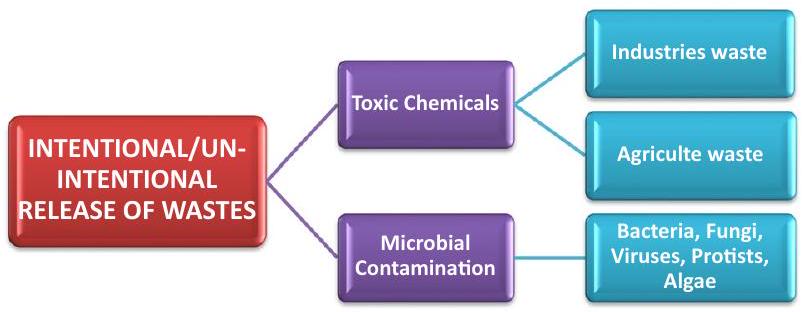
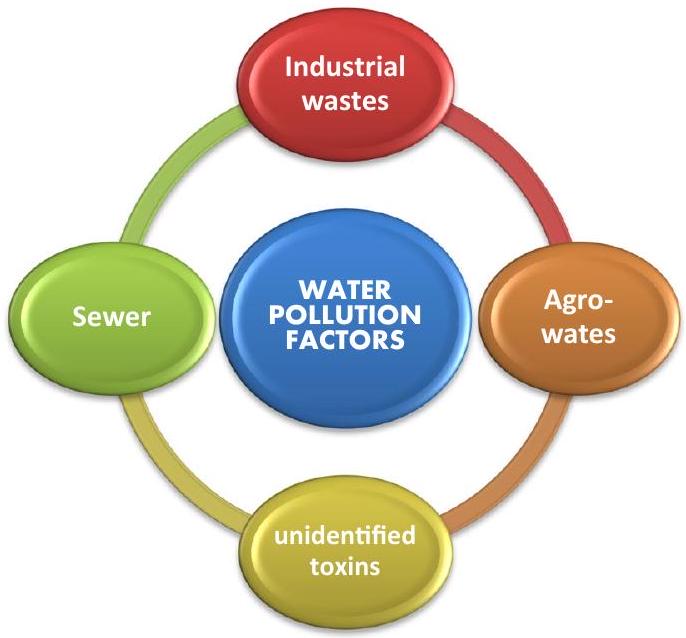
يزداد تلوث المياه عالميًا بسبب دخول مواد النفايات الخطرة المختلفة إلى المياه من مختلف الصناعات الكيميائية أو غيرها، والتعدين، والتنمية الحضرية. تساهم عوامل مختلفة مثل هطول الأمطار، المناخ، جودة التربة ونوع التربة ومصدر المياه الجوفية في تلوث المياه (الشكل 1). تؤدي التغيرات الكبيرة في جودة المياه إلى زيادة معدل الوفيات، حيث يموت حوالي 14,000 شخص يوميًا بسبب تلوث المياه. [1].
تظهر النتائج المقدرة أن حوالي 1.1 مليار شخص لا يصلون إلى مياه آمنة للشرب بسبب سوء الصرف الصحي، مما يؤدي إلى زيادة الأمراض المنقولة بالمياه ويموت 2.2 مليون شخص كل عام بسبب الأمراض المنقولة بالمياه.
تسبب الأمراض المنقولة بالمياه التهابات شديدة في الجهاز الهضمي وإسهال. في الدول النامية، تكون الحالة أكثر حدة من الدول المتقدمة بسبب سوء الإدارة، والظروف غير الصحية، ونقص الوصول إلى موارد مياه الشرب الآمنة [2].
تعتبر المياه مهمة لكل كائن حي، وتحتوي موارد المياه العذبة على من إجمالي المياه على الأرض. يتم استخدام كمية صغيرة من المياه للاستهلاك البشري [3]. ولكن بسبب التنمية الحضرية وتطوير الصناعات المختلفة، تتلوث موارد المياه العذبة. يؤدي إلقاء مياه الصرف الصحي والملوثات الكيميائية في المياه إلى تدهور جودة المياه [4].
في باكستان، لا يصل العديد من الناس إلى موارد مياه الشرب الآمنة بسبب نقص المياه ووجود ملوثات مختلفة في المياه. المياه في باكستان تحت ضغط، وفي المستقبل، فإن فرص ندرة المياه مرتفعة جدًا. لذا، هناك حاجة ملحة لإدارة مناسبة لتأمين موارد المياه [5]. في الأساس، يعد نقص بناء خزانات المياه والجفاف في بعض المناطق هو العامل الرئيسي الذي يؤدي إلى تراجع موارد المياه الآمنة [6].
يعاني العديد من المرضى في باكستان من الأمراض المتعلقة بالمياه بسبب ميكروبات مختلفة مثل البكتيريا، والطفيلات، والفيروسات. تشمل هذه الأمراض الكوليرا، والدوسنتاريا، والتهاب الكبد، والكرپتوسبوريدياز، والجياردياز، والتيفوئيد، والفيروس العجلي، والملاريا، والإشريكية القولونية. [7]. استكشاف تقنيات معالجة المياه الناشئة لإزالة مسببات الأمراض الميكروبية. في الدول المتقدمة، تم القضاء على حمى التيفوئيد تمامًا، ولكن في الدول النامية بما في ذلك باكستان، لا تزال مرضًا شائعًا، وذلك بسبب ضعف مرافق معالجة المياه. تنتقل العدوى المنقولة بالمياه من خلال الابتلاع، والهواء، والاتصال المباشر بالمياه الملوثة التي تحتوي على عوامل ميكروبية مختلفة [8]. وفقًا لمنظمة الصحة العالمية (WHO)، من خلال تحسين جودة المياه، يمكن تقليل عبء الأمراض المنقولة بالمياه على مستوى العالم. تحدث تفشي المياه المختلفة خلال التسعينيات بسبب التهابات المياه الشديدة. ولكن الآن، انخفضت هذه التفشي، خاصة في الدول المتقدمة. بين عامي 1920 و2002، تم الإبلاغ عن 1870 تفشيًا بسبب مياه الشرب غير الآمنة. بين عامي 1997 و2022، تم الإبلاغ عن 60 تفشيًا من الأمراض المنقولة بالمياه، وأثر حوالي 10,611 شخص في الولايات المتحدة بسبب عوامل ميكروبية مختلفة مثل الكريبتوسبوريديم، والبيسودوموناس، والليجيونيلا التي كانت عوامل شائعة [9].

1.2 العوامل المؤثرة على تلوث المياه

1.2.1 الملوثات

الملوثات هي مواد تسبب ضررًا شديدًا للبيئة. تشمل نوعان من الملوثات الملوثات القابلة للتحلل وغير القابلة للتحلل. تسبب الملوثات غير القابلة للتحلل أو الملوثات المخزنة ضررًا طويل الأمد، وقدرتها على الامتصاص أقل، مما يؤدي إلى تراكم هذه الملوثات وتسبب ضررًا شديدًا للبيئة. تشمل الملوثات غير القابلة للتحلل البلاستيك، والمعادن الثقيلة، والمواد الكيميائية الاصطناعية المختلفة. تحتفظ الملوثات القابلة للتحلل أو الملوثات الأساسية ببعض القدرة على الامتصاص، وتسبب ضررًا للبيئة فقط عندما تزيد كميتها عن قدرة الامتصاص البيئية (الشكل 2). يعمل ثاني أكسيد الكربون كملوث قابل للتحلل لأنه يسبب مشكلة فقط عندما تزداد كميته في البيئة [10].

1.2.2 الملوثات العضوية المستمرة (POP)
تُعرف المواد المختلفة التي يتم إطلاقها من البيئة خلال عمليات كيميائية أو تصنيع مختلفة باسم الملوثات العضوية المستمرة أو POP. DDT (ديكلوروديفينيل ثلاثي كلورو الإيثان)، PAH (الهيدروكربونات العطرية متعددة الحلقات)، PCBs، والديوكسينات متعددة الكلور هي بعض الأمثلة على الملوثات العضوية المستمرة [11].
الشكل 1 مصدر ملوثات المياه وتأثيرها على الكائنات المختلفة (سينغ وآخرون 2019)
الشكل 2 العوامل المؤثرة على تلوث المياه

1.2.3 تلوث المصدر النقطي وغير النقطي

عندما يكون مصدر تلوث المياه والملوثات معروفًا، يُطلق عليه تلوث المصدر النقطي مثل محطات معالجة مياه الصرف الصحي، والأنابيب، إلخ. عندما يكون مصدر تلوث المياه غير معروف وتأتي المياه من مصادر مختلفة، يُطلق عليه تلوث المصدر غير النقطي مثل النفايات الصناعية، والمبيدات، وأنواع مختلفة من الأسمدة [12].

1.2.4 تلوث المياه الجوفية

بسبب وجود ملوثات مختلفة وميكروبات مثل الفيروسات، والبكتيريا، والديدان، تتأثر أيضًا المياه الجوفية تحت الأرض. المياه غير صالحة للشرب بسبب وجود ملوثات وميكروبات خطرة مختلفة، مما يسبب التهابات في الجهاز الهضمي مثل الإسهال والكوليرا [13]. تصل كميات دقيقة من الأسمدة النيتروجينية المستخدمة لنمو النباتات إلى المياه الجوفية من التربة وتلوث المياه الجوفية من خلال التسرب [14].

1.2.5 الملوثات الزراعية، الجوية والكيميائية

تصل الأسمدة المختلفة، والمبيدات، والملوثات إلى المسطحات المائية بعد هطول الأمطار، أو ذوبان الثلوج، أو الفيضانات، أو الجريان السطحي، مما يؤدي إلى الإثراء الغذائي. يزيد الإثراء الغذائي من كمية السيانوبكتيريا وازدهار الطحالب في المسطحات المائية العذبة مثل البحيرات، والأنهار، والبرك، إلخ، بسبب وجود الفوسفات والنيترات. في النهاية، ينخفض مستوى الأكسجين المذاب، مما يؤدي إلى موت الكائنات المائية المختلفة [15].

1.2.6 الملوثات الجوية

توجد جزيئات مختلفة مثل ثاني أكسيد الكبريت وثاني أكسيد النيتروجين في الهواء وتصل إلى المسطحات المائية من خلال الأمطار. يؤدي احتراق الوقود الأحفوري إلى زيادة كمية ثاني أكسيد الكربون في الهواء وتكوين حمض الكبريتيك بعد دمجه مع جزيئات الماء. يتم إنتاج حمض الكبريتيك أيضًا من خلال دمج ثاني أكسيد الكبريت وجزيئات الماء. يتم إطلاق ثاني أكسيد الكبريت من البراكين واحتراق الفحم ومنتجات البترول ومختلف الصناعات. يتم أيضًا إنتاج حمض النيتريك بعد دمج ثاني أكسيد النيتروجين والماء.

1.2.7 الملوثات الكيميائية

تطلق المصانع أو الصناعات الكيميائية المختلفة أثناء تصنيع منتجات مختلفة مواد ضارة يتم تصريفها في خزانات المياه العذبة مثل البحيرات والأنهار وغيرها، مما يؤدي إلى تلوث مختلف المسطحات المائية [18]. هذه
قد تكون المواد الخطرة موجودة في شكل صلب أو سائل أو غازي وهي شديدة التفاعل وسامة. يجب معالجة الملوثات التي يتم إطلاقها من المصانع والصناعات من خلال أنظمة معالجة نفايات منفصلة [19].

1.2.8 المبيدات الحشرية ومبيدات الأعشاب

تُستخدم المبيدات العشبية والمبيدات الحشرية للتحكم في الأعشاب الضارة والنباتات غير المرغوب فيها والآفات. تؤدي كلا هذين المركبين الكيميائيين أيضًا إلى تلوث المياه. يحدث التسرب بسبب المبيدات العشبية أو المبيدات الحشرية، كما أن نسيج التربة وهطول الأمطار يساهمان في تلوث المسطحات المائية. بعد دخول هذه الملوثات إلى المسطحات المائية، تؤثر سلبًا على الحياة البرية والنباتات. للتغلب على هذه السمية الناتجة عن المبيدات الحشرية أو المبيدات العشبية، يجب تطوير كيميائيات زراعية أفضل وإجراءات جديدة. سيتم التحكم في التلوث في الموارد المائية والتربة من خلال استخدام مبيدات حشرية ذات جودة أفضل مما يؤدي إلى تقليل السمية والأمراض لدى المزارعين.

1.2.9 تلوث الرواسب

بسبب الترسيب، تأثرت جودة المياه أيضًا. في الأنهار والبحيرات والجداول العذبة، لا تخترق الضوء، مما يؤدي إلى اضطراب النباتات أو الفيتوبلانكتون المختلفة. كما تتأثر الكائنات المائية المختلفة التي تتغذى على النباتات، وفي النهاية يتعطل سلسلة الغذاء بأكملها. تلتصق جزيئات الرواسب المختلفة بخياشيم الأسماك، مما يجعل الأسماك تواجه صعوبة في التنفس، وفي النهاية تحدث وفاة الأسماك.

1.2.10 آثار التلوث الميكروبي على صحة الإنسان

تُسمى الميكروبات المختلفة التي تسبب أنواعًا مختلفة من الأمراض بالميكروبات الممرضة أو الكائنات الدقيقة الممرضة، بينما تُسمى بعض الميكروبات التي لا تسبب الأمراض ولكنها مفيدة وتلعب دورًا مهمًا في البيئة بالميكروبات غير الممرضة. تشمل الميكروبات البكتيريا والفيروسات والأوليات، وتعتبر أنواع مختلفة من هذه الميكروبات ممرضة وتسبب العديد من العدوى الشديدة.
تنتقل الأمراض المنقولة بالماء من خلال تناول الماء الملوث بسبب مسببات الأمراض المختلفة. تعتمد العدوى التي تسببها ميكروبات مرضية مختلفة على عوامل مختلفة مثل بقاء وتكاثر أو انقسام مسببات الأمراض في البيئة.

1.2.11 البكتيريا الممرضة المنقولة بالماء

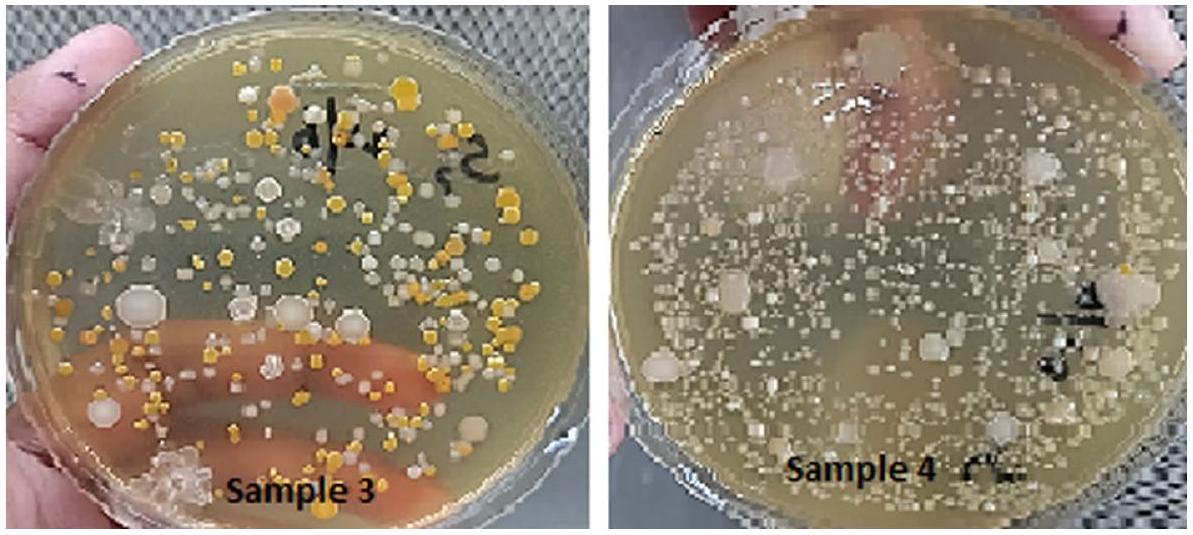
تُصنف مسببات الأمراض البكتيرية المنقولة بالماء إلى بكتيريا معوية وبكتيريا مائية. توجد البكتيريا المعوية مثل الإشريكية القولونية، والسالمونيلا، والشغيلة في أمعاء البشر، ويمكن لبعضها أن تنمو أيضًا في المسطحات المائية العذبة مثل الأنهار والبحيرات والجداول. تعتمد وجود البكتيريا المعوية في الماء على بعض المعايير مثل درجة الحرارة وتوفر المغذيات (الجدول 1). توجد البكتيريا المائية مثل الأيروموناس، والبيسيودوموناس الأيروجينوزا، والمايكوبكتيريوم أفيوم في الماء وتنمو أو تتكاثر في مياه الشرب (الشكل 3). في الولايات المتحدة، تم الإبلاغ عن حوالي 1200 حالة وفاة بسبب العدوى المنقولة بالماء [25].

1.3 البكتيريا المسببة للأمراض المعوية

1.3.1 أنواع كامبيلوباكتر

تم الإبلاغ عن عدوى التهاب المعدة والأمعاء البكتيري كأوبئة رئيسية في الولايات المتحدة بسبب بكتيريا كامبيلوباكتر جيجوني. مثل السالمونيلا والشغيلة، تم عزل كامبيلوباكتر جيجوني أيضًا من مرضى الإسهال وكانت السبب الرئيسي للإسهال في دول مختلفة نامية ومتقدمة مثل الولايات المتحدة والمملكة المتحدة. تؤدي الأمراض البشرية الناتجة عن الكامبيلوباكتر إلى الوفاة في النهاية. شهدت أوروبا وفنلندا وكندا ونيوزيلندا ودول أخرى مختلفة أوبئة رئيسية بسبب هذه البكتيريا المسببة للأمراض المنقولة بالمياه.

1.3.2 الإشريكية القولونية

في عام 1982 تم التعرف على الإشريكية القولونية كعوامل ممرضة وسميت بالإسهال الدموي وتسبب الفشل الكلوي لدى البشر. تنتقل الإشريكية القولونية من خلال التلوث البرازي عندما ترعى الحيوانات في مصادر المياه العذبة المختلفة مثل البحيرات والأنهار والجداول. تشير العديد من التفشيات إلى وجود الإشريكية القولونية في البيئة المائية وتسبب العدوى المنقولة بالمياه.
الجدول 1: الميكروبات في مياه الشرب والأمراض المرتبطة بها (إرشادات منظمة الصحة العالمية [63-65])
مُمْرِض مرض مصاحب الأهمية الصحية انتشار في مياه الشرب
بكتيريا
كامبيلوباكتر جيجوني (كامبيلوباكتر spp.) إسهال، التهاب المعدة والأمعاء عالي معتدل
إشريشيا كولاي (معظمها إيشريشيا كولاي النزفية المعوية وغيرها تشمل إيشريشيا كولاي الممرضة المعوية) إسهال حاد، إسهال دموي والتهاب المعدة والأمعاء عالي معتدل
ليجيونيلا رئوية وبكتيريا ذات صلة مرض تنفسي حاد، التهاب رئوي (ليجيونيلا) عالي قد يتضاعف
المتفطرات غير السلية مرض الرئة وعدوى الجلد منخفض قد يتضاعف
ب. الزائفة العدوى في الرئتين، والمسالك البولية، والكلى تسبب التهابًا وتسممًا دمويًا معتدل قد يتضاعف
سالمونيلا إنتيريكا النمط التيفي حمى التيفوئيد، حمى البارتييفوئيد وأخرى من السالمونيلا الخطيرة عالي معتدل
سالمونيلا أخرى التهاب المعدة والأمعاء، التهاب المفاصل التفاعلي عالي معتدل
شيغيلة spp. الدوسنتاريا البكتيرية أو الشيغيلوز عالي قصير
فيبريو كوليرا التهاب المعدة والأمعاء، الكوليرا عالي قصير إلى طويل
هيليكوباكتر بيلوري التهاب المعدة المزمن، مرض القرحة وسرطان المعدة منخفض معتدل
فيروسات
فيروس الأدينو التهاب المعدة والأمعاء عالي طويل
فيروسات المعوية التهاب المعدة والأمعاء عالي طويل
فيروس التهاب الكبد A التهاب الكبد عالي طويل
فيروس التهاب الكبد E التهاب الكبد المعدي؛ الإجهاض والموت عالي طويل
روتا فيروس التهاب المعدة والأمعاء عالي طويل
فيروسات أسترو إسهال عالي طويل
نوروفيروس التهاب المعدة والأمعاء عالي طويل
أوليات
كريبتوسبوريديوم بارفوم الكريبتوسبوريدiosis، الإسهال عالي طويل
كريبتوسبوريديوم كايتاننسيس إسهال عالي طويل
جيارديا إنتستيناليس إسهال عالي معتدل
الشكل 3 وحدات تشكيل المستعمرات البكتيرية (CFUs) المعزولة من عينات المياه

1.3.3 فيبريو كوليرا

تسبب بكتيريا فيبريو كوليرا في عدوى الكوليرا في الدول المتقدمة وأغلب الدول النامية حيث تؤدي الظروف غير الصحية أو ضعف الصرف الصحي إلى تفشي الكوليرا بشكل متكرر. توجد الكوليرا في البيئة المائية عادة في الأنهار والمناطق المصب. يزيد التلوث في مصادر المياه المختلفة من انتشار الكوليرا في المياه.
تم تحديد مجموعات السيرولوجية المختلفة من V. cholera، حيث إن مجموعتين فقط هما سبب وباء الكوليرا. تشمل هذه الفئة مجموعات السيرولوجية O1 و O139. المجموعتان الأخريان غير O1 وغير O139 لا تسببان الكوليرا، وتعتمد الأنماط المصلية المسببة للعدوى وغير المسببة للعدوى من الكوليرا على الجينات المرتبطة بالضراوة. تم الإبلاغ عن تفشي الكوليرا في جنوب وجنوب شرق آسيا، وغرب وشرق إفريقيا، وأمريكا الجنوبية، ودول مختلفة في أوروبا والعديد من الدول النامية.

1.4 البكتيريا الممرضة المائية

تتضاعف وتتكاثر البكتيريا الممرضة المائية في الماء وتبقى حية عندما تكون مستويات المغذيات العضوية منخفضة. تشمل هذه البكتيريا الممرضة بكتيريا الزائفة الهوائية، والأوروموناس، والليجيونيلا، ومجمع المتفطرات الأفومية، وتسبب عدوى مختلفة لدى البشر. تتواجد هذه البكتيريا الممرضة على نطاق واسع في موارد المياه العذبة ومياه الشرب.

1.4.1 الزائفة الزنجارية

P. aeruginosa موجود في المياه العذبة والتربة والنباتات، والخضروات المختلفة مثل البصل والخس والطماطم وغيرها. يتواجد بكثرة في المياه السطحية والمياه العادمة ويسبب العدوى في البشر والحيوانات المختلفة. P. aeruginosa مقاوم بشكل كبير لمختلف المضادات الحيوية. P. aeruginosa هو ممرض بيئي ويتم تناوله من خلال الطعام عند استهلاك الخضروات النيئة. وجود P. aeruginosa في مياه الشرب هو السبب الرئيسي لحدوث عدوى معوية مختلفة في البشر. المرضى الذين يعانون من ضعف المناعة بسبب أمراض مختلفة مثل التليف الكيسي والحروق الشديدة هم
الشكل 4: ثقافة نقية من مسببات الأمراض البكتيرية المنقولة بالماء
أكثر عرضة للإصابة بـ “يجب على المرضى تجنب مياه المستشفى بسبب وجود “. aeuroginosa. . aeuroginosa في مياه الشرب [37].

1.4.2 أيروموناس

توجد الأيرومونادات المتوسطة الحرارة في مياه الصرف الصحي، والمياه السطحية، ونظام السيفون والصرف. يعتمد العامل الأكثر أهمية في نمو الأيروموناس في مصادر مياه الصرف الصحي والمياه العذبة على درجة الحرارة وتوافر المغذيات العضوية. لا تستطيع الأيروموناس البقاء في المياه الفقيرة بالمغذيات. وهي تختلف عن البكتيريا المعوية الأخرى التي تسبب الإسهال وتوجد عادة من مصادر مياه مختلفة بما في ذلك المياه العذبة (البحيرات، الأنهار والجداول) ومياه الصرف الصحي [38].

1.4.3 ليجيونيلا

من بين 42 نوعًا محددًا من الليجيونيلا، فإن النوع المسبب للمرض في البشر هو L. pneumophila مجموعة السيروجروب 1. يسبب الليجيونيلا أو عدوى المحاربين ويظهر أعراضًا مثل الحمى الخفيفة. تزداد فرص العدوى من خلال استنشاق الهباء الجوي الملوث. توجد الليجيونيلا بشكل رئيسي في إمدادات المياه المستخدمة لأغراض الشرب [39]. تعمل خزانات المياه الساخنة وأنظمة التبريد كمعززات للبكتيريا. تعيش أنواع الليجيونيلا في شكل مستعمرات في أنظمة داخلية مختلفة في المستشفيات والمباني وما إلى ذلك، وتسبب العدوى من خلال الهباء الجوي الذي يتولد في الأحواض، وحمامات الاستحمام وما إلى ذلك. تعتبر درجة الحرارة عاملًا رئيسيًا لنمو وبقاء وتكاثر أنواع الليجيونيلا [40].

1.5 الميكوبكتيريا غير السلية

تختلف هذه عن بكتيريا السل التي توجد في أنسجة الإنسان. تتوزع الميكوبكتيريا غير السلية بحرية في البيئة بما في ذلك المياه والتربة والهباء الجوي والغبار. توجد أنواع الميكوبكتيريا غير السلية في مصادر المياه العذبة مثل الكاليس، والأنهار، والمياه المالحة، والمصبات، ومياه الصرف الصحي، والأنابيب. توجد أنواع الميكوبكتيريا غير السلية في مياه الشرب ولها ميل للنمو والتكاثر. تحتوي الميكوبكتيريا غير السلية على خصائص مثل أن هذه البكتيريا المسببة للأمراض تنمو عند درجة حموضة منخفضة حوالي 5-5.5، وتوجد في المياه الملوثة بشدة بالمعادن، وهذه البكتيريا مقاومة للكلور لذا توجد في عينات مياه الشرب [41].

1.5.1 هيليكوباكتر بيلوري

تسبب العدوى الناتجة عن هيليكوباكتر بيلوري التهاب المعدة المزمن، والقرحة، وسرطان المعدة [42]. هناك أربع طرق لانتقال هيليكوباكتر بيلوري للتسبب في العدوى تشمل الطريق البرازي الفموي، والطريق الفموي الفموي، والطريق المعدي الفموي، والطريق المعدي المعدي [43،44]. هذه البكتيريا أيضًا تنتقل عبر المياه وتوجد في مياه الصرف الصحي، والمياه السطحية، وإمدادات المياه الأخرى. تصبح هذه البكتيريا غير نشطة بعد إضافة الكلور إلى المياه [45].

1.5.2 الطفيليات المسببة للأمراض

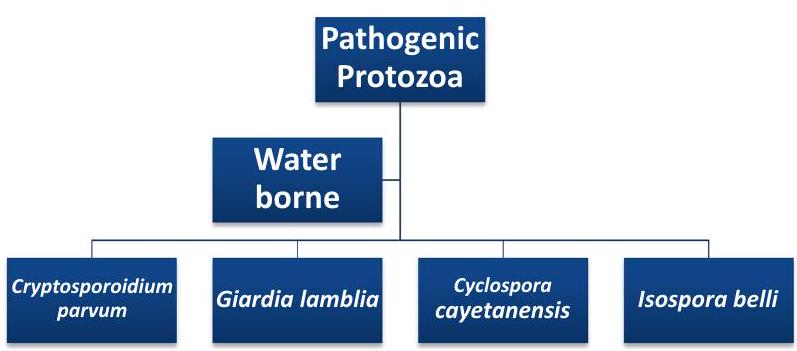
تشمل الطفيليات المسببة للأمراض المرتبطة بالأمراض المنقولة بالمياه جيراديا لامبليا، وكريبتوسبوريديوم بارفوم. بعض الأنواع الجديدة من الطفيليات المسببة للأمراض هي سيكلوسبورا كايتانينسيس، وإيزوسبورا بيلي، وأنواع مختلفة من الميكروسبراديا [46]. بعد التكاثر في القناة المعوية، يتم إنتاج الكيسات في حالة جيراديا، والأكياس في حالة كريبتوسبوريديوم أو إيزوسبورا، والجراثيم المعدية في حالة الميكروسبراديا، وتخرج عبر البراز في أشكال معدية أو مراحل غير ناضجة وتكمل تطورها المعدي في البيئة مثل في مصادر المياه المختلفة. تسبب جيراديا لامبليا مرض الجيراديا المنقول بالمياه في البشر وهي أكثر الأمراض المنقولة بالمياه انتشارًا في الولايات المتحدة على مدى الثلاثين عامًا الماضية (الشكل 5).
الشكل 5 الطفيليات المسببة للأمراض المنقولة بالمياه
تسبب كريبتوسبوريديوم أيضًا عدوى منقولة بالمياه وتم الإبلاغ عن الحالة الأولى في مياه الصرف الصحي الجوفية في عام 1985 في تكساس. [47]. في الولايات المتحدة من 1920 إلى 1996 تم الإبلاغ عن العديد من حالات الإسهال وتوفي العديد من الأشخاص، خاصة في المرضى الذين يعانون من ضعف المناعة. تم الإبلاغ أيضًا عن العديد من الحالات في المملكة المتحدة. ترتبط كل من الأمراض الجيراديا وكريبتوسبوريديا بمياه الشرب [48]. من العديد من الدراسات، لوحظ أن الأشخاص الذين يعانون من ضعف المناعة، عادةً مرضى الإيدز، هم أكثر عرضة للإصابة بكريبتوسبوريديا مقارنةً بالآخرين [49].

1.5.3 سيكلوسبورا، إيزوسبورا، ميكروسبراديا

مثل جيراديا وكريبتوسبوريديوم، تعتبر سيكلوسبورا وميكروسبراديا أيضًا مسببات أمراض منقولة بالمياه وسببًا لعدوى أكثر شدة في مرضى الإيدز [50]. تسبب سيكلوسبورا كايتانينسيس التهاب المعدة والأمعاء في الأطفال الذين يعيشون في ظروف صحية فقيرة. تم العثور أيضًا على أنواع مختلفة من الأكياس الخاصة بسيكلوسبورا في مياه الشرب. تم الإبلاغ عن أكبر تفشي لكريبتوسبوريديا في أمريكا الشمالية في عام 1996 [51].
تعتبر طفيليات الميكروسبراديا ملزمة وتكون جراثيم وتسبب الأمراض في اللافقاريات والفقرات. في البشر، خاصة في المرضى الذين يعانون من ضعف المناعة، تسبب خمسة أجيال مختلفة من الميكروسبراديا أمراضًا شديدة. تشمل هذه الأجيال الخمسة إنتيروسيتيزوون، وإنسيفاليتوزون، وتراخيبلستوفورا، وفيطافورما، ونوزيما. الشكلان الأكثر انتشارًا اللذان يسببان الأمراض في مرضى الإيدز هما إنتيروسيتيزوون بيينينسي وE. إنتستيناليس. تعتبر الميكروسبراديا مسببات أمراض منقولة بالمياه توجد في العديد من عينات المياه وتسبب عدوى مثل الإسهال، والعدوى العينية، وعدوى الكبد والقناة الصفراوية [52].

1.5.4 مسببات الأمراض الفيروسية

فيروسات التهاب الكبد A وE هي مسببات الأمراض الفيروسية المرتبطة بالعدوى المنقولة بالمياه. تم التعرف على 15 نوعًا مختلفًا من الفيروسات الموجودة في أمعاء الإنسان وتخرج عبر البراز وتدخل إلى مياه الصرف الصحي [53].
تصنف الفيروسات إلى ثلاث فئات مختلفة وهي: (1) غير مسببة للأمراض المعوية (فيروس التهاب الكبد A وE)، وفيروسات الإيكو وفيروسات شلل الأطفال، إلخ. (2) الفيروسات مثل فيروس الكالسيفيروس، وفيروس الروتا، وفيروس الأسترو، تسبب التهاب المعدة والأمعاء الحاد في البشر. (3) مسببات الأمراض المعوية المحتملة مثل فيروس كورونا، وفيروس التوروفيروس، وفيروسات الأمعاء، إلخ. [54].
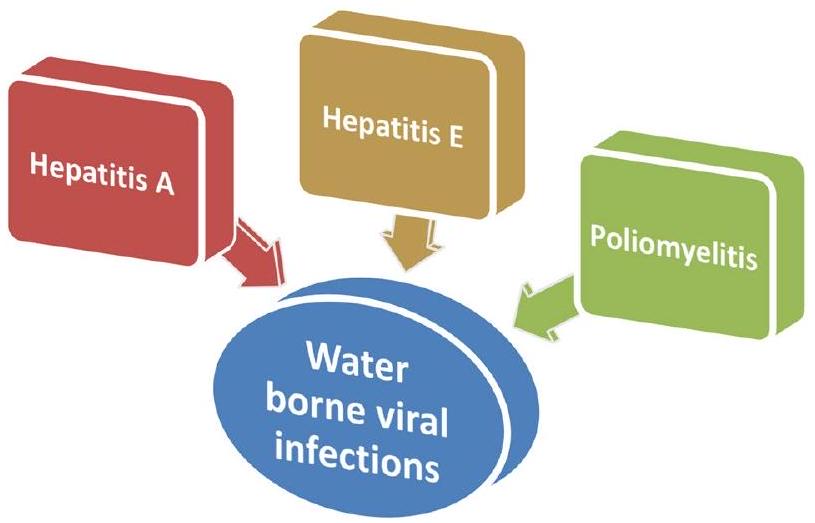
ينتقل فيروس التهاب الكبد A (HAV) وفيروس التهاب الكبد E (HEV) عبر الطريق البرازي الفموي ومصدر التلوث هو مياه الصرف الصحي الملوثة. معظم العدوى المنقولة بالمياه ناتجة عن فيروس التهاب الكبد A والسبب الرئيسي للعدوى غير العرضية في الرضع والأطفال الصغار. تم الإبلاغ عن العديد من التفشيات وتحدث التفشيات الأكثر شدة في الولايات المتحدة من 1950 إلى 1970 [55] (الشكل 6).
تم الإبلاغ عن فيروس التهاب الكبد E بشكل أكبر في المناطق الاستوائية وشبه الاستوائية. إنه أقل انتشارًا ولكن العدوى الناتجة عن فيروس التهاب الكبد E أكثر شدة وتزيد من معدل الوفيات لدى النساء الحوامل. تم الإبلاغ عن العديد من تفشيات فيروس التهاب الكبد E كمسبب للأمراض المنقولة بالمياه في الهند وتم الإبلاغ عن حالات قليلة جدًا في أوروبا [56-58]

1.5.5 التهاب المعدة والأمعاء الفيروسي

تم التعرف على فيروس الروتا، وفيروس الكالسيفيروس، وفيروس الأسترو كمسببات للأمراض في التهاب المعدة والأمعاء الفيروسي. عادةً ما تصنف فيروسات الروتا إلى مجموعات مستضدية مختلفة مثل A وB وC [59]. يحدث الإسهال في الأطفال الصغار والرضع بسبب مجموعة فيروس الروتا A، بينما يحدث الإسهال في البالغين بسبب مجموعة فيروس الروتا B. في البلدان النامية، إذا لم يتم علاج فيروس الروتا، فإن الجفاف
الشكل 6 العدوى الفيروسية المنقولة بالمياه
والموت كانت العواقب. تكون أعراض التهاب المعدة والأمعاء الناتج عن فيروس الكالسيفيروس وفيروس الأسترو أقل شدة مقارنةً بفيروس الروتا [60-62].

2 الأهداف والغايات

تقدم المقالة الاستعراضية نظرة على العلاقة بين تلوث المياه وانتشار العدوى الميكروبية. كما يتم دراسة حساب بيانات الأبحاث التي أجراها العلماء السابقون والمعاصرون.
تقدم هذه المراجعة نظرة على آثار تلوث المياه على الأمراض المعدية المنقولة بالمياه، وخاصة التلوث الميكروبي وآثاره على صحة الإنسان.
لتحليل العلاقة بين تلوث المياه الناجم عن مسببات الأمراض والأمراض المنقولة بالمياه.
فهم الأبحاث الحالية والمعرفة حول تلوث المياه والمخاطر الصحية الميكروبية.
استكشاف العوامل الميكروبية الرئيسية المعنية في الأمراض المنقولة بالمياه ومسار انتقالها وتأثيرها على صحة الإنسان.
للضغط على الطرق المختلفة التي يمكن من خلالها اتخاذ تدابير لضمان تقليل التلوث الميكروبي في المياه وآثاره على الصحة.

2.1 جدوى الدراسة

  • إجراء دراسة مراجعة على الأدبيات المتاحة حول تلوث المياه وانتشار العدوى المنقولة بالمياه.
  • تعتبر هذه المقالة الاستعراضية أيضًا مفيدة جدًا فيما يتعلق بدراسة آثار عوامل مضادة للبكتيريا مختلفة غير المضادات الحيوية للوقاية من العدوى المنقولة بالمياه، والتي ستكون نتائج جديدة في مجال العلوم البيئية والزراعية.
  • معالجة هذه القضايا أمر بالغ الأهمية لحماية الصحة العامة، خاصة في المناطق المعرضة لندرة المياه والتلوث الميكروبي.

3 المنهجية
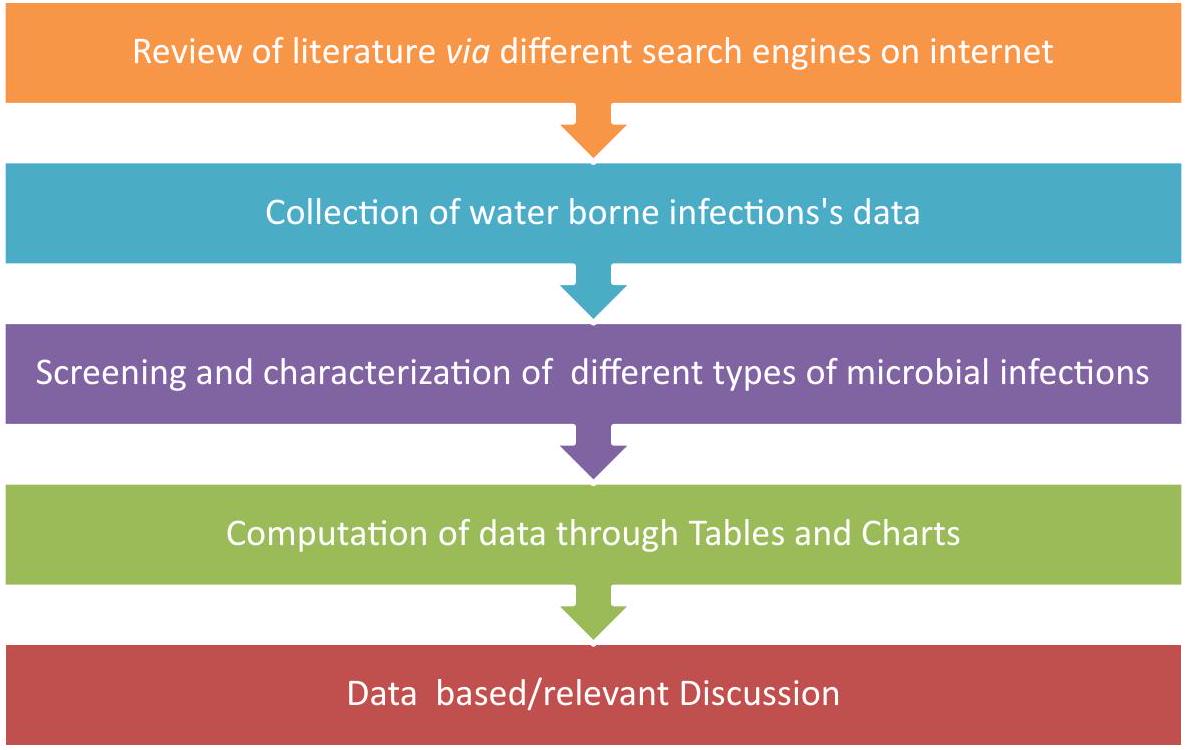
تم استخدام محركات بحث مختلفة مثل Google Scholar لجمع المعلومات واستكشاف مواقع ويب مختلفة مثل Springer وElsevier وWiley لدراسة مقالات بحثية مختلفة تتعلق بهذا العمل. إن انتشار العدوى المنقولة بالماء ذو طبيعة خطيرة. إن جمع وحساب الأعمال البحثية والدراسات ذات الصلة أمر مهم. من العدوى الميكروبية الخفيفة إلى المتوسطة إلى المميتة تكون بسبب استهلاك الماء الملوث (الشكل 7).
الشكل 7 ورقة تدفق توضح المنهجية

3.1 النتائج المتوقعة

كانت هذه الدراسة مفيدة في تخطيط استراتيجيات البحث والسيطرة على العدوى المنقولة بالماء. يمكن تحديد العوامل الممرضة المختلفة. تُنقل الأمراض المنقولة بالماء من خلال تناول الماء الملوث بسبب عوامل ممرضة مختلفة. تعتمد العدوى التي تسببها الميكروبات الممرضة المختلفة على عوامل مختلفة مثل البقاء والانقسام أو التكاثر للعوامل الممرضة في البيئة. تؤثر الملوثات المختلفة على جودة موارد المياه المختلفة. الملوثات هي مواد تسبب أضرارًا شديدة للبيئة. (الجدول 1).

4 المناقشة

تعتبر البيئة الطبيعية، مثل الماء والهواء أو التربة، بالإضافة إلى أجسام الحيوانات المختلفة والبشر، موطنًا للبكتيريا والفيروسات والطلائعيات. بعض هذه الميكروبات مفيدة وتساهم في الدورات البيوجيوكيميائية، مثل تحلل المواد العضوية، والتثبيت الحيوي للنيتروجين الجوي (إزالة النيتروجين)، وإنتاج الميثان، ودورة الكربون [66-69]. يتم استخدامها على نطاق واسع في صناعة المواد الغذائية وفي التحول الحيوي للمعادن. يتأثر وجود العوامل الممرضة المختلفة، مثل البكتيريا والطلائعيات والفيروسات، في الماء بعوامل أخرى مختلفة، مثل مبيدات الأعشاب، ومبيدات الحشرات، والملوثات الجوية أو الكيميائية، وما إلى ذلك. في الماضي، تم الإبلاغ عن تفشي مختلف بسبب عوامل ممرضة منقولة بالماء، مثل E. coli وCampylobacter jejuni وHelicobacter pylori وPseudomonas وAeromonas وLegionella وCryptosporidium وGiardia lamblia وHepatitis A وE وrotavirus، من بين آخرين [70-72]. تُكتشف الأمراض المنقولة بالماء في النهاية في الماء بسبب تلوث موارد المياه العذبة والمياه الجوفية الناتج عن تفريغ مياه الصرف الصحي، والظروف غير الصحية، وتصريف النفايات الصناعية [73-75]. بعد شرب الماء من موارد ملوثة أو تناول الخضروات النيئة حيث يتم استخدام الماء الملوث للري، يؤدي ذلك إلى أمراض معوية مختلفة، والمرضى الذين يعانون من ضعف المناعة بسبب أمراض أخرى مختلفة هم أكثر عرضة للإصابة بالعدوى المنقولة بالماء [76-78]. لذا هناك حاجة ملحة لتشكيل محطات معالجة نفايات منفصلة لتفريغ النفايات الصناعية [79،80].

5 الخاتمة

تظهر هذه المراجعة الأدبية العلاقة بين التلوث الميكروبي في الماء وانتشار العدوى المنقولة بالماء التي كان لها دور كبير في تحديد صحة الإنسان. توجد Vibrio cholerae الممرضة وCampylobacter jejuni وCryptosporidium spp. وEscherichia coli في المياه الملوثة في جميع أنحاء العالم. يرتبط تلوث المياه وتفشي الأمراض، وهو علامة على الحاجة الملحة لتقنيات معالجة المياه ويجب إجراء المزيد من الأبحاث لرفع مستوى الصحة. يجب أن تركز الأبحاث المستقبلية على أدوات التشخيص واستراتيجيات مضادة للميكروبات لتقليل المخاطر الصحية الناتجة عن تلوث المياه. هناك حاجة إلى نهج متعدد التخصصات من خلال إشراك خبراء من الصحة العامة وعلوم البيئة وصانعي السياسات للحد من التلوث الميكروبي واستهلاك المياه الآمنة.
مساهمات المؤلفين N.M.A. كتب النص الرئيسي للمخطوطة. ساهم M.K.K. وB.M في الأشكال والجداول. أعد M.M المراجع. راجع جميع المؤلفين المخطوطة.
التمويل لا شيء.
توفر البيانات لم يتم إنشاء أو تحليل أي مجموعات بيانات خلال الدراسة الحالية.

الإعلانات

موافقة الأخلاقيات والموافقة على المشاركة لم تكن الموافقة الأخلاقية مطلوبة لهذه المقالة. غير مطلوب.
الموافقة على النشر منح جميع المؤلفين الإذن للنشر في هذه المجلة.
المصالح المتنافسة يعلن المؤلفون عدم وجود مصالح متنافسة.
الوصول المفتوح هذه المقالة مرخصة بموجب رخصة المشاع الإبداعي للاستخدام غير التجاري، والتي تسمح بأي استخدام غير تجاري، ومشاركة، وتوزيع، وإعادة إنتاج في أي وسيلة أو شكل، طالما أنك تعطي الائتمان المناسب لـ
المؤلفين الأصليين والمصدر، وتوفر رابطًا لرخصة المشاع الإبداعي، وتوضح إذا قمت بتعديل المادة المرخصة. ليس لديك إذن بموجب هذه الرخصة لمشاركة المواد المعدلة المشتقة من هذه المقالة أو أجزاء منها. الصور أو المواد الأخرى من طرف ثالث في هذه المقالة مشمولة في رخصة المشاع الإبداعي للمقالة، ما لم يُشار إلى خلاف ذلك في سطر ائتمان للمادة. إذا لم تكن المادة مشمولة في رخصة المشاع الإبداعي للمقالة واستخدامك المقصود غير مسموح به بموجب اللوائح القانونية أو يتجاوز الاستخدام المسموح به، ستحتاج إلى الحصول على إذن مباشرة من صاحب حقوق الطبع والنشر. لعرض نسخة من هذه الرخصة، قم بزيارةhttp://creativeco mmons.org/licenses/by-nc-nd/4.0/.

References

  1. Dehkordi MM, Nodeh ZP, Dehkordi KS, Khorjestan RR, Ghaffarzadeh M. Soil, air, and water pollution from mining and industrial activities: sources of pollution, environmental impacts, and prevention and control methods. Results Eng. 2024;102729.
  2. Andrés L, Joseph G, Rana S. The economic and health impacts of inadequate sanitation. In Oxford research encyclopedia of environmental science. 2021.
  3. Ganoulis J. The dialectics of nature-human conflicts for sustainable water security. Sustainability. 2024;16(7):3055.
  4. PCRWR. National Water Quality Monitoring Programme. Water Quality Report 2003-2004. Islamabad, Pakistan: Pakistan Council for Research in Water Resources (PCRWR); 2005.
  5. Bukhari SRH, Khan AU, Noreen S. Optimizing water resource governance for sustainable agricultural and hydroelectric development in Pakistan: an in-depth examination and policy prescriptions. J Dev Soc Sci. 2024;5(2):280-93.
  6. Ahmad F. Water scarcity: causes and security implications for Pakistan. J Positive School Psychol. 2023;1986-1999.
  7. Obayomi OV, Olawoyin DC, Oguntimehin O, Mustapha LS, Kolade SO, Oladoye PO, et al. Exploring emerging water treatment technologies for the removal of microbial pathogens. Curr Res Biotechnol. 2024;100252.
  8. Tian Y, Yu F, Zhang G, Tian C, Wang X, Chen Y, Gao Z. Rotavirus outbreaks in China, 1982-2021: a systematic review. Front Public Health. 2024;12:1423573.
  9. Lawinger H. Waterborne disease outbreaks associated with splash pads—United States, 1997-2022. MMWR. Surveillance Summaries. 2024;73.
  10. Dey S, Veerendra GTN, Babu PA, Manoj AP, Nagarjuna K. Degradation of plastics waste and its effects on biological ecosystems: a scientific analysis and comprehensive review. Biomed Mater Devices. 2024;2(1):70-112.
  11. Krithiga T, Sathish S, Renita AA, Prabu D, Lokesh S, Geetha R, Sillanpaa M. Persistent organic pollutants in water resources: fate, occurrence, characterization and risk analysis. Sci Total Environ. 2022;831: 154808.
  12. Singh J, Yadav P, Pal AK, Mishra V. Water pollutants: origin and status. In: Pooja D, Kumar P, Singh P, Patil S, editors. Sensors in water pollutants monitoring: role of material. Advanced Functional Materials and Sensors. Singapore: Springer; 2020. https://doi.org/10.1007/ 978-981-15-0671-0_2.
  13. Mustafa BM, Hassan NE. Water contamination and its effects on human health: a review. J Geogr Environ Earth Sci Int. 2024;28(1):38-49.
  14. Abba SI, Yassin MA, Jibril MM, Tawabini B, Soupios P, Khogali A, Aljundi IH. Nitrate concentrations tracking from multi-aquifer groundwater vulnerability zones: insight from machine learning and spatial mapping. Process Saf Environ Prot. 2024;184:1143-57.
  15. Zuo J, Xiao P, Heino J, Tan F, Soininen J, Chen H, Yang J. Eutrophication increases the similarity of cyanobacterial community features in lakes and reservoirs. Water Res. 2024;250: 120977.
  16. Fazakas E, Neamtiu IA, Gurzau ES. Health effects of air pollutant mixtures (volatile organic compounds, particulate matter, sulfur and nitrogen oxides)-a review of the literature. Rev Environ Health. 2024;39(3):459-78.
  17. Saleem H, Zaidi SJ, Ismail AF, Goh PS. Advances of nanomaterials for air pollution remediation and their impacts on the environment. Chemosphere. 2022;287: 132083.
  18. Saravanan A, Kumar PS, Jeevanantham S, Karishma S, Tajsabreen B, Yaashikaa PR, Reshma B. Effective water/wastewater treatment methodologies for toxic pollutants removal: processes and applications towards sustainable development. Chemosphere. 2021;280: 130595.
  19. Rad SM, Ray AK, Barghi S. Water pollution and agriculture pesticide. Clean Technol. 2022;4(4):1088-102.
  20. Kankam F. Causes and management of pesticides contamination in agriculture: a review. Ghana J Sci Technol Dev. 2021;7(2):103-18.
  21. Zahoor I, Mushtaq A. Water pollution from agricultural activities: a critical global review. Int J Chem Biochem Sci. 2023;23(1):164-76.
  22. Wilson M, Wilson PJ, Wilson M, Wilson PJ. Microbes and infectious diseases. Close Encounters of the Microbial Kind: Everything You Need to Know About Common Infections. 2021; 3-48.
  23. Bridle H. Overview of waterborne pathogens. In Waterborne pathogens (pp. 9-40). Academic Press. 2021.
  24. Swanson DC. An overview and assessment of waterborne cyclosporiasis in the United States (Doctoral dissertation, University of Pittsburgh). 2023.
  25. Sher AA, Ashraf MA, Mustafa BE, Raza MM. Epidemiological trends of foodborne Campylobacter outbreaks in the United States of America, 1998-2016. Food Microbiol. 2021;97: 103751.
  26. Watkins LKF, Laughlin ME, Joseph LA, Chen JC, Nichols M, Basler C, Friedman CR. Ongoing outbreak of extensively drug-resistant Campylobacter jejuni infections associated with US pet store puppies, 2016-2020. JAMA Netw Open. 2021;4(9):e2125203-e2125203.
  27. Schirone M, Visciano P. Trends of major foodborne outbreaks in the European union during the years 2015-2019. Hygiene. 2021;1(3):106-19.
  28. Zhou J, Yang C, Lei W, Yang Z, Chen J, Lin H, Yuan W. Exploration of the correlation between intestinal flora and Escherichia coli peritoneal dialysis-related peritonitis. BMC Nephrol. 2022;23(1):76.
  29. Oba M, Minakuchi H, Yoshida T. Prevalence of diarrhea in end-stage renal disease patients initiating hemodialysis. Renal Replacement Therapy. 2021;7(1):38.
  30. Chigwechokha P, Nyirenda RL, Dalitsani D, Namaumbo RL, Kazembe Y, Smith T, Holm RH. Vibrio cholerae and Salmonella Typhi culturebased wastewater or non-sewered sanitation surveillance in a resource-limited region. J Exposure Sci Environ Epidemiol. 2024;34:432.
  31. Igere BE, Okoh AI, Nwodo UU. Non-serogroup O1/O139 agglutinable Vibrio cholerae: a phylogenetically and genealogically neglected yet emerging potential pathogen of clinical relevance. Arch Microbiol. 2022;204(6):323.
  32. Rouard C, Greig DR, Tauhid T, Dupke S, Njamkepo E, Amato E, Weill FX. Genomic analysis of Vibrio cholerae O1 isolates from cholera cases, Europe, 2022. Eurosurveillance. 2024;29(36):2400069.
  33. Ilic I, Ilic M. Global patterns of trends in cholera mortality. Trop Med Infect Dis. 2023;8(3):169.
  34. Perez-Saez J, Lessler J, Lee EC, Luquero FJ, Malembaka EB, Finger F, Azman AS. The seasonality of cholera in sub-Saharan Africa: a statistical modelling study. Lancet Glob Health. 2022;10(6):e831-9.
  35. Fakhkhari P, Tajeddin E, Azimirad M, Salmanzadeh-Ahrabi S, Abdi-Ali A, Nikmanesh B, Alebouyeh M. Involvement of Pseudomonas aeruginosa in the occurrence of community and hospital acquired diarrhea, and its virulence diversity among the stool and the environmental samples. Int J Environ Health Res. 2022;32(1):61-71.
  36. Singh R, Ryu J, Hyoung Lee W, Kang JH, Park S, Kim K. Wastewater-borne viruses and bacteria, surveillance and biosensors at the interface of academia and field deployment. Crit Rev Biotechnol. 2024;1-21.
  37. Męcik M, Stefaniak K, Harnisz M, Korzeniewska E. Hospital and municipal wastewater as a source of carbapenem-resistant Acinetobacter baumannii and Pseudomonas aeruginosa in the environment: a review. Environ Sci Pollut Res. 2024;31(36):48813-38.
  38. Govender R. The prevalence of selected emerging pathogenic species in wastewater and receiving water bodies (Doctoral dissertation). 2022.
  39. Garrido MCA, Villanueva-Suárez MJ, Martín MJM, Garcia-Alonso A, Sanz MDT. Prevalence and distribution of Legionella in municipal drinking water supply systems in Madrid (Spain) and risk factors associated. Sci Total Environ. 2024;954: 176655.
  40. Sylvestre F, Julian TR. Module 16 legionella control in building water systems: a guide for building managers and operators. 2023.
  41. Tharwani ZH, Kumar P, Salman Y, Islam Z, Ahmad S, Essar MY. Typhoid in Pakistan: challenges, efforts, and recommendations. Infection Drug Resistance. 2022;15:2523-7.
  42. Liatsos C, Papaefthymiou A, Kyriakos N, Galanopoulos M, Doulberis M, Giakoumis M, Kountouras J. Helicobacter pylori, gastric microbiota and gastric cancer relationship: unrolling the tangle. World J Gastrointestinal Oncol. 2022;14(5):959.
  43. Zhang L, Chen X, Ren B, Zhou X, Cheng L. Helicobacter pylori in the oral cavity: current evidence and potential survival strategies. Int J Mol Sci. 2022;23(21):13646.
  44. Duan M, Li Y, Liu J, Zhang W, Dong Y, Han Z, Li Y. Transmission routes and patterns of helicobacter pylori. Helicobacter. 2023;28(1): e12945.
  45. Lindmark M, Cherukumilli K, Crider YS, Marcenac P, Lozier M, Voth-Gaeddert L, Pickering AJ. Passive in-line chlorination for drinking water disinfection: a critical review. Environ Sci Technol. 2022;56(13):9164-81.
  46. Eslahi AV, Mamedova S, Nassiba R, Karanis P. Unveiling risks in healthy food: Vegetables and fruits are linked to the distribution chain of protozoan parasites. Food Microbiol. 2024;104592.
  47. Khan SM, Witola WH. Past, current, and potential treatments for cryptosporidiosis in humans and farm animals: a comprehensive review. Front Cell Infect Microbiol. 2023;13:1115522.
  48. Shaw JA. Fecal-oral diseases. In Historical diseases from a modern perspective: the American Experience (pp. 101-122). Cham: Springer Nature Switzerland. 2024.
  49. Bano S, Ali G, Sandeelo N, Talib A, Lal H, Lakho MA, Shah SZA. Frequency of aids defining opportunistic infections in hospitalized HIV infected patients.
  50. Paul J. Gastrointestinal tract infections. In: Disease causing microbes. Cham: Springer International Publishing; 2024. p. 149-215.
  51. Li J, Xu F, Karim MR, Zhang L. Review on Cyclosporiasis outbreaks and potential molecular markers for tracing back investigations. Foodborne Pathog Dis. 2022;19(12):796-805.
  52. Gopikrishnan T. Parasites: sources, method of analysis and treatment. Handbook of Water Pollution. 2024; 149-180.
  53. Kar P, Karna R. Enterically transmitted viral hepatitis-hepatitis A and E. In Hepatology (pp. 561-591). Academic Press. 2025.
  54. Singh PK, Kumar U, Kumar I, Dwivedi A, Singh P, Mishra S, Sharma RK. Critical review on toxic contaminants in surface water ecosystem: sources, monitoring, and its impact on human health. Environ Sci Pollut Res. 2024;31:56428.
  55. Mukhopadhyay K, Sengupta M, Misra SC, Majee K. Trends in emerging vector-borne viral infections and their outcome in children over two decades. Pediatr Res. 2024;95(2):464-79.
  56. Von Reyn CF, Maslow JN, Barber TW, Falkinham JO, Arbeit RD. Persistent colonisation of potable water as a source of Mycobacterium avium infection in AIDS. Lancet. 1994;343:1137.
  57. Singh S. Water pollution in rural areas: primary sources and associated health issues. In Water Resources Management for Rural Development (pp. 29-44). Elsevier. 2024.
  58. Collier SA, Deng L, Adam EA, Benedict KM, Beshearse EM, Blackstock AJ, Beach MJ. Estimate of burden and direct healthcare cost of infectious waterborne disease in the United States. Emerg Infect Dis. 2021;27(1):140.
  59. Cabral JP. Water microbiology. Bacterial pathogens and water. Int J Environ Res Public Health. 2010;7:3657-703. https://doi.org/10.3390/ ijerph7103657.
  60. Ahmad M, Ahmad B, Nawazish-i-Hussain S, Mahmood S. Clinical investigations of skeletal fluorosis in children of Manga Mandi in Pakistan. Pak J Pharm Sci. 2003;16:9-11.
  61. Alary M, Nadeau D. An outbreak of Campylobacter enteritis associated with a community water supply. Can J Public Health. 1990;81:268-71.
  62. Basu A, Garg P, Datta S, Chakraborty S, Bhattacharya T, Khan A, Ramamurthy S, Bhattacharya SK, Ymasaki S, Takeda Y, Nair GB. Vibrio cholerae O139 in Calcutta, 1992-1998: incidence, antibiograms and genotypes. Emerg Infect Dis. 2000;6:139-47.
  63. Teixeira PMAG. Evaluation of Bacteroides Spp. as alternative microbial indicators and assessment of enteric viruses for water quality determination (Doctoral dissertation, Universidade de Lisboa (Portugal)). 2021.
  64. Craun MF, Craun GF, Calderon RL, Beach MJ. Waterborne outbreaks reported in the United States. J Water Health. 2006;4:19-30.
  65. Curry A, Smith HV. Emerging pathogens: isospora, cyclospora and microsporidia. Parasitology. 1998;117S.
  66. Brennhovd O, Kapperud G, Langeland G. Survey of thermotolerant Campylobacter spp. and Yersinia spp. in three surface water sources in Norway. Int J Food Microbiol. 1992;15:327-38.
  67. Ramírez-Castillo FY, Loera-Muro A, Jacques M, Garneau P, Avelar-González FJ, Harel J, Guerrero-Barrera AL. Waterborne pathogens: detection methods and challenges. Pathogens. 2015;4(2):307-34.
  68. Chakraborty S, Mukhopadhyay AK, Bhadra RK, Ghosh AN, Mitra R, Shimada T, Yamasaki S, Faruque SM, Takeda Y, Colwell RR, Nair GB. Virulence genes in environmental strains of Vibrio cholerae. Appl Environ Microbiol. 2000;66:4022-8.
  69. Chaudhry FN and Malik MF. Factors affecting water pollution: a review. J Ecosyst Ecogr. 7(1).
  70. Faruque SM, Saha MN, Asadulghani A, Bag PK, Bhadra RK, Bhattacharya SK, Sacl RB, Takeda Y, Nair GB. Genomic diversity among Vibrio cholerae O139 strains isolated in Bangladesh and India between 1992 and 1998. FEMS Microbiol Lett. 2000;184:279-84.
  71. Florescu IRE, Sandru C, Iordache A, Culea M. He influence of pollution monitoring parameters in characterizing the surface water quality from Romania southern area. Rom JournPhys. 2010;56:7-8.
  72. Goldstein ST, Juranek DD, Ravanholt O, Hightower AW, Martin DG, Mesnik JL, Griffiths SD, Bryant A, Reich RR, Herwald BL. Cryptosporidiosis: an outbreak associated with drinking water despite state-of-the-art water treatment. Ann Internal Med. 1996;124:459.
  73. Herwaldt BL. Cyclosporacayetanensis: a review, focusing on the outbreaks of cyclosporiasis in the 1990s. Clin Infect Dis. 2000;31:1040-57.
  74. Hogan CM. Water pollution. Encyclopedia of Earth, Topic ed. Mark McGinley, ed., in chief C.Cleveland, National Council on Science and the Environment, Washington DC. 2010.
  75. Ahmed HAS, Kamel N, Mahfouz EM. Insight into hazard and control of transfusion-transmitted infections in Egypt: a narrative review. Transfusion and Apheresis Science. 2024;103965.
  76. Leung WK, Siu KL, Kwok CK, Chan SY, Sung R, Sung JJ. Isolation of Helicobacter pylori from vomitus in children and its implication in gastro-oral transmission. Am J Gastroenterol. 1999;94:2881-4.
  77. Melby K, Gondrosen B, Gregusson S, Ribe H, Dahl OP. Waterborne campylobacteriosis in northern Norway. Int J Food Microbiol. 1991;12:151-6.
  78. Millson M, Bokhout M, Carlson J, Spielberg L, Aldis R, Borczyk A, Lior H. An outbreak of Campylobacter jejuni gastroenteritis linked to meltwater contamination of a municipal well. Can J Public Health. 1991;82:27-31.
  79. Mitiku AA. A review on water pollution: causes, effects and treatment methods. Int J Pharm Sci Rev Res. 2020;60(2):94-101.
  80. Yu VL, Stout JE. Hospital characteristics associated with colonization of water systems by Legionella and risk of nosocomial legionnaires’ disease: a cohort study of 15 hospitals. Infect Control Hosp Epidemiol. 2000;21:434-5.
Publisher’s Note Springer Nature remains neutral with regard to jurisdictional claims in published maps and institutional affiliations.

  1. Nazish Mazhar Ali, nazishmazhar@gcu.edu.pk; nazipak@hotmail.com | ¹Department of Zoology, Government College University, Lahore, Pakistan. Qarshi University, Lahore, Pakistan.

Journal: Discover Water, Volume: 5, Issue: 1
DOI: https://doi.org/10.1007/s43832-025-00198-x
Publication Date: 2025-03-02

Review

Impact of Water Pollution on Waterborne Infections: Emphasizing Microbial Contamination and Associated Health Hazards in Humans

Nazish Mazhar Ali ⋅ Muhammad Kamran Khan ⋅ Bushra Mazhar ⋅ Madiha Mustafa

Received: 26 November 2024 / Accepted: 4 February 2025
Published online: 02 March 2025
© The Author(s) 2025 OPEN

Abstract

Water pollution is a major global issue due to the entrance of hazardous waste from industrial, agricultural, and urban activities. Several environmental elements, including precipitation, climate, and soil quality, contribute to this problem, which has serious ramifications for human health. Contaminated water is a major cause of waterborne infections, especially in underdeveloped nations where poor sanitation and water management worsen the problem. Every year, millions of people suffer from gastrointestinal infections and other disorders caused by microbial pollutants such bacteria (Escherichia coli, Vibrio cholerae, Salmonella spp.), viruses, and protozoa (Giardia lamblia, Cryptosporidium parvum). Despite advances in water treatment and sanitation in developed countries, outbreaks continue in places with little resources. Industrial pollution, agricultural runoff, and untreated sewage are common sources of pathogenic microorganisms, which harm both surface and groundwater. This review investigates the causes of water pollution, the many types of pollutants (biodegradable, non-biodegradable, and persistent organic pollutants), and the effects on human health. It emphasizes the presence of bacterial pathogens such as Legionella spp., Pseudomonas aeruginosa, and Campylobacter jejuni, as well as protozoan and viral agents that cause serious illnesses. The assessment emphasizes the importance of better water management, stricter pollution regulations, and the development of innovative treatment technologies to reduce waterborne diseases. Addressing these concerns is critical for protecting public health, especially in areas prone to water scarcity and microbiological pollution.

Keywords Water pollution • Microbial contamination • Infections • Pathogenic bacteria •Water borne diseases •Viral infections

1 Introduction

1.1 Water pollution

Water pollution enhances globally due to the entry of different hazardous waste materials in water from different chemical or other industries, mining and urban development. Different factors like precipitation, climate, soil quality and soil type and ground water source contribute in water pollution (Fig. 1). Huge changes in water quality increase the death rate and around 14,000 people die each day due to water pollution. [1].
Estimated results show that almost 1.1 billion people do not access safe water for drinking due to improper sanitation which causes an increase in water borne diseases and 2.2 million people die every year due to water borne diseases.
Waterborne diseases cause severe gastrointestinal infections and diarrhea. In developing countries condition is more severe than developed countries due to poor management, unhygienic conditions and lack of access of safe drinking water resources [2].
Water is important for every organism and fresh water resources consist of of the total water on earth. Small amount of water is used for human consumption [3]. But due to urban development and different industries development fresh water resources are contaminated. Sewage dumping and chemical pollutants in water result in deterioration of water quality [4].
In Pakistan many people do not access to safe drinking water resources due to shortage of water and presence of different pollutants in the water. Water in Pakistan is in stressed and in future chances of water scarcity are very high. So there is urgent need to do proper management to secure the water resources [5]. Basically lack of construction of water reservoirs and drought in some areas is the main factor that leads to the declining of safe water resources [6].
In Pakistan many patients are suffering from water related diseases due to different microbes like bacteria, protozoa and viruses. These diseases include cholera, dysentery, hepatitis, cryptospordiasis, giardiasis, typhoid, rotavirus, malaria and E.coli. [7]. Exploring emerging water treatment technologies for the removal of microbial pathogens. In developed countries typhoid fever has been ended completely but in developing countries including Pakistan it is still common disease and it is due to the poor water treatment facilities. Water borne infections are transmitted through ingestion, airborne and direct contact with contaminated water in which different microbial agents are present [8]. According to WHO (World Health Organization) by improving water quality, waterborne diseases burden can be minimized worldwide. Different water outbreaks occur during 1990s due to severe waterborne infections. But now these outbreaks have been declining especially in developed countries. In 1920-2002 due to unsafe drinking water 1870 outbreaks were reported. Between 1997 and 2022, 60 water borne outbreaks were reported and around 10,611 people were affected in US due to various microbial agents like Cryptosporidium, Pseudomonas, and Legionella being common agents [9].

1.2 Factors affecting water pollution

1.2.1 Pollutants

Pollutants are substances that cause severe damage to environment. Two types of pollutants include biodegradable and non-biodegradable pollutants. Non-biodegradable pollutants or stock pollutants cause long term damage and their absorptive capacity is less due to which these pollutants accumulate and cause severe damage to the environment. Nonbiodegradable pollutants include plastics, heavy metals and different synthetic chemicals. Biodegradable pollutants or fund pollutants retain some absorptive capacity and only cause damage to environment when their quantity enhances from the environment absorbance capacity (Fig. 2). Carbon dioxide acts as biodegradable because it causes problem only when its quantity increases in the environment [10].

1.2.2 Persistent organic pollutants (POP)

Different substances that are released from environment during different chemical or manufacturing processes are termed as persistent organic pollutants or POP. DDT (Dichlorodilphenyltrichloroethane), PAH (Polycyclic Aromatic Hydrocarbons), PCBs, and polychlorinated dioxins are few examples of persistent organic pollutants [11].
Fig. 1 Water pollutants origin and impact on different organisms (Singh et al. 2019)
Fig. 2 Factors effecting water pollution

1.2.3 Point source and non-point source pollution

When source of water pollution and pollutants known called as point source pollution like sewage treatment plants, pipe etc. When source of water pollution is not known and water comes from different sources called as non-point source pollution like industrial wastes, pesticides and different kinds of fertilizers [12].

1.2.4 Ground water pollution

Due to presence of different pollutants and pathogens like viruses, bacteria and helminthes the ground water bodies under earth also affected. Water is not suitable for drinking due to presence of different hazardous pathogens and pollutants and cause gastrointestinal infections like diarrhea and cholera [13]. Minute quantity of nitrate fertilizers used for plants growth reach to ground water from soil and contaminate the ground water through leeching [14].

1.2.5 Agricultural, atmospheric and chemical pollutants

Different fertilizers, pesticide and pollutants reach to water bodies after rain, snow melt, flood or surface runoff and lead to eutrophication. Eutrophication enhances the amount of cynobacteria and algal blooms in freshwater bodies like lakes, rivers and ponds etc. due to presence of phosphate and nitrates. Ultimately dissolved oxygen level decreased and cause death of different aquatic organisms [15].

1.2.6 Atmospheric pollutants

Different particles like sulphur dioxide, nitrogen dioxide are present in air and reach to water bodies through rain. Burning of fossil fuels lead to the increase in amount of carbon dioxide in air and form sulphuric acid after combining with water molecules. Sulfuric acid is also produced through the combination of sulphur dioxide and water molecules. Sulphur dioxide is released from volcanoes, combustion of coal and petroleum products and different industries. Nitric acid is also produced after combining of nitrogen dioxide and water [16, 17].

1.2.7 Chemical pollutants

Different chemical factories or industries during manufacturing of different products released harmful substances that are discharged into fresh water reservoirs like lakes, rivers etc. and polluting different water bodies [18]. These
hazardous materials may be present in solid, liquid or gaseous form and are highly reactive and toxic. Pollutants that are released from factories and industries must be treated through separate waste plant systems [19].

1.2.8 Herbicides and pesticides

Herbicides and pesticides are used to control weeds, undesirable plants and pests. Both of these chemicals also lead to water pollution. Leaching is due to the herbicides or pesticides, soil texture and rainfall also contaminate the water bodies. After entering into water bodies these contaminants disturb the fauna and flora [20]. To overcome this toxicity by pesticides or herbicides better agrochemicals and new procedures must be established. Contamination in water resources and soil will be controlled by using better quality pesticides and cause less toxicity and diseases in farmers [21].

1.2.9 Sediment pollution

Due to sedimentation water quality also affected. In fresh water rivers, lakes and streams light do not penetrate and flora or different phytoplanktons are disturbed. Different aquatic organisms that are feed on flora are also disturbed and ultimately whole food chain is disrupted. Different sediment particles attached to the fish gills and fish feels difficulty to respire and ultimately fish death occurs [22].

1.2.10 Microbial contamination effects on human health

Different microbes that cause different kind of diseases are called as pathogenic microbes or pathogenic microorganisms while some microbes that do not cause disease but are beneficial and play important role in environment are called as non-pathogenic microbes. Bacteria, viruses and protozoa are included in microbes and different types of these microbes are pathogenic and reason of many severe infections [23].
Water borne diseases are transmitted through the ingestion of water that is contaminated due to different pathogens. The infections caused by different pathogenic microbes depend on different factors like survival and division or multiplication of pathogens in the environment [24].

1.2.11 Water borne pathogenic bacteria

Water borne bacterial pathogens are classified into enteric and aquatic bacteria. Enteric bacteria like E. coli, Salmonella spp. and Shigella spp. are present in the intestines of humans and some can also grow in freshwater bodies like rivers, lakes and streams. Presence of enteric bacteria in water depends on some parameters like temperature and nutrient availability (Table 1). Aquatic bacteria like Aeromonas spp. Pseudomonas aeruginosa and Mycobacterium aviumare present in water and grow or multiply in the drinking water (Fig. 3). In US estimated 1200 deaths reported due to the waterborne infections [25].

1.3 Enteropathogenic bacteria

1.3.1 Campylobacteria spp.

Bacterial gastroenteritis infection was reported as major outbreaks in US due to Campylobacter jejuni. Like Salmonella and Shigellaand Campylobacter jejuni also isolated from the diarrhea patients and was the leading cause of diarrhea in different developing and developed countries like US and UK. Human disease due to the campylobacteriosis ultimately leads to the death. Europe, Finland, Canada, New Zealand and different other countries experienced major outbreaks due to this water borne pathogenic bacteria [26-28].

1.3.2 E.coli

In 1982 Escherichia coli identified as pathogenic and named as bloody diarrhea and cause renal failure in humans. E.coli is transmitted through fecal contamination when animals are grazing in different freshwater resources like lakes, rivers and streams. Many outbreaks suggested presence of E.coli in aquatic environment and cause waterborne infections [29,30]
Table 1 Pathogens in drinking water and related diseases (WHO guidelines [63-65])
Pathogen Associated disease Health significance Prevalence in drinking water
Bacteria
Campylobacter jejuni (Campylbacter spp.) Diarrhea, gastroenteritis High Moderate
Escherichia coli (mostly enterohemorragic E.coli and other include enteropathgenic E.coli) Acute diarrhea, bloody diarrhea and gastroenteritis High Moderate
Legionella pneumophlia and related bacteria Acute respiratory illness, pneumonia (legionellosis) High May multiply
Non-tuberculous mycobacteria Pulmonary disease and skin infection Low May multiply
P. aeruginosa Infection on lungs, urinary tract and kidney cause inflammation and sepsis Moderate May multiply
Salmonella enterica serotype Typhi Typhoid fever, paratyphoid fever and other serious salmonellosis High Moderate
Other salmonellae Gastroenteritis, reactive arthritis High Moderate
Shigella spp. Bacillary dysentery or shigellosis High Short
Vibrio cholera Gastroenteritis, cholera High Short to long
Helicobacter pylori Chronic gastritis, ulcer disease and gastric cancer Low Moderate
Viruses
Adenovirus Gastroenteritis High Long
Enteroviruses Gastroenteritis High Long
Hepatitis A virus Hepatitis High Long
Hepatitis E virus Infectious hepatitis; miscarriage and death High Long
Rotavirus Gastroenteritis High Long
Astroviruses Diarrhea High Long
Norovirus Gastroenteritis High Long
Protozoa
Cryptosporidium parvum Cryptosporidiosis, diarrhea High Long
Cryptosporidium cayetanensis Diarrhea High Long
Giardia intestinalis Diarrhea High Moderate
Fig. 3 Bacterial Colony Forming Units (CFUs) isolated from Water samples

1.3.3 Vibrio cholera

Vibrio cholera caused cholera infection in developed and mostly in developing countries where unhygienic conditions or poor sanitation results in frequent outbreaks of cholera. Cholera is found in aquatic environment usually in rivers and estuarine areas. Contamination in different water sources increases the prevalence of cholera in water [31].
Different O serogroups of V. cholera are identified in which only two serogroups are reason of epidemics of cholera. Serogroups O1 and O 139 are included in this category. The other two serogroups non O1 and non O139 do not cause cholera and both infection causing and non-infection causing serotypes of cholera depend on virulence associated genes [32]. The outbreaks of cholera reported in South and Southest Asia, West and East Africa and South America, different countries of Europe and several developing countries [33-35]

1.4 Aquatic pathogenic bacteria

Aquatic pathogenic bacteria divide and multiply in water and survive when low level of organic nutrients available. These pathogenic bacteria include Pseudomonas aeroginosa, Aueromonas, Legionella and Mycobacterium avium complex and cause different infections in humans. These pathogenic bacteria are widely present in freshwater resources and drinking water (Fig. 4).

1.4.1 Pseudomonas aeroginosa

P. aeruginosa is present in freshwater, soils, plants, different vegetables like onions, lettuce and tomatoes etc. It is abundantly found in surface water, wastewater and cause infection in humans and different animals. P. aeruginosa is highly resistant to different antibiotics. P. aeroginosa is environmental pathogen and ingested through food when raw vegetables are consumed. Presence of P. aeruginosa in drinking water is the main reason of different gastrointestinal infections in humans [36]. Patients whose immunity is compromised due to different diseases like cystic fibrosis, severe burns are
Fig. 4 Pure culture of water borne bacterial pathogens
more susceptible to infection from . aeuroginosa. Hospital water must be avoided by patients due to presence of . aeuroginosa in drinking water [37].

1.4.2 Aeromonas

Mesophilic aeromonads are present in wastewaters, surface waters, siphon and drainage system. Most important factor in the growth of aeromonas in wastewater and freshwater sources depend on temperature and organic nutrients availability. Aeromonas do not survive in nutrient poor waters. It is different from other enteric bacteria that cause diarrhea and stains usually found from different water resources including freshwater (lakes, rivers and streams) and wastewaters [38].

1.4.3 Legionella

Among 42 identified species of legionella, disease causing specie in humans is L. pneumophila serogroup 1. It causes legionollosis or legionnaries infection and show symptoms like mild fever. Chances of infection enhance through inhalation of contaminated aerosols. Legionella is mostly present in water supplies used for drinking purpose [39]. Hot water tanks and cooling systems act as bacterial amplifiers. Legionella species live in form of colonize in different internal systems of hospitals, buildings etc. and cause infection through aerosols that are generated in sinks, shower baths etc. Temperature acts as major factor for growth, survival and multiplication of legionella spp. [40].

1.5 Non tuberculosis mycobacterium

This is different from tuberculosis bacterium that is found in human tissues. Non tuberculosis mycobacteriums are freely distributed in the environment including water, soil, aerosols and dust. Non tuberculosis Mycobacterium spp. are found in fresh water sources like kales, rivers, salt waters, estuaries, waste water, pipes. In drinking waters non tuberculosis Mycobacterium spp. are found and have tendency to grow and multiply. Nontuberculosis mycobacterium contain following characters like these pathogenic bacteria grow at low pH around 5-5.5, present in highly polluted water by metals, these bacteria are resistant to chlorine so found in drinking water samples [41].

1.5.1 Helicobacter pylori

Infection caused by helicobacter pylori results in chronic gastritis, ulcer and gastric cancer [42]. There are four ways for transmission of helicobacter pylori to cause infection which include fecal-oral route, oral-oral route, gastric-oral route and gastric- gastric route [43,44]. This bacterium is also waterborne and present in sewage water, surface water and other water supplies. These bacteria become inactivated after addition of chlorine in water [45].

1.5.2 Pathogenic protozoa

The pathogenic protozoa that are interrelated with waterborne diseases include Giardia lamblia, Cryptosporoidium parvum. Some new pathogenic protozoa species are Cyclospora cayetanensis, Isospora belli and different microsporadian species [46]. After proliferation in intestinal tract cysts in case of Giardia, oocytes in case of Cryptospordium or Isospora, infective spores in case of microspordia are produced and released through feces in infective forms or immature stages and complete their infectious development in the environment like in different water sources. Giardia lamblia causes giardiasis waterborne disease in humans and it is the most prevalent water borne disease in US over last 30 years (Fig. 5).
Fig. 5 Water borne pathogenic protozoans
Apicomplexan cryptosporidium also causes waterborne infections and first case was reported in sewage ground water in 1985 in Texas. [47]. In US in 1920 to 1996 many cases of diarrhea were reported and several people died especially in immunocompromised patients. In UK also many cases reported. Both diseases giardiasis and cryptospordiasis are associated with drinking water [48]. From many studies it is noted that in immunocompromised person usually AIDS patients are more susceptible to infection from cryptospordiasis as compared with other people [49].

1.5.3 Cyclospora, isospora, microsprdia

Like giardia and cryptosporidium protozoa, cyclospora and microspordia also are waterborne pathogens and reason for more severe infection in AIDS patients [50]. Cyclospracayetanensis cause gastroenteritis in children who lived in poor sanitary conditions. Different oocytes of cyclospora were also found in drinking water. The largest outbreak from cyclospordiasis was reported in North America in 1996 [51].
Microspordia protozoa are obligate and spore forming that cause disease in invertebrates and vertebrates. In humans especially in immunocompromised patients five different genera of microspordia cause severe diseases. These five genera include enterocytozoon, encephalitozoon, trachipleistophora, vittaformae and nosema. Two most prevalent forms that cause disease in AIDS patients are Enterocytozoonbienensi and E. intstinalis. Microsporidia is waterborne pathogen that found in many water samples and cause infections like diarrhea, ocular infections, liver and biliary tract infections [52].

1.5.4 Viral pathogens

Hepatitis A and E are the viral pathogens that are associated with water borne infections. 15 different types of viruses recognized and found in gut of human and excreted through feces and entered into sewage [53].
Viruses classified into three different categories which are: (1) non enteropathogenic (Hepatits A and E), echovirus and poliovirus etc. (2) viruses like calcivirus, rotavirus, astrovirus cause acute gastroenteritis in humans. 3() putativeenteropathogens like corona virus, torovirus and enterovirus etc. [54].
HepatitsA (HAV) and hepatits E (HEV) both are transmitted through fecal oral route and source of contamination is sewage polluted water. Most of the waterborne infections are due to the hepatits A and the main reason of asymptomatic infections in infants and young children. Many outbreaks are reported and most severe outbreaks occur in US from 1950 to 1970 [55] (Fig. 6).
Hepatits E is mostly reported in tropical and subtropical areas. It is less widespread but infection cause by hepatits E is more severe and increases the mortality rate in pregnant women. Many outbreaks of hepatits E as waterborne pathogen reported in India and very few cases reported in Europe [56-58]

1.5.5 Viral gastroentritus

Rotavirus, calicivirus, astrovirus recognized as pathogens in viral gaastroentrities. Rotaviruses are usually classified into different antigenic groups like A, B and C serotypes [59]. Diarrhea in young children and infants is due to the rotavirus group A, diarrhea in adults is due to the rotavirus group B. In developing countries if rotavirus not treated than dehydration
Fig. 6 Water borne viral infections
and death were the consequences. The symptoms of calicivirus and astrovirusgastroentrities are less severe as compare with rotavirus [60-62].

2 Aims and objectives

The review article provides an insight on association of water contamination and prevalence of microbial infections. Also computation of data of research work conducted by previous and contemporary scientists is studied.
This review provides insight of the effects of water pollution on waterborne infectious diseases particularly microbial pollution and its effects on human health.
To analyze the correlation between water pollution caused by pathogens and waterborne diseases.
Understanding of current research and knowledge about water pollution and microbial health risks.
Explore the primary microbial agents involved in water-borne diseases and their course of transmission and impact on human health.
To stress on the various ways through which and approaches that can be made to ensure the reduction of microbial contamination in water and its effects on health.

2.1 Novelty of the study

  • Conducting a review study on the literature available on water contamination and prevalence of water borne infections.
  • This review article is also very useful in regard to study the effects of different antibacterial agents other than antibiotics for the prevention of water borne infections which will be new findings in the field of environment and agricultural sciences
  • Addressing these concerns is critical for protecting public health, especially in areas prone to water scarcity and microbiological pollution.

3 Methodology

Different search engines like Google Scholar were used to collect information and different websites like Springer, Elsevier and Wiley were explored to study different research articles related to this work. The prevalence of water borne infections is of serious nature. The collection and computation of relevant research work and studies is important. From mild to moderate to fatal microbial infections are because of the consumption of contaminated water (Fig. 7).
Fig. 7 Flow sheet showing methodology

3.1 Expected results

This study was helpful for planning research and control strategies water borne infections. The different pathogens can be identified. Waterborne diseases are transmitted through the ingestion of water that is contaminated due to different pathogens. The infections caused by different pathogenic microbes depend on different factors like survival and division or multiplication of pathogens in the environment. Different pollutants affect the different water resources quality. Pollutants are substances that cause severe damage to environment. (Table 1).

4 Discussion

The natural environment, such as water, air, or soil, as well as the bodies of various animals and humans, are home to bacteria, viruses, and protists. Some of these microbes are helpful and contribute to biogeochemical cycles, such as the breakdown of organic matter, the biofixation of atmospheric nitrogen (denitrifixation), the production of methane, and the cycling of carbons [66-69]. They are widely used in the food industry and in the biotransformation of metals. The presence of various pathogens, such as bacteria, protozoa, and viruses, in water is influenced by various other factors, such as herbicides, pesticides, atmospheric or chemical pollutants, etc. In the past, various outbreaks have been reported due to various waterborne pathogens, such as E. coli, Campylobacter jejuni, Helicobacter pylori, Pseudomonas, Aeromonas, Legionella, Cryptosporidium, Giardia lamblia, Hepatitis A and E, and rotavirus, among others [70-72]. Waterborne diseases are eventually found in water due to contamination of freshwater and groundwater resources caused by sewage dumping, unsanitary conditions, and the discharge of industrial waste effluents [73-75]. After drinking water from contaminated resources or eating raw vegetables where contaminated water is used for irrigation result in different gastrointestinal diseases and patients whose immunity is compromised due to different other diseases are more susceptible for waterborne infections [76-78]. So there is urgent need to form separate treatment waste plants for discharge of industrial wastes [79,80].

5 Conclusion

This review literature shows linkage between microbial contamination in water and spread of waterborne infections which had a significant role in determining human health. Pathogenic Vibrio cholerae, Campylobacter jejuni, Cryptosporidium spp. and Escherichia coli are found in polluted water worldwide. Water pollution and diseases outbreaks are correlated, which is the sign of urgent need of water treatment technologies and more researches should be done to elevate the health level. Future researches should be focused on diagnosing tools and antimicrobial strategies to lower down the health risks by water contamination. There is need of multidisciplinary approach by involving expert from public health, environmental science and policymaker for reducing microbial pollution and safe water consumption.
Author contributions N.M.A. wrote the main manuscript text. M.K.K. and B.M contributed in figures and tables. M.M. prepared references. All authors reviewed the manuscript.
Funding None.
Data availability No datasets were generated or analysed during the current study.

Declarations

Ethics approval and consent to participate Ethical approval was not required for this article. Not required.
Consent for publication All authors gave permission for publication in this journal.
Competing interests The authors declare no competing interests.
Open Access This article is licensed under a Creative Commons Attribution-NonCommercial-NoDerivatives 4.0 International License, which permits any non-commercial use, sharing, distribution and reproduction in any medium or format, as long as you give appropriate credit to
the original author(s) and the source, provide a link to the Creative Commons licence, and indicate if you modified the licensed material. You do not have permission under this licence to share adapted material derived from this article or parts of it. The images or other third party material in this article are included in the article’s Creative Commons licence, unless indicated otherwise in a credit line to the material. If material is not included in the article’s Creative Commons licence and your intended use is not permitted by statutory regulation or exceeds the permitted use, you will need to obtain permission directly from the copyright holder. To view a copy of this licence, visit http://creativeco mmons.org/licenses/by-nc-nd/4.0/.

References

  1. Dehkordi MM, Nodeh ZP, Dehkordi KS, Khorjestan RR, Ghaffarzadeh M. Soil, air, and water pollution from mining and industrial activities: sources of pollution, environmental impacts, and prevention and control methods. Results Eng. 2024;102729.
  2. Andrés L, Joseph G, Rana S. The economic and health impacts of inadequate sanitation. In Oxford research encyclopedia of environmental science. 2021.
  3. Ganoulis J. The dialectics of nature-human conflicts for sustainable water security. Sustainability. 2024;16(7):3055.
  4. PCRWR. National Water Quality Monitoring Programme. Water Quality Report 2003-2004. Islamabad, Pakistan: Pakistan Council for Research in Water Resources (PCRWR); 2005.
  5. Bukhari SRH, Khan AU, Noreen S. Optimizing water resource governance for sustainable agricultural and hydroelectric development in Pakistan: an in-depth examination and policy prescriptions. J Dev Soc Sci. 2024;5(2):280-93.
  6. Ahmad F. Water scarcity: causes and security implications for Pakistan. J Positive School Psychol. 2023;1986-1999.
  7. Obayomi OV, Olawoyin DC, Oguntimehin O, Mustapha LS, Kolade SO, Oladoye PO, et al. Exploring emerging water treatment technologies for the removal of microbial pathogens. Curr Res Biotechnol. 2024;100252.
  8. Tian Y, Yu F, Zhang G, Tian C, Wang X, Chen Y, Gao Z. Rotavirus outbreaks in China, 1982-2021: a systematic review. Front Public Health. 2024;12:1423573.
  9. Lawinger H. Waterborne disease outbreaks associated with splash pads—United States, 1997-2022. MMWR. Surveillance Summaries. 2024;73.
  10. Dey S, Veerendra GTN, Babu PA, Manoj AP, Nagarjuna K. Degradation of plastics waste and its effects on biological ecosystems: a scientific analysis and comprehensive review. Biomed Mater Devices. 2024;2(1):70-112.
  11. Krithiga T, Sathish S, Renita AA, Prabu D, Lokesh S, Geetha R, Sillanpaa M. Persistent organic pollutants in water resources: fate, occurrence, characterization and risk analysis. Sci Total Environ. 2022;831: 154808.
  12. Singh J, Yadav P, Pal AK, Mishra V. Water pollutants: origin and status. In: Pooja D, Kumar P, Singh P, Patil S, editors. Sensors in water pollutants monitoring: role of material. Advanced Functional Materials and Sensors. Singapore: Springer; 2020. https://doi.org/10.1007/ 978-981-15-0671-0_2.
  13. Mustafa BM, Hassan NE. Water contamination and its effects on human health: a review. J Geogr Environ Earth Sci Int. 2024;28(1):38-49.
  14. Abba SI, Yassin MA, Jibril MM, Tawabini B, Soupios P, Khogali A, Aljundi IH. Nitrate concentrations tracking from multi-aquifer groundwater vulnerability zones: insight from machine learning and spatial mapping. Process Saf Environ Prot. 2024;184:1143-57.
  15. Zuo J, Xiao P, Heino J, Tan F, Soininen J, Chen H, Yang J. Eutrophication increases the similarity of cyanobacterial community features in lakes and reservoirs. Water Res. 2024;250: 120977.
  16. Fazakas E, Neamtiu IA, Gurzau ES. Health effects of air pollutant mixtures (volatile organic compounds, particulate matter, sulfur and nitrogen oxides)-a review of the literature. Rev Environ Health. 2024;39(3):459-78.
  17. Saleem H, Zaidi SJ, Ismail AF, Goh PS. Advances of nanomaterials for air pollution remediation and their impacts on the environment. Chemosphere. 2022;287: 132083.
  18. Saravanan A, Kumar PS, Jeevanantham S, Karishma S, Tajsabreen B, Yaashikaa PR, Reshma B. Effective water/wastewater treatment methodologies for toxic pollutants removal: processes and applications towards sustainable development. Chemosphere. 2021;280: 130595.
  19. Rad SM, Ray AK, Barghi S. Water pollution and agriculture pesticide. Clean Technol. 2022;4(4):1088-102.
  20. Kankam F. Causes and management of pesticides contamination in agriculture: a review. Ghana J Sci Technol Dev. 2021;7(2):103-18.
  21. Zahoor I, Mushtaq A. Water pollution from agricultural activities: a critical global review. Int J Chem Biochem Sci. 2023;23(1):164-76.
  22. Wilson M, Wilson PJ, Wilson M, Wilson PJ. Microbes and infectious diseases. Close Encounters of the Microbial Kind: Everything You Need to Know About Common Infections. 2021; 3-48.
  23. Bridle H. Overview of waterborne pathogens. In Waterborne pathogens (pp. 9-40). Academic Press. 2021.
  24. Swanson DC. An overview and assessment of waterborne cyclosporiasis in the United States (Doctoral dissertation, University of Pittsburgh). 2023.
  25. Sher AA, Ashraf MA, Mustafa BE, Raza MM. Epidemiological trends of foodborne Campylobacter outbreaks in the United States of America, 1998-2016. Food Microbiol. 2021;97: 103751.
  26. Watkins LKF, Laughlin ME, Joseph LA, Chen JC, Nichols M, Basler C, Friedman CR. Ongoing outbreak of extensively drug-resistant Campylobacter jejuni infections associated with US pet store puppies, 2016-2020. JAMA Netw Open. 2021;4(9):e2125203-e2125203.
  27. Schirone M, Visciano P. Trends of major foodborne outbreaks in the European union during the years 2015-2019. Hygiene. 2021;1(3):106-19.
  28. Zhou J, Yang C, Lei W, Yang Z, Chen J, Lin H, Yuan W. Exploration of the correlation between intestinal flora and Escherichia coli peritoneal dialysis-related peritonitis. BMC Nephrol. 2022;23(1):76.
  29. Oba M, Minakuchi H, Yoshida T. Prevalence of diarrhea in end-stage renal disease patients initiating hemodialysis. Renal Replacement Therapy. 2021;7(1):38.
  30. Chigwechokha P, Nyirenda RL, Dalitsani D, Namaumbo RL, Kazembe Y, Smith T, Holm RH. Vibrio cholerae and Salmonella Typhi culturebased wastewater or non-sewered sanitation surveillance in a resource-limited region. J Exposure Sci Environ Epidemiol. 2024;34:432.
  31. Igere BE, Okoh AI, Nwodo UU. Non-serogroup O1/O139 agglutinable Vibrio cholerae: a phylogenetically and genealogically neglected yet emerging potential pathogen of clinical relevance. Arch Microbiol. 2022;204(6):323.
  32. Rouard C, Greig DR, Tauhid T, Dupke S, Njamkepo E, Amato E, Weill FX. Genomic analysis of Vibrio cholerae O1 isolates from cholera cases, Europe, 2022. Eurosurveillance. 2024;29(36):2400069.
  33. Ilic I, Ilic M. Global patterns of trends in cholera mortality. Trop Med Infect Dis. 2023;8(3):169.
  34. Perez-Saez J, Lessler J, Lee EC, Luquero FJ, Malembaka EB, Finger F, Azman AS. The seasonality of cholera in sub-Saharan Africa: a statistical modelling study. Lancet Glob Health. 2022;10(6):e831-9.
  35. Fakhkhari P, Tajeddin E, Azimirad M, Salmanzadeh-Ahrabi S, Abdi-Ali A, Nikmanesh B, Alebouyeh M. Involvement of Pseudomonas aeruginosa in the occurrence of community and hospital acquired diarrhea, and its virulence diversity among the stool and the environmental samples. Int J Environ Health Res. 2022;32(1):61-71.
  36. Singh R, Ryu J, Hyoung Lee W, Kang JH, Park S, Kim K. Wastewater-borne viruses and bacteria, surveillance and biosensors at the interface of academia and field deployment. Crit Rev Biotechnol. 2024;1-21.
  37. Męcik M, Stefaniak K, Harnisz M, Korzeniewska E. Hospital and municipal wastewater as a source of carbapenem-resistant Acinetobacter baumannii and Pseudomonas aeruginosa in the environment: a review. Environ Sci Pollut Res. 2024;31(36):48813-38.
  38. Govender R. The prevalence of selected emerging pathogenic species in wastewater and receiving water bodies (Doctoral dissertation). 2022.
  39. Garrido MCA, Villanueva-Suárez MJ, Martín MJM, Garcia-Alonso A, Sanz MDT. Prevalence and distribution of Legionella in municipal drinking water supply systems in Madrid (Spain) and risk factors associated. Sci Total Environ. 2024;954: 176655.
  40. Sylvestre F, Julian TR. Module 16 legionella control in building water systems: a guide for building managers and operators. 2023.
  41. Tharwani ZH, Kumar P, Salman Y, Islam Z, Ahmad S, Essar MY. Typhoid in Pakistan: challenges, efforts, and recommendations. Infection Drug Resistance. 2022;15:2523-7.
  42. Liatsos C, Papaefthymiou A, Kyriakos N, Galanopoulos M, Doulberis M, Giakoumis M, Kountouras J. Helicobacter pylori, gastric microbiota and gastric cancer relationship: unrolling the tangle. World J Gastrointestinal Oncol. 2022;14(5):959.
  43. Zhang L, Chen X, Ren B, Zhou X, Cheng L. Helicobacter pylori in the oral cavity: current evidence and potential survival strategies. Int J Mol Sci. 2022;23(21):13646.
  44. Duan M, Li Y, Liu J, Zhang W, Dong Y, Han Z, Li Y. Transmission routes and patterns of helicobacter pylori. Helicobacter. 2023;28(1): e12945.
  45. Lindmark M, Cherukumilli K, Crider YS, Marcenac P, Lozier M, Voth-Gaeddert L, Pickering AJ. Passive in-line chlorination for drinking water disinfection: a critical review. Environ Sci Technol. 2022;56(13):9164-81.
  46. Eslahi AV, Mamedova S, Nassiba R, Karanis P. Unveiling risks in healthy food: Vegetables and fruits are linked to the distribution chain of protozoan parasites. Food Microbiol. 2024;104592.
  47. Khan SM, Witola WH. Past, current, and potential treatments for cryptosporidiosis in humans and farm animals: a comprehensive review. Front Cell Infect Microbiol. 2023;13:1115522.
  48. Shaw JA. Fecal-oral diseases. In Historical diseases from a modern perspective: the American Experience (pp. 101-122). Cham: Springer Nature Switzerland. 2024.
  49. Bano S, Ali G, Sandeelo N, Talib A, Lal H, Lakho MA, Shah SZA. Frequency of aids defining opportunistic infections in hospitalized HIV infected patients.
  50. Paul J. Gastrointestinal tract infections. In: Disease causing microbes. Cham: Springer International Publishing; 2024. p. 149-215.
  51. Li J, Xu F, Karim MR, Zhang L. Review on Cyclosporiasis outbreaks and potential molecular markers for tracing back investigations. Foodborne Pathog Dis. 2022;19(12):796-805.
  52. Gopikrishnan T. Parasites: sources, method of analysis and treatment. Handbook of Water Pollution. 2024; 149-180.
  53. Kar P, Karna R. Enterically transmitted viral hepatitis-hepatitis A and E. In Hepatology (pp. 561-591). Academic Press. 2025.
  54. Singh PK, Kumar U, Kumar I, Dwivedi A, Singh P, Mishra S, Sharma RK. Critical review on toxic contaminants in surface water ecosystem: sources, monitoring, and its impact on human health. Environ Sci Pollut Res. 2024;31:56428.
  55. Mukhopadhyay K, Sengupta M, Misra SC, Majee K. Trends in emerging vector-borne viral infections and their outcome in children over two decades. Pediatr Res. 2024;95(2):464-79.
  56. Von Reyn CF, Maslow JN, Barber TW, Falkinham JO, Arbeit RD. Persistent colonisation of potable water as a source of Mycobacterium avium infection in AIDS. Lancet. 1994;343:1137.
  57. Singh S. Water pollution in rural areas: primary sources and associated health issues. In Water Resources Management for Rural Development (pp. 29-44). Elsevier. 2024.
  58. Collier SA, Deng L, Adam EA, Benedict KM, Beshearse EM, Blackstock AJ, Beach MJ. Estimate of burden and direct healthcare cost of infectious waterborne disease in the United States. Emerg Infect Dis. 2021;27(1):140.
  59. Cabral JP. Water microbiology. Bacterial pathogens and water. Int J Environ Res Public Health. 2010;7:3657-703. https://doi.org/10.3390/ ijerph7103657.
  60. Ahmad M, Ahmad B, Nawazish-i-Hussain S, Mahmood S. Clinical investigations of skeletal fluorosis in children of Manga Mandi in Pakistan. Pak J Pharm Sci. 2003;16:9-11.
  61. Alary M, Nadeau D. An outbreak of Campylobacter enteritis associated with a community water supply. Can J Public Health. 1990;81:268-71.
  62. Basu A, Garg P, Datta S, Chakraborty S, Bhattacharya T, Khan A, Ramamurthy S, Bhattacharya SK, Ymasaki S, Takeda Y, Nair GB. Vibrio cholerae O139 in Calcutta, 1992-1998: incidence, antibiograms and genotypes. Emerg Infect Dis. 2000;6:139-47.
  63. Teixeira PMAG. Evaluation of Bacteroides Spp. as alternative microbial indicators and assessment of enteric viruses for water quality determination (Doctoral dissertation, Universidade de Lisboa (Portugal)). 2021.
  64. Craun MF, Craun GF, Calderon RL, Beach MJ. Waterborne outbreaks reported in the United States. J Water Health. 2006;4:19-30.
  65. Curry A, Smith HV. Emerging pathogens: isospora, cyclospora and microsporidia. Parasitology. 1998;117S.
  66. Brennhovd O, Kapperud G, Langeland G. Survey of thermotolerant Campylobacter spp. and Yersinia spp. in three surface water sources in Norway. Int J Food Microbiol. 1992;15:327-38.
  67. Ramírez-Castillo FY, Loera-Muro A, Jacques M, Garneau P, Avelar-González FJ, Harel J, Guerrero-Barrera AL. Waterborne pathogens: detection methods and challenges. Pathogens. 2015;4(2):307-34.
  68. Chakraborty S, Mukhopadhyay AK, Bhadra RK, Ghosh AN, Mitra R, Shimada T, Yamasaki S, Faruque SM, Takeda Y, Colwell RR, Nair GB. Virulence genes in environmental strains of Vibrio cholerae. Appl Environ Microbiol. 2000;66:4022-8.
  69. Chaudhry FN and Malik MF. Factors affecting water pollution: a review. J Ecosyst Ecogr. 7(1).
  70. Faruque SM, Saha MN, Asadulghani A, Bag PK, Bhadra RK, Bhattacharya SK, Sacl RB, Takeda Y, Nair GB. Genomic diversity among Vibrio cholerae O139 strains isolated in Bangladesh and India between 1992 and 1998. FEMS Microbiol Lett. 2000;184:279-84.
  71. Florescu IRE, Sandru C, Iordache A, Culea M. He influence of pollution monitoring parameters in characterizing the surface water quality from Romania southern area. Rom JournPhys. 2010;56:7-8.
  72. Goldstein ST, Juranek DD, Ravanholt O, Hightower AW, Martin DG, Mesnik JL, Griffiths SD, Bryant A, Reich RR, Herwald BL. Cryptosporidiosis: an outbreak associated with drinking water despite state-of-the-art water treatment. Ann Internal Med. 1996;124:459.
  73. Herwaldt BL. Cyclosporacayetanensis: a review, focusing on the outbreaks of cyclosporiasis in the 1990s. Clin Infect Dis. 2000;31:1040-57.
  74. Hogan CM. Water pollution. Encyclopedia of Earth, Topic ed. Mark McGinley, ed., in chief C.Cleveland, National Council on Science and the Environment, Washington DC. 2010.
  75. Ahmed HAS, Kamel N, Mahfouz EM. Insight into hazard and control of transfusion-transmitted infections in Egypt: a narrative review. Transfusion and Apheresis Science. 2024;103965.
  76. Leung WK, Siu KL, Kwok CK, Chan SY, Sung R, Sung JJ. Isolation of Helicobacter pylori from vomitus in children and its implication in gastro-oral transmission. Am J Gastroenterol. 1999;94:2881-4.
  77. Melby K, Gondrosen B, Gregusson S, Ribe H, Dahl OP. Waterborne campylobacteriosis in northern Norway. Int J Food Microbiol. 1991;12:151-6.
  78. Millson M, Bokhout M, Carlson J, Spielberg L, Aldis R, Borczyk A, Lior H. An outbreak of Campylobacter jejuni gastroenteritis linked to meltwater contamination of a municipal well. Can J Public Health. 1991;82:27-31.
  79. Mitiku AA. A review on water pollution: causes, effects and treatment methods. Int J Pharm Sci Rev Res. 2020;60(2):94-101.
  80. Yu VL, Stout JE. Hospital characteristics associated with colonization of water systems by Legionella and risk of nosocomial legionnaires’ disease: a cohort study of 15 hospitals. Infect Control Hosp Epidemiol. 2000;21:434-5.
Publisher’s Note Springer Nature remains neutral with regard to jurisdictional claims in published maps and institutional affiliations.

  1. Nazish Mazhar Ali, nazishmazhar@gcu.edu.pk; nazipak@hotmail.com | ¹Department of Zoology, Government College University, Lahore, Pakistan. Qarshi University, Lahore, Pakistan.