
DOI: https://doi.org/10.1186/s40359-025-02491-9
PMID: https://pubmed.ncbi.nlm.nih.gov/40022267
تاريخ النشر: 2025-02-28
استخدام الذكاء الاصطناعي في العلاج النفسي: تطوير أنظمة علاجية ذكية
الملخص
الخلفية: الطلب المتزايد على العلاج النفسي والوصول المحدود إلى المتخصصين يبرز إمكانيات الذكاء الاصطناعي (AI) في رعاية الصحة النفسية. تقيّم هذه الدراسة فعالية روبوت الدردشة المدعوم بالذكاء الاصطناعي “صديق” في تقديم الدعم النفسي خلال حالات الأزمات، مقارنة بالعلاج النفسي التقليدي. الطرق: تم إجراء تجربة عشوائية محكومة مع 104 امرأة تم تشخيصهن باضطرابات القلق في مناطق الحرب النشطة. تم تعيين المشاركات عشوائيًا إلى مجموعتين: استخدمت المجموعة التجريبية روبوت الدردشة “صديق” للدعم اليومي، بينما تلقت المجموعة الضابطة جلسات علاج نفسي تقليدي لمدة 60 دقيقة ثلاث مرات في الأسبوع. تم تقييم مستويات القلق باستخدام مقياس هاملتون لتقييم القلق ومخزون بيك للقلق. تم استخدام اختبارات T لتحليل النتائج.
النتائج: أظهرت كلا المجموعتين انخفاضات كبيرة في مستويات القلق. حققت المجموعة الضابطة التي تلقت العلاج التقليدي انخفاضًا بنسبة 45% على مقياس هاملتون و50% على مقياس بيك، مقارنة بانخفاضات بنسبة 30% و35% في مجموعة روبوت الدردشة. بينما قدم روبوت الدردشة دعمًا فوريًا وسهل الوصول، أثبت العلاج التقليدي أنه أكثر فعالية بسبب العمق العاطفي والقدرة على التكيف التي يوفرها المعالجون البشريون. كان روبوت الدردشة مفيدًا بشكل خاص في إعدادات الأزمات حيث كان الوصول إلى المعالجين محدودًا، مما يثبت قيمته في القابلية للتوسع والتوافر. ومع ذلك، كان تفاعله العاطفي أقل بكثير مقارنة بالعلاج الشخصي. الاستنتاجات: يقدم روبوت الدردشة “صديق” حلاً قابلاً للتوسع وفعالاً من حيث التكلفة للدعم النفسي، خاصة في حالات الأزمات حيث قد لا يكون العلاج التقليدي متاحًا. على الرغم من أن العلاج التقليدي لا يزال أكثر فعالية في تقليل القلق، فإن نموذجًا هجينًا يجمع بين دعم الذكاء الاصطناعي والتفاعل البشري يمكن أن يحسن رعاية الصحة النفسية، خاصة في المناطق المحرومة أو خلال الطوارئ. هناك حاجة إلى مزيد من البحث لتحسين استجابة الذكاء الاصطناعي العاطفية وقدرته على التكيف.
المقدمة
تؤكد الدراسات الحديثة أن استخدام الذكاء الاصطناعي فعال في تشخيص وعلاج الاضطرابات النفسية [2،3]. تسلط بعض الدراسات الضوء على أن روبوتات الدردشة يمكن أن تساعد بشكل فعال في إدارة أعراض الاكتئاب والقلق [4]. أظهر زينغ وآخرون [5] أن الأنظمة المعتمدة على الذكاء الاصطناعي، وبشكل خاص نموذج دمج التصوير بالرنين المغناطيسي متعدد الأنماط القائم على الانتباه، يمكن أن تساعد بشكل فعال في تشخيص وإدارة اضطراب الاكتئاب الشديد. تسلط دراستهم الضوء على كيفية تحسين المراقبة المستمرة من خلال الذكاء الاصطناعي دقة التشخيص وتقديم تدخلات في الوقت الحقيقي، مما يعزز في النهاية علاج الاكتئاب والقلق. شهد استخدام روبوتات الدردشة في العلاج النفسي نموًا كبيرًا خلال السنوات الخمس الماضية. أجرى لي وآخرون [6] مراجعة منهجية وتحليلًا تلوياً، مما يوضح أن الوكلاء المحادثين المعتمدين على الذكاء الاصطناعي يمكن أن يعززوا الصحة النفسية والرفاهية بشكل فعال. تسلط دراستهم الضوء على أن روبوتات الدردشة تقدم دعمًا في الوقت المناسب وتوصيات مخصصة، مما يمكن أن يقلل بشكل كبير من مستويات القلق ويحسن الرفاهية النفسية والعاطفية، خاصة بين الطلاب.
مجال آخر مهم من البحث هو دمج الذكاء الاصطناعي لإدارة أعراض الاكتئاب والقلق. طور وانغ وآخرون [7] إطار عمل لدمج الميزات عالية ومنخفضة التردد للتشخيص التلقائي لاضطراب الاكتئاب الشديد، مما يبرز المزيد من إمكانيات الذكاء الاصطناعي لتقديم دعم أكثر سهولة وتخصيصًا للمرضى. تؤكد هذه الدراسات على الدور المتزايد للذكاء الاصطناعي في تحسين دقة وفعالية التدخلات النفسية، خاصة في إدارة الاكتئاب والقلق. يشير بواليلونغي وآخرون [8] إلى أن الذكاء الاصطناعي يمكن أن يؤدي وظائف، على وجه الخصوص، مراقبة حالة المرضى وتقديم توصيات علاجية، مما يفتح فرصًا جديدة لممارسة العلاج النفسي. ومع ذلك، هناك عدد كبير من الفجوات في البحث، خاصة فيما يتعلق بدمج هذه الأنظمة في البيئة السريرية وتقييم فعاليتها على المدى الطويل.
قدم هابر وآخرون [10] مفهوم “الثالث الاصطناعي” في العلاج النفسي، مستكشفين كيف تؤثر وجود الذكاء الاصطناعي على الديناميات بين المعالجين والمرضى. توفر هذه الدراسة منظورًا أوسع حول دور الذكاء الاصطناعي في العلاج، مقترحة أنه بينما يمكن للذكاء الاصطناعي المساعدة في التشخيص والدعم، قد يؤثر أيضًا على العلاقة التقليدية بين المعالج والمريض. أجرى رونبرغ وآخرون [11] دراسة SPEAC-2، التي تحقق في إمكانية وجود مستشار ذكي مدعوم بالذكاء الاصطناعي، مدرب على PST، للبالغين الذين يعانون من ضغوط عاطفية. توفر هذه الدراسة رؤى قيمة حول كيفية تقديم التدخلات المدفوعة بالذكاء الاصطناعي دعمًا عاطفيًا شخصيًا في الوقت الحقيقي، مما يلبي الطلب المتزايد على خدمات الصحة النفسية حيث قد يكون الوصول التقليدي محدودًا. ومع ذلك، بينما يظهر نظام SPEAC-2 وعدًا، هناك حاجة إلى مزيد من البحث لاستكشاف فعاليته على المدى الطويل مقارنة بالمعالجين البشريين.
استكشف عليمور وآخرون [12] الصفات النوعية لعمليات الذكاء الاصطناعي في رعاية الصحة النفسية، مع التركيز على كيفية توقع الذكاء الاصطناعي لتصورات المتخصصين في الصحة النفسية والمساهمة في تحسين اتخاذ القرار في العلاج النفسي. تكشف دراستهم عن إمكانيات الذكاء الاصطناعي في تحسين الكفاءة التشغيلية للممارسات العلاجية، لكنها تشير أيضًا إلى الحاجة إلى مزيد من البحث العميق حول كيفية دمج الذكاء الاصطناعي بالكامل في البيئات السريرية. درس بلاكون [13] دور الذكاء الاصطناعي في العلاج النفسي، مشيرًا إلى أنه بينما يمكن للذكاء الاصطناعي المساعدة في مراقبة المرضى وتقديم توصيات علاجية مخصصة، فإنه لا يمكن أن يحل محل العنصر البشري في العلاج. تؤكد هذه الدراسة على الحاجة إلى نهج متوازن لدمج الذكاء الاصطناعي في العلاج النفسي، حيث يعمل الذكاء الاصطناعي كمكمل بدلاً من بديل للمعالجين البشريين. يبرز هذا ضرورة المزيد من الاستكشاف حول كيفية الحفاظ على التعاطف والاتصال الشخصي الضروريين لنجاح العلاج.
تتناول الأبحاث الحالية فجوة حاسمة في تطبيق تقنيات الذكاء الاصطناعي ضمن رعاية الصحة النفسية، حيث تظل هذه الأدوات غير مستغلة مقارنة باستخدامها في الصحة البدنية. على عكس الدراسات السابقة، تستكشف هذه الأبحاث ليس فقط إمكانيات الذكاء الاصطناعي في تعزيز أدوات التشخيص وتحديد العلامات الحيوية الموضوعية للأمراض النفسية، ولكن أيضًا تقييم فعالية روبوتات الدردشة المدفوعة بالذكاء الاصطناعي في سيناريوهات الأزمات الواقعية، مثل خلال الحرب في أوكرانيا. تكمن أهمية هذه الدراسة في تحليلها الشامل لتطبيقات الذكاء الاصطناعي، مما يوضح كيف يمكن لهذه التقنيات تقديم دعم نفسي في الوقت المناسب عندما يكون الوصول إلى العلاج التقليدي محدودًا.
العلاج محدود. من خلال التركيز على تفاعلات المستخدمين مع روبوت الدردشة Friend، يكشف البحث عن فعاليته في تقليل القلق بين المستخدمين في بيئات عالية الضغط، مما يبرز دور الذكاء الاصطناعي كملحق حاسم للرعاية النفسية التقليدية.
تهدف هذه الدراسة إلى تقييم نظام علاجي ذكي يدمج الذكاء الاصطناعي لدعم عمليات العلاج النفسي، خاصة في الحالات التي يكون فيها الوصول إلى المعالجين النفسيين محدودًا. من خلال دراسة تجريبية، تم تقييم كيفية تأثير مثل هذا النظام على تحسين النتائج السريرية وتحسين العملية العلاجية. كما ساعدت الدراسة في تحديد المشكلات المحتملة وتأثير تكنولوجيا الذكاء الاصطناعي على ممارسة العلاج النفسي. بالإضافة إلى ذلك، كانت الدراسة تهدف إلى تقييم فعالية روبوت المحادثة ‘الصديق’ مقارنة بجلسات العلاج النفسي التقليدية في تقليل مستويات القلق لدى النساء في حالات الأزمات. تم تطوير عدة فرضيات لدراسة فائدة تكنولوجيا الذكاء الاصطناعي، ولا سيما روبوتات المحادثة، في علاج الصحة النفسية:
المواد والأساليب
تم تشخيصه باضطراب القلق من قبل ممارس صحة نفسية مؤهل خلال الستة أشهر السابقة. كما كان يُطلب من المشاركين العيش في مناطق تأثرت مباشرة بالأنشطة العسكرية وأن يكون لديهم إمكانية الوصول إلى جهاز محمول متصل بالإنترنت. شملت معايير الاستبعاد وجود أمراض نفسية رئيسية (مثل الفصام، واضطراب ثنائي القطب)، أو تعاطي المواد المخدرة الحالي، أو الحمل أو الرضاعة، أو أي حالة قد تمنع المشارك من التفاعل مع الروبوت الدردشة.
أجرى علماء النفس السريري مقابلات افتراضية لتأكيد تشخيص القلق وتحديد الأهلية، حيث تم اختيار 104 نساء من بين 150 تم فحصهن. ثم تم توزيع المشاركات إما على المجموعة التجريبية (52 امرأة تستخدم الدردشة الآلية المعتمدة على الذكاء الاصطناعي Friend للدعم النفسي اليومي) أو المجموعة الضابطة (52 امرأة تتلقى ثلاث جلسات علاج تقليدي مدتها 60 دقيقة مع علماء نفس معتمدين كل أسبوع). خلال الدراسة التي استمرت ثمانية أسابيع، قدمت الدردشة الآلية مساعدة مخصصة من خلال معالجة اللغة الطبيعية وتعلم الآلة، حيث كانت تعدل ردودها وفقًا للحالة العاطفية للمستخدم.
تُصنف هذه الدراسة كدراسة سريرية لأن المشاركين تم تعيينهم عشوائيًا إما إلى مجموعة تجريبية تستخدم روبوت المحادثة Friend أو مجموعة ضابطة تتلقى العلاج النفسي التقليدي، وهو عنصر من عناصر التجارب السريرية التي تقلل من التحيز وتضمن القابلية للمقارنة. يستخدم هذا النظام الذكاء الاصطناعي إطار معالجة اللغة الطبيعية وطرق التعلم الآلي للتواصل مع الأشخاص في الوقت الحقيقي. يهدف النظام إلى تحليل الحالة العاطفية للمستخدم من خلال مدخلات نصية ثم تقديم ردود مخصصة بناءً على إجراءات العلاج مثل العلاج السلوكي المعرفي والمقابلات التحفيزية. يستخدم روبوت المحادثة نماذج التعلم العميق لتعديل الردود مع تقدم المحادثات، مقلدًا علاقة تعاطفية لتخفيف أعراض القلق. يتم تقييم البيانات التي تم الحصول عليها من هذه المناقشات من قبل النظام الخلفي، الذي يقوم بتحليل المشاعر العاطفية لتحديد الانزعاج وتقديم تدابير التكيف المناسبة. من خلال تعيين المشاركين عشوائيًا إلى المجموعات التجريبية أو الضابطة، تضمن الدراسة القابلية للمقارنة وتسمح بتقييم شامل لفعالية روبوت المحادثة مقارنة بالعلاج النفسي التقليدي، مما يؤدي إلى أدلة موثوقة تؤثر على علاج الصحة النفسية. علاوة على ذلك، يسمح الشكل المنظم للتجربة العشوائية المضبوطة بتحليل إحصائي قوي، مما يعزز صلاحية النتائج في سياق العلاج النفسي خلال حالات الأزمات.
كان من الضروري إجراء تجربة عشوائية محكومة (RCT) لتحديد العلاقة السببية بين التدخل ونتائج تقليل القلق، مما يسمح بتقييم كامل لفعالية الروبوت الدردشة. يسمح تصميم التجربة العشوائية المحكومة المنظم بإجراء تحليل إحصائي شامل، مما يحسن من صحة النتائج في حالات الأزمات. مقاييس النتائج الموحدة، وبشكل خاص مقياس هاملتون لتقييم القلق ومقياس بيك للقلق.
بالإضافة إلى القياسات الكمية، نظرت الدراسة في تطبيقات الذكاء الاصطناعي الأخرى، مثل تيس، وويزا، وووبوت، للحصول على رؤى نوعية. وقد فحصت هذه الدراسة طرقها وميزاتها وبيئات تشغيلها، بالإضافة إلى كيفية استغلالها لمعالجة اللغة الطبيعية وغيرها من تقنيات الذكاء الاصطناعي لزيادة تفاعل المستخدمين. تسعى المقاربة الشاملة للدراسة إلى فحص الفوائد المحتملة لتقنيات الذكاء الاصطناعي في تحسين تشخيص وعلاج الأمراض النفسية، بالإضافة إلى اقتراح مواضيع للبحث والاستخدام المستقبلي في العلاج النفسي.
النتائج
لقد أثبتت الدراسات أن شبكة عصبية ثلاثية الأبعاد قادرة على التنبؤ بالاكتئاب بشكل صحيح استنادًا إلى مقاطع الفيديو.
بالإضافة إلى الأهداف التشخيصية والتنبؤية، تتطور الأجهزة العلاجية المدعومة بالذكاء الاصطناعي بسرعة. كان للابتكار التكنولوجي تأثير هائل على مجال علم النفس، خاصة مع تطوير أول روبوت محادثة من قبل عالم النفس ويزنباوم. تم تسمية البرنامج ELIZA تيمناً بشخصية إليزا دوليتل في مسرحية بيغماليون لجورج برنارد شو، حيث كان يحاكي محادثة مع معالج نفسي، على الرغم من قدراته الفكرية المحدودة. اعتمدت ELIZA على فرضية إعادة صياغة تعليقات المستخدم إلى أسئلة، مما سمح بظهور فهم وتعاطف. باستخدام سيناريو “الطبيب”، نجحت ELIZA في تقليد تقنية عالم النفس البارز كارل روجرز، مما خلق إحساساً بالاستماع النشط والتفاعل. سلط هذا التطبيق المبكر للروبوت المحادثة الضوء على إمكانية استخدام الذكاء الاصطناعي في العلاج النفسي، مما وضع الإطار للابتكارات المستقبلية في هذا المجال. لقد تقدمت التقنيات الحديثة بشكل كبير، مما حسّن القدرة على التعامل مع القضايا المعقدة وإنتاج أنظمة تفاعلية أكثر ذكاءً قادرة على توفير تفاعلات أكثر واقعية وعمقاً مع المستخدمين في مجال علم النفس. تقدم Tess وغيرها من روبوتات المحادثة (سارة، وويبوت، وويزا) المساعدة من خلال الرسائل النصية والعروض التفاعلية. على سبيل المثال، يستخدم ويبوت التحليل النفسي الافتراضي لمساعدة المستخدمين في تحديد مشاعرهم وأنماط تفكيرهم، بالإضافة إلى تعليمهم استراتيجيات المرونة وتقليل القلق. وقد وُجد في الدراسات أن ويبوت يقلل بنجاح من أعراض الاكتئاب. تُستخدم Tess لتشخيص الأمراض العاطفية وتخفيف الحزن والقلق. تُبنى أنظمة العلاج النفسي الذكية على الذكاء الاصطناعي وتعلم الآلة، والتي تشمل مجموعة واسعة من التقنيات.
تيس، وهو روبوت محادثة نفسي، يستخدم معالجة اللغة الطبيعية، وتعلم الآلة، والتعلم العميق لتقييم لغة المرضى، وعواطفهم، وسلوكهم، مع تعديل الردود لتقديم علاج مخصص. تستخدم تيس مجموعة متنوعة من أساليب العلاج، بما في ذلك العلاج السلوكي المعرفي والمقابلات التحفيزية، وقد أظهرت نجاحًا في تقليل القلق والحزن، خاصة بين الطلاب. تيس ليست بديلاً عن الرعاية المتخصصة، بل هي أداة مساعدة تعزز الوصول إلى المساعدة في الصحة النفسية وتوفر موارد تعليمية لتطوير مهارات المساعدة الذاتية.
إيلي، معالج افتراضي تم إنشاؤه بواسطة معهد التكنولوجيا الإبداعية، يستخدم التعرف على الصوت ورؤية الكمبيوتر لتقييم الصحة النفسية خلال الاستشارات الافتراضية. هذا النظام الذكي الاصطناعي يتعرف على التغيرات الصغيرة في تعبيرات الوجه، ونبرة الصوت، والإيماءات، والوضعية، والتي تعتبر حاسمة لتقييم الحالات النفسية بدقة. تقوم إيلي بتقييم المعاني و
التحولات العاطفية في الكلام، لكن خوارزميات رؤية الكمبيوتر تنظر إلى التعبيرات الدقيقة والإيماءات، التي قد تكشف أكثر من التواصل المنطوق. تُستخدم هذه الطريقة لتقييم الصحة النفسية للأفراد، وتشخيص علامات اضطراب ما بعد الصدمة، والاكتئاب، والقلق، وتطوير مهارات التواصل. إلي هي أيضًا أداة بحث مفيدة، تساعد في فهم العلاقة بين السلوك غير اللفظي والصحة النفسية بشكل أكبر. لقد أظهرت هذه التطبيق الذكي في العلاج النفسي القدرة على تحسين تشخيص وعلاج الأمراض النفسية، مما يوفر مساعدة حيوية للأفراد الذين لديهم وصول محدود إلى مرافق الرعاية الصحية التقليدية.
SimSensei هو نظام متقدم يستخدم التعلم العميق وتحليل السلوك لاكتشاف علامات الحزن واضطراب ما بعد الصدمة. يقوم بإجراء تفاعلات واقعية مع المستخدم من خلال دمج عدة مصادر بيانات، مثل الرسائل النصية وتسجيلات الصوت والفيديو. يستخدم SimSensei معالجة اللغة الطبيعية وتحليل الفيديو لتحديد الحالات العاطفية والدلالات السلوكية للمشاكل النفسية. تتمثل ميزته الرئيسية في قدرته على التفاعل مع المستخدمين من خلال دردشة تعاطفية أو وكيل افتراضي، مما يوفر تعليمات فردية ودعم نفسي بناءً على احتياجاتهم العاطفية.
ريبليكا هو روبوت محادثة مدعوم بالذكاء الاصطناعي يعمل كـ “صديق افتراضي” للتواصل المخصص والدعم العاطفي. يستخدم الشبكات العصبية ومعالجة اللغة الطبيعية لتقييم مدخلات المستخدم وتقديم ردود مناسبة للسياق. تستخدم ريبليكا حوارات تفاعلية لمساعدة المستخدمين على تحسين مهاراتهم الاجتماعية، وتقديم الدعم النفسي، وإمتاعهم. إنها أداة للنمو الشخصي والعاطفي، خاصة للأشخاص الذين يعانون من العزلة الاجتماعية أو يبحثون عن مساعدة في القضايا الشخصية.
إلوميا هو تطبيق موبايل يستخدم العلوم والتكنولوجيا لتحسين الصحة النفسية. يستخدم العلاج السلوكي المعرفي، وأساليب المساعدة الذاتية، والذكاء الاصطناعي لتقديم رعاية مخصصة. يتعرض المستخدمون لتقييمات نفسية وتتبع الأنشطة، مما يؤدي إلى خطط CBT فردية تتضمن تمارين نفسية. يقوم الذكاء الاصطناعي بتحسين العلاجات، ويقدم التطبيق أدوات للتصور والتأمل. تمتلك إلوميا منصة مجتمعية لتفاعل المستخدمين. تم تطويره بواسطة محترفين في علم النفس والذكاء الاصطناعي والتسويق، ويخدم الآن آلاف الأشخاص حول العالم، مع توفر نسخة مجانية للأوكرانيين. يعمل البرنامج مع Open AI، مستخدمًا نماذج قوية مثل GPT-3 لتقديم مساعدة علاجية فعالة ومتاحة.
فينو بوت ساي هو روبوت دردشة لإدارة التوتر يتواصل بشكل مجهول وبخمس لغات. يقيس مستويات التوتر ويقدم تمارين للتعافي، لكنه يؤكد أنه لا يمكن أن يحل محل المحادثات مع معالجين حقيقيين أو يعالج الاضطرابات النفسية الأساسية، بل يركز بدلاً من ذلك على المساعدة السريعة. وبالمثل، وايسا،
معالج الدردشة الدولي، يقدم مجموعة متنوعة من الأنشطة المتعلقة بالصحة النفسية والمحادثات الصوتية دون طلب أي معلومات شخصية من المستخدمين، مما يسمح لهم بالبقاء مجهولين. تُظهر هذه الأفكار قدرة الروبوتات الدردشة على تقديم المساعدة النفسية مع الحفاظ على استمرارية الرعاية. على الرغم من حدودها في الاتصال العاطفي البشري والتشخيص العميق، فإن هذه التقنيات تعالج الاحتياجات الحادة بكفاءة وتكمل الإجراءات العلاجية التقليدية.
قدمت أوكرانيا روبوت محادثة على تيليجرام يسمى “صديق الإسعاف الأولي”، والذي يهدف إلى تقديم الدعم النفسي في المواقف الصعبة باستخدام إجراءات معاصرة وأبحاث علمية. إنه فعال بشكل خاص للأشخاص الذين عانوا مؤخرًا من ضغوط ولا يتوفر لهم الوصول إلى خبير. يتفاعل الروبوت مع المستخدمين من خلال طرح الأسئلة، وتقديم تقنيات الاسترخاء، وتقديم اقتراحات لحل العقبات. إذا لزم الأمر، يمكنه توجيه المستخدمين إلى منصة “أخبرني” للاستشارات المتخصصة. وفقًا لمركز الاتصالات الاستراتيجية وأمن المعلومات، تم إثبات فعالية الروبوت سريريًا في تقديم المساعدة النفسية الفورية عندما لا يكون التواصل المباشر مع خبير متاحًا.
يستخدم روبوت الدردشة Friend الذكاء الاصطناعي ليكون رفيقًا افتراضيًا، حيث يطرح أسئلة، ويقدم المساعدة، ويقترح أنشطة مريحة، وينصح المستخدمين حول إدارة التوتر. يستخدم معالجة اللغة الطبيعية لتقييم محتوى المستخدم، وإنتاج الإجابات، وتخصيص التفاعلات، مع التعرف بنجاح على الحالات العاطفية والاستجابة لها، والتعلم من كل لقاء لتخصيص مساعدته. هذه القدرة على التكيف مفيدة بشكل خاص في حالات الأزمات، حيث يكون الوصول إلى العلاج القياسي محدودًا. تم تصميم روبوت الدردشة Friend لدعم اللغة الأوكرانية والتدخل في الأزمات في البيئات العسكرية، بينما تركز Tess وWoebot على اللقاءات النفسية العادية، وتقدم Wysa خدمات الصحة النفسية الشاملة لجمهور عالمي. الجدول 1 يقدم مقارنة بين روبوتات الدردشة.
في ضوء الحاجة إلى الدعم النفسي في أوكرانيا، تم تحديد روبوت الدردشة Friend كأفضل أداة لإجراء الأبحاث العلمية. تم اختيار هذا التطبيق بسبب سهولة الوصول إليه وسهولة استخدامه ودعمه للغة الأوكرانية. كان هدف الدراسة هو تقييم فعالية روبوت الدردشة Friend مقارنة بجلسات العلاج النفسي التقليدية في أوقات الأزمات، وخاصة خلال الحرب في أوكرانيا. كان المشاركون في التجربة 104 امرأة كن في مناطق القتال النشطة ولديهن خبرة في التواجد في ظروف خطرة. تم تشخيص جميع المشاركات باضطراب القلق قبل الدراسة، مما وفر مستوى عالٍ من القلق في العينة. من أجل الدراسة، تم تقسيم المشاركات عشوائيًا إلى مجموعتين. استخدمت المجموعة التجريبية روبوت الدردشة Friend للتواصل اليومي والدعم النفسي.
| روبوت المحادثة | لغة | تركيز | المنهجية | ميزات |
| صديق الدردشة | دعم اللغة الأوكرانية | توفير الدعم النفسي الفوري في المواقف الم stressful | إجابات وطرق بسيطة، وتحويل إلى متخصصين إذا لزم الأمر | مصمم للأوكرانيين، خاصة في سياق العمليات العسكرية والأزمات |
| تيس | في الغالب الإنجليزية | الدعم العاطفي المستمر وتدخلات العلاج النفسي | العلاج السلوكي المعرفي وطرق أخرى | تعدل الردود بناءً على الحالة العاطفية للمستخدم |
| ويسا | دعم متعدد اللغات | مجموعة واسعة من تمارين العلاج النفسي والدعم | تمارين تفاعلية ودردشة | إمكانية استخدامه دون الكشف عن المعلومات الشخصية |
| ووبوت | في الغالب الإنجليزية | الحفاظ على الصحة النفسية من خلال التأمل اليومي وممارسة الرياضة | العلاج السلوكي المعرفي | التفاعل مع المستخدمين في شكل تحليل نفسي افتراضي |
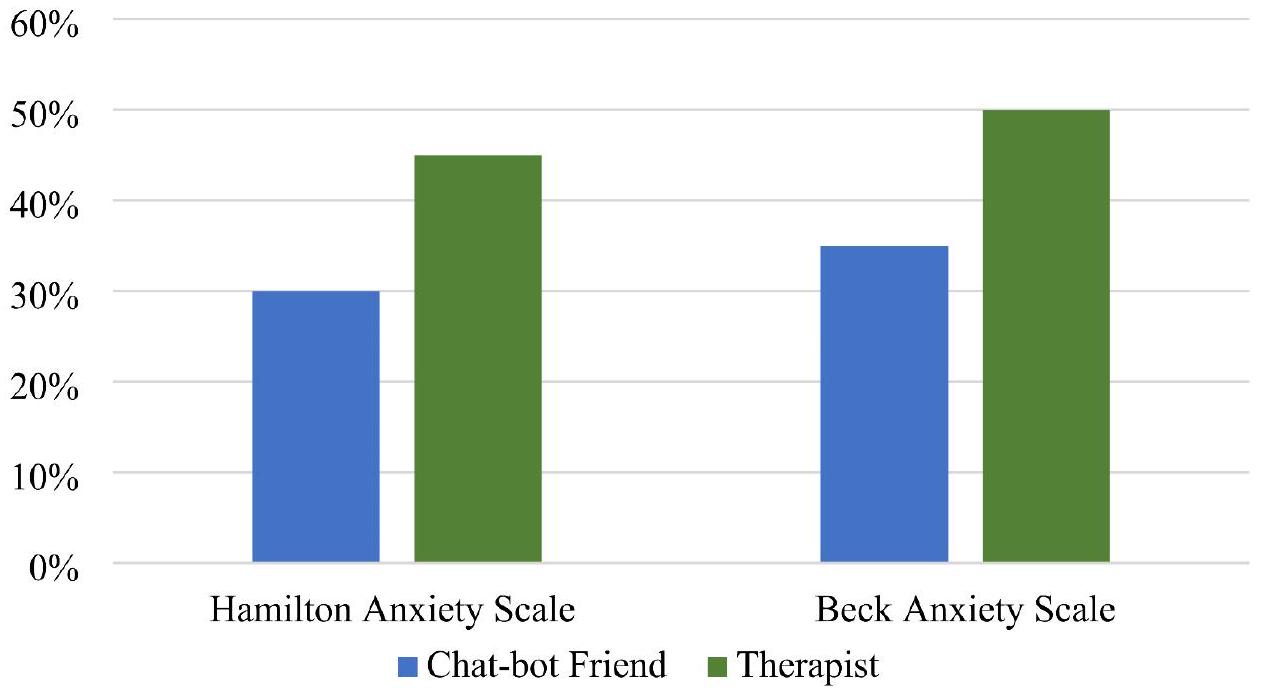
كشفت التجربة عن انخفاض كبير في أعراض القلق في كلا المجموعتين، مما يدل على فعالية كلا الطريقتين في تخفيف القلق. ومع ذلك، أظهرت مجموعة التحكم تعافياً أفضل، على الأرجح بسبب التفاعل الشخصي مع المعالجين، والذي قد يكون أكثر أهمية لبعض المرضى في حالات الأزمات. أظهرت المجموعة التجريبية، التي استخدمت روبوت الدردشة Friend،
أظهر اختبار t باستخدام مقياس هاملتون للقلق قيمة t تبلغ 2.85 و
| جانب | العلاج التقليدي | العلاج بالذكاء الاصطناعي (مثل: الدردشة الآلية) |
| التفاعل الشخصي | مباشر، وجهًا لوجه مع معالج | لا تفاعل بشري مباشر، محادثة افتراضية |
| الدعم العاطفي | مستوى عالٍ من الرعاية الشخصية المتعاطفة | دعم عاطفي محدود؛ يعتمد على ردود مبرمجة |
| الوصول | مقيد بتوافر المعالج والموقع الجغرافي | متاح بشكل كبير، متوفر على مدار الساعة طوال أيام الأسبوع بغض النظر عن الموقع |
| قابلية التوسع | محدود بعدد المعالجين ومدة الجلسة | قابل للتوسع بشكل كبير، يمكنه خدمة العديد من المستخدمين في نفس الوقت |
| القدرة على التكيف | يمكن للمعالجين تعديل الرعاية بناءً على التغذية الراجعة في الوقت الفعلي | تتكيف الردود بناءً على مدخلات المستخدم لكنها تفتقر إلى الفهم البشري. |
| السرية | عادةً ليس مجهولاً | غالبًا ما يسمح بالسرية التامة |
| حالات الطوارئ | فعّال للغاية، ولكن قد يكون غير متاح في مناطق الأزمات | سهلة الوصول في مناطق الأزمات التي تتوفر فيها خدمة الإنترنت |
| الفعالية في تقليل القلق | فعالية أعلى بسبب الرعاية الشخصية | فعّالة ولكن أقل من العلاج التقليدي |
| تكلفة | عادةً ما تكون أكثر تكلفة بسبب الموارد البشرية | أكثر فعالية من حيث التكلفة بفضل الأتمتة |
العلاج واضح، خاصة في الأماكن التي قد تكون فيها العلاجات التقليدية محدودة.
الجوهرية
الجوهرية
تسلط نتائج اختبار t الضوء على أهمية نموذج رعاية هجين يدمج تكنولوجيا الذكاء الاصطناعي مع التفاعل البشري. بينما توفر حلول الذكاء الاصطناعي مثل روبوت الدردشة Friend مساعدة فورية وقابلة للتوسع، خاصة خلال حالات الطوارئ مثل الأنشطة الحربية في أوكرانيا، إلا أنها لا يمكن أن تحل تمامًا محل العلاج الإنساني المتعاطف الذي يقدمه المعالجون (الجدول 2). يمكن أن يكون روبوت الدردشة مفيدًا بشكل خاص للمرضى الذين قد يتخطون العلاج بسبب
صعوبات لوجستية أو وصمة عار، مما يسد الفجوات في العلاج. ومع ذلك، فإن الانخفاض الأكبر في القلق الذي لوحظ في مجموعة المعالجين يبرز الفوائد الخاصة للاتصال البشري، مثل التحقق العاطفي والرعاية المخصصة، والتي يصعب على الذكاء الاصطناعي تقليدها. تظهر هذه النتائج إمكانية دمج تكنولوجيا الذكاء الاصطناعي، مثل روبوت الدردشة Friend، في جهود الصحة النفسية الأكبر في المناطق التي قد يكون فيها العلاج التقليدي أقل قابلية للتطبيق. قد يجمع الأسلوب الهجين بين فوائد كلا الطريقتين، حيث يلبي الاحتياجات الفورية بالتكنولوجيا بينما يؤسس علاقات عاطفية أعمق مع المعالجين. قد يساعد روبوت الدردشة في الاتصال الأول، وآليات التكيف، والحفاظ على مشاركة المرضى بين جلسات العلاج، وكلها تساهم في تحقيق أهداف علاجية أوسع.
يمتلك الذكاء الاصطناعي إمكانات كبيرة في تحسين تشخيص وعلاج الاضطرابات النفسية. تُستخدم تقنيات مثل التعلم العميق والشبكات العصبية بشكل فعال لتحليل بيانات EEG والمواد المرئية، مما يساعد على تحديد العلامات الحيوية للاكتئاب وحالات نفسية أخرى بدقة. تُظهر المعالجون النفسيون الافتراضيون وروبوتات الدردشة التي تستخدم معالجة اللغة الطبيعية وخوارزميات الذكاء الاصطناعي الأخرى القدرة على التفاعل بشكل فعال مع المرضى، وتقديم الدعم وتسهيل عمليات العلاج النفسي [31]. لا توفر هذه التقنيات الرعاية في بيئة سريرية فحسب، بل توسع أيضًا الوصول إلى الرعاية النفسية، مما يقلل من الحواجز المرتبطة بالبعد ووصمة العار المرتبطة بالمرض النفسي. يلعب الذكاء الاصطناعي دورًا رئيسيًا في تحويل مجال الصحة النفسية، مقدمًا أحدث الأساليب لتحسين جودة حياة المرضى [32].
ومع ذلك، يجب ملاحظة أنه، بينما تشير النتائج إلى أن العلاجات المدعومة بالذكاء الاصطناعي، مثل روبوت الدردشة Friend، توفر حلولًا قابلة للتوسع، ومتاحة، وفعالة من حيث التكلفة، تظهر بعض التحديات الرئيسية عند استخدامها في العلاج النفسي. إحدى المشكلات الرئيسية هي نقص العمق العاطفي والتعاطف، وهما مكونان ضروريان للعلاج القائم على الإنسان ولكن يصعب تكرارهما باستخدام الذكاء الاصطناعي. قد يقوم المعالجون البشريون بتكييف نهجهم
اعتمادًا على مؤشرات عاطفية في الوقت الحقيقي، مما يوفر علاجًا مخصصًا لا تستطيع روبوتات الدردشة الذكية، التي تعتمد على ردود مبرمجة، أن تضاهيه. علاوة على ذلك، تعتبر الخصوصية وحماية البيانات مشكلات رئيسية مع أنظمة الذكاء الاصطناعي، التي تتطلب بيانات حساسة للمرضى للعمل بشكل صحيح. الفائدة طويلة الأجل لأدوات الصحة النفسية المدعومة بالذكاء الاصطناعي غير معروفة، خاصةً قدرتها على تقديم تغيير علاجي عميق وطويل الأمد مقارنةً بالمعالجين البشريين. علاوة على ذلك، فإن المخاوف بشأن تحيز الخوارزميات وعدم القدرة على إنشاء شراكات علاجية تحد من استخدامها الواسع في علاج الصحة النفسية. نتيجة لذلك، بينما يمكن أن يملأ الذكاء الاصطناعي بعض الفجوات في تقديم خدمات الصحة النفسية، خاصة في حالات الأزمات، تتطلب هذه التحديات الأساسية استراتيجية هجينة تمزج بين الذكاء الاصطناعي والرعاية المتمحورة حول الإنسان لتقديم دعم أكثر شمولاً.
تمتلك النتائج تداعيات عملية مهمة للاستخدام المستقبلي لروبوتات الدردشة في الدعم النفسي، خاصة في ظروف الوصول المحدود إلى الخدمات النفسية، حيث تقدم بديلاً منخفض التكلفة يمكن استخدامه في مجموعة واسعة من السيناريوهات. يمكن أن تساعد هذه البيانات في فهم الفوائد المحتملة لاستخدام روبوتات الدردشة كوسيلة للدعم النفسي في حالات الضغط العالي. تسلط النتائج الضوء على أهمية دراسة دور الذكاء الاصطناعي في العلاج النفسي كوسيلة لدعم الأساليب العلاجية التقليدية وتحسين الفعالية العامة لعلاج الاضطرابات النفسية.
بينما ينجح كل من الذكاء الاصطناعي والعلاج النفسي التقليدي في تقليل القلق، تظل الفائدة طويلة الأجل للتفاعل حاسمة للعلاج الشامل، خاصة في البيئات عالية الضغط. سيكون من الضروري إجراء أبحاث مستمرة لتطوير هذه الأدوات وتعظيم تطبيقها لتحقيق نتائج أفضل في الصحة النفسية. يجب أن تركز الأبحاث المستقبلية على الجوانب النوعية لعلاج الصحة النفسية، مثل التعاطف والتحقق، لتحسين المساعدة في الصحة النفسية. الدراسات الطولية والتحقيق في الخصائص الديموغرافية والسياقية ضرورية لتحديد الفعالية طويلة الأجل لعلاجات الذكاء الاصطناعي وفهم أكثر نتائج العلاج فعالية.
نقاش
فيما يتعلق بدقة التشخيص، بحث فيرما وآخرون [35] في دور الذكاء الاصطناعي في تحليل إشارات الكلام لتشخيص الاكتئاب وخلصوا إلى أن الذكاء الاصطناعي يحسن الدقة في تشخيص الصحة النفسية. ومع ذلك، مشابهة للدراسة الحالية، اكتشفوا أن قدرة الذكاء الاصطناعي على استبدال الاتصال البشري بالكامل محدودة، خاصة في الظروف العاطفية والعلاقات. تشير النتائج الحالية إلى أنه، بينما يكون روبوت الدردشة Friend فعالًا في تقديم مساعدة سريعة وقابلة للتوسع، فإنه يفتقر إلى الردود الشخصية والدقيقة للمعالج، مما قد يفسر الانخفاض الأكبر في القلق المبلغ عنه في مجموعة العلاج التقليدي.
تظهر الإمكانية لدمج الذكاء الاصطناعي في طرق الصحة النفسية الأكبر، خاصة في حالات الأزمات حيث يكون الوصول إلى المعالجين البشريين محدودًا [36]. كشف غرين وآخرون [37] أن أنظمة الذكاء الاصطناعي قد تزيد بشكل كبير من الوصول إلى علاج الصحة النفسية في البيئات ذات الموارد المحدودة، مشابهة لما فعله روبوت الدردشة Friend في هذه الدراسة للمشاركين في مناطق النزاع. كما أكد لي وآخرون [6] فعالية روبوتات الدردشة الذكية في تقديم الدعم في الوقت الحقيقي، مما يكمل بدلاً من استبدال العلاج التقليدي. يتماشى هذا مع نتائج الدراسة الحالية، التي تسلط الضوء على إمكانات روبوت الدردشة Friend كمكمل مفيد للعلاج التقليدي، خاصة في المناطق التي يكون فيها الوصول إلى خدمات الصحة النفسية المهنية مقيدًا.
ومع ذلك، يجب الاعتراف بالقيود في التحقيق الحالي. قد لا تعكس الفترة القصيرة للتدخل فعالية الروبوت المحادثة على المدى الطويل بدقة، كما تم الإبلاغ عنه سابقًا. اكتشف شيفيلي وآخرون [38] أنه، بينما تكون العلاجات المدفوعة بالذكاء الاصطناعي مفيدة على المدى القصير، قد لا توفر نفس المزايا على المدى الطويل مثل العلاج السلوكي المعرفي عبر التشخيص، الذي ثبت أنه يحافظ على الاستقرار العاطفي بمرور الوقت. علاوة على ذلك، قد يحد حجم العينة في هذه الدراسة، على الرغم من كونه كافيًا للنتائج الأولية، من إمكانية تعميم البيانات عبر مجتمعات وسياقات ثقافية متنوعة.
استنادًا إلى نتائج الدراسة الحالية، التي كشفت عن فائدة الدردشة المدعومة بالذكاء الاصطناعي مثل Friend في تقديم الدعم النفسي، من الضروري وضع هذه النتائج في سياق مجموعة أكبر من الدراسات السابقة.
تؤكد الجمعية الأمريكية للطب النفسي على الحاجة إلى رعاية مخصصة في علاج الاكتئاب عبر الفئات العمرية، وهو مبدأ تلبي حلول الذكاء الاصطناعي جزءًا منه فقط. تدعم نتائج الدراسة الحالية هذا، حيث تفوقت العلاجات التقليدية على الدردشة الآلية في تقليل القلق، مما يبرز الأهمية الحاسمة للتعاطف البشري والتكيف في العلاج النفسي، خاصة للأشخاص الذين لديهم احتياجات عاطفية أكثر تعقيدًا.
على النقيض من ذلك، توفر إمكانية الوصول إلى الدردشة الآلية وقابليتها للتوسع في حالات الأزمات، مثل الحرب في أوكرانيا، بديلاً واقعياً عندما تكون العلاجات التقليدية غير متاحة. تسلط دراسات مثل دراسة ليندكفيست باج وآخرون [40] ودراسة دينجل وآخرون [41]، التي تبحث في آثار الصحة النفسية لجائحة كوفيد-19، الضوء على الحاجة المتزايدة لخدمات الصحة النفسية خلال أوقات الأزمات. كما يتضح في الدراسة الحالية، يمكن أن تلعب الحلول المعتمدة على الذكاء الاصطناعي دوراً حاسماً في تخفيف العبء الفوري على الصحة النفسية. وبالمثل، تناقش دراسات لي وآخرون [42] وأديبوجو وفالدز [43] كيف أصبحت إمكانية الوصول إلى علاج الصحة النفسية مهمة خلال وباء كوفيد-19، حيث توفر المنصات المدعومة بالذكاء الاصطناعي إضافة مفيدة للمؤسسات الصحية المزدحمة. ومع ذلك، بينما يمكن للذكاء الاصطناعي أن يسد بعض الفجوات في رعاية الصحة النفسية، يعبر ريتشاردز [44] عن مخاوفه بشأن حدوده في العلاج النفسي، وبشكل خاص عدم قدرته على بناء علاقات علاجية حقيقية. تعزز نتائج الدراسة الحالية هذه المخاوف، حيث قدم المعالجون البشريون دعماً عاطفياً أكبر بكثير وتقليلاً للقلق مقارنة بالدردشة الآلية، مما يظهر حدود الذكاء الاصطناعي في تكرار التفاعلات الدقيقة والمتعاطفة المطلوبة لعلاج فعال.
تؤكد الدراسة الجديدة على إمكانيات الأنظمة المدعومة بالذكاء الاصطناعي في العلاج النفسي، خاصة في حالات الأزمات حيث يكون الوصول إلى المعالجين البشريين محدودًا. هذه النتيجة تتماشى مع ما أظهره كلارك وآخرون [45]، الذين أثبتوا أن العلاج المعرفي عبر الإنترنت يمكن أن يوسع بشكل كبير من نطاق المعالجين، مما يعزز نتائج العلاج في اضطرابات مثل اضطراب القلق الاجتماعي. بينما يمكن أن تحسن أنظمة الذكاء الاصطناعي مثل الدردشات الآلية من إمكانية الوصول، إلا أنها تفتقر إلى التفاعل الدقيق والمتعاطف الذي يقدمه المعالجون البشريون – وهي قيود رئيسية لوحظت في كل من الدراسة الحالية وناقشها سفيان وآخرون [46]، الذين قارنوا بين نماذج الذكاء الاصطناعي وعلماء النفس في تقديم الذكاء الاجتماعي.
من حيث القابلية للتطبيق العملي، تتوافق نتائج الدراسة الحالية مع تلك التي قدمها أوبادياي وآخرون [47]، الذين طبقوا خوارزميات التعلم الآلي للكشف المبكر عن اضطراب الاكتئاب المستمر، مما يشير إلى أن الذكاء الاصطناعي قد يساعد بنجاح في التشخيص المبكر والمراقبة. ومع ذلك، كما أشار وانغ [48]، اكتشفت الدراسة الحالية أنه، بينما توفر أنظمة الذكاء الاصطناعي مثل روبوت الدردشة الصديق إمكانية الوصول والدعم النفسي الفوري، إلا أنها ليست بديلاً كافيًا عن المعالجين البشريين، خاصة عند التعامل مع الحالات المعقدة.
مشاكل الصحة النفسية التي تتطلب مستوى أعلى من المشاركة.
علاوة على ذلك، فإن النموذج الهجين الذي اقترحته هذه الدراسة، حيث تدعم الذكاء الاصطناعي العلاج البشري، مدعوم بدراسات مثل دراسة آفييس-فان دورن [49]، التي بحثت في جدوى الذكاء الاصطناعي في العلاج النفسي من وجهات نظر كل من المرضى والأطباء. بينما يمكن أن يحسن الذكاء الاصطناعي التدخلات العلاجية ويساعد الأطباء، يؤكد سوسو-ريبيرا وآخرون [50] على أهمية التدخل البشري في إدارة الجوانب الأكثر تعقيدًا للصحة النفسية، مثل إدارة الألم المزمن، والتي تتطلب رعاية شخصية تتجاوز قدرات أنظمة الذكاء الاصطناعي الحالية.
تدعم النتائج أيضًا تأكيد بهات [51] بأن تقنيات الصحة النفسية الرقمية ستلعب دورًا متزايد الأهمية في مستقبل العلاج النفسي. ومع ذلك، يعترف كل من بهات والدراسة الحالية بحدود الذكاء الاصطناعي في تكرار العمق العاطفي والتفاعلات العلاجية التي يقدمها المعالجون البشريون، مما يبرز الفكرة القائلة بأن الذكاء الاصطناعي يجب أن يُنظر إليه كأداة تكميلية بدلاً من حل منفرد. وفقًا لهذه النتائج، من المحتمل أن يكون مستقبل العلاج النفسي استراتيجية هجينة حيث يعزز الذكاء الاصطناعي نطاق وكفاءة المعالجين البشريين دون أن يحل محلهم تمامًا.
إن دمج الذكاء الاصطناعي في العلاج النفسي يوفر آفاقًا كبيرة لتعزيز الوصول إلى علاج الصحة النفسية، لا سيما في حالات الأزمات حيث قد تكون العلاجات التقليدية محدودة. تتماشى نتائج الدراسة الجديدة مع الأبحاث السابقة، مما يبرز أهمية الذكاء الاصطناعي في توسيع نطاق العلاج، والمساعدة في التشخيص المبكر، وتقديم المساعدة الفورية. ومع ذلك، فإن القيود المحددة، مثل نقص العمق العاطفي والتفاعل الدقيق الذي يتميز به العلاج البشري، تؤكد على الحاجة إلى نهج هجين. بينما يمكن أن تكمل أنظمة الذكاء الاصطناعي وتحسن من كفاءة المعالجين، إلا أنها لا يمكن أن تحل محل العلاج المتعاطف والقابل للتكيف الذي يقدمه المتخصصون البشريون، خاصة في الحالات العاطفية المعقدة. يجب أن تبحث الأبحاث المستقبلية في الفعالية طويلة الأمد للعلاجات النفسية المعتمدة على الذكاء الاصطناعي، لا سيما في ظروف الأزمات المختلفة وعبر الفئات السكانية. علاوة على ذلك، يمكن أن تستكشف التحقيقات دمج أنظمة الذكاء الاصطناعي مع نماذج رعاية هجينة تشمل كل من المعالجين البشريين ومساعدة الذكاء الاصطناعي وتقييم التأثير على نتائج العلاج بشكل عام. قد يؤدي المزيد من تطوير أنظمة الذكاء الاصطناعي التي تعزز العمق العاطفي والاستجابة إلى تحسين جودة المساعدة النفسية المقدمة من قبل الروبوتات المحادثة.
الاستنتاجات
بديل فعال للعلاج التقليدي في بيئات عالية الضغط مع موارد محدودة. في تجربة عشوائية محكومة (RCT)، تم تقسيم 104 أشخاص إلى مجموعتين: أولئك الذين استخدموا الروبوت الدردشة وأولئك الذين تلقوا العلاج التقليدي من علماء نفس مؤهلين.
بينما كانت العلاجات كلاهما مفيدة في خفض أعراض القلق، كشفت الدراسة أن العلاج التقليدي أدى إلى انخفاض أكثر أهمية في مستويات القلق، مع
تنبع أهمية هذه الدراسة من أدلتها على قدرة الذكاء الاصطناعي على سد الفجوات في تقديم الرعاية الصحية النفسية، لا سيما في السياقات التي تعاني من الأزمات أو نقص الموارد. بينما كانت أداء الدردشة الآلية أقل من العلاج التقليدي، لا يمكن تجاهل مزاياها من حيث الوصول وقابلية التوسع. تضيف هذه الدراسة إلى مجموعة الأدلة المتزايدة التي تشير إلى أن الدردشة الآلية المدعومة بالذكاء الاصطناعي يمكن أن تكون مكملاً قيماً للعلاج التقليدي، حيث تقدم دعمًا نفسيًا فوريًا وتساعد في إدارة القلق خلال الفترات المهمة. تظهر هذه الدراسة كيف يمكن للدردشة الآلية المعتمدة على الذكاء الاصطناعي مثل Friend أن تقدم مساعدة نفسية قابلة للوصول وقابلة للتوسع في ظروف الأزمات، خاصة عندما تكون خيارات العلاج التقليدي محدودة. تشير نتائجها إلى أن مثل هذه التقنيات يمكن دمجها بنجاح في أنظمة الرعاية الصحية النفسية لتكملة المعالجين البشريين، مما يوفر المساعدة الفورية في المواقف عالية الضغط. يجب أن تركز الأبحاث المستقبلية على تحسين ردود الفعل العاطفية للدردشة الآلية المدعومة بالذكاء الاصطناعي والتحقيق في التأثير طويل الأمد لهذه العلاجات على نتائج الصحة النفسية. قد تكون الاستراتيجية الهجينة التي تجمع بين تكنولوجيا الذكاء الاصطناعي وطرق العلاج التقليدية هي الحل الأكثر فعالية لمعالجة قضايا الصحة النفسية في كل من الأزمات والإعدادات اليومية.
الشكر والتقدير
مساهمات المؤلف
التمويل
توفر البيانات
الإعلانات
موافقة الأخلاقيات
الموافقة المستنيرة
الموافقة على النشر
المصالح المتنافسة
تم النشر عبر الإنترنت: 28 فبراير 2025
References
- Mosquera FEC, Guevara-Montoya MC, Serna-Ramirez V, Liscano Y. Neuroinflammation and Schizophrenia: new therapeutic strategies through Psychobiotics, Nanotechnology, and Artificial Intelligence (AI). J Pers Med. 2024;14(4):391. https://doi.org/10.3390/jpm14040391
- Prescott J, Barnes S. Artificial intelligence positive psychology and therapy. Couns Psychother Res. 2024;24:843-5. https://doi.org/10.1002/capr. 12784
- Pandey A, Misra M. Artificial Intelligence in Mental Health Care. Artificial Intelligence and Machine Learning in Healthcare. Singapore: Springer. 2023;117-28. https://doi.org/10.1007/978-981-99-6472-7_8
- Kang C, Novak D, Urbanova K, Cheng Y, Hu Y. Domain-specific improvement on psychotherapy chatbot using assistant. In: IEEE International Conference on Acoustics, Speech, and Signal Processing Workshops. Seoul: IEEE. 2024;351-5. https://doi.org/10.1109/ICASSPW62465.2024.10626529
- Zheng G, Zheng W, Zhang Y, Wang J, Chen M, Wang Y, Cai T, Yao Z, Hu B. An attention-based multi-modal MRI fusion model for major depressive disorder diagnosis. J Neural Eng. 2023;20(6):066005. https://doi.org/10.1088/1741-255 2/ad038c
- Li H, Zhang R, Lee YC, Kraut RE, Mohr DC. Systematic review and metaanalysis of AI-based conversational agents for promoting mental health and well-being. Npj Digit Med. 2023;6:236. https://doi.org/10.1038/s41746-023-00 979-5
- Wang J, Li T, Sun Q, Guo Y, Yu J, Yao Z, Hou N, Hu B. Automatic diagnosis of major depressive disorder using a high- and low-frequency feature fusion framework. Brain Sci. 2023;13(11):1590. https://doi.org/10.3390/brainsci13111 590
- Poalelungi DG, Musat CL, Fulga A, Neagu M, Neagu AI, Piraianu AI, Fulga I. Advancing patient care: how artificial intelligence is transforming healthcare. J Pers Med. 2023;13(8):1214. https://doi.org/10.3390/jpm13081214
- Ooi PB, Wilkinson G. Enhancing ethical codes with artificial intelligence governance- a growing necessity for the adoption of generative Al in counselling. Br J Guid Couns. 2024;1-15. https://doi.org/10.1080/03069885.2024.2 373180
- Haber Y, Levkovich I, Hadar-Shoval D, Elyoseph Z. The artificial third: a broad view of the effects of introducing generative artificial intelligence on psychotherapy. JMIR Ment Health. 2024;11:e54781. https://doi.org/10.2196/54781
- Ronneberg CR, Lv N, Ajilore OA, Kannampallil T, Smyth J, Kumar V, Barve A, Garcia C, Dosala S, Wittels N, Xiao L, Aborisade G, Zhang A, Tang Z, Johnson J, Ma J. Study of a PST-trained voice-enabled artificial intelligence counselor for adults with emotional distress (SPEAC-2): design and methods. Contemp Clin Trials. 2024;142:107574. https://doi.org/10.1016/j.cct.2024.107574
- Alimour SA, Alnono E, Aljasmi S, El Farran H, Alqawasmi AA, Alrabeei MM, Shwedeh F, Aburayya A. The quality traits of artificial intelligence operations
in predicting mental healthcare professionals’ perceptions: a case study in the psychotherapy division. J Auton Intell. 2024;7(4):1-17. https://doi.org/10.3262 9/jai.v7i4.1438 - Plakun EM. Psychotherapy and artificial intelligence. J Psychiatr Pract. 2023;29(6):476-9. https://doi.org/10.1097/PRA.0000000000000748
- Beg MJ, Verma M, Vishvak Chanthar KMM, Verma MK. Artificial intelligence for psychotherapy: a review of the current state and future directions. Indian J Psychol Med. 2024. https://doi.org/10.1177/02537176241260819
- Huțul TD, Popescu A, Karner-Huțuleac A, Holman AC, Huțul A. Who’s willing to lay on the virtual couch? Attitudes, anthropomorphism and need for human interaction as factors of intentions to use chatbots for psychotherapy. Couns Psychother Res. 2024;00:1-10. https://doi.org/10.1002/capr. 12794
- Klooster D. Evaluating robustness of brain stimulation biomarkers for depression: a systematic review of magnetic resonance imaging and electroencephalography studies. Biol Psychiatry. 2024;95(6):553-63. https://doi.org/10. 1016/j.biopsych.2023.09.009
- Weizenbaum J. ELIZA- A computer program for the study of natural language communication between man and machine. Commun ACM. 1966;9(1):36-45. https://doi.org/10.1145/365153.365168
- Alhuwaydi AM. Exploring the role of artificial intelligence in mental healthcare: current trends and future directions- A narrative review for a comprehensive insight. Risk Manag Healthc Policy. 2024;17:1339-48. https://doi.org/ 10.2147/RMHP.S461562
- Bocheliuk V, Panov M, Nechyporenko V, Pozdniakova-Kyrbiatieva E. Formation of mental set of subjects of higher education institution for management by the correction game method. Astra Salvens. 2019;7(13):275-88.
- Borna S, Maniaci MJ, Haider CR, Gomez-Cabello CA, Pressman SM, Haider SA, Demaerschalk BM, Cowart JB, Forte AJ. Artificial intelligence support for informal patient caregivers: a systematic review. Bioengineering. 2024;11(5):483. h ttps://doi.org/10.3390/bioengineering11050483
- Durden E, Pirner MC, Rapoport SJ, Williams A, Robinson A, Forman-Hoffman VL. Changes in stress, burnout, and resilience associated with an 8-week intervention with relational agent Woebot. Internet Interv. 2023;33:100637. ht tps://doi.org/10.1016/j.invent.2023.100637
- Tahan M, Saleem T. An overview of the application of artificial intelligence in psychotherapy: a systematic review. Neuropsychiatr Neuropsychol. 2024;19(1):28-39. https://doi.org/10.5114/nan.2024.141887
- Kryshtanovych M, Kryshtanovych S, Stepanenko L, Brodiuk Y, Fast A. Methodological approach to determining the main factors for the development of creative thinking in students of creative professions. Creat Stud. 2021;14(2):391-404. https://doi.org/10.3846/cs.2021.14806
- Bocheliuk V, Shevtsov A, Pozdniakova O, Panov M, Zhadlenko I. Effectiveness of Psycho-Correctional methods and technologies in Work with children who have autism. Syst Rev J Intel Disabil- Diagn Treat. 2023;11(1):10-20. https://do i.org/10.6000/2292-2598.2023.11.01.2
- Sawalha J, Yousefnezhad M, Shah Z, Brown MRG, Greenshaw AJ, Greiner R. Detecting presence of PTSD using sentiment analysis from text data. Front Psychiatry. 2022;12:811392. https://doi.org/10.3389/fpsyt.2021.811392
- Efremov A. The fear primacy hypothesis in the structure of Emotional States: a systematic literature review. Psychol Rep. 2025. https://doi.org/10.1177/0033 2941241313106
- Romaniuk O. Expression and interpretation of attraction and interpersonal intimacy: a comparative study of female nonverbal behaviour. Anal Univer Craiova – Ser Stiinte Filolog Ling. 2021;43(1-2):220-37.
- Romaniuk O, Yavorska L. Complimenting behaviour in young adults’ first impression scripts. Anal Univer Craiova – Ser Stiinte Filolog Ling. 2022;44(1-2):168-87. https://doi.org/10.52846/aucssflingv.v44i1-2.58
- DeVault D, Artstein R, Benn G, Dey T, Fast E, Gainer A, Georgila K, Gratch J, Hartholt A, Lhommet M, Lucas G, Marsella S, Morbini F, Nazarian A, Scherer S, Stratou G, Suri A, Traum D, Wood R, Xu Y, Rizzo A, Morency LP. SimSensei Kiosk: A virtual human interviewer for healthcare decision support. In: Proceedings of the 2014 International Conference on Autonomous Agents and Multi-Agent Systems. Richland: International Foundation for Autonomous Agents and Multiagent Systems. 2014;1061-8. https://doi.org/10.5555/26157 31.2617415
- Shaituro O, Holodnyk Y, Pevko S, Khan O. Legal awareness as a factor in preventing illegal (deviant) behavior. Dialog Hum Soc Sci. 2025;3(1):9-16. htt ps://doi.org/10.71261/dhss/3.1.9.16
- Shamne A, Dotsevych T, Akimova A. Psychosemantic peculiarities of promotional videos perception. Psycholing. 2019;25(1):384-408. https://doi.org/10.3 1470/2309-1797-2019-25-1-384-408
- Sokól-Szawlowska M. Paternal perinatal depression: cases. Psychol Polska. 2020;54(6):1123-35. https://doi.org/10.12740/PP/110610
- Hoffman V, Flom M, Mariano TY, Chiauzzi E, Williams A, Kirvin-Quamme A, Pajarito S, Durden E, Perski O. User engagement clusters of an 8-week digital mental health intervention guided by a relational agent (woebot): exploratory study. J Med Internet Res. 2023;25:e47198. https://doi.org/10.2196/4719 8
- Sedlakova J, Trachsel M. Conversational artificial intelligence in psychotherapy: a new therapeutic tool or agent? Am J Bioeth. 2022;23(5):4-13. https://d oi.org/10.1080/15265161.2022.2048739
- Verma A, Jain P, Kumar T. An effective depression diagnostic system using speech signal analysis through deep learning methods. Int J Artif Intell Tools. 2023;32(2):2340004. https://doi.org/10.1142/S0218213023400043
- Wahid N, Sajid IA. Factors contributing to On-campus drug use among students: a study of the boys’ hostels in the University of Peshawar. Rev Law Soc Sci. 2025;3(1):23-38. https://doi.org/10.71261/rlss/3.1.23.38
- Green EP, Lai Y, Pearson N, Rajasekharan S, Rauws M, Joerin A, Kwobah E, Musyimi C, Jones RM, Bhat C, Mulinge A, Puffer ES. Expanding access to perinatal depression treatment in Kenya through automated psychological support: development and usability study. JMIR Form Res. 2020;4(10):e17895. https://doi.org/10.2196/17895
- Schaeuffele C, Meine LE, Schulz A, Weber MC, Moser A, Paersch C, Recher D, Boettcher J, Renneberg B, Flückiger C, Kleim B. A systematic review and metaanalysis of transdiagnostic cognitive behavioural therapies for emotional disorders. Nat Hum Behav. 2024;8:493-509. https://doi.org/10.1038/s41562-0 23-01787-3
- American Psychological Association. Summary of the clinical practice guideline for the treatment of depression across three age cohorts. Am Psychol. 2022;77(6):770-80. https://doi.org/10.1037/amp0000904
- Lindqvist Bagge AS, Lekander M, Olofsson Bagge R, Carlander A. Mental health, stress, and well-being measured before (2019) and during (2020) COVID-19: A Swedish socioeconomic population-based study. Psychol Health. 2023;1-18. https://doi.org/10.1080/08870446.2023.2257747
- Dingle GA, Han R, Alhadad SS, Beckman E, Bentley SV, Gomersall SR, Hides L, Maccallum F, McKimmie BM, Rossa K, Smith SS, Walter ZC, Williams E, Wright O. Data from four consecutive cohorts of students in Australia (2019-2022) show the impact of the COVID-19 pandemic on domestic and international university students’ mental health. Aust N Z J Psychiatry. 2024;58(6):528-36. h ttps://doi.org/10.1177/00048674241233111
- Lee M, Jeong S, Kim CS, Yang YJ. Analysis of health behavior, mental health, and nutritional status among Korean adolescents before and after COVID-19 outbreak: based on the 2019-2020 Korea National Health and Nutrition Examination Survey. J Nutr Health. 2023;56(6):667-82. https://doi.org/10.4163 /jnh.2023.56.6.667
- Adepoju OE, Valdez MR. Trends in mental health utilization before and during the COVID-19 pandemic: federally qualified health centers as a case study. Popul Health Manag. 2023;26(3):143-8. https://doi.org/10.1089/pop.2023.000 6
- Richards D. Artificial intelligence and psychotherapy: a counterpoint. Couns Psychother Res. 2024;1-6. https://doi.org/10.1002/capr. 12758
- Clark DM, Wild J, Warnock-Parkes E, Stott R, Grey N, Thew G, Ehlers A. More than doubling the clinical benefit of each hour of therapist time: a randomised controlled trial of internet cognitive therapy for social anxiety disorder. Psychol Med. 2023;53(11):5022-32. https://doi.org/10.1017/S003329 1722002008
- Sufyan NS, Fadhel FH, Alkhathami SS, Mukhadi JYA. Artificial intelligence and social intelligence: preliminary comparison study between AI models and psychologists. Front Psychol. 2024;15:1353022. https://doi.org/10.3389/fpsyg. 2024.1353022
- Upadhyay DK, Mohapatra S, Singh NK. An early assessment of persistent depression disorder using machine learning algorithm. Multimed Tools Appl. 2023;83:49149-71. https://doi.org/10.1007/s11042-023-17369-4
- Wang C. Application of MPP database and artificial intelligence system in online evaluation of college students’ mental health. Prev Med. 2023;173:107580. https://doi.org/10.1016/j.ypmed.2023.107580
- Aafjes-van Doorn K. Feasibility of artificial intelligence-based measurement in psychotherapy practice: patients’ and clinicians’ perspectives. Couns Psychother Res. 2024;1-11. https://doi.org/10.1002/capr. 12800
- Suso-Ribera C, Castilla D, Martínez-Borba V, Jaén I, Botella C, Baños RM, GarcíaPalacios A. Technological interventions for pain management. Compr Clin Psychol. 2022;10:219-38. https://doi.org/10.1016/b978-0-12-818697-8.0000 9-1
- Bhatt S. Digital mental health: role of artificial intelligence in psychotherapy.
ملاحظة الناشر
- *المراسلة:
ليانا سبايتسكا
spytska_l@ukr.net
¹قسم علم النفس والتربية، جامعة كييف الدولية،
49 شارع لفيفسكا، كييف 03179، أوكرانيا
DOI: https://doi.org/10.1186/s40359-025-02491-9
PMID: https://pubmed.ncbi.nlm.nih.gov/40022267
Publication Date: 2025-02-28
The use of artificial intelligence in psychotherapy: development of intelligent therapeutic systems
Abstract
Background The increasing demand for psychotherapy and limited access to specialists underscore the potential of artificial intelligence (AI) in mental health care. This study evaluates the effectiveness of the AI-powered Friend chatbot in providing psychological support during crisis situations, compared to traditional psychotherapy. Methods A randomized controlled trial was conducted with 104 women diagnosed with anxiety disorders in active war zones. Participants were randomly assigned to two groups: the experimental group used the Friend chatbot for daily support, while the control group received 60 -minute psychotherapy sessions three times a week. Anxiety levels were assessed using the Hamilton Anxiety Rating Scale and Beck Anxiety Inventory. T-tests were used to analyze the results.
Results Both groups showed significant reductions in anxiety levels. The control group receiving traditional therapy had a 45% reduction on the Hamilton scale and a 50% reduction on the Beck scale, compared to 30% and 35% reductions in the chatbot group. While the chatbot provided accessible, immediate support, traditional therapy proved more effective due to the emotional depth and adaptability provided by human therapists. The chatbot was particularly beneficial in crisis settings where access to therapists was limited, proving its value in scalability and availability. However, its emotional engagement was notably lower compared to in-person therapy. Conclusions The Friend chatbot offers a scalable, cost-effective solution for psychological support, particularly in crisis situations where traditional therapy may not be accessible. Although traditional therapy remains more effective in reducing anxiety, a hybrid model combining AI support with human interaction could optimize mental health care, especially in underserved areas or during emergencies. Further research is needed to improve Al’s emotional responsiveness and adaptability.
Introduction
Modern studies confirm that the use of AI is effective for the diagnosis and treatment of mental disorders [2,3]. Some studies highlight that chatbots can effectively help manage symptoms of depression and anxiety [4]. Zheng et al. [5] demonstrated that AI-based systems, specifically an attention-based multi-modal MRI fusion model, can effectively aid in diagnosing and managing major depressive disorder. Their study highlights how continuous monitoring through AI can improve the accuracy of diagnosis and provide real-time interventions, ultimately enhancing the treatment of depression and anxiety. The use of chatbots in psychotherapy has seen significant growth over the past five years. Li et al. [6] conducted a systematic review and meta-analysis, demonstrating that AI-based conversational agents can effectively promote mental health and well-being. Their study highlights that chatbots provide timely support and personalised recommendations, which can significantly reduce anxiety levels and improve psychoemotional well-being, especially among students.
Another important area of research is integrating AI to manage symptoms of depression and anxiety. Wang et al. [7] developed a high- and low-frequency feature fusion framework for the automatic diagnosis of major depressive disorder, further emphasizing AI’s potential to offer more accessible and personalized support to patients. These studies underscore the growing role of AI in improving the accuracy and effectiveness of mental health interventions, particularly in the management of depression and anxiety. Poalelungi et al. [8] note that AI can perform functions, in particular, monitoring the condition of patients and providing treatment recommendations, which opens up new opportunities for psychotherapy practice. However, there are a significant number of gaps in research, especially regarding the integration of these systems into the clinical environment and the evaluation of their long-term effectiveness.
Haber et al. [10] introduced the concept of the “Artificial Third” in psychotherapy, exploring how AI’s presence affects the dynamics between therapists and patients. This study provides a broader perspective on the role of AI in therapy, suggesting that while AI can assist in diagnosis and support, it may also impact the traditional therapist-patient relationship. Ronneberg et al. [11] conducted the SPEAC-2 study, which investigates the potential of a PST-trained, voice-enabled AI counselor for adults experiencing emotional distress. This study provides valuable insights into how AI-driven interventions can offer real-time, personalised emotional support, addressing the growing demand for mental health services where traditional access may be limited. However, while the SPEAC-2 system shows promise, more research is needed to explore its long-term effectiveness in comparison to human therapists.
Alimour et al. [12] explored the quality traits of AI operations in mental health care, focusing on how AI can predict mental health professional’s perceptions and contribute to enhanced decision-making in psychotherapy. Their study reveals AI’s potential in improving the operational efficiency of therapeutic practices, yet it also points to the need for deeper research into how AI can be fully integrated into clinical environments. Plakun [13] examined the role of AI in psychotherapy, noting that while AI can assist with patient monitoring and provide personalized treatment recommendations, it cannot replace the human element in therapy. This study emphasizes the need for a balanced approach to integrating AI into psychotherapy, where AI serves as a complement rather than a substitute for human therapists. This highlights the necessity for further exploration of how AI can maintain the empathy and personal connection critical to therapeutic success.
The current research addresses a critical gap in the application of AI technologies within mental health care, where such tools remain underutilised compared to their use in physical health. Unlike previous studies, this research not only explores the potential of AI in enhancing diagnostic tools and identifying objective biomarkers for mental illnesses but also evaluates the effectiveness of AI-driven chatbots in real-world crisis scenarios, such as during the war in Ukraine. The significance of this study lies in its comprehensive analysis of AI applications, demonstrating how these technologies can provide timely psychological support when access to traditional
therapy is limited. By focussing on user interactions with the Friend chatbot, the research reveals its effectiveness in reducing anxiety among users in high-stress environments, highlighting AI’s role as a crucial adjunct to conventional mental health care.
This study aimed to evaluate an intelligent therapeutic system that integrates AI to support psychotherapy processes, especially in cases where access to psychotherapists is limited. Through an empirical study, it was evaluated how such a system can affect the improvement of clinical outcomes and optimisation of the therapeutic process. The study also helped to identify potential problems and the impact of AI technology on psychotherapy practice. Also, the study aimed to evaluate the effectiveness of the Friend chatbot compared to conventional psychotherapy sessions in reducing anxiety levels in women in crisis situations. Several hypotheses for study on the usefulness of AI technology, notably chatbots, in mental health treatment have been developed:
Materials and methods
had been diagnosed with anxiety disorder by a qualified mental health practitioner during the preceding six months. Participants were also required to live in areas directly affected by military activities and to have access to a mobile device with Internet connection. Exclusion criteria included the existence of major mental illnesses (e.g., schizophrenia, bipolar disorder), current substance abuse, pregnancy or breastfeeding, or any condition that would preclude the participant from interacting with the chatbot.
Clinical psychologists performed virtual interviews to confirm the anxiety diagnosis and determine eligibility, with 104 women chosen from among 150 screened. Participants were then assigned to either the experimental group ( 52 women utilising the AI-based chatbot Friend for daily psychological support) or the control group ( 52 women having three 60 -minute conventional therapy sessions with certified psychologists each week). During the eight-week study, the chatbot gave tailored help via natural language processing and machine learning, adapting its replies to the user’s emotional state.
This study is classified as a clinical trial because participants were randomly assigned to either an experimental group using the Friend chatbot or a control group receiving traditional psychotherapy, which is a component of clinical trials that lowers bias and ensures comparability. This AI system uses a natural language processing framework and machine learning methods to communicate with people in real time. The system is intended to analyse the user’s emotional state via text inputs and then deliver tailored replies based on therapy procedures such as CBT and motivational interviewing. The chatbot employs deep learning models to adjust replies as conversations progress, imitating an empathic relationship to alleviate anxiety symptoms. Data acquired from these discussions is evaluated by the system’s backend, which does emotional sentiment analysis to identify discomfort and offer appropriate coping measures. By randomly assigning participants to the experimental or control groups, the study assures comparability and allows for a thorough evaluation of the chatbot’s effectiveness in contrast to traditional psychotherapy, resulting in credible evidence to influence mental health treatment. Furthermore, the RCT’s structured format allows for robust statistical analysis, which strengthens the findings’ validity in the context of psychiatric therapy during crisis situations.
An RCT was required to establish causality between the intervention and anxiety reduction results, allowing for a complete assessment of the chatbot’s effectiveness. The structured RCT design allows for thorough statistical analysis, which improves the validity of the findings in crisis settings. Standardised outcome measures, specifically the Hamilton Anxiety Rating Scale and the Beck Anxiety
In addition to quantitative measurements, the research looked at other AI apps, such as Tess, Wysa, and Woebot, to get qualitative insights. This study examined their methods, features, and operating environments, as well as how they leverage natural language processing and other AI technologies to increase user engagement. The study’s holistic approach seeks to thoroughly examine the potential benefits of AI technologies in improving the diagnosis and treatment of mental illnesses, as well as to suggest topics for future research and usage in psychotherapy.
Results
[16]. A three-dimensional neural network has also been proven in studies to properly predict depression based on video clips.
In addition to diagnostic and prognostic aims, AIenabled therapeutic devices are quickly evolving. Technological innovation has had a tremendous impact on the area of psychology, particularly with the development of the first chatbot by psychologist Weizenbaum [17]. The software, named ELIZA after the character Eliza Doolittle in George Bernard Shaw’s play Pygmalion, replicated a conversation with a therapist, despite its’ limited intellectual ability. ELIZA relied on the premise of reformulating the user’s comments into questions, allowing for the appearance of comprehension and empathy. Using the “Doctor” scenario, ELIZA successfully mimicked the technique of prominent psychologist Carl Rogers, creating the sense of active listening and interaction. This early application of the chatbot highlighted the possibility of employing AI for psychotherapy, setting the framework for future innovations in the field [18]. Modern technologies have advanced significantly, improving the capacity to handle complicated issues and produce more intelligent interactive systems capable of providing more realistic and in-depth interactions with users in the field of psychology [19]. Tess and other chatbots (Sara, Woebot, and Wysa) offer assistance through text messages and interactive displays [20,21]. Woebot, for example, uses virtual psychoanalysis to assist users in identifying their emotions and thinking patterns, as well as teaching them resilience and anxiety reduction strategies [22]. Woebot has been found in studies to successfully lessen depressive symptoms. Tess is used to diagnose emotional illnesses and to alleviate sadness and anxiety. Intelligent psychotherapy systems are built on AI and machine learning, which encompass a wide spectrum of technologies [23].
Tess, a psychotherapeutic chatbot, uses natural language processing, machine learning, and deep learning to assess patients’ language, emotions, and behaviour, modifying replies to give personalised therapy [20]. Tess uses a variety of treatment modalities, including CBT and motivational interviewing, and has demonstrated success in lowering anxiety and sadness, particularly among students. Tess is not a replacement for expert care but rather an auxiliary tool that improves access to mental health assistance and provides instructional resources for selfhelp skill development [24].
Ellie, a virtual therapist created by the Institute of Creative Technologies, uses voice recognition and computer vision to evaluate mental health during virtual consultations [25]. This artificial intelligence system recognises small changes in facial expressions, voice intonation, gestures, and posture, which are critical for accurately assessing mental states. Ellie evaluates semantic and
emotional subtleties in speech, but computer vision algorithms look at microexpressions and gestures, which might disclose more than spoken communication [26]. The method is used to evaluate individuals’ mental health, diagnose signs of post-traumatic stress disorder (PTSD), depression, and anxiety, and develop communication skills. Ellie is also a helpful research tool, helping to gain a greater understanding of the relationship between nonverbal conduct and mental health. This AI application in psychotherapy has demonstrated the ability to improve mental illness diagnosis and treatment, providing critical assistance to individuals who have limited access to traditional healthcare facilities.
SimSensei is an advanced system that uses deep machine learning and behavioural analysis to detect signs of sadness and PTSD [27, 28]. It performs realistic user interactions by combining several data sources, such as text messages and audio-video recordings. SimSensei uses natural language processing and video analysis to identify emotional states and behavioural indications of psychiatric problems. Its main feature is its capacity to engage users via an empathic chatbot or virtual agent, providing individualised instruction and psychological support depending on their emotional requirements [29].
Replika is an AI-powered chatbot that functions as a “virtual friend” for tailored communication and emotional support [30]. It uses neural networks and natural language processing to assess user input and provide contextually suitable replies. Replika uses interactive dialogues to help users improve their social skills, give psychological support, and entertain them. It is a tool for personal and emotional growth, especially for people experiencing social isolation or seeking assistance with personal concerns.
Elomia is a mobile app that uses science and technology to improve mental wellness. It uses cognitive behavioural therapy, self-help approaches, and artificial intelligence to provide personalised care. Users are subjected to psychometric assessments and activity tracking, which result in individualised CBT plans that include psychological exercises. AI optimises therapies, and the app provides visualising and meditation aids. Elomia has a community platform for user engagement. It was developed by psychology, artificial intelligence, and marketing professionals and now serves thousands of people worldwide, with a free version available to Ukrainians. The software works with Open AI, using powerful models such as GPT-3 to deliver effective and accessible therapeutic help.
Faino Bot Psy is a stress-management chatbot that communicates anonymously and in five languages. It measures stress levels and provides recovery exercises, but underlines that it does not replace real therapist conversations or treat underlying psychological disorders, focused instead on rapid help. Similarly, Wysa, an
international chatbot therapist, offers a variety of mental health activities and voice conversation without requesting any personal information from users, allowing them to stay anonymous. These ideas demonstrate chatbots’ ability to provide psychological assistance while maintaining continuity of care. Despite their limits in human emotional connection and deep diagnosis, these technologies efficiently address acute needs and complement traditional therapeutic procedures.
Ukraine has introduced a Telegram chatbot called Friend First Aid, which is aimed to give psychological support in difficult situations using contemporary procedures and scientific research. It is especially effective for individuals who have recently experienced stress and do not have access to an expert. The chatbot engages users by asking questions, giving relaxation techniques, and making suggestions for solving obstacles. If necessary, it can send consumers to the Tell Me platform for specialised consultations. According to the Centre for Strategic Communications and Information Security, the chatbot has been clinically proven to provide immediate psychological help when direct communication with an expert is not available.
The Friend chatbot uses AI to serve as a virtual companion, asking questions, providing assistance, suggesting relaxing activities, and advising users on stress management. It uses natural language processing to assess user content, produce answers, and customise interactions, successfully recognising and responding to emotional states and learning from each encounter to tailor its assistance. This adaptability is especially useful in crisis settings, where access to standard therapy is restricted. The Friend chatbot is designed for Ukrainian language support and crisis intervention in military settings, while Tess and Woebot focus on regular psychotherapy encounters, and Wysa provides comprehensive mental health services to a global audience. Table 1 presents a comparison of chatbots.
In light of the need for psychological support in Ukraine, the Friend chatbot was identified as the best tool for conducting scientific research. This app was chosen because of its accessibility, ease of use, and support for the Ukrainian language. The purpose of the study was to evaluate the effectiveness of the Friend chatbot in comparison with conventional psychotherapy sessions in times of crisis, in particular during the war in Ukraine. Participants in the experiment were 104 women who were in active combat zones and had experience of being in dangerous conditions. All participants were diagnosed with an anxiety disorder prior to the study, which provided high initial anxiety in the sample. For the study, participants were randomly divided into two groups. The experimental group used the Friend chatbot for daily communication and psychological support. Participants
| Chatbot | Language | Focus | Methodology | Features |
| Chatbot Friend | Support for the Ukrainian language | Provision of prompt psychological support in stressful situations | Simple answers and methods, redirection to specialists if necessary | Designed for Ukrainians, especially in the context of military operations and crises |
| Tess | Mostly English | Ongoing emotional support and psychotherapy interventions | CBT and other methods | Adapts responses based on the user’s emotional state |
| Wysa | Multilingual support | Wide range of psychotherapy exercises and support | Interactive exercises and chat | Possibility of using it without disclosing personal information |
| Woebot | Mostly English | Maintaining mental health through daily introspection and exercise | CBT | Interaction with users in the form of virtual psychoanalysis |
The experiment revealed a substantial reduction in anxiety symptoms in both groups, demonstrating the efficacy of both methods in relieving anxiety. However, the control group showed a better recovery, most likely owing to the personal interaction with therapists, which may be more important for some patients in crisis situations. The experimental group, which used the Friend chatbot, demonstrated a
A t-test using the Hamilton Anxiety Scale indicated a t -value of 2.85 and a
| Aspect | Traditional Therapy | Al Therapy (e.g., Chatbots) |
| Personal interaction | Direct, face-to-face with a therapist | No direct human interaction, virtual conversation |
| Emotional support | High level of personalised, empathetic care | Limited emotional support; relies on programmed responses |
| Accessibility | Limited by therapist availability and geographic location | Highly accessible, available 24/7 regardless of location |
| Scalability | Limited by number of therapists and session time | Highly scalable, can serve many users simultaneously |
| Adaptability | Therapists can adapt care based on real-time feedback | Adapts responses based on user input but lacks human nuance |
| Anonymity | Usually not anonymous | Often allows full anonymity |
| Crisis Situations | Highly effective, but may be inaccessible in crisis zones | Easily accessible in crisis zones with internet access |
| Effectiveness in reducing anxiety | Higher effectiveness due to personalised care | Effective but less than traditional therapy |
| Cost | Typically, more expensive due to human resources | More cost-effective due to automation |
treatment is clear, particularly in places where traditional therapy may be limited.
The substantial
The substantial
The t-test results highlight the importance of a hybrid model of care that integrates AI technology with human engagement. While AI solutions like the Friend chatbot provide immediate, scalable assistance, especially during emergencies like war activities in Ukraine, they cannot totally replace the human, sympathetic treatment offered by therapists (Table 2). The chatbot can be especially beneficial for patients who may skip therapy owing
to logistical difficulties or stigma, bridging gaps in treatment. However, the higher anxiety reductions observed in the therapist group highlight the particular benefits of human connection, such as emotional validation and customised care, which are challenging for AI to imitate. These findings show the possibility of incorporating AI technology, such as the Friend chatbot, into larger mental health efforts in areas where traditional therapy may be less feasible. A hybrid method might combine the benefits of both modalities, serving immediate demands with technology while establishing deeper emotional relationships with therapists. The chatbot may help with first contact, coping mechanisms, and keeping patients involved in between treatment sessions, all of which contribute to broader therapeutic goals.
AI has significant potential in improving the diagnosis and treatment of mental disorders. Technologies such as deep learning and neural networks are effectively used to analyse EEG data and video materials, helping to accurately identify biomarkers of depression and other mental states. Virtual psychotherapists and chatbots that use natural language processing and other AI algorithms demonstrate the ability to effectively interact with patients, providing support and facilitating psychotherapy processes [31]. These technologies not only provide care in a clinical setting, but also expand access to psychological care, reducing barriers associated with remoteness and stigmatisation of mental illness. AI plays a key role in transforming the field of mental health, offering the latest approaches to improve the quality of life of patients [32].
However, it should be noted that, while the results indicate that AI-powered treatments, such as the Friend chatbot, provide scalable, accessible, and cost-effective solutions, some major challenges arise when using them to psychotherapy. One key problem is a lack of emotional depth and empathy, which are necessary components of human-based treatment but difficult to reproduce with AI. Human therapists may adapt their approach
depending on real-time emotional indicators, providing personalised treatment that AI chatbots, which rely on programmed replies, fail to match. Furthermore, privacy and data protection are major problems with AI systems, which require sensitive patient data to work properly. The long-term usefulness of AI-powered mental health tools is unknown, particularly their potential to offer profound, long-lasting therapeutic change when compared to human therapists. Furthermore, concerns about algorithm bias and the incapacity to create therapeutic partnerships limit their broad usage in mental health treatment. As a result, while AI can fill some gaps in mental health service delivery, especially in crisis situations, these essential challenges demand a hybrid strategy that blends AI with human-cantered care to provide more comprehensive support.
The results have important practical implications for the future use of chatbots in psychological support, especially in conditions of limited access to psychological services, offering a low-cost, affordable alternative that can be used in a wide range of scenarios. This data can help us understand the potential benefits of using chatbots as a means of psychological support in situations of high stress. The results highlight the importance of further studying the role of AI in psychotherapy as a means of supporting traditional therapeutic methods and improving the overall effectiveness of treating mental disorders.
While both AI and traditional psychotherapy are successful in reducing anxiety, the long-term benefit of interaction remains critical for comprehensive treatment, especially in high-stress settings. Ongoing research will be required to develop these tools and maximise their application for better mental health results. Future research should focus on qualitative aspects of mental health treatment, such as empathy and validation, to optimise mental health assistance. Longitudinal studies and investigation of demographic and contextual characteristics are necessary to determine the long-term effectiveness of AI treatments and understand the most effective treatment outcomes.
Discussion
In terms of diagnostic accuracy, Verma et al. [35] investigated AI’s involvement in speech signal analysis for depression diagnosis and concluded that AI improves precision in mental health diagnosis. However, similar to the current study, they discovered that AI’s potential to completely replace human contact is limited, particularly in emotional and relational circumstances. The current findings indicate that, while the Friend chatbot is effective for quick, scalable assistance, it lacks the personalised and nuanced replies of a therapist, which might explain the larger anxiety reductions reported in the conventional therapy group.
The potential for incorporating AI into larger mental health methods is apparent, particularly in crisis situations where access to human therapists is limited [36]. Green et al. [37] revealed that AI systems might dramatically increase access to mental health treatment in resource-constrained settings, similar to what the Friend chatbot did in this study for participants in conflict zones. Li et al. [6] also emphasised the effectiveness of conversational AI bots in delivering real-time support, complementing rather than replacing traditional treatment. This is consistent with the outcomes of the current study, which highlight the Friend chatbot’s potential as a beneficial supplement to conventional therapy, particularly in areas where access to professional mental health services is restricted.
However, limitations in the current investigation should be acknowledged. The brief period of the intervention may not accurately reflect the chatbot’s longterm efficacy, as previously reported. Schaeuffele et al. [38] discovered that, while AI-driven therapies are useful in the short term, they may not provide the same longterm advantages as transdiagnostic CBT, which has been shown to sustain emotional stability over time. Furthermore, the sample size in this study, while adequate for preliminary findings, may restrict the data’s generalisability across diverse communities and cultural situations.
Building on the present study’s findings, which revealed the usefulness of AI-powered chatbots such as Friend in giving psychological support, it is critical to contextualise these findings within the larger body of previous
research. The American Psychological Association [39] emphasises the need for personalised care in treating depression across age groups, a premise that AI-driven solutions only partially meet. The present study’s findings support this, since traditional treatment beat the chatbot in anxiety reduction, emphasising the critical importance of human empathy and adaptation in psychotherapy, particularly for people with more complex emotional needs.
In contrast, the chatbot’s accessibility and scalability in crisis situations, such as the war in Ukraine, provide a realistic alternative when traditional treatment is unavailable. Studies such as Lindqvist Bagge et al. [40] and Dingle et al. [41], which investigate the mental health effects of COVID-19, highlight the increasing need for mental health services during times of crisis. As demonstrated in the current study, AI-based solutions can play a critical role in alleviating the immediate mental health burden. Similarly, Lee et al. [42] and Adepoju and Valdez [43] discuss how access to mental health treatment became important during the COVID-19 epidemic, with AI-powered platforms providing a beneficial addition to overcrowded healthcare institutions. However, while AI can fill some gaps in mental health care, Richards [44] expresses worries about its limits in psychotherapy, specifically its incapacity to build true therapeutic connections. The current study’s findings reinforce these worries, as human therapists gave far greater emotional support and anxiety reduction than the chatbot, demonstrating AI’s limits in duplicating the subtle, sympathetic interactions required for effective treatment.
The new study emphasises the potential of AI-powered systems in psychotherapy, especially in crisis settings where access to human therapists is restricted. This conclusion is consistent with Clark et al. [45], who demonstrated that online cognitive therapy may greatly expand therapists’ reach, boosting treatment outcomes in disorders such as social anxiety disorder. While AI systems such as chatbots can improve accessibility, they lack the nuanced, empathetic interaction that human therapists provide- a key limitation observed in both the current study and discussed in Sufyan et al. [46], who compared AI models and psychologists in delivering social intelligence.
In terms of practical applicability, the current study’s findings are consistent with those of Upadhyay et al. [47], who applied machine learning algorithms for early detection of persistent depressive disorder, suggesting that AI may successfully help early diagnosis and monitoring. However, as Wang [48] noted, the current study discovered that, while AI systems such as the Friend chatbot provide accessibility and immediate psychological support, they are insufficient replacements for human therapists, especially when dealing with complex
mental health issues that necessitate a higher level of engagement.
Furthermore, the hybrid paradigm proposed by this study, in which AI supports human treatment, is supported by studies such as Aafjes-van Doorn [49], who investigated the viability of AI in psychotherapy from both patient and clinician viewpoints. While AI can improve therapeutic interventions and assist clinicians, Suso-Ribera et al. [50] emphasise the importance of human intervention in managing more complex aspects of mental health, such as chronic pain management, which necessitates personalised care beyond the capabilities of current AI systems.
The findings also support Bhatt’s [51] assertion that digital mental health technologies will play an increasingly important role in the future of psychotherapy. However, both Bhatt and the current study recognise AI’s limits in duplicating the emotional depth and therapeutic interactions that human therapists give, underscoring the notion that AI should be seen as a complementary tool rather than a solo solution. According to these findings, the future of psychotherapy is likely to be a hybrid strategy in which AI boosts the reach and efficiency of human therapists while not completely replacing them.
Incorporating AI into psychotherapy provides substantial prospects for enhancing access to mental health treatment, particularly in crisis settings where traditional therapy may be limited. The new study’s findings are consistent with earlier research, emphasising the significance of AI in extending therapy’s reach, assisting in early diagnosis, and offering instant assistance. However, the limitations identified, such as the lack of emotional depth and nuanced interaction inherent in human treatment, emphasise the need for a hybrid approach. While AI systems can supplement and improve the efficiency of therapists, they cannot replace the empathic and adaptable treatment offered by human specialists, particularly in complicated emotional situations. Future research should examine the long-term efficacy of AI-based mental health therapies, particularly in various crisis circumstances and across demographics. Furthermore, investigations could investigate the integration of AI systems with hybrid models of care that include both human therapists and AI help and assess the influence on overall treatment outcomes. Further development of AI systems that increase emotional depth and reactivity may improve the quality of psychological assistance provided by chatbots.
Conclusions
an effective substitute for traditional treatment in highstress settings with limited resources. In a randomised controlled experiment (RCT), 104 people were split into two groups: those who used the chatbot and those who received traditional therapy from qualified psychologists.
While both treatments were helpful in lowering anxiety symptoms, the study revealed that conventional therapy resulted in a more significant drop in anxiety levels, with a
The significance of this study stems from its evidence of AI’s ability to bridge gaps in mental health care provision, particularly in crisis or resource-constrained contexts. While the chatbot performed less well than traditional treatment, its advantages in terms of accessibility and scalability cannot be overlooked. This study adds to the growing body of evidence indicating that AI-powered chatbots can be valuable adjuncts to traditional treatment, providing instant psychological support and aiding in anxiety management during important periods. This study shows how AI-based chatbots like Friend can offer accessible, scalable psychological help in crisis circumstances, especially when traditional treatment options are restricted. Its findings indicate that such technologies may be successfully integrated into mental health care systems to supplement human therapists, providing instant assistance in high-stress situations. Future research should focus on improving AI chatbots’ emotional reactivity and investigating the long-term impact of these treatments on mental health outcomes. A hybrid strategy that combines AI technology with traditional therapy approaches may be the most effective answer for addressing mental health issues in both crisis and everyday settings.
Acknowledgements
Author contributions
Funding
Data availability
Declarations
Ethics approval
Informed consent
Consent for publication
Competing interests
Published online: 28 February 2025
References
- Mosquera FEC, Guevara-Montoya MC, Serna-Ramirez V, Liscano Y. Neuroinflammation and Schizophrenia: new therapeutic strategies through Psychobiotics, Nanotechnology, and Artificial Intelligence (AI). J Pers Med. 2024;14(4):391. https://doi.org/10.3390/jpm14040391
- Prescott J, Barnes S. Artificial intelligence positive psychology and therapy. Couns Psychother Res. 2024;24:843-5. https://doi.org/10.1002/capr. 12784
- Pandey A, Misra M. Artificial Intelligence in Mental Health Care. Artificial Intelligence and Machine Learning in Healthcare. Singapore: Springer. 2023;117-28. https://doi.org/10.1007/978-981-99-6472-7_8
- Kang C, Novak D, Urbanova K, Cheng Y, Hu Y. Domain-specific improvement on psychotherapy chatbot using assistant. In: IEEE International Conference on Acoustics, Speech, and Signal Processing Workshops. Seoul: IEEE. 2024;351-5. https://doi.org/10.1109/ICASSPW62465.2024.10626529
- Zheng G, Zheng W, Zhang Y, Wang J, Chen M, Wang Y, Cai T, Yao Z, Hu B. An attention-based multi-modal MRI fusion model for major depressive disorder diagnosis. J Neural Eng. 2023;20(6):066005. https://doi.org/10.1088/1741-255 2/ad038c
- Li H, Zhang R, Lee YC, Kraut RE, Mohr DC. Systematic review and metaanalysis of AI-based conversational agents for promoting mental health and well-being. Npj Digit Med. 2023;6:236. https://doi.org/10.1038/s41746-023-00 979-5
- Wang J, Li T, Sun Q, Guo Y, Yu J, Yao Z, Hou N, Hu B. Automatic diagnosis of major depressive disorder using a high- and low-frequency feature fusion framework. Brain Sci. 2023;13(11):1590. https://doi.org/10.3390/brainsci13111 590
- Poalelungi DG, Musat CL, Fulga A, Neagu M, Neagu AI, Piraianu AI, Fulga I. Advancing patient care: how artificial intelligence is transforming healthcare. J Pers Med. 2023;13(8):1214. https://doi.org/10.3390/jpm13081214
- Ooi PB, Wilkinson G. Enhancing ethical codes with artificial intelligence governance- a growing necessity for the adoption of generative Al in counselling. Br J Guid Couns. 2024;1-15. https://doi.org/10.1080/03069885.2024.2 373180
- Haber Y, Levkovich I, Hadar-Shoval D, Elyoseph Z. The artificial third: a broad view of the effects of introducing generative artificial intelligence on psychotherapy. JMIR Ment Health. 2024;11:e54781. https://doi.org/10.2196/54781
- Ronneberg CR, Lv N, Ajilore OA, Kannampallil T, Smyth J, Kumar V, Barve A, Garcia C, Dosala S, Wittels N, Xiao L, Aborisade G, Zhang A, Tang Z, Johnson J, Ma J. Study of a PST-trained voice-enabled artificial intelligence counselor for adults with emotional distress (SPEAC-2): design and methods. Contemp Clin Trials. 2024;142:107574. https://doi.org/10.1016/j.cct.2024.107574
- Alimour SA, Alnono E, Aljasmi S, El Farran H, Alqawasmi AA, Alrabeei MM, Shwedeh F, Aburayya A. The quality traits of artificial intelligence operations
in predicting mental healthcare professionals’ perceptions: a case study in the psychotherapy division. J Auton Intell. 2024;7(4):1-17. https://doi.org/10.3262 9/jai.v7i4.1438 - Plakun EM. Psychotherapy and artificial intelligence. J Psychiatr Pract. 2023;29(6):476-9. https://doi.org/10.1097/PRA.0000000000000748
- Beg MJ, Verma M, Vishvak Chanthar KMM, Verma MK. Artificial intelligence for psychotherapy: a review of the current state and future directions. Indian J Psychol Med. 2024. https://doi.org/10.1177/02537176241260819
- Huțul TD, Popescu A, Karner-Huțuleac A, Holman AC, Huțul A. Who’s willing to lay on the virtual couch? Attitudes, anthropomorphism and need for human interaction as factors of intentions to use chatbots for psychotherapy. Couns Psychother Res. 2024;00:1-10. https://doi.org/10.1002/capr. 12794
- Klooster D. Evaluating robustness of brain stimulation biomarkers for depression: a systematic review of magnetic resonance imaging and electroencephalography studies. Biol Psychiatry. 2024;95(6):553-63. https://doi.org/10. 1016/j.biopsych.2023.09.009
- Weizenbaum J. ELIZA- A computer program for the study of natural language communication between man and machine. Commun ACM. 1966;9(1):36-45. https://doi.org/10.1145/365153.365168
- Alhuwaydi AM. Exploring the role of artificial intelligence in mental healthcare: current trends and future directions- A narrative review for a comprehensive insight. Risk Manag Healthc Policy. 2024;17:1339-48. https://doi.org/ 10.2147/RMHP.S461562
- Bocheliuk V, Panov M, Nechyporenko V, Pozdniakova-Kyrbiatieva E. Formation of mental set of subjects of higher education institution for management by the correction game method. Astra Salvens. 2019;7(13):275-88.
- Borna S, Maniaci MJ, Haider CR, Gomez-Cabello CA, Pressman SM, Haider SA, Demaerschalk BM, Cowart JB, Forte AJ. Artificial intelligence support for informal patient caregivers: a systematic review. Bioengineering. 2024;11(5):483. h ttps://doi.org/10.3390/bioengineering11050483
- Durden E, Pirner MC, Rapoport SJ, Williams A, Robinson A, Forman-Hoffman VL. Changes in stress, burnout, and resilience associated with an 8-week intervention with relational agent Woebot. Internet Interv. 2023;33:100637. ht tps://doi.org/10.1016/j.invent.2023.100637
- Tahan M, Saleem T. An overview of the application of artificial intelligence in psychotherapy: a systematic review. Neuropsychiatr Neuropsychol. 2024;19(1):28-39. https://doi.org/10.5114/nan.2024.141887
- Kryshtanovych M, Kryshtanovych S, Stepanenko L, Brodiuk Y, Fast A. Methodological approach to determining the main factors for the development of creative thinking in students of creative professions. Creat Stud. 2021;14(2):391-404. https://doi.org/10.3846/cs.2021.14806
- Bocheliuk V, Shevtsov A, Pozdniakova O, Panov M, Zhadlenko I. Effectiveness of Psycho-Correctional methods and technologies in Work with children who have autism. Syst Rev J Intel Disabil- Diagn Treat. 2023;11(1):10-20. https://do i.org/10.6000/2292-2598.2023.11.01.2
- Sawalha J, Yousefnezhad M, Shah Z, Brown MRG, Greenshaw AJ, Greiner R. Detecting presence of PTSD using sentiment analysis from text data. Front Psychiatry. 2022;12:811392. https://doi.org/10.3389/fpsyt.2021.811392
- Efremov A. The fear primacy hypothesis in the structure of Emotional States: a systematic literature review. Psychol Rep. 2025. https://doi.org/10.1177/0033 2941241313106
- Romaniuk O. Expression and interpretation of attraction and interpersonal intimacy: a comparative study of female nonverbal behaviour. Anal Univer Craiova – Ser Stiinte Filolog Ling. 2021;43(1-2):220-37.
- Romaniuk O, Yavorska L. Complimenting behaviour in young adults’ first impression scripts. Anal Univer Craiova – Ser Stiinte Filolog Ling. 2022;44(1-2):168-87. https://doi.org/10.52846/aucssflingv.v44i1-2.58
- DeVault D, Artstein R, Benn G, Dey T, Fast E, Gainer A, Georgila K, Gratch J, Hartholt A, Lhommet M, Lucas G, Marsella S, Morbini F, Nazarian A, Scherer S, Stratou G, Suri A, Traum D, Wood R, Xu Y, Rizzo A, Morency LP. SimSensei Kiosk: A virtual human interviewer for healthcare decision support. In: Proceedings of the 2014 International Conference on Autonomous Agents and Multi-Agent Systems. Richland: International Foundation for Autonomous Agents and Multiagent Systems. 2014;1061-8. https://doi.org/10.5555/26157 31.2617415
- Shaituro O, Holodnyk Y, Pevko S, Khan O. Legal awareness as a factor in preventing illegal (deviant) behavior. Dialog Hum Soc Sci. 2025;3(1):9-16. htt ps://doi.org/10.71261/dhss/3.1.9.16
- Shamne A, Dotsevych T, Akimova A. Psychosemantic peculiarities of promotional videos perception. Psycholing. 2019;25(1):384-408. https://doi.org/10.3 1470/2309-1797-2019-25-1-384-408
- Sokól-Szawlowska M. Paternal perinatal depression: cases. Psychol Polska. 2020;54(6):1123-35. https://doi.org/10.12740/PP/110610
- Hoffman V, Flom M, Mariano TY, Chiauzzi E, Williams A, Kirvin-Quamme A, Pajarito S, Durden E, Perski O. User engagement clusters of an 8-week digital mental health intervention guided by a relational agent (woebot): exploratory study. J Med Internet Res. 2023;25:e47198. https://doi.org/10.2196/4719 8
- Sedlakova J, Trachsel M. Conversational artificial intelligence in psychotherapy: a new therapeutic tool or agent? Am J Bioeth. 2022;23(5):4-13. https://d oi.org/10.1080/15265161.2022.2048739
- Verma A, Jain P, Kumar T. An effective depression diagnostic system using speech signal analysis through deep learning methods. Int J Artif Intell Tools. 2023;32(2):2340004. https://doi.org/10.1142/S0218213023400043
- Wahid N, Sajid IA. Factors contributing to On-campus drug use among students: a study of the boys’ hostels in the University of Peshawar. Rev Law Soc Sci. 2025;3(1):23-38. https://doi.org/10.71261/rlss/3.1.23.38
- Green EP, Lai Y, Pearson N, Rajasekharan S, Rauws M, Joerin A, Kwobah E, Musyimi C, Jones RM, Bhat C, Mulinge A, Puffer ES. Expanding access to perinatal depression treatment in Kenya through automated psychological support: development and usability study. JMIR Form Res. 2020;4(10):e17895. https://doi.org/10.2196/17895
- Schaeuffele C, Meine LE, Schulz A, Weber MC, Moser A, Paersch C, Recher D, Boettcher J, Renneberg B, Flückiger C, Kleim B. A systematic review and metaanalysis of transdiagnostic cognitive behavioural therapies for emotional disorders. Nat Hum Behav. 2024;8:493-509. https://doi.org/10.1038/s41562-0 23-01787-3
- American Psychological Association. Summary of the clinical practice guideline for the treatment of depression across three age cohorts. Am Psychol. 2022;77(6):770-80. https://doi.org/10.1037/amp0000904
- Lindqvist Bagge AS, Lekander M, Olofsson Bagge R, Carlander A. Mental health, stress, and well-being measured before (2019) and during (2020) COVID-19: A Swedish socioeconomic population-based study. Psychol Health. 2023;1-18. https://doi.org/10.1080/08870446.2023.2257747
- Dingle GA, Han R, Alhadad SS, Beckman E, Bentley SV, Gomersall SR, Hides L, Maccallum F, McKimmie BM, Rossa K, Smith SS, Walter ZC, Williams E, Wright O. Data from four consecutive cohorts of students in Australia (2019-2022) show the impact of the COVID-19 pandemic on domestic and international university students’ mental health. Aust N Z J Psychiatry. 2024;58(6):528-36. h ttps://doi.org/10.1177/00048674241233111
- Lee M, Jeong S, Kim CS, Yang YJ. Analysis of health behavior, mental health, and nutritional status among Korean adolescents before and after COVID-19 outbreak: based on the 2019-2020 Korea National Health and Nutrition Examination Survey. J Nutr Health. 2023;56(6):667-82. https://doi.org/10.4163 /jnh.2023.56.6.667
- Adepoju OE, Valdez MR. Trends in mental health utilization before and during the COVID-19 pandemic: federally qualified health centers as a case study. Popul Health Manag. 2023;26(3):143-8. https://doi.org/10.1089/pop.2023.000 6
- Richards D. Artificial intelligence and psychotherapy: a counterpoint. Couns Psychother Res. 2024;1-6. https://doi.org/10.1002/capr. 12758
- Clark DM, Wild J, Warnock-Parkes E, Stott R, Grey N, Thew G, Ehlers A. More than doubling the clinical benefit of each hour of therapist time: a randomised controlled trial of internet cognitive therapy for social anxiety disorder. Psychol Med. 2023;53(11):5022-32. https://doi.org/10.1017/S003329 1722002008
- Sufyan NS, Fadhel FH, Alkhathami SS, Mukhadi JYA. Artificial intelligence and social intelligence: preliminary comparison study between AI models and psychologists. Front Psychol. 2024;15:1353022. https://doi.org/10.3389/fpsyg. 2024.1353022
- Upadhyay DK, Mohapatra S, Singh NK. An early assessment of persistent depression disorder using machine learning algorithm. Multimed Tools Appl. 2023;83:49149-71. https://doi.org/10.1007/s11042-023-17369-4
- Wang C. Application of MPP database and artificial intelligence system in online evaluation of college students’ mental health. Prev Med. 2023;173:107580. https://doi.org/10.1016/j.ypmed.2023.107580
- Aafjes-van Doorn K. Feasibility of artificial intelligence-based measurement in psychotherapy practice: patients’ and clinicians’ perspectives. Couns Psychother Res. 2024;1-11. https://doi.org/10.1002/capr. 12800
- Suso-Ribera C, Castilla D, Martínez-Borba V, Jaén I, Botella C, Baños RM, GarcíaPalacios A. Technological interventions for pain management. Compr Clin Psychol. 2022;10:219-38. https://doi.org/10.1016/b978-0-12-818697-8.0000 9-1
- Bhatt S. Digital mental health: role of artificial intelligence in psychotherapy.
Publisher’s note
- *Correspondence:
Liana Spytska
spytska_l@ukr.net
¹Department of Psychology and Pedagogy, Kyiv International University,
49 Lvivska Str, Kyiv 03179, Ukraine