
DOI: https://doi.org/10.22399/ijasrar.18
تاريخ النشر: 2025-03-07
الذكاء الاصطناعي في تحسين المالية وسلسلة التوريد: التحليلات التنبؤية لنمو الأعمال واستقرار السوق في الولايات المتحدة الأمريكية
تاريخ المقال:
تاريخ الاستلام: 3 يناير 2025
تم القبول: 7 مارس 2025
الكلمات المفتاحية:
الملخص
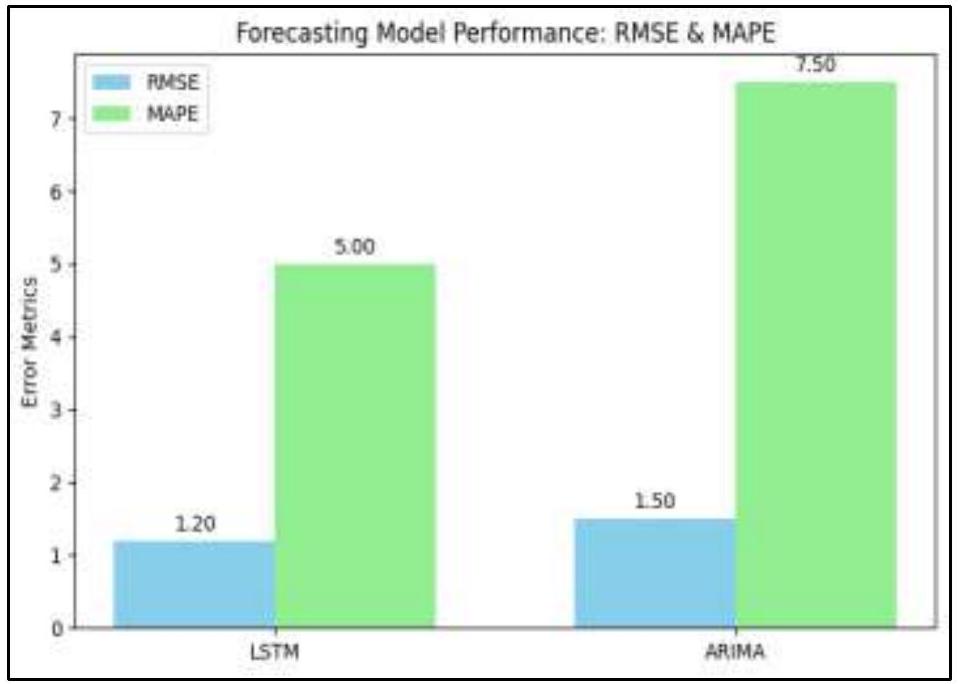
تدرس هذه الدراسة تطبيق الذكاء الاصطناعي (AI) وتعلم الآلة (ML) في تحسين عمليات سلسلة التوريد والتنبؤ المالي في الولايات المتحدة الأمريكية. تبحث البحث في كيفية تعزيز التحليلات التنبؤية المدفوعة بالذكاء الاصطناعي لنمو الأعمال واستقرار الأسواق. يتم استخدام مجموعة متنوعة من نماذج تعلم الآلة لمعالجة التحديات المختلفة: تُستخدم شبكات الذاكرة طويلة وقصيرة المدى (LSTM) للتنبؤ بالتسلسل في المجالات المالية والاقتصادية، بينما تدعم تقنيات الانحدار اللوجستي، والغابات العشوائية، وتقنيات التعزيز اكتشاف الاحتيال. بالإضافة إلى ذلك، يتم تطبيق المحولات التلقائية وخوارزميات غابة العزل لتحديد المعاملات المالية غير العادية، وتقوم نماذج ARIMA بتوقع ارتفاعات الطلب والموسمية. لتحسين اللوجستيات، يتم استخدام التعلم المعزز (شبكات Q العميقة) لتحسين تخطيط الطرق، وتقوم الشبكات العصبية بتوقع فترات إعادة التخزين المثلى بناءً على أنماط الطلب. يتم استخدام XGBoost لتقييم حساسية الأسعار لدى العملاء وتحسين استراتيجيات التسعير. يتم تقييم أداء نماذج التنبؤ باستخدام متوسط الخطأ التربيعي الجذري (RMSE) ومتوسط النسبة المطلقة للخطأ (MAPE). في المقابل، يتم قياس فعالية اكتشاف الاحتيال من خلال الدقة، والاسترجاع، ودرجة F1، والمساحة تحت المنحنى (AUC-ROC). يتم تقييم نماذج اللوجستيات من خلال إجمالي وقت التسليم، وتقليل التكاليف، وزيادة الكفاءة، بينما يتم التحقق من توقعات إعادة التخزين من خلال الدقة، ومتوسط الخطأ التربيعي (MSE)، ومعدلات دوران المخزون. يتم تقييم استراتيجيات التسعير بناءً على تأثير الإيرادات، ومقاييس المرونة، ومعدلات احتفاظ العملاء.
1. المقدمة
1.1 الخلفية
1.2 أهمية هذا البحث
1.3 الأهداف
2. مراجعة الأدبيات
2.1 الأعمال ذات الصلة
2.2 الفجوات والتحديات
3. المنهجية
3.1 جمع البيانات والمعالجة المسبقة
مصادر البيانات
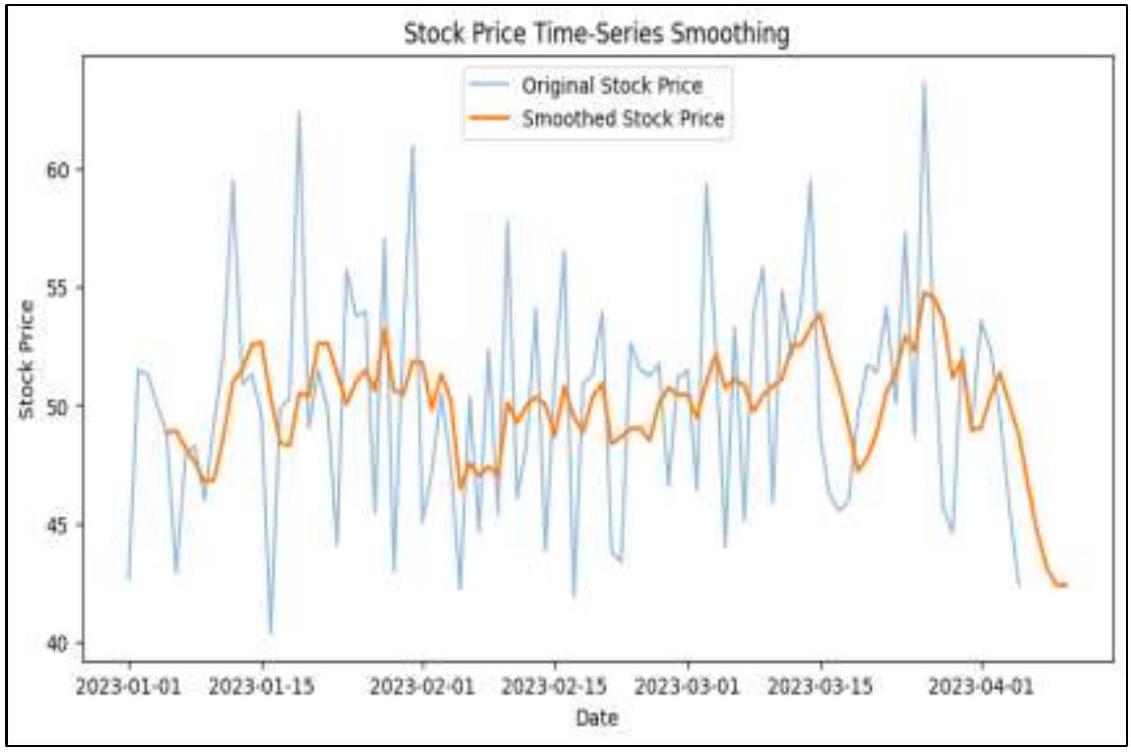
تحركات الأسعار والاتجاهات المالية. يتم الحصول على بيانات سلسلة التوريد من الشركات الرائدة في مجال التجزئة واللوجستيات، بما في ذلك السجلات المعاملات، مستويات المخزون، وعمليات اللوجستيات، مما يوفر مقاييس مفصلة لتوقع الطلب وتحسين المسارات. يتم اشتقاق بيانات كشف الاحتيال من المؤسسات المالية، وتتكون من سجلات المعاملات، تقارير الأنشطة المشبوهة، وتواريخ المعاملات للعملاء المجهولين. تم هيكلة هذه المجموعات البيانية لدعم النمذجة التنبؤية عبر سيناريوهات الأعمال المختلفة، لضمان أداء قوي للنموذج.
معالجة البيانات المسبقة
3.2 تطوير النموذج
3.3 إجراءات تدريب النموذج والتحقق منه
3.4 مقاييس تقييم الأداء
4. النتائج والمناقشة
4.1 أداء النماذج
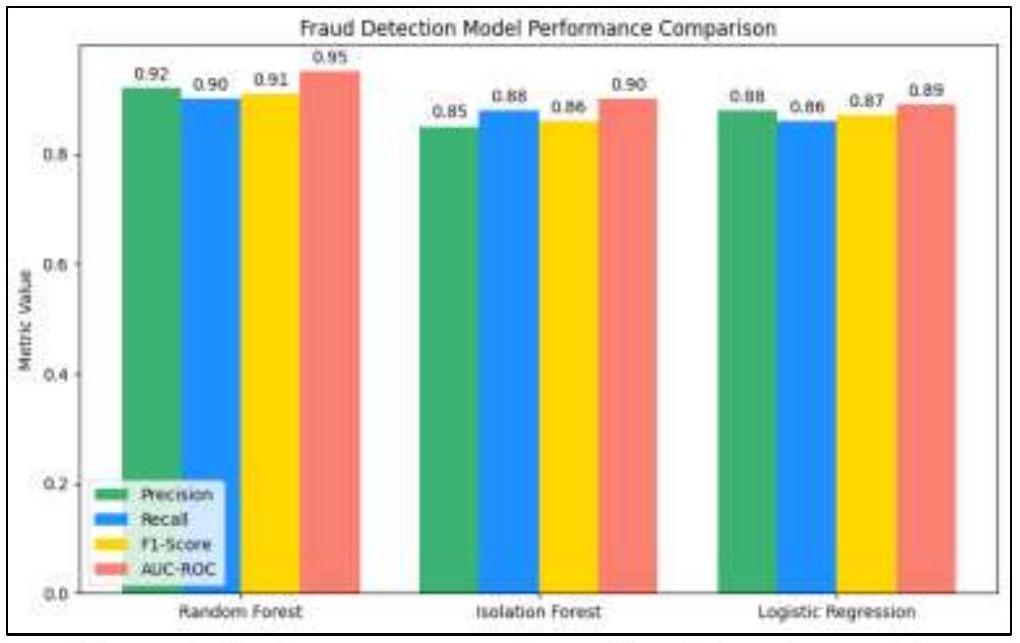
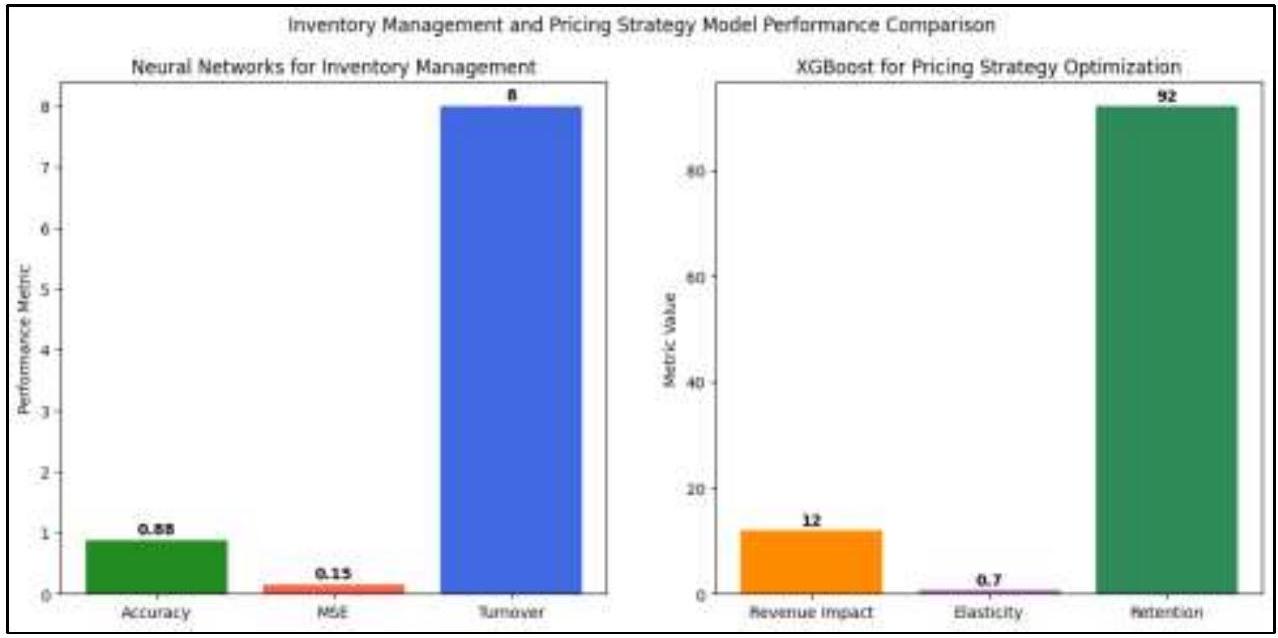
يوضح الرسم البياني العمودي المجمّع (الشكل 4) أداء نماذج كشف الاحتيال مثل الغابة العشوائية، والغابة المعزولة، والانحدار اللوجستي عبر عدة مقاييس: الدقة، والاسترجاع، ودرجة F1، وAUC-ROC. القيم الأعلى في هذه المقاييس (الأقرب إلى 1) تشير إلى أداء أفضل. تميل الغابة العشوائية إلى التفوق على الغابة المعزولة عبر معظم المقاييس، مما يُظهر قوتها في كشف المعاملات الاحتيالية. تساعد هذه التصويرات في تحديد أي نموذج يوازن بشكل أفضل بين الإيجابيات الكاذبة والسلبيات الكاذبة. يوضح الرسم البياني العمودي (الشكل 5) المقاييس الرئيسية للأداء لنموذج التعلم المعزز، الشبكات العصبية العميقة (DQN)، المستخدمة في تحسين اللوجستيات. تشمل المقاييس تقليل الوقت الإجمالي للتسليم (%)، وتقليل التكلفة (%)، وزيادة الكفاءة (%). تشير النسبة الأعلى في كل فئة إلى أداء أفضل. على سبيل المثال،
4.2 المناقشة والأعمال المستقبلية
لقد أبرزت الأعمال الأخيرة دور تقنيات الذكاء الاصطناعي المتقدمة في التنبؤ المالي وتحسين سلسلة التوريد [10،14]. كما أظهرت التحليلات المقارنة أن الاحتيال القائم على التعلم العميق
يمكن أن تتفوق نماذج الكشف بشكل كبير على الأساليب التقليدية في السيناريوهات الواقعية [15]. وقد أكدت الدراسات حول استقرار السوق والتسعير الديناميكي على فوائد دمج التحليلات التنبؤية مع نماذج اقتصادية قوية. تدعم الأبحاث الناشئة حول إدارة المخزون وتحسين استراتيجيات التسعير الحاجة إلى نماذج توازن بين الكفاءة التشغيلية والاستجابة للسوق [11،12،16]. يتم استخدام الذكاء الاصطناعي في تطبيقات مختلفة وتم الإبلاغ عنها في الأدبيات [17-23].
5. الخاتمة
بيانات المؤلفين:
- الموافقة الأخلاقية: البحث الذي تم إجراؤه لا يتعلق باستخدام البشر أو الحيوانات.
- تعارض المصالح: يعلن المؤلفون أنهم ليس لديهم أي مصالح مالية متنافسة معروفة أو علاقات شخصية قد تبدو أنها تؤثر على العمل المبلغ عنه في هذه الورقة.
- إقرار: يعلن المؤلفون أنهم ليس لديهم أي شخص أو شركة ليعترفوا بهم.
- مساهمات المؤلفين: يعلن المؤلفون أن لهم حقوق متساوية في هذه الورقة.
- معلومات التمويل: يعلن المؤلفون أنه لا يوجد تمويل يجب الإقرار به.
- بيان توافر البيانات: البيانات التي تدعم نتائج هذه الدراسة متاحة عند الطلب من المؤلف المراسل. البيانات غير متاحة للجمهور بسبب قيود الخصوصية أو الأخلاق.
References
[2] Rahman, A., Debnath, P., Ahmed, A., Dalim, H. M., Karmakar, M., Sumon, M. F. I., & Khan, M. A. (2024). Machine learning and network analysis for financial crime detection: Mapping and identifying illicit transaction patterns in global black money transactions. Gulf Journal of Advance Business Research, 2(6), 250-272.
[3] Rahman, M. K., Dalim, H. M., Reza, S. A., Ahmed, A., Zeeshan, M. A. F., Jui, A. H., & Nayeem, M. B. (2025). Assessing the Effectiveness of Machine Learning Models in Predicting Stock Price Movements During Energy Crisis: Insights from Shell’s Market Dynamics. Journal of Business and Management Studies, 7(1), 44-61.
[4] Sizan, M. M. H., Das, B. C., Shawon, R. E. R., Rana, M. S., Al Montaser, M. A., Chouksey, A., & Pant, L. (2023). AI-Enhanced Stock Market Prediction: Evaluating Machine Learning Models for Financial Forecasting in the USA. Journal of Business and Management Studies, 5(4), 152-166.
[5] Smith, R., & Robinson, J. (2024). Machine Learning for Market Volatility and Economic Forecasting. Journal of Economic Computation, 13(1), 34-56.
[6] Khan, M. T., Akter, R., Dalim, H. M., Sayeed, A. A., Anonna, F. R., Mohaimin, M. R., & Karmakar, M. (2024). Predictive Modeling of US Stock Market and Commodities: Impact of Economic Indicators and Geopolitical Events Using Machine. Journal of Economics, Finance and Accounting Studies, 6(6), 17-33.
[7] Nguyen, H., & Tran, D. (2023). Real-Time Data Streams in AI-Driven Supply Chain Management. International Journal of Supply Chain Technology, 9(2), 98-120.
[8] Nguyen, T., & Robinson, P. (2023). Enhancing Predictive Accuracy in Business Analytics through AI. Journal of Artificial Intelligence Research, 15(1), 45-67.
[9] Hasan, M. R., Islam, M. R., & Rahman, M. A. (2025). Developing and implementing AI-driven models for demand forecasting in US supply chains: A comprehensive approach to enhancing predictive accuracy. Edelweiss Applied Science and Technology, 9(1), 1045-1068.
[10] Lee, J., & Park, S. (2023). The Role of Machine Learning in Fraud Prevention and Market Stability. Journal of Business Intelligence, 11(4), 85-101.
[11] Davis, R., & Zhao, L. (2024). Predictive Analytics in Market Stability: A Hybrid AI Approach. Journal of Economics and Data Science, 8(1), 134-150.
[12] Patel, A., & Lee, H. (2023). AI-Driven Insights for Supply Chain Resilience. Logistics and Business Analytics Journal, 7(3), 178-195.
[13]Akter, R., Nasiruddin, M., Anonna, F. R., Mohaimin, M. R., Nayeem, M. B., Ahmed, A., & Alam, S. (2023). Optimizing Online Sales Strategies in the USA Using Machine Learning: Insights from Consumer Behavior. Journal of Business and Management Studies, 5(4).
[14] Kumar, S., & Gupta, R. (2024). AI-Based Risk Assessment Models for Financial Institutions. Computational Finance Journal, 10(3), 56-72.
[15] Martinez, P., & Chen, W. (2024). AI-Powered Stock Market Predictions: A Comparative Analysis. Journal of Financial Data Science, 14(2), 56-78.
[16] Chen, Y., Li, X., & Zhao, H. (2024). AI and Blockchain Integration for Secure Financial Transactions. Journal of Financial Technology, 12(2), 78-94.
[17] Jafar Ismail, R., Samar Jaafar Ismael, Dr. Sara Raouf Muhamad Amin, Wassan Adnan Hashim, & Israa Tahseen Ali. (2024). Survey of Multiple Destination Route Discovery Protocols. International Journal of Computational and Experimental Science and Engineering, 10(3). https://doi.org/10.22399/ijcesen. 385
[18] S. Menaka, & V. Selvam. (2025). Bibliometric Analysis of Artificial Intelligence on Consumer Purchase Intention in E-Retailing. International Journal of Computational and Experimental Science and Engineering, 11(1). https://doi.org/10.22399/ijcesen. 1007
[19] ZHANG, J. (2025). Artificial intelligence contributes to the creative transformation and innovative development of traditional Chinese culture. International Journal of Computational and Experimental Science and Engineering, 11(1). https://doi.org/10.22399/ijcesen. 860
[20] M.K. Sarjas, & G. Velmurugan. (2025). Bibliometric Insight into Artificial Intelligence Application in Investment. International Journal of Computational and Experimental Science and Engineering, 11(1). https://doi.org/10.22399/ijcesen. 864
[21] G. Prabaharan, S. Vidhya, T. Chithrakumar, K. Sika, & M.Balakrishnan. (2025). AI-Driven Computational Frameworks: Advancing Edge Intelligence and Smart Systems. International Journal of Computational and Experimental Science and Engineering, 11(1). https://doi.org/10.22399/ijcesen. 1165
[22] Serap ÇATLI DİNÇ, AKMANSU, M., BORA, H., ÜÇGÜL, A., ÇETİN, B. E., ERPOLAT, P., … ŞENTÜRK, E. (2024). Evaluation of a Clinical Acceptability of Deep Learning-Based Autocontouring: An Example of The Use of Artificial Intelligence in Prostate Radiotherapy. International Journal of Computational and Experimental Science and Engineering, 10(4). https://doi.org/10.22399/ijcesen. 386
[23] S. Esakkiammal, & K. Kasturi. (2024). Advancing Educational Outcomes with Artificial Intelligence: Challenges, Opportunities, And Future Directions. International Journal of Computational and Experimental Science and Engineering, 10(4). https://doi.org/10.22399/ijcesen. 799
DOI: https://doi.org/10.22399/ijasrar.18
Publication Date: 2025-03-07
Artificial Intelligence in Financial and Supply Chain Optimization: Predictive Analytics for Business Growth and Market Stability in the USA
Article History:
Received: Jan. 03, 2025
Accepted: Mar. 07, 2025
Keywords:
Abstract
This study investigates the application of Artificial Intelligence (AI) and Machine Learning (ML) in optimizing supply chain operations and financial forecasting in the USA. The research examines how AI-driven predictive analytics can foster business growth and stabilize markets. A diverse set of ML models is employed to address various challenges: Long Short-Term Memory (LSTM) networks are used for sequence forecasting in financial and economic domains, while Logistic Regression, Random Forest, and Boosting techniques support fraud detection. Additionally, autoencoders and Isolation Forest algorithms are applied to identify unusual financial transactions, and ARIMA models forecast demand spikes and seasonality. For logistics optimization, Reinforcement Learning ( Deep Q-Networks) is used to improve route planning, and Neural Networks predict optimal restocking periods based on demand patterns. XGBoost is used to assess customer price sensitivity and optimize pricing strategies. The performance of forecasting models is evaluated using Root Mean Squared Error (RMSE) and Mean Absolute Percentage Error (MAPE). In contrast, fraud detection effectiveness is measured through Precision, Recall, F1-score, and the Area Under the Curve (AUC-ROC). Logistics models are assessed by Total Delivery Time, Cost Reduction, and Efficiency Gains while restocking predictions are validated via accuracy, Mean Squared Error (MSE), and inventory turnover rates. Pricing strategies are evaluated based on Revenue Impact, Elasticity Metrics, and Customer Retention Rates.
1. Introduction
1.1 Background
1.2 Importance Of This Research
1.3 Objectives
2. Literature Review
2.1 Related Works
2.2 Gaps and Challenges
3. Methodology
3.1 Data Collection and Preprocessing
Data Sources
price movements and financial trends. Supply chain data is obtained from leading retail and logistics companies, including transactional records, inventory levels, and logistics operations, providing detailed metrics for demand forecasting and route optimization. Fraud detection data is derived from financial institutions, comprising transactional logs, suspicious activity reports, and anonymized customer transaction histories. These datasets are structured to support predictive modeling across various business scenarios, to ensure robust model performance.
Data Preprocessing
3.2 Model Development
3.3 Model Training and Validation Procedures
3.4 Performance Evaluation Metrics
4. Results and Discussion
4.1 Model Performances
The grouped bar (Figure 4) chart compares the performance of fraud detection models such as Random Forest, Isolation Forest, and Logistic Regression across multiple metrics: Precision, Recall, F1-score, and AUC-ROC. Higher values in these metrics (closer to 1) indicate better performance. Random Forest tends to outperform Isolation Forest across most metrics, demonstrating its robustness in detecting fraudulent transactions. This visualization helps in identifying which model best balances the trade-offs between false positives and false negatives. The bar chart (Figure 5) illustrates key performance metrics for a reinforcement learning model, Deep Q-Networks(DQN), used in logistics optimization. The metrics include Total Delivery Time Reduction (%), Cost Reduction (%), and Efficiency Gains (%). A higher percentage in each category indicates better performance. For instance, a
4.2 Discussion and Future Works
Recent works have highlighted the role of advanced AI techniques in financial forecasting and supply chain optimization [10,14]. Comparative analyses have also shown that deep learning-based fraud
detection models can substantially outperform traditional approaches in real-world scenarios [15]. Studies on market stability and dynamic pricing have emphasized the benefits of integrating predictive analytics with robust economic models. Emerging research on inventory management and pricing strategy optimization further supports the need for models that balance operational efficiency with market responsiveness [11,12,16]. Artificial Intelligence is used in different application and reported in the literatüre [17-23].
5. Conclusion
Author Statements:
- Ethical approval: The conducted research is not related to either human or animal use.
- Conflict of interest: The authors declare that they have no known competing financial interests or personal relationships that could have appeared to influence the work reported in this paper
- Acknowledgement: The authors declare that they have nobody or no-company to acknowledge.
- Author contributions: The authors declare that they have equal right on this paper.
- Funding information: The authors declare that there is no funding to be acknowledged.
- Data availability statement: The data that support the findings of this study are available on request from the corresponding author. The data are not publicly available due to privacy or ethical restrictions.
References
[2] Rahman, A., Debnath, P., Ahmed, A., Dalim, H. M., Karmakar, M., Sumon, M. F. I., & Khan, M. A. (2024). Machine learning and network analysis for financial crime detection: Mapping and identifying illicit transaction patterns in global black money transactions. Gulf Journal of Advance Business Research, 2(6), 250-272.
[3] Rahman, M. K., Dalim, H. M., Reza, S. A., Ahmed, A., Zeeshan, M. A. F., Jui, A. H., & Nayeem, M. B. (2025). Assessing the Effectiveness of Machine Learning Models in Predicting Stock Price Movements During Energy Crisis: Insights from Shell’s Market Dynamics. Journal of Business and Management Studies, 7(1), 44-61.
[4] Sizan, M. M. H., Das, B. C., Shawon, R. E. R., Rana, M. S., Al Montaser, M. A., Chouksey, A., & Pant, L. (2023). AI-Enhanced Stock Market Prediction: Evaluating Machine Learning Models for Financial Forecasting in the USA. Journal of Business and Management Studies, 5(4), 152-166.
[5] Smith, R., & Robinson, J. (2024). Machine Learning for Market Volatility and Economic Forecasting. Journal of Economic Computation, 13(1), 34-56.
[6] Khan, M. T., Akter, R., Dalim, H. M., Sayeed, A. A., Anonna, F. R., Mohaimin, M. R., & Karmakar, M. (2024). Predictive Modeling of US Stock Market and Commodities: Impact of Economic Indicators and Geopolitical Events Using Machine. Journal of Economics, Finance and Accounting Studies, 6(6), 17-33.
[7] Nguyen, H., & Tran, D. (2023). Real-Time Data Streams in AI-Driven Supply Chain Management. International Journal of Supply Chain Technology, 9(2), 98-120.
[8] Nguyen, T., & Robinson, P. (2023). Enhancing Predictive Accuracy in Business Analytics through AI. Journal of Artificial Intelligence Research, 15(1), 45-67.
[9] Hasan, M. R., Islam, M. R., & Rahman, M. A. (2025). Developing and implementing AI-driven models for demand forecasting in US supply chains: A comprehensive approach to enhancing predictive accuracy. Edelweiss Applied Science and Technology, 9(1), 1045-1068.
[10] Lee, J., & Park, S. (2023). The Role of Machine Learning in Fraud Prevention and Market Stability. Journal of Business Intelligence, 11(4), 85-101.
[11] Davis, R., & Zhao, L. (2024). Predictive Analytics in Market Stability: A Hybrid AI Approach. Journal of Economics and Data Science, 8(1), 134-150.
[12] Patel, A., & Lee, H. (2023). AI-Driven Insights for Supply Chain Resilience. Logistics and Business Analytics Journal, 7(3), 178-195.
[13]Akter, R., Nasiruddin, M., Anonna, F. R., Mohaimin, M. R., Nayeem, M. B., Ahmed, A., & Alam, S. (2023). Optimizing Online Sales Strategies in the USA Using Machine Learning: Insights from Consumer Behavior. Journal of Business and Management Studies, 5(4).
[14] Kumar, S., & Gupta, R. (2024). AI-Based Risk Assessment Models for Financial Institutions. Computational Finance Journal, 10(3), 56-72.
[15] Martinez, P., & Chen, W. (2024). AI-Powered Stock Market Predictions: A Comparative Analysis. Journal of Financial Data Science, 14(2), 56-78.
[16] Chen, Y., Li, X., & Zhao, H. (2024). AI and Blockchain Integration for Secure Financial Transactions. Journal of Financial Technology, 12(2), 78-94.
[17] Jafar Ismail, R., Samar Jaafar Ismael, Dr. Sara Raouf Muhamad Amin, Wassan Adnan Hashim, & Israa Tahseen Ali. (2024). Survey of Multiple Destination Route Discovery Protocols. International Journal of Computational and Experimental Science and Engineering, 10(3). https://doi.org/10.22399/ijcesen. 385
[18] S. Menaka, & V. Selvam. (2025). Bibliometric Analysis of Artificial Intelligence on Consumer Purchase Intention in E-Retailing. International Journal of Computational and Experimental Science and Engineering, 11(1). https://doi.org/10.22399/ijcesen. 1007
[19] ZHANG, J. (2025). Artificial intelligence contributes to the creative transformation and innovative development of traditional Chinese culture. International Journal of Computational and Experimental Science and Engineering, 11(1). https://doi.org/10.22399/ijcesen. 860
[20] M.K. Sarjas, & G. Velmurugan. (2025). Bibliometric Insight into Artificial Intelligence Application in Investment. International Journal of Computational and Experimental Science and Engineering, 11(1). https://doi.org/10.22399/ijcesen. 864
[21] G. Prabaharan, S. Vidhya, T. Chithrakumar, K. Sika, & M.Balakrishnan. (2025). AI-Driven Computational Frameworks: Advancing Edge Intelligence and Smart Systems. International Journal of Computational and Experimental Science and Engineering, 11(1). https://doi.org/10.22399/ijcesen. 1165
[22] Serap ÇATLI DİNÇ, AKMANSU, M., BORA, H., ÜÇGÜL, A., ÇETİN, B. E., ERPOLAT, P., … ŞENTÜRK, E. (2024). Evaluation of a Clinical Acceptability of Deep Learning-Based Autocontouring: An Example of The Use of Artificial Intelligence in Prostate Radiotherapy. International Journal of Computational and Experimental Science and Engineering, 10(4). https://doi.org/10.22399/ijcesen. 386
[23] S. Esakkiammal, & K. Kasturi. (2024). Advancing Educational Outcomes with Artificial Intelligence: Challenges, Opportunities, And Future Directions. International Journal of Computational and Experimental Science and Engineering, 10(4). https://doi.org/10.22399/ijcesen. 799