تأثيرات التحكم في الديدان الخيطية واختبارات السلامة لتحضير ديدينتونيا فلاجرا في الأغنام Nematode controlling effects and safety tests of Duddingtonia flagrans biological preparation in sheep

المجلة: Scientific Reports، المجلد: 15، العدد: 1
DOI: https://doi.org/10.1038/s41598-025-85844-z
PMID: https://pubmed.ncbi.nlm.nih.gov/39805957
تاريخ النشر: 2025-01-13

افتح

تأثيرات التحكم في الديدان الخيطية واختبارات السلامة لتحضير ديدينتونيا فلاجرا في الأغنام

يوان ما لي لي جيانغ زاوبين فان لوياو هاو تشنغ يي لي ياني زانغ تشياننان روي وانغ وهونغليانغ لو

الملخص

Duddingtonia flagrans هو فطر يصطاد الديدان الخيطية ويستخدم على نطاق واسع للسيطرة على الديدان الخيطية الطفيلية في الماشية. بعد الابتلاع عن طريق الفم ومروره عبر الجهاز الهضمي للحيوانات، يقوم هذا الكائن الدقيق باصطياد الديدان الخيطية في البراز. على الرغم من أن العديد من الباحثين قد درسوا سلامة هذا الفطر للبشر والحيوانات والبيئة، إلا أن هناك تقارير قليلة تناولت سلامة المنتجات البيولوجية لـ D. flagrans التي تصطاد الديدان الخيطية للحيوانات. في هذه الدراسة، تم اختبار سلامة D. flagrans، بينما تم فحص الآثار السلبية والسمية في الأغنام. أولاً، تم دراسة تأثيرات قتل الديدان الخيطية في الأغنام المصابة طبيعياً بعد إعطاء المجفف بالتجميد. تم اختبار تحضيرات D. flagrans المجففة بالتجميد. تم إعطاء تحضيرات D. flagrans المجففة بالتجميد للأغنام بجرعات مختلفة، تلاها مراقبة عوامل الدم الرئيسية وفحص الأنسجة الرئيسية، وإصابات الأعضاء، وعلم الأمراض. أخيرًا، تم إعطاء تحضيرات D. flagrans المجففة بالتجميد للأغنام بجرعات مختلفة، تلاها مراقبة عوامل الدم الرئيسية وفحص الأنسجة الرئيسية، وإصابات الأعضاء، وعلم الأمراض. تم اختبار تأثيرات قتل الديدان الطفيلية للأغنام المصابة بشكل طبيعي بعد الإدارة. أظهرت النتائج أن العلاج مع عزل الفلاغرانس قلل بشكل كبير من أعداد اليرقات النامية في البراز، بكفاءة قدرها لم يكن للتحضيرات المجففة بالتجميد أي تأثيرات ملحوظة على المعايير الفسيولوجية في الأغنام، مما يشير إلى نطاق أمان واسع في الحيوانات المستهدفة، مع مخاطر محتملة ضئيلة في الممارسة السريرية البيطرية. بشكل عام، ساعدت المستحضرات البيولوجية المجففة بالتجميد من D. flagrans بشكل فعال في السيطرة على العدوى الطفيلية، والتي تعتبر آمنة في الحيوانات مثل الأغنام، وبالتالي قد توفر منصة عملية للفطريات الملتقطة للديدان في البيئات السريرية البيطرية.

الكلمات الرئيسية: البيولوجيا المجففة بالتجميد، ملفات الأمان، تأثيرات القتل، الفطريات الجاذبة للديدان الخيطية
حالياً، يتم استخدام الأدوية الطاردة للديدان بشكل واسع للتحكم البيولوجي في الطفيليات في الماشية، لكن سوء استخدام هذه الأدوية أدى إلى مشاكل خطيرة في المقاومة؛ لذلك، يجب البحث وتطوير تدابير تحكم جديدة. أحد أهم الأساليب هو استغلال الأعداء الطبيعيين، بما في ذلك الفطريات المفترسة التي تمنع وتتحكم في الطفيليات. الفطريات المفترسة موزعة على نطاق واسع في التربة وتوجد في العديد من النظم البيئية، من المناطق الاستوائية إلى القارة القطبية الجنوبية الباردة ومن النظم البيئية الأرضية إلى النظم البيئية المائية. .
استنادًا إلى اكتشافهم، تم توجيه جهود بحثية كبيرة نحو الفطريات المفترسة، وخصائصها المفترسة، والآليات الكيميائية الحيوية، والتطبيقات السريرية. على سبيل المثال، الفطر المفترس للنيماتودا Duddingtonia flagrans ينتج أعدادًا كبيرة من الأبواغ ذات الجدران السميكة، التي يمكن أن تمر عبر الجهاز الهضمي للحيوانات دون أن تتعطل في الاستخدام السريري، ثم تنبت في البراز. . مع الأدوار المفترسة المعترف بها، تستهدف D. flagrans مجموعة متنوعة من الديدان الطفيلية، مثل Osertagia spp. وNematodirus وStrongyloides stercoralis. مؤخرًا، أظهر مانديس وآخرون أن محلول من كونيديا D. flagrans كان فعالًا في المختبر ضد الديدان المعوية في الجاموس عند استخدامه بمفرده و/أو بالاشتراك مع الإيفرمكتين. في دراسة فوينوت وآخرون، منع إعطاء حبيبات غذائية يوميًا غنية بمستعمرات M. circinelloides وD. flagrans، لفترة طويلة (سنتين)، الإصابة بالديدان الطفيلية (C. daubneyi والديدان المعوية) في الأبقار الحلوب تحت الرعي الدائري. بشكل حاسم، تزداد الأنشطة المفترسة مع زيادة أعداد اليرقات.
لذا فإن الفطر له قيم تطبيقية واسعة . ومع ذلك، هناك نقص في المعلومات حول ملفات الأمان للفطريات المفترسة في الحيوانات المستهدفة في دراسة حديثة، تم تجفيف الجيلاتين القابل للأكل واختباره على البيسون المحتجز في حديقة حيوانات تحت رعي مستمر. لم يكن لتحضيرات D. flagrans المجففة بالتجميد أي تأثيرات على المعايير الفسيولوجية في البيسون. . مؤخرًا، براگا وآخرون أظهرت فعالية وسلامة بيوفيرم ، منتج تجاري يعتمد على الأبواغ الكيسية لـ D. flagrans (AC001)، متوفر في البرازيل للتحكم المتكامل في عدوى الديدان في الحيوانات الزراعية. على الرغم من الكفاءة العلمية والسلامة المثبتة لـ D. flagrans (AC001) عند الإعطاء عن طريق الفم، لم يتم حتى الآن الإبلاغ عن أي آثار ضارة محتملة خلال transit المعوي. تم إجراء دراسات سريرية وتشريحية-pathological طويلة الأمد على العجول التي تم تغذيتها بكرات فطرية طفيلية يوميًا، وأظهرت عدم وجود آثار جانبية أو آفات محددة. علاوة على ذلك، تم تقليل خطر إصابة العجول بالديدان المسطحة وتحسين صحتها. .
تم تطوير Duddingtonia flagrans بشكل إيجابي كعامل بيولوجي في الولايات المتحدة والسويد ونيوزيلندا للتحكم في الديدان الطفيلية. لا يزال التحكم البيولوجي باستخدام الفطريات المفترسة D. flagrans بديلاً واعدًا منظمًا للطفيليات الحرة المعيشة للاستخدام في الثروة الحيوانية. للتحكم في الديدان الطفيلية في المجترات، أظهرت عدة دراسات تفحص D. flagrans كعامل للتحكم البيولوجي نتائج ممتازة. المزايا الرئيسية لـ تشمل D. flagrans مشاكل مقاومة أقل، وهي منتج طبيعي بالكامل وصديق للبيئة. لتوصيف التطبيقات الأولية والسريرية المحتملة، تم فحص ملفات الأمان الخاصة بـ D. flagrans في دراستنا على الحيوانات المستهدفة، بهدف أن تصبح عوامل بيولوجية مجففة بالتجميد مقبولة على نطاق واسع. تضع دراستنا الأساس للتطبيقات السريرية المستقبلية والإنتاج التجاري، وتوفر مرجعًا للدراسات المستقبلية المتعمقة حول الفطريات المفترسة.

المواد والأساليب

سلالة فطرية

تم الحصول على سلالة اختبار من D. flagrans سلالة CIM1 (رقم الوصول إلى عينة البيولوجية NCBI: SAMN05504105) من مختبر الطفيليات البيطرية في جامعة الزراعة بمنغوليا الداخلية، هولون، منغوليا الداخلية، الصين. تم تلقيح D. flagrans على وسط أجار دكستروز البطاطس (PDA) (بكين لاندبريدج، الصين) حتى غطت الفطريات سطح الطبق. ثم تم تقطيعه إلى مربعات، أضيفت إلى طبق جديد، وحضنت لمدة أسبوع واحد عند “. بعد ذلك، تم قطع الفطريات إلى مربعات ونقلت إلى وسط حبة الذرة في لمدة 3 أسابيع. تم تحضير مستخلص الجراثيم عن طريق إضافة 1 مل من توين-80 إلى 500 مل من الماء، ثم تسخينه إلى لمدة 15 دقيقة. تم غسل الأبواغ عدة مرات من الوسط باستخدام محلول غسل الأبواغ ثم تم تصفيتها على طاولة نظيفة للغاية. بعد ذلك، خضعت العينات للتجفيف بالتجميد تحت الفراغ حتى تم الحصول على مسحوق جاف. قمنا بتحديد عدد الكلايميدوسبورات في التركيبة المجففة بالتجميد ليكون الكلاميدوسبور/غ. ثم تم إغلاق الزجاجات بغشاء مانع للتسرب، وتخزينها في .

الحيوانات

استخدام D. flagrans في السيطرة على الطفيليات الدودية

الأغنام التجريبية تمت إصابة الحيوانات بشكل طبيعي بالديدان الخيطية المعوية في مزارع في منطقة سزي وانغ، أولان تشاب، منغوليا الداخلية، الصين، ولم يتم التخلص منها من الديدان خلال الستة أشهر السابقة للتجربة. اتبعت لجنة أخلاقيات تجارب الحيوانات معايير المختبرات الوطنية الصينية لمراجعة الأخلاقيات المتعلقة برفاهية الحيوانات (GB/T 35892-2018). تم مراجعة جميع بروتوكولات الحيوانات من قبل لجنة أخلاقيات تجارب الحيوانات في جامعة منغوليا الداخلية الزراعية.

تجارب سلامة الحيوانات

كان موقع اختبار سلامة الحيوانات في بيت الحيوانات بجامعة الزراعة في منغوليا الداخلية. تم اختيار أغنام تتراوح أعمارها بين 3-4 أشهر. . قبل 10 أيام من المحاكمة، الألبندازول ( النقاء؛ تم إعطاء دواء كانغمو البيطري، الصين) عن طريق الفم مرة واحدة. إيفرمكتين ( النقاء؛ كانغمو للأدوية البيطرية، الصين). تم حقنه أيضًا تحت الجلد لمدة 3 أيام متتالية وفقًا لوزن الجسم، لضمان عدم وجود عدوى ديدان.

طرق

الفعالية في الجسم الحي لـ . فلاجنس على بيض الديدان الخيطية واليرقات في براز الأغنام

ثلاثون خروف هان صغير الذيل، شهورًا، ووزنها حوالي 50 كجم تم اختيارها عشوائيًا. تم جمع البراز المستقيم وفحصه بحثًا عن عدوى الديدان الخيطية. تم تقسيم عشرة أغنام تحمل عددًا مشابهًا من إصابات EPG إلى مجموعات، بما في ذلك مجموعة الإيفرمكتين، ومجموعة D. flagrans البيولوجية، ومجموعة التحكم الفارغة. كانت جرعة مجموعة D. flagrans هي كلاميدوسبور/كغم من وزن الجسم (bw) تم قياس عدد البيض لكل جرام (EPG) واليرقات لكل جرام (LPG) من البراز وجمعها قبل التجربة وأسبوع واحد بعدها. تم عد البيض في البراز باستخدام تقنية مكماستر المعدلة لحساب EPG. تم حضانة عينات البراز عند درجة حرارة ثابتة من لمدة 15 يومًا. بعد هذه الفترة، تم عزل يرقات المرحلة الثالثة غير المفترسة (L3) باستخدام الطريقة المعدلة لبيرمان. تمت مقارنة القيم المتوسطة لـ EPG و LPG في المجموعات قبل وبعد الجرعة لتحديد فعالية الفلاغرانس في السيطرة على الطفيليات.

اختبارات السلامة التجريبية في الجسم الحي

تسع خراف بمتوسط وزن جسم تم تقسيمهم عشوائيًا إلى 5 أضعاف الجرعة ( الكلاميدوسبور/ كجم وزن الجسم)، جرعة عشرة أضعاف ( الكلاميدوسبور/ كجم من وزن الجسم)، ومجموعات التحكم الفارغة. كل مجموعة تتكون من ثلاثة أغنام، وتم تطبيق الجرعات المناسبة بناءً على وزن الجسم. تم إعطاء المعلقات كجرعة واحدة على معدة فارغة عن طريق الحقن باستخدام حقنة.

الملاحظات السريرية

خلال التجارب، تم ملاحظة عدة معايير رئيسية في الأغنام يومياً، بما في ذلك الاضطرابات السلوكية، شهية الطعام والشراب، اليرقان، معدل التنفس، السعال، العلامات العصبية، الإسهال، الوذمة، والحالة التنموية. كانت الاضطرابات السلوكية تشير إلى الإثارة، الاكتئاب، القلق، وغيرها من الشذوذات. كانت عملية الإخراج تمثل الإمساك والإسهال. خلال التجارب، تم إطعام الأغنام البرسيم عالي الجودة ثلاث مرات في اليوم (صباحاً، ظهراً، وليلاً).

قياسات درجة حرارة الجسم والوزن

تم فحص التأثيرات البيولوجية لـ Oral D. flagrans على كتلة الجسم وزيادة الوزن من خلال وزن الأغنام قبل التجربة وفي الأيام 3 و 7 و 15 و 30 بعد الجرعة. تم أخذ القياسات بين الساعة 9 صباحًا و 10 صباحًا على معدة فارغة.

فحوصات الدم الروتينية

تم جمع عينات الدم لإجراء اختبارات الدم الروتينية قبل 3 أيام من التجربة ثم في اليومين 15 و30 بعد الجرعة. تم قياس المؤشرات الحيوية التالية باستخدام جهاز تحليل خلايا الدم الحيوانية الأوتوماتيكي: WBC، Lym، Mon، Neu، Eo، Ba، RBC، MCV، Hct، MCHC، Hb، وMPV.

علم الأنسجة العضوية

في نهاية الدراسة، تم euthanize جميع الأغنام المختبرة وفقًا للوائح الأخلاقية. تم إجراء القتل الرحيم عن طريق حقن الحيوانات بالفيينوباربيتال عن طريق الوريد. وزن الجسم). تم صياغة هذا وفقًا لإرشادات الحيوانات المخبرية للقتل الرحيم من قبل جمهورية الصين الشعبية (GB/T39760-2021). تم تشريح الخروف، وفتح تجويف البطن للتحقق من وجود سوائل أو دم في التجويف. تم قطع جميع الأضلاع اللينة على الجانب الأيسر باستخدام قواطع العظام، وتم كسر الأضلاع على الجانبين الأيسر والأيمن باليد لكشف التجويف الصدري بالكامل لملاحظة ألوان الجنبة والنزيف/الالتصاقات. تم فحص الأعضاء والأنسجة التالية من خلال الفحص البصري: الدماغ، المخيخ، الكلى، القلب، البنكرياس، الكبد، الط splen، الرئة، المعدة، اللفائفي، الصائم، القولون، الأعور، والعقد اللمفاوية. تم تصوير وتسجيل جميع الآفات المرضية الظاهرة. ثم تم أخذ القلب، الكبد، الط splen، الرئتين، والكليتين لمزيد من الفحوصات. تم بعناية إزالة الأنسجة الضامة الزائدة حول الأعضاء وتم امتصاص السوائل السطحية باستخدام ورق الترشيح قبل الوزن وتسجيل البيانات. لحساب معاملات الأعضاء، تم استخدام المعادلة التالية: وزن العضو (غرام)/وزن الجسم (غرام) .

التحليل الإحصائي

تم معالجة البيانات التجريبية كمتوسط ± الانحراف المعياري، وتم إجراء تحليل التباين باستخدام برنامج IBM SPSS Statistics 22. تم تحليل البيانات للتوزيعات الطبيعية باستخدام اختباري كولموغوروف-سميرنوف وليفين. إذا كانت التباينات موزعة بشكل غير متساوٍ، تم استخدام اختبارات غير معلمية مكافئة (بشكل أساسي تحليل التباين كروسكال-واليس). كانت القيمة تعتبر ذات دلالة.

النتائج

كفاءة افتراس الديدان الخيطية في البراز بعد الإدارة البيولوجية الفموية

تمت مقارنة القيم المتوسطة لـ EPG و LPG في المجموعة قبل وبعد الجرعة لتحديد تأثيرات الطفيليات للعوامل البيولوجية. بعد العلاج، قللت الفطريات بشكل كبير من تطور LPG في البراز. كما هو موضح (الجدول 1)، كانت النتائج من الإيفرمكتين و كانت المجموعات البيولوجية الفلاغرانس مختلفة بشكل ملحوظ ) عند مقارنتها بمجموعة التحكم، بينما أظهرت مجموعة الفلاغرانز فعالية أفضل من مجموعة الإيفرمكتين من حيث التأثيرات الملحوظة.

الملاحظات السريرية

كان هناك خروف واحد في مجموعة الجرعة العشرية يعاني من أعراض السعال، وقد تعافى خلال 48 ساعة دون علاج. لم تظهر الخراف الأخرى أي تغييرات غير طبيعية من حيث التنفس أو الحالة العامة أو الشهية أو البراز خلال التجربة.

قياسات درجة حرارة الجسم والوزن

كانت جميع درجات حرارة الجسم ضمن النطاقات الطبيعية باستثناء خروف واحد، الذي كان خارج النطاق. ومع ذلك، لم تُلاحظ أي اختلافات إحصائية بين مجموعات الجرعات في و 30 يومًا عند مقارنتها بفترة ما قبل الجرعة (الجدول 2). زادت أوزان الجسم في جميع المجموعات، ومع ذلك، لم تكن الفروق في زيادة الوزن بين المجموعات قبل التجربة وفي الأيام 7 و 15 و 30 بعد التجربة ذات دلالة إحصائية (الجدول 3).

التغيرات المرضية في الأغنام

لم يتم العثور على سوائل في تجويف الصدر أو البطن في أي من الأغنام. وبالمثل، لم يتم اكتشاف أي محتويات غير طبيعية، أو وضع غير طبيعي، أو شكل غير طبيعي للأعضاء؛ ولم تكن هناك أي تغييرات في الانزلاق، أو الالتصاق، أو الالتواء، أو التمزق.
المخدرات دليل البرامج الإلكتروني غاز البترول المسال
تحكم علاج فعالية% تحكم علاج نسبة الفعالية%
DF -8.72% 92.99%
إيفرمكتين ٤٩.٤٤٪ 85.95%
تحكم -24.17% -6.10%
الجدول 1. تقليل البيض واليرقات في البراز (المتوسط ± الانحراف المعياري).
جرعة قبل الجرعة ثلاثي الأبعاد 7 د 15 د 30 د
خمسة أضعاف
عشر مرات
تحكم
الجدول 2. تأثيرات جرعة D. flagrans على درجة حرارة الجسم (المتوسط ± الانحراف المعياري، ). ملاحظة: في نفس العمود، تمثل الحروف المختلفة اختلافات ذات دلالة ( ) بينما تمثل نفس الحروف اختلافات غير ذات دلالة .
جرعة قبل الجرعة 3 د 7 د 15 د 30 يوم
خمسة أضعاف
عشر مرات
تحكم
الجدول 3. تأثير جرعات D. flagrans على زيادة الوزن (المتوسط ± الانحراف المعياري، كجم). ملاحظة: في نفس العمود، تمثل الحروف المختلفة اختلافات معنوية. ) بينما تمثل نفس الحروف اختلافات غير ذات دلالة .
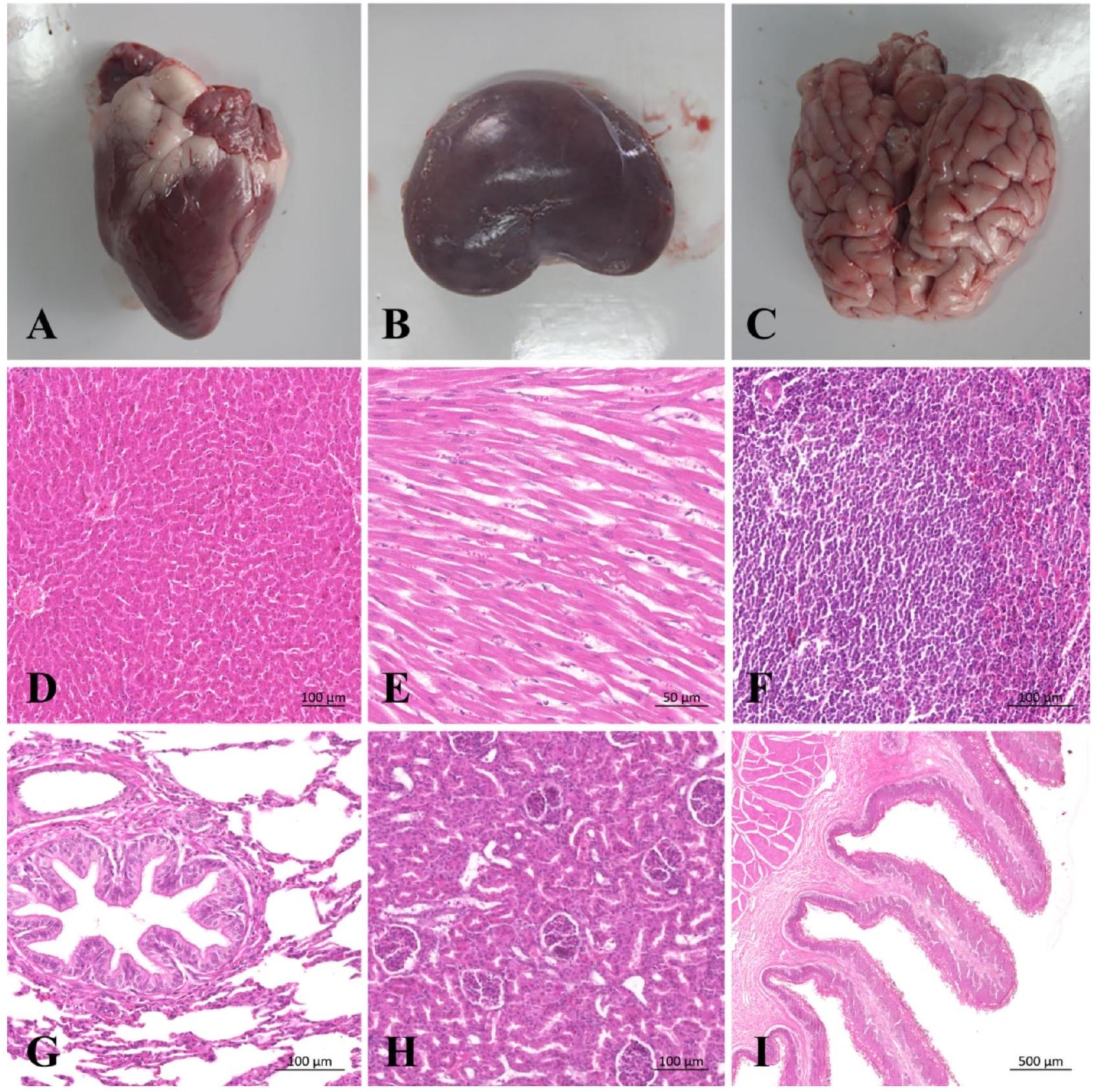
تم تسجيل. كانت شكل ولون وحجم وملمس القلب والكبد والطحال والرئتين والكليتين والدماغ والأعضاء الأخرى طبيعية وبدون نزيف أو تشكيل ندبات أو عقيدات أو نخر. كان حجم وملمس ولون البنكرياس طبيعيًا. كانت أسطح أغشية البلازما لقناة الأمعاء طبيعية في اللون، بدون التصاقات أو عقيدات طفيلية أو أورام أو نزيف. كانت جميع المقاطع المرضية طبيعية (الشكل 1).

نتائج فحص الدم الروتيني

كانت مؤشرات الدم الروتينية من مجموعات الجرعة ضمن النطاقات الطبيعية قبل التجربة وفي اليومين 15 و30 بعد الجرعة. لم تكن الفروق بين المجموعات ذات دلالة إحصائية (الجدول 4).

نتائج الكيمياء الحيوية للدم

كانت معايير الدم الكيميائية الحيوية ضمن النطاقات الطبيعية لكل مجموعة جرعة قبل التجربة وفي اليومين 15 و30 بعد الجرعة. لم تكن الفروق بين المجموعات ذات دلالة إحصائية (الجدول 5).

معاملات الأعضاء

تم وزن القلب والكبد والطحال والرئتين والكلى أثناء التشريح، وتم حساب معاملات الأعضاء لجميع الأغنام. لم يكن هناك فرق ذو دلالة إحصائية في معاملات الأعضاء بين المجموعات التجريبية (الجدول 6).

نقاش

في هذا العمل، تم إظهار أن D. flagrans تمارس تأثيرًا مفترسًا كبيرًا على اليرقات البرازية في تجارب داخل الجسم الحي. في عام 2011، قام باز-سيلفا وآخرون بدراسة كفاءة افتراس D. flagrans على يرقات الديدان المستديرة الساكنة المعدية وحددوا تقليل في اليرقات، بينما زيادة النشاط الفلاغرانسي مع عدد البيض واليرقات في الثقافة المشتركة فحص فيريرا وآخرون أيضًا نفس كفاءة الافتراس على L3 بعد مرورها عبر الجهاز الهضمي للأرانب والخنازير، وأظهروا أن تقليل L3 في البراز كان أظهر وانغ انخفاضًا يصل إلى في أعداد اليرقات في البراز عندما تم استخدام تحضيرات د. فلاجراونس المجففة بالتجميد بالاشتراك مع أدوية مضادة للطفيليات انخفض عدد الثقافات المشتركة للبراز من النوع L3 بشكل كبير في الأغنام التي ترعى في هولندا بعد العلاج بأبواغ D. flagrans، ولكن لم تُلاحظ أي اختلافات بين EPGs، ولكن يحدث أيضًا هيمونكوسيس شديد في المجموعة المعالجة. . وبالمثل، في دراسة ميدانية على ثلاث مزارع في سويسرا، تم تثبيط تطور اليرقات المشترك بشكل كبير، لكن لم تتأثر قيم EPG البرازية بشكل كبير أثناء تغذية D. flagrans. مجموعة العلاج الفطري في هذه الدراسة قللت بشكل كبير من تطور LPG في البراز، لكن EPG لم تظهر تأثيرًا، مشابهًا لنتائجنا. عندما تلامس D. flagrans مع الديدان اليرقية، التصقت بها وأعاقتها، مما سمح للفطر باختراق جدران الخلايا والتغذي على المحتويات. . يمكن أن تنتج الفلاغرانس أيضًا الكلاديموسبور، وهو نوع من الأبواغ الساكنة ذات الجدران السميكة . هذا يسمح للفطر بالحفاظ على تحمل بيئي عالٍ والمرور عبر القنوات الهضمية للماشية الرعوية دون تقليل معدلات الإنبات أو كفاءة الافتراس. وقد أفادت الأدبيات أن الأبواغ الشحمية لـ D. flagrans يمكن أن تتحمل النقل عبر الجهاز الهضمي وبيئات غير مرغوب فيها أخرى لتنبت، مكونة هيكل شبكة ثلاثي الأبعاد قائم على الافتراس يلتقط اليرقات الحية في البراز. لذلك، فإن الاستخدام المستمر لـ D. flagrans يقلل من اليرقات المعدية في المراعي ولديه إمكانيات كبيرة للسيطرة على إعادة العدوى بواسطة الديدان الخيطية. كما اقترحت هذه الدراسات أن D. flagrans كان له صلاحية جيدة في النشاط المفترس في المختبر، وهو ما يتماشى مع ملاحظاتنا. بينما لا شك في فعالية كفاءة افتراس D. flagrans وتطبيقه السريري، إلا أن ملفات السلامة الخاصة به في الحيوانات المستهدفة نادراً ما تم الإبلاغ عنها.
في عام 2020، بناءً على طلب المفوضية الأوروبية، قام بامبيديس وآخرون بدراسة سلامة D. flagrans وكفاءته في الافتراس (كغذاء) وذكروا أنه لا يسبب تهيجًا للجلد أو العينين، ولكنه كان حساسًا للجهاز التنفسي. لم يتم التوصل إلى أي استنتاجات بشأن إمكانيته في تحسس الجلد. في دراستنا، بعد تناول 5 و 10 أضعاف عن طريق الفم في الجرعات الإدارية الفلاغرانس للأغنام، لاحظنا أن التحضيرات لم يكن لها تأثيرات على الصفات السريرية الرئيسية، مثل التنفس، الحالة العقلية، الشهية، وإخراج البراز في المجموعات. بعد قياسات شاملة، كان هناك فقط واحد
الشكل 1. ملاحظات التشريح وعلم الأمراض النسيجي. ملاحظة: القلب (A)، الكلى (B)، الدماغ (C)، الكبد (D)، القلب (E)، الطحال (F)، الرئة (G)، الكلى (H)، والكرش (I).
كانت درجة حرارة جسم الأغنام تصل إلى بينما كانت البقية ضمن النطاقات الطبيعية. درجة حرارة الجسم الطبيعية للأغنام هي في نطاق، ويمكن أن يسبب الضغط زيادة في درجة الحرارة خلال القياسات. كان هناك خروف يعاني من أعراض السعال عند جمع الدم، وقد تعافى تمامًا بعد 48 ساعة دون علاج. علاوة على ذلك، حدثت أمطار غزيرة في هولونغ قبل يوم من ظهور الأعراض وانخفضت درجة الحرارة بشكل كبير. كانت أعراض السعال مرتبطة على الأرجح بالطقس البارد، ولم يتم العثور على أي شذوذ بعد التحليل الهيماتولوجي، والذي لم يكن كافيًا للإشارة إلى أن التحضير أثر على المؤشرات الفسيولوجية الطبيعية للخراف. سمحت تقنيات التشريح البشري بإجراء فحص بصري أكثر شمولاً للإصابات في أعضاء وأنسجة الحيوانات، وهو أمر حيوي عند دراسة تأثيرات الأدوية المختلفة على الكائن الحي. أظهرت نتائج التشريح أنه لم تحدث أي تغييرات غير طبيعية في الأعضاء والأنسجة وأن المقاطع المرضية كانت طبيعية. تُستخدم قيم معامل الأعضاء عادةً في الدراسات السمية وفي دراستنا، لم تكن الفروق في معامل الأعضاء بين المجموعات ذات دلالة إحصائية عند مقارنتها بمجموعة التحكم. أظهرت ملفات السلامة لمستخلص D. flagrans المجفف بالتجميد في الخراف أن هذه المادة لديها القدرة على الاستخدام في التطبيقات السريرية والتجارية.
تم مواجهة القيود التالية في الدراسة. أولاً، سلالات D. flagrans لديها نشاط إنزيمي ويمكن أن تنتج بروتينات سيرين. التي تساعد في تحسين هضم العلف واستخدامه في الحيوانات، وقد كانت الفطريات
جرعة الوقت WBC ( ) ليم (%) مون (%) العصبي (%) إيو (%) با (%)
خمسة أضعاف قبل الجرعة
15 د
30 د
عشر مرات قبل الجرعة
15 د
30 د
تحكم قبل الجرعة
15 د
30 د
جرعة الوقت حجم الكريات الحمراء المتوسط (%) HCT (%) MCHC (غرام/ديسيلتر) الهيموغلوبين (غرام/ديسيلتر) MPV (فل.)
خمسة أضعاف قبل الجرعة
15 د
30 يوم
عشر مرات قبل الجرعة
15 د
30 د
تحكم قبل الجرعة
15 د
30 د
الجدول 4. التأثيرات البيولوجية المجففة بالتجميد على مؤشرات الدم الروتينية (المتوسط ± الانحراف المعياري). ملاحظة: في نفس العمود، تمثل الحروف المختلفة اختلافات معنوية. بينما تمثل نفس الحروف اختلافات غير ذات دلالة كرات الدم البيضاء (WBC): النطاق الطبيعي: ; ليم: اللمفاويات، النطاق الطبيعي: ; مون: الخلايا الوحيدة، النطاق الطبيعي: ; نيو: العدلات، النطاق الطبيعي: ; Eo: الإيوزينيات، النطاق الطبيعي: ; با: الخلايا القاعدية، النطاق الطبيعي: ; RBC: كريات الدم الحمراء، النطاق الطبيعي: ; MCV: حجم الكريات الحمراء المتوسط، النطاق الطبيعي: ; HCT: الهيماتوكريت، النطاق الطبيعي: ; MCHC: تركيز الهيموغلوبين في الكريات الحمراء، النطاق الطبيعي: الهيموغلوبين، النطاق الطبيعي: ; MPV: حجم الصفائح الدموية المتوسط، النطاق الطبيعي: .
جرعة الوقت TG (ملليمول/لتر) اليوريا (مللي مول/لتر) ALT (وحدة/لتر) AST (وحدة/لتر) TP (غرام/لتر) ALB (غ/ل)
خمسة أضعاف قبل الجرعة
15 د
30 يوم
عشر مرات قبل الجرعة
15 د
30 د
تحكم قبل الجرعة
15 د
30 د
الجدول 5. التأثيرات البيولوجية المجففة بالتجميد على كيمياء الدم (المتوسط ± الانحراف المعياري). ملاحظة: في نفس العمود، تمثل الحروف المختلفة اختلافات معنوية. بينما تمثل نفس الحروف اختلافات غير ذات دلالة . TG: ثلاثي الجليسريد، النطاق الطبيعي: ; اليوريا: اليوريا، النطاق الطبيعي: ; ALT: ألانين أمينوترانسفيراز، النطاق الطبيعي: ; AST: الأسبارتات أمينوترانسفيراز، النطاق الطبيعي: ; TP: البروتين الكلي، النطاق الطبيعي: ; ALB: ألبومين المصل، النطاق الطبيعي: .
وجد أنه فعال في تحلل المركبات المعقدة في عدة دراسات لكن يجب التحقق من ذلك بشكل أكبر. ثانياً، لم نقيم ما إذا كانت المستقلبات الثانوية لـ D. flagrans قد انتقلت إلى المنتجات الحيوانية وأثرت على المستهلكين. ثالثاً، في التطبيقات السريرية، افترض الباحثون أن الفطريات المفترسة للديدان الخيطية ليست ضارة بالبيئة وآمنة. ومع ذلك، في السنوات الأخيرة، تم الإبلاغ عن أن هذه الفطريات تؤثر على تجمعات وكثافة الروتيفرات (الروتيفرات تحسن جودة مياه الصرف الصحي خلال المعالجة البيولوجية). وبالمثل، يمكن أن تشكل الأعداد العالية من الفطريات المفترسة للديدان الخيطية خطرًا على تجمعات الروتيفر، ولذلك من الضروري إجراء دراسات متعمقة تفحص تأثيرات الفطريات المفترسة للديدان الخيطية على بعض الكائنات الحية في بيئات أخرى. لقد لاحظنا أن D. flagrans كان له بعض التأثيرات الطاردة للديدان الخيطية وكان أفضل من تأثيرات الأدوية الضابطة. توفر نتائجنا استراتيجية جديدة للسيطرة على الطفيليات البيطرية في الصين، وأيضًا بيانات مرجعية جديدة لدراسة المواد الفعالة الحشرية المستمدة من النباتات.
جرعة ) الوزن (كجم) معامل العضو (%)
قلب كبد الطحال رئة كُلى
خمسة أضعاف
عشر مرات
تحكم أ
الجدول 6. التأثيرات البيولوجية المجففة بالتجميد على معاملات الأعضاء (المتوسط ± الانحراف المعياري). ملاحظة: في نفس العمود، تمثل الحروف المختلفة اختلافات معنوية. بينما تمثل نفس الحروف اختلافات غير ذات دلالة .

توفر البيانات

تتوفر مجموعات البيانات المستخدمة و/أو التي تم تحليلها خلال الدراسة الحالية من المؤلف المراسل عند الطلب المعقول.
تاريخ الاستلام: 26 سبتمبر 2024؛ تاريخ القبول: 6 يناير 2025
نُشر على الإنترنت: 13 يناير 2025

References

  1. Fiałkowska, E., Fiałkowski, W. & Pajdak-Stós, A. The relations between predatory fungus and its rotifer preys as a noteworthy example of intraguild predation (IGP). Microb. Ecol. 79, 73-83 (2020).
  2. Luns, F. D. et al. Coadministration of nematophagous Fungi for biological control over nematodes in bovine in the South-Eastern Brazil. Biomed Res. Int. 2018, 1-6 (2018).
  3. Silva, A. R. et al. Biological control of sheep gastrointestinal nematodiasis in a tropical region of the southeast of Brazil with the nematode predatory fungi Duddingtonia flagrans and Monacrosporium thaumasium. Parasitol. Res. 105, 1707-1713 (2009).
  4. Zhang, W., Liu, D., Yu, Z., Hou, B. & Wang, R. Comparative genome and transcriptome analysis of the nematode-trapping fungus duddingtonia flagrans reveals high pathogenicity during nematode infection. Biol. Control 143, 104159 (2020).
  5. Tabata, A. C. et al. Biological control of gastrointestinal nematodes in horses fed with grass in association with nematophagus fungi Duddingtonia flagrans and Pochonia Chlamydosporia. Biol. Control 182, 105219 (2023).
  6. Mendes, L. Q. et al. In vitro association of Duddingtonia flagrans with ivermectin in the control of gastrointestinal nematodes of water buffaloes. Rev. MVZ Cordoba 27, 3 (2022).
  7. Voinot, M. et al. Integrating the control of helminths in dairy cattle: deworming, rotational grazing and nutritional pellets with parasiticide fungi. Vet. Parasitol. 278, 109038 (2020).
  8. Ferreira, S. R., de Araújo, J. V., Braga, F. R., Araujo, J. M. & Fernandes, F. M. In vitro predatory activity of nematophagous fungi Duddingtonia flagrans on infective larvae of Oesophagostomum spp. after passing through gastrointestinal tract of pigs. Trop. Anim. Health Prod. 3, 1589-1593 (2011).
  9. Araujo, J. M. et al. Control of Strongyloides westeri by nematophagous fungi after passage through the gastrointestinal tract of donkeys. Rev. Bras. Parasitol. Vet. 21, 157-60 (2012).
  10. Braga, F. R. et al. Destruction of Strongyloides venezuelensis infective larvae by fungi Duddingtonia flagrans, Arthrobotrys robusta and Monacrosporium sinense. Rev. Soc. Bras. Med. Trop. 44, 389-391 (2011).
  11. Paz-Silva, A. et al. Ability of the fungus Duddingtonia flagrans to adapt to the cyathostomin egg-output by spreading chlamydospores. Vet. Parasitol. 179, 277-282 (2011).
  12. Hiura, E. et al. Fungi predatory activity on embryonated Toxocara canis eggs inoculated in domestic chickens (Gallus gallus Domesticus) and destruction of second stage larvae. Parasitol. Res. 114, 3301-3308 (2015).
  13. Voinot, M. et al. Control of Strongyles in first-season grazing ewe lambs by integrating deworming and thrice-weekly administration of parasiticidal fungal spores. Pathogens 10, 1338 (2021).
  14. Salmo, R. et al. Formulating parasiticidal Fungi in dried edible gelatins to reduce the risk of infection by Trichuris Sp. among continuous grazing bison. Pathogens 13, 82 (2024).
  15. Braga, F. R., Ferraz, C. M., da Silva, E. N. & de Araújo, J. V. Efficiency of the Bioverm (Duddingtonia flagrans) fungal formulation to control in vivo and in vitro of Haemonchus Contortus and Strongyloides papillosus in sheep. Biotech10, 62(2020).
  16. Voinot, M. et al. Safety of daily administration of pellets containing parasiticidal fungal spores over a long period of time in heifers. Biocontrol Sci. Technol. 32, 1249-1259 (2021).
  17. Buzatti, A. et al. Duddingtonia flagrans in the control of gastrointestinal nematodes of horses. Exp. Parasitol. 159, 1-4 (2015).
  18. Mendoza-de Gives, P. Soil-borne nematodes: Impact in agriculture and livestock and sustainable strategies of prevention and control with special reference to the use of nematode natural enemies. Pathogens 11, 640 (2022).
  19. Souza, D. C. et al. Compatibility study of Duddingtonia flagrans conidia and its crude proteolytic extract. Vet. Parasitol. 322, 110030 (2023).
  20. Healey, K., Lawlor, C., Knox, M. R., Chambers, M. & Lamb, J. Field evaluation of Duddingtonia flagrans IAH 1297 for the reduction of worm burden in grazing animals: Tracer studies in sheep. Vet. Parasitol. 253, 48-54 (2018).
  21. Wang, B. B. et al. In vitro and in vivo studies of the native isolates of nematophagous fungi from China against the larvae of trichostrongylides. J. Basic Microbiol. 7, 265-275 (2017).
  22. Wang, W. R. Study on the clinical application model of nematode-trapping fungus-Duddingtonia flagrans (Master’s thesis of Inner Mongolia Agricultural University, 2018).
  23. Eysker, M. et al. The impact of daily Duddingtonia flagransapplication to lactating ewes on gastrointestinal nematodes infections in their lambs in the Netherlands. Vet. Parasitol. 41, 91-100 (2006).
  24. Faessler, H., Torgerson, P. R. & Hertzberg, H. Failure of Duddingtonia flagrans to reducegastrointestinal nematode infections in dairy ewes. Vet. Parasitol. 147(1-2), 96-102 (2007).
  25. Simon, A., Theodor, P. P. & Wolfgang, H. HTSeq-A Python framework to work with high-throughput sequencing data. Bioinformatics 2, 166-169 (2015).
  26. EFSA Panel on Additives and Products or Substances used in Animal Feed (FEEDAP) et al. Safety and efficacy of BioWorma (Duddingtonia flagrans NCIMB 30336) as a feed additive for all grazing animals. EFSA J.18, e06208 (2020).
  27. Braga, F. R. et al. Interaction of the nematophagous fungus Duddingtonia flagrans on Amblyomma cajannense engorged females and enzymatic characterisationof its chitinase. Biocontrol Sci. Technol. 23, 584-594 (2013).
    (2025) 15:1843
  28. Kazda, M., Langer, S. & Bengeelsdorf, F. R. Fungi open new possibilities for anaerobicfermentation of organic residues. Energy Sustain. Soc. 4, 6 (2014).
  29. Pajdak-Stosa, A., Wazny, R. & Fiałkowska. E. Can a predatory fungus (Zoophagus sp.) endanger the rotifer populations in activated sludge? Fungal Ecol. 23, 75-78 (2016).
  30. Crook, E. K. et al. Prevalence of anthelmintic resistance on sheep and goat farms in the mid-atlantic region and comparison of in vivo and in vitro detection methods. Small Ruminant Res. 143, 89-96 (2016).

مساهمات المؤلفين

قام Y.M. و L.J. و Z.F. بتصميم الدراسة. قام Y.M. و Z.L. و Y.Z. و Q.L. بإجراء التجارب. قام Y.M. و Z.L. و L.H. و H.L. و R.W. بتحليل البيانات وكتابة المخطوطة. قرأ جميع المؤلفين النسخة النهائية من المخطوطة ووافقوا عليها.

الإعلانات

المصالح المتنافسة

يعلن المؤلفون عدم وجود مصالح متنافسة.

موافقة الأخلاقيات

تمت مراجعة الدراسات التي تشمل الحيوانات والموافقة عليها من قبل لجنة الأخلاقيات في جامعة الزراعة في منغوليا الداخلية. جميع بروتوكولات الحيوانات اتبعت لوائح لجنة أخلاقيات تجارب الحيوانات في جامعة الزراعة في منغوليا الداخلية.
لم يكن الحصول على موافقة مستنيرة مطلوبًا حيث لم تتضمن الدراسة مشاركين بشريين.

معلومات إضافية

يجب توجيه المراسلات والطلبات للحصول على المواد إلى R.W. أو H.L.
معلومات إعادة الطباعة والتصاريح متاحة علىwww.nature.com/reprints.
ملاحظة الناشر: تظل شركة سبرينجر ناتشر محايدة فيما يتعلق بالمطالبات القضائية في الخرائط المنشورة والانتماءات المؤسسية.
الوصول المفتوح. هذه المقالة مرخصة بموجب رخصة المشاع الإبداعي النسب-غير التجارية-عدم الاشتقاق 4.0 الدولية، التي تسمح بأي استخدام غير تجاري، ومشاركة، وتوزيع، وإعادة إنتاج في أي وسيلة أو صيغة، طالما أنك تعطي الائتمان المناسب للمؤلفين الأصليين والمصدر، وتوفر رابطًا لرخصة المشاع الإبداعي، وتوضح إذا قمت بتعديل المادة المرخصة. ليس لديك إذن بموجب هذه الرخصة لمشاركة المواد المعدلة المشتقة من هذه المقالة أو أجزاء منها. الصور أو المواد الأخرى من طرف ثالث في هذه المقالة مشمولة في رخصة المشاع الإبداعي الخاصة بالمقالة، ما لم يُشار إلى خلاف ذلك في سطر الائتمان للمادة. إذا لم تكن المادة مشمولة في رخصة المشاع الإبداعي الخاصة بالمقالة وكان استخدامك المقصود غير مسموح به بموجب اللوائح القانونية أو يتجاوز الاستخدام المسموح به، ستحتاج إلى الحصول على إذن مباشرة من صاحب حقوق الطبع والنشر. لعرض نسخة من هذه الرخصة، قم بزيارة http://creativecommo ns.org/licenses/by-nc-nd/4.0/.
© المؤلفون 2025

  1. كلية الطب البيطري، جامعة الزراعة في منغوليا الداخلية، هولون بوير، منغوليا الداخلية، جمهورية الصين الشعبية. المختبر الرئيسي للتشخيص والعلاج السريري للأمراض الحيوانية، وزارة الزراعة، المركز الوطني لتعليم الطب البيطري التجريبي، بكين، جمهورية الصين الشعبية. كلية الصيدلة، جامعة هيتزه، طريق الجامعة 2269، هيتزه 274015، جمهورية الصين الشعبية. شركة روي بو للتكنولوجيا الزراعية المحدودة، هولون بوير، منغوليا الداخلية، جمهورية الصين الشعبية. البريد الإلكتروني: wr2006@163.com; 865583480@qq.com

Journal: Scientific Reports, Volume: 15, Issue: 1
DOI: https://doi.org/10.1038/s41598-025-85844-z
PMID: https://pubmed.ncbi.nlm.nih.gov/39805957
Publication Date: 2025-01-13

OPEN

Nematode controlling effects and safety tests of Duddingtonia flagrans biological preparation in sheep

Yuan Ma , Lili Jiang , Zhaobin Fan , Luyao Hao , Zhengyi Li , Yanni Zhang , Qiannan , Rui Wang & Hongliang Luo

Abstract

Duddingtonia flagrans is a nematode-trapping fungus that is widely used to control parasitic nematodes in livestock. After oral ingestion and passage through the digestive tract of animals, this microorganism captures nematodes in feces. Although many researchers have examined the safety of this fungus for humans, animals, and the environment, few reports have discussed the safety of nematode-trapping D. flagrans biologics for animals. In this study, D. flagrans safety was tested, while adverse effects and toxicities were examined in sheep. First, the nematode killing effects in naturally parasitized sheep after administration of lyophilized . flagrans preparations were tested.lyophilized D. flagrans preparations were administered to sheep at various doses, followed by key blood factor monitoring and an examination of major tissues, organ lesions, and pathology. Lastly, lyophilized D. flagrans preparations were administered to sheep at various doses, followed by key blood factor monitoring and an examination of major tissues, organ lesions, and pathology. the nematode killing effects of naturally parasitized sheep after administration were tested. The results demonstrated that treatment with . flagrans isolates significantly reduced developing larvae numbers in feces, with an efficiency of . Lyophilized preparations had no observable effects on physiological parameters in sheep, thus indicating a wide safety range in target animals, with potentially minimal risks in veterinary clinical practice. Overall, D. flagrans freeze-dried biologics effectively helped to controlled parasitic infections, which are safe in animals like sheep, and thus may provide a practical platform for nematode-trapping fungi in veterinary clinical settings.

Keywords Lyophilized biologic, Safety profiles, Killing effects, Nematode-trapping fungi
Currently, to biologically control parasites in livestock, anthelmintic drugs are widely applied but the misuse of these drugs has led to serious resistance issues; therefore, new control measures must be researched and developed . One of the most important approaches is the exploitation of natural enemies, including predatory fungi that prevent and control parasites . Predatory fungi are widely distributed in soils and exist in many ecosystems, from tropical areas to cold Antarctica and from terrestrial to aquatic ecosystems .
Based on their discovery, considerable research efforts have been directed toward predatory fungi, their predatory properties, biochemical mechanisms, and clinical applications . For example, the nematode-predatory fungus Duddingtonia flagransgenerates large numbers of thick-walled spores, which can pass through animal digestive tracts without inactivation in clinical use, and then germinate in feces . With recognized predatory roles, D. flagrans then targets a variety of parasitic nematodes, such as Osertagia spp., Nematodirus, and Strongyloides stercoralis. More recently, Mendes et al. demonstrated that a solution of D. flagransconidia was effective in vitro against gastrointestinal nematodes in buffaloes when used alone and/or in association with ivermectin . In Voinot et al., the daily administration of nutritional pellets enriched with M. circinelloides and D. flagrans spores, for a prolonged interval (2 years), prevented helminth infection (C. daubneyiand gastrointestinal nematodes) in dairy cattle under rotational grazing . Critically, predatory activities increase with increased larvae numbers,
thus the fungus has broad application values . However, there is a dearth of information on predatory fungi safety profiles in target animals . In a recent study, edible gelatins were desiccated and tested on captive bison maintained in a zoological garden under continuous pasturing. Lyophilized D. flagranspreparations had no effects on physiological parameters in bison . Recently, Braga et al. demonstrated the efficacy and safety of Bioverm , a commercial product based on D. flagrans chlamydospores (AC001), available in Brazil for the integrated control of helminth infections in farm animals. Despite the scientific efficiency and proven safety of D. flagrans(AC001) by oral administration, no reports have yet assessed possible harmful effects during gastrointestinal transit. Long-term clinical and anatomical-pathological studies on heifers fed parasitic fungal pellets on a daily basis were performed and showed no side-effects or specific lesions. Moreover, the risk of heifers being infected with trematodes was reduced and their health was improved .
Duddingtonia flagrans has been positively developed as a biological agent in the United States, Sweden, and New Zealand for controlling parasitic nematodes . Biological control with the predacious fungi D. flagrans still remains a promising free-living parasite regulator alternative for use in livestock . To control ruminant parasitic nematodes, several studies examining D. flagrans as a biological control agent have shown excellent results . The main advantages of . flagrans include fewer resistance problems, a fully natural product, and environmentally friendly. To characterize potential primary and clinical applications, predatory D. flagranssafety profiles were examined in our study in target animals, with a view to their becoming widely accepted lyophilized biological agents . Our study lays the foundation for future clinical applications and commercial production, and provides a reference for future in-depth predatory fungi studies.

Materials and methods

Fungal strain

A test strain of D. flagrans strain CIM1 (NCBI bio-sample accession number: SAMN05504105), was obtained from the Veterinary Parasite Laboratory of the Inner Mongolia Agricultural University, Hohhot, Inner Mongolia, China. D. flagrans was inoculated onto Potato Dextrose Agar (PDA) (Beijing Landbridge, China) medium until the mycelium covered the dish surface , then it was cut into squares, added to a new dish, and incubated for 1 week at . Next, the mycelium was cut into squares and transferred to corn kernel medium at for 3 weeks. Spore eluate was prepared by adding 1 mL Tween- 80 to 500 mL of water, and then heating it to for 15 min . Spores were eluted several times from the medium using spore eluent and then filtered on an ultra-clean bench. Samples then underwent vacuum freeze drying until a dry powder was obtained. We determined chlamydospore counts in the lyophilized formulation to be chlamydospores/g. The Bottle were then sealed with sealing film, and stored at .

Animals

D. flagrans use in controlling helminth parasites

Experimental sheep ( ) were naturally infected with gastrointestinal nematodes on farms in Siziwang Banner, Ulanqab, Inner Mongolia, China, and had not been previously dewormed within 6 months of the trial. The Animal Experimentation Ethics Committee followed Chinese National Standard Laboratory AnimalGuidelines for the ethical review of animal welfare (GB/T 35892-2018). All animal protocols were reviewed by the Animal Experiments Ethics Committee at Inner Mongolia Agricultural University.

Animal safety experiments

The animal safety test site was located in the animal house of Inner Mongolia Agricultural University. 3-4 month old sheep were selected . At 10 days before the trial, albendazole ( purity; Kangmu Animal Pharmaceutical, China) was orally administered once. Ivermectin ( purity; Kangmu Animal Pharmaceutical, China). was also subcutaneously injected for 3 consecutive days according to body weight, to ensure the absence of helminth infections.

Methods

In vivo efficacy of . flagrans on nematode eggs and larvae in sheep feces

Thirty Small Tailed Han Sheep, months old, and approximately 50 kg were randomly selected. Rectal feces were collected and examined for nematode infection. Ten sheep with a similar number of EPG infections were divided into groups, including ivermectin, D. flagrans biologic, and blank control groups. The D. flagrans group dose was chlamydospores/kg body weight (bw) . Egg numbers per gram (EPG) and larvae per gram (LPG) of feces were measured and collected before and 1 week after the trial. Eggs in feces were counted using a modified McMaster technique to calculate EPG. Fecal samples were incubated at a constant temperature of for 15 days. After this period, third-stage non-predatory larvae (L3) were isolated using the modified Baermann’s method . Mean EPG and LPG values in groups were compared before and after dosing to determine . flagrans effectiveness in controlling parasites.

In vivo safety experimental tests

Nine sheep with an average body weight were randomly divided into 5-fold dose ( chlamydospores/ kg bw), 10 -fold dose ( chlamydospores/ kg bw), and blank control groups. Each group consisted of three sheep, and corresponding doses were applied based on bw. Suspensions were administered as a single dose on an empty stomach by perfusion with a syringe.

Clinical observations

During trials, multiple key parameters were observed in sheep every day, including behavioral disorders, food and drink appetite, jaundice, respiratory rate, cough, neurological signs, diarrhea, edema, and developmental status. Behavioral disorders referred to excitement, depression, restlessness, and other abnormalities. Defecation represented constipation and diarrhea. During trials, sheep were fed high-quality alfalfa three times a day (morning, noon, and night).

Body temperature and weight measurements

Oral D. flagrans biological effects on body mass and weight gain were examined by weighing sheep before the trial and at days3, 7, 15, and 30 after dosing. Measurements were taken between 9 am and 10 am. on an empty stomach.

Routine blood tests

Blood samples were collected for routine blood tests at 3 days before the trial and then at days15 and 30 after dosing. The following biomarkers were measured using an automatic animal blood cell analyzer: WBC, Lym, Mon, Neu, Eo, Ba, RBC, MCV, Hct, MCHC, Hb, and MPV.

Organ histomorphology

At study end, all test sheep were euthanized according to ethical regulations. Euthanasia was conducted by intravenously injecting animals with phenobarbital ( body weight). This was formulated in accordance with Laboratory Animal-Guidelines for Euthanasia by the People’s Republic of China (GB/T39760-2021). The sheep dissected, and the abdominal cavity cut open to check for fluids or blood in the cavity. All soft ribs on the left side were cut using bone cutters, and ribs on left and right sides were broken by hand to expose the entire thoracic cavity to observe pleural colors and bleeding/adhesions. The following organs and tissues were checked by visual inspection: brain, cerebellum, kidney, heart, pancreas, liver, spleen, lung, stomach, ileum, jejunum, colon, cecum, and lymph nodes. All gross pathological lesions were photographed and recorded. The heart, liver, spleen, lungs, and kidneys were then taken fur further examinations. Excess connective tissue around organs was carefully peeled away and surface fluids blotted with filter paper before weighing and recording data. To calculate organ coefficients, the following equation was used: organ weight (g)/body weight (g) .

Statistical analysis

Experimental data were processed as the mean ± standard deviation, and ANOVA was performed using IBM SPSS Statistics 22 software. Data were analyzed for normal distributions using Kolmogorov-Smirnov and Levene’s tests. If variance was unevenly distributed, equivalent non-parametric tests (primarily Kruskal-Wallis analysis of variance) were used. A value was considered significant.

Results

Nematode predation efficiency in feces after oral biologic administration

Mean EPG and LPG values in group were compared before and after dosing to determine the parasite effects of biologic agents. After treatment, fungi significantly reduced LPG development in feces. As shown (Table 1), results from ivermectin and . flagrans biologic groups were significantly different ( ) when compared with the control group, while the . flagrans group showed better effectiveness than the ivermectin group in terms of significant effects.

Clinical observations

One sheep in the 10 -fold dose group had coughing symptoms, which was recovered within 48 h without treatment. Other sheep showed no abnormal changes in terms of respiration, spirit, appetite, or feces during the trial.

Body temperature and weight measurements

All body temperatures were within normal ranges except for one sheep, which was outside the range. However, no statistical differences were observed between dose groups at and 30 days when compared with the predose period (Table 2). Body weights in all groups increased, however, weight gain differences in groups before the trial and at days 7, 15, and 30 after the trial were not statistically significant (Table 3).

Pathological changes in sheep

No fluids were found in thoracic or abdominal cavities in any sheep. Similarly, no abnormal contents, abnormal position, or organ shape were discovered; and no dislocation, adhesion, torsion, or rupture changes were
Drugs EPG LPG
Control Treatment Efficacy% Control Treatment Efficacy%
DF -8.72% 92.99%
Ivermectin 49.44% 85.95%
Control -24.17% -6.10%
Table 1. Reduction eggs and larvae in feces(mean ± SD).
Dosage Pre-dose 3d 7 d 15 d 30 d
5-fold
10-fold
Control
Table 2. D. flagrans dose effects on body temperature (mean ± SD, ). Note: In the same column, different letters represent significant differences ( ) while the same letters represent non-significant differences .
Dosage Pre-dose 3 d 7 d 15 d 30d
5-fold
10-fold
Control
Table 3. D. flagrans dose effects on weight gain (mean ± SD, kg). Note: In the same column, different letters represent significant differences ( ) while the same letters represent non-significant differences .
recorded. The shape, color, size, and texture of the heart, liver, spleen, lungs, kidneys, brain, and other organs were normal and were without bleeding, scar formation, nodules, or necrosis. Pancreas size, texture, and color were normal. Intestinal duct plasma membrane surfaces were normal in color, without adhesion, parasitic nodules, tumors, or hemorrhages. All pathological sections were normal (Fig. 1).

Routine blood test results

Routine blood biomarkers from the dose groups were within normal ranges before the trial and at days 15 and 30 after dosing. Differences between groups were not significant (Table 4).

Blood biochemistry results

Blood biochemical parameters were within normal ranges for each dose group before the trial and at days 15 and 30 after dosing. Differences between groups were not significant (Table 5).

Organ coefficients

The heart, liver, spleen, lungs, and kidney organs were weighed at autopsy and organ coefficients calculated for all sheep. There was no significant difference in organ coefficients between the experimental groups (Table 6).

Discussion

In this work, D. flagrans was shown to exert considerable predatory effect on fecal larvae in in vivo experiments. In 2011, Paz-Silva et al. examined D. flagrans predation efficiency on infective roundworm cyathostomin larvae and identified a reduction in larvae, while . flagransactivity increased with egg and larvae numbers in coculture . Ferreira et al. also examined the same predation efficiency on L3 after passing through the digestive tracts of rabbits pigs, and showed that L3 reductions in feces were . Wang showed a reduction of up to in larvae numbers in feces when lyophilized D. flagransbiologic preparations were used in combination with anthelmintic drugs . The number of L3 fecal co-cultures decreased substantially in sheep grazing in The Netherlands after treatment with D. flagransspores, but no differences were observed between EPGs, but severe haemonchosis occurs also in treated group . Similarly, in a field study on three farms in Switzerland, co-cultured larval development was significantly inhibited but fecal EPGs were not significantly affected during D. flagransfeeding . The fungal treatment group in this study significantly reduced LPG development in feces, but EPG did not show an effect, similar to our results. When D. flagranscame into contact with larval worms, they adhered to and immobilized them, allowing the fungus to penetrate cell walls and feed on the contents . flagranscan also produce chlamydospores, which are a type of thick-walled resting spore . This allows the fungus to maintain high environmental tolerance and pass through gastrointestinal tracts of grazing livestock without reducing germination rates or predation efficiency. The literature has reported that D. flagranschlamydospores can withstand gastrointestinal transportation and other undesirable environments to germinate, forming a predatorbased, three-dimensional network structure that captures living larvae in feces . Therefore, the continuous use of D. flagrans reduces infective larvae in pastures and has great potential to control reinfection by nematodes. These studies also suggested that D. flagrans had good validity in in vitro predatory activity, consistent with our observations. While the effectiveness of D. flagrans predation efficiency and its clinical application is undoubted, its safety profiles in target animals have been rarely reported.
In 2020, at the request of the European Commission, Bampidis et al. examined D. flagranssafety and predation efficiency (as a feed) and stated that it did not irritate the skin or eyes, but was sensitive to the respiratory tract . No conclusions were drawn on its skin-sensitizing potential. In our study, after oral 5-and 10-fold . flagrans administrative doses to sheep, we observed that preparations had no effects on key clinical traits, such as respiration, mental status, appetite, and fecal excretion in groups. After extensive measurements, only one
Fig. 1. Autopsy and histopathological observations. Note: heart (A), kidney (B), brain (C), liver (D), heart (E), spleen (F), lung (G), kidney (H), and the rumen (I).
sheep had a body temperature of up to , while the remainder were within normal ranges. The normal body temperature of a sheep is in the range, and capture stress can cause a increase in temperature during measurements. One sheep had coughing symptoms at blood collection, which were fully recovered after 48 h without treatments. Moreover, heavy rain occurred in Hohhot the day before symptom onset and the temperature dropped dramatically. Coughing symptoms were probably related to the cool weather, and no abnormalities were found after hematological analysis, which was not sufficient to indicate that the preparation influenced the normal physiological indicators of the sheep. Necropsy techniques allowed for a more thorough visual inspection of lesions in different organs and tissues in animals, which are vital when studying different drug effects on an organism. Autopsy results showed that no abnormal changes had occurred in organs and tissues and that pathological sections were normal. Organ coefficient values are commonly used in toxicological studies and in our study, organ coefficient differences between groups were not significant when compared with the control group. The safety profiles of lyophilized D. flagrans in sheep have shown that this agent has the potential for use in clinical and commercial applications.
The following study limitations were encountered. First, D. flagransstrains have enzymatic activity and can produce serine proteases which help improve feed digestibility and utilization in animals, and fungi have been
Dosage Time WBC ( ) Lym (%) Mon (%) Neu (%) Eo (%) Ba (%)
5-fold Pre-dose
15 d
30 d
10-fold Pre-dose
15 d
30 d
Control Pre-dose
15 d
30 d
Dosage Time MCV (%) HCT (%) MCHC (g/dl) Hb (g/dl) MPV (fl.)
5-fold Pre-dose
15 d
30 d
10-fold Pre-dose
15 d
30 d
Control Pre-dose
15 d
30 d
Table 4. Lyophilized biologic effects on routine blood indices (mean ± SD). Note: In the same column, different letters represent significant differences while the same letters represent non-significant differences . WBC: white blood cell, normal range: ; Lym: lymphocytes, normal range: ; Mon: monocytes, normal range: ; Neu: neutrophil, normal range: ; Eo: Eosinophils, normal range: ; Ba: basophils, normal range: ; RBC: red blood cell, normal range: ; MCV: mean corpuscular volume, normal range: ; HCT: hematocrit, normal range: ; MCHC: mean corpuscular hemoglobin concentration, normal range: : hemoglobin, normal range: ; MPV: mean platelet volume, normal range: .
Dosage Time TG (mmol/L) UREA (mmol/L) ALT (U/L) AST (U/L) TP (g/L) ALB (g/L)
5-fold Pre-dose
15 d
30 d
10-fold Pre-dose
15 d
30 d
Control Pre-dose
15 d
30 d
Table 5. Lyophilized biologic effects on blood biochemistry (mean ± SD). Note: In the same column, different letters represent significant differences while the same letters represent non-significant differences . TG: triglyceride, normal range: ; UREA: urea, normal range: ; ALT: alanine amiotransferase, normal range: ; AST: aspartate aminotransferase, normal range: ; TP: total protein, normal range: ; ALB: serum albumin, normal range: .
found to be effective in degrading complex compounds in several studies . But this needs to be further verified. Second, we did not assess whether D. flagranssecondary metabolites were carried into animal products and exerted effects on consumers. Third, in clinical applications, researchers have hypothesized that nematodepredatory fungi are not harmful to the environment and are safe. However, in recent years, these fungi have been reported to affect rotifer populations and density levels (rotifers improve wastewater quality during biological treatment) . Similarly, high numbers of nematode-predatory fungi can endanger rotifer populations and therefore it is vital that in-depth studies examining nematode-predatory fungi effects on certain organisms in other environments are conducted. We observed that D. flagrans had some nematode repellent effects and were better than control drug effects. Our results provide a new strategy to control veterinary parasites in China, and also new reference data for studying plant-derived insecticidal active substances.
Dosage( ) weight (kg) Organ Coefficient (%)
heart Liver spleen lung kidney
5-fold
10-fold
Control a
Table 6. Lyophilized biologic effects on organ coefficients (mean ± SD). Note: In the same column, different letters represent significant differences while the same letters represent non-significant differences .

Data availability

The datasets used and/or analyzed during the current study available from the corresponding author on reasonable request.
Received: 26 September 2024; Accepted: 6 January 2025
Published online: 13 January 2025

References

  1. Fiałkowska, E., Fiałkowski, W. & Pajdak-Stós, A. The relations between predatory fungus and its rotifer preys as a noteworthy example of intraguild predation (IGP). Microb. Ecol. 79, 73-83 (2020).
  2. Luns, F. D. et al. Coadministration of nematophagous Fungi for biological control over nematodes in bovine in the South-Eastern Brazil. Biomed Res. Int. 2018, 1-6 (2018).
  3. Silva, A. R. et al. Biological control of sheep gastrointestinal nematodiasis in a tropical region of the southeast of Brazil with the nematode predatory fungi Duddingtonia flagrans and Monacrosporium thaumasium. Parasitol. Res. 105, 1707-1713 (2009).
  4. Zhang, W., Liu, D., Yu, Z., Hou, B. & Wang, R. Comparative genome and transcriptome analysis of the nematode-trapping fungus duddingtonia flagrans reveals high pathogenicity during nematode infection. Biol. Control 143, 104159 (2020).
  5. Tabata, A. C. et al. Biological control of gastrointestinal nematodes in horses fed with grass in association with nematophagus fungi Duddingtonia flagrans and Pochonia Chlamydosporia. Biol. Control 182, 105219 (2023).
  6. Mendes, L. Q. et al. In vitro association of Duddingtonia flagrans with ivermectin in the control of gastrointestinal nematodes of water buffaloes. Rev. MVZ Cordoba 27, 3 (2022).
  7. Voinot, M. et al. Integrating the control of helminths in dairy cattle: deworming, rotational grazing and nutritional pellets with parasiticide fungi. Vet. Parasitol. 278, 109038 (2020).
  8. Ferreira, S. R., de Araújo, J. V., Braga, F. R., Araujo, J. M. & Fernandes, F. M. In vitro predatory activity of nematophagous fungi Duddingtonia flagrans on infective larvae of Oesophagostomum spp. after passing through gastrointestinal tract of pigs. Trop. Anim. Health Prod. 3, 1589-1593 (2011).
  9. Araujo, J. M. et al. Control of Strongyloides westeri by nematophagous fungi after passage through the gastrointestinal tract of donkeys. Rev. Bras. Parasitol. Vet. 21, 157-60 (2012).
  10. Braga, F. R. et al. Destruction of Strongyloides venezuelensis infective larvae by fungi Duddingtonia flagrans, Arthrobotrys robusta and Monacrosporium sinense. Rev. Soc. Bras. Med. Trop. 44, 389-391 (2011).
  11. Paz-Silva, A. et al. Ability of the fungus Duddingtonia flagrans to adapt to the cyathostomin egg-output by spreading chlamydospores. Vet. Parasitol. 179, 277-282 (2011).
  12. Hiura, E. et al. Fungi predatory activity on embryonated Toxocara canis eggs inoculated in domestic chickens (Gallus gallus Domesticus) and destruction of second stage larvae. Parasitol. Res. 114, 3301-3308 (2015).
  13. Voinot, M. et al. Control of Strongyles in first-season grazing ewe lambs by integrating deworming and thrice-weekly administration of parasiticidal fungal spores. Pathogens 10, 1338 (2021).
  14. Salmo, R. et al. Formulating parasiticidal Fungi in dried edible gelatins to reduce the risk of infection by Trichuris Sp. among continuous grazing bison. Pathogens 13, 82 (2024).
  15. Braga, F. R., Ferraz, C. M., da Silva, E. N. & de Araújo, J. V. Efficiency of the Bioverm (Duddingtonia flagrans) fungal formulation to control in vivo and in vitro of Haemonchus Contortus and Strongyloides papillosus in sheep. Biotech10, 62(2020).
  16. Voinot, M. et al. Safety of daily administration of pellets containing parasiticidal fungal spores over a long period of time in heifers. Biocontrol Sci. Technol. 32, 1249-1259 (2021).
  17. Buzatti, A. et al. Duddingtonia flagrans in the control of gastrointestinal nematodes of horses. Exp. Parasitol. 159, 1-4 (2015).
  18. Mendoza-de Gives, P. Soil-borne nematodes: Impact in agriculture and livestock and sustainable strategies of prevention and control with special reference to the use of nematode natural enemies. Pathogens 11, 640 (2022).
  19. Souza, D. C. et al. Compatibility study of Duddingtonia flagrans conidia and its crude proteolytic extract. Vet. Parasitol. 322, 110030 (2023).
  20. Healey, K., Lawlor, C., Knox, M. R., Chambers, M. & Lamb, J. Field evaluation of Duddingtonia flagrans IAH 1297 for the reduction of worm burden in grazing animals: Tracer studies in sheep. Vet. Parasitol. 253, 48-54 (2018).
  21. Wang, B. B. et al. In vitro and in vivo studies of the native isolates of nematophagous fungi from China against the larvae of trichostrongylides. J. Basic Microbiol. 7, 265-275 (2017).
  22. Wang, W. R. Study on the clinical application model of nematode-trapping fungus-Duddingtonia flagrans (Master’s thesis of Inner Mongolia Agricultural University, 2018).
  23. Eysker, M. et al. The impact of daily Duddingtonia flagransapplication to lactating ewes on gastrointestinal nematodes infections in their lambs in the Netherlands. Vet. Parasitol. 41, 91-100 (2006).
  24. Faessler, H., Torgerson, P. R. & Hertzberg, H. Failure of Duddingtonia flagrans to reducegastrointestinal nematode infections in dairy ewes. Vet. Parasitol. 147(1-2), 96-102 (2007).
  25. Simon, A., Theodor, P. P. & Wolfgang, H. HTSeq-A Python framework to work with high-throughput sequencing data. Bioinformatics 2, 166-169 (2015).
  26. EFSA Panel on Additives and Products or Substances used in Animal Feed (FEEDAP) et al. Safety and efficacy of BioWorma (Duddingtonia flagrans NCIMB 30336) as a feed additive for all grazing animals. EFSA J.18, e06208 (2020).
  27. Braga, F. R. et al. Interaction of the nematophagous fungus Duddingtonia flagrans on Amblyomma cajannense engorged females and enzymatic characterisationof its chitinase. Biocontrol Sci. Technol. 23, 584-594 (2013).
    (2025) 15:1843
  28. Kazda, M., Langer, S. & Bengeelsdorf, F. R. Fungi open new possibilities for anaerobicfermentation of organic residues. Energy Sustain. Soc. 4, 6 (2014).
  29. Pajdak-Stosa, A., Wazny, R. & Fiałkowska. E. Can a predatory fungus (Zoophagus sp.) endanger the rotifer populations in activated sludge? Fungal Ecol. 23, 75-78 (2016).
  30. Crook, E. K. et al. Prevalence of anthelmintic resistance on sheep and goat farms in the mid-atlantic region and comparison of in vivo and in vitro detection methods. Small Ruminant Res. 143, 89-96 (2016).

Author contributions

Y.M., L.J. and Z.F. conceived the study. Y.M., Z.L., Y.Z. and Q.L. performed the experiments. Y.M., Z.L., L.H., H.L. and R.W. analyzed the data and wrote the manuscript. All authors have read and approved thefinal version of the manuscript.

Declarations

Competing interests

The authors declare no competing interests.

Ethics approval

The studies involving animals were reviewed and approved by Inner Mongolia Agricultural University of Ethics Committee. All animal protocols followed Animal Experimentation Ethics Committee regulations of the Inner Mongolia Agricultural University.
Informed consent was not required as the study did not involve human participants.

Additional information

Correspondence and requests for materials should be addressed to R.W. or H.L.
Reprints and permissions information is available at www.nature.com/reprints.
Publisher’s note Springer Nature remains neutral with regard to jurisdictional claims in published maps and institutional affiliations.
Open Access This article is licensed under a Creative Commons Attribution-NonCommercial-NoDerivatives 4.0 International License, which permits any non-commercial use, sharing, distribution and reproduction in any medium or format, as long as you give appropriate credit to the original author(s) and the source, provide a link to the Creative Commons licence, and indicate if you modified the licensed material. You do not have permission under this licence to share adapted material derived from this article or parts of it. The images or other third party material in this article are included in the article’s Creative Commons licence, unless indicated otherwise in a credit line to the material. If material is not included in the article’s Creative Commons licence and your intended use is not permitted by statutory regulation or exceeds the permitted use, you will need to obtain permission directly from the copyright holder. To view a copy of this licence, visit http://creativecommo ns.org/licenses/by-nc-nd/4.0/.
© The Author(s) 2025

  1. College of Veterinary Medicine, Inner Mongolia Agricultural University, Hohhot, Inner Mongolia, People’s Republic of China. Key Laboratory of Clinical Diagnosis and Treatment of Animal Diseases, Ministry of Agriculture, National Animal Medicine Experimental Teaching Center, Beijing, People’s Republic of China. College of Pharmacy Heze University, University Road 2269, Heze 274015, People’s Republic of China. Rui Pu Agricultural Technology Co., Ltd, Hohhot, Inner Mongolia, People’s Republic of China. email: wr2006@163.com; 865583480@qq.com