تعزيز تحمل الملوحة في الخيار من خلال التخصيب الحيوي بالسيلينيوم والتطعيم Enhancing salinity tolerance in cucumber through Selenium biofortification and grafting

المجلة: BMC Plant Biology، المجلد: 24، العدد: 1
DOI: https://doi.org/10.1186/s12870-023-04711-z
PMID: https://pubmed.ncbi.nlm.nih.gov/38166490
تاريخ النشر: 2024-01-03

تعزيز تحمل الملوحة في الخيار من خلال التخصيب الحيوي بالسيلينيوم والتطعيم

مسمومه أميريان أمير بالانجي غلامرضا جوهري وجورجيا ناتسي

الملخص

خلفية يعتبر إجهاد الملوحة عاملاً محددًا رئيسيًا لنمو النباتات، خاصة في البيئات الجافة وشبه الجافة. للتخفيف من الآثار الضارة لإجهاد الملوحة على إنتاج الخضروات، ظهرت تقنيات تعزيز السيلينيوم (Se) وزراعة النباتات على أصول جذرية متحملة كطرق زراعة فعالة ومستدامة. هدفت هذه الدراسة إلى التحقيق في التأثيرات المشتركة لتعزيز السيلينيوم وزراعة النباتات على أصول جذرية متحملة على إنتاج الخيار المزروع تحت ظروف الدفيئة مع إجهاد الملوحة. اتبعت التجربة تصميمًا عشوائيًا بالكامل مع ثلاثة عوامل: مستوى الملوحة (0، 50، و100 مللي مول من NaCl)، تطبيق السيلينيوم الورقي (0، 5، و من سيلينات الصوديوم) والتطعيم (النباتات المطعمة وغير المطعمة) باستخدام اليقطين (Cucurbita maxima) كأصل. تم تكرار كل معالجة ثلاث مرات. النتائج أظهرت نتائج هذه الدراسة أن تعزيز السيلينيوم الحيوي والتطعيم زادا بشكل كبير من تحمل الملوحة في الخيار المطعوم، مما أدى إلى زيادة الإنتاج والنمو. علاوة على ذلك، في ظل ظروف الإجهاد الناتج عن الملوحة، أظهرت النباتات المعززة بالسيلينيوم زيادة في محتوى الماء النسبي في الأوراق (RWC)، والبروتين، والسكريات القابلة للذوبان الكلية، والفينولات، والفلافونويدات، وإنزيمات مضادات الأكسدة. تشير هذه النتائج إلى أن السيلينيوم يساهم في استقرار غشاء خلايا الخيار وتقليل تسرب الأيونات من خلال تعزيز تخليق المركبات الواقية وزيادة نشاط إنزيمات مضادات الأكسدة. علاوة على ذلك، أدى التطعيم على اليقطين إلى زيادة تحمل الملوحة في الخيار من خلال تقليل امتصاص الصوديوم وانتقاله إلى الطعم. الخلاصة في الختام، تسلط النتائج الضوء على فعالية تعزيز السيلينيوم الحيوي والتطعيم على اليقطين في تحسين تحمل الخيار للملوحة. تركيز سيلينات الصوديوم يُقترح تعزيز تحمل الملوحة في الخيار المطعوم. توفر هذه النتائج رؤى قيمة لتطوير ممارسات زراعية مستدامة للتخفيف من الأثر السلبي لإجهاد الملوحة على إنتاج الخيار في البيئات الصعبة.

الكلمات المفتاحية: إنزيمات مضادة للأكسدة، مواد متوافقة، بيبو، جذر الجذع

الخلفية

يُعترف بإجهاد الملوحة على نطاق واسع كعائق رئيسي للإنتاجية الزراعية في المناطق الاستوائية وشبه الاستوائية. يؤدي ذلك إلى انخفاض في إنتاجية المحاصيل وجودة المنتجات، مما يطرح تحديات كبيرة للأمن الغذائي العالمي [1]. حوالي تتعرض نسبة كبيرة من الأراضي القابلة للزراعة في جميع أنحاء العالم للتلف الشديد بسبب الملوحة، بينما تتأثر النصف المتبقي بدرجات متفاوتة. هناك نوعان من عمليات ملوحة التربة: الملوحة الأولية أو الطبيعية والملوحة الثانوية أو البشرية. تعتبر العوامل الهيدرولوجية والجيومورفية والمناخية الأسباب الرئيسية لملوحة التربة. تُسبب الملوحة الثانوية في التربة انخفاض مستويات المياه، وسوء الري، والإفراط في الري مع عدم كفاية الصرف، والاستخدام المفرط للمياه الجوفية في المناطق الساحلية، ومياه الصرف الصناعي غير القابلة للحل، ومياه الصرف الصحي ذات الملوحة العالية. بشكل خاص، يمكن أن تنشأ الملوحة الثانوية من عمليات مختلفة مدفوعة بالبشر. يمكن أن تؤدي مستويات الملوحة العالية في التربة إلى اضطراب التوازن الأسموزي، مما يحد من امتصاص المياه والتبخر وبالتالي الإنتاجية. تأثير إجهاد الملوحة على نمو النباتات معقد ويعتمد على عدة عوامل، بما في ذلك مستوى الملوحة، ونوع الملح، والأنواع النباتية المحددة المعنية.
تم استخدام برامج التربية التقليدية على نطاق واسع لتعزيز تحمل المحاصيل للملوحة. ومع ذلك، فقد ثبت أن تحقيق النجاح التجاري أمر صعب، ويرجع ذلك أساسًا إلى تعقيد هذه الظاهرة. تشكل الصفات الوراثية والفسيولوجية المرتبطة بالتحمل للضغوط البيئية، بما في ذلك الملوحة، عقبات كبيرة في أساليب التربية التقليدية. لمواجهة هذه التحديات، يتم حاليًا استخدام طرق نقل الجينات لتعزيز التحمل للملح، على الرغم من أن تحقيق التحمل لعدة ضغوط من خلال نقل الجينات أمر صعب. مؤخرًا، برز التطعيم على أصول مقاومة كتقنية واعدة وصديقة للبيئة لتعزيز إنتاجية المحاصيل، حيث تقدم فوائد مثل مقاومة الآفات والأمراض والضغوط البيئية. و 12].
إحدى الطرق الصديقة للبيئة للتخفيف من تقليل المحصول وزيادة المقاومة لأمراض التربة (خاصةً مرض الذبول) والضغوط البيئية في الأنواع من عائلة الباذنجانية والخيارية هي تطعيمها على أصول مقاومة. تتيح هذه التقنية لمربي النباتات الاستفادة من الصفات المفيدة لكل من الأصل والطعم. يمكن أن تؤثر الأصول بشكل كبير على نمو النبات والمحصول وجودة الثمار. تؤكد العديد من التقارير على الدور المحوري لاختيار الأصل في منح التحمل للضغوط البيئية والآفات وظروف نمو التربة غير المثلى. يضمن التطعيم الناجح قدرة الطعم على إنتاج محصول مرتفع وتوفير منتجات ذات جودة عالية، بينما يزيد الأصل من تحمل الضغوط المتعلقة بظروف التربة. تلعب التفاعلات بين الأصل والطعم دورًا حاسمًا في تحديد
تحمل الطعم للضغوط البيئية [17]. في النباتات المطعمة، يمكن أن يُعزى تحمل الإجهاد الناتج عن الملوحة إلى تراكم البرولين والسكريات القابلة للذوبان الكلية [18]، وزيادة القدرة المضادة للأكسدة [19]، وتقليل تراكم الصوديوم والكلور في الطعم [20].
الطعوم هي عملية متبادلة، حيث يؤثر كل من الجذر والطعوم على تحمل النبات لإجهاد الملوحة [21]. أظهرت الدراسات على البطاطس (Solanum tuberosum L.) [22]، والبطيخ (Cucumis melo L.) [23]، والطماطم (Solanum lycopersicum L.) [24]، والبطيخ (Citrullus lanatus L.) [25]، والخيار (Cucumis sativus L.) [26، 27] أهمية الجذر في منح تحمل إجهاد الملوحة في النباتات المطعمة. ومع ذلك، في الطماطم، يساهم كل من الجذر والطعوم في تحمل إجهاد الملوحة [28].
الخيار هو نبات منخفض السعرات الحرارية وغني بالمعادن والمركبات الفينولية. باعتباره نباتًا جليكوفتيًا، فإن الخيار حساس للغاية لملوحة التربة. تؤثر ضغوط الملوحة سلبًا على نمو الخيار نتيجة للضغط الأسموزي، الذي يتبعه سمية الأيونات. يؤدي الضغط الأسموزي إلى اختلال توازن العناصر الغذائية، وإنتاج أنواع الأكسجين التفاعلية (ROS)، وتلف الأغشية، مما يقلل من المحصول وجودة المنتج. تشير الأبحاث إلى أن تحمل الملوحة العالي في نباتات الخيار المطعمة مرتبط بزيادة تركيز البوتاسيوم في الأوراق. لقد أظهر تطعيم الخيار على قرع ورق التين (Cucurbita ficifolia Bouche L.) زيادة في المحصول وتحمل الملوحة. ومع ذلك، يمكن أن تتأثر جودة وطعم ثمار الخيار سلبًا، مما يستلزم اختيار جذر مناسب بعناية لزيادة التحمل تحت الضغوط غير الحيوية والحيوية، مع تحسين المحصول وجودة ثمار الخيار المطعمة. تم تقديم اللوف (Luffa aegyptiaca L.) كجذر واعد للخيار، حيث أظهر زيادة في مقاومة الملح ونمو الخيار. وفقًا لـ Guo وآخرين، يمكن أن يُعزى هذا الزيادة في النمو إلى زيادة ارتفاع النبات، وعدد الأوراق، والتمثيل الضوئي، ونشاط مضادات الأكسدة، والسكريات القابلة للذوبان الكلية، وتراكم البوتاسيوم في الأجزاء الهوائية من النبات.
السيلينيوم هو عنصر غذائي دقيق أساسي لصحة الحيوانات والبشر وكذلك لنمو النباتات وتطورها [32]. لتحسين جودة المنتجات الزراعية والتخفيف من مشاكل نقص السيلينيوم في المجتمع، اكتسبت الإضافة البيولوجية للسيلينيوم، المعروفة على نطاق واسع باسم تعزيز السيلينيوم، اهتمامًا [33]. أوصت منظمة الصحة العالمية (WHO) بمدخول يومي يقارب يؤثر نقص السيلينيوم بشكل مباشر على صحة الإنسان، حيث تم ربط أكثر من 40 نوعًا من الأمراض، مثل مرض كيشان 2، السرطان، الأمراض القلبية الوعائية، أمراض الكبد، والمياه البيضاء، بمستوياته غير الكافية في جسم الإنسان. تلعب النباتات دورًا حيويًا في نقل السيلينيوم من التربة إلى سلسلة الغذاء البشرية.
في النباتات، ظهر السيلينيوم كعنصر مفيد يمكن أن يخفف من الآثار السلبية للإجهاد الحراري [35]، والمعادن الثقيلة [36]، والأشعة فوق البنفسجية [37]، والجفاف [38]، والملوحة [39]. وفقًا لـ لان وآخرون [40]، يمكن أن يساعد السيلينيوم في تخفيف الأضرار التأكسدية الناتجة عن الإجهاد بسبب زيادة نشاط إنزيمات مضادات الأكسدة (البيروكسيداز، الكاتالاز، إلخ) وعدد المركبات المضادة للأكسدة في الجسم (الأنثوسيانين، الفلافونويد، المركبات الفينولية، إلخ). السيلينيوم هو أحد المكونات الأساسية لنظام إنزيمات مضادات الأكسدة التي تساعد في القضاء على الجذور الحرة الناتجة عن ظروف إجهاد الملوحة [40]. وهذا يؤدي إلى تحسين عملية التمثيل الضوئي، وتوازن الأيونات، وزيادة نمو النبات وإنتاجيته [41]. علاوة على ذلك، أظهرت المستويات المناسبة من السيلينيوم أنها تقلل من الآثار السلبية لإجهاد الملوحة من خلال تعزيز آلية الدفاع لدى النبات وتنظيم ناقلات الصوديوم [42]. كما أظهر ريجني وآخرون [43]، أن السيلينيوم زاد من تحمل إجهاد الملوحة في نباتات الزيتون (Olea europaea L.)، مما أدى إلى زيادة وزن الأوراق الجافة، ومحتوى الماء النسبي، ومحتوى البرولين، وعملية التمثيل الضوئي [43]. وبالمثل، في الفاصوليا (Phaseolus vulgaris L.)، أدى تعزيز السيلينيوم الحيوي إلى زيادة وزن الساق والجذر الطازج، والكلوروفيل، والكاروتينويد، والماء النسبي، والبرولين، والسكريات القابلة للذوبان الكلية، وإنزيمات البيروكسيداز والكاتالاز عندما تعرضت النباتات لتركيز 50 مليمول من NaCl [44]. بالإضافة إلى ذلك، حسنت تطبيقات السيلينيوم الورقية من عملية التمثيل الضوئي وكفاءة استخدام المياه (WUE) في نباتات الطماطم تحت ظروف إجهاد الملوحة، مما أدى إلى زيادة نمو نبات الطماطم وتقليل الأضرار الناتجة عن الإجهاد التأكسدي [45].
نظرًا للزيادة المتزايدة في الطلب على الغذاء والانتشار الواسع للتربة المتأثرة بالملوحة، توسعت الأبحاث حول استجابة النباتات لضغوط الملوحة بسرعة في العقود الأخيرة. تم اقتراح ممارسات الزراعة المستدامة مثل تطعيم النباتات على أصول مقاومة والتغذية الحيوية كبدائل واعدة. على الرغم من الأبحاث الواسعة التي أجريت على تطعيم الخيار، إلا أن القليل معروف عن التأثيرات التفاعلية لتطعيم الخيار والتغذية الحيوية بالسيلينيوم. نظرًا لكون موضوع تطعيم الخضروات جديدًا نسبيًا في إيران، تم تصميم دراسة بهدف التحقيق في تأثير أداء الخيار المطعوم بالسيلينيوم تحت ظروف ضغط الملوحة.

المواد والأساليب

المواد النباتية والعلاجات التجريبية

في هذه الدراسة، تم تنفيذ العلاجات التجريبية بتصميم عاملي، استنادًا إلى تصميم عشوائي بالكامل مع ثلاث تكرارات. تم إجراء البحث في دفيئة في جامعة رازي للزراعة والموارد الطبيعية. كان العامل الأول يتكون من مستويات مختلفة من الملوحة وهي 0 و 50 و 100 مللي مول من كلوريد الصوديوم؛ وكان العامل الثاني هو التطبيق الورقي للسيلينيوم عند ثلاثة مستويات هي 0 و 5 و من سيلينات الصوديوم، وكان العامل الثالث يشمل كل من النباتات المطعمة وغير المطعمة. كان تطبيق السيلينيوم عن طريق الأوراق
تمت العملية باستخدام ملح سيلينات الصوديوم وتم تطبيقها في نفس الوقت مع تحفيز إجهاد الملوحة وتم رش السيلينيوم على الأوراق مرة واحدة. تم شراء سيلينات الصوديوم من شركة سيغما.
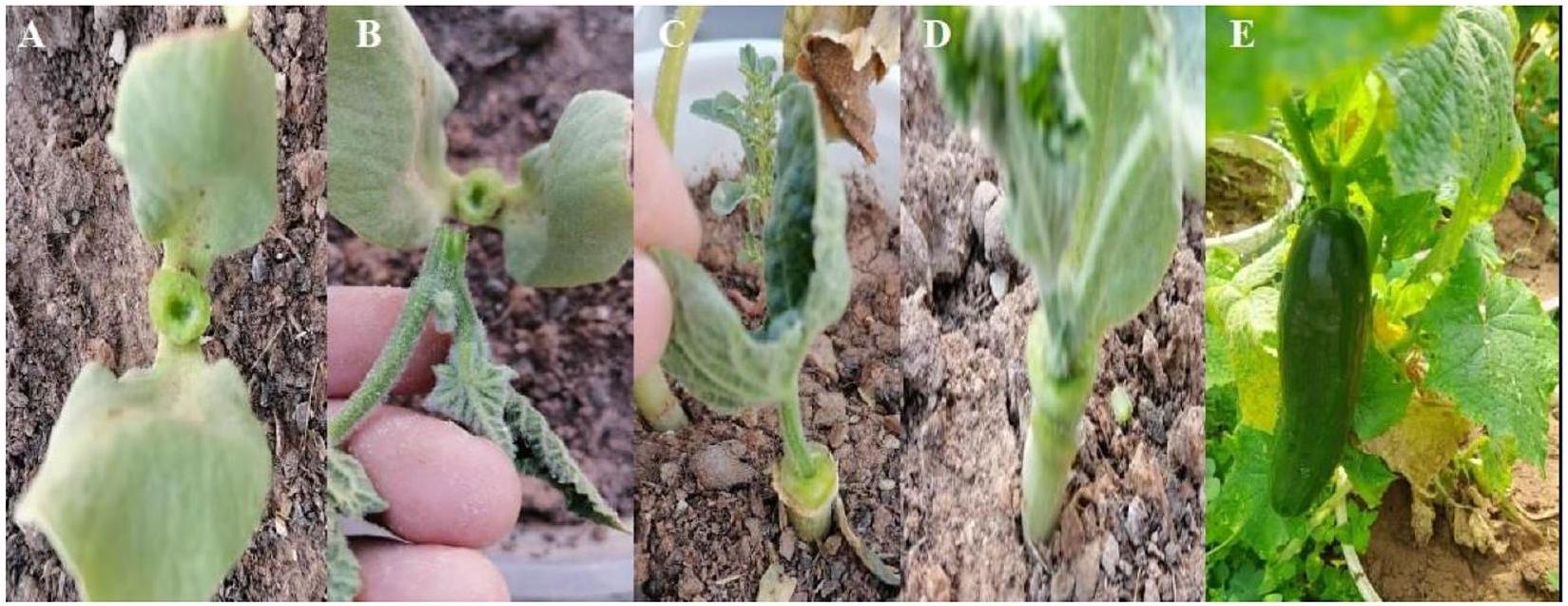
تم الحصول على بذور الخيار من نوع ناغين وبذور اليقطين من شركة باكان بازرا في أصفهان. تم زراعة البذور في حاويات بلاستيكية بقطر 5 سم مع خليط متساوٍ من التربة والرمل والسماد المتعفن. تم زراعة بذور اليقطين قبل ثلاثة إلى أربعة أيام من بذور الخيار لضمان التوافق في قطر الساق بين الجذر والطعمة لضمان نجاح التطعيم. بعد 25 يومًا من زراعة البذور، تم إجراء تطعيم إدخال الثقب كما يلي: تم إعداد الجذر، الذي كان لديه أوراق حرشفية وأوراق حقيقية، عن طريق إزالة الورقة الحقيقية بعناية والبرعم الطرفي (القمي) للجذر. تم عمل ثقب ب يتم صنعه في مركز الساق باستخدام عود أسنان. تم قطع نبات الطعم، الذي يتكون فقط من الفلقات، على بعد حوالي 2 سم أسفل الفلقات. أخيرًا، تم إدخال الطعم في الثقب الذي تم إنشاؤه في الجذر. خطوات إجراء التطعيم موضحة في الشكل 1. ثم تم نقل النباتات المطعمة إلى أصص بلاستيكية سعة 10 لترات. بعد ذلك، تم وضع الشتلات المطعمة في غرف التطعيم مع رطوبة نسبية من ظلام دامس، ودرجة حرارة . بعد ثلاثة أيام، تم تقليل الرطوبة النسبية بشكل مستمر حتى وصلت إلى المستويات المناسبة للنمو الأمثل خلال الأربعة عشر يومًا القادمة. بمجرد أن تأقلمت النباتات المطعمة وتطورت لديها ثلاث أوراق حقيقية، تم تطبيق إجهاد الملوحة عن طريق إضافة NaCl إلى مياه الري حتى نهاية فترة النمو. زادت مستويات الملوحة تدريجياً لتصل إلى مستوى الإجهاد المطلوب. تم رش السيلينيوم على الأوراق مرة واحدة وبالتزامن مع تطبيق إجهاد الملح. تم توفير التحكم في الآفات والأمراض، وتقليم النباتات، ودعم النمو العمودي، والري، وتنظيم درجة الحرارة والرطوبة لجميع الشتلات المطعمة وغير المطعمة. كانت الظروف البيئية في الدفيئة خلال فترة نمو الخيار تشمل درجة حرارة نهارية من ودرجات حرارة الليل شدة الإضاءة 6000-10,000 لوكس ورطوبة نسبية بين 50 و .

المعلمات المورفومترية

كانت الميزات الشكلية المدروسة هي ارتفاع النبات، الوزن الطازج للجذر والساق والثمرة، عدد الأوراق والثمار، إنتاجية النبات الواحد، والإنتاج الكلي. تم حصاد الثمار ثلاث مرات في الأسبوع بين 4 مايو و20 يونيو. في كل حصاد، تم تسجيل العدد الإجمالي للثمار ووزن الثمار بشكل منفصل. تم حساب متوسط وزن الثمرة والإنتاج الكلي للثمار.
الشكل 1 خطوات إجراء التطعيم، إعداد الجذر (A)، إعداد الطعم (B)، وضع الطعم على الجذر (C)، اندماج موقع التطعيم (D) وتكوين الثمار على الخيار المطعوم (E)

المعلمات الفسيولوجية أصباغ التمثيل الضوئي

تم قياس كمية الكلوروفيل في الأوراق وفقًا لطريقة ليختنثالر [46]. باختصار، تم هرس 0.1 جرام من نسيج ورقة الخيار الطازجة مع 10 مل من الأسيتون داخل المدقة. تم طرد الخليط المتجانس الناتج لمدة 10 دقائق عند 3000 دورة في الدقيقة، وأخيرًا، تم فصل الجزء العلوي من المستخلص. تم قراءة امتصاص العينات عند 645 و 663 و 470 نانومتر باستخدام الطريقة الطيفية (نموذج كيري 100، فاريان، أمريكا)، وتم حساب كمية الكلوروفيل والكاروتينويد في باستخدام الصيغ التالية:

كأس العالم للرغبي

لتحليل RWC، تم وزن أقراص الأوراق الطازجة (بقطر 1.5 سم) (الوزن الطازج)، ووضعها في طبق بتري يحتوي على 30 مل من الماء المقطر البارد لمدة 24 ساعة، ثم تم قياس وزنها المتورم (TW). لقياس الوزن الجاف (DW)، تم تجفيف أقراص الأوراق في فرن (نموذج ذكي 35 لتر، شركة شيمادز، إيران) لمدة 48 ساعة عند ثم تم وزنه. تم حساب محتوى الماء النسبي في الورقة باستخدام الصيغة التالية [47]:

تسرب الإلكتروليت (EL)

تم استخدام طريقة بن حامد وآخرون (2007) لقياس تسرب الإلكتروليتات [48]. أولاً، تم غمر قطع أوراق الخيار (أقراص بقطر 1.5 سم) في 40 مل من الماء المقطر وتم هز الأنابيب (120 دورة في الدقيقة) على الفور لمدة 12 ساعة تحت درجة حرارة الغرفة، وتم قياس الموصلية الكهربائية للعينات ( تم قياسها باستخدام مقياس التوصيل الكهربائي (طراز جينواي، شركة إنجلترا). ثم تم تعقيمها في جهاز الأوتوكلاف عند لمدة 20 دقيقة، وبعد الوصول التوصيلية الكهربائية للعينات ( تم قياسه مرة أخرى، وتم حساب نسبة تسرب الأيونات من المعادلة التالية.

البروتينات والكربوهيدرات القابلة للذوبان

تم طحن 0.5 جرام من نسيج الورقة مع النيتروجين السائل في هاون. ثم، 5 مل من تم إضافة الإيثانول إليه على الفور وتم خلطه بقوة. تم فصل الجزء العلوي من المحلول الناتج، وتم غسل الرواسب مرتين بـ 5 مل من الإيثانول، وتم إضافة الطور العلوي إلى السائل الطافي الذي تم جمعه سابقًا. تم طرد المحلول الناتج في جهاز الطرد المركزي بسرعة 3500 دورة في الدقيقة لمدة 10 دقائق. بعد فصل الطورين السائل والصلب، تم الاحتفاظ بالجزء السائل داخل الثلاجة عند درجة حرارة .
لتحديد كمية البرولين، تم تخفيف 1 مل من المستخلص الكحولي المذكور أعلاه مع 10 مل من الماء المقطر، وتم إضافة 5 مل من كاشف نينهيدرين.
لها. كانت تركيبة كاشف النينهدين لكل عينة تتضمن 0.125 جرام من النينهدين + 2 مل من حمض الفوسفوريك 6 م و 3 مل من حمض الأسيتيك الجليدي. بعد إضافة كاشف النينهدين، تم إضافة 5 مل من الحمض الجليدي، وتم وضع المزيج الناتج في حمام مائي مغلي عند لمدة 45 دقيقة. بعد إزالة العينات من حمام الماء المغلي وتبريدها، أضيف 10 مل من البنزين إلى كل عينة وتم هزها بقوة حتى دخل البرولين في مرحلة البنزين. ثم تُركت العينات لتستقر لمدة 30 دقيقة. تم إعداد محاليل قياسية من البرولين بتركيزات تتراوح من 0 إلى أخيرًا، تم قياس امتصاص الضوء للمحاليل القياسية والعينات عند طول موجي قدره 515 نانومتر باستخدام مطياف الضوء (طراز كيري 100، فاريان، أمريكا) [49].
لحساب السكريات القابلة للذوبان، تم إضافة 0.1 مل من المستخلص الكحولي إلى 3 مل من الأنثرون المحضر حديثًا (150 ملغ من الأنثرون + 100 مل من حمض الكبريتيك). تم وضعه في حمام مائي مغلي لمدة 10 دقائق. في هذا الوقت، تم تشكيل مادة ملونة. تم إعداد معايير الجلوكوز من 0 إلى أخيرًا، تم قراءة امتصاص الضوء للمحلولات القياسية والعينات باستخدام مطياف الضوء (طراز كيري 100، فاريان، أمريكا) عند طول موجي قدره 625 نانومتر [50].

محتوى الفينولات الكلي والفلافونويدات

لإعداد المستخلص الميثانولي، تم سحق 0.5 جرام من نسيج الورقة الطازج جيدًا في هاون بوجود 3 مل من تم استخدام هذا المستخلص الميثانولي لقياس إجمالي الفينولات والفلافونويدات.
تم تحديد كمية الفينول الكلي باستخدام كاشف فولين-سيوكالتو [51]. في هذه الطريقة، تم خلط المستخلص الميثانولي مع من محلول فولين المخفف (نسبة 10:1 مع الماء المقطر). بعد الاحتفاظ به لمدة 8 دقائق في من تم إضافة محلول بيكربونات الصوديوم. بعد 90 دقيقة من الاهتزاز على جهاز الاهتزاز بسرعة 120 دورة في الدقيقة في درجة حرارة الغرفة وفي الظلام، تم قياس امتصاص العينات باستخدام مطياف الضوء عند طول موجي 765 نانومتر (نموذج كيري 100، فاريان، أمريكا). باستخدام منحنى المعايير لحمض الغاليك، تم حساب إجمالي الفينول بوحدات ملغ من حمض الغاليك. إعادة توجيه.
تم قياس كمية الفلافونويد الكلي بطريقة الكالوريمترية باستخدام كلوريد الألمنيوم [52]. خمسون تم خلط مستخلص الميثانول مع كلوريد الألمنيوم ( ) ، من خلات البوتاسيوم ( 1 م )، و من الماء المنزوع الأيونات. بعد الخلط الدوامي، تم الاحتفاظ بالعينات في درجة حرارة الغرفة لمدة 40 دقيقة. تم قياس امتصاص العينات عند طول موجي 415 نانومتر باستخدام مطياف الضوء. تم حساب إجمالي الفلافونويدات بالملغ من الكيرسيتين. إعادة استخدام منحنى معيار الكيرسيتين.

إجمالي محتوى البروتين

تم استخدام طريقة برادفورد [53] لتحديد كمية البروتينات القابلة للذوبان. لهذا الغرض، تم خلط 0.5 جرام من الأوراق الطازجة مع 6.25 مل من محلول عازل الاستخراج وتركه لمدة 24 ساعة. لتحضير 1 لتر من محلول عازل الاستخراج، تم إذابة 121.4 جرام من تريس في 1 لتر من الماء المقطر، وتم تغيير حموضة المحلول إلى 6.8 باستخدام حمض الهيدروكلوريك العادي حتى تم الحصول على محلول العازل المطلوب. بعد الفترة المذكورة، تم طحن الأوراق بالكامل في هاون ثم تم طردها مركزيًا بسرعة 6000 دورة في الدقيقة لمدة 20 دقيقة. بعد ذلك، أخذ العينة 0.1 مل من المحلول العلوي الناتج عن الطرد المركزي، وتم إضافة 5 مل من كاشف BioRad إليه. تم خلط 100 ملغ من كاشف كوماتسي الأزرق اللامع – 250 مع 50 مل من الإيثانول النقي لتحضير الكاشف، ثم تم رفع حجمه إلى حوالي 800 مل باستخدام الماء المقطر وتم تصفيته. أخيرًا، تم زيادة حجم المحلول المصفى إلى 1000 مل باستخدام 100 مل من حمض الفوسفوريك النقي والماء المقطر. تم وضع المحلول الناتج في جهاز الطيف الضوئي (طراز كيري 100، فاريان، أمريكا) مع محلول عازل الاستخراج، وتم قراءة امتصاصه عند طول موجي 595 نانومتر. لتحضير المحلول القياسي، تم إذابة 100 ملغ من ألبومين البقر في 1 مل من محلول العازل ثم تم تكوينه إلى 1000 مل باستخدام الماء المقطر. بعد ذلك، تم تحضير معيار من 10 إلى 90 جزء في المليون من المحلول، وتم قراءة امتصاصه باستخدام جهاز الطيف الضوئي عند الطول الموجي المذكور.

أنشطة إنزيمات مضادات الأكسدة

تم إعداد مستخلص الإنزيمات أولاً لقياس نشاط إنزيمات مضادات الأكسدة. باختصار، تم طحن نسيج الأوراق المجمدة أولاً في هاون في وجود النيتروجين السائل، وتم إضافة 0.1 جرام منه إلى أنبوب بلاستيكي يحتوي على 1 مل من محلول الاستخراج وتم خلطه. تم تمرير العينة عبر مصفاة، وتم طرد المستخلص المحضر في جهاز الطرد المركزي لمدة 15 دقيقة بسرعة عند درجة حرارة تم فصل المحلول الشفاف ببطء؛ وتم استخدام المحلول الناتج لقياس نشاط كل من إنزيمات مضادات الأكسدة كما هو موضح أدناه.
لتحديد نشاط إنزيم الكاتالاز، أولاً، تم خلط مستخلص النبات مع 3 مل من محلول الاستخراج الذي يحتوي على 50 مللي مول من فوسفات الصوديوم (رقم الهيدروجيني 7.8) و2 مللي مول من حمض الإيثيلينديامينيتراسيتيك (EDTA). بدأت تفاعل إنزيم الكاتالاز بإضافة من بيروكسيد الهيدروجين إلى هذا المزيج. تم تسجيل التغيرات في الامتصاص البصري للعينات عند طول موجي 240 نانومتر لمدة 10 دقائق. تم اعتبار كل وحدة من نشاط إنزيم الكاتالاز هي كمية الإنزيم التي تقلل من بيروكسيد الهيدروجين في الدقيقة. تم التعبير عن كمية نشاط الإنزيم بوحدات لكل ملغ من بروتين الورقة. تم اعتبار كل وحدة من نشاط CAT كـ 1.0 مل من الإنزيم الذي يقلل [54].
تم قياس نشاط إنزيم البيروكسيداز بواسطة الطيف الضوئي [55]. أولاً، تم صب 3 مل من محلول الاستخراج (50 ملليمول من فوسفات الصوديوم (pH 7.8) و2 ملليمول من حمض الإيثيلين ثنائي الأمين رباعي الأسيتيك (EDTA)) في كل من قوارير التحكم والعينة لبدء تفاعل إنزيم البيروكسيداز. خمسة من بيروكسيد الهيدروجين و تم إضافة الجلايكول إليهما. تم وضع هذين الأنبوبين في جهاز الطيف الضوئي، وأصبح الرقم المقروء 0. ثم، تم إضافة مستخلص النبات إلى قنينة العينة، وتم قياس التغيرات في امتصاص الضوء للعينة عند طول موجي 465 نانومتر، والذي يشير إلى درجة التحلل والانخفاض في تم تسجيل التركيز كل 10 ثوانٍ لمدة 120 ثانية. وتم اعتبار كل وحدة من نشاط إنزيم البيروكسيداز ككمية الإنزيم التي تقلل من .

تركيز الصوديوم والبوتاسيوم

بعد الغسل، تم تجفيف عينات الأوراق، ووضعها داخل الظرف، ووضعها في فرن عند لمدة 48 ساعة. بعد التجفيف، تم طحن العينات، ثم تم صب 0.2 جرام من العينات المطحونة في أنبوب الاختبار، وأضيفت إليهم 2 مل من حمض النيتريك المركز وتم وضعهم في حمام مائي عند لمدة 60 دقيقة. بعد 60 دقيقة، تم زيادة درجة الحرارة لتصل إلى وتم الاحتفاظ بها عند هذه الدرجة الحرارة لمدة 90 دقيقة. بعد تبريد أنابيب الاختبار التي تحتوي على العينات إلى درجة حرارة المختبر، 0.2 مل من تم إضافة بيروكسيد الهيدروجين إلى العينات، وترك العينات لمدة 30 دقيقة لإكمال التفاعل. بعد 30 دقيقة، تم تصفية العينات وتم تخفيف حجمها النهائي إلى 25 مل بواسطة الماء المقطر. تم استخدام هذا المستخلص لقياس عناصر الصوديوم والبوتاسيوم بواسطة جهاز قياس اللهب (جهاز قياس اللهب الإلكتروني 450 G) [56].

التحليلات الإحصائية

تم تنفيذ العلاجات التجريبية بطريقة عاملية، استنادًا إلى تصميم عشوائي كامل مع ثلاث تكرارات تحتوي على كرمتين لكل تكرار. تم تحليل البيانات باستخدام برنامج SAS (9.1) الإحصائي. تم إجراء مقارنات المتوسطات باستخدام اختبار النطاق المتعدد لدنكان عند مستوى الدلالة. تم تقديم جميع البيانات كمتوسط الانحراف المعياري.

النتائج

المعلمات المورفومترية

تأثرت خصائص نمو الخيار بشكل كبير بالملوحة، والسيلينيوم، والتطعيم. كانت أعلى ارتفاع للنبات (345.100 سم)، وزن النبات الطازج (135.833 غ)، وزن الجذر الطازج (47.933 غ)، عدد العقد (61.777)، عدد الثمار (59.700)، وزن الثمار الطازجة (72.733 غ)، إنتاج النبات. والعائد الإجمالي تمت ملاحظتها في الخيار المطعوم بتركيز من سيلينات الصوديوم و0 مللي مول من NaCl (الجدول 1). لم يكن للملوحة والسيلينيوم والتطعيم تأثير كبير على النبات و
وزن الجذر الجاف. وفقًا للنتائج التي تم الحصول عليها، فقد حسّن السيلينيوم تأثيرات الملوحة في النباتات المزروعة بحيث زادت خصائص النمو والعائد من الخيار بشكل ملحوظ مع زيادة السيلينيوم في جميع مستويات إجهاد الملوحة الثلاثة.

الخصائص الفسيولوجية الصفات الفسيولوجية

أظهرت النتائج أن الملوحة والسيلينيوم أثرا بشكل كبير على كمية أصباغ التمثيل الضوئي في ورقة الخيار. على عكس السيلينيوم، تضر الملوحة كمية أصباغ التمثيل الضوئي في ورقة الخيار. كانت أعلى كمية من الكلوروفيل أ ( فورمولا واي)، الكلوروفيل ب إجمالي الكلوروفيل FW)، وكاروتينويد ( تمت ملاحظته في علاج 0 مليمول من NaCl مع من سيلينات الصوديوم. مع زيادة تركيز السيلينيوم، زادت كمية أصباغ التمثيل الضوئي في أوراق الخيار في جميع مستويات إجهاد الملوحة الثلاثة مقارنةً بالتحكم. في نفس الوقت، مع زيادة تركيز السيلينيوم في ظروف عدم الملوحة، زاد عدد أصباغ التمثيل الضوئي (الجدول 2).

برولين

وفقًا للنتائج (الجدول 3)، مع زيادة مستويات إجهاد الملوحة والسيلينيوم، زاد محتوى البرولين في ورقة الخيار مقارنةً بالتحكم. كان أعلى محتوى من البرولين ( تم العثور على (FW) في الخيار المطعوم و 100 مليمول من NaCl مع من سيلينات الصوديوم.

الكربوهيدرات القابلة للذوبان

يزداد مقدار الكربوهيدرات القابلة للذوبان مع زيادة مستويات الملوحة والسيلينيوم. فقط في أعلى مستويات إجهاد الملوحة والسيلينيوم أظهرت النتائج (الجدول 3) فرقًا كبيرًا بين نباتات الخيار المطعمة وغير المطعمة. كان أعلى مقدار من الكربوهيدرات القابلة للذوبان ( تمت ملاحظته في الخيار المزروع و 100 مللي مول من NaCl مع من سيلينات الصوديوم.

إجمالي البروتين

في الخيار المطعوم وغير المطعوم، مع زيادة مستوى السيلينيوم والملوحة، زادت كمية البروتين الكلي، والتي كانت مختلفة بشكل ملحوظ عن معاملة التحكم. وبالتالي، كانت أعلى كمية من البروتين الكلي ( تمت ملاحظته في الخيار المزروع مع 100 مللي مول من NaCl جنبًا إلى جنب مع من سيلينات الصوديوم.

إجمالي الفينولات والفلافونويدات

مع زيادة تركيز السيلينيوم، زاد محتوى الفينولات الكلي في أوراق الخيار تحت ظروف إجهاد الملوحة. كانت أعلى كمية من الفينولات الكلية
الجدول 1 مقارنة متوسط تأثير مستويات مختلفة من إجهاد الملح، والسيلينيوم، والتطعيم على بعض الخصائص الشكلية لنبات الخيار. المتوسطات SD ( )
إجهاد الملح (مليمول) سيلينات الصوديوم ) الطعيم ارتفاع النبات (سم) وزن النبات الطازج (غ) وزن الجذر الطازج (غ) عدد العقد (-) عدد الفواكه (-) وزن الفاكهة الطازجة (غ) محصول النبات (غرام لكل نبات ) العائد الإجمالي ( )
غير التطعيم
0 الطعيم
غير التطعيم
0 ٥ الطعْم
غير التطعيم
10 الطعوم
غير التطعيم
0 الطعيم
50 غير التطعيم
٥ الطعيم
غير التطعيم
10 الطعيم
غير التطعيم
0 الطعيم
غير التطعيم
100 ٥ الطعْم
غير التطعيم
10 الطعيم
تعني القيم المشار إليها بحروف مشابهة في الأعمدة أنها لا تختلف بشكل كبير عند مستوى
الجدول 2 مقارنة متوسط تأثير مستويات مختلفة من إجهاد الملح والسيلينيوم على أصباغ التمثيل الضوئي في أوراق الخيار. المتوسطات SD ( )
إجهاد الملح (مليمول) سيلينات الصوديوم (ملغ) ) الكلوروفيل أ إعادة توجيه) الكلوروفيل ب إعادة توجيه) إجمالي الكلوروفيل (ملغ) إعادة توجيه) كاروتينويد )
0 0
٥
10
0
50 ٥
10
0
100 ٥
10
تعني القيم المشار إليها بحروف مشابهة في الأعمدة أنها لا تختلف بشكل كبير عند مستوى
FW) وإجمالي الفلافونويد ( تمت معالجة 100 مليمول من NaCl و من سيلينات الصوديوم للنباتات المطعمة، تختلف بشكل ملحوظ عن معالجة التحكم (الجدول 3).

إنزيمات مضادة للأكسدة

مع زيادة تركيز السيلينيوم وإجهاد الملوحة، زادت نشاط إنزيمات الكاتالاز والبيروكسيداز (الجدول 3). تظهر النتائج عدم وجود فرق ذو دلالة إحصائية بين النباتات المطعمة وغير المطعمة عند أدنى وأعلى تركيزات من السيلينيوم وإجهاد الملوحة. ومع ذلك، كانت نشاط إنزيمات الكاتالاز والبيروكسيداز أعلى في الخيار المطعم تحت ظروف إجهاد الملوحة مقارنة بالنباتات غير المطعمة (الجدول 3).

كأس العالم للرغبي

وفقًا لنتائج مقارنة المتوسط لتأثير مستويات الملوحة المختلفة والسيلينيوم على محتوى الماء النسبي لأوراق الخيار (الشكل 2)، على عكس الملوحة، زاد السيلينيوم من كمية محتوى الماء النسبي. كانت أعلى كمية لمحتوى الماء النسبي (78.77%) في المعاملة التي تحتوي على 0 مللي مول من NaCl و من سيلينات الصوديوم (الشكل 2). وفقًا للنتائج التي تم الحصول عليها، في ظل ظروف إجهاد الملح، مع زيادة مستوى السيلينيوم، زادت كمية RWC.

إل

تشير النتائج إلى مقارنة تأثير مستويات مختلفة من الملوحة والسيلينيوم على EL في أوراق الخيار، حيث أظهرت أن الملوحة، على عكس السيلينيوم، قد زادت من كمية EL في أوراق الخيار. كانت أقصى كمية من EL في أوراق الخيار ( ) كان في معالجة 100 مليمول من NaCl و من سيلينات الصوديوم (الشكل 3).

تركيز الصوديوم والبوتاسيوم

انخفضت كمية البوتاسيوم مع زيادة إجهاد الملوحة، بينما زادت كمية الصوديوم. قلل السيلينيوم من كمية الصوديوم بينما زاد من كمية البوتاسيوم في ورقة وجذر الخيار (الجدول 4). كانت أعلى كمية من البوتاسيوم في الورقة. DW) والجذر ( كان الخيار في
معالجة 0 مللي مولار من NaCl بـ سيلينات الصوديوم. بالمقابل، تم ملاحظة أعلى كمية من الصوديوم عند معالجة 100 مللي مول من NaCl و من سيلينات الصوديوم (الجدول 4).

نقاش

تهدد الملوحة بشكل خطير المحاصيل الزراعية والبستانية، مما يؤدي إلى تقليل النمو والإنتاج. يرتبط النمو مباشرة بإنتاجية النبات والعائد. نتيجة لذلك، تم التعرف عليها على نطاق واسع كمؤشر حاسم في معظم الأبحاث الفسيولوجية. تقلل الملوحة من ضغط التوتر وتخليق الحمض النووي من خلال تحفيز الإجهاد الأسموزي، وعدم توازن الأيونات، وسمية الأيونات. جميع التغيرات الناتجة عن الملوحة في استقلاب النبات، والتي تشمل العمليات الفسيولوجية والبيوكيميائية مثل التمثيل الضوئي، وتوازن الأيونات، ونشاط مضادات الأكسدة، تؤدي إلى تقليل النمو.
لقد أدى إجهاد الملح إلى تقليل خصائص النمو للخيار المطعوم وغير المطعوم. في هذه الدراسة، انخفض ارتفاع ووزن نبات الخيار والثمار تحت إجهاد الملح مقارنةً بالشاهد (الجدول 1). يمكن أن يكون فقدان الوزن للأجزاء الهوائية تحت ظروف إجهاد الملوحة بسبب تراكم الأيونات الضارة مثل الكلور والصوديوم، والتي تكون ضارة أو تسبب اضطرابات في امتصاص الماء والمعادن الأخرى. أيضًا، تزيد الملوحة من كمية الطاقة المطلوبة للحفاظ على الظروف القياسية للخلايا، ونتيجة لذلك، يتبقى طاقة أقل لاحتياجات النمو. تحت ظروف إجهاد الملوحة، يقل امتصاص ونقل الماء والمعادن من الجذور إلى الأوراق. يقلل النبات من مستوى التمثيل الضوئي عن طريق تقليل عدد وسطح الأوراق، مما يقلل أيضًا من قدرة النبات على التمثيل الضوئي. وفقًا لنتائج هذا البحث، أدى إجهاد الملوحة، من خلال خفض محتوى رطوبة الأوراق (RWC) والتسبب في سمية الأيونات، إلى انخفاض في خصائص النمو، والإنتاج ومكونات الإنتاج للخيار، وهو ما يتماشى مع نتائج سميدة وآخرون (2021) في البصل (Allium cepa) وكاراجا وآخرون (2023) في الطماطم.
الجدول 3 مقارنة متوسط تأثير مستويات مختلفة من إجهاد الملح، والسيلينيوم، والتطعيم على بعض الخصائص الفسيولوجية لورقة الخيار. المتوسطات SD ( )
إجهاد الملح (مليمول) سيلينات الصوديوم (ملغ) ) الطعيم برولين إعادة توجيه) السكريات القابلة للذوبان إعادة توجيه) إجمالي البروتين ( إعادة توجيه) إجمالي الفينول (ملغ) إعادة توجيه) الفلافونويد (ملغ) إعادة توجيه) كاتالاز (وحدة بروتين) البيروكسيداز (وحدة بروتين
0 غير مزروع
الطعْم
غير التطعيم
0 ٥ الطعيم
غير التطعيم
10 الطعيم
غير التطعيم
0 الطعيم
50 غير التطعيم
٥ الطعيم
غير التطعيم
10 الطعْم
غير التطعيم
0 الطعيم
غير مزروع
100 ٥ الطعيم
غير التطعيم
10 الطعيم
تعني القيم المشار إليها بحروف مشابهة في الأعمدة أنها لا تختلف بشكل كبير عند مستوى
الشكل 2 مقارنة متوسط تأثير مستويات مختلفة من الملوحة والسيلينيوم على محتوى الماء النسبي في أوراق الخيار. و على التوالي: 0.50 و 100 مللي مول و على التوالي: 0,5 ، و سيلينات الصوديوم
الشكل 3 مقارنة متوسط تأثير مستويات مختلفة من الملوحة والسيلينيوم على محتوى EL في أوراق الخيار. و على التوالي: 0.50 و 100 مللي مول و و على التوالي: 0,5 ، و سيلينات الصوديوم
الجدول 4 مقارنة متوسط تأثير مستويات مختلفة من إجهاد الملح والسيلينيوم على تركيز الصوديوم والبوتاسيوم في جذر وورقة الخيار. المتوسطات SD ( )
إجهاد الملح (مليمول) سيلينات الصوديوم (ملغ) ) البوتاسيوم في الورقة دي دبليو) بوتاسيوم الجذر ( دي دبليو) صوديوم الورقة دي دبليو) صوديوم الجذر ( دي دبليو)
0 0
٥
10
0
50 ٥
10
0
100 ٥
10
مماثل للنتائج المعروضة في الخيار [62] والثوم (Allium sativum L.) [32]، تحت ظروف إجهاد الملوحة، فإن التطبيق الورقي للسيلينيوم ( تحسين خصائص النمو الخضري مقارنة بمعاملة التحكم. من خلال نقلها إلى الجذور عبر امتصاص الماء والعناصر الغذائية، فإن التوازن الأسموزي ضروري في تحمل النبات لظروف الإجهاد الملحي، والذي يرتبط بزيادة خصائص نمو النبات. في ظل ظروف الإجهاد الملحي، يتسبب السيلينيوم في زيادة محتوى الماء النسبي، مما يؤدي إلى احتفاظ أكبر بالماء في الأنسجة. تحت ضغط الملح، يمكن القول إن السيلينيوم يزيد من امتصاص المغذيات الكبرى مثل المغنيسيوم والبوتاسيوم والفوسفور والنيتروجين بينما يقلل من امتصاص الصوديوم. كما أنه يزيد من مستويات البرولين، ومحتوى الماء النسبي، ونشاط إنزيمات مضادات الأكسدة، مما يؤدي إلى زيادة إنتاج الخيار.
الخيار حساس للملوحة؛ لذا، يبدو أن تحديد الأصول الجذرية المقاومة للملوحة أمر حاسم. لقد أظهر اليقطين تحملًا أكبر للضغوط البيئية مقارنة بالخيار. وفقًا للنتائج (الجدول 1)، لم يُلاحظ فرق كبير بين الخيار المطعوم وغير المطعوم في المعالجة بدون ضغط ملوحة. ومع ذلك، عند مستويات عالية من ضغط الملوحة، كانت خصائص النمو المدروسة في النباتات المطعومة أعلى من النباتات غير المطعومة؛ وهذا يظهر التأثير الإيجابي للطعم واستخدام أصول اليقطين تحت ظروف ضغط الملوحة ويتماشى مع النتائج التي تم الحصول عليها في الفلفل (Capsicum annuum L.). وفقًا للدراسات التي أجريت، يمكن أن يؤثر الطعم على امتصاص الماء وعناصر المغذيات. في الدراسة الحالية، حسّن الطعم والتطبيق الورقي للسيلينيوم خصائص نمو الخيار تحت ظروف ضغط الملوحة. في ظروف ضغط الملوحة، أدى تطعيم الطماطم على الباذنجان (Solanum melongena L.) إلى تحسين الحالة الفسيولوجية لثمار الطماطم والمحصول. يزيد الباذنجان كأصل جذر من كمية البرولين وإنزيمات مضادات الأكسدة، بما في ذلك الكاتالاز، ويقلل من كمية الصوديوم في النباتات المطعومة، وفقًا لما لوحظ في بحثنا. أدى تطعيم الطماطم على البطاطس تحت ظروف ضغط الملوحة إلى زيادة محصول ثمار الطماطم. يمكن أن يزيد التفاعل بين الأصل الجذري والفرع من نمو الفرع وكتلة الحيوية، كما يلعب دورًا في توزيع المواد المساعدة بين المصدر (الورقة، الساق، والجذر) والمصب (الثمرة). سيلعب الأصل الجذري دورًا مهمًا في محصول الثمار والنمو، وهناك العديد من التقارير حول زيادة التحمل للضغوط البيئية في أشجار الفاكهة المطعومة. في الوقت نفسه، تم اختبار أصل اليقطين والسيلينيوم لأول مرة لزيادة تحمل الخيار للملوحة. زاد أصل اليقطين والسيلينيوم بشكل كبير من ارتفاع النبات، وعدد الأوراق، ومحصول الخيار المطعوم، وهو ما يمكن أن يُعزى إلى زيادة المواد الأسموزية المتوافقة (البرولين، والسكريات القابلة للذوبان الكلية)، وإنزيمات مضادات الأكسدة، و
تقليل امتصاص الصوديوم ونقله تحت ظروف الإجهاد الملحي. استخدمت بعض الدراسات تطبيق السيلينيوم الورقي والتطعيم لزيادة نمو ثمار الطماطم، والمحصول، والجودة. وفقًا للنتائج، فإن التطعيم مع 2 و أدى استخدام Se إلى زيادة محصول الطماطم الكرزية والمركبات الغذائية [70].
في ظروف إجهاد الملوحة، زاد السيلينيوم من كمية أصباغ التمثيل الضوئي، بما يتماشى مع نتائج هاوريلك-نواك (2009) في نباتات الخيار [71]. في الثوم، من خلال تطبيق تحت ظروف إجهاد الملوحة، زادت كمية الكلوروفيل والكاروتينويد عند استخدام سيلينات الصوديوم [32]. وقد تم الإبلاغ عن انخفاض أصباغ التمثيل الضوئي تحت ظروف إجهاد الملوحة في نباتات مختلفة [72]، والذي يمكن أن يكون بسبب تراكم أيونات الصوديوم في البلاستيدات الخضراء، وتدهور أغشية البلاستيدات الخضراء والثايلاكويد، وانخفاض الإنزيمات المسؤولة عن تخليق أصباغ التمثيل الضوئي، وانخفاض استقرار مجمعات الصبغ-بروتين بسبب وجود الأيونات، ومنع تخليق الكلوروفيل الجديد بسبب تخليق المزيد من البرولين، ونقص أيونات المغنيسيوم والبوتاسيوم – كعناصر رئيسية في تخليق الكلوروفيل، وانخفاض نسبة البوتاسيوم إلى الصوديوم، وهجوم الجذور الحرة الناتج عن الإجهاد التأكسدي والتأكسد، وتحلل الكلوروفيل وتنشيط إنزيم الكلوروفيلاز، وأخيرًا انخفاض محتوى الكلوروفيل [73]. يمكن أن يزيد التطبيق الورقي للسيلينيوم من محتوى الكلوروفيل والكاروتينويدات في أوراق النباتات المعرضة لظروف إجهاد الملوحة من خلال تقليل التوتر التأكسدي ومنع تدمير جزيئات الكلوروفيل. تلعب الكاروتينويدات دورًا وقائيًا ضد الإجهاد التأكسدي وهي فعالة أيضًا في إزالة سمية الكلوروفيل وتقليل التأثيرات السامة للجذور الحرة [74].
تلعب الكربوهيدرات، في ظل ظروف الضغط، بالإضافة إلى دورها في تنظيم الأسموزية، دورًا وقائيًا ضد الإجهاد التأكسدي من خلال الإلكترونات الحرة في حلقاتها الهيكلية [75]. يبدو أن استخدام السيلينيوم لزيادة إنتاج الكربوهيدرات القابلة للذوبان هو خطوة قابلة للتطبيق في حماية النباتات ضد الإجهاد التأكسدي. كما أظهرت الريحان (Ocimum basilicum L.) زيادة في الكربوهيدرات القابلة للذوبان تحت ظروف ضغط الملوحة [76].
أظهرت النتائج أن التطعيم أثر بشكل إيجابي على كمية البرولين في أوراق الخيار تحت ظروف إجهاد الملوحة، بحيث كانت أعلى كمية من البرولين في الخيار المطعوم ومع معالجة 0 مللي مول من NaCl مع من سيلينات الصوديوم. كانت هذه النتائج متوافقة مع تلك التي تم الحصول عليها في الطماطم [77] والفلفل [66]. البرولين هو أحد المواد المتوافقة التي تنتجها معظم النباتات في ظل ظروف الإجهاد ويساعد في الحفاظ على التوازن الأسموزي. في الواقع، فإن زيادة البرولين في النباتات تحت ضغط الملوحة هي رد فعل النبات لتقليل الجهد المائي في بيئة الجذور [78]. من خلال خفض الجهد الأسموزي لخلايا الجذر، البرولين
يخلق ظروف امتصاص الماء والمغذيات. في الوقت نفسه، يحفز البرولين نسخ بروتينات مقاومة إجهاد الملوحة بحيث تتحمل النبات ظروف إجهاد الملوحة. قد يساعد رفع مستوى البرولين مع تطبيق السيلينيوم الورقي النباتات على مقاومة إجهاد الملوحة من خلال تعزيز نظام الدفاع المضاد للأكسدة. تحت ظروف إجهاد الملوحة، يؤدي السيلينيوم إلى زيادة تراكم بعض الأسموليتات المتوافقة، بما في ذلك البرولين والسكريات القابلة للذوبان الكلية. وفقًا لنتائجنا، زاد السيلينيوم من كمية الكلوروفيل. و البروتين، ونشاط إنزيم الكاتالاز في إجهاد الملوحة في نبات الثوم [32].
وفقًا للنتائج (الجدول 3)، أثرت الملوحة والسيلينيوم بشكل إيجابي على إجمالي البروتين القابل للذوبان في أوراق الخيار المطعمة مقارنة بالنباتات الضابطة. تم ملاحظة أعلى كمية من بروتين أوراق الخيار في معالجة النباتات المطعمة مع 100 مللي مول من NaCl و من سيلينات الصوديوم (الجدول 3). يعزز السيلينيوم كمية البروتينات تحت ظروف الإجهاد الملحي من خلال حماية البروتينات التي تحتوي على مجموعات ثيول وتحفيز نسخ جين إنزيم نترات ريدوكتاز [81]. تحت ظروف الإجهاد الملحي، زاد السيلينيوم من كمية البروتينات والكربوهيدرات القابلة للذوبان في القمح (Triticum aestivum L.)، وفقًا للدراسات [41].
وفقًا لنتائج مقارنة المتوسطات (الجدول 3)، لم يُلاحظ أي فرق كبير في محتوى الفلافونويد في أوراق الخيار بين النباتات المطعمة وغير المطعمة عند مستويات عالية من إجهاد الملوحة والسيلينيوم. بينما مع زيادة تركيز السيلينيوم وإجهاد الملوحة، زاد محتوى الفلافونويد في أوراق الخيار (الجدول 3). المركبات الفينولية ضرورية في تثبيط أكسدة الدهون والتخلص من الجذور الحرة. في ظروف إجهاد الملوحة، يرتبط زيادة المركبات الفينولية مباشرة بإنتاج الجذور الحرة. إن ارتفاع المركبات الفينولية تحت ظروف إجهاد الملوحة هو آلية مقاومة للإجهاد في النباتات [82]. في الوقت نفسه، يرتبط زيادة المركبات الفينولية تحت ظروف إجهاد الملوحة بزيادة إنتاج اللجنين، مما يساعد على زيادة مقاومة النبات للإجهاد [83]. تحت ظروف إجهاد الملوحة، يمكن أن يلعب السيلينيوم دورًا وقائيًا من خلال تنشيط إنتاج إنزيم الفينيل ألانين أمونيا-لاز، الضروري لإنتاج المركبات الفينولية، مما يؤدي إلى زيادة في المركبات الفينولية [84]. وفقًا للنتائج، زاد السيلينيوم من البروتين، والفينول الكلي، والفلافونويد، وإنزيمات مضادات الأكسدة في الستيفيا (Stevia rebaudiana Bertoni) تحت إجهاد الملوحة [85]. الفلافونويدات ضرورية بسبب دورها في أنظمة الدفاع غير الإنزيمية. يتأثر مقدار الفلافونويدات بشكل كبير بالظروف البيئية. عندما تكتشف النبات الإجهاد، يتم تنشيط وتعزيز آليتها الدفاعية، التي تشمل الفلافونويدات، للتعامل مع الإجهاد [78].
أثرت السيلينيوم وإجهاد الملوحة بشكل إيجابي على نشاط إنزيم البيروكسيداز (الجدول 3). تم الكشف عن أقصى كمية من نشاط إنزيم البيروكسيداز في النباتات المطعمة التي تحتوي على أعلى تركيز من السيلينيوم وإجهاد الملوحة. وقد أظهرت فرقًا كبيرًا عن المعاملة الضابطة. يساعد النظام المضاد للأكسدة في حماية الخلايا من الجذور الحرة. في هذه الدراسة، زاد نشاط إنزيمات مضادات الأكسدة مثل الكاتالاز والبيروكسيداز تحت ظروف إجهاد الملوحة وتطبيق السيلينيوم ورقيًا (الجدول 3)، متبعًا النتائج التي تم الحصول عليها في Stachys byzantina (Stachys byzantine L.) [86]. ترتبط الضغوط البيئية بالإجهاد التأكسدي وزيادة إنتاج أنواع الأكسجين التفاعلية، التي تدمر الأغشية وتسبب أكسدة الدهون، مما يؤدي في النهاية إلى تسرب المواد من الخلية وموت الخلايا. يمكن للنباتات إزالة هذه الجذور الحرة ضد الإجهاد التأكسدي باستخدام نظامها المضاد للأكسدة، الذي يشمل البيروكسيداز الأسكوربي، الكاتالاز، ديسموتاز السوبر أكسيد، البيروكسيداز، ومضادات الأكسدة غير الإنزيمية مثل الأسكوربات، الجلوتاثيون، والألفا توكوفيرول، وفقًا لنتائج هذه الدراسة [78]. من خلال زيادة نشاط إنزيمات مضادات الأكسدة، يتسبب السيلينيوم في إزالة الأكسجين النشط، ونتيجة لذلك، يقلل من أكسدة الدهون في الأغشية وسطح المالونديالديهايد [87]. يقوم السيلينيوم بتثبيط إنزيمات الجلوتاثيون بيروكسيداز وبيروكسيد الهيدروجين، ثم تقوم إنزيمات البيروكسيداز الأسكوربي، الكاتالاز، والجلوتاثيون ريدوكتاز بتنظيف بقايا بيروكسيد الهيدروجين [88].
تمت ملاحظة أعلى محتوى من RWC في أوراق الخيار في أعلى تركيز من السيلينيوم. السيلينيوم السيلينات) في جميع درجات الإجهاد الملحي الثلاثة. زاد السيلينيوم من محتوى الماء النسبي لورقة الخيار تحت ظروف الإجهاد الملحي (الشكل 2). قياس محتوى الماء النسبي هو أحد المؤشرات التي تقدر مقاومة النبات للإجهاد الملحي. يقلل الملح من جهد الماء في سرير الزراعة، ويؤثر على حجم الماء الذي يمكن لجذور الخيار امتصاصه، وفي النهاية يقلل من محتوى الماء النسبي. يساعد السيلينيوم في الحفاظ على الضغط الأسموزي للخيار في ظل الإجهاد الملحي من خلال إنتاج الأسموزيات المتوافقة. يقلل إنتاج الأسموزيات المتوافقة من الضغط الأسموزي داخل الخلية، مما يساعد على الاحتفاظ بالماء داخلها ويمنع الخلية من الجفاف. من خلال المساعدة في امتصاص الماء من محلول التربة، يزيد من ضغط الماء والكمية النسبية لمحتوى الماء النسبي.
في جميع تركيزات إجهاد الملوحة الثلاثة، مع زيادة تركيز السيلينيوم، انخفضت كمية تسرب الإلكتروليت من ورقة الخيار (الشكل 3). في إجهاد الملوحة، ينخفض تسرب الإلكتروليت مع زيادة نشاط مضادات الأكسدة، ويقلل السيلينيوم من تسرب الإلكتروليت من خلال حماية أغشية الخلايا [90]. لأن غشاء الخلية هو هدف رئيسي في العديد من الضغوط البيئية، بما في ذلك الملوحة، فإن استقرار الغشاء تحت ظروف الإجهاد هو أحد مؤشرات التحمل [91]. لذلك، فإن قياس كمية تسرب الإلكتروليت هو أحد
مؤشرات جيدة لقياس كمية الضرر التأكسدي للغشاء. نظرًا لضعف الغشاء السيتوبلازمي، تتسرب محتويات الخلية، وتحدد كمية هذا الضرر من خلال قياس تسرب الإلكتروليت [92].
الاستراتيجية الأساسية لتنظيم تراكم المذاب في النبات هي تقليل نقل الصوديوم من الجذر إلى العضو الهوائي وامتصاص المزيد من البوتاسيوم مقارنة بالصوديوم. تقلل الملوحة من مستويات البوتاسيوم في جذر نبات الخيار (الجدول 4)؛ في الواقع، واحدة من الآثار الضارة للملوحة هي تعطيل امتصاص البوتاسيوم. إن تقليل امتصاص البوتاسيوم بسبب وجود أيون الصوديوم المتنافس يعود إلى تشابه حجم نصف قطر الترطيب لهذين الأيونين [62]. نتيجة لذلك، يتم تشخيص بروتينات النقل الخاصة بهم بشكل خاطئ. بسبب وجود مستويات عالية من الصوديوم في البيئة المحيطة بالجذور خلال ضغط الملوحة، بالإضافة إلى تعطيل امتصاص البوتاسيوم والتسبب في تلف أغشية الجذور، يتغير أيضًا الاختيار الانتقائي لهذه الأغشية [93]. البوتاسيوم هو أحد العناصر الأكثر وفرة في النباتات، وهو مطلوب لتكوين البروتينات والإنزيمات وعملية التمثيل الضوئي. يلعب دورًا في تنظيم الجهد الأسموزي، ومع زيادة الرقم الهيدروجيني والصوديوم، تقل توافره للنباتات [91]. تحت ظروف ضغط الملوحة، يزيد السيلينيوم من البوتاسيوم. يقلل من كمية الصوديوم في مؤشر الشتلات عن طريق ربط الصوديوم بجدار خلايا الجذر، مما يقلل من أضرار ضغط الملوحة. يمنع أيون الصوديوم قنوات نقل أيون البوتاسيوم على سطح الغشاء، بينما يمكن أن يؤثر السيلينيوم على التعبير الجيني لناقلات الصوديوم ومضخات الهيدروجين. يمكن أن تزيد تركيزات السيلينيوم المناسبة من التعبير عن التونوبلاست. ATPاز مضاد النقل في غشاء الجذر، مما يقلل من نقل أيونات الصوديوم إلى الأجزاء الهوائية المقيدة والسمية [87]. وفقًا للنتائج (الجدول 4)، يحتوي الجذر على نسبة أعلى من الصوديوم مقارنةً بورقة الخيار، وفقًا لملاحظات غاو وآخرين [64]، حيث أن تطعيم الخيار على جذر القرع يقلل من نقل الصوديوم من الجذر إلى الورقة (الجدول 4).

الاستنتاجات

بالنظر إلى أنه تم دراسة تأثير السيلينيوم وزراعة الأنسجة على تحمل ملوحة الخيار في البيوت المحمية للمرة الأولى، أظهرت النتائج أن اليقطين لديه تحمل أكبر للإجهاد الملحي مقارنة بالخيار، وهو ما يترافق مع زيادة في خصائص النمو، والأوزمولات المتوافقة (البروتين، والسكريات القابلة للذوبان الكلية)، والمركبات (الفينولات الكلية، والفلافونويد)، وإنزيمات مضادات الأكسدة (الكاتالاز) وتراكم البوتاسيوم في أوراق الخيار. كان للسيلينيوم، إلى جانب التطعيم، دور فعال في زيادة تحمل الملح في الخيار. ونتيجة لذلك، يمكن القول إن استخدام جذر اليقطين و استخدام سيلينات الصوديوم هو استراتيجية جيدة لتحمل الملوحة
و تحسين جودة وإنتاجية تطعيم نباتات الخيار.

شكر وتقدير

يعبّر مؤلفو المقال عن امتنانهم لجامعة رازي وجامعة أثينا الزراعية.

مساهمات المؤلفين

أشرف م.أ. على التجارب، وكتب وراجع المخطوطة بشكل نقدي. قام أ.ب. بإجراء التجارب. قام ج.ج. بتحليل البيانات. ساهم ج.ن. في إدارة المشروع والتحقيق ومراجعة المخطوطة. قرأ جميع المؤلفين ووافقوا على النسخة المنشورة من المخطوطة. راجع جميع المؤلفين ووافقوا على المخطوطة.

تمويل

غير قابل للتطبيق.

توفر البيانات

جميع البيانات متاحة في ملف المخطوطة.

الإعلانات

غير قابل للتطبيق.
غير قابل للتطبيق.

المصالح المتنافسة

يعلن المؤلفون عدم وجود مصالح متنافسة.
تاريخ الاستلام: 19 سبتمبر 2023 / تاريخ القبول: 27 ديسمبر 2023
نُشر على الإنترنت: 03 يناير 2024

References

  1. Feng D, Gao Q, Liu J, Tang J, Hua Z, Sun X. Categories of exogenous substances and their effect on alleviation of plant salt stress. Eur J Agron. 2023;142:126656. https://doi.org/10.1016/j.eja.2022.126656.
  2. Hassani A, Azapagic A, Shokr N. Global predictions of primary soil salinization under changing climate in the 21 st century. Nat Commun. 2021;12(1):6663. https://doi.org/10.1038/s41467-021-26907-3.
  3. Okur B, Örçen N. Soil salinization and climate change. In: Prasad MNV, Pietrzykowski M, editors. Climate Change and Soil interactions. Amsterdam, The Netherlands: Elsevier; 2020. pp. 331-50.
  4. Zhao S, Zhang Q, Liu M, Zhou H, Ma C, Wang P. Regulation of plant responses to salt stress. Int J Mol Sci. 2021;22:1-16. https://doi.org/10.3390/ ijms22094609.
  5. Abdelaal Kh. Cucumber grafting onto pumpkin can represent an interesting tool to minimize salinity stress. Physiological and anatomical studies. Middle East J Agric Res. 2017;6:953-75. https://www.researchgate.net/ publication/323883911.
  6. Savvas D, Papastavrou D, Ntatsi G, Ropokis A, Olympios C, Hartmann H, Schwarz D. Interactive effects of Grafting and Manganese Supply on Growth, Yield, and nutrient uptake by Tomato. HortScience Horts. 2009;44(7):1978-82. https://doi.org/10.21273/HORTSCI.44.7.1978.
  7. Ntatsi G, Savvas D, Ntatsi G, Kläring H, Schwarz D. Growth, yield, and metabolic responses of temperature-stressed Tomato to Grafting onto rootstocks differing in Cold Tolerance. J Am Soc Hortic Sci. 2014;139(2):230-43. https:// doi.org/10.21273/JASHS.139.2.230.
  8. Ntatsi G, Savvas D, Papasotiropoulos V, Katsileros A, Zrenner RM, Hincha DK, Zuther E, Schwarz D. Rootstock Sub-optimal Temperature Tolerance determines transcriptomic responses after Long-Term Root cooling in Rootstocks and scions of grafted tomato plants. Front Plant Sci. 2017;8:911. https://doi. org/10.3389/fpls.2017.00911.
  9. Savvas D, Öztekin GB, Tepecik M, Ropokis A, Tüzel Y, Ntatsi G, Schwarz D. Impact of grafting and rootstock on nutrient-to-water uptake ratios during the first month after planting of hydroponically grown tomato. J Hortic Sci
Biotechnol. 2017;92(3):294-302. https://doi.org/10.1080/14620316.2016.1265 903.
10. Fu X, Feng YQ, Zhang XW, Zhang YY, Bi HG, Ai XZ. Salicylic acid is involved in rootstock-Scion communication in improving the Chilling Tolerance of Grafted Cucumber. Front. Plant Sci. 2021;12:1-16. https://doi.org/10.3389/ fpls.2021.693344.
11. Jang Y, Moon JH, Kim SG, Kim T, Lee OJ, Lee HJ, Wi SH. Effect of low-temperature tolerant rootstocks on the growth and Fruit Quality of Watermelon in Semi-forcing and Retarding Culture. Agronomy. 2023;13:1-17. https://doi. org/10.3390/agronomy13010067.
12. Yetisir H, Uygur V. Responses of grafted watermelon onto different gourd species to salinity stress. J Plant Nutr. 2010;33:315-27. https://doi.org/10.1016/j. hpj.2018.08.003.
13. Huang Y, Bie Z, He S, Hua B, Zhen A, Liu Z. Improving cucumber tolerance to major nutrients induced salinity by grafting onto Cucurbita ficifolia. Environ Ex Bot. 2011;69:32-8. https://doi.org/10.1016/j.envexpbot.2010.02.002.
14. Rouphael Y, Edelstein M, Savvas D, Colla G, Ntatsi G, Kumar P, Schwarz D. Grafting as a Tool for Tolerance of Abiotic stress. Vegetable Grafting: Principles and Practices. 2017;171-215. https://doi.org/10.1079/9781780648972.0171.
15. Ropokis A, Ntatsi G, Kittas C, Katsoulas N, Savvas D. Impact of Cultivar and Grafting on Nutrient and Water Uptake by Sweet Pepper (Capsicum annuum L.) grown hydroponically under Mediterranean climatic conditions. Front. Plant Sci. 2018;9:1244. https://doi.org/10.3389/fpls.2018.01244.
16. Consentino BB, Rouphael Y, Ntatsi G, Pasquale CD, lapichino G, D’Anna F, Bella SL, Sabatino L. Agronomic performance and fruit quality in greenhouse grown eggplant are interactively modulated by iodine dosage and grafting. Sci Hortic. 2022;295:110891. https://doi.org/10.1016/j.scienta.2022.110891.
17. Parthasarathi TE, Ephrath J, Lazarovitch N. Grafting of tomato (Solanum lycopersicum L.) onto potato (Solanum tuberosum L.) to improve salinity tolerance. Sci Hortic. 2021;282:1-9. https://doi.org/10.1016/j.scienta.2021.110050.
18. Lu K, Sun J, Li Q, Li X, Jin S. Effect of cold stress on growth, physiological characteristics, and Calvin-Cycle-related gene expression of grafted Watermelon seedlings of different Gourd rootstocks. Horticulturae. 2021;7:1-13. https:// doi.org/10.3390/horticulturae7100391.
19. López-Gómez E, San Juan MA, Diaz-Vivancos P, Mataix beneyto J, GarciaLegaz MF, Hernández JA. Effect of rootstocks grafting and boron on the antioxidant system and salinity tolerance on loqut plants (Eriobotyra Japonica Lidl). Environ Exp Bot. 2007;60:151-8. https://doi.org/10.1016/j. envexpbot.2006.10.007.
20. Zhu J, Bie Z, Huang Y, Han X. Effect of grafting on the growth and ion concentrations of cucumber seedlings under NaCl stress. J Soil Sci Plant Nutr. 2008;54:895-902. https://doi.org/10.1111/j.1747-0765.2008. 00306.x.
21. Etehadnia M, Waterer D, De Jong H, Tanino KK. Scion and Rootstock effects on ABA-mediated plant growth regulation and salt tolerance of acclimated and unacclimated potato genotypes. J Plant Growth Regul. 2008;27:125-40. https://doi.org/10.1007/s00344-008-9039-6.
22. Shaterian J, Georges F, Hussain A, Tanin KK. Root to shoot communication and abscisic acid in calreticulin (CR) gene expression and salt stress tolerance in grafted diploid potato (Slanum sp.) clones. Environ Ex Bot. 2005;53:323-32. https://doi.org/10.1016/j.envexpbot.2004.04.008.
23. Ulas F, Alim Aydın AU, Halit Y. Grafting for sustainable growth performance of melon (Cucumis melo) under salt stressed hydroponic condition. EJSD. 2019;8:201-210. https://doi.org/10.14207/ejsd.2019.v8n1p201.
24. Singh H, Kumar P, Kumar A, Kyriacou MC, Colla G, Rouphael Y. Grafting tomato as a tool to improve salt tolerance. Agronomy. 2020;10:1-22. https://doi. org/10.3390/agronomy10020263.
25. Yanyan Y, Shuoshuo W, Min W, Biao G, Qinghua SHI. Effect of different rootstocks on the salt stress tolerance in watermelon seedlings. Hortic Plant J. 2018;4:239-49. https://doi.org/10.1016/j.hpj.2018.08.003.
26. Colla G, Rouphae Y, Reac E, Cardarelli M. Grafting cucumber plants enhance tolerance to sodium chloride and sulfate salinization. Sci Hortic. 2012;135:177-85. https://doi.org/10.1016/j.scienta.2011.11.023.
27. Elsheery NI, Helaly MN, Omar SO, John SVS, Zabochnicka-Swiątek M, Kalaji HM, Rastogi A. Physiological and molecular mechanisms of salinity tolerance in grafted cucumber. S Afr J Bot. 2020;130:90-102. https://doi.org/10.1016/j. sajb.2019.12.014.
28. Santa-Cruz A, Martinez-Rodriguez MM, Perez-Alfocea F, Romero-Aranda R, Bolarin MC. The rootstock effect on the tomato salinity response depends on the shoot genotype. Plant Sci. 2002;162:825-31. https://doi.org/10.1016/ S0168-9452(02)00030-4.
29. Bayoumi Y, Abd-Alkarim E, El-Ramady H, El-Aidy F, Hamed ES, Taha N, Prohens J, Rakha M. Grafting improves Fruit Yield of Cucumber plants grown under
combined heat and soil salinity stresses. Horticulturae. 2021;7:1-14. https:// doi.org/10.3390/horticulturae7030061.
30. Huang Y, Tang R, Cao Q, Bie Z. Improving the fruit yield and quality of cucumber by grafting onto the salt tolerant rootstock under NaCl stress. Sci Hortic. 2009;122:26-31. https://doi.org/10.1016/j.scienta.2009.04.004.
31. Guo Z, Qin Y, Lv J, Wang X, Dong H, Dong X, Zhang T, Du N, Piao F. Luffa rootstock enhances salt tolerance and improves yield and quality of grafted cucumber plants by reducing sodium transport to the shoot. Environ Pollut. 2023;316:1-16. https://doi.org/10.1016/j.envpol.2022.120521.
32. Khademi Astaneh R, Bolandnazar S, Zaare Nahandi F, Oustan S. Effects of selenium on enzymatic changes and productivity of garlic under salinity stress. Afr J Bot. 2019;121:447-55. https://doi.org/10.1016/j.sajb.2018.10.037.
33. Motesharezadeh B, Ghorbani S, Alikhani HA, Fatemi R, Ma Q. Investigation of different selenium sources and supplying methods for Selenium Enrichment of Basil vegetable (a Case Study under Calcareous and Non-calcareous Soil systems). Recent Pat Food Nutr Agric. 2020;12:73-82. https://doi.org/10.2174/ 2212798411666200611101032.
34. Genchi G, Lauria G, Catalano A, Sinicropi MS, Carocci A. Biological Activity of Selenium and its impact on Human Health. Int J Mol Sci. 2023;24(3):1-19. https://doi.org/10.3390/ijms24032633.
35. Saleem MF, Kamal MA, Shahid M, Saleem A, Shakeel A, Anjum Sh. A. Exogenous Selenium-Instigated Physiochemical transformations Impart Terminal Heat Tolerance in BT Cotton. J Soil Sci Plant Nutr. 2020;20:274-83. https://doi. org/10.1007/s42729-019-00139-3.
36. Wu C, Dun Y, Zhang Z, Li M, Wu G. Foliar application of selenium and zinc to alleviate wheat (Triticum aestivum L.) cadmium toxicity and uptake from cadmium-contaminated soil. Ecotoxicol Environ Saf. 2020;190:110091. https://doi.org/10.1016/j.ecoenv.2019.110091.
37. Golob A, Novak T, Marsic NK, Sircelj H, Stibij V, Jersa A, Kroflic A, Germ M. Biofortification with selenium and iodine changes morphological properties of Brassica oleracea L. var. Gongylodes and increases their contents in tubers. Plant Physiol Biochem. 2020;150:234-43. https://doi.org/10.1016/j. plaphy.2020.02.044.
38. Ali J, Jan IU, Ullah H. Selenium supplementation affects vegetative and yield attributes to escalate drought tolerance in okra. Sarhad J Agric. 2020;36:1209. https://doi.org/10.17582/journal.sja/2020/36.1.120.129.
39. Elkelisha AA, Soliman MH, Alhaithlould HA, El-Esawie MA. Selenium protects wheat seedlings against salt stress-mediated oxidative damage by upregulating antioxidants and osmolytes metabolism. Plant Physiol Biochem. 2019;137:144-53. https://doi.org/10.1016/j.plaphy.2019.02.004.
40. Lan CY, Lin KH, Huang WD, Chen CC. Protective effects of selenium on wheat seedlings under salt stress. Agronomy. 2019;9:1-14. https://doi.org/10.3390/ agronomy9060272.
41. Desoky E-SM, Merwad A-RMA, Abo El-Maati MF, Mansour E, Arnaout SMAI, Awad MF, Ramadan MF, Ibrahim SA. Physiological and biochemical mechanisms of exogenously Applied Selenium for Alleviating Destructive impacts Induced by salinity stress in Bread Wheat. Agronomy. 2021;11:1-18. https:// doi.org/10.3390/agronomy11050926.
42. Rasool A, Shah WH, Mushtaq NU, Saleem S, Hakeem KR, ul Rehman R. Amelioration of salinity induced damage in plants by selenium application: a review. S Afr J Bot. 2022;147:98-105. https://doi.org/10.1016/j.sajb.2021.12.029.
43. Regni L, Palmerini CA, Del Pino AM, Businelli D, D’Amato R, Mairech H, Marmottini F, Micheli M, Pacheco PH, Proietti P. Effects of selenium supplementation on olive under salt stress conditions. Sci Hortic. 2021;278:109866. https:// doi.org/10.1016/j.scienta.2020.109866.
44. Farag HAS, Ibrahim MFM, El-Yazied AA, El-Beltagi HS, El-Gawad HGA, Alqurashi M, Shalaby TA, Mansour AT, Alkhateeb AA, Farag R. Applied Selenium as a powerful antioxidant to mitigate the Harmful effects of salinity stress in snap Bean seedlings. Agronomy. 2022;12:1-19. https://doi. org/10.3390/agronomy12123215.
45. Wu H, Fan S, Gong H, Guo J. Roles of salicylic acid in selenium-enhanced salt tolerance in tomato plants. Plant Soil. 2022;484:569-88. https://doi. org/10.21203/rs.3.rs-1857198/v1.
46. Lichtenthaler HK. Chlorophylls and carotenoids: pigments of photosynthetic biomembranes. Methods Enzymol. 1987;148:350-82. https://doi. org/10.1016/0076-6879(87)48036-1.
47. Schonfeld MA, Johnson RC, Carver BF, Mornhinweg DW. Water relations in winter wheat as drought resistance indicators. Crop Sci. 1988;28(3):526-31. https://doi.org/10.2135/cropsci1988.0011183X002800030021x.
48. Ben Hamed K, Castagna A, Salem EA, Ranieri A, Abdelly C. Sea fennel (Crithmum Maritimum L.) under salinity conditions: a comparison of leaf and
root antioxidant responses. Plant Growth Regul. 2007;53:185-94. https://doi. org/10.1007/s10725-007-9217-8.
49. Irigoyen JJ, Einerich DW, Sanchez-Diaz M. Water stress induced changes in concentrations of proline and total soluble sugars in nodulated alfalfa (Medicago sativa L.) plants. Physiol Plant. 1992;84:55-60. https://doi. org/10.1111/j.1399-3054.1992.tb08764.x.
50. Paquin , Lechasseur P. Observation sur une method de dosage de la proline libre dans les extrats deplants. Canad J Bot. 1979;75:1851-4. https://doi. org/10.1139/b79-233.
51. Singleton VL, Rossi JA. Colorimetry of total phenolics with phosphomolybdicphosphotungstic acid reagents. Am J Enol Vitic. 1965;16:144-53. https://doi. org/10.5344/ajev.1965.16.3.144.
52. Bor JY, Chen HY, Yen G. Ch. Evaluation of antioxidant activity and inhibitory effect on nitric oxide production of some common vegetables. J Agric Food Chem. 2006;54:1680-6. https://doi.org/10.1021/jf0527448.
53. Bradford MM. Rapid and sensitive method for the quantitation of microgram quantities of protein utilizing the principle of protein-dye binding. Anal Biochem. 1976;72:248-54. https://doi.org/10.1016/0003-2697(76)90527-3.
54. Bergmeyer HU. Methods of enzymatic analysis. Berlin, Germany: Akademie Verlag; 1970. pp. 636-47.
55. Herzog V, Fahimi HD. A new sensitive colorimetric assay for peroxidase using 3,3′-diaminobenzidine as hydrogen donor. Anal Biochem. 1973;55:554-62. https://doi.org/10.1016/0003-2697(73)90144-9.
56. AOAC. Official method of analysis. Association of official analytical. Chemists, washington, DC: USA; 1990.
57. Hasanuzzaman M, Anwar Hossain M, Fujita M. Selenium in higher plants: physiological role, antioxidant metabolism and abiotic stress tolerance. J. Plant Sci. 2010;5:354-75. https://doi.org/10.3923/jps.2010.354.375.
58. Paris P, Matteo GD, Tarchi M, Tosi L, Spaccino L, Lauteri M. Precision subsurface drip irrigation increases yield while sustaining water use efficiency in Mediterranean poplar bioenergy plantations. For Ecol Manag. 2018;409:749-56. https://doi.org/10.1016/j.foreco.2017.12.013.
59. Yaldiz G, Camlica M. Selenium and salt interactions in sage (Salvia officinalis L.): growth and yield, chemical content, ion uptake. Ind Crops Prod. 2021;171:113855. https://doi.org/10.1016/j.indcrop.2021.113855.
60. Alinejadian Bidabadi A, Hasani M, Maleki A. The effect of amount and salinity of water on soil salinity and growth and nutrients concentration of spinach in a pot experiment. Iran J Soil Water Res. 2018;49:641-51. https://doi. org/10.22059/ijswr.2017.236843.667714.
61. Semida WM, Abd El-Mageed TA, Abdelkhalik A, Hemida KA, Abdurrahman HA, Howladar SM, Leilah AAA, Rady MOA. Selenium modulates antioxidant activity, osmoprotectants, and photosynthetic efficiency of onion under saline soil conditions. Agronomy. 2021;11:1-18. https://doi.org/10.3390/ agronomy11050855.
62. Karaca C, Aslan GE, Buyuktas D, Kurunc A, Bastug R, Navarro A. Effects of salinity stress on drip-irrigated tomatoes grown under Mediterranean-Type Greenhouse conditions. Agronomy. 2023;13:1-18. https://doi.org/10.3390/ agronomy13010036.
63. Shalaby TA, Abd-Alkarim E, El-Aidy F, Hamed ES, Sharaf-Eldin M, Taha N, El-Ramady H, Bayoumi Y, Dos Reis AR. Nano-selenium, silicon and boost growth and productivity of cucumber under combined salinity and heat stress. Ecotoxicol Environ Saf. 2021;212:1-9. https://doi.org/10.1016/j. ecoenv.2021.111962.
64. Admasie MA, Kurunc A, Cengiz MF. Effects of exogenous selenium application for enhancing salinity stress tolerance in dry bean. Sci Hortic. 2023;320:112238. https://doi.org/10.1016/j.scienta.2023.112238.
65. Gou T, Yang L, Hu W, Chen X, Zhu Y, Guo J, Gong H. Silicon improves the growth of cucumber under excess nitrate stress by enhancing nitrogen assimilation and chlorophyll synthesis. Plant Physiol Biochem. 2020;152:5361. https://doi.org/10.1016/j.plaphy.2020.04.031.
66. Farajimanesh A, Haghighi M, Mobli M. The Effect of different endemic cucurbita rootstocks on water relation and physiological changes of grafted cucumber under salinity stress. Int J Hortic Sci Technol. 2016;17:351-68. http://journal-irshs.ir/article-1-210-en.html.
67. Kacjan Maršić N, Štolfa P, Vodnik D, Košmelj K, Mikulič-Petkovšek M, Kump B, Vidrih R, Kokalj D, Piskernik S, Ferjančič B, Dragutinović M, Veberič R, Hudina M, Šircelj H. Physiological and biochemical responses of ungrafted and Grafted Bell Pepper Plants (Capsicum annuum L. var. Grossum (L.) Sendtn.) Grown under moderate salt stress. Plants. 2021;10(2):314. https://doi. org/10.3390/plants10020314.
68. Penella C, Nebauer SG, Quinones A, San Bautista A, Lopez-Galarza S, Calatayud A. Some rootstocks improve pepper tolerance to mild salinity
through ionic regulation. Plant Sci. 2015;230:12-22. https://doi.org/10.1016/j. plantsci.2014.10.007.
69. Ulas F. Effects of grafting on growth, root morphology and leaf physiology of pepino (Solanum muricatum Ait.) As affected by salt stress under hydroponic conditions. int J Agric Environs food sci. 2021;5:203-12. https://doi. org/10.31015/jaefs.2021.2.10.
70. Sanwal SK, Man A, Kumar A, Kesh H, Kaur G, Rai AK, Kumar R, Sharma PC, Kumar A, Bahadur A, Singh B, Kumar P. Salt Tolerant Eggplant rootstocks modulate sodium partitioning in Tomato Scion and improve performance under saline conditions. Agriculture. 2022;12:1-15. https://doi.org/10.3390/ agriculture12020183.
71. Sabatino L, La Bella S, Ntatsi G, lapichino G, D’Anna F, De Pasquale C, Consentino BB, Rouphael Y. Selenium biofortification and grafting modulate plant performance and functional features of cherry tomato grown in a soilless system. Sci Hortic. 2021;285:110095. https://doi.org/10.1016/j. scienta.2021.110095.
72. Hawrylak-Nowak B. Beneficial effects of Exogenous Selenium in Cucumber seedlings subjected to salt stress. Biol Trace Elem Res. 2009;132:259-69. https://doi.org/10.1007/s12011-009-8402-1.
73. Afkari A, Farajpour P. Evaluation of the effect of vermicompost and salinity stress on the pigments content and some biochemical characteristics of borage (Borago Officinalis L.). JPEP. 2019;14(54):90. https://ecophysiologi.gorgan. iau.ir/article_668078.html?lang=en.
74. Shah SH, Houborg R, McCabe MF. Response of chlorophyll, carotenoid and SPAD-502 measurement to salinity and nutrient stress in wheat (Triticum aestivum L). Agronomy. 2017;7:1-20. https://doi.org/10.3390/agronomy7030061.
75. Hawrylak-Nowak B. Selenite is more efficient than selenate in alleviation of salt stress in lettuce plants. Acta Biol Crac Ser Bot. 2015;57:49-54. https://doi. org/10.1515/abcsb-2015-0023.
76. Labanowska M, Filek M, Kurdziel M, Bidzińska E, Miszalski Z, Hartikainen H. EPR spectroscopy as a tool for investigation of differences in radical status in wheat plants of various tolerances to osmotic stress induced by NaCl and PEGtreatment. J. Plant Physiol. 2013;170:136-45. https://doi.org/10.1016/j. jplph.2012.09.013.
77. de Oliveira Sousa VF, Dias TJ, Henschel JM, Júnior SDOM, Batista DS, Linné JA, Targino VA, da Silva RF. Castor bean cake increases osmoprotection and oil production in basil (Ocimum basilicum) under saline stress. Sci Hortic. 2023;309:111687. https://doi.org/10.1016/j.scienta.2022.111687.
78. Koleška I, Hasanagǐ c D, Oljǎ ca R, Murtí c S, Bosan cí c B. Todoroví c V. influence of grafting on the copper concentration in tomato fruits under elevated soil salinity. АГРОЗНАЊE. 2019;20:37-44. https://doi.org/10.7251/ AGREN1901037K.
79. Karimi R, Ebrahimi M, Amerian M. Abscisic acid mitigates NaCl toxicity in grapevine by influencing phytochemical compounds and mineral nutrients in leaves. Sci Hortic. 2021;288:1-10. https://doi.org/10.1016/j. scienta.2021.110336.
80. Khedr AHA, Abbas MA, Wahid AAA, Quick WP, Abogadallah GM. Proline induces the expression of salt-stress-responsive proteins and may improve the adaptation of Pancratium maritimum L. to salt stress. J Exp Bot. 2003;54:2553-62. https://doi.org/10.1093/jxb/erg277.
81. Sattar A, Cheema MA, Abbas T, Sher A, Ijaz Wasaya A, Yasir TA, Abbas T, Hussain M. Foliar applied silicon improves water relations, stay green and enzymatic antioxidants activity in late sown wheat. Silicon. 2020;12:223-30. https://doi.org/10.1007/s12633-019-00115-7.
82. Nowak J, Kaklewski K, Ligocki M. Influence of selenium on oxidoreductive enzymes activity in soil and in plants. Soil Biol Biochem. 2004;36:1553-8. https://doi.org/10.1016/j.soilbio.2004.07.002.
83. Pietrak A, Salachna P, Łopusiewicz Ł. Changes in growth, ionic status, metabolites content and antioxidant activity of two FernsExposed to Shade, full sunlight, andSalinity. Int J Mol Sci. 2023;24:1-15. https://doi.org/10.3390/ ijms24010296.
84. Shekari F, Abbasi A, Mustafavi SH. Effect of silicon and selenium on enzymatic changes and productivity of dill in saline condition. J Saudi Soc Agric Sci. 2017;16:367-74. https://doi.org/10.1016/j.jssas.2015.11.006.
85. Walaa AE, Shatlah MA, Atteia MH, Sror HAM. Selenium induces antioxidant defensive enzymes and promotes tolerance against salinity stress in cucumber seedlings (Cucumis sativus). Arab Univ J Agric Sci. 2010;18:65-76. https:// doi.org/10.21608/ajs.2010.14917.
86. Sheikhalipour M, Esmaielpour B, Gohari G, Haghighi M, Jafari H, Farhadi H, Kulak M, Kalisz A. Salt stress mitigation via the Foliar application of ChitosanFunctionalized Selenium and Anatase Titanium Dioxide nanoparticles in
Stevia (Stevia rebaudiana Bertoni). Molecules. 2021;26:1-20. https://doi. org/10.3390/molecules26134090.
87. Sharifi P, Amirnia R, Torkian M, Shirani Bidabadi S. Protective role of exogenous selenium on salinity-stressed Stachys byzantine plants. J Soil Sci Plant Nutr. 2021;21:2660-72. https://doi.org/10.1007/s42729-021-00554-5.
88. Xu S, Zhao N, Qin D, Liu S, Jiang S, Xu L, Sun Z, Yan D, Hu A. The synergistic effects of silicon and selenium on enhancing salt tolerance of maize plants. Environ Exp Bot. 2021;187:104482. https://doi.org/10.1016/j. envexpbot.2021.104482.
89. Rahman M, Rahman K, Sathi KS, Alam MM, Nahar K, Fujita M, Hasanuzzaman M. Supplemental Selenium and Boron Mitigate Salt-Induced oxidative damages in Glycine Max L. Plants. 2021;10:1-16. https://doi.org/10.3390/ plants10102224.
90. Levent Tuna A, Kaya C, Dikilitas M, Yokas IB, Burun B, Altunlu H. Comparative effects of various salicylic acid derivatives on key growth parameters and some enzyme activities in salinity stressed maize (Zea mays L.) plants. Pak. J. Bot. 2007;39:787-798. https://hdl.handle.net/20.500.12809/5077.
91. Khademi Astaneh R, Bolandnazar S, Zaare Nahandi F, Oustan S. Effects of selenium on enzymatic changes and productivity of garlic under salinity stress. Afr J Bot. 2021;121:447-55. https://doi.org/10.1016/j.sajb.2018.10.037.
92. Liu H, Xiao C, Qiu T, Deng J, Cheng H, Cong X, Cheng S, Rao S, Zhang Y. Selenium regulates antioxidant, photosynthesis, and cell permeability in plants under various Abiotic stresses: a review. Plants. 2023;12:1-17. https:// doi.org/10.3390/plants12010044.
93. Jouyban Z. The effect of salt stress on plant growth. J Eng Appl Sci. 2012;2:710. https://api.semanticscholar.org/CorpusID:39278033.

ملاحظة الناشر

تظل شركة سبرينجر ناتشر محايدة فيما يتعلق بالمطالبات القضائية في الخرائط المنشورة والانتماءات المؤسسية.

  1. *المراسلات:
    مسمومه أميريان
    masoomehamerian@yahoo.com
    قسم علوم وهندسة البستنة، كلية
    العلوم الزراعية والهندسة، حرم الزراعة والطبيعة
    الموارد، جامعة رازي، كرمانشاه، إيران
    قسم علوم البستنة، كلية الزراعة، جامعة مراغه، مراغه، إيران
    قسم علوم المحاصيل، مختبر المحاصيل الخضراء، الجامعة الزراعية في أثينا، أثينا، اليونان
  2. تعني القيم المشار إليها بحروف مشابهة في الأعمدة أنها لا تختلف بشكل كبير عند مستوى

Journal: BMC Plant Biology, Volume: 24, Issue: 1
DOI: https://doi.org/10.1186/s12870-023-04711-z
PMID: https://pubmed.ncbi.nlm.nih.gov/38166490
Publication Date: 2024-01-03

Enhancing salinity tolerance in cucumber through Selenium biofortification and grafting

Masoomeh Amerian , Amir Palangi , Gholamreza Gohari and Georgia Ntatsi

Abstract

Background Salinity stress is a major limiting factor for plant growth, particularly in arid and semi-arid environments. To mitigate the detrimental effects of salinity stress on vegetable production, selenium (Se) biofortification and grafting onto tolerant rootstocks have emerged as effective and sustainable cultivation practices. This study aimed to investigate the combined effects of Se biofortification and grafting onto tolerant rootstock on the yield of cucumber grown under salinity stress greenhouse conditions. The experiment followed a completely randomized factorial design with three factors: salinity level ( 0,50 , and 100 mM of NaCl ), foliar Se application ( 0,5 , and of sodium selenate) and grafting (grafted and non-grafted plants) using pumpkin (Cucurbita maxima) as the rootstock. Each treatment was triplicated. Results The results of this study showed that Se biofortification and grafting significantly enhanced salinity tolerance in grafted cucumbers, leading to increased yield and growth. Moreover, under salinity stress conditions, Se-Biofortified plants exhibited increased leaf relative water content (RWC), proline, total soluble sugars, protein, phenol, flavonoids, and antioxidant enzymes. These findings indicate that Se contributes to the stabilization of cucumber cell membrane and the reduction of ion leakage by promoting the synthesis of protective compounds and enhancing antioxidant enzyme activity. Moreover, grafting onto pumpkin resulted in increased salinity tolerance of cucumber through reduced Na uptake and translocation to the scion. Conclusion In conclusion, the results highlight the effectiveness of Se biofortification and grafting onto pumpkin in improving cucumber salinity tolerance. A sodium selenate concentration of is suggested to enhance the salinity tolerance of grafted cucumbers. These findings provide valuable insights for the development of sustainable cultivation practices to mitigate the adverse impact of salinity stress on cucumber production in challenging environments.

Keywords Antioxidant enzymes, Compatible solutes, Pepo, Rootstock

Background

Salinity stress is widely recognized as a major constraint for agricultural productivity in tropical and subtropical regions. It leads to a decrease in crop productivity and product quality, thereby posing significant challenges to global food security [1]. Approximately of arable land worldwide is severely damaged by salinity, with the remaining half being affected to varying degrees. There are two forms of soil saline process. Primary or natural salinity and secondary or human salinity. Various hydrological, geomorphic and climatic factors are the primary causes of saline soil. Secondary soil salinity is caused by low water levels, poor water irrigation, over irrigation with inadequate drainage, overuse of ground-water in coastal areas and unsolvable industrial wastewater, and Sewage with high soluble salt. In particular, secondary salinization can stem from different human driven processes [2]. High salinity levels in the soil can result in osmotic balance disruption, limiting water intake and transpiration and consequently yield [3]. The impact of salinity stress on plant growth is complex and depends on several factors, including the level of salinity, type of salt, and the specific plant species involved [4].
Traditional breeding programs have been extensively utilized to enhance crop salinity tolerance. However, achieving commercial success has proven difficult, primarily due to the complexity of this phenomenon. The genetic and physiological traits associated with tolerance to environmental stresses, including salinity, pose significant obstacles in conventional breeding approaches [5]. To address these challenges, gene transfer methods are currently employed to enhance tolerance to salt, although achieving tolerance to multiple stresses through gene transfer is difficult. Recently, grafting onto tolerant rootstocks has emerged as a promising and environmentally friendly technique for enhancing crop yield, offering benefits such as resistant to pests, diseases, and environmental stress [ and 12].
One of the environmentally friendly ways to mitigate yield reduction and increase resistance to soil diseases (especially damping off) and environmental stresses in the Solanaceae and Cucurbitaceae genotypes is to graft them onto resistant rootstocks [8, 13]. This technique allows plant breeders to harness the advantageous traits of both the rootstock and scion. Rootstock can significantly affect plant growth, yield, and fruit quality [7, 14, 15 and 16]. Numerous reports emphasize the pivot role of rootstock selection in conferring tolerance to environmental stresses, pathogens, and suboptimal soil growth conditions. Successful grafting ensures the scion’s ability to yield high and provide products of superior quality, while the rootstock increases stress tolerance related to the soil conditions. The interaction between rootstock and scion plays a crucial role in determining
scion’s tolerance to environmental stresses [17]. In grafted plants, tolerance to salinity stress can be attributed to the accumulation of proline and total soluble sugars [18], enhanced antioxidant capacity [19], and reduced of sodium and chlorine accumulation in the scion [20].
Grafting is a reciprocal process, in which both the rootstock and the scion affect plant’s tolerance to salinity stress [21]. Studies in potato (Solanum tuberosum L.) [22], melon (Cucumis melo L.) [23], tomato (Solanum lycopersicum L.) [24], watermelon (Citrullus lanatus L.) [25], and cucumber (Cucumis sativus L.) [26, 27] plants highlighted the importance of rootstock in conferring salinity stress tolerance in grafted plants. In tomato, however, both the rootstock and scion contribute to salinity stress tolerance [28].
Cucumber is low-calorie vegetable rich in minerals and phenolic compounds. As a glycophyte plant, cucumber is extremely sensitive to soil salinity. Salinity stress adversely affects cucumber growth as a result of osmotic stress, which is followed by ion toxicity. The osmotic stress leads to nutrient imbalances, reactive oxygen species (ROS) production, and membrane damage thereby reducing yield and product quality [29]. Research indicates that high salinity tolerance in grafted cucumber plants is linked to increased leaf potassium concentration [20]. Grafting cucumber onto fig leaf gourd (Cucurbita ficifolia Bouche L.) has shown to increase yield and tolerance to salinity [29, 30]. However, cucumber fruit quality and taste can be negatively affected necessitating a careful rootstock selection to increase tolerance both under abiotic and biotic stresses, while improving the yield and quality of grafted cucumber fruit. Luffa (Luffa aegyptiaca L .) has been introduced as a promising rootstock for cucumber, demonstrating increased salt-resistant and cucumber growth. According to Guo et al. [31], this growth increase can be attributed to increased plant height, leaf number, photosynthesis, antioxidant activity, total soluble sugars, and potassium accumulation in aerial plant parts.
Selenium is an essential micronutrient crucial for animal and human health as well as plant growth and development [32]. To improve the quality of agricultural products and mitigate Se deficiency problems in society, the biological addition of Se , widely known as Se biofortification, has gained attention [33]. The World Health Organization (WHO) has recommended a daily intake of approximately Se for adults. Selenium deficiency directly affects human health since more than 40 types of diseases, such as Keshan 2 disease, cancer, cardiovascular diseases, liver diseases, and cataracts, have been linked to its inadequate levels in the human body. Plants play a crucial role in transferring Se from the soil to the human food chain [34].
In plants, Se has emerged as a beneficial element that can mitigate the adverse effects of heat stress [35], heavy metals [36], ultraviolet radiation [37], drought [38], and salinity [39]. According to Lan et al. [40], Se can help alleviate the oxidative damaged induced by stress due to the increased activity of antioxidant enzymes (peroxidase, catalase, etc.) and number of antioxidant compounds in the body (anthocyanins, flavonoids, phenolic compounds, etc.). Selenium is one of the essential components of the antioxidant enzyme system aiding in the scavenging of free radicals produced by salinity stress conditions [40]. This leads to improved photosynthesis, ion homeostasis and increased plant growth and yield [41]. Moreover, appropriate levels of Se have been shown to reduce the negative effects of salinity stress by enhancing the plant’s defense mechanism and regulating sodium carriers [42]. As shown by Regni et al. [43], Se increased tolerance to salinity stress in olive (Olea europaea L.) plants, resulting in increased leaf dry weight, RWC, proline content, and photosynthesis [43]. Similarly, in bean (Phaseolus vulgaris L.), Se biofortification resulted in enhanced shoot and root fresh weight, chlorophyll, carotenoid, RWC, proline, total soluble sugars, peroxidase, and catalase enzymes when plants were exposed to a concentration of 50 mM NaCl [44]. Additionally, foliar Se application improved photosynthesis and water use efficiency (WUE) in tomato plants under salinity stress conditions, leading to increased tomato plant growth and a reduction in oxidative stress-induced damage [45].
Because of the increasing demand for food and the widespread occurrence of salinity-affected soils, research on plant responses to salinity stress has rapidly expanded in recent decades. Sustainable cultivation practices such as grafting plants onto resistant rootstocks and biofortification have been proposed as promising alternative. Despite the extensive research conducted on grafting of cucumber, little is known on the interactive effects of grafting and Se biofortification. Given the relative new subject of vegetable grafting in Iran, a study was designed with the aim to investigate the effect of Se grafted cucumber performance under salinity stress conditions.

Materials and methods

Plant materials and experimental treatments

In this study, the experimental treatments were implemented in a factorial design, based on completely randomized design with three replications. The research was conducted in a greenhouse at Razi University of Agriculture and Natural Resources. The first factor consisted of different salinity levels namely 0,50 , and 100 mM of sodium chloride; the second factor was the foliar application of Se at three levels of 0,5 , and of sodium selenate, and the third factor included both grafted and non-grafted plants. Selenium foliar application was
performed using sodium selenate salt and was applied simultaneously with the induction of salinity stress and Se foliar spraying was done once. Sodium selenate was purchased from Sigma Company.
Cucumber seeds of the Nagene variety and pumpkin seeds were obtained from the Pakan Bazr Isfahan Company. The seeds were sown in 5 cm diameter plastic containers with an equal mixture of soil, sand, and rotten manure. Pumpkin seeds were planted three to four days prior to cucumber seeds to ensure compatibility in the stem diameter between the rootstock and the scion to ensure success in grafting. After 25 days of seed cultivation, the Hole insertion grafting was performed as follows: the rootstock, which had cotyledon and true leaves, was prepared by carefully removing the true leaf and the rootstock terminal (apical) bud. A hole of is made in the stem center using a toothpick. The scion plant, consisting only of cotyledons, was cut approximately 2 cm below the cotyledons. Finally, the scion was inserted into the hole created in the rootstock. The Steps to perform the grafting are shown in Fig. 1. Grafted plants were then transferred to 10 L plastic pots. Subsequently, the grafted seedlings were placed in grafting chambers with a relative humidity of , complete darkness, and a temperature of . After three days, the relative humidity was steadily reduced until it reached the appropriate levels for optimum growth for the upcoming 14 days. Once the grafted plants had acclimatized and developed three true leaves, salinity stress was applied by adding NaCl to the irrigation water up to the end of the growth period. The salinity level increased gradually to reach the desired stress level. Selenium foliar spraying was done once and simultaneously with the application of salt stress. Pest and disease control, plant pruning and support for vertical growth, irrigation, and temperature and humidity regulation were all provided for grafted and non-grafted seedlings. The environmental conditions of the greenhouse during the cucumber growth period included a day temperature of and the night temperatures of , light intensity 6000-10,000 lx and relative humidity between 50 and .

Morphometric parameters

The morphological features studied were plant height, fresh weight of root, shoot and fruit, number of leaves and fruits, single plant yield, and total yield. Fruits were harvested three times per week between May 4 and June 20. At each harvest, the total number of fruits and weight of fruits was recorded separately. Mean fruit weight and total fruit yield were calculated.
Fig. 1 The Steps to perform the grafting, Preparation of the rootstock (A), Preparation of scion (B), Placing the scion on the rootstock (C), Fusion of the graft site (D) and Fruit formation on grafted cucumber (E)

Physiologic parameters Photosynthetic pigments

The amount of leaf chlorophyll was measured according to the method of Lichtenthaler [46]. Briefly, 0.1 g of fresh tissue of cucumber leaf was homogenized with 10 ml of acetone inside the mortar. The obtained homogeneous mixture was centrifuged for 10 min at 3000 rpm , and finally, the upper part of the extract was separated. The absorbance of the samples was read at 645, 663 and 470 nm using the spectrophotometric method (Kerry 100 model, Varian, America), and the amount of chlorophyll and carotenoid was calculated in using the following formulas:

RWC

For RWC assay, the fresh leaf discs (with 1.5 cm diameter) were weighted (FW), placed in a petri dish containing 30 ml cool distilled water for 24 h and then their turgid weight (TW) measured. To measure dry weight (DW), leaf discs were dried in an oven ( 35 L smart model, Shimaz Company, Iran) for 48 h at and then weighed. The leaf RWC was calculated as following formula [47]:

Electrolyte leakage (EL)

The method of Ben Hamed et al. (2007) was used to measure the leakage of electrolytes [48]. Firstly, the cucumber leaf segments (discs with 1.5 cm diameter) were immersed in 40 ml deionized water and the tubes shaken ( 120 rpm ) immediately for 12 h under room temperature, and the electrical conductivity of the samples ( ) was measured with an EC meter (Jenway model, England company). Then, they were autoclaved at for 20 min , and after reaching , the electrical conductivity of the samples ( ) was measured again, and the ion leakage percentage was calculated from the following equation.

Proline and soluble carbohydrates

The first 0.5 g of leaf tissue was ground with liquid nitrogen in a mortar. Then, 5 ml of ethanol was immediately added to it and shaken vigorously. The upper part of the resulting solution was separated, and its sediments were washed twice with 5 ml of ethanol, and their upper phase was added to the previously collected supernatant. The obtained solution was centrifuged at 3500 rpm for 10 min . After separating the liquid and solid phases, the liquid part was kept inside the refrigerator at a temperature of .
To determine the amount of proline, 1 ml of the abovementioned alcoholic extract was diluted with 10 ml of distilled water, and 5 ml of Ninhydrin reagent was added
to it. The composition of the Ninhydrin reagent for each sample included 0.125 g of Ninhydrin +2 ml of 6 M Phosphoric acid and 3 ml of Glacial acetic acid. After adding the Ninhydrin reagent, 5 ml of Glacial acid was added, and the resulting mixture was placed in a boiling water bath at for 45 min . After removing the samples from the boiling water bath and cooling them, 10 ml of benzene was added to each sample and shaken vigorously until proline entered the benzene phase. The samples were then left to stand still for 30 min . Standard solutions of proline were prepared with concentrations of 0 to . Finally, the light absorption of standard solutions and samples was measured at a wavelength of 515 nm with a spectrophotometer (Kerry 100 model, Varian, America) [49].
To calculate the soluble sugars, 0.1 ml of the alcoholic extract was added to 3 ml of freshly prepared anthrone ( 150 mg of anthrone +100 ml of sulfuric acid). It was placed in a boiling water bath for 10 min . At this time, a colored substance was formed. Glucose standards were prepared from 0 to . Finally, the light absorption of standard solutions and samples was read with a spectrophotometer (Kerry 100 model, Varian, America) at a wavelength of 625 nm [50].

Total phenol and flavonoid content

To prepare methanolic extract, 0.5 g the fresh tissue of the leaf was crushed well in a mortar in the presence of 3 ml of methanol and then smoothed. This methanolic extract was used to measure total phenol and flavonoids.
The amount of total phenol was determined using Folin-Ciocalteu reagent [51]. In this method, of methanolic extract was mixed with of diluted folin solution (10:1 ratio with distilled water). After keeping it for 8 min at of sodium bicarbonate solution were added. After 90 min of shaking on a shaker at a speed of 120 rpm at room temperature and in the dark, the absorbance of the samples was measured with a spectrophotometer at a wavelength of 765 nm (model Kerry 100, Varian, America). Using the standard curve of gallic acid, total phenol was calculated as mg of gallic acid FW.
The amount of total flavonoid was measured by the aluminum chloride calorimetric method [52]. Fifty of methanol extract was mixed with of aluminum chloride ( ), of potassium acetate ( 1 M ), and of deionized water. After vortexing, the samples were kept at room temperature for 40 min . The absorbance of the samples was read at a wavelength of 415 nm with a spectrophotometer. Total flavonoids were calculated in mg of quercetin FW using the quercetin standard curve.

Total protein content

The Bradford method [53] was employed to determine the amount of soluble proteins. For this purpose, 0.5 g of fresh leaves was mixed with 6.25 ml of extraction buffer solution and kept for 24 h . To prepare 1 L of extraction buffer solution, 121.4 g of Tris was dissolved in 1 L of distilled water, and the acidity of the solution was changed to 6.8 by normal hydrochloric acid until the desired buffer solution was obtained. After the mentioned period, the leaves were wholly ground in a mortar and then centrifuged at 6000 rpm for 20 min . Then, the sampler took 0.1 ml of the centrifuged upper solution, and 5 ml of BioRad reagent was added to it. 100 mg of Coomassie Brilliant Blue – 250 was mixed with 50 ml of pure ethanol to prepare the reagent, and then it was brought to a volume of approximately 800 ml with distilled water and filtered. Finally, the volume of the filtered solution was increased to 1000 ml with 100 ml of pure phosphoric acid and distilled water. The resulting solution was placed in a spectrophotometer (Kerry 100 model, Varian, America) along with the extraction buffer solution, and its absorbance was read at a wavelength of 595 nm . To prepare the standard solution, 100 mg of bovine albumin was dissolved in 1 ml of extraction buffer and then made up to 1000 ml with distilled water. Then, a standard of 10 to 90 ppm was prepared from the solution, and its absorbance was read with a spectrophotometer at the mentioned wavelength.

Antioxidant enzyme activities

Enzyme extract was first prepared to measure the activity of antioxidant enzymes. Briefly, the frozen leaf tissue was first ground in a mortar in the presence of liquid nitrogen, and 0.1 g of it was added to a plastic tube containing 1 ml of extraction buffer and mixed. The sample was passed through a strainer, and the prepared extract was centrifuged for 15 min at a speed of at a temperature of and the clear supernatant solution was slowly separated; the resulting solution was used to measure the activity of each of the antioxidant enzymes as described below.
To determine the activity of the catalase enzyme, first, of plant extract was mixed with 3 ml of extraction buffer containing 50 mM sodium phosphate ( pH 7.8 ) and 2 mM ethylenediaminetetraacetic acid (EDTA). The reaction of catalase enzyme was started by adding of hydrogen peroxide to this mixture. The changes in optical absorption of the samples were recorded at a wavelength of 240 nm for 10 min . Each unit of catalase enzyme activity was considered the amount of enzyme that reduces of hydrogen peroxide per minute. The amount of enzyme activity was expressed as units per mg of leaf protein. Each unit of CAT activity was considered as the 1.0 ml enzyme that reduces [54].
Peroxidase enzyme activity was measured by spectrophotometry [55]. The first, 3 ml of extraction buffer ( 50 mM sodium phosphate ( pH 7.8 ) and 2 mM ethylenediaminetetraacetic acid (EDTA) was poured into both control and sample cuvettes to start the peroxidase enzyme reaction. Five of hydrogen peroxide and of glycol were added to them. These two cuvettes were placed in the spectrophotometer, and the number read became 0 . Then, of plant extract were added to the sample cuvette, and the changes in light absorption of the samples at 465 nm wavelength, which indicates the degree of degradation and decrease in concentration, were recorded every 10 s for 120 s. Each unit of peroxidase enzyme activity was considered as the amount of enzyme that reduces of .

Sodium and potassium concentration

After washing, the leaf samples were dried, placed inside the envelope, and placed in an oven at for 48 h . After drying, the samples were milled, then 0.2 g of the milled samples were poured into the test tube, and 2 ml of concentrated nitric acid was added to them and placed in a water bath at for 60 min . After 60 min , the temperature was increased to reach and kept at this temperature for 90 min . After cooling down the test tubes containing the samples to the laboratory temperature, 0.2 ml of hydrogen peroxide was added to the samples, and the samples were left for 30 min to complete the reaction. After 30 min , the samples were filtered and their final volume was diluted to 25 ml by distilled water. This extract was used to measure sodium and potassium elements by the flame photometer ( 450 G electronic flame photometer) [56].

Statistical analyses

The experimental treatments were implemented factorial, based on completely randomized design with three replications containing two vines per each replicate. Data were analyzed with SAS (9.1) statistical software. Mean comparisons were performed with Duncan’s multiple range test at the level of significance. All data were presented as mean standard deviation.

Results

Morphometric parameters

Salinity, Se, and grafting significantly affected the growth characteristics of cucumber. The highest plant height ( 345.100 cm ), fresh plant weight ( 135.833 g ), fresh root weight ( 47.933 g ), number of nodes (61.777), number of fruit (59.700), fresh fruit weight ( 72.733 g ), plant yield and total yield were observed in grafted cucumbers with a concentration of of sodium selenate and 0 mM of NaCl (Table 1). Salinity, Se and grafting had no significant effect on plant and
root dry weight. According to the obtained results, Se has improved the effects of salinity in transplanted plants so that in all three levels of salinity stress, the growth characteristics and yield of cucumber increased significantly with the increase of Se .

Physiological characteristics Physiological traits

The results showed that salinity and Se significantly affected the amount of photosynthetic pigments in cucumber leaf. Unlike Se, salinity harms the amount of photosynthetic pigments in cucumber leaf. The highest amount of chlorophyll a ( FW), chlorophyll b ( FW), total chlorophyll ( FW), and carotenoid ( FW) was observed in the treatment of 0 mM of NaCl along with of sodium selenate. With increasing Se concentration, the amount of photosynthetic pigments in cucumber leaf increased in all three levels of salinity stress compared to the control. At the same time, with the increase of Se concentration in non-salinity conditions, the number of photosynthetic pigments increased (Table 2).

Proline

According to the results (Table 3), with increasing levels of salinity stress and Se , the proline content of cucumber leaf increased compared to the control. The highest content of proline ( FW) was found in grafted cucumber and 100 mM of NaCl along with of sodium selenate.

Soluble carbohydrates

The amount of soluble carbohydrates increases as salinity and Se levels increased. Only in the highest salinity stress and Se level did the results (Table 3) show a significant difference between grafted and non-grafted cucumber plants. The highest amount of soluble carbohydrates ( FW) was observed in grafted cucumber and 100 mM of NaCl along with of sodium selenate.

Total protein

In grafted and non-grafted cucumber, with the increase of Se and salinity level, the amount of total protein increased, which was significantly different from the control treatment. Thus, the highest amount of total protein ( FW) was observed in grafted cucumber with 100 mM of NaCl along with of sodium selenate.

Total phenol and flavonoid

With increasing Se concentration, the total phenol content of cucumber leaf increased under salinity stress condition. The highest amount of total phenol
Table 1 Mean comparison of effect different levels of salt stress, Se and grafting on some morphological characteristics cucumber plant. Means SD ( )
Salt stress (mM) Sodium selenate ( ) Grafting Plant height (cm) Fresh plant weight (g) Fresh root weight (g) Number of nodes (-) Number of fruits (-) Fresh fruit weight (g) Plant yield (g plant ) Total yield ( )
Non-Grafting
0 Grafting
Non-Grafting
0 5 Grafting
Non-Grafting
10 Grafting
Non-Grafting
0 Grafting
50 Non-Grafting
5 Grafting
Non-Grafting
10 Grafting
Non-Grafting
0 Grafting
Non-Grafting
100 5 Grafting
Non-Grafting
10 Grafting
Means indicated with similar letters in columns do not differ significantly at the level
Table 2 Mean comparison of effect different levels of salt stress and Se on photosynthetic pigments cucumber leaf. Means SD ( )
Salt stress (mM) Sodium selenate (mg ) Chlorophyll a ( FW) Chlorophyll b ( FW) Total chlorophyll (mg FW) Carotenoid ( )
0 0
5
10
0
50 5
10
0
100 5
10
Means indicated with similar letters in columns do not differ significantly at the level
FW) and total flavonoid ( FW) were in the treatment of 100 mM of NaCl and of sodium selenate of grafted plants, significantly different from the control treatment (Table 3).

Antioxidant enzymes

With increasing Se concentration and salinity stress, catalase and peroxidase enzymes activity increased (Table 3). The results show no significant difference between grafted and non-grafted plants at the lowest and highest concentrations of Se and salinity stress. Still, grafted cucumbers had higher catalase and peroxidase enzyme activity under salinity stress conditions than non-grafted plants (Table 3).

RWC

According to the results of mean comparison of effect different levels of salinity and Se on RWC cucumber leaf (Fig. 2), unlike salinity, Se increased the amount of RWC. The highest amount of RWC (78.77%) was in the treatment of 0 mM of NaCl and of sodium selenate (Fig. 2). According to the obtained results, in the condition of salt stress, with the increase of Se level, the amount of RWC increased.

EL

The results mean comparison of effect different levels of salinity and Se on EL cucumber leaf show that, contrary to Se, salinity has increased the amount of EL in cucumber leaf. The maximum amount of EL of cucumber leaf ( ) was in treating 100 mM of NaCl and of sodium selenate (Fig. 3).

Sodium and potassium concentration

The amount of potassium decreased as salinity stress increased, but the amount of sodium increased. Selenium reduced the quantity of sodium while increasing the amount of potassium in cucumber leaf and root (Table 4). The highest amount of potassium in leaf DW) and root ( DW) of cucumber was in
treating 0 mM NaCl with sodium selenate. In contrast, the highest amount of sodium was observed in treating 100 mM of NaCl and of sodium selenate (Table 4).

Discussion

Salinity seriously threatens agricultural and horticultural crops, leading to reduced growth and yield. Growth is directly related to plant productivity and yield. As a result, it has been widely recognized as a critical indicator in most physiological research. Salinity decreases turgor pressure and DNA synthesis by inducing osmotic stress, ion imbalance, and ion toxicity [45]. All salinityinduced changes in plant metabolism, which include physiological and biochemical processes such as photosynthesis, ion homeostasis, and antioxidant activity, lead to reduced growth [57].
Salt stress has reduced the growth characteristics of grafted and non-grafted cucumbers. In this study, the height and fresh weight of cucumber plant and fruit decreased under salt stress compared to the control (Table 1). The weight loss of air parts under salinity stress conditions can be due to the accumulation of harmful ions such as chlorine and sodium, which are detrimental or cause disturbances in the absorption of water and other minerals. Also, salinity increases the amount of energy required to maintain the cell’s standard conditions, and as a result, less energy is left for growth needs [58]. Under salinity stress conditions, the absorption and transfer of water and minerals from the roots to the leaves decrease. The plant reduces its photosynthetic level by reducing the number and surface of the leaves, which also reduces the plant’s photosynthetic capacity [59]. According to the results of this research, salinity stress, by lowering RWC leaf and causing ion toxicity, led to a decrease in the growth characteristics, yield and yield components of cucumber, which is consistent with the results of Semida et al. (2021) in onion (Allium cepa) and Karaca et al. (2023) in tomato [60, 61].
Table 3 Mean comparison of effect different levels of salt stress, Se and grafting on some physiological characteristics cucumber leaf. Means SD ( )
Salt stress (mM) Sodium selenate (mg ) Grafting Proline ( FW) Soluble sugars ( FW) Total Protein ( FW) Total phenol (mg FW) Flavonoid (mg FW) Catalase (unit protein) Peroxidase (unit protein)
0 Non-Grafting
Grafting
Non-Grafting
0 5 Grafting
Non-Grafting
10 Grafting
Non-Grafting
0 Grafting
50 Non-Grafting
5 Grafting
Non-Grafting
10 Grafting
Non-Grafting
0 Grafting
Non-Grafting
100 5 Grafting
Non-Grafting
10 Grafting
Means indicated with similar letters in columns do not differ significantly at the level
Fig. 2 Mean comparison of effect different levels of salinity and Se on RWC cucumber leaf. and respectively: 0,50 , and 100 mM of and respectively: 0,5 , and sodium selenate
Fig. 3 Mean comparison of effect different levels of salinity and Se on EL cucumber leaf. and respectively: 0,50 , and 100 mM of and and respectively: 0,5 , and sodium selenate
Table 4 Mean comparison of effect different levels of salt stress and Se on sodium and potassium concentration cucumber root and leaf. Means SD ( )
Salt stress (mM) Sodium selenate (mg ) Leaf potassium ( DW) Root potassium ( DW) Leaf sodium ( DW) Root sodium ( DW)
0 0
5
10
0
50 5
10
0
100 5
10
Similar to the outcomes shown in cucumber [62] and garlic (Allium sativum L.) [32], under salinity stress conditions, foliar application of Se ( sodium selenate) improved vegetative traits compared to the control treatment. Transferring them to the roots through water and nutrient elements absorption, the osmotic balance is essential in plant tolerance to salinity stress conditions, which is associated with increasing plant growth characteristics [63]. Under salinity stress conditions, Se causes an increase in the RWC, which leads to more water retention in the tissues. Under salinity stress, Se can be said to increase the absorption of macronutrients like magnesium, potassium, phosphorus, and nitrogen while decreasing the absorption of sodium. It also increases proline levels, RWC, and the activity of antioxidant enzymes [64], thereby resulting in enhanced cucumber yield (Table 1).
Cucumber is sensitive to salinity; thus, identifying salinity-tolerant rootstock appears to be critical. Pumpkin has shown more tolerance to environmental stress than cucumber [65]. According to the results (Table 1), no significant difference was observed between grafted and non-grafted cucumbers in the treatment without salinity stress. Still, at high levels of salinity stress, the growth characteristics studied in grafted plants were higher than non-grafted plants; this shows the positive effect of grafting and using pumpkin rootstock under salinity stress conditions and follows the results obtained in the pepper (Capsicum annuum L.) [66]. According to the conducted studies, grafting can affect water absorption and nutrient elements [67, 68]. In the present study, grafting and foliar application of Se improved the growth characteristics of cucumber under salinity stress conditions. In salinity stress conditions, grafting tomato on eggplant (Solanum melongena L.) has improved tomato fruit’s physiological condition and yield. Eggplant as a rootstock increases the amount of proline and antioxidant enzymes, including catalase, and decreases the amount of sodium in grafted plants [69], according to what was observed in our research. Grafting tomato on potato under salinity stress conditions increased the yield of tomato fruit. The interaction between the rootstock and scion can increase the scion’s growth and biomass and also play a role in the distribution of assimilates between the source (leaf, stem, and root) and the sink (fruit) [18]. Rootstock will play an important role in fruit yield and growth, and there are many reports on increasing tolerance to environmental stress in grafted fruit trees. At the same time, pumpkin rootstock and Se were tested for the first time for cucumber salinity tolerance increase (Table 1). Pumpkin rootstock and Se significantly increased plant height, number of leaves, and fruit yield of grafted cucumber, which can be attributed to the increase of compatible osmolytes (proline, total soluble sugars), antioxidant enzymes, and
reduction of sodium absorption and transport under salinity stress conditions. Some studies employed foliar Se application and grafting to increase tomato fruit growth, yield, and quality. According to the results, grafting with 2 and of Se resulted in increased cherry tomato yield and nutritional compounds [70].
In salinity stress conditions, Se has increased the amount of photosynthetic pigments, consistent with the results of Hawrylak-Nowak (2009) in cucumber plants [71]. In garlic, by applying of sodium selenate under salinity stress conditions the amount of chlorophyll and carotenoid was increased [32]. The reduction of photosynthetic pigments under salinity stress conditions has been reported in various plants [72], which can be due to the accumulation of sodium ions in chloroplasts, the deterioration of chloroplast and thylakoid membranes, the reduction of enzymes responsible for the synthesis of photosynthetic pigments, the reduction of the stability of pigment-protein complexes due to the presence of ions, the prevention of new chlorophyll biosynthesis due to the synthesis of more proline, the lack of magnesium and potassium ions – as the main elements in the synthesis of chlorophyll, the reduction of the ratio of potassium to sodium, the attack of ROS caused by oxidative stress and peroxidation, the decomposition of chlorophyll and the activation of the chlorophyllase enzyme, and finally the reduction of the content of chlorophyll [73]. The foliar application of Se can increase the content of chlorophyll and carotenoids in the leaves of plants subjected to salinity stress conditions by reducing oxidative tension and preventing the destruction of chlorophyll molecules. Carotenoids have a protective role against oxidative stress and are also effective in detoxifying chlorophyll and reducing the toxic effects of free radicals [74].
Carbohydrates, under stress conditions, in addition to playing a role in osmoregulation, also have a protective role against oxidative stress through free electrons in their structural rings [75]. It appears that using Se to increase soluble carbohydrates production is a viable step in plant protection against oxidative stress. Basil (Ocimum basilicum L.) has also shown a rise in soluble carbohydrates under salinity stress conditions [76].
The findings showed that grafting positively affected the amount of proline in cucumber leaves under salinity stress conditions so that the highest amount of proline was in the grafted cucumber and the treatment of 0 mM of NaCl with of sodium selenate. These findings were consistent with those obtained in tomato [77] and pepper [66]. Proline is one of the compatible substances most plants produce under stress conditions and helps maintain osmotic balance. In fact, the increase of proline in plants under salinity stress is the plant’s reaction to reducing water potential in the root environment [78]. By lowering the osmotic potential of root cells, proline
creates water and nutrient absorption conditions. At the same time, proline induces the transcription of salinity stress-resistant proteins so that the plant tolerates salinity stress conditions [79]. Raising the proline level with foliar Se application may help plants resist salinity stress by enhancing the antioxidant defense system. Under salinity stress conditions, Se leads to increased accumulation of some compatible osmolytes, including proline and total soluble sugars [80]. According to our results, Se increased the amount of chlorophyll and , proline, and catalase enzyme activity in salinity stress in garlic plant [32].
According to the findings (Table 3), salinity and Se positively affected total soluble protein in grafted cucumber leaf compared to control plants. The highest amount of cucumber leaf protein was observed in the treatment of grafted plants with 100 mM of NaCl and of sodium selenate (Table 3). Selenium enhances the amount of proteins under salinity stress conditions by protecting proteins with sulfhydryl groups and stimulating the nitrate reductase enzyme gene transcription [81]. Under salinity stress conditions, Se enhanced the amount of protein and soluble carbohydrates in wheat (Triticum aestivum L.), according to the studies [41].
According to the results of comparing the averages (Table 3), in high levels of salinity stress and Se , no significant difference in the flavonoid content of cucumber leaf was seen between grafted and non-grafted plants. While with increasing Se concentration and salinity stress, the flavonoid content of cucumber leaf increased (Table 3). Phenolic compounds are essential in inhibiting lipid peroxidation and scavenging free radicals. In salinity stress conditions, the increase of phenolic compounds is directly related to the production of free radicals. The rise in phenolic compounds under salinity stress conditions is a plant stress-resistance mechanism [82]. At the same time, the increase of phenolic compounds under salinity stress conditions is associated with an increase in the production of lignins, which helps to increase the plant’s resistance to stresses [83]. Under salinity stress conditions, Se can play a protective role by activating the production of the phenylalanine ammonia-lyase enzyme, which is necessary for producing phenolic compounds, and lead to an increase in phenolic compounds [84]. According to the results, Se has increased proline, total phenol, flavonoid, and antioxidant enzymes in stevia (Stevia rebaudiana Bertoni) under salinity stress [85]. Flavonoids are essential because of their role in nonenzymatic defense systems. The amount of flavonoids is significantly affected by environmental conditions. When a plant detects stress, its defensive mechanism, which includes flavonoids, is activated and strengthened to deal with the stress [78].
Selenium and salinity stress positively affected peroxidase enzyme activity (Table 3). The maximum amount of peroxidase enzyme activity was detected in the grafted plants with the highest Se concentration and salinity stress. That exhibited a significant difference from the control treatment. The antioxidant system helps protect cells against free radicals. In this study, the activity of antioxidant enzymes such as catalase and peroxidase increased under salinity stress conditions and foliar application of Se (Table 3), following the results obtained in the Stachys byzantina (Stachys byzantine L.) [86]. Environmental stresses are associated with oxidative stress and increased production of ROS, which destroy membranes and peroxidation of lipids. ultimately causing the leakage of materials the cell and cell death. Plants can clear these free radicals against oxidative stress using their antioxidant system, which includes ascorbate peroxidase, catalase, superoxide dismutase, peroxidase, and non-enzymatic antioxidants like ascorbate, glutathione, and alphatocopherol, according to the findings of this study [78]. By increasing the activity of antioxidant enzymes, Se causes the removal of active oxygen and, as a result, reduces the oxidation of lipids in membranes and the surface of malondialdehyde [87]. Selenium suppresses the enzymes glutathione peroxidase and hydrogen peroxide, then the enzymes ascorbate peroxidase, catalase, and glutathione reductase clean up the hydrogen peroxide residues [88].
The highest RWC of cucumber leaf was seen in the highest concentration of Se ( sodium selenate) in all three degrees of salinity stress. Selenium increased the RWC of cucumber leaf under salinity stress conditions (Fig. 2). Measuring the RWC is one indicator that estimates the plant’s resistance to salinity stress. Salinity lowers the cultivation bed’s water potential, affects the volume of water the cucumber roots can absorb, and ultimately lowers the RWC. Selenium helps to maintain the osmotic pressure of cucumber in salinity stress by producing compatible osmolytes. The production of compatible osmolytes reduces the osmotic pressure inside the cell, which helps keep the water inside and prevents the cell from drying out. By helping to absorb water from the soil solution, it increases the water pressure and the relative amount of RWC [89].
In all three concentrations of salinity stress, with increasing Se concentration, the amount of electrolyte leakage of cucumber leaf has decreased (Fig. 3). In salinity stress, electrolyte leakage decreases as antioxidant activity increases, and Se reduces electrolyte leakage by protecting cell membranes [90]. Because the cell membrane is a primary target in many environmental stresses, including salinity, membrane stability under stress conditions is one of the indicators of tolerance [91]. Therefore, measuring the amount of electrolyte leakage is one of the
good indicators for measuring the amount of oxidative damage to the membrane. Due to the cytoplasmic membrane’s vulnerability, the cell’s contents leak out, and the amount of this damage is determined by measuring electrolyte leakage [92].
The fundamental strategy for regulating solute accumulation in the plant is reducing sodium transport from the root to the air organ and absorbing more potassium than sodium. Salinity lowers potassium levels in cucumber plant root (Table 4); indeed, one of the harmful impacts of salinity is the disruption of potassium absorption. The reduction of potassium absorption due to the presence of the competing sodium ion is due to the similarity of the size of the hydrated radius of these two ions [62]. As a result, their transfer proteins are misdiagnosed. Because of the presence of high levels of sodium in the surrounding environment of the roots during salinity stress, in addition to disrupting potassium absorption and causing damage to the root membranes, the selective selection of these membranes also changes [93]. Potassium is one of the most abundant elements in plants, and it is required to form proteins, enzymes, and photosynthesis. It plays a role in regulating osmotic potential, and with increasing pH and sodium, its availability for plants decreases [91]. Under condition of salinity stress, Se increases potassium. It decreases the amount of sodium in the seedling index by binding sodium to the root cell wall, reducing salinity stress damage. Sodium ion blocks potassium ion transport channels on the membrane surface, while Se can affect gene expression of sodium transporters and hydrogen pumps. The appropriate Se concentration can increase the expression of tonoplasty ATPase and antiport in the root membrane, reducing sodium ion transport to the restricted aerial parts and toxicity [87]. According to the findings (Table 4), the root contains higher sodium than the cucumber leaf that, according to the observations of Gou et al. [64]., in grafted cucumber on rootstock pumpkin lowers sodium transfers from root to leaf (Table 4).

Conclusions

Considering that for the first time the effect of selenium and transplantation on salinity tolerance of greenhouse cucumber was studied, the results showed that pumpkin has more tolerance to salt stress than cucumber, which is accompanied by increase in growth characteristics, compatible osmolytes (proline, total soluble sugars), compounds (total phenol, flavonoid), antioxidant enzymes (catalase) and accumulation potassium of cucumber leaf. Selenium, along with grafting, had an effective role in increasing salt tolerance in cucumber. As a result, it can be said that the use of pumpkin rootstock and of sodium selenate is a good strategy to tolerate salinity
and improve the quality and yield of grafting cucumber plants.

Acknowledgements

The authors of the article are grateful to Razi University and Agricultural University of Athens.

Author contributions

M.A. supervised the experiments, wrote and critically revised the manuscript. A.P. performed the experiments. G.G. analyzed the data. G.N. con-tributed to project administration, investigation and revision of the manuscript. All authors have read and agreed to the published version of the manuscript. All authors reviewed and approved the manuscript.

Funding

Not applicable.

Data availability

All data are available in the manuscript file.

Declarations

Not applicable.
Not applicable.

Competing interests

The authors declare no competing interests.
Received: 19 September 2023 / Accepted: 27 December 2023
Published online: 03 January 2024

References

  1. Feng D, Gao Q, Liu J, Tang J, Hua Z, Sun X. Categories of exogenous substances and their effect on alleviation of plant salt stress. Eur J Agron. 2023;142:126656. https://doi.org/10.1016/j.eja.2022.126656.
  2. Hassani A, Azapagic A, Shokr N. Global predictions of primary soil salinization under changing climate in the 21 st century. Nat Commun. 2021;12(1):6663. https://doi.org/10.1038/s41467-021-26907-3.
  3. Okur B, Örçen N. Soil salinization and climate change. In: Prasad MNV, Pietrzykowski M, editors. Climate Change and Soil interactions. Amsterdam, The Netherlands: Elsevier; 2020. pp. 331-50.
  4. Zhao S, Zhang Q, Liu M, Zhou H, Ma C, Wang P. Regulation of plant responses to salt stress. Int J Mol Sci. 2021;22:1-16. https://doi.org/10.3390/ ijms22094609.
  5. Abdelaal Kh. Cucumber grafting onto pumpkin can represent an interesting tool to minimize salinity stress. Physiological and anatomical studies. Middle East J Agric Res. 2017;6:953-75. https://www.researchgate.net/ publication/323883911.
  6. Savvas D, Papastavrou D, Ntatsi G, Ropokis A, Olympios C, Hartmann H, Schwarz D. Interactive effects of Grafting and Manganese Supply on Growth, Yield, and nutrient uptake by Tomato. HortScience Horts. 2009;44(7):1978-82. https://doi.org/10.21273/HORTSCI.44.7.1978.
  7. Ntatsi G, Savvas D, Ntatsi G, Kläring H, Schwarz D. Growth, yield, and metabolic responses of temperature-stressed Tomato to Grafting onto rootstocks differing in Cold Tolerance. J Am Soc Hortic Sci. 2014;139(2):230-43. https:// doi.org/10.21273/JASHS.139.2.230.
  8. Ntatsi G, Savvas D, Papasotiropoulos V, Katsileros A, Zrenner RM, Hincha DK, Zuther E, Schwarz D. Rootstock Sub-optimal Temperature Tolerance determines transcriptomic responses after Long-Term Root cooling in Rootstocks and scions of grafted tomato plants. Front Plant Sci. 2017;8:911. https://doi. org/10.3389/fpls.2017.00911.
  9. Savvas D, Öztekin GB, Tepecik M, Ropokis A, Tüzel Y, Ntatsi G, Schwarz D. Impact of grafting and rootstock on nutrient-to-water uptake ratios during the first month after planting of hydroponically grown tomato. J Hortic Sci
Biotechnol. 2017;92(3):294-302. https://doi.org/10.1080/14620316.2016.1265 903.
10. Fu X, Feng YQ, Zhang XW, Zhang YY, Bi HG, Ai XZ. Salicylic acid is involved in rootstock-Scion communication in improving the Chilling Tolerance of Grafted Cucumber. Front. Plant Sci. 2021;12:1-16. https://doi.org/10.3389/ fpls.2021.693344.
11. Jang Y, Moon JH, Kim SG, Kim T, Lee OJ, Lee HJ, Wi SH. Effect of low-temperature tolerant rootstocks on the growth and Fruit Quality of Watermelon in Semi-forcing and Retarding Culture. Agronomy. 2023;13:1-17. https://doi. org/10.3390/agronomy13010067.
12. Yetisir H, Uygur V. Responses of grafted watermelon onto different gourd species to salinity stress. J Plant Nutr. 2010;33:315-27. https://doi.org/10.1016/j. hpj.2018.08.003.
13. Huang Y, Bie Z, He S, Hua B, Zhen A, Liu Z. Improving cucumber tolerance to major nutrients induced salinity by grafting onto Cucurbita ficifolia. Environ Ex Bot. 2011;69:32-8. https://doi.org/10.1016/j.envexpbot.2010.02.002.
14. Rouphael Y, Edelstein M, Savvas D, Colla G, Ntatsi G, Kumar P, Schwarz D. Grafting as a Tool for Tolerance of Abiotic stress. Vegetable Grafting: Principles and Practices. 2017;171-215. https://doi.org/10.1079/9781780648972.0171.
15. Ropokis A, Ntatsi G, Kittas C, Katsoulas N, Savvas D. Impact of Cultivar and Grafting on Nutrient and Water Uptake by Sweet Pepper (Capsicum annuum L.) grown hydroponically under Mediterranean climatic conditions. Front. Plant Sci. 2018;9:1244. https://doi.org/10.3389/fpls.2018.01244.
16. Consentino BB, Rouphael Y, Ntatsi G, Pasquale CD, lapichino G, D’Anna F, Bella SL, Sabatino L. Agronomic performance and fruit quality in greenhouse grown eggplant are interactively modulated by iodine dosage and grafting. Sci Hortic. 2022;295:110891. https://doi.org/10.1016/j.scienta.2022.110891.
17. Parthasarathi TE, Ephrath J, Lazarovitch N. Grafting of tomato (Solanum lycopersicum L.) onto potato (Solanum tuberosum L.) to improve salinity tolerance. Sci Hortic. 2021;282:1-9. https://doi.org/10.1016/j.scienta.2021.110050.
18. Lu K, Sun J, Li Q, Li X, Jin S. Effect of cold stress on growth, physiological characteristics, and Calvin-Cycle-related gene expression of grafted Watermelon seedlings of different Gourd rootstocks. Horticulturae. 2021;7:1-13. https:// doi.org/10.3390/horticulturae7100391.
19. López-Gómez E, San Juan MA, Diaz-Vivancos P, Mataix beneyto J, GarciaLegaz MF, Hernández JA. Effect of rootstocks grafting and boron on the antioxidant system and salinity tolerance on loqut plants (Eriobotyra Japonica Lidl). Environ Exp Bot. 2007;60:151-8. https://doi.org/10.1016/j. envexpbot.2006.10.007.
20. Zhu J, Bie Z, Huang Y, Han X. Effect of grafting on the growth and ion concentrations of cucumber seedlings under NaCl stress. J Soil Sci Plant Nutr. 2008;54:895-902. https://doi.org/10.1111/j.1747-0765.2008. 00306.x.
21. Etehadnia M, Waterer D, De Jong H, Tanino KK. Scion and Rootstock effects on ABA-mediated plant growth regulation and salt tolerance of acclimated and unacclimated potato genotypes. J Plant Growth Regul. 2008;27:125-40. https://doi.org/10.1007/s00344-008-9039-6.
22. Shaterian J, Georges F, Hussain A, Tanin KK. Root to shoot communication and abscisic acid in calreticulin (CR) gene expression and salt stress tolerance in grafted diploid potato (Slanum sp.) clones. Environ Ex Bot. 2005;53:323-32. https://doi.org/10.1016/j.envexpbot.2004.04.008.
23. Ulas F, Alim Aydın AU, Halit Y. Grafting for sustainable growth performance of melon (Cucumis melo) under salt stressed hydroponic condition. EJSD. 2019;8:201-210. https://doi.org/10.14207/ejsd.2019.v8n1p201.
24. Singh H, Kumar P, Kumar A, Kyriacou MC, Colla G, Rouphael Y. Grafting tomato as a tool to improve salt tolerance. Agronomy. 2020;10:1-22. https://doi. org/10.3390/agronomy10020263.
25. Yanyan Y, Shuoshuo W, Min W, Biao G, Qinghua SHI. Effect of different rootstocks on the salt stress tolerance in watermelon seedlings. Hortic Plant J. 2018;4:239-49. https://doi.org/10.1016/j.hpj.2018.08.003.
26. Colla G, Rouphae Y, Reac E, Cardarelli M. Grafting cucumber plants enhance tolerance to sodium chloride and sulfate salinization. Sci Hortic. 2012;135:177-85. https://doi.org/10.1016/j.scienta.2011.11.023.
27. Elsheery NI, Helaly MN, Omar SO, John SVS, Zabochnicka-Swiątek M, Kalaji HM, Rastogi A. Physiological and molecular mechanisms of salinity tolerance in grafted cucumber. S Afr J Bot. 2020;130:90-102. https://doi.org/10.1016/j. sajb.2019.12.014.
28. Santa-Cruz A, Martinez-Rodriguez MM, Perez-Alfocea F, Romero-Aranda R, Bolarin MC. The rootstock effect on the tomato salinity response depends on the shoot genotype. Plant Sci. 2002;162:825-31. https://doi.org/10.1016/ S0168-9452(02)00030-4.
29. Bayoumi Y, Abd-Alkarim E, El-Ramady H, El-Aidy F, Hamed ES, Taha N, Prohens J, Rakha M. Grafting improves Fruit Yield of Cucumber plants grown under
combined heat and soil salinity stresses. Horticulturae. 2021;7:1-14. https:// doi.org/10.3390/horticulturae7030061.
30. Huang Y, Tang R, Cao Q, Bie Z. Improving the fruit yield and quality of cucumber by grafting onto the salt tolerant rootstock under NaCl stress. Sci Hortic. 2009;122:26-31. https://doi.org/10.1016/j.scienta.2009.04.004.
31. Guo Z, Qin Y, Lv J, Wang X, Dong H, Dong X, Zhang T, Du N, Piao F. Luffa rootstock enhances salt tolerance and improves yield and quality of grafted cucumber plants by reducing sodium transport to the shoot. Environ Pollut. 2023;316:1-16. https://doi.org/10.1016/j.envpol.2022.120521.
32. Khademi Astaneh R, Bolandnazar S, Zaare Nahandi F, Oustan S. Effects of selenium on enzymatic changes and productivity of garlic under salinity stress. Afr J Bot. 2019;121:447-55. https://doi.org/10.1016/j.sajb.2018.10.037.
33. Motesharezadeh B, Ghorbani S, Alikhani HA, Fatemi R, Ma Q. Investigation of different selenium sources and supplying methods for Selenium Enrichment of Basil vegetable (a Case Study under Calcareous and Non-calcareous Soil systems). Recent Pat Food Nutr Agric. 2020;12:73-82. https://doi.org/10.2174/ 2212798411666200611101032.
34. Genchi G, Lauria G, Catalano A, Sinicropi MS, Carocci A. Biological Activity of Selenium and its impact on Human Health. Int J Mol Sci. 2023;24(3):1-19. https://doi.org/10.3390/ijms24032633.
35. Saleem MF, Kamal MA, Shahid M, Saleem A, Shakeel A, Anjum Sh. A. Exogenous Selenium-Instigated Physiochemical transformations Impart Terminal Heat Tolerance in BT Cotton. J Soil Sci Plant Nutr. 2020;20:274-83. https://doi. org/10.1007/s42729-019-00139-3.
36. Wu C, Dun Y, Zhang Z, Li M, Wu G. Foliar application of selenium and zinc to alleviate wheat (Triticum aestivum L.) cadmium toxicity and uptake from cadmium-contaminated soil. Ecotoxicol Environ Saf. 2020;190:110091. https://doi.org/10.1016/j.ecoenv.2019.110091.
37. Golob A, Novak T, Marsic NK, Sircelj H, Stibij V, Jersa A, Kroflic A, Germ M. Biofortification with selenium and iodine changes morphological properties of Brassica oleracea L. var. Gongylodes and increases their contents in tubers. Plant Physiol Biochem. 2020;150:234-43. https://doi.org/10.1016/j. plaphy.2020.02.044.
38. Ali J, Jan IU, Ullah H. Selenium supplementation affects vegetative and yield attributes to escalate drought tolerance in okra. Sarhad J Agric. 2020;36:1209. https://doi.org/10.17582/journal.sja/2020/36.1.120.129.
39. Elkelisha AA, Soliman MH, Alhaithlould HA, El-Esawie MA. Selenium protects wheat seedlings against salt stress-mediated oxidative damage by upregulating antioxidants and osmolytes metabolism. Plant Physiol Biochem. 2019;137:144-53. https://doi.org/10.1016/j.plaphy.2019.02.004.
40. Lan CY, Lin KH, Huang WD, Chen CC. Protective effects of selenium on wheat seedlings under salt stress. Agronomy. 2019;9:1-14. https://doi.org/10.3390/ agronomy9060272.
41. Desoky E-SM, Merwad A-RMA, Abo El-Maati MF, Mansour E, Arnaout SMAI, Awad MF, Ramadan MF, Ibrahim SA. Physiological and biochemical mechanisms of exogenously Applied Selenium for Alleviating Destructive impacts Induced by salinity stress in Bread Wheat. Agronomy. 2021;11:1-18. https:// doi.org/10.3390/agronomy11050926.
42. Rasool A, Shah WH, Mushtaq NU, Saleem S, Hakeem KR, ul Rehman R. Amelioration of salinity induced damage in plants by selenium application: a review. S Afr J Bot. 2022;147:98-105. https://doi.org/10.1016/j.sajb.2021.12.029.
43. Regni L, Palmerini CA, Del Pino AM, Businelli D, D’Amato R, Mairech H, Marmottini F, Micheli M, Pacheco PH, Proietti P. Effects of selenium supplementation on olive under salt stress conditions. Sci Hortic. 2021;278:109866. https:// doi.org/10.1016/j.scienta.2020.109866.
44. Farag HAS, Ibrahim MFM, El-Yazied AA, El-Beltagi HS, El-Gawad HGA, Alqurashi M, Shalaby TA, Mansour AT, Alkhateeb AA, Farag R. Applied Selenium as a powerful antioxidant to mitigate the Harmful effects of salinity stress in snap Bean seedlings. Agronomy. 2022;12:1-19. https://doi. org/10.3390/agronomy12123215.
45. Wu H, Fan S, Gong H, Guo J. Roles of salicylic acid in selenium-enhanced salt tolerance in tomato plants. Plant Soil. 2022;484:569-88. https://doi. org/10.21203/rs.3.rs-1857198/v1.
46. Lichtenthaler HK. Chlorophylls and carotenoids: pigments of photosynthetic biomembranes. Methods Enzymol. 1987;148:350-82. https://doi. org/10.1016/0076-6879(87)48036-1.
47. Schonfeld MA, Johnson RC, Carver BF, Mornhinweg DW. Water relations in winter wheat as drought resistance indicators. Crop Sci. 1988;28(3):526-31. https://doi.org/10.2135/cropsci1988.0011183X002800030021x.
48. Ben Hamed K, Castagna A, Salem EA, Ranieri A, Abdelly C. Sea fennel (Crithmum Maritimum L.) under salinity conditions: a comparison of leaf and
root antioxidant responses. Plant Growth Regul. 2007;53:185-94. https://doi. org/10.1007/s10725-007-9217-8.
49. Irigoyen JJ, Einerich DW, Sanchez-Diaz M. Water stress induced changes in concentrations of proline and total soluble sugars in nodulated alfalfa (Medicago sativa L.) plants. Physiol Plant. 1992;84:55-60. https://doi. org/10.1111/j.1399-3054.1992.tb08764.x.
50. Paquin , Lechasseur P. Observation sur une method de dosage de la proline libre dans les extrats deplants. Canad J Bot. 1979;75:1851-4. https://doi. org/10.1139/b79-233.
51. Singleton VL, Rossi JA. Colorimetry of total phenolics with phosphomolybdicphosphotungstic acid reagents. Am J Enol Vitic. 1965;16:144-53. https://doi. org/10.5344/ajev.1965.16.3.144.
52. Bor JY, Chen HY, Yen G. Ch. Evaluation of antioxidant activity and inhibitory effect on nitric oxide production of some common vegetables. J Agric Food Chem. 2006;54:1680-6. https://doi.org/10.1021/jf0527448.
53. Bradford MM. Rapid and sensitive method for the quantitation of microgram quantities of protein utilizing the principle of protein-dye binding. Anal Biochem. 1976;72:248-54. https://doi.org/10.1016/0003-2697(76)90527-3.
54. Bergmeyer HU. Methods of enzymatic analysis. Berlin, Germany: Akademie Verlag; 1970. pp. 636-47.
55. Herzog V, Fahimi HD. A new sensitive colorimetric assay for peroxidase using 3,3′-diaminobenzidine as hydrogen donor. Anal Biochem. 1973;55:554-62. https://doi.org/10.1016/0003-2697(73)90144-9.
56. AOAC. Official method of analysis. Association of official analytical. Chemists, washington, DC: USA; 1990.
57. Hasanuzzaman M, Anwar Hossain M, Fujita M. Selenium in higher plants: physiological role, antioxidant metabolism and abiotic stress tolerance. J. Plant Sci. 2010;5:354-75. https://doi.org/10.3923/jps.2010.354.375.
58. Paris P, Matteo GD, Tarchi M, Tosi L, Spaccino L, Lauteri M. Precision subsurface drip irrigation increases yield while sustaining water use efficiency in Mediterranean poplar bioenergy plantations. For Ecol Manag. 2018;409:749-56. https://doi.org/10.1016/j.foreco.2017.12.013.
59. Yaldiz G, Camlica M. Selenium and salt interactions in sage (Salvia officinalis L.): growth and yield, chemical content, ion uptake. Ind Crops Prod. 2021;171:113855. https://doi.org/10.1016/j.indcrop.2021.113855.
60. Alinejadian Bidabadi A, Hasani M, Maleki A. The effect of amount and salinity of water on soil salinity and growth and nutrients concentration of spinach in a pot experiment. Iran J Soil Water Res. 2018;49:641-51. https://doi. org/10.22059/ijswr.2017.236843.667714.
61. Semida WM, Abd El-Mageed TA, Abdelkhalik A, Hemida KA, Abdurrahman HA, Howladar SM, Leilah AAA, Rady MOA. Selenium modulates antioxidant activity, osmoprotectants, and photosynthetic efficiency of onion under saline soil conditions. Agronomy. 2021;11:1-18. https://doi.org/10.3390/ agronomy11050855.
62. Karaca C, Aslan GE, Buyuktas D, Kurunc A, Bastug R, Navarro A. Effects of salinity stress on drip-irrigated tomatoes grown under Mediterranean-Type Greenhouse conditions. Agronomy. 2023;13:1-18. https://doi.org/10.3390/ agronomy13010036.
63. Shalaby TA, Abd-Alkarim E, El-Aidy F, Hamed ES, Sharaf-Eldin M, Taha N, El-Ramady H, Bayoumi Y, Dos Reis AR. Nano-selenium, silicon and boost growth and productivity of cucumber under combined salinity and heat stress. Ecotoxicol Environ Saf. 2021;212:1-9. https://doi.org/10.1016/j. ecoenv.2021.111962.
64. Admasie MA, Kurunc A, Cengiz MF. Effects of exogenous selenium application for enhancing salinity stress tolerance in dry bean. Sci Hortic. 2023;320:112238. https://doi.org/10.1016/j.scienta.2023.112238.
65. Gou T, Yang L, Hu W, Chen X, Zhu Y, Guo J, Gong H. Silicon improves the growth of cucumber under excess nitrate stress by enhancing nitrogen assimilation and chlorophyll synthesis. Plant Physiol Biochem. 2020;152:5361. https://doi.org/10.1016/j.plaphy.2020.04.031.
66. Farajimanesh A, Haghighi M, Mobli M. The Effect of different endemic cucurbita rootstocks on water relation and physiological changes of grafted cucumber under salinity stress. Int J Hortic Sci Technol. 2016;17:351-68. http://journal-irshs.ir/article-1-210-en.html.
67. Kacjan Maršić N, Štolfa P, Vodnik D, Košmelj K, Mikulič-Petkovšek M, Kump B, Vidrih R, Kokalj D, Piskernik S, Ferjančič B, Dragutinović M, Veberič R, Hudina M, Šircelj H. Physiological and biochemical responses of ungrafted and Grafted Bell Pepper Plants (Capsicum annuum L. var. Grossum (L.) Sendtn.) Grown under moderate salt stress. Plants. 2021;10(2):314. https://doi. org/10.3390/plants10020314.
68. Penella C, Nebauer SG, Quinones A, San Bautista A, Lopez-Galarza S, Calatayud A. Some rootstocks improve pepper tolerance to mild salinity
through ionic regulation. Plant Sci. 2015;230:12-22. https://doi.org/10.1016/j. plantsci.2014.10.007.
69. Ulas F. Effects of grafting on growth, root morphology and leaf physiology of pepino (Solanum muricatum Ait.) As affected by salt stress under hydroponic conditions. int J Agric Environs food sci. 2021;5:203-12. https://doi. org/10.31015/jaefs.2021.2.10.
70. Sanwal SK, Man A, Kumar A, Kesh H, Kaur G, Rai AK, Kumar R, Sharma PC, Kumar A, Bahadur A, Singh B, Kumar P. Salt Tolerant Eggplant rootstocks modulate sodium partitioning in Tomato Scion and improve performance under saline conditions. Agriculture. 2022;12:1-15. https://doi.org/10.3390/ agriculture12020183.
71. Sabatino L, La Bella S, Ntatsi G, lapichino G, D’Anna F, De Pasquale C, Consentino BB, Rouphael Y. Selenium biofortification and grafting modulate plant performance and functional features of cherry tomato grown in a soilless system. Sci Hortic. 2021;285:110095. https://doi.org/10.1016/j. scienta.2021.110095.
72. Hawrylak-Nowak B. Beneficial effects of Exogenous Selenium in Cucumber seedlings subjected to salt stress. Biol Trace Elem Res. 2009;132:259-69. https://doi.org/10.1007/s12011-009-8402-1.
73. Afkari A, Farajpour P. Evaluation of the effect of vermicompost and salinity stress on the pigments content and some biochemical characteristics of borage (Borago Officinalis L.). JPEP. 2019;14(54):90. https://ecophysiologi.gorgan. iau.ir/article_668078.html?lang=en.
74. Shah SH, Houborg R, McCabe MF. Response of chlorophyll, carotenoid and SPAD-502 measurement to salinity and nutrient stress in wheat (Triticum aestivum L). Agronomy. 2017;7:1-20. https://doi.org/10.3390/agronomy7030061.
75. Hawrylak-Nowak B. Selenite is more efficient than selenate in alleviation of salt stress in lettuce plants. Acta Biol Crac Ser Bot. 2015;57:49-54. https://doi. org/10.1515/abcsb-2015-0023.
76. Labanowska M, Filek M, Kurdziel M, Bidzińska E, Miszalski Z, Hartikainen H. EPR spectroscopy as a tool for investigation of differences in radical status in wheat plants of various tolerances to osmotic stress induced by NaCl and PEGtreatment. J. Plant Physiol. 2013;170:136-45. https://doi.org/10.1016/j. jplph.2012.09.013.
77. de Oliveira Sousa VF, Dias TJ, Henschel JM, Júnior SDOM, Batista DS, Linné JA, Targino VA, da Silva RF. Castor bean cake increases osmoprotection and oil production in basil (Ocimum basilicum) under saline stress. Sci Hortic. 2023;309:111687. https://doi.org/10.1016/j.scienta.2022.111687.
78. Koleška I, Hasanagǐ c D, Oljǎ ca R, Murtí c S, Bosan cí c B. Todoroví c V. influence of grafting on the copper concentration in tomato fruits under elevated soil salinity. АГРОЗНАЊE. 2019;20:37-44. https://doi.org/10.7251/ AGREN1901037K.
79. Karimi R, Ebrahimi M, Amerian M. Abscisic acid mitigates NaCl toxicity in grapevine by influencing phytochemical compounds and mineral nutrients in leaves. Sci Hortic. 2021;288:1-10. https://doi.org/10.1016/j. scienta.2021.110336.
80. Khedr AHA, Abbas MA, Wahid AAA, Quick WP, Abogadallah GM. Proline induces the expression of salt-stress-responsive proteins and may improve the adaptation of Pancratium maritimum L. to salt stress. J Exp Bot. 2003;54:2553-62. https://doi.org/10.1093/jxb/erg277.
81. Sattar A, Cheema MA, Abbas T, Sher A, Ijaz Wasaya A, Yasir TA, Abbas T, Hussain M. Foliar applied silicon improves water relations, stay green and enzymatic antioxidants activity in late sown wheat. Silicon. 2020;12:223-30. https://doi.org/10.1007/s12633-019-00115-7.
82. Nowak J, Kaklewski K, Ligocki M. Influence of selenium on oxidoreductive enzymes activity in soil and in plants. Soil Biol Biochem. 2004;36:1553-8. https://doi.org/10.1016/j.soilbio.2004.07.002.
83. Pietrak A, Salachna P, Łopusiewicz Ł. Changes in growth, ionic status, metabolites content and antioxidant activity of two FernsExposed to Shade, full sunlight, andSalinity. Int J Mol Sci. 2023;24:1-15. https://doi.org/10.3390/ ijms24010296.
84. Shekari F, Abbasi A, Mustafavi SH. Effect of silicon and selenium on enzymatic changes and productivity of dill in saline condition. J Saudi Soc Agric Sci. 2017;16:367-74. https://doi.org/10.1016/j.jssas.2015.11.006.
85. Walaa AE, Shatlah MA, Atteia MH, Sror HAM. Selenium induces antioxidant defensive enzymes and promotes tolerance against salinity stress in cucumber seedlings (Cucumis sativus). Arab Univ J Agric Sci. 2010;18:65-76. https:// doi.org/10.21608/ajs.2010.14917.
86. Sheikhalipour M, Esmaielpour B, Gohari G, Haghighi M, Jafari H, Farhadi H, Kulak M, Kalisz A. Salt stress mitigation via the Foliar application of ChitosanFunctionalized Selenium and Anatase Titanium Dioxide nanoparticles in
Stevia (Stevia rebaudiana Bertoni). Molecules. 2021;26:1-20. https://doi. org/10.3390/molecules26134090.
87. Sharifi P, Amirnia R, Torkian M, Shirani Bidabadi S. Protective role of exogenous selenium on salinity-stressed Stachys byzantine plants. J Soil Sci Plant Nutr. 2021;21:2660-72. https://doi.org/10.1007/s42729-021-00554-5.
88. Xu S, Zhao N, Qin D, Liu S, Jiang S, Xu L, Sun Z, Yan D, Hu A. The synergistic effects of silicon and selenium on enhancing salt tolerance of maize plants. Environ Exp Bot. 2021;187:104482. https://doi.org/10.1016/j. envexpbot.2021.104482.
89. Rahman M, Rahman K, Sathi KS, Alam MM, Nahar K, Fujita M, Hasanuzzaman M. Supplemental Selenium and Boron Mitigate Salt-Induced oxidative damages in Glycine Max L. Plants. 2021;10:1-16. https://doi.org/10.3390/ plants10102224.
90. Levent Tuna A, Kaya C, Dikilitas M, Yokas IB, Burun B, Altunlu H. Comparative effects of various salicylic acid derivatives on key growth parameters and some enzyme activities in salinity stressed maize (Zea mays L.) plants. Pak. J. Bot. 2007;39:787-798. https://hdl.handle.net/20.500.12809/5077.
91. Khademi Astaneh R, Bolandnazar S, Zaare Nahandi F, Oustan S. Effects of selenium on enzymatic changes and productivity of garlic under salinity stress. Afr J Bot. 2021;121:447-55. https://doi.org/10.1016/j.sajb.2018.10.037.
92. Liu H, Xiao C, Qiu T, Deng J, Cheng H, Cong X, Cheng S, Rao S, Zhang Y. Selenium regulates antioxidant, photosynthesis, and cell permeability in plants under various Abiotic stresses: a review. Plants. 2023;12:1-17. https:// doi.org/10.3390/plants12010044.
93. Jouyban Z. The effect of salt stress on plant growth. J Eng Appl Sci. 2012;2:710. https://api.semanticscholar.org/CorpusID:39278033.

Publisher’s Note

Springer Nature remains neutral with regard to jurisdictional claims in published maps and institutional affiliations.

  1. *Correspondence:
    Masoomeh Amerian
    masoomehamerian@yahoo.com
    Department of Horticultural Sciences and Engineering, Faculty of
    Agricultural Sciences and Engineering, Campus of Agriculture and Natural
    Resources, Razi University, Kermanshah, Iran
    Department of Horticultural Sciecne, Faculty of Agriculture, University of Maragheh, Maragheh, Iran
    Department of Crop Science, Laboratory of Vegetable Crops, Agricultural University of Athens, Athens, Greece
  2. Means indicated with similar letters in columns do not differ significantly at the level